
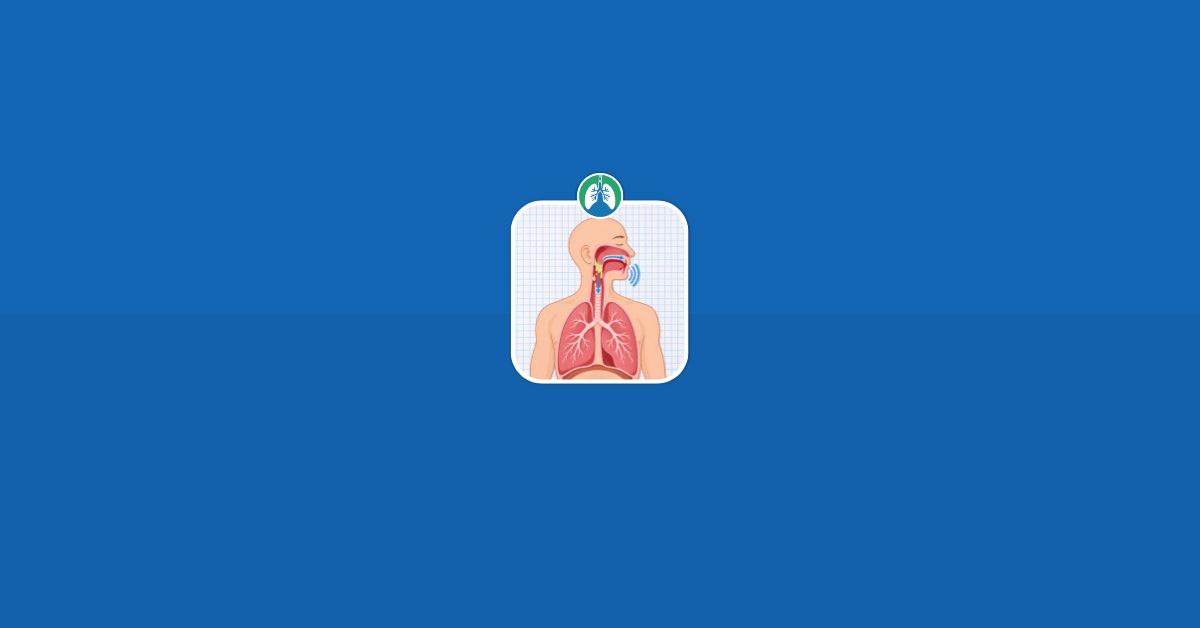
The death rattle is a wet, rattling, or gurgling sound that may occur when a person is approaching the end of life. It develops when saliva and other secretions collect in the throat or upper airways and the person becomes too weak to swallow, cough, or clear them normally.
Although the sound can be alarming for family members, it usually does not mean that the person is choking or suffering. Understanding why the death rattle occurs and what can be done about it may make this stage of the dying process easier to understand.

Download our free guide that has over 100+ of the best tips for healthy lungs.
What Is a Death Rattle?
A death rattle is a noisy breathing sound that occurs in some people during the final hours or days of life. It may sound wet, crackling, bubbling, rattling, or gurgling.
The sound develops because saliva, mucus, and other fluids begin to collect in the back of the throat and upper airways. Normally, a person automatically swallows these secretions or clears them by coughing. Near the end of life, however, the body becomes progressively weaker.
A dying person may no longer have enough strength or awareness to swallow effectively or produce a strong cough. As air moves past the pooled secretions during breathing, the fluid vibrates or moves within the airway, creating the characteristic rattling sound.
The medical term often used for this problem is terminal respiratory secretions or noisy respiratory secretions. The phrase “death rattle” can sound frightening. However, the term describes the sound itself rather than indicating that the person is experiencing pain or choking.

Why Does the Death Rattle Happen?
The human body continuously produces saliva and mucus. Under normal circumstances, most people barely notice these secretions because they are automatically swallowed or cleared from the airway. As a person becomes very weak near the end of life, several things change.
They may:
- Spend most or all of their time sleeping
- Become unconscious or only partly responsive
- Lose the ability to swallow normally
- Develop a weaker cough reflex
- Produce less purposeful movement
- Lose the muscle strength needed to clear their throat
Secretions can therefore accumulate instead of being swallowed. When air passes through or around this fluid, the secretions may move and create a rattling or bubbling sound.
The noise can sometimes seem surprisingly loud, especially in a quiet room. Its intensity does not necessarily indicate how uncomfortable the person is.
What Does a Death Rattle Sound Like?
The exact sound varies from person to person.
It may resemble:
- Wet or congested breathing
- Gurgling in the throat
- A bubbling sound
- Snoring combined with congestion
- Rattling during inhalation or exhalation
- Fluid moving in the throat or upper chest
The sound may occur during every breath or only intermittently. It may also become louder or softer when the person’s position changes. Some people develop only mild noisy breathing, while others produce a very noticeable rattling sound.
Family members sometimes describe it as sounding as though the person needs to cough or clear their throat but cannot.
Does the Death Rattle Mean Someone Is Choking?
Usually, no. A death rattle is generally caused by secretions collecting in an airway that the person is no longer able to clear normally. It does not necessarily mean that the airway is completely blocked.
Air is still moving through the airway, which is actually what creates the sound.
The noise may make it appear that the person is struggling with mucus or needs to cough. However, people who are actively dying are often very sleepy, minimally responsive, or unconscious by the time the death rattle develops.
Available evidence and palliative-care guidance indicate that noisy terminal secretions generally do not appear to cause significant discomfort for the dying person, even though they can be very upsetting for family members.
Is the Death Rattle Painful?
The death rattle itself is not generally considered painful. The person may no longer be consciously aware of the secretions or the sound they are producing.
This can be difficult for family members to understand because the breathing may sound unpleasant. People naturally associate noisy, congested breathing with illness, suffocation, or difficulty breathing. What something sounds like to an observer, however, is not always the same as what the dying person is experiencing.
Healthcare professionals caring for people at the end of life assess more than the sound of breathing. They may also look for signs such as:
- Facial grimacing
- Restlessness
- Tension
- Rapid breathing
- Labored breathing
- Persistent agitation
- Other visible signs of discomfort
Note: If the person appears comfortable despite the rattling sound, reducing the noise may be more important for the emotional comfort of the family than for the physical comfort of the patient. If there are signs of actual breathing distress, pain, or agitation, those symptoms can be treated separately.
When Does the Death Rattle Usually Occur?
The death rattle most commonly develops during the final stage of life. It often occurs during the last hours or days, although predicting exactly when someone will die based on this sign is impossible.
The National Cancer Institute describes death rattle as an indicator that death may occur within hours or days. Marie Curie similarly notes that many people who develop noisy terminal secretions die within a few days, although some live longer and others die sooner.
Every person’s dying process is different. The presence of a death rattle should therefore be considered one sign among several rather than an exact countdown.
How Long Does Someone Live After the Death Rattle Begins?
There is no precise answer. For some people, noisy respiratory secretions appear only shortly before death. For others, the sound may continue for many hours or occasionally longer.
One person may die several hours after the sound begins, while another may continue breathing for a day or more. The person’s overall condition provides more useful information than the death rattle alone.
Healthcare professionals may consider factors such as:
- Level of consciousness
- Breathing pattern
- Ability to swallow
- Urine production
- Blood circulation
- Skin changes
- Food and fluid intake
- Overall progression of the person’s illness
Note: A hospice nurse, physician, or other professional who has been caring for the person may be able to provide a better estimate based on the entire clinical picture. Even then, the exact timing of death can be difficult to predict.
Other Breathing Changes Near the End of Life
The death rattle is only one breathing change that can occur during the dying process. Breathing often becomes increasingly irregular as the body’s systems begin to slow down.
Slower or Shallower Breathing
Breaths may gradually become more shallow. The person may appear to be taking much smaller breaths than before. This is often part of the natural reduction in the body’s energy requirements as death approaches.
Periods of Rapid Breathing
At other times, breathing may briefly become faster. Periods of faster breathing can alternate with slower breathing.
Pauses Between Breaths
Long pauses may develop between breaths. A person might stop breathing for several seconds and then begin again. These pauses sometimes become progressively longer as death approaches.
Cheyne-Stokes Breathing
Some people develop a pattern called Cheyne-Stokes breathing. The breaths gradually become deeper or faster, then become progressively shallower before stopping temporarily. After a pause, the cycle begins again. This breathing pattern can occur naturally near the end of life.
Occasional Gasping
Very near death, breathing may become extremely irregular, with long pauses followed by an occasional deeper breath or gasp. These changes can be difficult to watch but do not necessarily indicate that the person is consciously experiencing distress.
Other Signs That Death May Be Near
A death rattle often develops along with several other changes in the body. Not everyone experiences all of these signs, and they do not necessarily occur in a predictable order.
Increased Sleeping
The person may spend more and more time asleep. Eventually, they may become difficult or impossible to awaken. Even when someone appears unconscious, families often continue speaking calmly to them and offering reassuring physical contact if appropriate.
Reduced Interest in Food
The desire for food usually decreases substantially as the body shuts down. The person may eat only small amounts before eventually stopping altogether. This usually reflects the body’s declining need and ability to process food rather than a lack of care.
Reduced Fluid Intake
Drinking also commonly decreases. The person may take small sips at first and later become unable to swallow safely. Mouth care can often provide more comfort than repeatedly encouraging someone to drink when swallowing has become difficult.
Difficulty Swallowing
Swallowing can become increasingly weak. This contributes to the development of terminal secretions because saliva is no longer cleared normally. Medications may also need to be given by another route if swallowing pills becomes difficult.
Less Urine
As fluid intake decreases and kidney function slows, the person may urinate less frequently. The urine may also become darker.
Cold Hands and Feet
Circulation gradually changes as the body directs less blood toward the hands and feet. The extremities may feel cool or cold.
Skin Color Changes
The skin may become pale, bluish, gray, or mottled. Mottling often appears as irregular purple, reddish, or bluish areas, particularly on the legs, feet, arms, or hands.
Changes in Awareness
The person may become confused, restless, less responsive, or unconscious. Some people experience periods of agitation or unusual behavior.
These symptoms should be discussed with the healthcare team because treatable problems such as pain, medication effects, urinary retention, constipation, or other causes may contribute to restlessness.
Does a Death Rattle Mean the Person Is Suffocating?
The sound may resemble someone struggling with fluid in their airway, but the death rattle itself does not generally mean that a person is suffocating. By this stage of the dying process, consciousness is frequently reduced.
The person may not be aware of the sound or sensation in the same way that an alert person would notice congestion. Families should nevertheless tell a healthcare professional if the person appears to be experiencing actual breathing distress.
Signs that deserve attention include obvious agitation, persistent grimacing, marked restlessness, or other indications that the person is uncomfortable. The healthcare team can determine whether the sound is simply terminal secretions or whether another condition may be contributing.
What Can Be Done About a Death Rattle?
Treatment focuses on comfort rather than aggressively removing every secretion. Several approaches may be considered.
Repositioning
Changing the person’s position is often one of the first measures used. Turning the person slightly onto one side may allow secretions to move away from the back of the throat.
The head of the bed may also be raised. Pillows can sometimes be used to support the person’s head, shoulders, or back in a comfortable position.
Guidance from the National Cancer Institute and other palliative-care sources notes that repositioning can sometimes reduce noisy secretions.
If the person is receiving hospice or nursing care, caregivers can ask for help before moving someone who is very weak, injured, or unable to reposition themselves.
Mouth Care
Gentle mouth care can help keep the mouth comfortable. The lips may become dry, and the inside of the mouth can become dry even when secretions are collecting deeper in the throat.
Depending on instructions from the healthcare team, comfort measures may include moistening the mouth or lips.
Trying to make an increasingly unconscious person drink large amounts of fluid is usually not necessary and may be unsafe if swallowing has weakened.
Medications
Healthcare professionals sometimes use medications called anticholinergic or antisecretory medications to reduce saliva and other secretions. Examples that may be used in end-of-life care include glycopyrrolate, scopolamine, atropine, or hyoscine preparations, depending on local practice and the person’s circumstances.
These medicines reduce new secretion production. They do not necessarily remove fluid that has already accumulated. Their effectiveness also varies.
Clinical research has not consistently shown that medications completely eliminate death rattle, although they are commonly used in palliative care when healthcare professionals believe they may be helpful.
Families should not give medications for this purpose unless they have been prescribed or recommended by the person’s healthcare team.
Should the Secretions Be Suctioned?
It may seem logical to remove the secretions with suction, particularly when the breathing sounds very wet. However, deep suctioning is not routinely recommended simply because a dying person has a death rattle.
Suctioning can sometimes:
- Cause discomfort
- Trigger coughing
- Trigger gagging
- Irritate the airway
- Stimulate additional secretions
- Disturb someone who is otherwise resting comfortably
In selected situations, a healthcare professional may gently remove secretions that are easily accessible in the mouth. Suctioning may be considered in some circumstances but can trigger the gag reflex and may be counterproductive.
Families caring for someone at home should generally ask the hospice or medical team before attempting to suction secretions themselves.
Should Someone Be Given More Water?
Families often worry that reduced drinking means their loved one is becoming dehydrated and needs more fluids. Near the end of life, however, the situation is different from ordinary dehydration in a healthy person.
The body’s ability and desire to use fluids changes as organ function slows. Trying to force someone to drink when they are no longer swallowing effectively may increase the risk of aspiration, which occurs when fluid enters the airway.
Intravenous or tube-delivered fluids are not automatically beneficial in every dying person either.
In some circumstances, additional fluid may contribute to swelling or respiratory secretions. Decisions about artificial hydration should therefore be individualized according to the person’s goals, symptoms, medical condition, and wishes.
Families should discuss these decisions with the person’s physician, hospice team, or palliative-care provider rather than trying to judge the need for fluids based solely on the presence of noisy breathing.
Is Oxygen Helpful?
Oxygen does not specifically remove the secretions responsible for a death rattle. If a person has true shortness of breath or another reason for oxygen therapy, the healthcare team may recommend it. However, simply hearing noisy breathing does not necessarily mean the person needs more oxygen.
The treatment plan should focus on whether the person appears uncomfortable rather than the sound alone. Healthcare professionals may use several approaches to relieve genuine breathlessness near the end of life, depending on the person’s condition.
Why Is the Death Rattle So Distressing for Families?
The sound has strong emotional significance. Family members may already understand intellectually that their loved one is dying, but hearing the person’s breathing suddenly become wet or rattling can make the situation feel immediate.
It may create fears such as:
- “Are they choking?”
- “Can they breathe?”
- “Are they drowning?”
- “Should I do something?”
- “Are they suffering?”
These reactions are understandable. One important part of end-of-life care is explaining that the sound is usually caused by the body’s inability to clear normal secretions and does not necessarily represent suffering.
The death rattle can be particularly distressing to family members even though it does not appear to be distressing to the patient. Knowing this does not always make the sound easy to hear, but it may reduce the fear that something is being left untreated.
What Can Family Members Do?
There may not be a need to “fix” the breathing sound completely. Instead, family members can focus on comfort and presence.
Depending on the situation, this may include:
- Sitting quietly beside the person
- Holding their hand
- Speaking in a calm voice
- Playing familiar music
- Keeping the room peaceful
- Helping with gentle mouth care if instructed
- Alerting the healthcare team when symptoms change
- Taking breaks when needed
Marie Curie notes that caregivers who find noisy breathing upsetting may benefit from taking occasional breaks or using quiet background music to make the sound less prominent. Being present does not require watching every breath.
A family member who needs to leave the room, eat, sleep, shower, or take a few minutes outside is not abandoning the person. End-of-life care can be emotionally and physically exhausting.
Can a Person Still Hear During This Stage?
A person with a death rattle may be deeply asleep or unconscious and may not respond when someone speaks to them. It is often impossible to know exactly how much awareness remains.
For that reason, families commonly continue talking to the person in a calm, reassuring way. They might share familiar stories, say that they are nearby, express affection, or simply sit quietly.
There is no requirement to find the perfect words. Comfort can also come from familiar voices, gentle touch, music, prayer, silence, or the presence of people who matter to the person.
When Should You Contact Hospice or a Healthcare Professional?
If the person is already receiving hospice or end-of-life care, contact the hospice nurse or healthcare team when noisy breathing develops, particularly if you have not been told to expect it.
They can assess whether the sound represents typical terminal secretions and determine whether repositioning, medication, or another intervention may help.
You should also contact the care team if the person appears uncomfortable or develops:
- Significant agitation
- Persistent restlessness
- New or severe pain
- Obvious breathing distress
- Vomiting
- Bleeding
- Seizures
- Sudden symptoms that were not anticipated
If someone is not known to be dying and suddenly develops gurgling, choking, severely abnormal breathing, loss of consciousness, or another medical emergency, that should not automatically be assumed to be a death rattle. Emergency medical evaluation may be necessary.
The term applies specifically to secretions that occur as part of the dying process.
Does Everyone Develop a Death Rattle?
No. Some people die without ever developing noisy respiratory secretions. Others may have only mild congestion that family members barely notice. Still others develop a pronounced rattling sound.
Several factors can influence how much secretion accumulates, including the person’s ability to swallow and cough, their underlying illness, medications, fluid balance, and the amount or type of mucus and saliva present.
Because dying varies considerably from one person to another, the absence of a death rattle does not mean death is not near. Likewise, the presence of one cannot determine the exact time remaining.
Can the Death Rattle Stop Before Death?
Yes. The sound may become quieter or temporarily disappear. A change in position may allow secretions to shift. Medication may reduce new secretions.
Breathing may also become shallower, causing less air to pass through the accumulated fluid. For these reasons, the sound can change considerably from one hour to another.
A quieter death rattle does not necessarily mean the person is recovering. The overall pattern of the person’s condition remains more important.
What Happens as Death Gets Closer?
As the body’s functions continue to slow, the person’s breathing generally becomes less regular. The pauses between breaths may lengthen. Breaths may become extremely shallow.
Eventually, there may be only occasional breaths separated by long periods of silence. The final breath may not appear dramatically different from those immediately before it.
After breathing stops, the chest no longer rises and falls. The person will not respond. The heart will also stop.
For someone receiving hospice care at home, families are usually given instructions in advance about whom to contact when death occurs. In most expected hospice deaths, the hospice service should be contacted according to that plan.
Note: Knowing these steps beforehand can help prevent uncertainty during an already emotional time.
FAQs About the Death Rattle
Does the death rattle mean death is minutes away?
Not necessarily. It usually indicates that someone is in the final stage of life, but death may still be hours or sometimes days away.
Can a person hear their own death rattle?
It is difficult to know exactly what a person can perceive near death. Many people who develop terminal secretions are very sleepy or unconscious and do not show evidence that the sound is troubling them.
Should I wake someone up because of the sound?
Usually, there is no reason to wake a dying person who appears peaceful simply because their breathing has become noisy. Contact the healthcare team if you are concerned.
Should I encourage them to cough?
A person who is actively dying may not have enough strength or awareness to cough effectively. Repeatedly asking them to cough may cause unnecessary disturbance without clearing the secretions.
Does the death rattle mean there is fluid in the lungs?
Not always. The sound frequently comes from saliva and secretions in the throat and upper airways. Noisy breathing can also result from deeper respiratory secretions caused by other conditions, so the healthcare team may assess the cause when appropriate.
Can medication completely stop the death rattle?
Sometimes medication reduces the sound, but it may not eliminate it. These medicines generally reduce production of new secretions rather than removing fluid that has already accumulated.
Does turning someone on their side help?
It may. Repositioning can allow pooled secretions to move and may reduce the rattling sound. The person’s comfort and medical condition should always be considered when changing position.
Is the death rattle a sign of pain?
No. The sound itself is not generally considered evidence of pain. Healthcare professionals evaluate pain separately based on other signs and symptoms.
Final Thoughts
The death rattle is a common change that can occur during the final hours or days of life when a person becomes too weak to swallow or cough away normal secretions. Although the wet or rattling sound can be difficult for loved ones to hear, it usually does not mean the person is choking, suffocating, or experiencing pain.
Repositioning, mouth care, and certain medications may sometimes reduce the sound, but treatment is primarily focused on comfort. When noisy breathing develops, families should communicate with the hospice or healthcare team, especially if there are signs of pain, agitation, or true breathing distress.

Written by:
John Landry is a registered respiratory therapist from Memphis, TN, and has a bachelor's degree in kinesiology. He enjoys using evidence-based research to help others breathe easier and live a healthier life.
References
- van Esch HJ, Lokker ME, Rietjens J, van Zuylen L, van der Rijt CCD, van der Heide A. Understanding relatives’ experience of death rattle. BMC Psychol. 2020.