
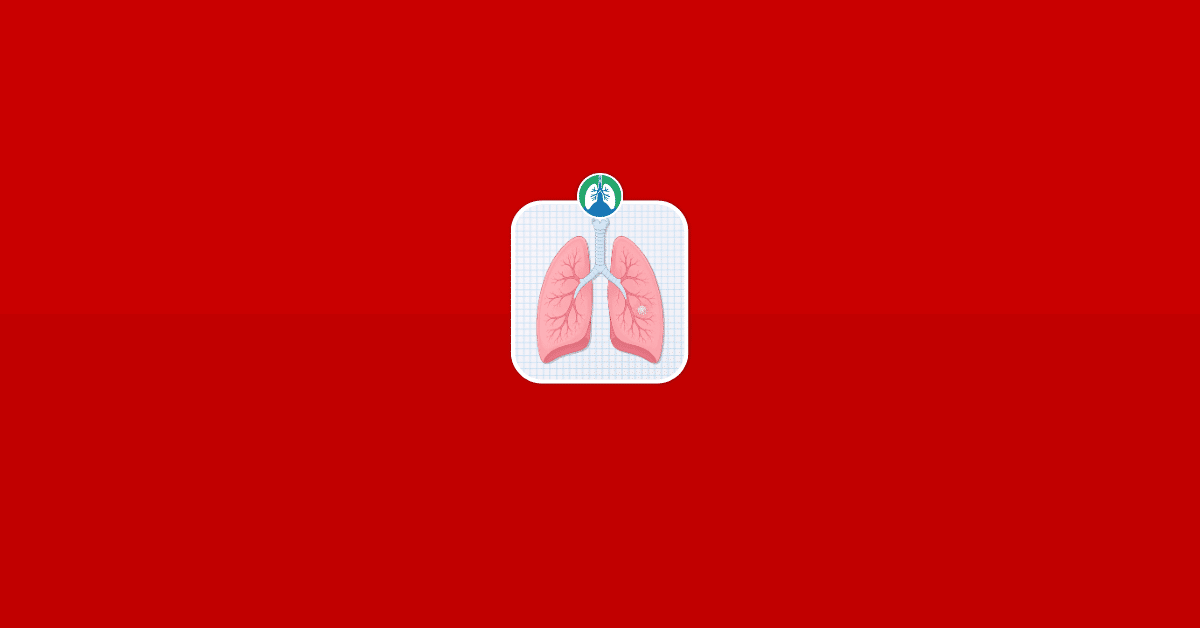
A lung nodule can sound scary when it appears on a chest X-ray or CT scan, especially because many people immediately connect lung spots with cancer. The good news is that a lung nodule is not always cancer.
In fact, most lung nodules found on CT scans are not cancer and are often caused by old infections, scar tissue, inflammation, or other benign conditions.
Still, some lung nodules can be cancerous, which is why they should be evaluated carefully instead of ignored. The next step depends on the nodule’s size, appearance, growth, and your personal risk factors.

Download our free guide that has over 100+ of the best tips for healthy lungs.
What Is a Lung Nodule?
A lung nodule is a small spot or abnormal area in the lung that shows up on an imaging test. It may also be called a pulmonary nodule. Many lung nodules are found by accident when a person has a chest X-ray or CT scan for another reason, such as a cough, chest pain, pneumonia, shortness of breath, injury, or routine lung cancer screening.
Doctors usually use the word “nodule” when the spot is 3 centimeters or smaller. Three centimeters is about 30 millimeters, or a little over 1 inch. If the spot is larger than 3 centimeters, it may be called a lung mass. A mass is generally more concerning than a small nodule and usually needs a more detailed evaluation.
Lung nodules are common, especially now that CT scans are used more often. A CT scan can detect very small spots in the lung that may not show up clearly on a regular chest X-ray. This means more people are being told they have a lung nodule, even when they feel completely well.
A lung nodule can be:
- Solid
- Ground glass
- Part-solid
- Smooth
- Irregular
- Calcified
- Single
- Multiple
Note: These descriptions help doctors decide whether the nodule looks more likely to be benign or whether it needs closer follow-up.
Is a Lung Nodule Always Cancer?
No. A lung nodule is not always cancer. This is the most important point to understand. Many people feel alarmed when they hear the word “nodule,” but a nodule simply means there is a small spot in the lung. It does not automatically mean that cancer is present.
Most lung nodules are benign, meaning they are not cancer. The American Cancer Society states that most lung nodules seen on CT scans are not cancer and are more often caused by old infections, scar tissue, or other causes.
However, some nodules can be cancer. A lung nodule may represent early lung cancer, cancer that has spread from another part of the body, or a less common type of tumor. This is why the finding should be followed up with a healthcare provider.
The goal is to sort nodules into general risk categories. Some nodules are low risk and may only need monitoring. Others are suspicious and may need further testing, such as a repeat CT scan, PET scan, biopsy, or removal.

Why Lung Nodules Are Often Found by Accident
Most lung nodules do not cause symptoms. They are often too small to affect breathing, cause pain, or make a person feel sick.
A lung nodule may be found during imaging for:
- A lingering cough
- Chest pain
- Shortness of breath
- Pneumonia
- A fall or injury
- Pre-surgery testing
- A heart or abdominal scan that includes part of the lungs
- Lung cancer screening
Note: This is called an incidental finding, which means the nodule was found while looking for something else. Finding a lung nodule by accident can be stressful, but it is also common. Many of these nodules turn out to be harmless. The important thing is to make sure the nodule is evaluated appropriately.
Common Noncancerous Causes of Lung Nodules
There are many reasons a person may have a lung nodule that is not cancer. In some areas, benign lung nodules are especially common because of prior infections that leave small scars or granulomas in the lungs.
Old Infections
One of the most common causes of benign lung nodules is a previous infection. Sometimes the body heals from an infection and leaves behind a small scar or calcified area. This may show up later as a nodule.
The infection may have been mild enough that the person does not remember having it. Some infections can leave lung changes even after they are no longer active.
Examples may include:
- Prior pneumonia
- Fungal infections
- Tuberculosis exposure
- Healed granulomas
Note: A granuloma is a small area of inflammation that forms when the immune system walls off something it sees as foreign, such as an infection or irritant. Granulomas are often benign.
Scar Tissue
Scar tissue can form in the lung after infection, inflammation, injury, surgery, or radiation therapy. A small scar may appear as a nodule on imaging. Scar-related nodules may remain unchanged for years. If a nodule has been stable on older scans, that can be reassuring.
Inflammation
Inflammation can also cause lung nodules. This may happen with certain autoimmune or inflammatory conditions.
Examples include:
- Rheumatoid arthritis
- Sarcoidosis
- Inflammatory lung disease
- Medication reactions
- Irritation from inhaled substances
Note: Inflammatory nodules may require follow-up or additional testing, especially if they look unusual or if symptoms are present.
Benign Lung Tumors
Some lung nodules are benign tumors. A benign tumor is a growth that is not cancer and does not spread to other parts of the body.
One example is a hamartoma, which is a common type of benign lung tumor. Hamartomas may contain fat or calcium, which can sometimes help doctors recognize them on imaging. Cleveland Clinic describes hamartomas as the most common type of benign lung nodule.
Note: A benign tumor may still need monitoring or removal in certain situations, but many do not require aggressive treatment.
Small Areas of Bleeding or Irritation
Less commonly, a small area of bleeding, irritation, or healing tissue can appear as a nodule or nodule-like finding. The meaning depends on symptoms, medical history, and whether the finding changes over time.
When a Lung Nodule Could Be Cancer
Although many lung nodules are benign, some are cancerous. A lung nodule can sometimes be an early sign of lung cancer, especially when it is new, growing, larger, or has suspicious imaging features.
A lung nodule may be cancer when it represents:
- Primary lung cancer, meaning cancer that started in the lung
- Metastatic cancer, meaning cancer that spread to the lung from another part of the body
- A less common tumor type
Note: The chance of cancer depends on the full picture. Doctors do not look at one detail alone. They consider the nodule’s size, shape, density, location, growth pattern, and the person’s risk factors.
Risk Factors That Make Cancer More Likely
A lung nodule is more concerning when it appears in a person who has risk factors for lung cancer. These risk factors do not mean the nodule is cancer, but they may influence how closely it is followed.
Smoking History
Smoking is one of the strongest risk factors for lung cancer. A nodule in a current or former smoker may require closer attention than a similar nodule in someone who has never smoked.
Doctors may ask:
- Do you currently smoke?
- Did you smoke in the past?
- How many years did you smoke?
- How many packs per day did you smoke?
- When did you quit?
Note: This information helps estimate risk.
Age
The chance of a lung nodule being cancer generally increases with age. Nodules in younger adults are often benign, especially if there are no other risk factors. Nodules in older adults may need closer follow-up.
Prior Cancer
A person with a history of cancer may need a more careful evaluation. Some cancers can spread to the lungs, and a new lung nodule in someone with prior cancer may require additional testing.
This does not mean every nodule in a cancer survivor is cancer. Infection, scarring, and benign nodules can still occur. But the history matters.
Family History
A family history of lung cancer may be considered, especially when combined with smoking or other exposures.
Environmental and Workplace Exposures
Certain exposures can increase lung cancer risk, including:
- Radon
- Asbestos
- Secondhand smoke
- Silica dust
- Diesel exhaust
- Some workplace chemicals
Note: Your healthcare provider may ask about your home, work history, military service, hobbies, or past exposures.
Nodule Features That Can Raise Concern
Doctors also look closely at how the nodule appears on imaging. Some features are more reassuring, while others may raise concern.
Size
Size is one of the most important factors. In general, very small nodules are less likely to be cancer, while larger nodules are more likely to need follow-up or testing.
Common size categories include:
- Less than 6 millimeters
- 6 to 8 millimeters
- Larger than 8 millimeters
- Larger than 3 centimeters, usually called a mass
The American Academy of Family Physicians summarizes that larger nodules may need CT follow-up, PET/CT, tissue sampling, or removal depending on the risk level and clinical situation.
Still, size alone does not diagnose cancer. A small nodule can sometimes be concerning if it is growing or irregular, while a larger nodule can sometimes be benign.
Growth Over Time
Growth is one of the most important clues. A nodule that grows over time may be more suspicious. A nodule that stays the same size for years is often less concerning, especially if it is solid.
This is why old imaging is so valuable. If your doctor can compare your current scan with an older scan, they may be able to tell whether the nodule is new, stable, or changing.
Shape and Edges
A smooth, round nodule is often less suspicious. A nodule with irregular, lobulated, or spiculated edges may raise more concern.
Spiculated means the nodule has tiny lines or points extending from its border. This can sometimes be seen with cancer, but it can also occur with scarring or inflammation.
Density
A nodule may be described as solid, ground glass, or part-solid.
- A solid nodule looks dense throughout.
- A ground glass nodule looks hazy, like frosted glass.
- A part-solid nodule has both hazy and solid areas.
Note: Part-solid nodules may need closer follow-up because some slow-growing lung cancers can appear this way.
Calcification
Some nodules contain calcium. Certain patterns of calcification can suggest a benign cause, especially when related to old healed infection.
However, not all calcification patterns are equally reassuring. A radiologist looks at the pattern, not just whether calcium is present.
Fat Inside the Nodule
Fat inside a nodule can suggest a benign tumor such as a hamartoma. This can be a reassuring feature when seen clearly on CT imaging.
Location
Nodules in the upper lobes of the lungs can be more concerning, especially in people with a smoking history. Location alone does not diagnose cancer, but it can affect the overall risk estimate.
What If You Have More Than One Lung Nodule?
Having multiple lung nodules does not automatically mean cancer. Multiple small nodules can occur after infections, inflammatory conditions, or exposure to certain irritants.
Doctors look at:
- How many nodules are present
- Their size
- Their shape
- Whether they are in one lung or both lungs
- Whether they are new or old
- Whether they are growing
- Whether there are symptoms or signs of infection
Note: In some cases, multiple nodules can be related to cancer that has spread to the lungs, but benign causes are also common. The pattern matters.
Symptoms of a Lung Nodule
Most lung nodules do not cause symptoms. This is especially true when they are small. Many people have no cough, no pain, and no breathing problems.
If symptoms are present, they may be caused by the condition behind the nodule or by another lung problem.
Possible symptoms include:
- Persistent cough
- Coughing up blood
- Shortness of breath
- Chest discomfort
- Wheezing
- Repeated lung infections
- Unexplained weight loss
- Fatigue
- Hoarseness
Note: These symptoms do not automatically mean cancer, but they should be discussed with a healthcare provider. Coughing up blood, persistent chest pain, worsening shortness of breath, or unexplained weight loss should be evaluated promptly.
How Doctors Evaluate a Lung Nodule
The next step depends on how the nodule looks and the person’s risk factors. In many cases, doctors do not jump straight to biopsy or surgery.
Reviewing the Radiology Report
The radiology report describes what the imaging test showed. It may include the nodule’s size, location, density, border, and any recommended follow-up.
The report may use words such as:
- Pulmonary nodule
- Solid nodule
- Ground glass nodule
- Part-solid nodule
- Spiculated margins
- Calcified nodule
- Stable nodule
- Suspicious nodule
- Recommend follow-up CT
Note: These terms can sound intimidating, but they are descriptions. They are not always a diagnosis.
Comparing With Older Scans
Old imaging can be one of the most helpful tools. A nodule that was present years ago and has not changed may be less concerning. A new or growing nodule may need closer evaluation.
If you have had previous imaging at another hospital or clinic, tell your provider. The actual images are often needed, not just the written report.
Repeat CT Scan
A repeat CT scan may be recommended to see whether the nodule changes. The timing depends on the size and risk level.
A small low-risk nodule may need no follow-up or a later scan. A larger or more suspicious nodule may need repeat imaging sooner. Follow-up CT scans are not a sign that cancer is present. They are a way to watch the nodule safely.
PET Scan
A PET scan may be used for some nodules, especially when they are larger or more suspicious. PET scans look for increased metabolic activity.
Cancer may show increased activity, but infection and inflammation can also show activity. Some slow-growing cancers may show little activity. This means a PET scan can help, but it is not perfect.
Biopsy
A biopsy removes a small tissue sample so it can be examined under a microscope. This may be done with a needle through the chest wall, through bronchoscopy, or during surgery.
A biopsy may be recommended when the nodule is suspicious enough that tissue is needed. However, biopsy is not always the first step. Very small nodules can be hard to sample accurately, and some biopsies carry risks.
Surgical Removal
Surgical removal may be considered when the chance of cancer is high, when a biopsy is not possible or unclear, or when the nodule has already been confirmed as cancer.
Removal may involve taking out a small wedge of lung tissue, a larger segment, or a lobe, depending on the situation.
Why Some Nodules Are Watched Instead of Biopsied
It can be unsettling when doctors recommend watching a nodule instead of testing it immediately. But monitoring can be the safest plan in many cases.
A nodule may be watched when:
- It is very small
- It looks low risk
- It may be caused by infection or inflammation
- It has not changed over time
- Biopsy would be difficult or risky
- The chance of cancer is low
Note: Watching a nodule does not mean ignoring it. It means following a structured plan to see whether it changes.
What Happens If the Nodule Is Benign?
If the nodule is determined to be benign, you may not need treatment. Some benign nodules remain in the lung permanently as small scars. They may continue to show up on future scans without causing problems.
If the nodule is caused by infection or inflammation, treatment may focus on that cause. If it is a benign tumor, the doctor may monitor it or remove it in selected cases.
Note: The plan depends on the diagnosis, symptoms, and whether the nodule changes.
What Happens If the Nodule Is Cancer?
If the nodule is cancer, the next step is to determine the type and stage. Staging means finding out how large the cancer is, whether lymph nodes are involved, and whether it has spread.
Treatment may include:
- Surgery
- Radiation therapy
- Chemotherapy
- Immunotherapy
- Targeted therapy
- A combination of treatments
Note: A small lung cancer found as a nodule may be at an earlier stage, which can allow more treatment options. This is one reason follow-up is important.
How Lung Cancer Screening Fits In
Some lung nodules are found during lung cancer screening. Screening is done with low-dose CT in people who meet certain age and smoking history criteria.
Screening can find lung cancer earlier, but it can also find many nodules that are not cancer. That is why screening programs use structured follow-up recommendations.
If you have a smoking history, ask your healthcare provider whether lung cancer screening is appropriate for you.
Questions to Ask Your Doctor
If you are told you have a lung nodule, it is reasonable to ask questions. Clear answers can reduce anxiety and help you understand the plan.
Helpful questions include:
- How large is the nodule?
- Is it solid, ground glass, or part-solid?
- Does it look smooth or irregular?
- Where is it located?
- Was it present on old scans?
- Has it grown?
- What is my estimated risk level?
- Do I need a follow-up CT scan?
- When should the next scan happen?
- Do I need a PET scan?
- Do I need a biopsy?
- Should I see a pulmonologist or lung nodule specialist?
- What symptoms should I report right away?
- When can monitoring stop?
Note: You do not need to understand every medical term, but you should understand the plan.
When to Seek Medical Care Promptly
A lung nodule often does not cause symptoms, but certain symptoms should be evaluated quickly.
Contact a healthcare provider promptly if you develop:
- Coughing up blood
- New or worsening shortness of breath
- Persistent chest pain
- Unexplained weight loss
- A cough that does not improve
- Repeated pneumonia
- Ongoing fever
- New hoarseness
- Severe fatigue with other concerning symptoms
Note: Seek emergency care for severe trouble breathing, severe chest pain, fainting, blue lips, confusion, or coughing up a large amount of blood.
How to Reduce Your Risk Moving Forward
You may not be able to change why a nodule formed, but you can take steps to protect your lung health.
If you smoke, quitting is one of the most important steps. Avoiding secondhand smoke, testing your home for radon if appropriate, using protective equipment around dust or chemicals, and staying current with recommended medical care can also help.
Note: These steps do not replace follow-up imaging or testing, but they can support long-term lung health.
Managing Anxiety After a Lung Nodule Finding
It is normal to feel worried after being told there is a spot on your lung. Many people immediately think of cancer, even though most lung nodules are benign.
A few things can help:
- Ask for the nodule size and type
- Get a clear follow-up timeline
- Find out whether old scans are available
- Avoid assuming the worst from one word in the report
- Write down questions before appointments
- Bring someone with you if you need support
Note: The uncertainty can be difficult, but a clear plan makes the process easier to manage.
Final Thoughts
A lung nodule is not always cancer. Most lung nodules found on CT scans are benign and may be related to old infections, scar tissue, inflammation, or other noncancerous causes. Still, some nodules can be cancerous, so they should be evaluated carefully.
Doctors look at the nodule’s size, shape, density, growth, location, and your personal risk factors to decide what happens next.
Some nodules only need monitoring, while others may need PET imaging, biopsy, or removal. If you have been told you have a lung nodule, do not panic, but do follow your healthcare provider’s plan.

Written by:
John Landry is a registered respiratory therapist from Memphis, TN, and has a bachelor's degree in kinesiology. He enjoys using evidence-based research to help others breathe easier and live a healthier life.
References
- Loverdos K, Fotiadis A, Kontogianni C, Iliopoulou M, Gaga M. Lung nodules: A comprehensive review on current approach and management. Ann Thorac Med. 2019.