

Vaping has grown rapidly in popularity, particularly among younger adults who often view it as a cleaner, less harmful alternative to smoking cigarettes. That perception is only partially accurate. While vaping does eliminate many of the combustion byproducts found in traditional tobacco smoke, it is far from harmless.
Growing evidence suggests that regular vaping can accelerate the aging process, affecting skin health, oral health, and the body’s internal systems. This article examines what the current research says and what regular vapers should know.

Download our free guide that has over 100+ of the best tips for healthy lungs.
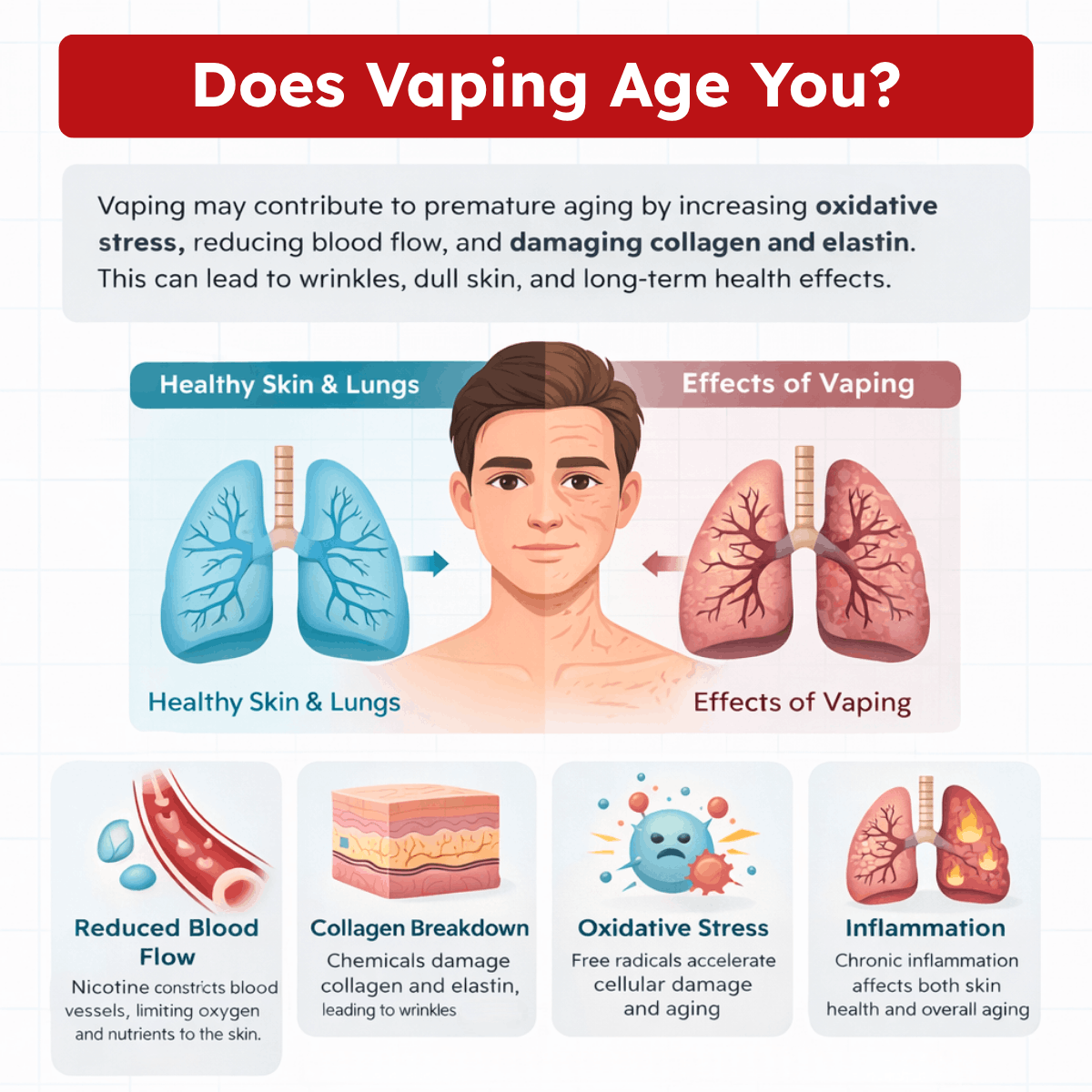
Does Vaping Age You?
Vaping may contribute to premature aging, although its effects are still being studied. The chemicals found in e-cigarette vapor, including nicotine and other toxic compounds, can increase oxidative stress and inflammation in the body.
This can damage collagen and elastin, which are essential for maintaining firm, youthful skin, potentially leading to wrinkles, sagging, and a dull complexion. Nicotine also constricts blood vessels, reducing oxygen and nutrient delivery to the skin, which can accelerate visible aging.
In addition, vaping may impact lung and cardiovascular health, which play a role in overall vitality and appearance. While it may be less harmful than traditional smoking, vaping is not risk-free and could still contribute to long-term aging effects.
What Is Actually in Vape Aerosol?
Before examining how vaping ages you, it helps to understand what you are inhaling. E-cigarettes work by heating a liquid, commonly called e-juice or vape juice, into an aerosol that is then breathed in. That liquid typically contains nicotine, a carrier base of propylene glycol and vegetable glycerin, flavoring agents, and in many cases, a range of additional chemical compounds.
Vaping exposes users to a diverse chemical mix that includes nicotine, metals, and toxic and carcinogenic compounds, which can induce oxidative stress, promote inflammation, and impair vascular function in the skin. The specific chemical profile varies considerably by brand, device type, and heat setting, which makes it difficult to pin down a single risk level. What is consistent across most products, however, is the presence of nicotine and the generation of free radicals during heating.
Vaping triggers a chain reaction of free radical activity. Free radicals are highly unstable molecules that damage healthy collagen proteins by stealing their electrons, reproducing themselves in a chain reaction that causes damage to accelerate. This process is not unique to tobacco smoke. It happens with vaping too, just through a somewhat different chemical pathway.
Propylene glycol, one of the most common base ingredients, also presents its own concerns. While propylene glycol carries flavors and colors that help vapes appear and feel harmless, this substance appears to be toxic when regularly inhaled as a vapor. Research into the long-term inhalation effects of these carrier compounds is still developing, but early indicators are not reassuring.
How Vaping Affects Skin: The Core Mechanisms
The most visible sign of accelerated aging is what happens to the skin. Several distinct biological mechanisms connect vaping to skin deterioration.
Reduced Blood Flow
Nicotine is a vasoconstrictor, meaning it narrows blood vessels and reduces circulation. Nicotine constricts blood vessels and reduces blood flow to the skin, meaning that essential nutrients and oxygen are not reaching the skin cells as efficiently, contributing to premature aging. When the skin is consistently deprived of adequate circulation, it loses its ability to repair itself, maintain a healthy tone, and produce the structural proteins that keep it looking youthful.
Note: When blood flow is reduced, the skin does not get all of the nutrients it needs to stay healthy, resulting in more wrinkles not just on the face, but across the body.
Collagen and Elastin Breakdown
Collagen and elastin are the two proteins most responsible for keeping skin firm, smooth, and resilient. Vaping attacks both. Nicotine decreases collagen production, leading to decreased skin elasticity and more visible wrinkles.
The damage goes further than just slowing production. Nicotine accelerates the breakdown of existing collagen and elastin fibers by stimulating the release of destructive enzymes, particularly Matrix Metalloproteinases such as MMP-8, which degrade the dermal matrix. This dual action of slowing new synthesis while speeding up degradation creates an imbalance that leads to a net loss of structural support, causing the skin to lose resistance and develop sagging and fine lines.
Note: A dermatologist quoted in Aging Matters Magazine described the collagen loss plainly: collagen is like the stuffing in a mattress, and when you get rid of it, the mattress goes saggy and so does your skin.
Oxidative Stress and Free Radicals
Vaping leads to an immediate loss of oxygen and nutrients in the skin, and continued use exposes the skin to free radicals that accumulate over time and break down healthy collagen and elastin, resulting in premature signs of aging such as dullness, discoloration, and more prominent lines and deep wrinkles.
This oxidative damage is not limited to the skin’s surface. Free radical activity penetrates at the cellular level, interfering with normal skin cell regeneration and repair. Vape chemicals produce free radicals that attack skin cells and accelerate aging, speeding up the wear-and-tear process on the skin.
Dehydration
Vaping depletes hydration levels in the skin, resulting in significant changes in oxygen and vital nutrients. Dehydrated skin can result in more pronounced lines and wrinkles, flakiness, redness, and dullness.
Propylene glycol, when vaporized and inhaled repeatedly, draws moisture away from surrounding tissue. Chronically dry skin is not just a cosmetic issue. It is structurally more fragile, more prone to microscopic cracking, and less able to repair damage from environmental exposure such as UV radiation and pollution.
Skin Conditions Vaping Can Trigger or Worsen
Beyond the slow structural deterioration caused by nicotine and free radicals, vaping can cause or worsen a range of skin conditions that contribute to an older-looking appearance.
Chronically, vaping may accelerate skin aging, impair wound healing, and exacerbate existing conditions like acne, eczema, and psoriasis, with mechanisms involving collagen degradation, altered pigmentation, and disrupted microcirculation.
Vaping may trigger skin allergies such as contact dermatitis from the nickel used in vape devices, as well as atopic dermatitis and chemical or thermal burns from battery malfunctions and the heat in the devices themselves.
Wound healing is another significant concern. Nicotine has been found to delay wound healing and accelerate general skin aging. For people who undergo cosmetic procedures or minor skin injuries, slower healing means longer recovery times, increased scarring risk, and a higher likelihood of post-procedural complications.
Vaping can also exacerbate skin conditions such as psoriasis, eczema, and acne. Nicotine can trigger outbreaks or worsen existing conditions due to its effects on the body’s circulation and immune response.
“Vape Face”: The Mechanical Dimension of Aging
There is a physical, mechanical side to how vaping ages the face that is worth addressing separately. The repetitive facial expressions involved in vaping, particularly the pursing of lips and squinting of eyes during inhalation and exhalation, create what dermatologists have started calling “vape face.”
The physical act of repeatedly pursing the lips and squinting also creates mechanical, dynamic wrinkles around the mouth and eyes. This is the same mechanism responsible for the perioral lines associated with long-term smokers, often described as “smoker’s lines.” Vapers are not immune to these purely physical effects, regardless of what chemicals their device does or does not contain.
The aerosol itself also plays a direct role when it contacts the skin surface during exhalation. When inhaled and exhaled, vape compounds can dehydrate the skin, making existing lines more visible. Furthermore, propylene glycol and vegetable glycerin aerosols, even without nicotine, increase inflammatory markers including MMP-9, contributing to oxidative stress and cellular damage.
Does Vaping Affect Oral Health?
Much of the discussion around vaping and aging focuses on the skin, but oral health is equally important to how a person’s face and appearance change over time. Teeth, gums, and the structural integrity of the jaw and surrounding tissue all contribute to overall facial appearance.
In addition to systemic, respiratory, and cardiovascular effects, vaping is associated with an increased risk of gingivitis and periodontal disease as well as reduced antioxidant capacity of saliva.
The chemicals in e-cigarette vapor can irritate gum tissue, leading to inflammation, redness, and swelling. Over time, this can cause or exacerbate gum disease characterized by receding gums, chronic bad breath, and even tooth loss if left untreated.
Tooth loss and gum recession are among the most visually aging things that can happen to a face. When the gums recede and teeth are lost or damaged, the structure underlying the cheeks and lips changes, leading to a sunken or hollowed appearance that adds years to a person’s look.
Many vape e-liquids contain propylene glycol, which can cause dry mouth. Saliva is essential for washing away food particles and neutralizing acids produced by bacteria, which protects against decay and gum disease. A dry mouth can increase the risk of cavities and gum disease.
Research published in 2024 in Frontiers in Oral Health found that e-cigarette use is strongly associated with oral epithelial cell damage, dry mouth, inflammation, and disruption of the oral microbiome, all of which contribute to gum disease and dental decay.
Data from a large-scale study using the Population Assessment of Tobacco and Health dataset found that regular ENDS users had higher odds of poor periodontal health, including bone loss around teeth, compared to those who had never used these devices. Bone loss in the jaw is a direct contributor to the kind of facial structural changes that make people look significantly older.
Using a high heat setting on an e-cigarette can turn the aerosol more yellow, which could result in tooth discoloration, and makes the aerosol stickier, potentially causing it to remain on the teeth for longer periods. Tooth discoloration, while cosmetic rather than structural, is another visible marker of premature aging.
Vaping vs. Smoking: Is One Worse for Aging?
This is a question with a reasonably clear answer, even if the full picture is still developing. Traditional cigarette smoke is more damaging to the skin and overall appearance than vaping. That is not the same as saying vaping is safe.
Instead of burning tobacco, e-cigarettes deliver nicotine by heating it and converting it to inhalable vapor. This means users miss out on the toxins from burning tobacco, which is the cause of most of the damage cigarettes are responsible for. Both the heat from a burning cigarette and the thousands of chemicals found in tobacco smoke can damage collagen and elastin and contribute to wrinkling.
However, the shared ingredient tells a different story. When it comes to smoking, the skin’s real enemy is nicotine. And electronic cigarettes are not free of that. One study showed that nicotine exposure was unchanged when smokers switched from cigarettes to e-cigarettes.
Smoking cigarettes has a more pronounced effect on aging compared to vaping. The thousands of chemicals in cigarette smoke, including tar and carbon monoxide, significantly reduce blood flow to the skin, leading to deeper wrinkles and a more pronounced aged appearance. Smoking also increases the risk of severe cardiovascular diseases, lung cancer, and COPD, all of which can contribute to a decrease in overall health and vitality, indirectly influencing how quickly one appears to age.
Cigarette smoke contains a broader range of toxic chemicals more directly linked to premature aging than the substances typically found in vape juice. While both vaping and smoking can accelerate aging, the extensive research on smoking provides a clearer connection to more severe health outcomes and external signs of aging.
What this comparison ultimately means is that a long-term smoker who switches to vaping may reduce some of their aging-related risk. But a non-smoker who starts vaping is taking on a risk they did not previously have. The relative comparison does not negate the absolute harm.
The Impact on Younger Users
Much of the concern around vaping and aging is directed at younger users, and for good reason. E-cigarettes have been the leading nicotine product among adolescents in the United States for well over a decade. The results of the 2024 National Youth Tobacco Survey show that 5.9% of middle and high school students use e-cigarettes, and more than 1 in 4 youth e-cigarette users reported vaping daily.
Starting to vape at a young age compounds the long-term aging risk in two ways. First, a longer duration of use means a longer cumulative exposure to nicotine and free radicals. Second, the biology of younger skin creates particular vulnerabilities. Young skin naturally produces abundant collagen, but nicotine can interfere with this process as it limits oxygen supply to the skin. Disrupting collagen production during the years when the body naturally produces it most efficiently creates a deficit that may not be recoverable.
Early evidence shows increased inflammation and reduced moisture retention in the skin among vape users. These changes are consistent with factors that speed up visible aging. While vaping may not be as instantly damaging as cigarette smoking, regular long-term use of vaping products can influence skin health and overall aging patterns.
In the UK, 11 to 17-year-olds trying or using e-cigarettes rose from 14% in 2023 to 21% in 2025. This trend carries meaningful implications for public health, since the cumulative skin and structural damage from years of early-onset vaping will not become fully apparent for a decade or more.
Note: Some dermatologists report that frequent vape users can show signs similar to those of mild cigarette smokers, including slightly dull or uneven skin tone, increased fine lines around the eyes and mouth, more frequent breakouts or skin irritation, and slower skin turnover.
Systemic Aging Effects of Vaping
Aging is not only about appearance. Vaping affects internal systems in ways that contribute to how the body ages at a deeper biological level.
Vaping reduces cell viability, affecting the ultrastructure of the skin and stimulating the release of pro-inflammatory cytokines. Chronic low-level inflammation is one of the key drivers of biological aging. When the body is in a persistent state of inflammation, cellular repair slows down, tissues become less resilient, and organ systems gradually lose efficiency.
Cardiovascular function is another area of concern. Nicotine’s vasoconstrictive effects do not stop at the skin. Narrowed blood vessels throughout the body reduce the efficient delivery of oxygen and nutrients to organs and tissues. Over time, this contributes to cardiovascular strain that accelerates biological aging well beyond what shows up on the face.
Vaping also harms the lungs and other bodily systems. There is a higher risk of respiratory disease and damaged lungs. Vapes release free radicals that can develop into cancer and weaken the immune system, with cancers such as oral cancer, lip cancer, melanoma, and squamous cell carcinoma among the concerns.
Research published in the ARC Journal of Dermatology in 2025 noted that while epidemiological data remain limited, some findings raise concerns about potential carcinogenicity. Dermatologists may be among the first to detect these effects in their patients.
The immune system also takes a hit. A compromised immune response means the body is less able to repair cumulative damage, fight off infections, and maintain the kind of cellular stability that keeps aging at bay. This is not unique to heavy users. Even moderate, regular vaping sustains a low level of chemical stress on the body that compounds over time.
What Happens When You Quit Vaping?
The body’s capacity for recovery after stopping vaping is meaningful, though it is not unlimited. The degree of recovery depends on how long a person vaped, how heavily, and at what age they started.
The immediate effects of vasoconstriction are rapidly reversed, with blood flow improving within days of stopping use. This improved circulation delivers more oxygen, nutrients, and antioxidants to the skin cells, visibly reducing the pale or dull complexion within four to twelve weeks. While deep, established wrinkles caused by years of structural damage will not disappear entirely, the accelerated aging process slows down considerably. Fibroblasts resume normal function, and the balance between collagen production and breakdown stabilizes.
After quitting, improved blood flow helps the skin receive more nutrients and hydration, leading to a clearer and more hydrated complexion. Over time, cuts or blemishes heal faster. By stopping vaping, exposure to toxins that break down collagen and elastin is reduced, which can help slow the premature aging of the skin.
Research into smoking cessation gives a useful reference point, since many of the mechanisms are shared. One study found that average biological skin age, calculated using non-invasive measurements of parameters such as skin smoothness, brightness, coloring, and elasticity, decreased from 53 to 40 years during 9 months of smoking cessation. According to this study, skin biological age improved quickly within 3 months, and the improvement was maintained for 9 months.
A typical timeline for skin recovery after quitting shows that skin color begins to return and overall tone improves within 2 to 3 days. Increases in oxygen and antioxidant levels make the complexion appear more vibrant within a week. Circulation tends to recover and restore nutrients within a month, and by six months many people begin to see a reduction in fine lines, wrinkles, and dark spots, particularly if they follow a healthy lifestyle and skincare regimen.
Oral health also begins to recover. Quitting vaping protects oral health by reducing harmful disruptions to the mouth’s microbiome, and research shows vaping can alter oral bacteria similarly to traditional smoking, negatively impacting gum health and oral tissues. Reversing this process gives the gums a better chance to remain intact and the teeth to retain their structural support.
Not all damage reverses. Deep wrinkles that have formed through years of structural collagen loss do not simply fill back in. Gum tissue that has receded substantially may not fully regrow. But stopping vaping arrests the ongoing damage and gives the body the best possible chance to stabilize and recover what it can.
FAQs About Vaping and Aging
Does Vaping Age Your Skin Faster Than Not Using Nicotine at All?
Yes. Even without the combustion chemicals found in traditional cigarettes, vaping introduces nicotine and free radicals into the body that directly damage skin health. Nicotine restricts blood flow, reduces collagen and elastin production, and generates oxidative stress that breaks down skin structure over time.
The damage may be subtler than what heavy smokers experience, but it is real and cumulative. Regular vapers show measurable signs of accelerated skin aging compared to people who use no nicotine products.
How Long Does It Take for Vaping to Visibly Age Your Skin?
There is no fixed timeline, and it varies considerably based on frequency of use, nicotine concentration, genetics, diet, and sun exposure. Some people notice dullness, dryness, and early fine lines within months of regular use.
Others may not see obvious changes for years, though biological damage is likely accumulating beneath the surface regardless.
Dermatologists note that frequent vapers can develop signs comparable to mild smokers. The earlier someone starts vaping, and the more heavily they use it, the sooner visible aging effects tend to appear.
Can Nicotine-Free Vapes Still Age Your Skin?
Yes, though the risk profile is somewhat different. Nicotine is responsible for much of the vasoconstriction and collagen disruption associated with vaping, so removing it reduces some of the aging-related harm.
However, nicotine-free vapes still generate free radicals during the heating process, and the base ingredients, propylene glycol and vegetable glycerin, produce compounds that cause oxidative stress and increase inflammatory markers when vaporized.
Skin dehydration and exposure to aerosol chemicals remain concerns even without nicotine, making nicotine-free vaping far from risk-free for skin health.
Does Vaping Cause the Same Wrinkles Around the Mouth as Smoking?
Yes. The repetitive lip-pursing motion involved in vaping produces the same mechanical wrinkles around the mouth that are commonly associated with long-term smokers. These are known as perioral lines, and they form through the repeated contraction of the muscles surrounding the lips, independent of any chemical effects.
Squinting during exhalation also contributes to lines around the eyes. Because the physical motions of vaping closely mirror those of smoking, vapers are not immune to these mechanically driven facial changes, regardless of what their device contains.
Is Vaping Better or Worse for Your Appearance Than Smoking Cigarettes?
Vaping is generally considered less damaging to appearance than smoking traditional cigarettes, primarily because it eliminates exposure to the thousands of combustion chemicals and tar found in tobacco smoke. Those additional compounds cause more aggressive collagen breakdown and deeper wrinkling than nicotine alone.
However, the gap is narrower than many people assume. Both habits share nicotine as a core ingredient, and one study found nicotine exposure was effectively unchanged when smokers switched to e-cigarettes. Vaping still causes measurable skin aging and oral health deterioration.
Does Vaping Affect Oral Health in Ways That Make You Look Older?
Yes, significantly. Vaping is associated with gum disease, gum recession, dry mouth, tooth discoloration, and increased risk of cavities. These are not merely cosmetic concerns. When gums recede, and teeth are lost or damaged, the underlying facial structure changes.
The cheeks and lips lose support, creating a hollowed or sunken appearance that adds years to a person’s look. A 2024 study found that regular e-cigarette users had higher odds of periodontal bone loss compared to non-users, a change that directly alters facial structure over time.
Can Your Skin Recover After You Quit Vaping?
Partially, yes. Recovery begins quickly once nicotine exposure stops. Blood flow improves within days, and skin tone and hydration typically show noticeable improvement within four to twelve weeks. Collagen production begins to normalize, and fine lines may soften over several months.
However, deep wrinkles caused by years of structural collagen loss are unlikely to disappear entirely without cosmetic intervention, and significantly receded gum tissue may not fully regrow. The key factor is how early a person quits. Stopping sooner preserves more of the body’s natural recovery capacity.
Are Younger People More Vulnerable to the Aging Effects of Vaping?
In terms of long-term consequences, yes. Young skin is naturally more resilient and produces collagen abundantly, but starting to vape early means a longer cumulative exposure to nicotine, free radicals, and inflammatory compounds over a lifetime.
Disrupting collagen production during the years when the body is most efficient at making it creates deficits that can compound with age.
Habits formed in adolescence or early adulthood also tend to persist, meaning a teenager who starts vaping is likely accumulating aging-related damage across decades before the visible effects become apparent.
Final Thoughts
The evidence available today consistently points in the same direction: vaping accelerates aging. It is less aggressive in this respect than traditional cigarette smoking, but it operates through many of the same mechanisms, with nicotine as the primary culprit.
Skin loses firmness, moisture, and collagen. Gums recede. Teeth discolor. Free radical damage accumulates at the cellular level. The face ages in ways that are both structural and mechanical. For those who have never smoked, starting to vape carries real and measurable costs to how they will look and feel as they age.
For those trying to quit cigarettes, it may serve a transitional purpose, but it should not be treated as a long-term substitute. The clearest path to preserving healthy appearance and slowing the aging process is to avoid nicotine delivery in any form.

Written by:
John Landry is a registered respiratory therapist from Memphis, TN, and has a bachelor's degree in kinesiology. He enjoys using evidence-based research to help others breathe easier and live a healthier life.
References
- Kosterman R, Epstein M, Bailey JA, Hawkins JD. Is e-cigarette use associated with better health and functioning among smokers approaching midlife? Drug Alcohol Depend. 2022.
- Alotaybi M, Alzahrani SS, Algethmi AM, Alamri NS, Natto YS, Hashim ST, Altammar A, Alzubaidi AS, Alzahrani IB, Alghamdi AA. E-cigarettes and Vaping: A Smoking Cessation Method or Another Smoking Innovation? Cureus. 2022.