

Acne is a common skin condition that affects people of all ages, and many factors can influence its development, including hormones, diet, stress, and lifestyle habits. In recent years, vaping has become increasingly popular, raising questions about its potential impact on overall health, including the skin.
While often marketed as a safer alternative to smoking, vaping introduces various chemicals into the body that may contribute to inflammation, dehydration, and changes in oil production. This has led many to wonder whether vaping could play a role in triggering or worsening acne.

Download our free guide that has over 100+ of the best tips for healthy lungs.
Does Vaping Cause Acne?
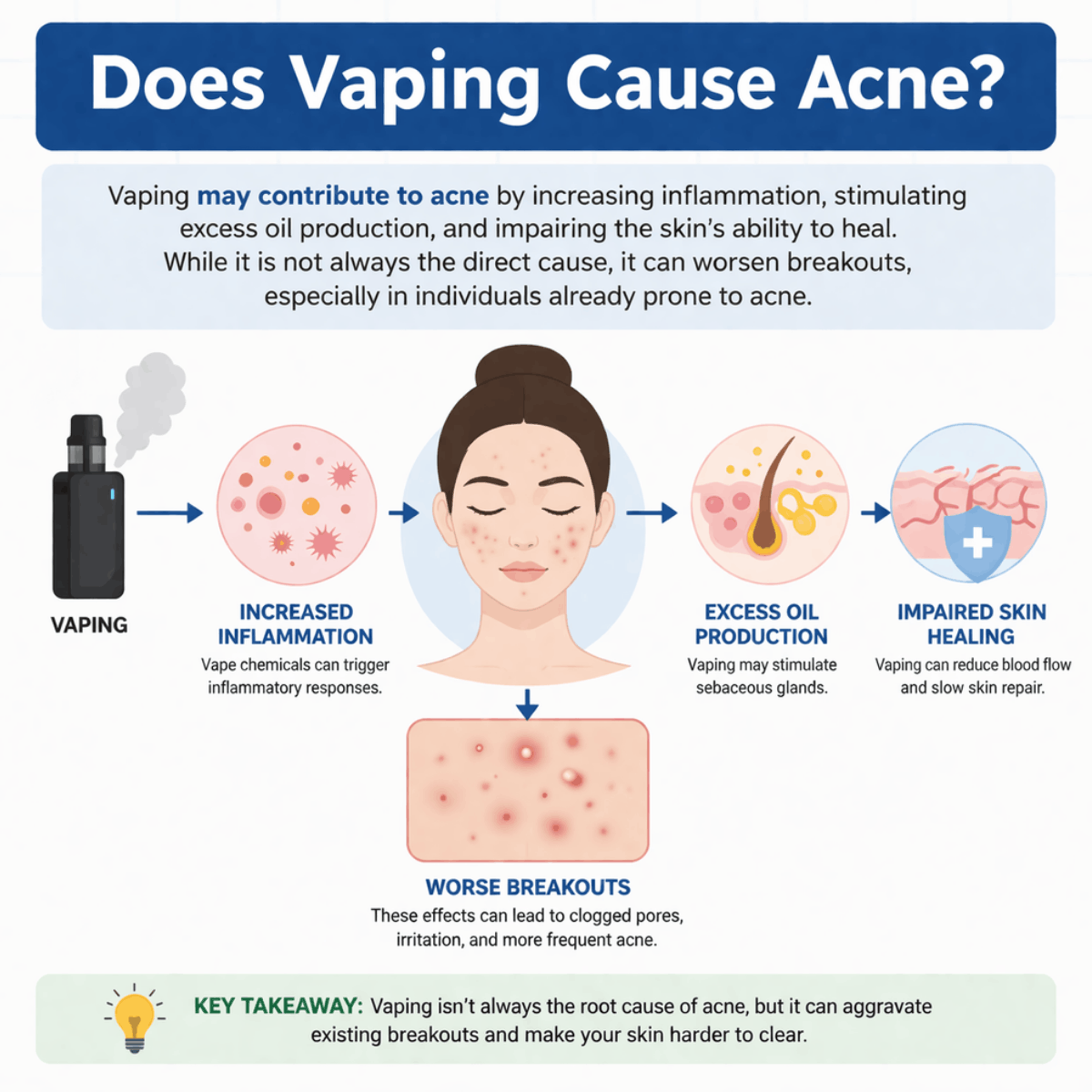
Vaping may contribute to acne, although the connection is not entirely direct. The chemicals found in e-liquids, including nicotine, can affect the skin by increasing inflammation, reducing blood flow, and disrupting normal healing processes.
Nicotine also stimulates oil (sebum) production, which can clog pores and lead to breakouts. In addition, vaping can cause dehydration, leaving the skin dry and prompting it to produce more oil to compensate. This combination creates an environment where acne is more likely to develop or worsen.
While vaping is not always the sole cause of acne, it can be a contributing factor, especially in individuals who are already prone to skin issues.
What Does Vaping Put Into Your Body?
Vaping involves inhaling an aerosol produced by heating a liquid, commonly called e-liquid or vape juice. That liquid typically contains propylene glycol, vegetable glycerin, flavorings, and nicotine, though some products contain THC or other substances.
When you inhale that aerosol, you are not just getting nicotine. You are introducing a cocktail of chemicals into your lungs and bloodstream that then circulate throughout your entire body, including your skin. Nicotine is the most studied component in this context, but it is not necessarily the only one that matters for skin health. The heat produced during vaping, the drying nature of certain ingredients, and the inflammatory potential of flavoring compounds all play a role.
Note: The skin is the body’s largest organ, and it is highly responsive to changes in circulation, hydration, hormone levels, and inflammation. All of those things are affected by vaping.
What Is the Connection Between Nicotine and Acne?
Nicotine is a stimulant that triggers the release of adrenaline and causes blood vessels to constrict. This vasoconstriction reduces blood flow to the skin, which means the skin receives less oxygen and fewer nutrients. Over time, this impairs the skin’s ability to repair itself and maintain a healthy barrier.
Beyond circulation, nicotine has a direct effect on sebaceous glands, which are the oil-producing glands attached to hair follicles. Sebum, the oily substance these glands produce, is a key factor in acne development. When sebaceous glands produce too much sebum, pores can become clogged. Bacteria, specifically Cutibacterium acnes (formerly called Propionibacterium acnes), thrive in that environment, leading to the inflammatory response we recognize as a pimple.
Research has shown that nicotine can stimulate androgen receptors and influence the production of androgens, which are hormones that directly regulate sebaceous gland activity. Higher androgen activity generally means more sebum production, which increases the likelihood of breakouts.
There is also evidence that nicotine activates inflammatory pathways in the skin. A study published in the Journal of Investigative Dermatology found that nicotine can stimulate keratinocytes, the primary cells that make up the outer layer of skin, to behave in ways that promote inflammatory skin conditions. Inflammation is a central driver of acne, particularly the more severe nodular and cystic forms.
Oxidative Stress and Skin Damage
One of the more significant ways vaping can harm the skin is through oxidative stress. Vaping exposes the body to free radicals, which are unstable molecules that damage cells by stealing electrons from healthy tissue. The skin has antioxidant defenses, but these can be overwhelmed when the body is consistently exposed to the byproducts of vaping.
Oxidative stress does several things that are relevant to acne. It damages the integrity of the skin barrier, making it easier for bacteria to penetrate and for the immune system to overreact. It promotes inflammation, which worsens existing breakouts and makes the skin slower to heal. And it can alter the composition of sebum, making it more likely to oxidize inside pores, a process that triggers further inflammation and comedone formation.
Comedones, better known as blackheads and whiteheads, are often the first stage of acne. Oxidized sebum is one of the factors that contributes to their development. If vaping is consistently generating oxidative stress in the skin, it creates a low-level, ongoing environment that is more hospitable to acne formation.
Dehydration and Skin Barrier Disruption
Propylene glycol, one of the main ingredients in most e-liquids, is a hygroscopic compound, meaning it draws moisture from its surroundings. When inhaled regularly, it can contribute to dehydration in the mucous membranes and, potentially, in the skin itself. Dry skin might not sound like an acne problem, but it actually is.
When the skin becomes dehydrated, it can trigger a compensatory response in the sebaceous glands: producing more oil to try to counteract the dryness. This is a well-documented phenomenon in skincare. People who strip their skin of moisture too aggressively often find their skin becomes oilier as a result. Vaping may create a similar dynamic.
Additionally, a compromised skin barrier is more vulnerable to environmental irritants and bacteria. The skin barrier’s job is to keep moisture in and pathogens out. When that barrier is weakened, whether through dehydration, oxidative stress, or impaired circulation, the conditions for acne become more favorable.
Nicotine and Hormonal Disruption
Hormones are one of the primary drivers of acne, which is why acne is so common during puberty and why hormonal fluctuations associated with menstrual cycles, pregnancy, and certain medications can trigger breakouts.
Nicotine interferes with hormone regulation in several ways. It activates the adrenal glands to release cortisol and adrenaline, and it can influence the hypothalamic-pituitary-adrenal (HPA) axis, which controls the body’s stress response. Elevated cortisol is associated with increased sebum production, which circles back to a higher risk of clogged pores.
There is also evidence that nicotine can alter estrogen and testosterone levels in the body, and some research suggests that e-cigarette use may affect thyroid function. All of these hormonal disruptions can have downstream effects on the skin, even if they are subtle enough that the person using the vape does not notice them directly.
This is particularly relevant for teenagers and young adults, who are already navigating significant hormonal changes. Adding nicotine into that environment may amplify hormonal fluctuations that are already pushing their skin toward acne.
Inflammation: The Common Thread
If there is a single mechanism that ties all of the above together, it is inflammation. Acne is fundamentally an inflammatory condition. The redness, swelling, and pain associated with a pimple are all signs of an immune response.
Vaping contributes to systemic inflammation. The lungs react to the inhaled aerosol by triggering an immune response, and that inflammation does not stay localized to the airways. Research on both traditional cigarette smoking and vaping has consistently found elevated markers of systemic inflammation in users, including higher levels of interleukin-6 (IL-6), C-reactive protein (CRP), and tumor necrosis factor-alpha (TNF-alpha). These are the same inflammatory mediators that drive acne pathology.
People who are already prone to acne due to genetics or hormonal factors may find that vaping pushes their skin into more frequent or more severe breakouts by keeping the body in a low-grade inflammatory state.
Does Vaping Cause Acne Directly?
It is important to be straightforward here: there are currently no large-scale, randomized controlled trials that definitively prove vaping causes acne. The research that exists is mostly focused on traditional cigarette smoking, with a smaller but growing body of work looking at e-cigarettes.
What we do know from the smoking literature is that smokers tend to have worse skin than non-smokers. Studies have linked cigarette smoking to a particular form called smoker’s acne or acne inversa, and to generally higher rates of certain skin conditions. Because vaping shares many of the same mechanisms (nicotine exposure, oxidative stress, inflammation), it is reasonable to infer that similar effects could occur.
Some dermatologists and researchers have begun noting clinical observations of patients who vape reporting acne flare-ups, but anecdotal clinical observation is not the same as controlled research. The field has not yet produced the studies needed to say definitively that vaping causes acne in the way we can say, for example, that smoking causes lung cancer.
What can be said with more confidence is this: vaping creates physiological conditions that are known to promote acne. Whether those conditions are sufficient to cause acne in someone who would not otherwise have it, or whether they primarily worsen acne in those already predisposed to it, is a distinction that future research will need to clarify.
The Skin Around the Mouth and Face
There is also a more localized aspect to consider. Many people who vape notice skin changes specifically around their mouth and lips. Repeated exposure to vapor near the face, combined with the physical habit of holding a device to the mouth, can irritate the skin in that area.
Some users also experience perioral dermatitis, a condition that causes small, pimple-like bumps around the mouth, nose, and chin. While perioral dermatitis is not the same as acne vulgaris, it can be mistaken for it, and vaping may be a contributing irritant.
There is also the matter of contact with the mouthpiece. If a vape device is not kept clean, it can harbor bacteria that are repeatedly introduced near the mouth. Combined with the skin irritation and oil changes already described, this creates a fairly unfavorable set of conditions for the skin in that area.
Vaping vs. Smoking: Is One Worse for Skin?
Vaping is often positioned as a safer alternative to smoking, and in some respects it may be, particularly in terms of the absence of tar and combustion byproducts. However, “safer than cigarettes” is not the same as “safe for your skin.”
Cigarettes expose the skin to polycyclic aromatic hydrocarbons (PAHs) and other combustion products that are particularly damaging. These compounds accelerate skin aging, impair wound healing, and increase oxidative stress significantly. On those specific measures, vaping likely causes less damage.
But vaping delivers nicotine in ways that may actually be more efficient, and some flavoring compounds used in e-liquids introduce their own set of concerns. Diacetyl, for example, which was previously used in some flavorings, is known to cause serious lung damage. Other flavoring compounds have been shown to be cytotoxic in cell studies. The long-term skin effects of these compounds are not yet fully understood.
In terms of acne specifically, the nicotine-driven mechanisms are present in both smoking and vaping. Someone who switches from cigarettes to vaping to improve their skin may not see as much improvement as they hoped, particularly if nicotine is the primary driver of their skin issues.
What About Nicotine-Free Vaping?
Some vape products are marketed as nicotine-free. If nicotine is the main culprit in the skin-related effects described above, one might expect that nicotine-free options would be safer for the skin.
The reality is more complicated. Nicotine-free vapes still contain propylene glycol and vegetable glycerin, which means the dehydration and barrier disruption effects are still present. They still generate aerosol particles that enter the lungs and trigger inflammatory responses. And they often contain flavoring compounds whose safety profiles are not well established.
Some research has found that flavored e-liquids, regardless of nicotine content, can generate free radicals and aldehydes, including formaldehyde and acrolein, when heated. These compounds contribute to oxidative stress in their own right.
Note: Nicotine-free vaping is probably less harmful to the skin than nicotine-containing vaping, but it is unlikely to be entirely harmless.
Practical Implications for Acne Sufferers
If you have acne and you vape, the evidence suggests that vaping is probably not helping your skin, and it may be making things worse. The degree to which it is contributing depends on factors including how much you vape, whether your product contains nicotine, your individual skin type, your hormone levels, and your genetic predisposition to acne.
If you are managing acne and struggling to get it under control despite treatment, it is worth discussing your vaping habit with a dermatologist. In clinical practice, dermatologists look at the full picture of a patient’s lifestyle when trying to understand why certain treatments are not working as expected. Vaping is a factor that belongs in that conversation.
Quitting vaping is not a guaranteed acne cure, and if your acne is driven primarily by hormones or genetics, stopping vaping may not dramatically change your skin overnight. But it removes a set of physiological stressors that are working against skin health, and that is unlikely to be a bad thing.
FAQs About Vaping and Acne
Does Vaping Make Your Skin Break Out?
Vaping may contribute to breakouts in some individuals, although it is not a direct cause of acne for everyone. The chemicals in e-cigarette vapor can irritate the skin and increase inflammation, which may worsen existing acne.
In addition, vaping can affect hormone balance and reduce oxygen delivery to the skin, both of which play a role in skin health. If you already have acne-prone skin, vaping may make breakouts more frequent or more difficult to control over time.
Does Nicotine Cause Acne?
Nicotine itself is not a direct cause of acne, but it can create conditions that make breakouts more likely. It constricts blood vessels, reducing oxygen and nutrient delivery to the skin, which can impair healing and promote inflammation.
Nicotine may also influence hormone levels and increase oil production, both of which contribute to clogged pores. Over time, these effects can worsen acne or slow recovery from breakouts, especially in individuals who are already prone to skin issues.
Why Does Vaping Cause Acne?
Vaping can contribute to acne through several indirect mechanisms. The chemicals in vapor may trigger inflammation and oxidative stress, which can damage skin cells and disrupt normal skin function. Nicotine can increase oil production and reduce blood flow, leading to clogged pores and slower healing.
In addition, vaping may weaken the immune response, making it harder for the skin to fight acne-causing bacteria. These combined effects can create an environment where breakouts are more likely to occur or persist.
Does Vaping Cause Face Inflammation?
Yes, vaping can contribute to facial inflammation in some individuals. The inhaled chemicals can trigger an inflammatory response in the body, which may show up as redness, irritation, or swelling in the skin.
Nicotine also promotes the release of inflammatory substances that can worsen skin conditions like acne or eczema. Over time, repeated exposure to these irritants can lead to chronic low-grade inflammation, which affects skin tone, texture, and overall appearance, making the skin look less healthy.
Does Vaping Age Your Face?
Vaping may accelerate signs of facial aging due to its effects on circulation and collagen production. Nicotine reduces blood flow to the skin, limiting oxygen and essential nutrients needed to maintain a youthful appearance.
It can also contribute to the breakdown of collagen and elastin, which are responsible for skin firmness and elasticity. As a result, frequent vaping may lead to fine lines, dullness, and premature wrinkles, making the skin appear older over time compared to non-users.
Does Stopping Vaping Make You Look Younger?
Stopping vaping can improve your skin’s appearance and may help you look younger over time. Once nicotine and other harmful chemicals are removed, blood flow gradually improves, allowing more oxygen and nutrients to reach the skin. This supports better healing, increased collagen production, and a healthier complexion.
While existing damage may not fully reverse, many people notice brighter skin, fewer breakouts, and improved texture after quitting, all of which contribute to a more youthful appearance.
Final Thoughts
The short answer to whether vaping causes acne is: probably not in isolation, but it very likely contributes. Through nicotine’s effects on sebum production and hormones, through the oxidative stress and systemic inflammation it promotes, through the dehydration it can cause, and through the disruption to the skin’s barrier function, vaping creates conditions that favor acne development and can worsen existing breakouts.
The definitive clinical research has not fully caught up yet, but the biological mechanisms are plausible and consistent. For anyone dealing with persistent acne, vaping is a habit worth taking seriously as a potential contributing factor.

Written by:
John Landry is a registered respiratory therapist from Memphis, TN, and has a bachelor's degree in kinesiology. He enjoys using evidence-based research to help others breathe easier and live a healthier life.
References
- Hamann SL, Kungskulniti N, Charoenca N, Kasemsup V, Ruangkanchanasetr S, Jongkhajornpong P. Electronic Cigarette Harms: Aggregate Evidence Shows Damage to Biological Systems. Int J Environ Res Public Health. 2023.
- Kraft J, Freiman A. Management of acne. CMAJ. 2011.