

Cold weather can place extra stress on the body, especially the heart and lungs, which may lead to chest discomfort or pain in some individuals. As temperatures drop, blood vessels can constrict, breathing cold, dry air can irritate the airways, and underlying conditions such as asthma, heart disease, or respiratory infections may become worse.
While chest pain can be alarming, understanding how cold weather contributes to these symptoms can help you take proactive steps to stay comfortable and safe.
This article explores practical and effective ways to relieve chest pain triggered by cold weather while supporting overall respiratory and cardiovascular health.

Download our free guide that has over 100+ of the best tips for healthy lungs.
How to Relieve Chest Pain Due to Cold Weather
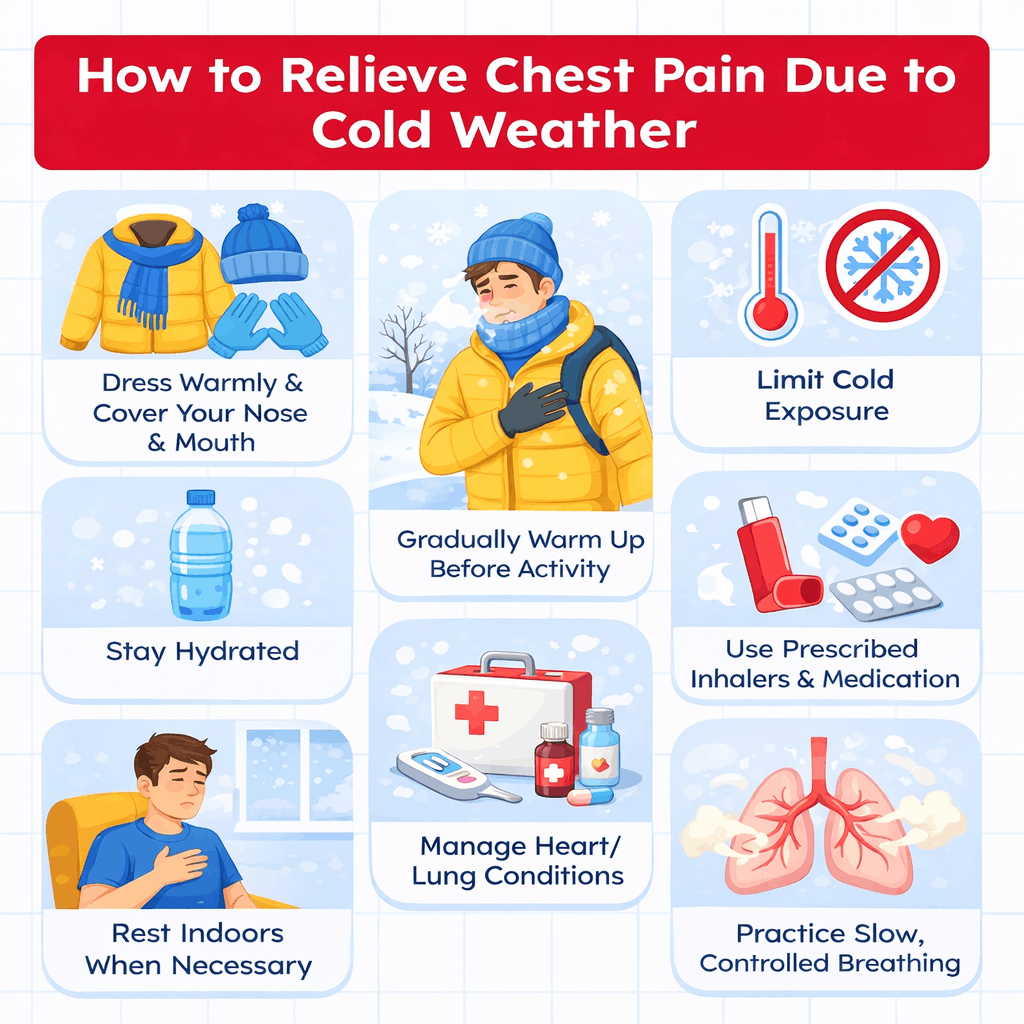
Relieving chest pain caused by cold weather involves protecting the body from temperature-related stress and supporting healthy breathing and circulation. Wearing warm, layered clothing and covering the mouth and nose with a scarf helps warm and humidify the air before it enters the lungs, reducing airway irritation.
Limiting prolonged exposure to cold temperatures and gradually warming up before outdoor activity can prevent sudden strain on the heart and respiratory system. Staying well hydrated helps keep mucus thin and airways comfortable.
Using prescribed inhalers or medications as directed is essential for individuals with asthma or heart conditions. Practicing slow, controlled breathing techniques and resting indoors when symptoms occur can also help reduce discomfort and promote recovery.
Understanding Chest Pain in Cold Weather
Cold weather can trigger chest pain through physical strain, airway irritation, and changes in blood flow. Knowing how temperature affects your body helps you judge when symptoms need simple care and when they need medical attention.
Common Causes
Chest pain in cold weather often starts with muscle strain from shivering or tense posture. You may also feel pain from bronchospasm, where cold air irritates the airways and tightens chest muscles.
Cold exposure can worsen acid reflux, which causes a burning or pressure-like pain behind the breastbone. People with asthma may notice chest tightness during cold, dry air exposure.
Other frequent causes include:
- Costochondritis, inflammation of the rib cartilage
- Cold-induced angina, especially if you have heart disease
- Respiratory infections, which become more common in winter
Note: Most of these causes are manageable, but they can feel alarming without context.
How Cold Weather Affects the Body
Cold temperatures cause your blood vessels to narrow. This response helps conserve heat but can reduce blood flow to the heart, especially during exertion like shoveling snow. You also breathe colder, drier air. This irritates the airways and can trigger coughing, wheezing, or chest tightness. Your chest muscles may work harder to warm and humidify the air.
Cold increases muscle tension across your shoulders and chest. Prolonged tension can create localized pain that worsens with movement or touch. If you already have heart or lung conditions, cold weather places extra stress on systems that may already function near their limits.
Recognizing Symptoms
Chest pain linked to cold exposure often feels sharp, tight, or sore. You may notice it during outdoor activity or shortly after coming inside.
Pay attention to patterns:
- Pain that worsens with deep breathing or movement often points to muscle or airway causes.
- Pain that improves with warmth or rest usually signals a non-cardiac source.
Note: You might also feel short of breath, coughing, or chest tightness. These symptoms often ease as your body warms. Track how long the pain lasts, what triggers it, and what relieves it. These details matter if symptoms persist.
Distinguishing Serious Conditions
Some chest pain needs urgent care, even in cold weather. Heart-related pain often feels like pressure, squeezing, or heaviness and may spread to your arm, neck, jaw, or back.
Watch for warning signs:
- Pain lasting more than a few minutes at rest
- Shortness of breath not linked to cold air
- Nausea, dizziness, or cold sweats
Note: Cold weather can mask or trigger heart symptoms, especially if you have risk factors like high blood pressure or diabetes. If you cannot clearly link the pain to cold exposure or muscle strain, treat it as serious and seek medical help promptly.
Immediate Relief Strategies
Cold air can tighten chest muscles, irritate airways, and strain the heart as your body works to stay warm. You can reduce discomfort quickly by raising your core temperature, adjusting how you sit or lie down, and controlling your breathing.
Warming Techniques
Raising your body temperature helps relax chest muscles and improves blood flow. Move to a warm indoor space as soon as possible, and protect exposed skin from drafts. Focus on steady warmth rather than sudden heat.
- Wear layered clothing, especially over your chest and neck.
- Use a warm compress or heating pad on the chest for 10–15 minutes. Keep the heat mild to avoid skin irritation.
- Sip a warm drink like water or herbal tea to support internal warming.
- Gently rub the chest area with slow, circular motions to reduce muscle tension.
Note: Avoid very hot showers if you feel lightheaded, since rapid temperature changes can worsen discomfort.
Proper Positioning
Your body position can reduce pressure on the chest and make breathing easier. Sit upright in a chair with your back supported and your shoulders relaxed. Keep your feet flat on the floor to promote stable circulation.
If you need to lie down, use extra pillows to elevate your upper body at a 30–45 degree angle. This position limits chest tightness and reduces strain on your lungs. Avoid lying flat, especially if cold air triggered coughing or shortness of breath.
Note: Loosen tight clothing around your chest and abdomen. Restricted movement can increase the sensation of pressure and make pain feel worse.
Breathing Exercises
Slow, controlled breathing helps calm chest muscles and improves oxygen flow. Breathe through your nose when possible, since it warms and humidifies the air before it reaches your lungs.
Try this simple pattern:
- Inhale through your nose for 4 seconds.
- Hold briefly for 2 seconds.
- Exhale slowly through pursed lips for 6 seconds.
Note: Repeat for several minutes while keeping your shoulders relaxed. Place one hand on your chest and one on your abdomen to encourage deeper, steadier breaths. Stop the exercise if pain intensifies or you feel dizzy, and focus on gentle, natural breathing.
Preventive Measures for Cold-Induced Chest Pain
Cold air stresses your heart and lungs through rapid heat loss, airway constriction, and higher cardiac workload. Practical steps reduce that strain by protecting your body, preparing it for exertion, and choosing safer activity settings.
Appropriate Clothing
Dress to preserve core heat and limit cold air exposure to your chest and airways. Layer clothing so you can adjust as your body warms: a moisture-wicking base layer, an insulating middle layer, and a wind-resistant outer layer.
Cover exposed skin. A scarf or neck gaiter warms the air you inhale, which helps reduce airway tightening and chest discomfort. Wear gloves and a hat to limit heat loss that forces your heart to work harder. Choose a fit that allows normal breathing. Tight jackets or compression across the chest can worsen discomfort in cold conditions. Keep clothing dry, and change damp layers quickly to prevent rapid cooling.
Pre-Activity Precautions
Warm up indoors for 5–10 minutes before going outside. Light movements such as marching in place or gentle arm swings raise your heart rate gradually and reduce sudden cardiac stress.
Breathe through your nose when possible. Nasal breathing warms and humidifies air before it reaches your lungs, which can lower the risk of chest tightness. Avoid sudden bursts of intense activity at the start.
Pay attention to warning signs. If you feel chest pressure, sharp pain, dizziness, or unusual shortness of breath, stop activity and move to a warm area. Take prescribed medications, such as inhalers or heart medications, exactly as directed.
Indoor vs, Outdoor Activity Tips
Choose indoor exercise on very cold, windy, or icy days. Indoor environments offer stable temperatures that reduce airway irritation and cardiovascular strain. Treadmills, stationary bikes, and resistance training provide controlled alternatives.
If you exercise outdoors, plan shorter sessions and avoid peak cold hours, such as early morning. Stick to familiar routes near shelter so you can warm up quickly if symptoms start.
Adjust intensity based on conditions. Lower temperatures increase energy demands, so reduce pace and extend recovery time. Hydrate well, since cold weather can blunt thirst and contribute to chest discomfort through dehydration.
Lifestyle Modifications to Reduce Chest Pain
Daily habits strongly influence how your chest feels during cold weather. Staying physically active, choosing supportive foods, and managing stress help reduce strain on your heart and chest muscles while improving cold tolerance.
Staying Active in Winter
Cold temperatures can tighten blood vessels and chest muscles, which increases discomfort. You reduce this risk by maintaining regular, moderate activity that keeps your circulation steady.
Choose indoor or weather-appropriate exercise, such as brisk indoor walking, stationary cycling, or light strength training. Aim for 20–30 minutes most days rather than infrequent intense workouts. Warm up slowly to allow your heart rate and breathing to rise gradually.
Dress in layers when you exercise outdoors. Cover your mouth and nose with a scarf to warm the air before it reaches your lungs, which can reduce chest tightness. Avoid sudden exertion, like shoveling snow quickly, since it places abrupt stress on your chest and heart.
Nutrition to Support Heart Health
What you eat affects inflammation, blood flow, and energy levels during cold months. Consistent meals help stabilize blood sugar and reduce stress on your cardiovascular system.
Focus on foods that support circulation and muscle function:
- Fruits and vegetables, especially leafy greens and berries
- Lean proteins like fish, beans, and poultry
- Healthy fats from olive oil, nuts, and seeds
Limit excess salt, which can raise blood pressure and worsen chest discomfort. Stay hydrated even when you feel less thirsty, since dehydration can thicken blood and strain your heart. Warm fluids, such as soups or herbal teas, help maintain hydration and body temperature without adding caffeine.
Strategies for Stress Reduction
Cold weather often increases stress through reduced daylight, disrupted routines, and physical discomfort. Stress can tighten chest muscles and elevate heart rate, which may worsen pain.
Build short, repeatable stress-reduction habits into your day. Practice slow breathing for 5 minutes, inhaling through your nose and exhaling longer through your mouth. This directly reduces chest tension and calms your nervous system.
Maintain regular sleep and wake times, even on weekends, to support heart health. Limit excessive news or screen exposure before bed. If anxiety or chest discomfort persists, schedule time for activities that promote calm focus, such as stretching, reading, or guided relaxation.
Medical Remedies and Treatments
Cold air can trigger chest discomfort by tightening blood vessels, irritating airways, or worsening heart and digestive conditions. Medical options focus on easing symptoms, protecting your heart and lungs, and identifying problems that need prompt care.
Over-the-Counter Medications
You can use certain nonprescription medications to manage mild chest discomfort linked to cold exposure, but you should choose them carefully. Acetaminophen helps reduce muscle-related chest pain without affecting blood pressure or heart rate.
If cold air worsens heartburn or reflux, antacids or H2 blockers can reduce acid irritation that feels like chest pain. These work best when you take them before outdoor exposure or cold-weather exercise.
Use nonsteroidal anti-inflammatory drugs (NSAIDs) with caution. Drugs like ibuprofen may help inflammation-related pain, but they can increase cardiovascular risk and irritate the stomach.
Note: Avoid oral decongestants if you have chest pain, high blood pressure, or heart disease. These medications can raise heart rate and constrict blood vessels, which may worsen symptoms.
When to See a Doctor
You should seek medical care if chest pain appears suddenly, feels severe, or does not improve after warming up. Pain that spreads to your arm, jaw, back, or neck needs urgent evaluation. Get immediate help if chest discomfort occurs with shortness of breath, dizziness, nausea, sweating, or fainting. These signs can indicate a heart-related emergency, even if cold weather triggered the pain.
Schedule a medical visit if cold-induced chest pain happens repeatedly or limits daily activities. A clinician can assess for conditions such as angina, asthma, or acid reflux, which often worsen in winter.
Note: Do not ignore new chest pain if you have diabetes, high blood pressure, high cholesterol, or a history of heart disease. Early evaluation improves safety and treatment options.
Prescribed Therapies
If cold weather triggers heart-related chest pain, your doctor may prescribe nitrates to relax blood vessels and improve blood flow. Beta blockers or calcium channel blockers may also reduce strain on your heart during cold exposure.
For airway-related chest tightness, prescription inhalers such as bronchodilators or inhaled corticosteroids can prevent cold-induced bronchospasm. Using them before going outdoors often improves control. If acid reflux causes chest discomfort, proton pump inhibitors can reduce acid production and protect the esophagus. These medications work best with consistent daily use.
Note: Your clinician may adjust existing medications during winter months. This approach helps you maintain symptom control when cold temperatures increase physical stress on your body.
Special Considerations for Vulnerable Groups
Cold weather can trigger chest pain more easily in certain groups due to changes in circulation, breathing, and heart workload. Paying attention to specific risks helps you reduce symptoms and avoid complications.
Older Adults
As you age, your blood vessels respond less quickly to cold, which can raise blood pressure and strain your heart. Cold air can also tighten chest muscles, making pain feel sharper or more persistent. Dress in layers that protect your chest and neck, and avoid sudden exposure to cold air. Warm up indoors before going outside, even for short tasks.
Watch for atypical symptoms, such as fatigue, dizziness, or shortness of breath, which may replace classic chest pain. Stay hydrated, since dehydration thickens blood and increases cardiac workload.
Note: If you take medications for blood pressure or heart rhythm, cold weather may alter how your body responds. Keep regular medical appointments during winter to adjust care when needed.
Individuals With Heart Disease
Cold temperatures force your heart to work harder by narrowing blood vessels and increasing heart rate. This effect can worsen angina or provoke chest pain during light activity. Limit outdoor exertion when temperatures drop, especially in windy conditions. Use a scarf or mask to warm inhaled air and reduce airway irritation.
Follow your treatment plan closely, including timely use of prescribed nitroglycerin if your clinician has advised it. Keep medications accessible when you leave home.
Note: Pay attention to chest pain that lasts longer, occurs at rest, or feels different from your usual pattern. Seek medical care promptly if symptoms do not improve with rest or medication.
Children and Teens
Children and teens may experience chest discomfort in cold weather due to airway tightening, muscle strain, or asthma-related irritation. While often non-cardiac, pain still deserves attention. Encourage gradual warm-ups before outdoor sports. Cold air can trigger bronchospasm, especially during intense activity.
If your child has asthma, ensure they use preventive inhalers as prescribed and carry rescue medication. Covering the mouth and nose helps warm inhaled air. Teach teens to report chest pain instead of ignoring it. Persistent pain, fainting, or pain with breathing should prompt medical evaluation to rule out serious causes.
Alternative and Complementary Approaches
You can pair non-drug options with basic cold protection to ease muscle tightness, improve circulation, and reduce stress that can worsen chest discomfort. These methods support comfort but do not replace medical care for new, severe, or unexplained pain.
Herbal Remedies
Certain herbs support circulation and muscle relaxation, which may help chest tightness triggered by cold exposure. You should use standardized products and follow label directions.
- Ginger may improve peripheral circulation and reduce cold-related stiffness. You can use it as a warm tea or capsule.
- Turmeric contains curcumin, which supports inflammatory balance. Pair it with black pepper for absorption.
- Peppermint can relax smooth muscle and may ease pressure sensations. Use tea rather than concentrated oils.
Note: Avoid combining herbs with heart or blood-thinning medications without guidance. Stop use if you notice palpitations, dizziness, or stomach upset.
Mind-Body Techniques
Cold stress can increase muscle tension and shallow breathing, which amplifies chest discomfort. Mind-body practices target these drivers directly.
- Slow diaphragmatic breathing (4–6 breaths per minute) can lower chest wall tension and improve oxygen delivery.
- Progressive muscle relaxation helps you release tightness across the chest, shoulders, and neck.
- Guided imagery focused on warmth can reduce stress responses during cold exposure.
Note: Practice these techniques daily, especially before going outdoors. Use them alongside warm clothing and gradual exposure to cold air.
FAQs About Chest Pain Due to Cold Weather
Can Being Too Cold Cause Chest Pain?
Yes, being exposed to very cold temperatures can cause chest pain in some individuals. Cold weather can cause blood vessels to constrict, which increases blood pressure and forces the heart to work harder.
Breathing cold, dry air can also irritate the airways, potentially triggering chest tightness, coughing, or shortness of breath, especially in people with asthma or chronic lung disease. In individuals with heart disease, cold exposure may reduce blood flow to the heart, increasing the risk of angina or other cardiac symptoms.
Do Heart Attacks Increase in the Winter?
Yes, research shows that heart attacks tend to occur more frequently during the winter months. Cold temperatures cause blood vessels to narrow, which can increase blood pressure and strain the heart. Physical activities such as shoveling snow or exercising in freezing weather can also increase the heart’s workload.
Additionally, respiratory infections and seasonal illnesses may increase inflammation and stress on the cardiovascular system. These factors combined can raise the risk of heart attacks, particularly in individuals with existing heart conditions or risk factors.
Why Does Cold Air Make Me Cough?
Cold air can trigger coughing because it is typically dry and can irritate the lining of the respiratory tract. When cold air enters the lungs, it may cause airway muscles to tighten and increase mucus production.
This irritation can stimulate cough receptors, leading to persistent or forceful coughing. Individuals with asthma, bronchitis, or sensitive airways are especially prone to cold-induced coughing.
Note: Covering the mouth and nose with a scarf or mask helps warm and humidify the air, which can reduce irritation and coughing.
What Helps Chest Pain Due to Cold Weather?
Relieving chest pain caused by cold weather involves protecting the body from sudden temperature changes and supporting heart and lung function. Dressing in warm layers and covering the nose and mouth helps warm inhaled air and reduces airway irritation.
Limiting time outdoors in freezing temperatures and gradually warming up before physical activity can prevent strain on the cardiovascular system. Staying hydrated, practicing slow breathing techniques, and using prescribed medications or inhalers as directed can also help reduce symptoms and improve comfort.
Final Thoughts
Chest pain related to cold weather can be uncomfortable and sometimes concerning, but it is often manageable with the right precautions and self-care strategies. By staying warm, limiting exposure to extreme temperatures, maintaining proper hydration, and managing underlying respiratory or cardiovascular conditions, many people can significantly reduce their symptoms.
It is important to pay attention to how your body responds to cold environments and take breaks when needed. However, persistent, severe, or unexplained chest pain should never be ignored, as it may signal a more serious medical condition.
Seeking prompt medical evaluation ensures proper diagnosis and treatment while helping protect your long-term heart and lung health.

Written by:
John Landry is a registered respiratory therapist from Memphis, TN, and has a bachelor's degree in kinesiology. He enjoys using evidence-based research to help others breathe easier and live a healthier life.
References
- Dawson LP, Andrew E, Nehme Z, Bloom J, Cox S, Anderson D, Stephenson M, Lefkovits J, Taylor AJ, Kaye D, Guo Y, Smith K, Stub D. Temperature-related chest pain presentations and future projections with climate change. Sci Total Environ. 2022.