
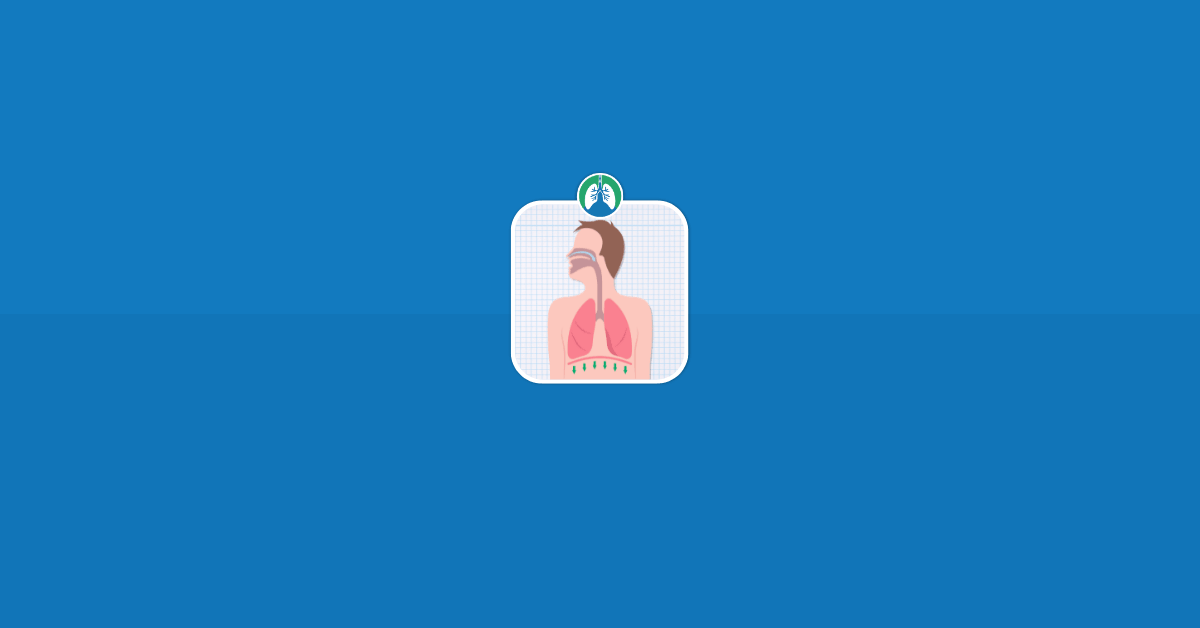
Breathing is a fundamental process that sustains life, but it requires energy and coordination from the respiratory muscles and pulmonary system. The amount of energy required to move air into and out of the lungs is known as the work of breathing (WOB).
Under normal conditions, breathing occurs with minimal effort. However, in patients with respiratory disease or critical illness, the work of breathing can increase significantly and lead to fatigue or respiratory failure.
Understanding this concept is essential for respiratory therapists, as it plays a major role in patient assessment, ventilator management, and treatment planning.

What Is the Work of Breathing?
Work of breathing (WOB) refers to the amount of energy required to inhale and exhale. It reflects the effort the respiratory muscles must generate to overcome forces that oppose lung inflation and deflation. These forces include elastic resistance from lung and chest wall structures and frictional resistance from airflow moving through the airways and lung tissues.
In physiological terms, work is defined as force multiplied by distance. When applied to respiratory mechanics, this concept is expressed as the product of pressure and volume. As respiratory muscles generate pressure to expand the lungs, volume changes occur as air moves into and out of the respiratory system. The area under a pressure-volume curve represents the mechanical work performed during each breath.
In healthy adults at rest, the work of breathing is relatively low, typically ranging from 0.5 to 0.7 joules per liter of ventilation. During quiet breathing, inhalation is an active process requiring contraction of the diaphragm and external intercostal muscles, while exhalation is largely passive, relying on elastic recoil of the lungs and thoracic cage.

Mechanical Components of Work of Breathing
The mechanical work of breathing can be divided into two primary components: elastic work and resistive work.
Elastic Work
Elastic work involves overcoming the natural tendency of the lungs and chest wall to resist expansion. The lungs contain elastic fibers that allow them to recoil after being stretched. Similarly, the chest wall must expand during inhalation and return to its resting position during exhalation.
Conditions that decrease lung compliance increase elastic work. Compliance refers to how easily the lungs expand in response to pressure changes. Diseases such as pulmonary fibrosis, acute respiratory distress syndrome (ARDS), and pulmonary edema stiffen lung tissue and make inflation more difficult. As a result, patients must generate greater pressure to achieve adequate ventilation, increasing the work of breathing.
Patients with restrictive lung disease often compensate by adopting rapid, shallow breathing patterns. Smaller tidal volumes reduce the effort required to expand stiff lungs, although the increased respiratory rate may still increase overall energy expenditure.
Resistive Work
Resistive work refers to the effort required to overcome airflow resistance within the airways and lung tissues. Airway resistance is influenced by factors such as airway diameter, mucus production, inflammation, and airflow velocity.
Obstructive lung diseases, including chronic obstructive pulmonary disease (COPD) and asthma, increase resistive work due to airway narrowing and obstruction. These patients often adopt slow, deep breathing patterns to minimize turbulence and airflow resistance. Techniques such as pursed-lip breathing can help reduce airway collapse during exhalation and decrease overall work of breathing.
Note: In obstructive disorders, expiration may become an active process requiring contraction of abdominal and internal intercostal muscles to help expel trapped air.
Metabolic Work and Oxygen Cost of Breathing
Beyond mechanical effort, the respiratory muscles also require metabolic energy to function. This metabolic component of work of breathing is measured by the oxygen consumption of the respiratory muscles.
In healthy individuals, the oxygen cost of breathing is relatively small, accounting for less than 5 percent of total body oxygen consumption at rest. However, during high levels of ventilation or in patients with respiratory disease, oxygen consumption by respiratory muscles can increase dramatically. In severe cases, respiratory muscles may consume more than 30 percent of total oxygen supply.
Elevated oxygen consumption by respiratory muscles can contribute to respiratory muscle fatigue, particularly in patients with limited oxygen delivery or compromised cardiac function. This is one reason why mechanical ventilation may be required in critically ill patients, as ventilatory support reduces muscle workload and preserves oxygen delivery to vital organs.
Clinical Signs of Increased Work of Breathing
Respiratory therapists rely heavily on clinical observation to identify increased work of breathing. Several signs indicate that a patient is struggling to maintain adequate ventilation. Tachypnea, or rapid breathing, is often one of the earliest indicators. As respiratory muscles fatigue, tidal volume may decrease, causing patients to increase respiratory rate to maintain ventilation.
Accessory muscle use is another hallmark sign. Muscles in the neck and upper chest, including the sternocleidomastoid and scalene muscles, may become visibly engaged during labored breathing. Retractions, characterized by inward movement of the chest wall during inspiration, also suggest increased respiratory effort.
Thoracoabdominal dyssynchrony, sometimes referred to as see-saw breathing, occurs when the chest and abdomen move in opposite directions during respiration. This pattern indicates significant respiratory distress and possible muscle fatigue.
Note: Other signs may include nasal flaring, diaphoresis, agitation, and altered mental status, all of which suggest worsening respiratory compromise.
Factors That Increase Work of Breathing
Several physiological and pathological conditions can increase work of breathing by altering compliance, airway resistance, or respiratory muscle performance.
Airway obstruction from diseases such as asthma, COPD, or upper airway swelling increases airflow resistance. Lung conditions that reduce compliance, including ARDS, pulmonary fibrosis, and pulmonary edema, increase elastic workload. Chest wall abnormalities, such as obesity, ascites, or pleural effusion, can also restrict lung expansion.
Respiratory muscle weakness further complicates increased work of breathing. Electrolyte imbalances, sepsis, malnutrition, neuromuscular disorders, and prolonged mechanical ventilation can weaken respiratory muscles and contribute to ventilatory failure.
Environmental and therapeutic factors can also affect work of breathing. For example, inappropriate ventilator settings, excessive airway secretions, or poorly fitting artificial airways can increase patient effort and delay recovery.
Importance of Work of Breathing in Respiratory Care
Understanding and assessing work of breathing is fundamental to respiratory therapy practice. It plays a critical role in patient evaluation, ventilator management, and treatment selection.
Respiratory therapists must continually assess whether patients are maintaining adequate ventilation with acceptable effort. Increased work of breathing often indicates worsening respiratory function and may signal the need for interventions such as bronchodilator therapy, airway clearance techniques, supplemental oxygen, or ventilatory support.
Work of breathing also plays a major role in mechanical ventilation management. Excessive patient effort can lead to ventilator asynchrony, increased oxygen consumption, and respiratory muscle fatigue. Therapists may adjust ventilator settings, such as pressure support or positive end-expiratory pressure (PEEP), to reduce patient workload and improve gas exchange.
During the weaning process, evaluating work of breathing is essential. Successful liberation from mechanical ventilation requires that patients maintain adequate oxygenation and ventilation without excessive respiratory muscle effort. Monitoring clinical signs, pressure-volume curves, and pressure-time product measurements helps therapists determine readiness for extubation.
Strategies to Reduce Work of Breathing
Respiratory therapists use various therapeutic interventions to decrease work of breathing and improve patient comfort and outcomes.
Bronchodilators help reduce airway resistance by relaxing smooth muscle and improving airflow. Airway clearance therapies remove mucus and secretions that obstruct airflow. Heliox, a mixture of helium and oxygen, can reduce airflow resistance in patients with large airway obstruction due to its lower density.
Mechanical ventilation provides direct support to reduce respiratory muscle workload. Noninvasive ventilation may be used in selected patients to improve ventilation without intubation. Pressure-support ventilation enhances spontaneous breathing by assisting inspiratory effort.
In neonatal respiratory distress syndrome, surfactant therapy improves lung compliance and reduces work of breathing by stabilizing alveoli and preventing collapse.
Note: Patient positioning, humidification, and secretion management also play important roles in minimizing respiratory effort and improving ventilation efficiency.
Measurement and Monitoring of Work of Breathing
While clinical observation remains the primary method of assessing work of breathing, several objective measurement techniques exist. Esophageal pressure monitoring can estimate pleural pressure and provide insight into respiratory muscle effort. Pressure-volume loops and pressure-time product measurements during mechanical ventilation offer valuable information about patient workload.
Despite these available tools, bedside evaluation by respiratory therapists remains essential. Continuous monitoring of respiratory rate, breathing pattern, accessory muscle use, and patient comfort provides critical information for guiding treatment decisions.
Work of Breathing Practice Questions
1. What is the work of breathing?
The energy required by respiratory muscles to move air into and out of the lungs.
2. Which muscles primarily perform the work of breathing?
The diaphragm, intercostal muscles, and accessory respiratory muscles.
3. What two main forces must be overcome during breathing?
Elastic forces and frictional (resistive) forces.
4. What is mechanical work of breathing?
The physical effort required to move air based on force and distance or pressure and volume changes.
5. What is metabolic work of breathing?
The oxygen consumption required by respiratory muscles during breathing.
6. During normal quiet breathing, which phase requires active muscle contraction?
Inhalation
7. Why is exhalation usually passive during quiet breathing?
Because stored elastic recoil energy in the lungs and chest wall drives expiration.
8. When does exhalation require active muscle effort?
During forced expiration or respiratory distress.
9. What is the basic equation used to describe mechanical work?
Work = Force × Distance
10. How is mechanical work expressed in respiratory physiology?
As pressure multiplied by volume (P × V).
11. Why is pressure multiplied by volume equivalent to force multiplied by distance?
Because pressure equals force per area and volume equals area times distance.
12. How is work of breathing represented graphically?
As the area under the pressure-volume curve.
13. What does transpulmonary pressure measure?
The pressure difference between the alveoli and pleural space.
14. What pressure measurement is used to evaluate ventilator work?
Transrespiratory system pressure.
15. What percentage of work of breathing in healthy individuals is due to elastic forces?
Approximately two-thirds.
16. What percentage of work of breathing is caused by airway and tissue resistance?
Approximately one-third.
17. What does elastic work of breathing represent?
Work required to overcome lung and chest wall stiffness.
18. What does resistive work of breathing represent?
Work required to overcome airflow resistance in airways and tissues.
19. How do restrictive lung diseases affect work of breathing?
They increase elastic work due to decreased lung compliance.
20. How do obstructive lung diseases increase work of breathing?
They increase resistive work due to airflow obstruction.
21. What breathing pattern is commonly seen in restrictive lung disease?
Rapid, shallow breathing.
22. Why do patients with restrictive lung disease adopt rapid, shallow breathing?
To reduce the energy required to expand stiff lungs.
23. What breathing pattern is often seen in obstructive lung disease?
Slow, deep breathing.
24. Why does slow, deep breathing help patients with obstructive lung disease?
It reduces airway resistance and improves airflow.
25. How does pursed-lip breathing help reduce work of breathing?
It helps maintain airway patency and reduces expiratory airway collapse.
26. How does tidal volume affect work of breathing?
Large tidal volumes increase elastic work.
27. How does breathing frequency affect work of breathing?
High breathing rates increase resistive work.
28. How do healthy individuals minimize work of breathing during exercise?
By adjusting tidal volume and respiratory rate.
29. What is a quasistatic pressure-volume curve?
A curve obtained using slow inspiratory flow to evaluate lung mechanics.
30. Why are pressure-volume curves useful in mechanical ventilation?
They help determine lung compliance and optimal PEEP settings.
31. How does increased airway resistance affect pressure-volume loops?
It widens the loop due to increased resistive work.
32. What does a decreased compliance slope on a pressure-volume curve indicate?
Restrictive lung disease
33. What does a leftward bulge on a pressure-volume loop suggest?
Positive pleural pressure during expiration.
34. How can respiratory muscle weakness affect work of breathing?
It reduces muscle endurance and increases fatigue risk.
35. What conditions can cause respiratory muscle weakness?
Electrolyte imbalance, acidosis, shock, sepsis, or neuromuscular disease.
36. What happens to tidal volume as respiratory muscles fatigue?
Tidal volume decreases.
37. How does respiratory rate change during respiratory muscle fatigue?
Respiratory rate increases to compensate.
38. Why is increased work of breathing clinically important?
It can lead to respiratory failure if muscles fatigue.
39. What happens to oxygen consumption when work of breathing increases?
Respiratory muscle oxygen demand increases.
40. Why is monitoring work of breathing important in respiratory care?
It helps guide therapy, ventilation strategies, and assess respiratory muscle function.
41. What is metabolic work of breathing?
The oxygen consumption required by respiratory muscles to perform ventilation.
42. Why do respiratory muscles require oxygen during breathing?
Because muscle contraction requires energy produced through oxygen-dependent metabolism.
43. What is VO₂ in respiratory physiology?
The rate of oxygen consumption by the body or respiratory muscles.
44. How is the oxygen cost of breathing measured?
By comparing oxygen consumption at rest with oxygen consumption during increased ventilation.
45. What is the normal oxygen cost of breathing in healthy individuals?
Approximately 0.5 to 1 mL of oxygen per liter of ventilation.
46. What percentage of total body oxygen consumption is used for breathing in healthy individuals at rest?
Less than 5%.
47. How does oxygen consumption change during extremely high ventilation rates?
It may increase to more than 30% of total body oxygen consumption.
48. How is oxygen consumption by respiratory muscles related to diaphragm activity?
It increases as the diaphragm generates higher inspiratory pressures.
49. What is transdiaphragmatic pressure?
The pressure difference between the abdominal and thoracic cavities across the diaphragm.
50. How is transdiaphragmatic pressure measured?
Using balloon catheters placed in the esophagus and stomach.
51. What happens to esophageal pressure during normal inspiration?
It becomes more negative as thoracic pressure decreases.
52. What happens to stomach pressure during inspiration?
It increases as the diaphragm contracts downward.
53. What does an increased pressure gradient across the diaphragm indicate?
Increased respiratory muscle effort.
54. How do pulmonary diseases affect the oxygen cost of breathing?
They significantly increase respiratory muscle oxygen consumption.
55. Why do patients with emphysema have increased metabolic work of breathing?
Airflow obstruction requires greater respiratory muscle effort to maintain ventilation.
56. How can increased work of breathing contribute to weight loss in chronic lung disease?
Excessive energy expenditure from respiratory muscles increases calorie consumption.
57. Why may increased work of breathing contribute to ventilator weaning failure?
Respiratory muscles may fatigue due to excessive oxygen demand.
58. Why might mechanical ventilation be used in patients with shock and respiratory distress?
To reduce respiratory muscle oxygen consumption and preserve oxygen delivery to vital organs.
59. What are the two major methods used to measure work of breathing?
Mechanical measurement using pressure-volume curves and metabolic measurement using oxygen consumption.
60. Why is bedside measurement of work of breathing often limited?
Because specialized equipment and invasive measurements may be required.
61. What is the most common way clinicians assess work of breathing at the bedside?
Through clinical observation and patient assessment.
62. What breathing pattern is typical in healthy adults at rest?
Regular rhythm with minimal effort and passive exhalation.
63. What are the two broad categories of abnormal breathing patterns?
Those caused by cardiopulmonary or chest wall disorders and those caused by neurologic disorders.
64. What is a hallmark sign of increased work of breathing?
Recruitment of accessory respiratory muscles.
65. Which accessory muscles are commonly visible during increased work of breathing?
Sternocleidomastoid and scalene muscles.
66. What chest wall abnormality may indicate severe respiratory distress?
Chest wall retractions.
67. What causes thoracic-abdominal dyssynchrony during breathing?
Severe respiratory muscle fatigue or mechanical impairment.
68. What is paradoxical or “see-saw” breathing?
Opposite movement of the chest and abdomen during respiration.
69. Which conditions commonly increase work of breathing by increasing airway resistance?
Asthma and COPD
70. Which conditions increase work of breathing by decreasing lung compliance?
ARDS, pulmonary edema, and pulmonary fibrosis.
71. How can a stiff chest wall increase work of breathing?
It increases the force required to expand the lungs.
72. What clinical condition can cause chest wall stiffness and increased breathing effort?
Ascites or anasarca
73. What is the normal reference range for work of breathing in healthy adults?
Approximately 0.5 to 0.7 joules per liter.
74. How is work of breathing estimated during mechanical ventilation?
By analyzing pressure-volume graphics or pressure-time product.
75. What ventilator measurement reflects inspiratory work of breathing?
The area under the airway pressure curve during inspiration.
76. What clinical sign strongly suggests increased work of breathing?
Tachypnea
77. Why does tachypnea occur with increased work of breathing?
To compensate for reduced tidal volume or increased respiratory muscle demand.
78. Why are abdominal muscles recruited during labored breathing?
To assist expiration and improve subsequent inspiration.
79. What is dyspnea and how is it related to work of breathing?
Dyspnea is the sensation of breathlessness often associated with increased respiratory effort.
80. Why is recognizing increased work of breathing important in respiratory care?
Because early intervention can prevent respiratory muscle fatigue and respiratory failure.
81. What clinical signs strongly suggest increased work of breathing?
Tachypnea, thoracic–abdominal dyssynchrony, and use of accessory respiratory muscles.
82. Why does tachypnea indicate increased work of breathing?
Rapid breathing occurs as the body attempts to maintain ventilation despite increased respiratory effort.
83. What is thoracic–abdominal dyssynchrony?
A condition where the chest and abdomen move out of sync during breathing.
84. Why is accessory muscle use considered a sign of respiratory distress?
It indicates that primary respiratory muscles are insufficient to meet ventilatory demands.
85. How does heliox reduce work of breathing?
Its lower gas density reduces airway resistance and improves airflow.
86. In which patients is heliox most beneficial?
Patients with large airway obstruction or severe airflow limitation.
87. What conditions commonly benefit from heliox therapy?
Upper airway obstruction, croup, post-extubation stridor, and reversible obstructive lung disease.
88. Why does reduced gas density improve airflow in obstructed airways?
Lower density decreases turbulence and airway resistance.
89. Why should PEP therapy be avoided in patients unable to tolerate increased work of breathing?
PEP increases expiratory effort and may worsen respiratory fatigue.
90. Why is PEP therapy contraindicated in patients with bullous emphysema?
Increased airway pressure may rupture bullae and cause pneumothorax.
91. Why is PEP therapy contraindicated in untreated pneumothorax?
Positive pressure may worsen lung collapse.
92. Why should PEP therapy be avoided in patients with elevated intracranial pressure?
It may further increase intracranial pressure and worsen neurologic status.
93. What indicates successful ventilator weaning related to work of breathing?
The patient maintains adequate ventilation and oxygenation with minimal respiratory effort.
94. Why is monitoring work of breathing important during ventilator weaning?
Excessive respiratory effort increases the risk of weaning failure.
95. What clinical signs suggest a tension pneumothorax is increasing work of breathing?
Sudden respiratory distress, unilateral chest expansion, absent breath sounds, and tracheal deviation.
96. How does tension pneumothorax affect ventilator parameters?
It may cause increased airway pressures in volume-control ventilation or decreased tidal volume in pressure-control ventilation.
97. Why does tension pneumothorax cause increased work of breathing?
Collapsed lung tissue and mediastinal shift impair ventilation and oxygenation.
98. How does pressure support ventilation help reduce work of breathing?
It assists inspiratory effort and increases spontaneous tidal volume.
99. When should pressure support be increased during spontaneous ventilation?
When signs of respiratory muscle fatigue or increased work of breathing are present.
100. How does exogenous surfactant therapy reduce work of breathing in neonates?
It improves lung compliance and reduces alveolar collapse in respiratory distress syndrome.
Final Thoughts
Work of breathing (WOB) represents the energy required to sustain ventilation and maintain adequate gas exchange. Although breathing is normally effortless, respiratory disease and critical illness can dramatically increase the workload placed on respiratory muscles.
For respiratory therapists, understanding the physiological principles and clinical implications of work of breathing is vital for patient assessment, treatment planning, and ventilator management. Early recognition of increased respiratory effort allows timely intervention, preventing muscle fatigue and respiratory failure.
By carefully monitoring and optimizing work of breathing, respiratory therapists play a central role in improving patient outcomes and supporting recovery across a wide range of clinical settings.

Written by:
John Landry is a registered respiratory therapist from Memphis, TN, and has a bachelor's degree in kinesiology. He enjoys using evidence-based research to help others breathe easier and live a healthier life.
References
- Amirav I, Manucot A, Crawley J, Levi S. Work of Breathing: Physiology, Measurement, and Diagnostic Value in Childhood Pneumonia. Children (Basel). 2024.