

Respiratory therapists play a vital role in modern healthcare by managing patients with breathing disorders across a wide range of clinical settings. Their expertise extends far beyond the hospital, reaching into outpatient clinics, home care, rehabilitation centers, and emergency transport services.
Because respiratory conditions can affect patients at any stage of life, therapists must be adaptable, knowledgeable, and prepared to deliver care in diverse environments.
This article provides a comprehensive overview of the many practice settings where respiratory therapists work and the unique responsibilities they carry in each setting.

Where Do Respiratory Therapists Work?
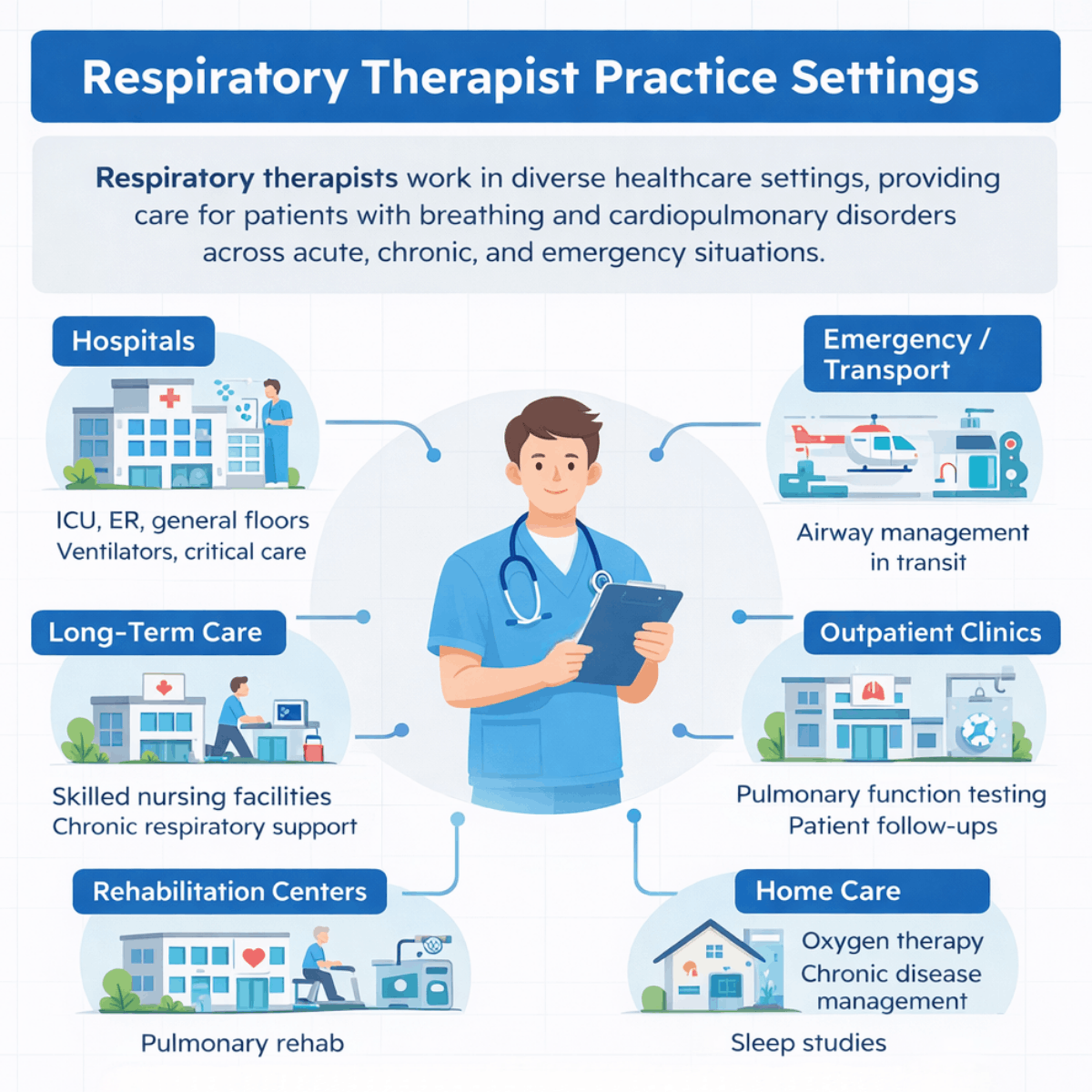
Respiratory therapists work in a wide range of healthcare settings where patients need support with breathing and lung function. Hospitals are the most common environment, including intensive care units, emergency rooms, and operating rooms, where therapists manage ventilators and provide life-saving treatments.
They also work in outpatient clinics and medical offices, performing pulmonary function tests and educating patients. Many respiratory therapists provide care in patients’ homes, helping manage oxygen therapy and chronic conditions.
Other settings include sleep laboratories, skilled nursing facilities, and pulmonary rehabilitation programs, where the focus is on long-term care and recovery. Some therapists even work in ground and air transport, delivering critical care during patient transfers.
Hospitals
Hospitals remain the most common practice setting for respiratory therapists. In this environment, therapists provide direct patient care to individuals with both acute and chronic respiratory conditions. They are responsible for administering oxygen therapy, performing aerosol treatments, managing airway devices, and monitoring patient responses to therapy.
Respiratory therapists also play a key role in patient education. Patients with asthma, chronic obstructive pulmonary disease, and other long-term conditions often require guidance on medication use, breathing techniques, and lifestyle modifications. They help ensure that patients understand how to manage their conditions effectively after discharge.
In addition, respiratory therapists collaborate closely with physicians, nurses, and other healthcare professionals to develop and implement treatment plans. Their ability to interpret diagnostic data such as arterial blood gases and pulmonary function tests makes them essential contributors to clinical decision-making.
Intensive Care Units
In intensive care units, respiratory therapists manage critically ill patients who require advanced respiratory support. One of their primary responsibilities is the management of mechanical ventilation. This includes setting up ventilators, adjusting parameters, and monitoring patients for changes in respiratory status.
Respiratory therapists must understand complex ventilator modes and be able to respond quickly to alarms and patient deterioration. They are also involved in weaning patients from mechanical ventilation when appropriate, which requires careful assessment and coordination with the healthcare team.
Airway management is another critical responsibility in the ICU. Respiratory therapists assist with intubation, ensure proper placement of endotracheal tubes, and provide ongoing care to maintain airway patency. They also perform suctioning and monitor for complications such as ventilator-associated pneumonia.
Note: Because ICU patients are often unstable, respiratory therapists must maintain a high level of vigilance and clinical judgment at all times.
Emergency Rooms
Respiratory therapists in the emergency room are responsible for providing rapid assessment and immediate care to patients experiencing respiratory distress. These patients may present with conditions such as asthma exacerbations, trauma, pulmonary embolism, or cardiac arrest.
In this fast-paced environment, therapists must act quickly to stabilize patients. They administer oxygen, initiate ventilatory support, and assist with advanced airway procedures. They may also be involved in cardiopulmonary resuscitation and other life-saving interventions.
Effective communication is essential in the emergency setting. Respiratory therapists must relay critical information to physicians and nurses while adapting to rapidly changing situations. Their ability to perform under pressure directly impacts patient outcomes.
Operating Rooms and Postoperative Care Units
In the operating room, respiratory therapists work alongside anesthesiologists to manage patients’ ventilation during surgical procedures. They ensure that ventilators are functioning correctly and that patients are receiving appropriate levels of oxygen and ventilation.
After surgery, patients are often transferred to postoperative care units where respiratory therapists continue to monitor their breathing. They assess for complications such as hypoventilation, atelectasis, or airway obstruction.
Respiratory therapists may administer treatments to promote lung expansion, such as incentive spirometry, and provide support to prevent postoperative respiratory complications. Their role is essential in helping patients recover safely from anesthesia and surgery.
Newborn and Pediatric Care Units
Respiratory therapists who work in neonatal and pediatric care units specialize in treating infants and children with respiratory conditions. These patients often require highly specialized care due to their unique anatomy and physiology.
In neonatal intensive care units, therapists manage premature infants who may have underdeveloped lungs. They provide ventilatory support, administer surfactant therapy, and monitor oxygen levels to prevent complications such as retinopathy of prematurity.
Pediatric patients may present with conditions such as bronchiolitis, asthma, or congenital lung disorders. Respiratory therapists tailor treatments to each patient’s needs while also providing education and reassurance to families.
Note: Working with this population requires a high level of precision, compassion, and communication skills.
Home Care
Home care is an increasingly important practice setting for respiratory therapists. In this environment, therapists provide services to patients who require ongoing respiratory support outside of the hospital.
Common responsibilities include managing home oxygen therapy, maintaining ventilators, and ensuring that patients and caregivers understand how to use medical equipment safely. Therapists also conduct regular assessments to monitor patient progress and identify potential issues.
Home care allows patients to maintain a higher quality of life while reducing hospital readmissions. Respiratory therapists play a key role in supporting independence and promoting long-term health management.
Sleep Laboratories
Sleep laboratories focus on the diagnosis and management of sleep-related breathing disorders, such as obstructive sleep apnea. Respiratory therapists in this setting conduct overnight sleep studies, also known as polysomnography.
During these studies, therapists monitor parameters such as airflow, oxygen saturation, heart rate, and brain activity. They analyze the data to identify abnormalities and assist physicians in diagnosing sleep disorders.
Respiratory therapists also help patients adapt to treatments such as continuous positive airway pressure therapy. This includes fitting masks, adjusting settings, and providing education to improve compliance.
Note: Sleep laboratories require attention to detail and a strong understanding of respiratory physiology during sleep.
Skilled Nursing Facilities and Pulmonary Rehabilitation Programs
In skilled nursing facilities and pulmonary rehabilitation programs, respiratory therapists work with patients who have chronic respiratory conditions. These patients often require long-term management and support to improve their quality of life.
Pulmonary rehabilitation programs focus on exercise training, education, and behavioral interventions. Respiratory therapists guide patients through breathing exercises, monitor their progress, and help them build endurance.
They also educate patients on disease management strategies, including medication adherence and energy conservation techniques. This setting emphasizes prevention and long-term improvement rather than acute intervention.
Outpatient Clinics and Medical Offices
Respiratory therapists in outpatient clinics and medical offices perform diagnostic testing and provide patient education. Pulmonary function testing is a common responsibility, allowing therapists to assess lung capacity, airflow, and overall respiratory function.
These tests are essential for diagnosing conditions such as asthma and chronic obstructive pulmonary disease. Respiratory therapists ensure that tests are conducted accurately and that results are properly interpreted.
In addition to testing, therapists educate patients on inhaler techniques, breathing exercises, and lifestyle changes. Their goal is to help patients manage their conditions effectively and prevent exacerbations.
Smoking Cessation Programs
Respiratory therapists play an important role in smoking cessation programs, which are often offered in hospitals or medical offices. These programs aim to help individuals quit smoking and reduce their risk of respiratory disease.
Therapists provide counseling, develop personalized cessation plans, and educate patients on the health effects of smoking. They may also recommend nicotine replacement therapies or other interventions to support the quitting process.
Note: By helping patients stop smoking, respiratory therapists contribute to the prevention of many serious respiratory and cardiovascular conditions.
Ground and Air Transport Programs
Respiratory therapists involved in ground and air transport programs provide critical care during patient transfers. These transfers may occur between hospitals or from the scene of an emergency to a medical facility.
Respiratory therapists are responsible for maintaining airway stability, managing ventilators, and monitoring patients during transport. This requires the ability to work in confined and unpredictable environments.
They must be prepared to handle emergencies with limited resources while ensuring patient safety. This setting demands strong clinical skills, adaptability, and the ability to remain calm under pressure.
Disease Management and Case Management Roles
Respiratory therapists also work in disease management and case management roles within hospitals, insurance companies, and medical offices. In these positions, they focus on coordinating care for patients with complex respiratory conditions.
They develop care plans, monitor patient progress, and ensure that treatments are effective and appropriate. This may involve reviewing medical records, communicating with healthcare providers, and educating patients on their conditions.
Note: Disease management roles emphasize continuity of care and aim to reduce hospital readmissions while improving patient outcomes.
Interdisciplinary Collaboration
Respiratory therapists do not work in isolation. Across all practice settings, they are integral members of interdisciplinary healthcare teams. They collaborate with physicians, nurses, physical therapists, pharmacists, and other specialists to ensure comprehensive patient care.
In acute care settings, respiratory therapists provide input on ventilator management, oxygen therapy, and airway strategies. In outpatient and rehabilitation environments, they work closely with other professionals to support long-term disease management and functional improvement.
Effective collaboration requires clear communication, mutual respect, and a shared understanding of patient goals. Respiratory therapists must be able to advocate for their patients while also adapting to team-based decision-making processes.
Diagnostic and Monitoring Responsibilities
In many settings, respiratory therapists are responsible for performing and interpreting diagnostic tests. These include arterial blood gas analysis, pulmonary function testing, and oxygen saturation monitoring.
Accurate data collection is essential for guiding treatment decisions. Therapists must ensure that tests are performed correctly and that results are communicated promptly to the healthcare team.
Continuous monitoring is also a key component of respiratory care. Whether in an ICU, sleep lab, or home care setting, therapists track changes in respiratory status and adjust treatments as needed. This ongoing assessment helps prevent complications and supports optimal patient outcomes.
Education and Patient Empowerment
Patient education is a consistent responsibility across all practice settings. Respiratory therapists teach patients how to use inhalers, nebulizers, and other respiratory devices correctly. They also provide instruction on breathing techniques, airway clearance methods, and lifestyle modifications.
Education extends beyond the patient to include family members and caregivers. In home care and chronic disease management, this support is essential for ensuring adherence to treatment plans.
Empowering patients with knowledge helps improve outcomes, reduce hospitalizations, and enhance quality of life. Respiratory therapists play a central role in helping patients take an active role in their own care.
Technology and Equipment Management
Respiratory therapists work with a wide range of medical equipment, including ventilators, oxygen delivery systems, and diagnostic devices. Proper setup, maintenance, and troubleshooting of this equipment are critical responsibilities.
In hospital settings, therapists must be familiar with advanced ventilator modes and monitoring systems. In home care, they ensure that equipment is safe and functioning properly for long-term use.
Staying current with technological advancements is essential. New devices and treatment approaches continue to evolve, and respiratory therapists must adapt to these changes to provide effective care.
Ethical and Professional Considerations
Respiratory therapists must adhere to ethical and professional standards in all practice settings. This includes maintaining patient confidentiality, obtaining informed consent, and providing care that aligns with established guidelines.
They may encounter challenging situations, such as end-of-life care decisions or conflicts between treatment options. In these cases, therapists must rely on ethical principles and collaborate with the healthcare team to determine the best course of action.
Note: Professionalism also involves ongoing education and skill development. Respiratory therapists are expected to maintain competence through continuing education and certification requirements.
Career Flexibility and Advancement Opportunities
The wide range of practice settings available to respiratory therapists offers significant career flexibility. Therapists can choose to specialize in areas such as critical care, neonatal care, pulmonary rehabilitation, or sleep medicine.
Opportunities for advancement include roles in education, management, research, and clinical leadership. Some therapists pursue additional certifications or advanced degrees to expand their scope of practice.
Note: This diversity allows respiratory therapists to tailor their careers to their interests and strengths while continuing to make meaningful contributions to patient care.
Challenges Across Practice Settings
While respiratory therapy is a rewarding profession, it also presents several challenges. Work environments can be physically and emotionally demanding, particularly in critical care and emergency settings.
Therapists must often manage high patient loads, respond to emergencies, and make quick decisions under pressure. Exposure to infectious diseases and the need for shift work can also impact work-life balance.
Note: Despite these challenges, many respiratory therapists find the work fulfilling due to the direct impact they have on patient outcomes and quality of life.
Future Trends in Respiratory Therapy Practice
The field of respiratory therapy continues to evolve in response to changes in healthcare delivery and patient needs. Advances in technology, such as portable ventilators and telehealth services, are expanding the scope of care beyond traditional settings.
There is also a growing emphasis on preventive care and chronic disease management. Respiratory therapists are increasingly involved in community-based programs and patient education initiatives.
As the demand for respiratory care services continues to rise, particularly with aging populations and the prevalence of chronic lung diseases, the role of respiratory therapists is expected to remain essential.
Final Thoughts
Respiratory therapists work in a wide range of practice settings, each with its own responsibilities and challenges. From hospitals and intensive care units to home care and outpatient clinics, their role is essential in managing respiratory health and improving patient outcomes.
Their ability to adapt to different environments, collaborate with healthcare teams, and provide both acute and long-term care highlights the versatility of the profession.
As healthcare continues to evolve, respiratory therapists will remain an important part of delivering effective and patient-centered care across all settings.

Written by:
John Landry is a registered respiratory therapist from Memphis, TN, and has a bachelor's degree in kinesiology. He enjoys using evidence-based research to help others breathe easier and live a healthier life.
References
- Rickards T, Kitts E. The roles, they are a changing: Respiratory Therapists as part of the multidisciplinary, community, primary health care team. Can J Respir Ther. 2018.