

Albuterol is a commonly prescribed bronchodilator used to relieve breathing problems caused by conditions such as asthma and chronic obstructive pulmonary disease (COPD). While it is generally considered safe and effective, some people may experience side effects after using this medication.
Most individuals are familiar with symptoms like jitteriness, a rapid heartbeat, or mild headaches, but skin reactions can occasionally occur as well. This has led many patients to wonder whether albuterol can cause a rash.
Understanding the potential link between albuterol and skin reactions can help patients recognize unusual symptoms and know when it may be necessary to seek medical advice.

Download our free guide that has over 100+ of the best tips for healthy lungs.
Can Albuterol Cause a Rash?
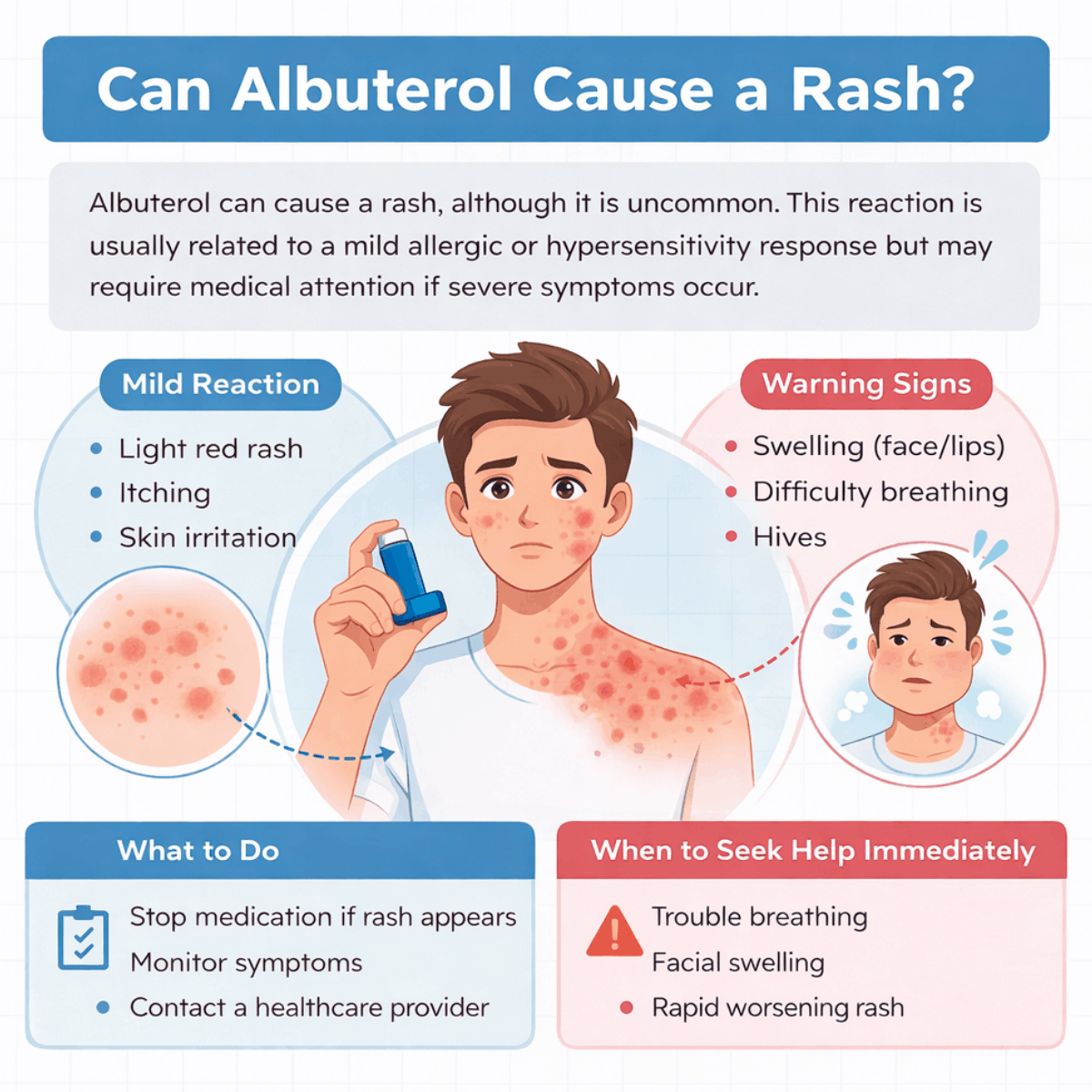
Yes, albuterol can cause a rash in some individuals, although this side effect is relatively uncommon. A rash may occur as part of an allergic or hypersensitivity reaction to the medication or one of its ingredients.
Symptoms may include redness, itching, hives, or irritated patches of skin that appear after using an inhaler, nebulizer solution, or oral form of albuterol. In most cases, these reactions are mild and resolve once the medication is discontinued or adjusted.
However, if a rash is accompanied by swelling, difficulty breathing, or severe itching, it could indicate a more serious allergic reaction that requires immediate medical attention. Anyone who develops a rash after using albuterol should consult a healthcare provider for proper evaluation and guidance.
Common Albuterol Side Effects
Albuterol most often affects your heart rate and nervous system, not your skin. Common effects include tremor, nervousness, headache, and a fast heartbeat. These symptoms usually appear soon after use and fade as the drug wears off.
Skin reactions can occur but remain uncommon. When they happen, you may notice redness, itching, hives, or mild swelling. These signs suggest a hypersensitivity reaction rather than irritation from inhalation.
In rare cases, a rash may appear with other allergy-related symptoms such as facial swelling or trouble breathing. This pattern requires urgent medical attention. Some people react to preservatives or propellants in certain inhalers, not albuterol itself. Switching formulations may reduce symptoms if a sensitivity exists.
Prevalence of Rash With Albuterol Use
Rashes linked to albuterol appear infrequently compared with other side effects. Clinical reports and prescribing information list rash and urticaria as rare or uncommon reactions, without a consistent rate across studies.
Your risk may increase if you have a history of drug allergies or asthma triggered by multiple allergens. Children and adults can both experience skin reactions, but age does not strongly predict who will develop a rash.
Timing helps clarify the cause. A rash that starts shortly after dosing and improves when you stop using albuterol points toward a drug-related reaction. A delayed or persistent rash often has another cause, such as infection, another medication, or a contact allergen.
Common Symptoms of an Albuterol-Induced Rash
An albuterol-related rash usually affects your skin soon after exposure and may vary in appearance and intensity. You may notice changes that range from mild irritation to more noticeable inflammatory reactions, often alongside other allergy-like symptoms.
Types of Skin Reactions
You may experience hives (urticaria), which appear as raised, itchy welts that can move across different areas of your body. These often signal an allergic response and may come with swelling around the lips, eyelids, or face.
Some people develop a maculopapular rash, marked by flat red patches mixed with small bumps. This type usually spreads evenly and may feel warm or mildly itchy rather than painful.
Less commonly, you may notice contact dermatitis, especially around the mouth or nose if you use a nebulizer or inhaler mask. This reaction can cause localized redness, dryness, or scaling where the medication or residue touches your skin.
In rare cases, albuterol may trigger angioedema, which causes deeper swelling under the skin. This reaction requires prompt medical attention, especially if it affects breathing or swallowing.
Appearance and Onset Timeline
A rash linked to albuterol often appears within minutes to a few hours after use. Allergic reactions tend to develop faster, while irritation-related rashes may take longer to become noticeable. The skin usually looks red, blotchy, or raised, with itching as a common feature. Symptoms may worsen with repeated doses if you continue using the medication.
If you stop albuterol, mild rashes often fade within a few days. Persistent or worsening symptoms suggest a stronger reaction and should prompt medical evaluation, especially if you notice swelling or breathing changes.
Mechanisms Behind Rash Development From Albuterol
Albuterol can trigger skin changes through immune reactions or non-immune effects related to how the drug works and how you use it. These mechanisms differ in timing, appearance, and associated symptoms.
Allergic Reactions to Albuterol
An allergic reaction occurs when your immune system treats albuterol or one of its ingredients as a threat. This response can involve IgE-mediated hypersensitivity, which leads to the release of histamine and other inflammatory chemicals.
You may notice hives, itching, redness, or swelling, often appearing soon after use. In some cases, the reaction stems from inactive ingredients rather than albuterol itself, such as sulfites, preservatives, or propellants used in certain inhalers or nebulizer solutions.
Warning signs that suggest a true allergy include:
- Rapid onset of rash after dosing
- Facial or lip swelling
- Wheezing that worsens instead of improves
Note: These reactions require prompt medical attention, especially if breathing or swallowing becomes difficult.
Non-Allergic Causes of Rash
Albuterol can also cause a rash without triggering an immune response. The drug stimulates beta-adrenergic receptors, which can increase blood flow to the skin and lead to temporary flushing or redness.
You might also develop skin irritation from repeated contact with the medication delivery system. Nebulizer masks and inhaler spacers can trap moisture and medication residue against your skin, causing irritation or contact dermatitis.
Other contributing factors include:
- Dry or sensitive skin that reacts to frequent exposure
- Heat and sweating during asthma symptoms or treatment
- Rubbing or friction from masks or tubing
Note: These rashes usually improve with skin care adjustments and do not indicate a medication allergy.
Differentiating Albuterol Rash From Other Conditions
You can narrow the cause of a rash by looking at timing, appearance, and associated symptoms. Albuterol reactions often follow a predictable pattern that differs from many other common skin conditions.
Comparison With Other Drug Rashes
You may confuse an albuterol-related rash with rashes caused by antibiotics, NSAIDs, or seizure medications. Many drug rashes appear days to weeks after starting a new medicine, while albuterol reactions often begin soon after use, sometimes within hours.
Antibiotic rashes frequently spread widely and form flat red patches that merge together. In contrast, albuterol rashes more often present as localized hives or itching, especially on the face, neck, or upper chest.
You should also consider systemic symptoms. Drug hypersensitivity reactions often include fever, joint pain, or facial swelling. Albuterol reactions usually lack these signs and instead occur alongside tremor, nervousness, or rapid heartbeat, which reflect its bronchodilator effects.
Distinctive Features
You can identify an albuterol rash by noting how it behaves with repeated exposure. The rash often appears or worsens shortly after inhaler or nebulizer use and may fade as the medication wears off.
Key features that point toward albuterol include:
- Itchy hives or redness rather than blistering or peeling
- Rapid onset after dosing
- Improvement when albuterol use decreases or stops
You should also rule out non-drug causes. Viral rashes tend to last several days and come with cold or flu symptoms. Contact dermatitis usually stays limited to areas that touched an irritant and follows a clear exposure pattern.
Note: If the rash recurs only with albuterol and not with other medications, that pattern strongly supports albuterol as the trigger.
What to Do If You Develop a Rash While Using Albuterol
A rash while using albuterol can range from mild irritation to a sign of an allergic reaction. Your response should match the severity of symptoms and how quickly they appear after use.
When to Seek Medical Attention
Seek medical care right away if the rash appears suddenly after using albuterol or spreads quickly. Hives, swelling of the face or lips, trouble breathing, dizziness, or throat tightness require urgent evaluation, as these can signal a serious allergic reaction.
Contact your healthcare provider promptly if the rash persists, worsens, or comes with fever or joint pain. These features suggest causes beyond simple skin irritation.
Stop using albuterol only if a clinician tells you to do so, unless you experience severe allergic symptoms. If you rely on albuterol for asthma or COPD, abrupt discontinuation can worsen breathing problems. A clinician may switch you to a different formulation or prescribe an alternative bronchodilator.
Self-Care and Management Tips
For a mild rash without systemic symptoms, focus on skin care and monitoring. Keep the area clean and dry, and avoid scratching to reduce infection risk.
You can take these steps:
- Document timing: Note when the rash started and when you used albuterol.
- Avoid irritants: Skip new soaps, lotions, or detergents.
- Use gentle relief: Apply fragrance-free moisturizer or a cool compress.
- Consider antihistamines: Non-drowsy options may reduce itching if approved by your clinician.
Note: If you use an inhaler, rinse your mouth and skin around it after each dose. Watch for changes over several days and report them clearly to your healthcare provider.
Risk Factors for Experiencing a Rash From Albuterol
Certain personal health factors and medication combinations can raise your chance of developing a rash while using albuterol. These risks relate most often to immune sensitivity and how other drugs influence your skin’s response.
Preexisting Allergies and Sensitivities
You face a higher risk if you have a history of drug allergies, especially reactions to asthma medications or inhaler additives. Some albuterol formulations contain sulfites or benzalkonium chloride, which can trigger skin reactions in sensitive people.
If you have atopic conditions such as eczema, allergic rhinitis, or food allergies, your immune system may react more easily. That reaction can appear as hives, redness, or itching after albuterol use. You should also consider prior reactions to beta-agonists. Even mild past symptoms, such as flushing or itching, matter. Report them before starting or continuing treatment.
Note: Watch closely when you start a new formulation, dose, or delivery method. Changes can expose you to different inactive ingredients that affect your skin.
Drug Interactions Affecting Skin Response
Some medications can increase the likelihood or visibility of a rash while you use albuterol. Niacin, for example, causes flushing that may worsen redness or itching and mimic a drug rash. You may notice more skin symptoms if you take systemic corticosteroids and then taper them. Steroid withdrawal can unmask allergic reactions that were previously suppressed.
Other drugs can complicate diagnosis rather than cause a direct interaction. Antibiotics, anticonvulsants, and NSAIDs commonly cause rashes, which may appear soon after you start albuterol.
Note: Using multiple inhaled medications also increases exposure to preservatives. That combined exposure can irritate your skin, especially if you already react to additives.
FAQs About Albuterol Side Effects
What Does an Albuterol Allergy Look Like?
An allergy to albuterol is rare but can occur in some individuals. Symptoms may include a skin rash, hives, itching, redness, or swelling of the face, lips, or throat. Some people may also experience difficulty breathing, dizziness, or a rapid heartbeat shortly after using the medication.
These reactions may indicate a hypersensitivity to albuterol or one of the ingredients in the inhaler or nebulizer solution. If any signs of an allergic reaction appear, it is important to stop using the medication and seek medical attention promptly.
What Is the Most Common Side Effect of Albuterol?
The most common side effect of albuterol is feeling shaky or jittery after using the medication. This occurs because albuterol stimulates beta-2 receptors, which relax the airway muscles but can also affect the nervous system.
Some people may also experience a fast heartbeat, mild headache, nervousness, or slight muscle tremors. These effects are usually temporary and tend to improve as the body adjusts to the medication.
Note: If these symptoms become severe or persistent, a healthcare provider may adjust the dosage or recommend an alternative treatment.
What Are the Serious Side Effects of Albuterol?
Although albuterol is generally safe when used as directed, it can sometimes cause serious side effects. These may include chest pain, an irregular heartbeat, severe dizziness, or worsening breathing problems shortly after using the medication.
In rare cases, an allergic reaction can occur, leading to hives, rash, swelling, or difficulty breathing. Some individuals may also experience significant changes in blood pressure or potassium levels. If any severe or unusual symptoms develop after using albuterol, immediate medical attention is necessary to prevent complications.
Can Asthma Inhalers Cause a Rash?
Yes, asthma inhalers can sometimes cause a rash, although it is not very common. A rash may occur as a result of an allergic reaction to the medication itself or to other ingredients in the inhaler, such as preservatives or propellants.
In some cases, skin irritation may also develop around the mouth or face if medication residue contacts the skin. Symptoms may include redness, itching, or small raised bumps. If a rash appears after using an inhaler, it is important to discuss the symptoms with a healthcare provider.
When to See a Doctor About a Rash From Albuterol?
You should see a doctor if a rash develops after using albuterol and does not improve or continues to worsen. Medical attention is especially important if the rash is accompanied by swelling, hives, intense itching, or breathing difficulties. These symptoms may indicate an allergic reaction that requires prompt treatment.
A healthcare provider can determine whether the rash is related to the medication and may recommend stopping the drug, adjusting the treatment plan, or prescribing an alternative medication to manage the underlying respiratory condition safely.
Final Thoughts
While albuterol is widely used and generally safe for treating breathing conditions, it can occasionally cause side effects, including skin rashes in some individuals. These reactions are usually mild and uncommon, but they may indicate an allergic response to the medication or one of its ingredients.
If a rash develops after using albuterol, it’s important to monitor the symptoms and speak with a healthcare provider for proper guidance.
Prompt medical attention is especially important if the rash is severe or occurs alongside other symptoms. Understanding potential side effects can help ensure the medication is used safely and effectively.

Written by:
John Landry is a registered respiratory therapist from Memphis, TN, and has a bachelor's degree in kinesiology. He enjoys using evidence-based research to help others breathe easier and live a healthier life.
References
- Johnson DB, Merrell BJ, Bounds CG. Albuterol. [Updated 2024 Jan 10]. In: StatPearls [Internet]. Treasure Island (FL): StatPearls Publishing; 2026.