
Blood pressure is a vital physiologic parameter that reflects the force exerted by circulating blood against the walls of the arteries. It provides essential insight into cardiovascular function, tissue perfusion, and overall patient stability.
In clinical practice, blood pressure is used alongside other vital signs to assess hemodynamic status and guide treatment decisions. It is influenced by cardiac performance, vascular tone, and circulating blood volume, all of which must work together to maintain adequate perfusion.
Understanding blood pressure is fundamental for healthcare professionals, especially in respiratory and critical care settings.

What Is Blood Pressure?
Blood pressure is the force exerted by circulating blood against the walls of the arteries as the heart pumps it throughout the body. It is a key indicator of cardiovascular health and reflects how well blood is being delivered to vital organs.
Blood pressure is measured using two values: systolic pressure, which represents the force during heart contraction, and diastolic pressure, which represents the force when the heart is at rest between beats. It is influenced by factors such as cardiac output, vascular resistance, and blood volume.
Maintaining normal blood pressure is essential for proper tissue perfusion, oxygen delivery, and organ function. Abnormal levels, including hypotension or hypertension, can lead to serious health complications if not properly managed.
Components of Blood Pressure
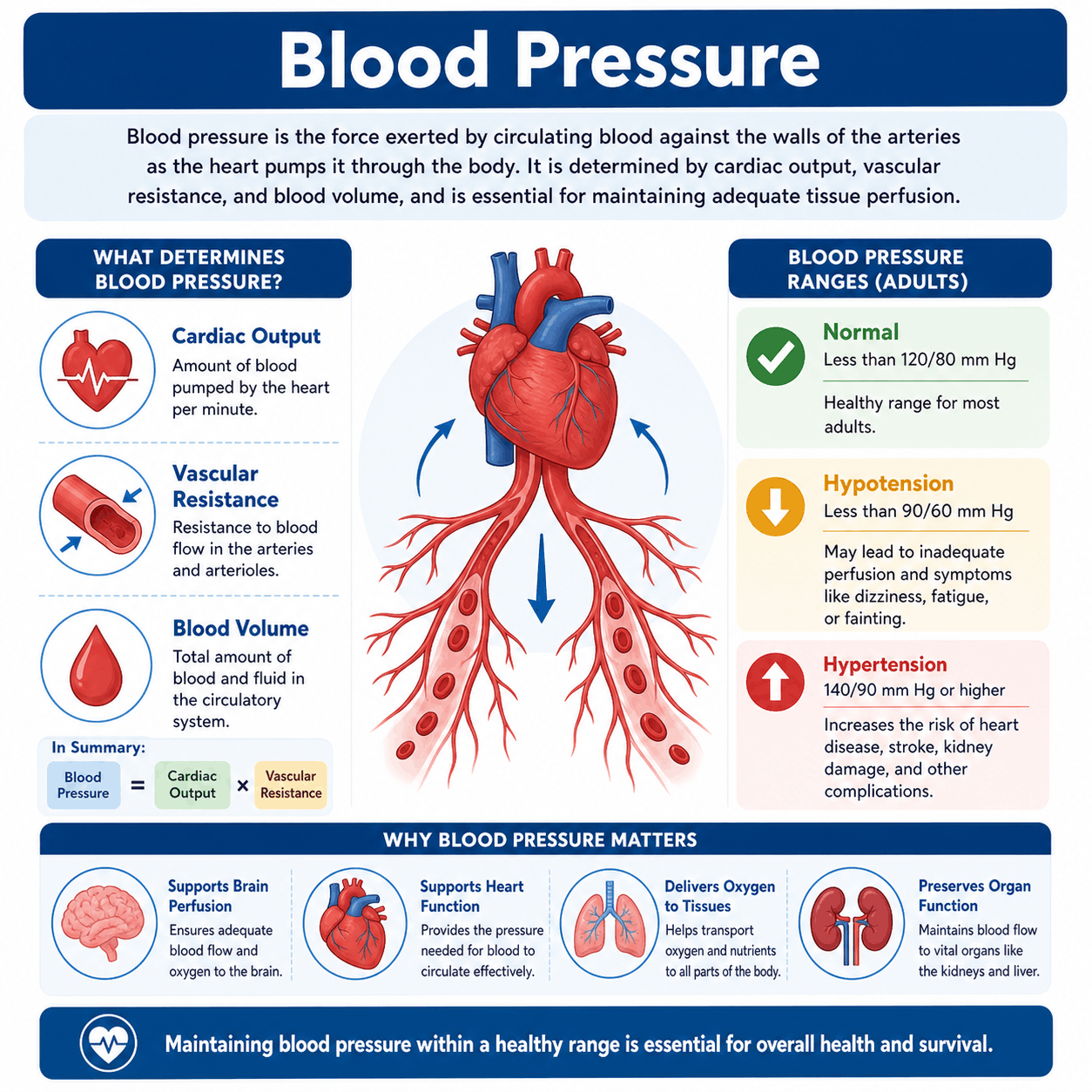
Blood pressure refers to the pressure generated by the heart as it pumps blood through the systemic circulation. It is measured in millimeters of mercury (mmHg) and expressed as two values:
- Systolic pressure: The peak pressure in the arteries during ventricular contraction
- Diastolic pressure: The pressure in the arteries during ventricular relaxation
A typical adult blood pressure reading is written as systolic over diastolic, such as 120/80 mmHg. The difference between systolic and diastolic pressure is known as pulse pressure, which normally ranges from 30 to 40 mmHg.
Normal blood pressure values can vary slightly depending on the individual, but in general:
- Normal: Less than 120/80 mmHg
- Elevated: Systolic 120 to 129 mmHg and diastolic less than 80 mmHg
- Hypertension: Equal to or greater than 140/90 mmHg
Note: Understanding these values is essential for identifying abnormal conditions and initiating appropriate interventions.
Determinants of Blood Pressure
Blood pressure is not a fixed value. It is determined by the interaction of three primary factors:
Cardiac Output
Cardiac output is the amount of blood pumped by the heart per minute. It is calculated as:
- Heart rate multiplied by stroke volume
Note: An increase in cardiac output raises blood pressure, while a decrease lowers it. Conditions such as heart failure can reduce cardiac output and lead to hypotension.
Systemic Vascular Resistance
Systemic vascular resistance refers to the resistance that blood encounters as it flows through the blood vessels. It is largely determined by the diameter of the arteries:
- Vasoconstriction increases resistance and raises blood pressure
- Vasodilation decreases resistance and lowers blood pressure
Note: This factor plays a major role in conditions like hypertension and septic shock.
Blood Volume
Blood volume represents the total amount of fluid circulating within the vascular system. It is influenced by hydration status, bleeding, and renal function.
- Increased volume raises blood pressure
- Decreased volume lowers blood pressure
Note: For example, hemorrhage leads to reduced blood volume and a drop in blood pressure.
Mean Arterial Pressure and Perfusion
Mean arterial pressure (MAP) is a key concept in understanding blood pressure. It represents the average pressure within the arteries during a single cardiac cycle and is a better indicator of tissue perfusion than systolic pressure alone.
Normal MAP typically ranges from 80 to 100 mmHg. A MAP below 60 mmHg is considered inadequate for sustaining perfusion to vital organs such as the brain and kidneys.
MAP is directly influenced by cardiac output and systemic vascular resistance. When either of these factors decreases significantly, MAP falls, leading to impaired oxygen delivery and potential organ dysfunction.
Note: Maintaining adequate MAP is a primary goal in the management of critically ill patients, particularly those with shock or sepsis.
Physiologic Regulation of Blood Pressure
The body tightly regulates blood pressure through several integrated mechanisms to maintain homeostasis.
Autonomic Nervous System
The autonomic nervous system plays a central role in short-term regulation:
- The sympathetic nervous system increases heart rate, contractility, and vasoconstriction
- The parasympathetic nervous system decreases heart rate and promotes relaxation
Note: These systems respond rapidly to changes in blood pressure.
Baroreceptors
Baroreceptors are specialized pressure-sensitive receptors located in the carotid sinus and aortic arch. They detect changes in arterial pressure and send signals to the brainstem.
- When blood pressure decreases, baroreceptor activity decreases, triggering sympathetic stimulation
- When blood pressure increases, baroreceptor activity increases, promoting parasympathetic responses
Note: This feedback mechanism helps stabilize blood pressure within a narrow range.
Hormonal Regulation
Hormones also play an important role in longer-term regulation:
- The renin-angiotensin-aldosterone system (RAAS) increases blood volume and vascular resistance
- Antidiuretic hormone (ADH) promotes water retention
- Atrial natriuretic peptide (ANP) reduces blood volume and pressure
Note: These systems help maintain blood pressure during changes in fluid balance and stress.
Measurement of Blood Pressure
Accurate measurement of blood pressure is essential for proper assessment and management.
Manual Measurement
The traditional method involves a sphygmomanometer and a stethoscope:
- The cuff is inflated above systolic pressure to occlude blood flow
- The cuff is slowly deflated
- The first audible sound, known as the Korotkoff sound, indicates systolic pressure
- The disappearance of sound indicates diastolic pressure
Note: Proper technique is critical to avoid inaccurate readings.
Automated Devices
Automated blood pressure monitors are widely used in clinical and home settings. These devices:
- Reduce observer variability
- Provide consistent readings
- Are easier to use for repeated measurements
Note: They must be properly calibrated to ensure accuracy.
Clinical Importance in Respiratory Care
Blood pressure plays a significant role in respiratory care because it directly affects oxygen delivery to tissues. Oxygen delivery depends not only on adequate oxygenation in the lungs but also on effective circulation.
Even if arterial oxygen levels are normal, low blood pressure can result in poor tissue perfusion, leading to inadequate oxygen delivery. This highlights an important clinical principle:
- Adequate oxygenation requires both ventilation and perfusion
In patients with respiratory failure or cardiopulmonary disease, monitoring blood pressure helps guide interventions and assess treatment effectiveness.
Blood pressure monitoring is especially important in conditions such as:
- Respiratory failure
- Sepsis
- Shock
- Heart failure
Note: Changes in blood pressure may indicate deterioration or improvement in a patient’s condition.
Hypotension
Hypotension is generally defined as a systolic blood pressure less than 90 mmHg or a mean arterial pressure less than 65 mmHg. It represents inadequate perfusion pressure and can lead to serious complications.
Causes of Hypotension
Common causes include:
- Decreased cardiac output, such as in heart failure
- Reduced blood volume, such as from hemorrhage or dehydration
- Decreased systemic vascular resistance, such as in sepsis
Compensatory Mechanisms
The body attempts to maintain perfusion through several responses:
- Increased heart rate
- Vasoconstriction
- Activation of hormonal systems such as RAAS
Note: These mechanisms can temporarily stabilize blood pressure.
Clinical Consequences
If hypotension persists, it can lead to:
- Cellular hypoxia
- Organ dysfunction
- Multi-organ failure
Note: Early recognition and intervention are essential to prevent progression.
Hypertension
Hypertension is defined as persistently elevated blood pressure, typically at or above 140/90 mmHg in adults. It is one of the most common chronic conditions encountered in clinical practice and is a major risk factor for cardiovascular disease.
Causes of Hypertension
Hypertension can result from several underlying mechanisms:
- Increased systemic vascular resistance due to vasoconstriction
- Increased cardiac output
- Increased blood volume due to fluid retention
Note: In many cases, hypertension is classified as primary (essential) hypertension, meaning no single identifiable cause is present. Secondary hypertension may result from specific conditions such as renal disease, endocrine disorders, or medication effects.
Clinical Effects
Although hypertension may not produce noticeable symptoms, it places continuous stress on the cardiovascular system. Over time, this can lead to:
- Left ventricular hypertrophy
- Increased risk of stroke
- Coronary artery disease
- Kidney damage
Note: In respiratory care, hypertension can also contribute to pulmonary complications, including worsening pulmonary edema and impaired gas exchange.
Clinical Monitoring
Patients with hypertension require regular monitoring to assess control and prevent complications. Blood pressure readings should be interpreted in context, considering trends over time rather than isolated values.
Blood Pressure and Oxygen Delivery
Blood pressure plays a critical role in oxygen delivery to tissues. Oxygen delivery depends on both the oxygen content of the blood and the ability of the cardiovascular system to transport that oxygen to the tissues.
Even when oxygenation is adequate at the level of the lungs, poor perfusion due to low blood pressure can result in tissue hypoxia. This highlights the importance of maintaining both:
- Adequate ventilation
- Adequate circulation
Note: In critically ill patients, maintaining sufficient blood pressure is essential to ensure that oxygen reaches vital organs such as the brain, heart, and kidneys.
Blood Pressure in Shock
Shock is a life-threatening condition characterized by inadequate tissue perfusion and oxygen delivery. Although hypotension is commonly associated with shock, it is important to recognize that shock can develop even before blood pressure falls significantly.
Types of Shock
There are several types of shock, each affecting blood pressure differently:
- Hypovolemic shock: Caused by loss of blood or fluids, leading to decreased blood volume
- Cardiogenic shock: Caused by failure of the heart to pump effectively
- Distributive shock: Caused by abnormal vasodilation, as seen in sepsis
- Obstructive shock: Caused by physical obstruction of blood flow, such as pulmonary embolism
Clinical Features
Common signs of shock include:
- Hypotension
- Tachycardia
- Altered mental status
- Decreased urine output
Note: Prompt recognition and treatment are essential to prevent progression to organ failure.
Monitoring Blood Pressure in Critical Care
In critically ill patients, continuous and accurate blood pressure monitoring is essential for guiding treatment decisions.
Arterial Line Monitoring
An arterial catheter, commonly referred to as an arterial line, provides direct and continuous measurement of blood pressure. This method offers several advantages:
- Real-time monitoring of hemodynamic changes
- Accurate measurement in unstable patients
- Ability to obtain frequent arterial blood gas samples
Note: Arterial waveform analysis can also provide additional information about cardiovascular function.
Noninvasive Monitoring
Noninvasive blood pressure monitoring is widely used in less critical settings. While convenient, it may be less accurate in patients with poor perfusion or arrhythmias. Clinicians must choose the appropriate method based on the patient’s condition and clinical needs.
Factors That Affect Blood Pressure
Blood pressure can fluctuate due to a variety of internal and external factors. Understanding these influences is important for accurate interpretation.
Physiologic Factors
- Age: Blood pressure tends to increase with age
- Activity level: Exercise can temporarily raise blood pressure
- Body position: Standing may lower blood pressure compared to lying down
Environmental and Emotional Factors
- Stress and anxiety can increase blood pressure
- Pain can activate sympathetic responses and elevate pressure
Clinical Factors
- Medications such as vasopressors or antihypertensives
- Fluid status, including dehydration or fluid overload
- Disease states such as sepsis or heart failure
Note: Because of these influences, a single blood pressure reading should not be used in isolation to make clinical decisions.
Interpreting Blood Pressure in Clinical Practice
A key principle in patient care is that blood pressure must be interpreted within the context of the overall clinical picture.
Importance of Trends
Trends over time provide more meaningful information than a single measurement. For example:
- A gradual decline in blood pressure may indicate worsening cardiac function
- Stabilization may suggest effective treatment
Correlation With Other Vital Signs
Blood pressure should always be evaluated alongside:
- Heart rate
- Respiratory rate
- Oxygen saturation
Note: This integrated approach allows clinicians to better understand the patient’s hemodynamic status.
Signs and Symptoms
Clinical signs can provide additional insight into the significance of blood pressure readings:
- Low blood pressure with confusion may indicate poor cerebral perfusion
- High blood pressure with headache or neurological symptoms may indicate hypertensive urgency
Note: Combining objective measurements with clinical assessment improves diagnostic accuracy and patient outcomes.
Role of Blood Pressure in Patient Management
Blood pressure plays a central role in guiding treatment decisions across a wide range of clinical scenarios.
Fluid Therapy
In patients with hypotension due to low blood volume, fluid resuscitation is often the first line of treatment. Increasing blood volume can improve cardiac output and raise blood pressure.
Vasopressor Support
When fluid therapy is insufficient, medications known as vasopressors may be used to increase vascular resistance and improve blood pressure.
Antihypertensive Therapy
Patients with hypertension may require medications to lower blood pressure and reduce the risk of long-term complications. Treatment decisions must be individualized based on the patient’s condition, underlying cause, and response to therapy.
Special Considerations in Respiratory Care
In respiratory care, blood pressure is closely linked to pulmonary function and oxygen delivery. Patients with respiratory failure often have compromised oxygenation, making adequate perfusion even more critical. Low blood pressure can worsen tissue hypoxia, while high blood pressure can increase cardiac workload and affect pulmonary circulation.
Mechanical ventilation can also influence blood pressure. Positive pressure ventilation may reduce venous return to the heart, leading to decreased cardiac output and hypotension in some patients. For this reason, respiratory therapists must carefully monitor blood pressure and recognize how respiratory interventions impact hemodynamics.
Blood Pressure Practice Questions
1. What is blood pressure?
Blood pressure is the force exerted by circulating blood against the walls of the arteries as the heart pumps it through the body.
2. What two values are used to express blood pressure?
Blood pressure is expressed as systolic pressure over diastolic pressure.
3. What does systolic blood pressure represent?
Systolic blood pressure represents the peak pressure in the arteries during left ventricular contraction.
4. What does diastolic blood pressure represent?
Diastolic blood pressure represents the pressure remaining in the arteries during ventricular relaxation.
5. How is a blood pressure reading commonly written?
A blood pressure reading is written as systolic pressure over diastolic pressure, such as 120/80 mmHg.
6. What unit is used to measure blood pressure?
Blood pressure is measured in millimeters of mercury, or mmHg.
7. What is pulse pressure?
Pulse pressure is the difference between the systolic and diastolic blood pressure values.
8. What is the normal range for pulse pressure?
Normal pulse pressure is typically 30 to 40 mmHg.
9. What three major factors determine blood pressure?
Blood pressure is determined by cardiac output, systemic vascular resistance, and blood volume.
10. What is cardiac output?
Cardiac output is the volume of blood pumped by the heart per minute.
11. How does increased cardiac output affect blood pressure?
Increased cardiac output generally raises blood pressure.
12. How does decreased cardiac output affect blood pressure?
Decreased cardiac output generally lowers blood pressure.
13. What is systemic vascular resistance?
Systemic vascular resistance is the resistance to blood flow within the blood vessels.
14. How does vasoconstriction affect blood pressure?
Vasoconstriction increases vascular resistance and raises blood pressure.
15. How does vasodilation affect blood pressure?
Vasodilation decreases vascular resistance and lowers blood pressure.
16. What is blood volume?
Blood volume is the total amount of circulating fluid within the vascular system.
17. How does increased blood volume affect blood pressure?
Increased blood volume generally raises blood pressure.
18. How does decreased blood volume affect blood pressure?
Decreased blood volume generally lowers blood pressure.
19. What is mean arterial pressure?
Mean arterial pressure, or MAP, is the average pressure in the arteries during one cardiac cycle.
20. Why is mean arterial pressure clinically important?
Mean arterial pressure is important because it reflects the pressure needed to perfuse vital organs.
21. What is the normal range for MAP?
Normal MAP is typically around 80 to 100 mmHg.
22. At what MAP level can vital organ perfusion become severely compromised?
Vital organ perfusion can become severely compromised when MAP falls below 60 mmHg.
23. Why is adequate blood pressure necessary for tissue perfusion?
Adequate blood pressure is necessary to deliver oxygen and nutrients to tissues and organs.
24. What happens when blood pressure becomes too low?
When blood pressure becomes too low, tissues may not receive enough oxygen and nutrients.
25. What condition is closely associated with severe hypotension and inadequate oxygen delivery?
Shock is closely associated with severe hypotension and inadequate oxygen delivery.
26. What is hypotension?
Hypotension is a condition in which blood pressure is abnormally low, typically defined as a systolic pressure less than 90 mmHg.
27. What MAP value is commonly used to define hypotension in critical care?
A MAP less than 65 mmHg is commonly used to define hypotension in critical care settings.
28. What is hypertension?
Hypertension is a condition characterized by persistently elevated blood pressure, usually 140/90 mmHg or higher.
29. What is the primary role of the cardiovascular system related to blood pressure?
The primary role is to maintain adequate tissue perfusion by delivering oxygen and nutrients.
30. What system in the body provides rapid regulation of blood pressure?
The autonomic nervous system provides rapid regulation of blood pressure.
31. What are baroreceptors?
Baroreceptors are pressure-sensitive receptors located in the carotid sinus and aortic arch that detect changes in blood pressure.
32. What happens to baroreceptor activity when blood pressure drops?
Baroreceptor activity decreases when blood pressure drops.
33. How does the body respond to decreased baroreceptor activity?
The body increases sympathetic activity, raising heart rate and causing vasoconstriction.
34. What happens when blood pressure rises in terms of baroreceptor activity?
Baroreceptor activity increases when blood pressure rises.
35. How does increased baroreceptor activity affect the body?
It stimulates parasympathetic responses, lowering heart rate and vascular resistance.
36. What hormone system helps regulate blood pressure by increasing blood volume?
The renin-angiotensin-aldosterone system helps increase blood volume and blood pressure.
37. What role does antidiuretic hormone play in blood pressure regulation?
Antidiuretic hormone promotes water retention, increasing blood volume and pressure.
38. What is the function of atrial natriuretic peptide?
Atrial natriuretic peptide helps lower blood pressure by reducing blood volume.
39. What instrument is used to manually measure blood pressure?
A sphygmomanometer is used to manually measure blood pressure.
40. What are Korotkoff sounds?
Korotkoff sounds are the sounds heard during cuff deflation that help identify systolic and diastolic pressures.
41. What indicates the systolic pressure during manual measurement?
The first Korotkoff sound indicates systolic pressure.
42. What indicates the diastolic pressure during manual measurement?
The disappearance of Korotkoff sounds indicates diastolic pressure.
43. Why are automated blood pressure devices commonly used?
They reduce observer error and provide consistent, easy measurements.
44. How does blood pressure affect oxygen delivery?
Blood pressure influences perfusion, which is necessary to deliver oxygen to tissues.
45. Can normal oxygen levels still result in poor tissue oxygenation?
Yes, if blood pressure is low, tissue perfusion may be inadequate despite normal oxygen levels.
46. What principle explains the relationship between ventilation and perfusion?
Effective oxygenation requires both adequate ventilation and adequate perfusion.
47. What are common causes of hypotension?
Common causes include decreased cardiac output, low blood volume, and reduced vascular resistance.
48. How does hemorrhage lead to hypotension?
Hemorrhage reduces blood volume, leading to decreased blood pressure.
49. What compensatory response occurs when blood pressure drops?
The body increases heart rate and constricts blood vessels to maintain perfusion.
50. What can prolonged hypotension lead to?
Prolonged hypotension can lead to cellular hypoxia and organ dysfunction.
51. What is the relationship between cardiac output and systemic vascular resistance in determining blood pressure?
Blood pressure is directly related to both cardiac output and systemic vascular resistance.
52. How does sepsis affect blood pressure?
Sepsis can cause vasodilation, leading to decreased systemic vascular resistance and hypotension.
53. What type of shock is caused by decreased blood volume?
Hypovolemic shock is caused by decreased blood volume.
54. What type of shock results from the heart’s inability to pump effectively?
Cardiogenic shock results from impaired cardiac pumping ability.
55. What type of shock is associated with widespread vasodilation?
Distributive shock is associated with widespread vasodilation.
56. What type of shock can be caused by a pulmonary embolism?
Obstructive shock can be caused by a pulmonary embolism.
57. What is a common early sign of shock?
Tachycardia is a common early sign of shock.
58. How does altered mental status relate to blood pressure?
Altered mental status may indicate inadequate cerebral perfusion due to low blood pressure.
59. Why is urine output monitored in relation to blood pressure?
Decreased urine output may indicate poor renal perfusion due to low blood pressure.
60. What is an arterial line used for?
An arterial line is used for continuous, real-time blood pressure monitoring.
61. What advantage does an arterial line provide in critical care?
It allows for accurate monitoring and frequent arterial blood gas sampling.
62. Why might noninvasive blood pressure monitoring be less accurate in critical patients?
It may be less accurate in patients with poor perfusion or irregular heart rhythms.
63. How does age affect blood pressure?
Blood pressure generally increases with age.
64. How does exercise affect blood pressure?
Exercise temporarily increases blood pressure.
65. How does body position influence blood pressure?
Standing can lower blood pressure compared to lying down.
66. How can anxiety affect blood pressure readings?
Anxiety can increase blood pressure through sympathetic stimulation.
67. How does pain influence blood pressure?
Pain can raise blood pressure by activating the stress response.
68. How can dehydration impact blood pressure?
Dehydration decreases blood volume, leading to lower blood pressure.
69. How can fluid overload affect blood pressure?
Fluid overload can increase blood volume and raise blood pressure.
70. Why should a single blood pressure reading not be used alone?
Because blood pressure fluctuates and must be interpreted in context.
71. Why are trends in blood pressure more important than single readings?
Trends help identify patterns of improvement or deterioration.
72. How does blood pressure relate to heart rate?
Changes in blood pressure often occur alongside changes in heart rate.
73. Why is blood pressure evaluated with respiratory rate?
Respiratory rate provides additional insight into overall patient status.
74. What does a weak or thready pulse suggest about blood pressure?
It may indicate low blood pressure and poor perfusion.
75. What does a bounding pulse suggest about blood pressure?
It may indicate elevated blood pressure.
76. What is the primary function of blood pressure in the body?
The primary function of blood pressure is to ensure adequate perfusion of tissues and organs.
77. How does left ventricular function influence blood pressure?
Stronger left ventricular contractions increase systolic blood pressure.
78. What happens to blood pressure when stroke volume increases?
An increase in stroke volume raises blood pressure.
79. What happens to blood pressure when stroke volume decreases?
A decrease in stroke volume lowers blood pressure.
80. What is the relationship between heart rate and cardiac output?
Cardiac output increases as heart rate increases, assuming stroke volume remains constant.
81. How does reduced heart rate affect blood pressure?
A reduced heart rate can decrease cardiac output and lower blood pressure.
82. What is the role of the medulla in blood pressure regulation?
The medulla contains cardiovascular control centers that regulate heart rate and vascular tone.
83. What happens to sympathetic activity during hypotension?
Sympathetic activity increases during hypotension.
84. What happens to parasympathetic activity during hypertension?
Parasympathetic activity increases to help lower blood pressure.
85. How does vasoconstriction help maintain blood pressure?
It increases systemic vascular resistance, helping to raise blood pressure.
86. What is the effect of vasodilation on tissue perfusion?
Vasodilation can improve blood flow but may reduce blood pressure if widespread.
87. How does blood pressure support oxygen transport?
It drives blood flow, allowing oxygen to reach tissues.
88. What is one consequence of prolonged poor tissue perfusion?
Prolonged poor perfusion can lead to organ failure.
89. What role does the kidney play in blood pressure regulation?
The kidneys regulate fluid balance and help control blood volume.
90. How does sodium retention affect blood pressure?
Sodium retention increases fluid volume, which can raise blood pressure.
91. What is the effect of RAAS activation on vascular tone?
RAAS activation increases vasoconstriction, raising blood pressure.
92. What happens to blood pressure during acute blood loss?
Blood pressure decreases due to reduced circulating volume.
93. What is a common sign of severe hypotension?
Unconsciousness can occur in severe hypotension.
94. Why is early detection of hypotension important?
It helps prevent progression to shock and organ damage.
95. How does chronic hypertension affect the heart?
It increases workload and can lead to left ventricular hypertrophy.
96. How can hypertension contribute to stroke risk?
It can damage blood vessels, increasing the likelihood of rupture or blockage.
97. What is one effect of hypertension on the kidneys?
It can cause long-term kidney damage.
98. How does hypertension affect pulmonary circulation?
It can worsen pulmonary edema and affect gas exchange.
99. Why is blood pressure monitoring essential in cardiopulmonary disease?
It helps assess stability and guide treatment decisions.
100. Why must blood pressure be interpreted with clinical context?
Because values alone do not provide a complete picture of patient status.
Final Thoughts
Blood pressure is a fundamental indicator of cardiovascular function and tissue perfusion. It reflects the complex interaction between cardiac output, vascular resistance, and blood volume, all of which must remain balanced to support normal physiologic function.
Accurate measurement and thoughtful interpretation are essential in clinical practice, particularly in patients with cardiopulmonary disease.
Both hypotension and hypertension carry significant risks and require appropriate management to prevent complications. By understanding the mechanisms that regulate blood pressure and recognizing changes in patient status, healthcare professionals can make informed decisions that improve outcomes and support effective patient care.

Written by:
John Landry is a registered respiratory therapist from Memphis, TN, and has a bachelor's degree in kinesiology. He enjoys using evidence-based research to help others breathe easier and live a healthier life.
References
- Brzezinski WA. Blood Pressure. In: Walker HK, Hall WD, Hurst JW, editors. Clinical Methods: The History, Physical, and Laboratory Examinations. 3rd edition. Boston: Butterworths; 1990.