

A complete blood count (CBC) is one of the most commonly ordered laboratory tests in medicine. Despite its routine use, the information it provides is powerful and clinically significant. By evaluating red blood cells, white blood cells, hemoglobin, hematocrit, and platelets, a CBC offers insight into oxygen delivery, immune function, and clotting ability.
For respiratory therapists, understanding the CBC is essential. Many respiratory conditions are closely linked to abnormalities in blood composition, and interpreting these values helps guide oxygen therapy, ventilatory support, and overall patient management.

What Is a Complete Blood Count?
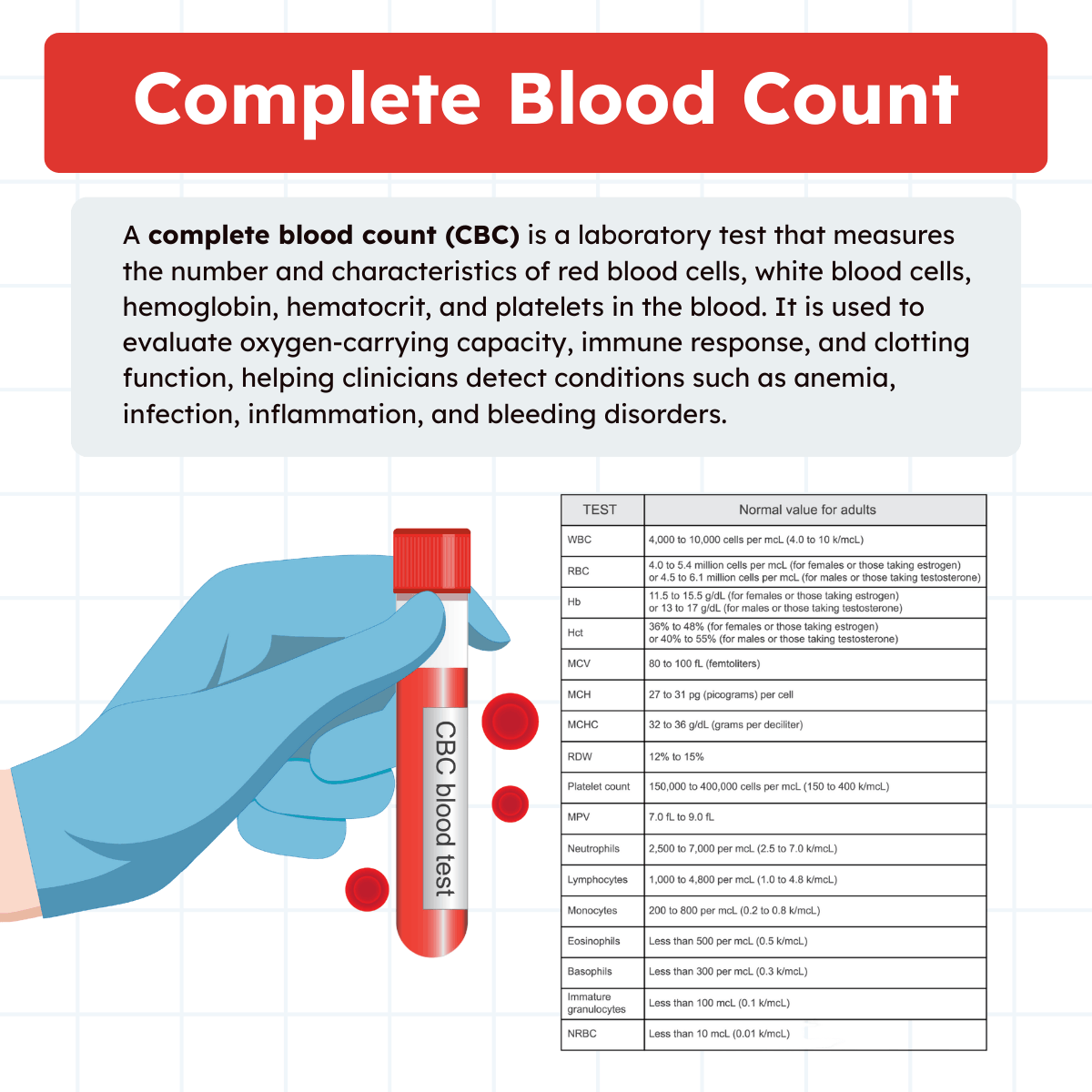
A complete blood count is a laboratory test that measures the cellular components of blood. Specifically, it evaluates:
- Red blood cells (RBCs), also called erythrocytes
- White blood cells (WBCs), also called leukocytes
- Platelets, also called thrombocytes
- Hemoglobin (Hb) concentration
- Hematocrit (Hct)
- RBC indices such as MCV, MCH, and MCHC
Blood is composed of plasma and formed elements. The formed elements include RBCs, WBCs, and platelets. The CBC focuses on quantifying and characterizing these cellular components.
In clinical practice, the CBC is used to screen for infection, anemia, inflammation, bleeding disorders, and bone marrow abnormalities. It is often one of the first diagnostic tools used when evaluating acutely ill patients.
Red Blood Cells and Oxygen Transport
Red blood cells are responsible for transporting oxygen from the lungs to the tissues and returning carbon dioxide to the lungs for elimination. This function is made possible by hemoglobin, the iron-containing protein within RBCs that binds oxygen.
Key RBC-related values in a CBC include:
- RBC count
- Hemoglobin (Hb)
- Hematocrit (Hct)
- Mean corpuscular volume (MCV)
- Mean corpuscular hemoglobin (MCH)
- Mean corpuscular hemoglobin concentration (MCHC)
Hemoglobin and Hematocrit
Hemoglobin reflects the blood’s oxygen-carrying capacity. Hematocrit represents the percentage of blood volume composed of red blood cells.
For respiratory therapists, hemoglobin is particularly important. A patient may have a normal arterial oxygen tension (PaO2) on an arterial blood gas, but if hemoglobin is low, total oxygen delivery to tissues is reduced. This is because oxygen content (CaO2) depends heavily on hemoglobin concentration.
For example, a patient with severe anemia may show adequate oxygen saturation yet still exhibit signs of hypoxia due to insufficient oxygen-carrying capacity.
Anemia and Respiratory Care
Anemia can contribute to:
- Dyspnea
- Fatigue
- Increased work of breathing
- Tachycardia
- Decreased exercise tolerance
Note: In patients with chronic lung disease such as COPD, anemia may significantly worsen symptoms. Respiratory therapists must consider hemoglobin levels when assessing oxygenation status and determining the need for supplemental oxygen.
White Blood Cells and Infection
White blood cells are critical components of the immune system. The total WBC count reflects the body’s inflammatory and immune response. A normal WBC count generally ranges from approximately 4,000 to 11,000 cells per microliter. Abnormal values can provide important clinical clues.
Leukocytosis
Leukocytosis refers to an elevated WBC count. It often represents a vigorous immune response, commonly due to:
- Infection
- Inflammation
- Trauma
- Stress
- Certain medications
A significantly elevated WBC count, particularly above 20 × 103/mcL, raises concern for serious infection. In respiratory care, this may suggest pneumonia, sepsis, acute bronchitis, or another infectious process affecting the lungs.
For respiratory therapists, leukocytosis may explain worsening oxygenation, increased secretions, fever, and changes in chest radiograph findings.
Leukopenia
Leukopenia, or leukocytopenia, refers to a low WBC count. It often signifies that the immune system has been overwhelmed by infection or that immunosuppression is present.
Common causes include:
- Severe infection
- Chemotherapy
- Bone marrow suppression
- Acquired immunodeficiency syndrome (AIDS)
Note: Patients with leukopenia are at high risk for infection. In the respiratory setting, even minor respiratory pathogens may lead to significant complications. Strict infection control measures become essential.
The Differential Count
The WBC count consists of five primary cell types:
- Neutrophils
- Lymphocytes
- Monocytes
- Eosinophils
- Basophils
Note: The differential provides the percentage of each type.
Neutrophils
Neutrophils are the primary defenders against bacterial infection. An increase in neutrophils often suggests a bacterial respiratory infection such as pneumonia.
Lymphocytes
Lymphocytes are involved in viral immunity. Elevated lymphocyte counts may indicate viral infections, including viral pneumonia or influenza.
Eosinophils
Eosinophils are associated with allergic reactions and parasitic infections. In respiratory care, elevated eosinophils may be seen in asthma or certain hypersensitivity conditions.
Note: Understanding the differential helps respiratory therapists anticipate disease progression and tailor interventions accordingly.
Platelets and Clotting
Platelets are responsible for blood clot formation. A normal platelet count ranges from approximately 150,000 to 450,000 per microliter.
Thrombocytopenia, or low platelet count, increases the risk of bleeding. In respiratory care, this is particularly relevant when:
- Performing suctioning
- Managing artificial airways
- Assisting with bronchoscopy
- Caring for patients on anticoagulation therapy
Note: Excessively low platelet counts may increase the risk of airway bleeding during procedures. Thrombocytosis, or elevated platelet count, may occur in inflammatory states or certain hematologic disorders.
CBC and Mortality Risk Assessment
A CBC is not only diagnostic but also prognostic. Certain clinical scoring systems use CBC values to estimate mortality risk in acutely ill patients.
Complete blood count, blood glucose, serum sodium, and blood urea nitrogen are commonly included in scoring systems used to predict outcomes in pneumonia and other critical illnesses.
Abnormal WBC counts, particularly extreme elevations or severe leukopenia, are associated with worse outcomes in respiratory infections.
CBC and Arterial Blood Gas Correlation
Respiratory therapists frequently interpret arterial blood gases (ABGs). While ABGs measure oxygenation and ventilation status, they do not directly assess oxygen-carrying capacity. This is where the CBC becomes essential.
For example:
- A patient may have normal PaO2 but low hemoglobin, resulting in decreased oxygen delivery
- A septic patient may have elevated WBCs along with metabolic acidosis
- Severe infection may present with leukocytosis and hypoxemia
Note: Combining CBC findings with ABG results provides a more comprehensive picture of respiratory status.
CBC in Chronic Respiratory Disease
Patients with chronic respiratory conditions often exhibit CBC abnormalities.
Chronic Obstructive Pulmonary Disease (COPD)
Some patients with chronic hypoxemia develop secondary polycythemia, an increase in RBC count and hematocrit. This occurs as the body attempts to compensate for low oxygen levels by producing more red blood cells.
Note: While this adaptation improves oxygen-carrying capacity, it may also increase blood viscosity and strain the cardiovascular system.
Asthma
Eosinophilia may be present in certain asthma phenotypes. Elevated eosinophils can help guide corticosteroid therapy decisions.
Interstitial Lung Disease
Anemia may worsen dyspnea and exercise limitation in these patients, compounding their respiratory impairment.
CBC in Acute Respiratory Failure
In critically ill patients, CBC values help guide clinical decisions.
- Rising WBC count may signal worsening infection
- Falling hemoglobin may indicate bleeding
- Severe anemia may necessitate transfusion
- Thrombocytopenia may affect procedural safety
Note: In cases of pneumonia, sepsis, or acute respiratory distress syndrome (ARDS), the CBC provides valuable information about inflammatory status and systemic involvement.
Clinical Application for Respiratory Therapists
Respiratory therapists should routinely review CBC results as part of patient assessment.
When evaluating a patient, consider:
- Is dyspnea due solely to lung pathology, or is anemia contributing?
- Is leukocytosis supporting a diagnosis of pneumonia?
- Is leukopenia increasing infection risk?
- Are platelet levels safe for airway procedures?
Understanding these relationships enhances clinical judgment and patient safety. The CBC also supports communication with the interdisciplinary team.
Respiratory therapists who understand laboratory data can more effectively collaborate with physicians and nurses to optimize patient care.
Complete Blood Count Practice Questions
1. What is a complete blood count (CBC)?
A complete blood count is a laboratory test that measures and evaluates the cellular components of blood.
2. Which three primary cell types are quantified in a CBC?
Red blood cells (erythrocytes), white blood cells (leukocytes), and platelets (thrombocytes) are measured.
3. What additional parameters related to red blood cells are included in a CBC?
Hemoglobin concentration, hematocrit, and red blood cell indices such as MCV, MCH, and MCHC are included.
4. What is the purpose of the WBC differential?
The WBC differential identifies the relative percentages of the five types of white blood cells.
5. What does leukocytosis indicate?
Leukocytosis refers to an elevated white blood cell count, often associated with infection, inflammation, stress, or trauma.
6. What WBC level raises concern for serious infection?
A WBC count greater than 20 × 10³/mcL may suggest a significant infection or strong immune response.
7. What is leukopenia?
Leukopenia is a white blood cell count below normal.
8. What are common causes of leukopenia?
Leukopenia may occur due to severe infection, bone marrow suppression, chemotherapy, or immunodeficiency conditions such as AIDS.
9. Why can leukopenia be concerning in acutely ill patients?
It may indicate immune system suppression or inability to mount an adequate response to infection.
10. What are the formed elements of blood?
The formed elements include red blood cells, white blood cells, and platelets.
11. What is the primary function of red blood cells?
Red blood cells transport oxygen from the lungs to tissues and return carbon dioxide to the lungs.
12. What protein enables red blood cells to carry oxygen?
Hemoglobin is the iron-containing protein responsible for oxygen binding.
13. What does hemoglobin concentration reflect?
Hemoglobin reflects the blood’s oxygen-carrying capacity.
14. What does hematocrit measure?
Hematocrit represents the percentage of total blood volume composed of red blood cells.
15. Why is hemoglobin especially important for respiratory therapists?
Hemoglobin determines oxygen content in the blood, directly affecting tissue oxygen delivery.
16. Can a patient have normal PaO2 but impaired oxygen delivery?
Yes, if hemoglobin is low, oxygen content and delivery may be reduced despite normal PaO2.
17. What formula component is most influenced by hemoglobin concentration?
Arterial oxygen content (CaO2) is heavily dependent on hemoglobin levels.
18. What are RBC indices used for?
RBC indices help classify different types of anemia.
19. What does mean corpuscular volume (MCV) measure?
MCV measures the average size of red blood cells.
20. What does mean corpuscular hemoglobin (MCH) measure?
MCH measures the average amount of hemoglobin per red blood cell.
21. What does mean corpuscular hemoglobin concentration (MCHC) measure?
MCHC measures the average concentration of hemoglobin within red blood cells.
22. What clinical conditions can be screened using a CBC?
A CBC can help identify infection, anemia, inflammation, bleeding disorders, and bone marrow abnormalities.
23. Why is the CBC often ordered in acutely ill patients?
It provides rapid information about oxygen-carrying capacity, immune status, and platelet function.
24. How can anemia contribute to dyspnea?
Reduced hemoglobin decreases oxygen delivery, increasing respiratory demand.
25. What cardiovascular sign may accompany anemia?
Tachycardia often occurs as compensation for reduced oxygen-carrying capacity.
26. How can anemia affect patients with chronic lung disease?
Anemia may worsen hypoxemia symptoms and increase work of breathing in conditions like COPD.
27. Why must oxygen therapy decisions consider hemoglobin levels?
Supplemental oxygen may not correct reduced oxygen content if anemia is present.
28. What role do platelets play in the body?
Platelets are essential for blood clotting and hemostasis.
29. Why is platelet count important in respiratory care?
Low platelet counts increase bleeding risk during invasive procedures.
30. How can a CBC contribute to mortality risk scoring?
CBC values, along with other lab data, help assess severity of illness and predict outcomes.
31. What is the primary function of white blood cells (WBCs)?
White blood cells are responsible for defending the body against infection and mediating inflammatory responses.
32. What is the normal adult range for total WBC count?
A normal WBC count generally ranges from approximately 4,000 to 11,000 cells per microliter.
33. What is leukocytosis?
Leukocytosis is an elevated white blood cell count above the normal range.
34. What are common causes of leukocytosis?
Infection, inflammation, trauma, physiologic stress, and certain medications can cause leukocytosis.
35. Why is a WBC count greater than 20 × 10³/mcL concerning?
Such elevations may indicate a severe infection or systemic inflammatory response.
36. How can leukocytosis affect respiratory assessment?
It may support a diagnosis of pneumonia, sepsis, bronchitis, or other pulmonary infections.
37. What is leukopenia?
Leukopenia is a decreased white blood cell count below normal.
38. Why are patients with leukopenia at increased infection risk?
A reduced WBC count impairs the body’s ability to mount an effective immune response.
39. What are common causes of leukopenia?
Severe infection, chemotherapy, bone marrow suppression, and immunodeficiency conditions can cause leukopenia.
40. Why is infection control especially important in leukopenic patients?
Even minor pathogens can lead to serious complications due to weakened immunity.
41. What is a WBC differential?
A WBC differential reports the percentage of each type of white blood cell.
42. What are the five primary types of white blood cells?
Neutrophils, lymphocytes, monocytes, eosinophils, and basophils are the five major types.
43. What is the primary role of neutrophils?
Neutrophils are the main defenders against bacterial infections.
44. What does neutrophilia typically suggest?
An elevated neutrophil count often indicates bacterial infection.
45. What is the primary function of lymphocytes?
Lymphocytes are central to viral immunity and adaptive immune responses.
46. What does lymphocytosis commonly indicate?
An increased lymphocyte count often suggests viral infection.
47. What is the role of eosinophils?
Eosinophils are associated with allergic responses and parasitic infections.
48. In which respiratory condition is eosinophilia commonly observed?
Elevated eosinophils are often seen in certain asthma phenotypes.
49. Why is understanding the differential important for respiratory therapists?
It helps anticipate infection type and guide appropriate interventions.
50. What is the normal platelet count range?
A normal platelet count ranges from approximately 150,000 to 450,000 per microliter.
51. What is thrombocytopenia?
Thrombocytopenia is a platelet count below the normal range.
52. Why is thrombocytopenia concerning in respiratory care?
Low platelet levels increase the risk of bleeding during procedures such as suctioning or bronchoscopy.
53. What is thrombocytosis?
Thrombocytosis is an elevated platelet count.
54. In what conditions might thrombocytosis occur?
It may occur in inflammatory states or certain hematologic disorders.
55. How is the CBC used in mortality risk assessment?
CBC values are incorporated into clinical scoring systems to estimate severity of illness and prognosis.
56. Why are extreme WBC abnormalities associated with worse outcomes?
Severe leukocytosis or leukopenia may reflect overwhelming infection or immune dysfunction.
57. How do CBC results complement arterial blood gas (ABG) analysis?
CBC evaluates oxygen-carrying capacity and immune status, while ABG assesses gas exchange and acid-base balance.
58. Why might a patient with normal PaO2 still have tissue hypoxia?
Low hemoglobin can reduce oxygen content despite normal arterial oxygen tension.
59. How can sepsis affect CBC and ABG findings simultaneously?
Sepsis may cause leukocytosis and metabolic acidosis with impaired oxygenation.
60. Why is reviewing CBC results essential for respiratory therapists?
It enhances clinical decision-making, improves patient safety, and supports interdisciplinary collaboration.
61. What does an elevated hematocrit indicate?
An elevated hematocrit suggests an increased proportion of red blood cells in the blood, which may occur with dehydration or polycythemia.
62. What is polycythemia?
Polycythemia is an abnormal increase in red blood cell count and hematocrit.
63. How can chronic hypoxemia lead to polycythemia?
Chronic low oxygen levels stimulate erythropoietin release, increasing red blood cell production.
64. Why can polycythemia be problematic in respiratory patients?
Increased blood viscosity may strain the cardiovascular system and increase thrombotic risk.
65. What does a decreased hematocrit typically indicate?
A low hematocrit usually reflects anemia or acute blood loss.
66. What is the significance of a falling hemoglobin level in the ICU?
It may indicate active bleeding or dilutional anemia.
67. What is mean corpuscular volume (MCV) used to classify?
MCV helps classify anemia as microcytic, normocytic, or macrocytic.
68. What does a low MCV suggest?
A low MCV typically suggests microcytic anemia, often due to iron deficiency.
69. What does a high MCV indicate?
A high MCV suggests macrocytic anemia, which may be related to vitamin B12 or folate deficiency.
70. What does mean corpuscular hemoglobin concentration (MCHC) assess?
MCHC evaluates the concentration of hemoglobin within red blood cells.
71. What does a low MCHC indicate?
A low MCHC suggests hypochromic anemia, often associated with iron deficiency.
72. Why is anemia especially concerning in patients with COPD?
Anemia further reduces oxygen delivery in patients who already have impaired gas exchange.
73. How can severe anemia affect ventilator weaning?
Reduced oxygen-carrying capacity may increase fatigue and delay successful weaning.
74. What does an elevated WBC with a left shift indicate?
A left shift indicates increased immature neutrophils, often seen in acute bacterial infection.
75. What are bands in a WBC differential?
Bands are immature neutrophils released during significant infection or stress.
76. What is neutropenia?
Neutropenia is a decreased neutrophil count, increasing susceptibility to bacterial infections.
77. Why is neutropenia dangerous in hospitalized patients?
It significantly increases the risk of severe bacterial and fungal infections.
78. What does monocytosis suggest?
An elevated monocyte count may indicate chronic infection or inflammation.
79. What role do basophils play in immune response?
Basophils are involved in inflammatory and allergic reactions.
80. How can systemic inflammation affect platelet count?
Inflammatory states may increase platelet production, causing thrombocytosis.
81. What is the clinical concern with severe thrombocytopenia?
Severe thrombocytopenia increases the risk of spontaneous bleeding.
82. Why should platelet count be reviewed before bronchoscopy?
Low platelets increase the risk of procedural bleeding.
83. What does pancytopenia describe?
Pancytopenia refers to a reduction in red blood cells, white blood cells, and platelets.
84. What conditions may cause pancytopenia?
Bone marrow disorders, severe infection, or chemotherapy can cause pancytopenia.
85. How can acute blood loss affect CBC values?
It may initially show normal values, followed by decreased hemoglobin and hematocrit as plasma volume equilibrates.
86. Why may dehydration falsely elevate hemoglobin and hematocrit?
Reduced plasma volume concentrates red blood cells, artificially increasing values.
87. What is the importance of trending CBC values?
Trends provide more meaningful clinical information than isolated measurements.
88. How can chronic inflammation affect hemoglobin levels?
Chronic disease may cause anemia of inflammation.
89. Why is CBC monitoring important in sepsis?
WBC and platelet trends help assess infection severity and systemic response.
90. What does thrombocytopenia combined with sepsis suggest?
It may indicate disseminated intravascular coagulation or severe systemic illness.
91. How does acute respiratory distress syndrome (ARDS) relate to CBC findings?
ARDS may be associated with leukocytosis due to systemic inflammation.
92. Why is hemoglobin important in evaluating hypoxemia?
Low hemoglobin reduces oxygen content even if saturation appears normal.
93. What is the difference between oxygen saturation and oxygen content?
Oxygen saturation measures percentage of hemoglobin bound to oxygen, while oxygen content reflects total oxygen carried.
94. How can chronic hypoxia affect RBC production?
It stimulates increased erythropoiesis to improve oxygen delivery.
95. What CBC abnormality might be seen in chronic smokers?
Smokers may develop secondary polycythemia due to chronic hypoxia.
96. Why is CBC evaluation important before initiating anticoagulation?
Platelet levels influence bleeding risk.
97. What does anemia of chronic disease typically present as?
It often presents as normocytic, normochromic anemia.
98. How can major surgery impact WBC count?
Postoperative stress can cause transient leukocytosis.
99. Why is CBC review essential in acute respiratory failure?
It helps identify anemia, infection, or bleeding contributing to respiratory compromise.
100. How does understanding CBC results improve respiratory therapy practice?
It enhances assessment accuracy, supports safe interventions, and improves interdisciplinary communication.
Final Thoughts
The complete blood count (CBC) is far more than a routine laboratory test. It provides essential insight into oxygen delivery, immune response, and hemostasis. For respiratory therapists, these values directly influence clinical decision-making in both acute and chronic care settings.
From identifying infection and assessing anemia to evaluating procedural risk and interpreting oxygenation status, the CBC plays a vital role in respiratory care.
Mastery of CBC interpretation enhances patient assessment, improves collaboration with the healthcare team, and ultimately contributes to safer and more effective respiratory management.

Written by:
John Landry is a registered respiratory therapist from Memphis, TN, and has a bachelor's degree in kinesiology. He enjoys using evidence-based research to help others breathe easier and live a healthier life.
References
- El Brihi J, Pathak S. Normal and Abnormal Complete Blood Count With Differential. [Updated 2024 Jun 8]. In: StatPearls [Internet]. Treasure Island (FL): StatPearls Publishing; 2025.