

Just when many people thought COVID-19 was finally settling into the background, reports of rising cases have started making headlines again. Social media, news outlets, and local health departments are all talking about a noticeable uptick in infections heading into 2026.
For a world eager to leave the pandemic years behind, this brings up an understandable question: Is COVID-19 making a comeback?
While today’s situation is very different from the crisis-level surges of 2020–2022, COVID-19 has not disappeared. Instead, it continues to evolve, circulate, and cause periodic increases in respiratory illnesses — especially during colder months.
This article breaks down why cases are rising again, what this means for everyday life, and what to expect throughout 2026.
Is COVID-19 Making a Comeback?
Yes, COVID-19 is rising again in several regions, which indicates a clear resurgence. However, this “comeback” looks very different from the early pandemic. Thanks to widespread immunity from vaccination and previous infections, most people who contract the virus now experience mild or moderate symptoms rather than life-threatening illness.
COVID-19 has transitioned into an endemic virus, meaning it never fully goes away. Instead, it circulates at lower levels and then rises during certain seasons, much like the flu or other common respiratory infections. The increase in cases heading into 2026 reflects that natural pattern.
Even though new waves are expected, they can still affect communities — especially vulnerable groups, older adults, and people with chronic health conditions.
Why Are COVID-19 Cases Increasing Again?
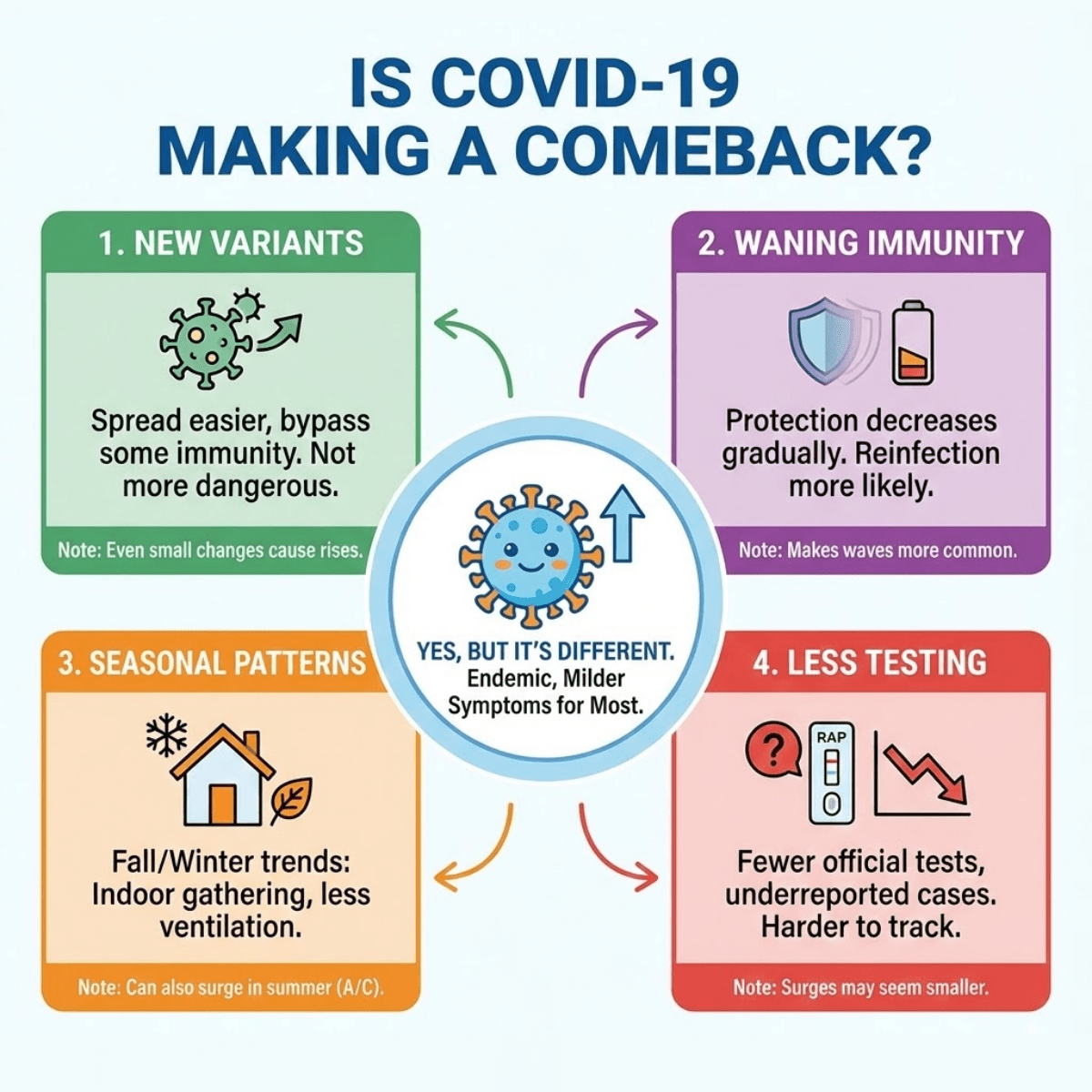
1. New Variants Continue to Emerge
Viruses change over time, and COVID-19 is no exception. New variants can spread more easily or partially bypass immunity. This does not mean these variants are more dangerous; they may simply be better at infecting people who have not been recently vaccinated or exposed.
Note: Even small genetic changes can cause noticeable rises in cases.
2. Immunity Naturally Wears Off
Whether someone gained immunity from a vaccine, a previous infection, or both, protection decreases gradually. This doesn’t mean immunity disappears; it still helps prevent severe disease, but it does make reinfection more likely.
Note: As immunity fades, waves of COVID-19 become more common, especially if a new variant begins to spread.
3. Seasonal Patterns Are Becoming Clear
COVID-19 now follows seasonal trends similar to other respiratory viruses. During fall and winter:
- People gather indoors more often
- Ventilation decreases
- Air is drier, which helps viruses spread
- Travel increases during holidays
Note: All these factors make it easier for COVID-19 to circulate. Some regions also experience a smaller surge during summer, especially in very hot climates where people stay indoors with air conditioning.
4. Less Testing Means Less Awareness
Unlike in early 2020–2022, fewer people take official tests, and many rely on at-home kits without reporting results. Because of this:
- Case numbers appear lower on paper than they truly are
- Surges may seem smaller until hospital data or wastewater monitoring show increases
Note: This reduction in testing makes COVID-19 harder to track in real time, which is why local trends sometimes appear to spike suddenly.
How This Resurgence Differs From the Early Pandemic
While COVID-19 is rising again, it’s important to understand how 2026 differs from the frightening uncertainty of the pandemic years.
1. Most Cases Are Mild
Due to widespread immunity, many infections now resemble:
- A bad cold
- A short flu-like illness
- A sore throat and cough
- Fatigue lasting a few days
Note: Serious complications still occur, but they are less common than before.
2. Vaccines and Treatments Are Better Than Ever
Updated vaccines target newer variants, helping reduce the severity of illness. Antiviral medications are more available and more effective in preventing complications when taken early. These tools give people far more control over their illness than they had in 2020.
3. Healthcare Systems Are Prepared
Hospitals and clinics now understand how to treat COVID-19 efficiently. There is no longer a shortage of ventilators, protective equipment, or treatment protocols. Most facilities can handle seasonal surges the way they do with the flu.
4. Predictable Waves, Not Chaos
COVID-19 is behaving more like other respiratory illnesses that rise and fall throughout the year. We now understand the patterns and can anticipate when cases are likely to increase. This predictability helps communities prepare without widespread panic or sudden closures.
What is Long COVID?
Long COVID refers to a range of symptoms that continue for weeks or months after the initial COVID-19 infection has resolved. While most people recover within a few days or weeks, some experience lingering effects that interfere with daily life. Long COVID can affect anyone, including people who had mild or even symptom-free infections.
Common symptoms include fatigue, shortness of breath, brain fog, headaches, sleep problems, chest discomfort, and difficulty concentrating. Some individuals also report changes in taste or smell, joint or muscle pain, digestive issues, or a rapid heartbeat. Symptoms can come and go, appear suddenly, or gradually improve over time.
Researchers believe Long COVID results from a combination of factors such as immune system changes, inflammation, viral remnants in the body, or disruptions in the nervous system. There is no single test for Long COVID, so diagnosis is based on symptoms and medical history.
Note: Treatment focuses on managing symptoms, rebuilding physical stamina, improving sleep, and supporting mental health. While recovery varies from person to person, many individuals see gradual improvement with time, rest, and proper medical care.
What to Expect Throughout 2026
COVID-19 will continue to circulate, and communities may see fluctuations at different times. Based on current patterns and projections, here’s what the year may look like:
- Seasonal Surges: Late fall and winter will likely bring the highest number of cases. Summer and early fall may have smaller bumps depending on regional factors and variant behavior.
- Mostly Mild to Moderate Illness: Most cases should stay on the mild side, but older adults, pregnant individuals, and those with chronic health conditions may still face higher risks.
- Possibility of New Variants: New variants will continue to emerge. Most will not cause major problems, but a variant with significant immune escape could temporarily increase hospitalizations.
- Continued Vaccine Updates: Like the flu shot, updated COVID-19 vaccines will likely become an annual recommendation for many people.
How to Protect Yourself and Your Community
Even as COVID-19 becomes a routine part of life, simple steps can reduce the risk of infection and complications:
- Improve indoor ventilation, particularly during gatherings
- Wash your hands often and avoid touching your face
- Wear a mask in crowded indoor areas during high-transmission periods
- Stay home when sick to prevent spreading illness to others
- Seek medical care early if symptoms worsen
Note: These strategies are not meant to cause fear; they simply help keep communities healthier during respiratory virus season.
FAQs About COVID-19 Making a Comeback
Why Are People Suddenly Getting COVID-19 Again?
People are getting COVID-19 again because immunity from previous infections or vaccinations naturally decreases over time, making reinfections easier. New variants also spread more efficiently and may partially escape existing immunity.
Seasonal factors like colder weather, indoor gatherings, and holiday travel contribute to rising cases. Reduced testing and less public awareness can make the increase seem sudden, even though the virus has continued circulating at lower levels throughout the year.
Is There Going To Be Another Pandemic?
Another pandemic caused by COVID-19 is unlikely because widespread immunity and better medical tools have greatly reduced the severity of most infections. Future global pandemics from other viruses are always possible, but COVID-19 itself has transitioned into an endemic virus that produces seasonal waves rather than large-scale worldwide outbreaks.
Note: Health agencies closely monitor new variants, and current evidence suggests they are more likely to cause regional surges instead of a new pandemic event.
How Serious Is It To Get COVID-19 Now?
For most healthy individuals, COVID-19 today is less severe than in earlier years due to broad immunity from vaccines and past infections. Many cases resemble a flu-like illness with mild to moderate symptoms.
However, it can still be serious for older adults, pregnant individuals, and those with chronic health conditions. Complications such as pneumonia, dehydration, and lingering symptoms known as Long COVID remain possible, so early care and monitoring are still important.
How Are New Variants Of COVID-19 Different From Previous Strains?
New variants differ mainly in how easily they spread and how well they can bypass some existing immunity. Most do not cause more severe disease, but they may lead to more infections because they attach to human cells more effectively or replicate faster.
These variants often arise from small genetic changes in the virus. Updated vaccines help improve protection, especially against variants that are circulating widely during the respiratory season.
How Long Are You Protected After Getting COVID-19?
Immunity after infection usually offers protection for several months, especially against severe disease. However, the level of protection varies from person to person and declines gradually over time.
Reinfections can occur as immunity fades or when new variants emerge that differ from earlier strains. People generally have the strongest protection in the first three to six months after infection. Staying current on vaccines helps boost immunity and extend protection against future infections.
Final Thoughts
COVID-19 is making a comeback heading into 2026, but not in the alarming way many people might imagine. Instead of being a global emergency, it has become a recurring seasonal virus that rises and falls throughout the year.
New variants, waning immunity, and seasonal behavior all contribute to these waves, but widespread immunity and medical advances have dramatically reduced the severity of most infections.
The virus is still something to take seriously, especially for people at higher risk, but it no longer dominates daily life the way it once did. With awareness, updated vaccines, and simple precautions, communities can navigate COVID-19’s ongoing presence safely and confidently.

Written by:
John Landry is a registered respiratory therapist from Memphis, TN, and has a bachelor's degree in kinesiology. He enjoys using evidence-based research to help others breathe easier and live a healthier life.
References
- Antar AAR, Peluso MJ. CROI 2025: Acute and Postacute COVID-19. Top Antivir Med. 2025.