

Digital clubbing is a physical finding in which the ends of the fingers or toes become enlarged, rounded, and abnormal in appearance. It is most often recognized during inspection of the hands, but it may also involve the feet.
In respiratory care, clubbing is important because it can suggest chronic cardiopulmonary disease or another long-standing systemic disorder.
Although clubbing does not diagnose a specific condition by itself, it provides a valuable bedside clue that should prompt further assessment of the patient’s history, oxygenation status, symptoms, and diagnostic findings.

What is Digital Clubbing?
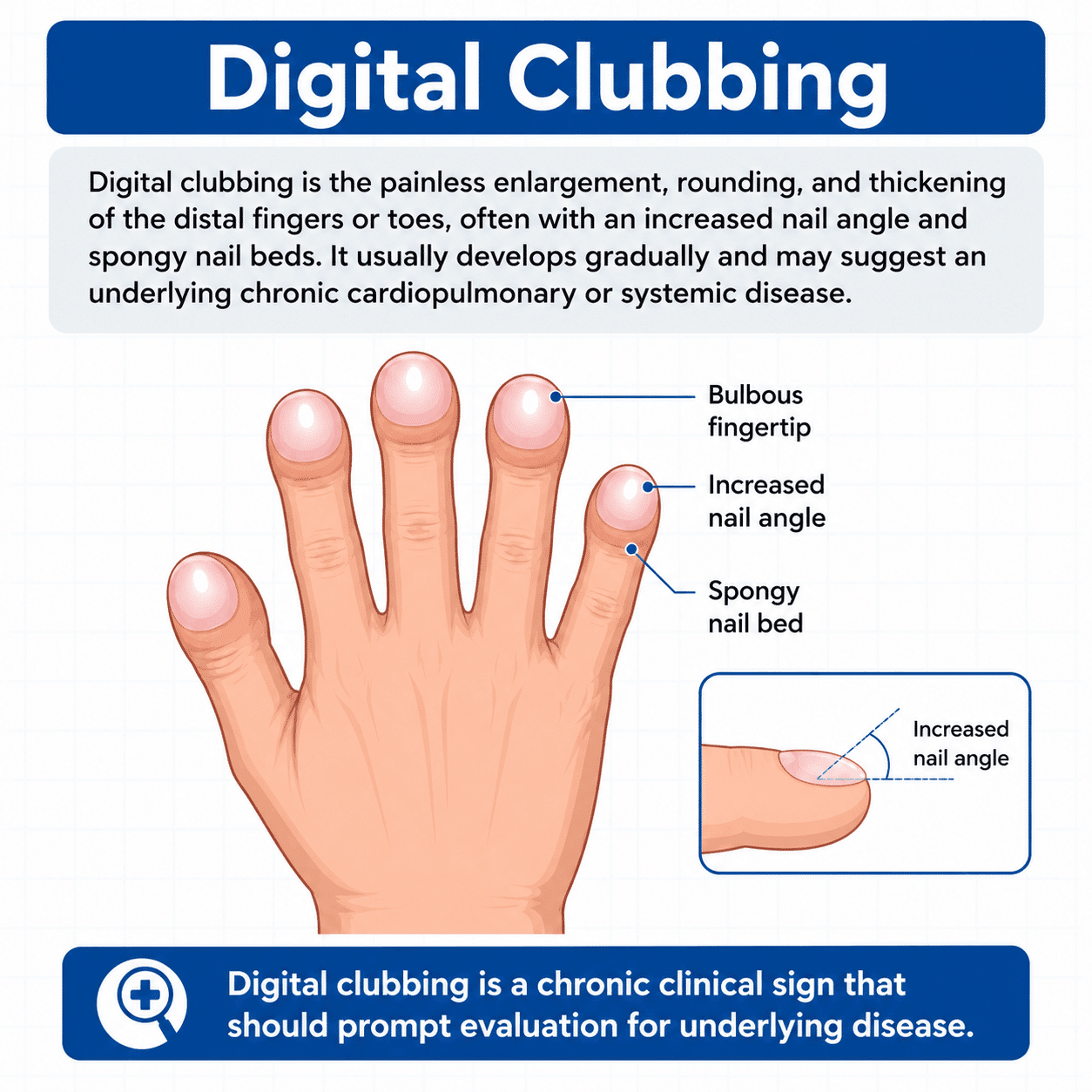
Digital clubbing refers to painless enlargement of the terminal phalanges of the fingers or toes. The terminal phalanges are the distal portions of the digits, meaning the tips of the fingers or toes. In a patient with clubbing, the fingertips may appear rounded, swollen, bulbous, or wider than normal.
This condition usually develops gradually over time. It is not typically an acute finding, and it is not usually painful. Because of this, many patients may not notice the change right away. In some cases, clubbing is first identified during a physical examination by a clinician.
Clubbing is most commonly discussed as a sign of chronic respiratory or cardiovascular disease, but it can also be associated with gastrointestinal, hepatic, infectious, inflammatory, and malignant conditions. For respiratory therapists, nurses, physicians, and students, recognizing clubbing is important because it may point toward an underlying disease process that requires further investigation.
Why Digital Clubbing Matters
Digital clubbing matters because it is a visible bedside clue. It can suggest that the patient may have a long-standing condition affecting the lungs, heart, blood vessels, or systemic circulation. It is especially important in respiratory care because many of the diseases associated with clubbing involve chronic pulmonary impairment, recurrent infection, abnormal gas exchange, or malignancy.
Clubbing should not be interpreted in isolation. The presence of clubbed fingers does not automatically identify the diagnosis. Instead, it should be combined with other clinical information, including:
- The patient’s medical history
- Smoking history
- Respiratory symptoms
- Breath sounds
- Oxygen saturation
- Arterial blood gas results
- Chest imaging
- Pulmonary function test results
- Sputum production
- Signs of infection
- Signs of cardiac disease
For example, clubbing in a patient with chronic cough, recurrent infections, and thick sputum may raise concern for bronchiectasis or cystic fibrosis.
Clubbing in a patient with unexplained weight loss, hemoptysis, and abnormal chest imaging may raise concern for lung cancer. Clubbing in a patient with cyanosis, edema, and congenital heart disease may suggest a chronic cardiopulmonary cause.
Physical Appearance of Digital Clubbing
The appearance of clubbing is usually described in relation to changes in the nail, nail bed, and distal digit. One of the classic findings is an increased angle between the fingernail and the nail base. Normally, the nail forms a more typical angle with the skin at the base of the nail. In clubbing, this angle becomes flattened, widened, or more rounded.
As clubbing progresses, the fingertip may become bulbous. The distal portion of the finger may appear enlarged from side to side and from front to back. In more advanced cases, the depth of the finger near the nail base may become greater than the depth of the interphalangeal joint.
Common visible features of clubbing include:
- Rounded or bulbous fingertips
- Increased nail angle
- Enlargement of the distal fingers or toes
- Thickening of the tissue near the nail bed
- Curved nails
- Loss of the normal nail contour
- Possible cyanotic appearance of the nail beds
Note: Clubbing may be mild or severe. Mild clubbing can be subtle and may require careful inspection and palpation. Severe clubbing is easier to recognize because the distal digits appear clearly enlarged and rounded.
Sponginess of the Nail Bed
One of the most important assessment findings in clubbing is sponginess of the nail bed. This means the tissue at the base of the nail feels soft, compressible, or floating when palpated. The nail may feel less firmly attached to the underlying tissue than expected.
This is an important point because clubbing is not identified by inspection alone. Visual changes can be subtle, especially in early clubbing. Palpation of the nail bed can help confirm the finding. For respiratory therapy students, this is a high-yield concept: clubbing involves both appearance and feel.
When assessing for clubbing, the clinician should inspect the fingers from the side and front, then gently palpate the nail bed. The presence of a spongy nail bed, along with an increased nail angle and rounded fingertip, supports the finding of digital clubbing.
Schamroth’s Test
Schamroth’s test is a simple bedside method used to screen for digital clubbing. The patient places the dorsal surfaces of the distal phalanges of the index fingers together, with the nails facing each other. In a person without clubbing, a small diamond-shaped space is normally visible between the nails.
When clubbing is present, this normal diamond-shaped space is reduced or absent. The loss of this space is sometimes called obliteration of the Schamroth window.
Schamroth’s test is useful because it is quick, noninvasive, and requires no equipment. However, it should be used as part of the overall assessment rather than as the only method of identifying clubbing. The clinician should still inspect the nail angle, observe the shape of the fingertips, and palpate the nail beds.
How Digital Clubbing Develops
The exact mechanism of digital clubbing is not completely understood. However, it is generally believed to involve abnormal changes in blood flow, vascular tissue, connective tissue, and growth factors in the distal digits. Chronic disease processes may alter circulation or promote tissue changes near the nail bed.
Chronic hypoxemia has often been associated with clubbing, but it does not fully explain every case. Some patients with chronic low oxygen levels develop clubbing, while others do not. Some diseases that cause clubbing may involve inflammation, malignancy, infection, abnormal vascular circulation, or systemic changes that affect the distal fingers and toes.
Possible mechanisms may include:
- Increased blood flow to the distal digits
- Vascular dilation
- Connective tissue proliferation
- Changes in platelet or growth factor activity
- Chronic inflammation
- Long-standing cardiopulmonary stress
Note: Because the mechanism is complex, clinicians should focus on what clubbing means clinically. It is a chronic physical sign that should prompt careful evaluation for underlying pulmonary, cardiac, malignant, hepatic, or systemic disease.
Respiratory Diseases Associated with Digital Clubbing
Digital clubbing is strongly associated with several chronic respiratory conditions. In these cases, clubbing may reflect long-standing lung disease, recurrent infection, impaired gas exchange, or malignancy.
Interstitial Lung Disease
Interstitial lung disease is one of the important respiratory associations with clubbing. These diseases affect the lung interstitium, which is the tissue and space around the alveoli. When the interstitium becomes inflamed, thickened, or scarred, gas exchange can become impaired.
Patients with interstitial lung disease may present with progressive dyspnea, dry cough, reduced lung volumes, inspiratory crackles, and abnormal imaging findings. Clubbing may be seen in some patients, especially when the disease is chronic or advanced.
The presence of clubbing in a patient with progressive shortness of breath should make the clinician think beyond simple airway obstruction. It may suggest a disease process involving the lung parenchyma or interstitial tissue.
Bronchiectasis
Bronchiectasis is another major respiratory condition associated with digital clubbing. It involves permanent dilation and damage of the bronchi or bronchioles. This damage can lead to impaired mucus clearance, chronic sputum production, recurrent infection, and airway inflammation.
Patients with bronchiectasis may have chronic cough, large amounts of sputum, recurrent respiratory infections, coarse crackles, abnormal chest imaging, and obstructive changes on pulmonary function testing. When clubbing is present with these findings, it supports the possibility of chronic bronchiectatic disease.
Bronchiectasis may occur due to prior severe lung infection, cystic fibrosis, immune deficiency, aspiration, airway obstruction, or other chronic lung conditions. Because it is often long-standing, clubbing may develop gradually over time.
Cystic Fibrosis
Cystic fibrosis is a high-yield association with digital clubbing, especially in respiratory therapy exam preparation. It is an inherited disorder that affects exocrine gland function and leads to thick secretions, chronic respiratory infections, pancreatic insufficiency, and progressive lung disease.
Patients with cystic fibrosis may present with:
- Chronic cough
- Thick sputum production
- Recurrent respiratory infections
- Sinusitis
- Nasal polyps
- Steatorrhea
- Failure to thrive
- Low body weight
- Progressive obstructive lung disease
- Digital clubbing
Note: In a patient with clubbing, chronic sputum production, recurrent infections, and gastrointestinal findings, cystic fibrosis should be considered. Diagnostic findings may include abnormal sweat chloride testing, genetic testing, chest imaging abnormalities, and pulmonary function testing that shows progressive obstruction.
Lung Cancer
Lung cancer, especially bronchogenic carcinoma, is an important cause of digital clubbing. Clubbing does not diagnose lung cancer by itself, but it can be a visible clue when combined with other concerning findings.
A patient with clubbing should be evaluated carefully if they also have:
- Persistent cough
- Hemoptysis
- Unexplained weight loss
- Fatigue
- Chest pain
- Smoking history
- Abnormal chest x-ray
- Suspicious CT findings
- Poor response to usual therapy
Note: Clubbing associated with lung cancer may occur as part of a paraneoplastic process, where the tumor produces systemic effects outside the primary site of disease. For this reason, clubbing in a patient with new or unexplained respiratory symptoms should not be ignored.
Sarcoidosis
Sarcoidosis is an inflammatory disease that can affect the lungs and other organs. It is characterized by granuloma formation and may cause chronic pulmonary symptoms. Although clubbing is not the most classic finding in sarcoidosis, it has been listed among conditions associated with digital clubbing.
Patients with sarcoidosis may have cough, dyspnea, fatigue, chest discomfort, lymphadenopathy, or abnormal chest imaging. If clubbing is present, the clinician should consider the chronic nature of the disease and evaluate the patient’s overall pulmonary status.
Cardiovascular Conditions Associated with Digital Clubbing
Digital clubbing can also occur in cardiovascular disease, especially when abnormal circulation or chronic oxygenation problems are present.
Congenital Heart Disease
Congenital heart disease is one of the classic cardiac associations with clubbing. This is especially true when the condition causes chronic cyanosis or abnormal right-to-left shunting. In these cases, deoxygenated blood may bypass the lungs and enter systemic circulation, contributing to chronic hypoxemia.
Patients may show signs such as cyanosis, exertional dyspnea, fatigue, murmurs, poor exercise tolerance, and clubbing. In long-standing cyanotic congenital heart disease, clubbing may be prominent.
Pulmonary Hypertension
Pulmonary hypertension refers to elevated pressure in the pulmonary circulation. It may occur due to pulmonary arterial hypertension, chronic lung disease, left heart disease, chronic thromboembolic disease, or other causes.
Physical findings in pulmonary hypertension may include an accentuated second heart sound, right ventricular heave, jugular venous distention, peripheral edema, hepatomegaly, cyanosis, cool extremities, and signs of right-sided heart strain. Clubbing may be seen when pulmonary hypertension is associated with congenital heart disease, interstitial lung disease, pulmonary vascular disease, or liver disease.
In respiratory care, this matters because pulmonary hypertension often overlaps with chronic lung disease. A patient with dyspnea, hypoxemia, edema, and clubbing may require evaluation for both pulmonary and cardiovascular causes.
Infective Endocarditis
Infective endocarditis is an infection of the inner lining of the heart, usually involving the heart valves. It can produce systemic signs and may be associated with clubbing, particularly when the disease is prolonged.
Patients may have fever, fatigue, murmur, embolic findings, abnormal blood cultures, and signs of systemic illness. Clubbing in this context reflects the importance of considering cardiac and infectious causes, not only pulmonary causes.
Systemic Conditions Associated with Digital Clubbing
Although clubbing is often discussed in respiratory assessment, it is not limited to respiratory disease. Several systemic conditions can also be associated with clubbing.
Severe Liver Disease
Severe liver failure and other chronic hepatic disorders may be associated with digital clubbing. Liver disease can affect circulation, metabolism, inflammation, and systemic vascular function. In some patients, clubbing may appear along with jaundice, ascites, edema, fatigue, abnormal liver function tests, or signs of portal hypertension.
When clubbing is present without an obvious pulmonary explanation, clinicians should remember that hepatic causes are possible.
Inflammatory Bowel Disease
Inflammatory bowel disease, including Crohn’s disease and ulcerative colitis, has also been associated with clubbing. These conditions involve chronic inflammation of the gastrointestinal tract and may produce systemic manifestations outside the intestines.
A patient with clubbing and a history of chronic diarrhea, abdominal pain, weight loss, anemia, or inflammatory bowel disease may have clubbing related to systemic inflammation rather than primary lung disease.
Chronic Infection and Inflammation
Long-standing infection and inflammation can contribute to clubbing in certain patients. This is seen in conditions such as bronchiectasis, cystic fibrosis, lung abscess, empyema, and infective endocarditis. In these cases, clubbing reflects a chronic disease process rather than an isolated problem with the digits.
Digital Clubbing and COPD
One of the most important exam and clinical points is the relationship between clubbing and COPD. COPD is a chronic obstructive lung disease that commonly causes dyspnea, cough, sputum production, wheezing, airflow obstruction, hyperinflation, and abnormal gas exchange. However, clubbing should not automatically be attributed to COPD alone.
This distinction is important because many patients with COPD have chronic hypoxemia, and it may be tempting to assume that hypoxemia from COPD causes clubbing. However, clubbing in a patient with COPD should raise concern for another condition occurring in addition to COPD.
Possible additional conditions include:
- Lung cancer
- Bronchiectasis
- Interstitial lung disease
- Cystic fibrosis
- Congenital heart disease
- Chronic cardiovascular disease
- Severe liver disease
- Inflammatory bowel disease
For example, a patient with COPD and clubbing who also has hemoptysis, weight loss, and a suspicious lung mass should be evaluated for lung cancer. A patient with COPD-like symptoms, chronic sputum production, recurrent infections, and clubbing may actually have bronchiectasis or another chronic suppurative lung disease.
Note: For the board exam, this is a key point: do not treat clubbing as a routine COPD finding. If clubbing is present, look for another explanation or an additional disease process.
Digital Clubbing vs. Cyanosis
Digital clubbing and cyanosis are different physical findings, although they may occur together. Cyanosis refers to a blue or gray discoloration of the skin or mucous membranes, usually associated with increased deoxygenated hemoglobin. It may be seen in the lips, nail beds, tongue, or extremities.
Clubbing refers to structural enlargement and rounding of the distal digits. It develops gradually and reflects chronic disease processes.
The two findings can overlap. For example, a patient with cyanotic congenital heart disease may have both cyanosis and clubbing. A patient with chronic pulmonary disease may have cyanotic nail beds along with clubbed fingers. However, cyanosis is a color change, while clubbing is a structural change.
Note: Clinicians should not rely only on the visual appearance of cyanosis to assess oxygenation. Objective measurements such as pulse oximetry and arterial blood gas analysis are needed when oxygenation status is clinically important.
Digital Clubbing vs. Edema
Digital clubbing should also be distinguished from edema. Edema is swelling caused by excess fluid in the tissues. It commonly occurs in the lower extremities and may be associated with heart failure, venous disease, renal disease, liver disease, or fluid overload.
Clubbing is not simply fluid swelling. It involves chronic enlargement and tissue changes of the distal digits, especially around the nail bed. It is usually painless and gradual.
A patient may have both clubbing and edema, especially if chronic cardiopulmonary disease is present. For example, a patient with pulmonary hypertension or right-sided heart failure may have peripheral edema along with other findings such as jugular venous distention, hepatomegaly, cyanosis, and possibly clubbing depending on the underlying cause.
Assessment of Digital Clubbing
Assessment of digital clubbing begins with careful inspection of the hands and feet. The clinician should observe the shape of the fingertips, the angle of the nails, the contour of the nail beds, and the presence of any cyanosis or discoloration.
A basic assessment may include:
- Inspect the fingers from the side.
- Look for an increased nail angle.
- Observe whether the fingertips appear rounded or bulbous.
- Compare multiple digits.
- Palpate the nail bed for sponginess.
- Perform Schamroth’s test if needed.
- Inspect the toes if clinically appropriate.
- Assess for cyanosis, edema, skin temperature changes, or poor perfusion.
- Connect the finding with the patient’s history and symptoms.
Note: The finding should then be interpreted within the larger clinical picture. Clubbing in a patient with chronic cough and sputum production has different implications than clubbing in a patient with congenital heart disease or unexplained weight loss.
Questions to Ask When Clubbing is Present
When clubbing is identified, the clinician should gather more information to determine what may be causing it. Important questions may include:
- How long have the fingers or toes looked this way?
- Is there a history of chronic lung disease?
- Does the patient have chronic cough or sputum production?
- Are there recurrent respiratory infections?
- Is there hemoptysis?
- Has the patient had unexplained weight loss?
- Is there a history of smoking?
- Is there a history of congenital heart disease?
- Are there symptoms of inflammatory bowel disease?
- Is there known liver disease?
- Are oxygen levels chronically low?
- Has chest imaging shown abnormalities?
Note: These questions help guide the next steps in assessment and testing.
Diagnostic Evaluation
Digital clubbing itself is a physical finding, not a diagnosis. The diagnostic evaluation depends on the patient’s symptoms, history, and associated findings.
Possible tests may include:
- Pulse oximetry to assess oxygen saturation
- Arterial blood gas analysis to evaluate oxygenation, ventilation, and acid-base status
- Chest x-ray to screen for pulmonary abnormalities
- Chest CT to evaluate for bronchiectasis, interstitial lung disease, tumors, or other structural changes
- Pulmonary function testing to assess obstructive or restrictive patterns
- Sputum studies if infection is suspected
- Sweat chloride testing or genetic testing if cystic fibrosis is suspected
- Echocardiography if pulmonary hypertension or congenital heart disease is suspected
- Blood cultures if infective endocarditis is suspected
- Liver function testing if hepatic disease is suspected
- Gastrointestinal evaluation if inflammatory bowel disease is suspected
Note: The goal is not to “treat clubbing” directly. The goal is to identify and manage the underlying condition.
Treatment Considerations
There is no single treatment for digital clubbing itself. Management focuses on the disease causing it. If the underlying condition is treated or controlled, clubbing may stabilize, and in some cases it may partially improve. However, longstanding clubbing may not fully resolve.
Examples include:
- Treating chronic respiratory infection in bronchiectasis
- Managing cystic fibrosis with airway clearance, medications, infection control, and nutritional support
- Evaluating and treating lung cancer when present
- Managing interstitial lung disease according to its cause and severity
- Treating infective endocarditis with appropriate antimicrobial therapy and cardiac management
- Managing pulmonary hypertension and right heart strain
- Addressing severe liver disease or inflammatory bowel disease when present
Note: For respiratory therapists, treatment involvement often includes oxygen assessment, airway clearance, aerosol therapy, pulmonary function testing, patient education, ventilatory support when needed, and monitoring response to therapy.
Digital Clubbing in Respiratory Therapy Exam Preparation
Digital clubbing is a common board-style physical assessment finding. For exam purposes, it should be remembered as a chronic sign associated with cardiopulmonary and systemic disease.
Important exam points include:
- Clubbing is painless enlargement of the distal fingers or toes.
- It develops gradually and suggests a chronic condition.
- The nail angle increases.
- The fingertips may become rounded or bulbous.
- The nail beds may feel spongy.
- Schamroth’s test may show loss of the normal diamond-shaped window.
- Clubbing is associated with lung cancer, bronchiectasis, cystic fibrosis, interstitial lung disease, congenital heart disease, chronic cardiovascular disease, liver disease, inflammatory bowel disease, and infective endocarditis.
- Clubbing should not be treated as a normal finding in COPD.
- In a patient with COPD and clubbing, another disease process should be considered.
Note: Clubbing may help narrow the diagnosis when combined with other findings. In exam scenarios, clubbing should prompt further assessment rather than immediate treatment by itself.
Pattern Recognition Examples
Digital clubbing is most useful when connected to other clinical clues. The following patterns are helpful for respiratory care students.
Clubbing with Chronic Sputum Production
Clubbing with chronic cough, thick sputum, and recurrent infections suggests bronchiectasis or cystic fibrosis. Look for clues such as frequent respiratory infections, abnormal chest CT findings, coarse crackles, airway clearance needs, or poor growth in pediatric patients.
Clubbing with Weight Loss and Hemoptysis
Clubbing with unexplained weight loss, persistent cough, hemoptysis, smoking history, or abnormal imaging should raise concern for bronchogenic carcinoma or another malignancy. This finding should prompt further diagnostic evaluation.
Clubbing with Progressive Dyspnea and Crackles
Clubbing with progressive shortness of breath, dry cough, inspiratory crackles, reduced lung volumes, and abnormal interstitial markings may suggest interstitial lung disease. Pulmonary function testing may show a restrictive pattern and reduced diffusion capacity.
Clubbing with Cyanosis and Heart Disease
Clubbing with cyanosis, murmurs, exertional dyspnea, and a history of congenital heart disease suggests a chronic cardiac or cardiopulmonary cause. The patient may require cardiac evaluation, oxygenation assessment, and monitoring for complications.
Clubbing in a Patient with COPD
Clubbing in a patient with COPD should not be ignored. Look for another condition such as lung cancer, bronchiectasis, interstitial lung disease, or another chronic systemic disorder. This is especially important when the patient has symptoms that do not fit the expected COPD pattern.
Common Mistakes to Avoid
Several mistakes can occur when interpreting digital clubbing.
- Assuming clubbing diagnoses a specific disease: Clubbing does not identify one exact condition. It is a physical sign that must be interpreted with the rest of the patient’s presentation.
- Attributing clubbing to COPD alone: While some exam resources may list COPD among associations, clubbing should not be considered a routine COPD finding. If a patient with COPD has clubbing, another cause should be considered.
- Relying only on visual inspection: Mild clubbing can be subtle. Palpation of the nail bed and Schamroth’s test can help support the assessment.
- Confusing clubbing with cyanosis or edema: Cyanosis is a color change, edema is fluid swelling, and clubbing is a structural change of the distal digits.
- Ignoring clubbing because it is painless: Clubbing is usually painless, so the absence of finger pain does not make it unimportant.
Role of the Respiratory Therapist
Respiratory therapists play an important role in identifying and interpreting clubbing during patient assessment. While therapists do not diagnose the underlying disease based on clubbing alone, they can recognize the finding and connect it with respiratory history, symptoms, vital signs, oxygenation, and diagnostic data.
A respiratory therapist may notice clubbing while assessing a patient before treatment, during a breathing treatment, while checking pulse oximetry, or while performing pulmonary function testing. When clubbing is observed, the therapist should document the finding and communicate it when clinically relevant.
The respiratory therapist should also look for related signs, such as cyanosis, edema, accessory muscle use, abnormal breath sounds, sputum production, cachexia, or signs of poor perfusion. This helps build a more complete picture of the patient’s condition.
Digital Clubbing Practice Questions
1. What is digital clubbing?
Digital clubbing is the painless enlargement and rounding of the terminal phalanges of the fingers or toes.
2. Which part of the fingers or toes is affected by digital clubbing?
Digital clubbing affects the terminal phalanges, which are the tips of the fingers or toes.
3. Is digital clubbing usually painful?
No. Digital clubbing is typically painless.
4. Does digital clubbing usually develop suddenly or gradually?
Digital clubbing usually develops gradually over time.
5. Why is digital clubbing considered clinically important?
It may suggest an underlying chronic cardiopulmonary or systemic disease process.
6. What are the four major extremity findings that may suggest cardiopulmonary disease?
The four major findings are digital clubbing, cyanosis, pedal edema, and skin temperature changes.
7. What happens to the angle between the fingernail and nail base in clubbing?
The angle between the fingernail and nail base increases.
8. What is the normal fingernail angle?
The normal fingernail angle is approximately 160 degrees.
9. What may the fingernail angle approach in early or mild clubbing?
In early or mild clubbing, the fingernail angle may approach 180 degrees.
10. What is the most important assessment feature of digital clubbing?
The most important assessment feature is sponginess of the nail beds.
11. What does a spongy nail bed mean in digital clubbing?
A spongy nail bed means the nail base feels soft or compressible when palpated.
12. Why should clubbing be assessed by palpation as well as inspection?
Because visual changes may be subtle, and sponginess of the nail bed helps confirm the finding.
13. What does the fingertip often look like in advanced clubbing?
The fingertip often appears rounded, enlarged, thickened, or bulbous.
14. What is Schamroth’s test used to assess?
Schamroth’s test is used as a quick bedside method to assess for digital clubbing.
15. How is Schamroth’s test performed?
The patient places the nails of the index fingers together and the clinician looks for the normal diamond-shaped space.
16. What is normally seen during Schamroth’s test?
A small diamond-shaped space is normally visible between the nails.
17. What happens to the diamond-shaped space in Schamroth’s test when clubbing is present?
The normal diamond-shaped space is obliterated or absent.
18. Why is clubbing considered a chronic physical finding?
Because it develops slowly over time and is associated with long-standing disease processes.
19. What respiratory disease category is associated with clubbing?
Clubbing is associated with infiltrative or interstitial lung disease.
20. Why might clubbing suggest interstitial lung disease?
Because interstitial lung disease can cause chronic changes in the lung tissue and impaired gas exchange.
21. What chronic airway disease is associated with clubbing?
Bronchiectasis is associated with clubbing.
22. What is bronchiectasis?
Bronchiectasis is permanent dilation of the bronchi or bronchioles, often associated with chronic infection and sputum production.
23. What symptoms combined with clubbing may suggest bronchiectasis?
Chronic cough, sputum production, and recurrent respiratory infections combined with clubbing may suggest bronchiectasis.
24. Which cancer is especially associated with digital clubbing?
Lung cancer is especially associated with clubbing.
25. What symptoms combined with clubbing may raise concern for lung cancer?
Chronic cough, weight loss, hemoptysis, abnormal imaging, or smoking history combined with clubbing may raise concern for lung cancer.
26. What should clubbing in a patient with COPD make the clinician suspect?
Clubbing in a patient with COPD should make the clinician suspect that another disease process may be present.
27. Is clubbing a normal finding caused by COPD alone?
No, COPD alone does not cause clubbing.
28. Why should clubbing not be dismissed in a patient with COPD?
Because it may indicate another condition such as lung cancer, bronchiectasis, interstitial lung disease, or systemic disease.
29. Can chronic hypoxemia from COPD alone explain clubbing?
No. Even when hypoxemia is present, clubbing should not be attributed to COPD alone.
30. What does clubbing in a patient with COPD indicate?
It indicates that something other than obstructive lung disease is occurring.
31. What type of heart disease is associated with digital clubbing?
Congenital heart disease is associated with digital clubbing.
32. How may congenital heart disease contribute to clubbing?
Congenital heart disease may contribute to chronic oxygenation problems or abnormal circulation that can be associated with clubbing.
33. What liver-related condition is a cause of clubbing?
Severe liver failure is a cause of clubbing.
34. What gastrointestinal disease category is associated with clubbing?
Inflammatory bowel disease is associated with clubbing.
35. Why is clubbing not specific to one disease?
Because it can occur with several pulmonary, cardiac, hepatic, gastrointestinal, malignant, and systemic conditions.
36. What does clubbing suggest in a patient with chronic cough and recurrent infections?
It may suggest a chronic condition such as bronchiectasis or cystic fibrosis.
37. What does clubbing suggest in a patient with chronic cough, weight loss, and hemoptysis?
It may raise concern for bronchogenic carcinoma or lung cancer.
38. What is bronchogenic carcinoma?
Bronchogenic carcinoma refers to lung cancer.
39. Which inherited disorder is strongly associated with clubbing?
Cystic fibrosis is strongly associated with clubbing.
40. What type of genetic disorder is cystic fibrosis?
Cystic fibrosis is an inherited autosomal recessive disease.
41. Which glands are affected by cystic fibrosis?
Cystic fibrosis affects the exocrine glands.
42. What are common respiratory findings in cystic fibrosis?
Common respiratory findings include chronic cough, sputum production, recurrent respiratory infections, and progressive obstruction.
43. What gastrointestinal findings may support cystic fibrosis in a patient with clubbing?
Steatorrhea, bowel obstruction, pancreatic enzyme insufficiency, and failure to thrive may support cystic fibrosis.
44. What nasal findings may be seen in cystic fibrosis along with clubbing?
Sinusitis and nasal polyps may be seen in cystic fibrosis.
45. What sweat chloride value supports a diagnosis of cystic fibrosis?
A sweat chloride value greater than 60 mmol/L supports a diagnosis of cystic fibrosis.
46. What is the definitive diagnostic test for cystic fibrosis?
Genetic testing is used for definitive diagnosis of cystic fibrosis.
47. What is the main cause of death in end-stage cystic fibrosis?
End-stage lung disease is the main cause of death in cystic fibrosis.
48. Why is clubbing often associated with cystic fibrosis?
Because it appears with chronic sputum production, recurrent infections, sinusitis, steatorrhea, failure to thrive, and progressive lung disease.
49. What does digital clubbing suggest in the broader patient assessment process?
It suggests the need to gather more clinical information rather than jump to a single diagnosis.
50. What should the respiratory therapist connect clubbing with during assessment?
The therapist should connect clubbing with history, symptoms, vital signs, oxygenation status, breath sounds, imaging, and diagnostic data.
51. In which part of the physical assessment is digital clubbing usually identified?
Digital clubbing is usually identified during inspection of the extremities, especially the digits.
52. What does inspection of the extremities help the respiratory therapist evaluate?
It helps the therapist identify visible signs that may suggest cardiopulmonary disease.
53. What does the presence of clubbing tell the respiratory therapist about the timing of the disease process?
It suggests that the underlying condition is likely chronic or long-standing.
54. Why is clubbing not typically associated with a sudden asthma attack?
Because clubbing develops slowly and is not an acute finding.
55. What does lateral thickening mean in digital clubbing?
Lateral thickening means the distal finger becomes enlarged from side to side.
56. What does anteroposterior thickening mean in digital clubbing?
Anteroposterior thickening means the distal finger becomes enlarged from front to back.
57. What may the nail beds look like when clubbing coexists with cyanosis?
The nail beds may appear blue, gray, or ashen due to cyanosis.
58. What is cyanosis?
Cyanosis is a blue or ashen-gray discoloration of the skin or mucous membranes.
59. Is cyanosis an exact measurement of oxygenation?
No. Cyanosis is a visual sign and is not an exact measurement of oxygenation.
60. What objective tests may be used if oxygenation is in question?
Pulse oximetry and arterial blood gas analysis may be used to assess oxygenation.
61. What is clubbing of the digits often associated with?
Clubbing is associated with bronchogenic carcinoma, COPD, cystic fibrosis, and chronic cardiovascular disease.
62. Why should clubbing be viewed as a diagnostic clue instead of a diagnosis?
Because it suggests an underlying chronic condition but does not identify the exact disease by itself.
63. What additional data should be considered when clubbing is found?
History, symptoms, breath sounds, sputum production, imaging, pulmonary function tests, and oxygenation status should be considered.
64. What chest imaging test is often used to identify bronchiectasis?
Chest CT is often used to identify bronchiectasis.
65. What does bronchiectasis involve structurally?
Bronchiectasis involves permanent dilation of the bronchi or bronchioles.
66. What are possible causes of bronchiectasis?
Possible causes include childhood lung infection, cystic fibrosis, and hypogammaglobulinemia.
67. What does hypogammaglobulinemia increase the risk for?
Hypogammaglobulinemia can increase the risk for recurrent infections that may contribute to bronchiectasis.
68. What does clubbing with recurrent infections and poor growth suggest in a pediatric patient?
It may suggest cystic fibrosis.
69. What does failure to thrive mean in the context of cystic fibrosis?
Failure to thrive refers to poor growth or inadequate weight gain, often related to chronic disease and malabsorption.
70. What does steatorrhea suggest in a patient with suspected cystic fibrosis?
Steatorrhea suggests fat malabsorption, which may occur due to pancreatic insufficiency.
71. What is pancreatic insufficiency in cystic fibrosis?
Pancreatic insufficiency means the pancreas does not release enough digestive enzymes for normal nutrient absorption.
72. What type of pulmonary function pattern may develop in cystic fibrosis?
Cystic fibrosis may cause progressive obstructive lung disease.
73. What clinical pattern should make cystic fibrosis a strong consideration?
Clubbing with chronic cough, sputum, recurrent infections, sinusitis, steatorrhea, and failure to thrive should suggest cystic fibrosis.
74. What does clubbing with abnormal chest imaging and unexplained respiratory symptoms suggest?
It may suggest a serious underlying condition such as lung cancer, bronchiectasis, or interstitial lung disease.
75. What should a clinician do after identifying clubbing during assessment?
The clinician should investigate further by correlating the finding with symptoms, history, oxygenation, imaging, and other diagnostic data.
76. What physical finding may be seen in pulmonary hypertension associated with congenital heart disease?
Digital clubbing may be seen in pulmonary hypertension associated with congenital heart disease.
77. What other conditions may be associated with clubbing in pulmonary hypertension?
Interstitial lung disease, pulmonary vascular occlusive disease, and liver disease may be associated with clubbing in pulmonary hypertension.
78. What heart sound finding may be associated with pulmonary arterial hypertension?
An accentuated second heart sound may be associated with pulmonary arterial hypertension.
79. What right-sided heart finding may be present in pulmonary hypertension?
A right ventricular heave may be present in pulmonary hypertension.
80. What neck vein finding may suggest right-sided heart involvement?
Jugular venous distention may suggest right-sided heart involvement.
81. What abdominal finding may be associated with pulmonary hypertension or right-sided heart strain?
Hepatomegaly may be associated with pulmonary hypertension or right-sided heart strain.
82. What extremity findings may be seen with poor perfusion in pulmonary hypertension?
Pallor, cool extremities, cyanosis, and edema may be seen with poor perfusion.
83. Why can clubbing be connected to both pulmonary and cardiac disease?
Because chronic lung disease, abnormal pulmonary circulation, congenital heart disease, and chronic cardiovascular disease can all be associated with clubbing.
84. What is the relationship between clubbing and chronic cardiovascular disease?
Chronic cardiovascular disease is a condition often associated with clubbing of the digits.
85. What assessment findings may support chronic cardiovascular disease in a patient with clubbing?
Jugular venous distention, peripheral edema, cyanosis, abnormal perfusion, and signs of heart failure may support chronic cardiovascular disease.
86. What hemodynamic data may be useful in cardiovascular cases where chronic disease is suspected?
CVP, pulmonary artery pressures, wedge pressure, cardiac output, cardiac index, ejection fraction, and mixed venous oxygen may be useful when indicated.
87. What does edema suggest in the broader bedside assessment?
Edema may suggest fluid overload, congestive heart failure, cor pulmonale, or capillary leakage.
88. How is edema different from digital clubbing?
Edema is swelling from excess fluid, while clubbing is chronic enlargement and rounding of the distal digits.
89. How is diaphoresis different from digital clubbing?
Diaphoresis may suggest acute stress, shock, myocardial infarction, or hypoxemia, while clubbing suggests a more chronic process.
90. Why is the location of clubbing in the assessment section important?
It shows that clubbing is recognized during patient observation and inspection, especially of the extremities.
91. What does a barrel chest suggest in a physical inspection table?
A barrel chest is commonly associated with COPD.
92. What does pursed-lip breathing suggest during inspection?
Pursed-lip breathing suggests expiratory airway obstruction.
93. Why should a therapist avoid choosing a diagnosis based only on clubbing?
Because clubbing is nonspecific and must be interpreted with the patient’s full clinical pattern.
94. What classic emphysema findings may appear in a COPD-style exam question?
Severe early dyspnea, thin appearance, barrel chest, decreased breath sounds, hyperresonance, flattened diaphragm, increased lung volumes, and decreased DLCO may appear.
95. What classic chronic bronchitis findings may appear in a COPD-style exam question?
Productive cough, copious mucopurulent sputum, cyanosis, peripheral edema, jugular venous distention, rhonchi, wheezing, and chronic respiratory acidosis may appear.
96. Why should clubbing carry less diagnostic weight than the larger clinical pattern in COPD questions?
Because COPD questions are usually identified by airflow obstruction, smoking history, dyspnea, sputum, wheezing, hyperinflation, and ABG findings.
97. What imaging studies may be used to evaluate suspected thoracic tumors?
CT, MRI, and PET scans may be used to evaluate suspected thoracic tumors.
98. What does PET imaging help identify in the context of thoracic tumors?
PET imaging may help identify malignant tumors.
99. What is the best exam strategy when clubbing appears in a case scenario?
Use clubbing as a chronic disease clue and connect it with the history, symptoms, imaging, oxygenation, and diagnostic findings.
100. What is the main takeaway about digital clubbing for respiratory therapy students?
Digital clubbing is a chronic bedside sign that may indicate serious cardiopulmonary or systemic disease and should prompt further assessment.
Final Thoughts
Digital clubbing is an important physical assessment finding that involves painless enlargement, rounding, and thickening of the distal fingers or toes. It usually develops gradually and is most often associated with chronic cardiopulmonary or systemic disease.
Key assessment findings include an increased nail angle, bulbous fingertips, spongy nail beds, and loss of the normal diamond-shaped space during Schamroth’s test.
Clubbing should be interpreted as a clinical clue rather than a diagnosis. It is especially important to remember that clubbing should not be dismissed as a routine COPD finding, since another underlying disease process may be present.

Written by:
John Landry is a registered respiratory therapist from Memphis, TN, and has a bachelor's degree in kinesiology. He enjoys using evidence-based research to help others breathe easier and live a healthier life.
References
- Sarkar M, Mahesh DM, Madabhavi I. Digital clubbing. Lung India. 2012.