

Gas exchange is one of the most essential processes in human physiology, allowing oxygen to enter the bloodstream while carbon dioxide is removed from the body. While most healthcare professionals are familiar with oxygen transport, the movement of carbon dioxide is equally complex and clinically significant.
One key concept that explains how carbon dioxide is transported in the blood is known as the Haldane effect.
Understanding this physiologic phenomenon is especially important for respiratory therapists, who play a vital role in managing ventilation, oxygenation, and acid-base balance in critically ill patients.

What Is the Haldane Effect?
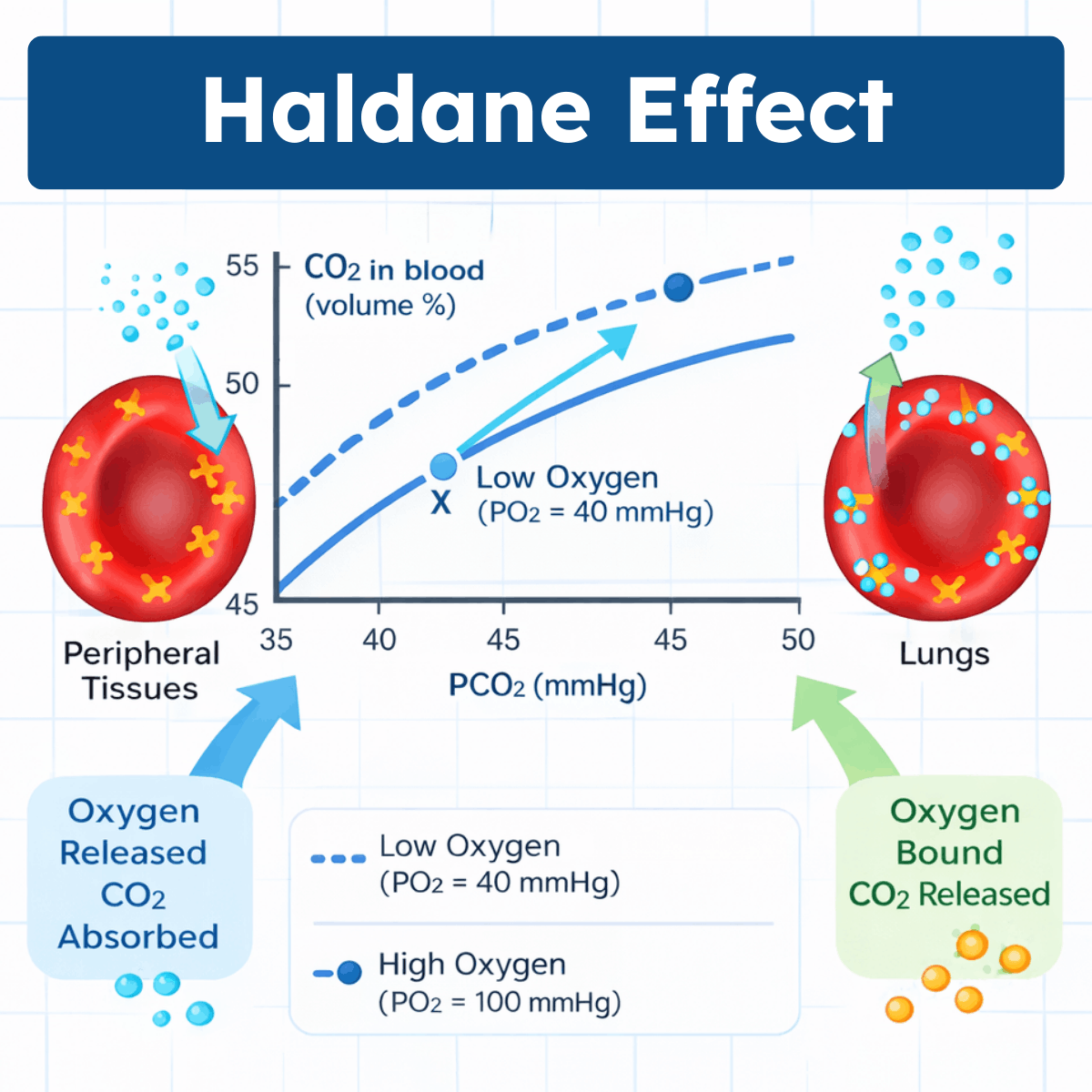
The Haldane effect describes the influence of oxygen binding to hemoglobin on the transport and release of carbon dioxide in the blood. In simple terms, when hemoglobin binds to oxygen, it becomes less capable of carrying carbon dioxide. Conversely, when oxygen levels are low and hemoglobin releases oxygen, it becomes more capable of transporting carbon dioxide.
This process plays a critical role in facilitating efficient gas exchange at both the lungs and peripheral tissues. The Haldane effect explains how carbon dioxide is more easily released in the lungs, where oxygen levels are high, and more easily absorbed in the tissues, where oxygen levels are lower.
The concept is closely tied to hemoglobin’s chemical behavior. When hemoglobin is oxygenated, it undergoes structural changes that reduce its ability to bind hydrogen ions and carbon dioxide. When oxygen is released from hemoglobin, its capacity to bind these substances increases, allowing carbon dioxide to be carried more effectively from the tissues to the lungs.
Understanding Carbon Dioxide Transport
To fully appreciate the Haldane effect, it is important to understand how carbon dioxide is transported in the blood. Carbon dioxide travels through the bloodstream in three primary forms:
- Dissolved carbon dioxide in plasma
- Carbon dioxide bound to hemoglobin as carbamino compounds
- Bicarbonate ions formed through chemical reactions in red blood cells
The majority of carbon dioxide is transported as bicarbonate ions. Inside red blood cells, carbon dioxide combines with water to form carbonic acid, which quickly dissociates into hydrogen ions and bicarbonate. Hemoglobin plays a crucial role by buffering hydrogen ions, allowing this reaction to proceed efficiently.
The Haldane effect enhances this process. When hemoglobin releases oxygen in peripheral tissues, it becomes a better buffer for hydrogen ions, which promotes the conversion of carbon dioxide into bicarbonate. This increases the blood’s capacity to carry carbon dioxide away from metabolically active tissues.
The Carbon Dioxide Dissociation Curve
The relationship between carbon dioxide partial pressure (PCO₂) and carbon dioxide content in the blood is illustrated by the carbon dioxide dissociation curve. This curve demonstrates how carbon dioxide levels change in response to different physiologic conditions.
Unlike the oxygen dissociation curve, which has a sigmoidal shape, the carbon dioxide dissociation curve is more linear. However, the position of this curve is influenced by hemoglobin’s oxygen saturation.
When oxygen saturation is high, such as in arterial blood leaving the lungs, the carbon dioxide dissociation curve shifts downward. This means that the blood holds less carbon dioxide, allowing carbon dioxide to be released into the alveoli and exhaled.
When oxygen saturation is lower, such as in venous blood returning from tissues, the curve shifts upward. This allows the blood to carry greater amounts of carbon dioxide, facilitating removal of metabolic waste from cells.
Relationship Between the Haldane Effect and the Bohr Effect
The Haldane effect is closely related to another important physiologic concept known as the Bohr effect. While the Haldane effect describes how oxygen saturation affects carbon dioxide transport, the Bohr effect explains how carbon dioxide and hydrogen ions influence oxygen transport.
The Bohr effect states that increased carbon dioxide levels and decreased pH reduce hemoglobin’s affinity for oxygen, encouraging oxygen release in tissues. The Haldane effect complements this by improving carbon dioxide uptake when oxygen is released and promoting carbon dioxide release when oxygen is bound.
Together, these mechanisms create a highly efficient system that optimizes gas exchange throughout the body. The Bohr effect helps ensure that oxygen is delivered to tissues where it is needed most, while the Haldane effect ensures that carbon dioxide is efficiently removed.
The Haldane Effect in the Lungs
In the lungs, oxygen diffuses from the alveoli into the pulmonary capillaries. As oxygen binds to hemoglobin, it triggers the Haldane effect, which reduces hemoglobin’s ability to carry carbon dioxide and hydrogen ions.
This process promotes the conversion of bicarbonate back into carbon dioxide within red blood cells. The carbon dioxide then diffuses into the alveoli and is eliminated during exhalation.
This mechanism is crucial for maintaining normal carbon dioxide levels and preventing respiratory acidosis. Efficient carbon dioxide elimination depends heavily on adequate oxygenation, highlighting the interconnected nature of respiratory physiology.
The Haldane Effect in Peripheral Tissues
In metabolically active tissues, oxygen is released from hemoglobin to support cellular respiration. As hemoglobin becomes deoxygenated, its capacity to bind carbon dioxide and hydrogen ions increases.
This promotes carbon dioxide uptake from tissues and enhances bicarbonate formation, allowing carbon dioxide to be transported back to the lungs for elimination. The increased carbon dioxide-carrying capacity of deoxygenated blood plays a vital role in maintaining normal acid-base balance.
Note: Without the Haldane effect, carbon dioxide removal from tissues would be less efficient, potentially leading to metabolic and respiratory disturbances.
Clinical Relevance for Respiratory Therapists
The Haldane effect has significant clinical implications for respiratory therapists, particularly when managing patients with respiratory failure, chronic lung disease, or altered oxygenation status.
Oxygen Therapy Considerations
One important clinical application involves oxygen therapy. When supplemental oxygen is administered, hemoglobin becomes more saturated with oxygen. This can reduce the blood’s ability to carry carbon dioxide, potentially leading to increased carbon dioxide levels in certain patients, especially those with chronic obstructive pulmonary disease (COPD).
Respiratory therapists must carefully titrate oxygen therapy to maintain adequate oxygenation while avoiding excessive carbon dioxide retention. Understanding the Haldane effect helps explain why some patients experience worsening hypercapnia after receiving high concentrations of oxygen.
Mechanical Ventilation Management
Respiratory therapists frequently manage patients requiring mechanical ventilation. Adjustments to ventilator settings affect oxygenation and ventilation, both of which influence carbon dioxide elimination.
Knowledge of the Haldane effect helps clinicians anticipate how changes in oxygen delivery may affect carbon dioxide transport. This understanding supports more effective ventilator management and helps prevent complications such as respiratory acidosis.
Acid-Base Balance
Carbon dioxide plays a central role in regulating blood pH. Because the Haldane effect directly influences carbon dioxide transport, it also affects acid-base balance. Respiratory therapists often interpret arterial blood gas results to evaluate a patient’s ventilatory status and metabolic compensation.
Note: Recognizing how oxygen saturation affects carbon dioxide levels can improve clinical decision-making and enhance patient outcomes.
Importance in Critical Care and Emergency Medicine
The Haldane effect is particularly relevant in critical care settings where patients frequently experience rapid changes in oxygenation and ventilation. Conditions such as acute respiratory distress syndrome (ARDS), pneumonia, pulmonary embolism, and severe asthma can disrupt normal gas exchange.
In these situations, respiratory therapists must understand how physiologic mechanisms like the Haldane effect influence carbon dioxide removal. This knowledge supports timely interventions and helps guide treatment strategies.
Note: The effect also has implications in resuscitation and trauma care, where restoring oxygen delivery can significantly alter carbon dioxide transport and acid-base status.
Educational Importance in Respiratory Care Training
For respiratory therapy students and clinicians preparing for credentialing examinations, understanding the Haldane effect is essential. This concept is frequently tested because it demonstrates the integration of respiratory physiology, gas transport, and acid-base regulation.
Mastery of the Haldane effect helps clinicians better understand patient responses to oxygen therapy, ventilator adjustments, and disease progression. It also strengthens critical thinking skills needed for clinical decision-making.
Haldane Effect Practice Questions
1. What is the Haldane effect?
The Haldane effect describes how oxygen binding to hemoglobin reduces hemoglobin’s ability to carry carbon dioxide, thereby promoting CO2 release in the lungs.
2. How does hemoglobin oxygen saturation influence carbon dioxide transport?
As hemoglobin becomes more saturated with oxygen, its capacity to carry carbon dioxide decreases, facilitating CO2 unloading in the lungs.
3. How does reduced oxygen saturation affect carbon dioxide transport at the tissue level?
When hemoglobin releases oxygen in peripheral tissues, it can bind and transport more carbon dioxide back to the lungs.
4. What is the relationship between the Haldane effect and the carbon dioxide dissociation curve?
The Haldane effect shifts the carbon dioxide dissociation curve based on hemoglobin oxygen saturation, altering blood CO2 content at a given PCO2.
5. How does oxygenated hemoglobin influence carbon dioxide carriage in the lungs?
Oxygenated hemoglobin decreases its affinity for carbon dioxide, promoting the release of CO2 into the alveoli for exhalation.
6. How does deoxygenated hemoglobin affect carbon dioxide transport in systemic tissues?
Deoxygenated hemoglobin increases its ability to bind carbon dioxide, enhancing CO2 uptake from metabolically active tissues.
7. What physiologic advantage does the Haldane effect provide during gas exchange?
It enhances carbon dioxide removal in the lungs and improves carbon dioxide transport from tissues, making gas exchange more efficient.
8. How does the Haldane effect differ from the Bohr effect?
The Haldane effect describes how oxygen affects carbon dioxide transport, whereas the Bohr effect describes how carbon dioxide and pH influence oxygen release from hemoglobin.
9. What are typical arterial blood values associated with carbon dioxide content and oxygen saturation?
Arterial blood typically has a PCO2 of approximately 40 mm Hg, an oxygen saturation near 97%, and a carbon dioxide content of about 48 mL/dL.
10. What are typical mixed venous blood values associated with carbon dioxide content and oxygen saturation?
Mixed venous blood typically has a PCO2 of approximately 46 mm Hg, an oxygen saturation near 70%, and a carbon dioxide content of about 52 mL/dL.
11. Why does arterial blood carry less carbon dioxide than venous blood?
Arterial blood contains higher oxygen saturation, which reduces hemoglobin’s ability to carry carbon dioxide.
12. How does hemoglobin buffering of hydrogen ions contribute to the Haldane effect?
When oxygen binds to hemoglobin, hydrogen ions are released, which promotes the formation of carbon dioxide and its removal from the blood.
13. Why is the Haldane effect important for maintaining acid-base balance?
It influences carbon dioxide transport, which directly affects blood pH through the carbonic acid–bicarbonate buffering system.
14. How does the Haldane effect support carbon dioxide removal during alveolar gas exchange?
High oxygen levels in the alveoli reduce hemoglobin’s affinity for carbon dioxide, enhancing CO2 diffusion into the alveoli.
15. Why does the carbon dioxide dissociation curve vary with oxygen saturation?
Changes in hemoglobin oxygen binding alter its chemical affinity for carbon dioxide, shifting the curve accordingly.
16. How does the Haldane effect improve carbon dioxide transport efficiency during exercise?
Increased oxygen delivery to tissues promotes carbon dioxide uptake by deoxygenated hemoglobin, improving metabolic waste removal.
17. How does oxygen therapy influence the Haldane effect?
Increased oxygen levels can enhance carbon dioxide release from hemoglobin, sometimes contributing to transient increases in arterial CO2 levels.
18. Why is understanding the Haldane effect important for respiratory therapists?
It helps clinicians interpret gas exchange, carbon dioxide retention, and oxygen therapy responses in patients with respiratory disease.
19. How does the Haldane effect assist with carbon dioxide loading in peripheral tissues?
Lower oxygen saturation increases hemoglobin’s buffering capacity and promotes CO2 binding and transport to the lungs.
20. How do the Haldane and Bohr effects work together during gas exchange?
The Haldane effect promotes carbon dioxide transport based on oxygen binding, while the Bohr effect facilitates oxygen release based on carbon dioxide levels and pH.
21. How does the Haldane effect explain carbon dioxide release in the lungs?
The Haldane effect explains that when hemoglobin binds oxygen in the lungs, its ability to carry carbon dioxide decreases, which promotes CO2 unloading into the alveoli.
22. How does the Haldane effect facilitate carbon dioxide uptake in peripheral tissues?
When hemoglobin releases oxygen in peripheral tissues, it increases its capacity to bind carbon dioxide and hydrogen ions, enhancing CO2 transport back to the lungs.
23. Why is the Haldane effect essential for efficient gas exchange?
It allows hemoglobin to adjust its carbon dioxide carrying capacity based on oxygen saturation, optimizing CO2 removal from tissues and release in the lungs.
24. How does hemoglobin’s structural change during oxygen binding influence carbon dioxide transport?
When oxygen binds to hemoglobin, the molecule undergoes a conformational change that reduces its affinity for carbon dioxide and hydrogen ions.
25. What are the three primary forms in which carbon dioxide is transported in the blood?
Carbon dioxide is transported dissolved in plasma, bound to hemoglobin as carbamino compounds, and as bicarbonate ions formed inside red blood cells.
26. Which form accounts for the majority of carbon dioxide transport in the blood?
Most carbon dioxide is transported as bicarbonate ions formed through reactions within red blood cells.
27. How is carbon dioxide converted into bicarbonate inside red blood cells?
Carbon dioxide combines with water to form carbonic acid, which rapidly dissociates into hydrogen ions and bicarbonate ions.
28. What role does hemoglobin play in buffering hydrogen ions during carbon dioxide transport?
Hemoglobin binds hydrogen ions, allowing continued conversion of carbon dioxide into bicarbonate and improving CO2 transport efficiency.
29. How does oxygen release from hemoglobin enhance bicarbonate formation?
Deoxygenated hemoglobin buffers hydrogen ions more effectively, promoting carbon dioxide conversion into bicarbonate.
30. How does the carbon dioxide dissociation curve differ from the oxygen dissociation curve?
The carbon dioxide dissociation curve is more linear, whereas the oxygen dissociation curve has a sigmoidal shape due to cooperative oxygen binding.
31. How does increased oxygen saturation affect the carbon dioxide dissociation curve?
Higher oxygen saturation shifts the carbon dioxide dissociation curve downward, reducing blood CO2 content at a given PCO2.
32. How does decreased oxygen saturation influence the carbon dioxide dissociation curve?
Lower oxygen saturation shifts the carbon dioxide dissociation curve upward, increasing the blood’s capacity to carry carbon dioxide.
33. Why does venous blood typically contain more carbon dioxide than arterial blood?
Venous blood has lower oxygen saturation, allowing hemoglobin to bind and transport greater amounts of carbon dioxide.
34. How does the Haldane effect improve carbon dioxide removal from metabolically active tissues?
It increases hemoglobin’s ability to bind carbon dioxide and hydrogen ions when oxygen levels are low, facilitating waste removal.
35. Why is the Haldane effect important for maintaining normal blood pH?
By enhancing carbon dioxide transport and buffering hydrogen ions, the Haldane effect helps regulate acid-base balance.
36. How does hemoglobin oxygenation affect carbamino compound formation?
Deoxygenated hemoglobin forms carbamino compounds more readily, allowing increased carbon dioxide binding.
37. How does the Haldane effect contribute to efficient ventilation-perfusion matching?
It supports rapid carbon dioxide exchange in areas of the lung where oxygen uptake is occurring.
38. Why is understanding the Haldane effect important in patients with respiratory disease?
It helps explain carbon dioxide retention, oxygen therapy responses, and changes in gas exchange efficiency.
39. How does oxygen therapy potentially influence carbon dioxide levels through the Haldane effect?
Increasing oxygen saturation may reduce hemoglobin’s CO2 carrying capacity, potentially increasing dissolved CO2 in the blood.
40. How do the Haldane effect and carbon dioxide transport work together to support cellular metabolism?
They ensure efficient removal of metabolic carbon dioxide from tissues and facilitate its elimination through the lungs.
41. How does the Haldane effect differ from the Bohr effect?
The Haldane effect describes how oxygen saturation influences carbon dioxide transport, whereas the Bohr effect explains how carbon dioxide and hydrogen ions influence oxygen binding and release.
42. How do the Haldane effect and Bohr effect work together to improve gas exchange?
The Bohr effect promotes oxygen unloading in tissues, while the Haldane effect enhances carbon dioxide uptake in tissues and release in the lungs, improving overall gas exchange efficiency.
43. Why does increased carbon dioxide concentration promote oxygen release from hemoglobin?
Elevated carbon dioxide levels lower blood pH, which reduces hemoglobin’s affinity for oxygen and facilitates oxygen unloading in tissues.
44. How does oxygen binding to hemoglobin in the lungs influence carbon dioxide transport?
Oxygen binding reduces hemoglobin’s ability to carry carbon dioxide and hydrogen ions, promoting CO2 release into the alveoli for exhalation.
45. Why is the Haldane effect essential for maintaining normal carbon dioxide levels in the blood?
It enhances carbon dioxide elimination in the lungs and promotes carbon dioxide uptake in peripheral tissues, maintaining normal gas balance.
46. How does bicarbonate convert back into carbon dioxide in the lungs?
When hemoglobin binds oxygen, hydrogen ions are released, allowing bicarbonate to combine with hydrogen ions to form carbonic acid, which then dissociates into carbon dioxide and water.
47. Why is adequate oxygenation necessary for efficient carbon dioxide elimination?
Oxygenation promotes hemoglobin saturation, which reduces CO2 binding and enhances carbon dioxide release in the lungs.
48. How does deoxygenated hemoglobin enhance carbon dioxide transport in peripheral tissues?
Deoxygenated hemoglobin has a higher affinity for hydrogen ions and carbon dioxide, allowing more efficient CO2 transport from tissues to the lungs.
49. Why does impaired oxygen delivery reduce carbon dioxide removal from tissues?
Without adequate oxygen unloading, hemoglobin cannot increase its CO2 carrying capacity, reducing carbon dioxide transport efficiency.
50. How does the Haldane effect help maintain acid-base balance?
By influencing carbon dioxide transport and buffering hydrogen ions, it helps regulate blood pH and prevent acid-base disturbances.
51. Why is the Haldane effect clinically important in patients with chronic obstructive pulmonary disease (COPD)?
High oxygen levels can reduce hemoglobin’s CO2 carrying capacity, potentially worsening carbon dioxide retention in COPD patients.
52. How can excessive oxygen administration affect carbon dioxide levels in susceptible patients?
High oxygen concentrations increase hemoglobin saturation, which may reduce CO2 transport and contribute to hypercapnia.
53. Why must oxygen therapy be carefully titrated in patients with chronic hypercapnia?
Excessive oxygen may impair carbon dioxide removal due to the Haldane effect, potentially worsening respiratory acidosis.
54. How does the Haldane effect influence mechanical ventilation management?
Understanding how oxygenation affects CO2 transport helps clinicians adjust ventilator settings to optimize gas exchange.
55. Why is monitoring arterial blood gases important when adjusting oxygen therapy?
It helps identify changes in carbon dioxide levels and acid-base status influenced by oxygen saturation changes.
56. How can improved oxygenation during mechanical ventilation alter carbon dioxide transport?
Improved oxygenation reduces hemoglobin’s CO2 carrying capacity, which may increase dissolved carbon dioxide levels in the blood.
57. Why is the Haldane effect particularly relevant in acute respiratory failure?
Rapid changes in oxygenation can significantly alter carbon dioxide transport and acid-base balance.
58. How does the Haldane effect influence carbon dioxide removal during resuscitation?
Restoring oxygen delivery promotes hemoglobin oxygenation, facilitating carbon dioxide release and improving ventilation.
59. Why is understanding the Haldane effect important in patients with acute respiratory distress syndrome (ARDS)?
It helps clinicians predict changes in carbon dioxide elimination when oxygenation strategies are modified.
60. How does the Haldane effect support clinical decision-making in respiratory therapy?
It helps clinicians anticipate how changes in oxygenation, ventilation, and disease severity affect carbon dioxide transport and acid-base balance.
61. How does the Haldane effect influence mixed venous carbon dioxide content?
Deoxygenated hemoglobin in venous blood increases CO2 binding capacity, allowing more carbon dioxide to be transported from tissues.
62. Why does arterial blood carry less carbon dioxide than venous blood?
Arterial blood contains higher oxygen saturation, which reduces hemoglobin’s ability to carry carbon dioxide.
63. How does hemoglobin function as a buffer during carbon dioxide transport?
Hemoglobin binds hydrogen ions produced during CO2 conversion to bicarbonate, allowing continued CO2 transport in the blood.
64. Why does increased tissue metabolism enhance the Haldane effect?
Increased metabolism lowers oxygen saturation in tissues, which increases hemoglobin’s ability to carry carbon dioxide.
65. How does impaired hemoglobin function affect the Haldane effect?
Conditions that alter hemoglobin structure or function can reduce its ability to transport carbon dioxide effectively.
66. Why does increased oxygen saturation shift the carbon dioxide dissociation curve downward?
Higher oxygen saturation decreases hemoglobin’s CO2 carrying capacity, resulting in lower CO2 content at a given PCO2.
67. How does reduced oxygen saturation shift the carbon dioxide dissociation curve?
Lower oxygen saturation shifts the curve upward, allowing greater carbon dioxide storage in the blood.
68. Why is the Haldane effect important during exercise?
During exercise, increased oxygen unloading in tissues enhances carbon dioxide uptake, improving metabolic waste removal.
69. How does anemia affect the Haldane effect?
Reduced hemoglobin levels decrease the blood’s ability to transport carbon dioxide efficiently.
70. Why may patients with severe hypoxemia have impaired carbon dioxide transport?
Persistent low oxygen saturation can alter hemoglobin buffering and gas exchange efficiency.
71. How does increased hemoglobin concentration influence carbon dioxide transport?
Higher hemoglobin levels increase the blood’s capacity to bind carbon dioxide and hydrogen ions.
72. Why does oxygen therapy sometimes reduce ventilatory drive in chronic hypercapnic patients?
Improved oxygenation may alter CO2 transport and central chemoreceptor stimulation, contributing to reduced respiratory drive.
73. How does the Haldane effect support efficient gas exchange in pulmonary capillaries?
It facilitates rapid carbon dioxide unloading as oxygen binds to hemoglobin in the lungs.
74. Why is hemoglobin oxygen saturation a key determinant of carbon dioxide transport efficiency?
Oxygen saturation directly affects hemoglobin’s ability to bind carbon dioxide and hydrogen ions.
75. How does respiratory acidosis influence the Haldane effect?
Elevated carbon dioxide and hydrogen ion concentrations increase hemoglobin’s affinity for CO2 in tissues.
76. Why is the Haldane effect less efficient in patients with severe lung disease?
Impaired oxygen diffusion limits hemoglobin oxygenation, reducing carbon dioxide release in the lungs.
77. How does the Haldane effect contribute to maintaining normal venous carbon dioxide levels?
It enhances CO2 binding to deoxygenated hemoglobin, preventing excessive CO2 accumulation in tissues.
78. Why does improved lung oxygenation enhance bicarbonate conversion back to carbon dioxide?
Oxygen binding releases hydrogen ions from hemoglobin, promoting the reverse bicarbonate reaction that generates CO2.
79. How does the Haldane effect influence capillary gas exchange gradients?
It increases the difference in CO2 content between tissues and lungs, promoting efficient diffusion and removal.
80. Why is understanding the Haldane effect important when interpreting venous blood gas results?
Venous carbon dioxide levels are influenced by hemoglobin oxygen saturation, which must be considered during clinical evaluation.
81. How does carbon monoxide poisoning affect the Haldane effect?
Carbon monoxide binds tightly to hemoglobin, reducing oxygen binding and impairing the normal exchange of carbon dioxide.
82. Why does increased oxygen delivery in the lungs promote carbon dioxide unloading?
Oxygen binding to hemoglobin decreases its affinity for carbon dioxide, allowing CO2 to be released into the alveoli.
83. How does the Haldane effect assist with maintaining normal tissue pH?
By promoting carbon dioxide removal, it helps regulate hydrogen ion concentration and supports acid-base balance.
84. Why is the Haldane effect particularly important in metabolically active organs?
These organs produce more carbon dioxide, requiring efficient uptake and transport by deoxygenated hemoglobin.
85. How does hypoventilation influence the Haldane effect?
Reduced ventilation increases carbon dioxide retention, limiting effective CO2 elimination despite hemoglobin binding changes.
86. Why can improved oxygenation increase arterial carbon dioxide levels in certain patients?
Increased hemoglobin oxygen saturation may reduce CO2 carrying capacity, contributing to elevated arterial CO2.
87. How does the Haldane effect support efficient pulmonary gas exchange during rapid breathing?
It enhances carbon dioxide release even when blood transit time through pulmonary capillaries is shortened.
88. Why does reduced hemoglobin oxygen saturation enhance hydrogen ion buffering?
Deoxygenated hemoglobin has a greater capacity to bind hydrogen ions, promoting carbon dioxide transport.
89. How does the Haldane effect interact with bicarbonate transport in red blood cells?
It promotes hydrogen ion binding to hemoglobin, allowing bicarbonate formation and CO2 transport.
90. Why does the Haldane effect improve carbon dioxide clearance during increased cardiac output?
More blood reaches the lungs, allowing oxygen binding and enhanced CO2 unloading from hemoglobin.
91. How can severe anemia alter carbon dioxide transport despite normal lung function?
Reduced hemoglobin concentration limits the blood’s capacity to carry carbon dioxide.
92. Why is hemoglobin essential for efficient carbon dioxide transport beyond simple plasma dissolution?
Hemoglobin binds carbon dioxide and buffers hydrogen ions, significantly increasing CO2 carrying capacity.
93. How does the Haldane effect influence pulmonary capillary blood as it becomes oxygenated?
Oxygenation reduces hemoglobin’s CO2 affinity, facilitating rapid carbon dioxide diffusion into alveoli.
94. Why can impaired alveolar oxygen diffusion reduce the effectiveness of the Haldane effect?
Without adequate oxygen binding, hemoglobin retains a higher affinity for carbon dioxide, limiting CO2 release.
95. How does altitude exposure influence the Haldane effect?
Reduced oxygen availability at high altitude alters hemoglobin saturation and may modify carbon dioxide transport dynamics.
96. Why does hemoglobin’s structural change during oxygen binding affect carbon dioxide transport?
The conformational change decreases carbamino compound formation and reduces hydrogen ion binding.
97. How does the Haldane effect contribute to maintaining venous carbon dioxide gradients?
It increases CO2 uptake in deoxygenated blood, maintaining diffusion gradients between tissues and blood.
98. Why is the Haldane effect essential for efficient removal of metabolic carbon dioxide?
It enhances hemoglobin’s ability to transport CO2 from tissues to the lungs for elimination.
99. How can lung diseases that impair oxygenation indirectly affect carbon dioxide transport?
Reduced oxygen saturation limits the ability of hemoglobin to release carbon dioxide in the lungs.
100. Why is understanding the Haldane effect important in managing patients with ventilatory failure?
It helps clinicians predict how changes in oxygenation and ventilation influence carbon dioxide retention and acid-base status.
Final Thoughts
The Haldane effect is a fundamental physiologic principle that explains how oxygen saturation influences carbon dioxide transport in the bloodstream. By enhancing carbon dioxide uptake in tissues and promoting carbon dioxide release in the lungs, this mechanism plays a vital role in maintaining efficient gas exchange and acid-base balance.
For respiratory therapists, understanding the Haldane effect is essential for safely managing oxygen therapy, mechanical ventilation, and critically ill patients.
As respiratory care continues to evolve, a strong foundation in physiologic principles, such as the Haldane effect, remains crucial for delivering effective, evidence-based patient care and improving clinical outcomes.

Written by:
John Landry is a registered respiratory therapist from Memphis, TN, and has a bachelor's degree in kinesiology. He enjoys using evidence-based research to help others breathe easier and live a healthier life.
References
- Doyle J, Cooper JS. Physiology, Carbon Dioxide Transport. [Updated 2023 Jul 4]. In: StatPearls [Internet]. Treasure Island (FL): StatPearls Publishing; 2025.