

Heart rate is one of the most essential vital signs used in clinical practice, reflecting the number of heartbeats per minute and providing insight into cardiovascular and respiratory function. It plays a central role in maintaining adequate tissue perfusion and oxygen delivery throughout the body.
In respiratory care, heart rate is closely linked to oxygen transport, metabolic demand, and the body’s compensatory mechanisms.
Understanding how heart rate is generated, regulated, and interpreted is critical for clinicians, as changes in heart rate often serve as early indicators of physiologic stress or underlying disease.

What Is Heart Rate?
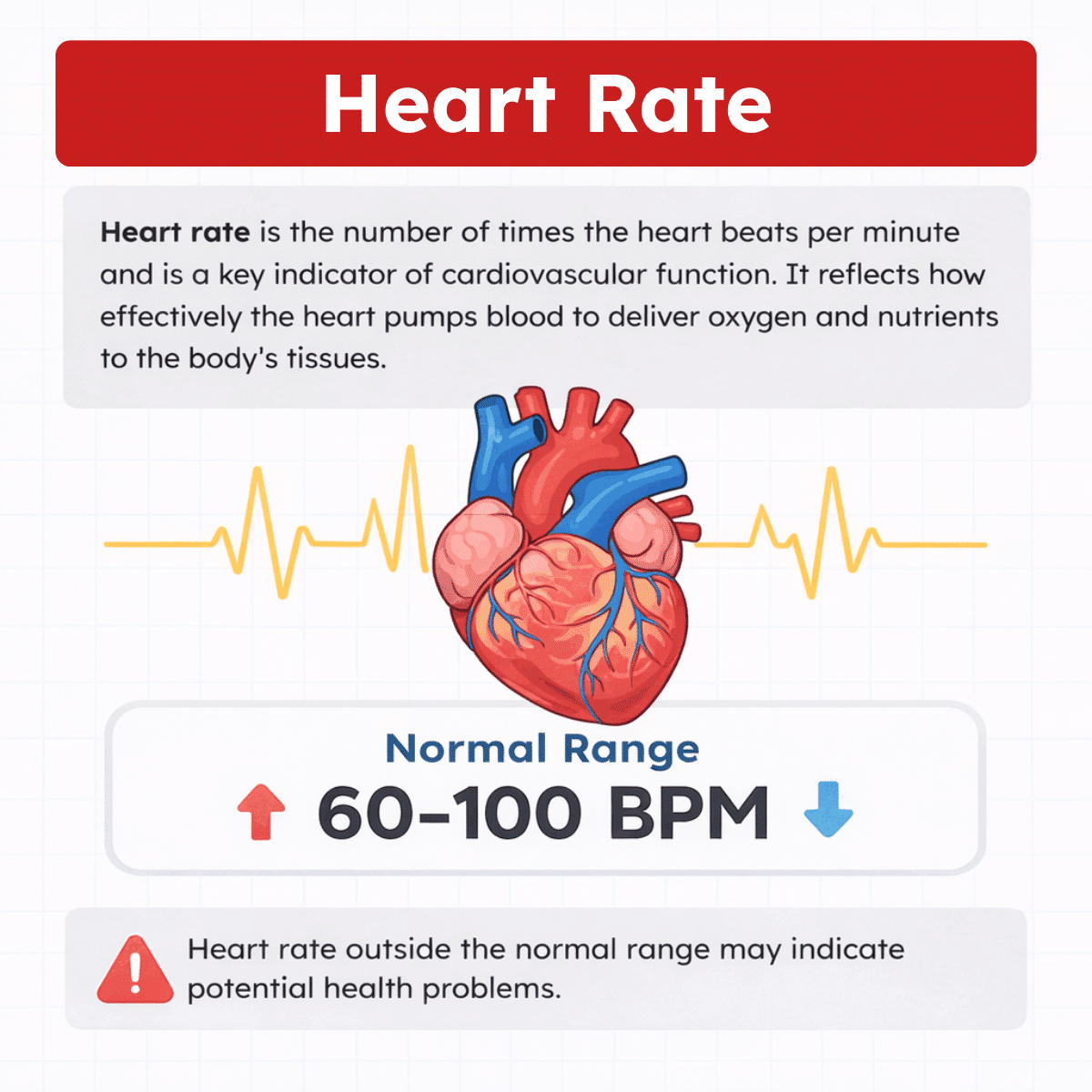
Heart rate is the number of times the heart beats per minute and is a key indicator of cardiovascular function. It reflects how effectively the heart pumps blood to deliver oxygen and nutrients to the body’s tissues. In adults at rest, a normal heart rate typically ranges from 60 to 100 beats per minute, though it can vary based on age, fitness level, and overall health.
Heart rate is regulated by the heart’s electrical conduction system, primarily the sinoatrial (SA) node, and is influenced by the autonomic nervous system. Changes in heart rate can signal physiologic stress, such as hypoxia, fever, or illness, making it an essential parameter in patient assessment and monitoring.
Physiology of Heart Rate
The Cardiac Conduction System
Heart rate is primarily determined by the electrical activity of the heart’s conduction system. This system ensures that the heart beats in a coordinated and efficient manner, allowing blood to be pumped effectively through both the pulmonary and systemic circulations.
The sinoatrial (SA) node, located in the right atrium, functions as the natural pacemaker of the heart. It generates electrical impulses spontaneously due to its automaticity. Under normal resting conditions, the SA node sets the heart rate between 60 and 100 beats per minute in adults.
Once the SA node initiates an impulse, it spreads across the atria, resulting in atrial contraction. This contraction helps move blood into the ventricles. The impulse then travels to the atrioventricular (AV) node, where it is briefly delayed. This delay is essential because it allows the ventricles enough time to fill with blood before they contract.
After passing through the AV node, the impulse continues down the bundle of His and into the Purkinje fibers, which distribute the signal throughout the ventricles. This leads to a coordinated ventricular contraction, propelling blood into the lungs and the rest of the body.
Note: This precise conduction pathway ensures that each heartbeat is synchronized and effective, supporting adequate circulation and oxygen delivery.
Intrinsic and Extrinsic Regulation
Although the SA node establishes the baseline heart rate, it does not function in isolation. The autonomic nervous system continuously modifies heart rate based on the body’s needs.
The sympathetic nervous system increases heart rate and enhances myocardial contractility. This response occurs during physical activity, stress, or conditions such as hypoxemia. Sympathetic stimulation prepares the body to meet increased metabolic demands by boosting cardiac output.
In contrast, the parasympathetic nervous system, primarily through the vagus nerve, decreases heart rate. This effect is most prominent during rest and relaxation, helping conserve energy and maintain homeostasis.
The balance between these two systems allows for rapid and precise adjustments in heart rate. For example, during exercise, sympathetic activity increases while parasympathetic influence decreases, resulting in a higher heart rate. When the activity stops, parasympathetic tone is restored, bringing the heart rate back down.
Secondary Pacemakers
If the SA node fails to generate impulses or conduction is impaired, other parts of the conduction system can take over as pacemakers.
The AV node can assume this role, typically generating a heart rate between 40 and 60 beats per minute. While this rate may sustain minimal cardiac output, it is often insufficient to meet the body’s demands during stress or illness.
If both the SA and AV nodes fail, the ventricles themselves may generate impulses. However, this ventricular rhythm is significantly slower, often between 20 and 40 beats per minute, and is generally inadequate for maintaining normal perfusion.
The presence of these backup pacemakers highlights the redundancy of the cardiac conduction system, but also underscores the importance of the SA node in maintaining optimal heart rate and function.
Relationship Between Heart Rate and Cardiac Output
Heart rate plays a direct role in determining cardiac output, which is the volume of blood pumped by the heart per minute. Cardiac output is calculated using the following equation:
Cardiac Output = Heart Rate × Stroke Volume
Stroke volume refers to the amount of blood ejected by the ventricles with each contraction. Together, heart rate and stroke volume determine how effectively the cardiovascular system delivers oxygen and nutrients to tissues.
An increase in heart rate generally leads to an increase in cardiac output, especially during exercise or stress. This allows the body to meet higher metabolic demands by delivering more oxygen to working tissues.
However, this relationship has important limitations. When heart rate becomes excessively high, the duration of diastole is shortened. Diastole is the phase of the cardiac cycle during which the ventricles fill with blood. If filling time is reduced, stroke volume decreases, which can ultimately reduce cardiac output despite the elevated heart rate.
Note: This concept is particularly important in clinical settings. For example, severe tachycardia may compromise perfusion rather than improve it, especially in patients with underlying cardiac disease.
Coronary Perfusion and Diastole
Coronary blood flow primarily occurs during diastole. This means that the heart muscle itself receives most of its oxygen supply when the ventricles are relaxed.
When heart rate increases significantly, diastolic time decreases. As a result, coronary perfusion may be reduced. This can impair oxygen delivery to the myocardium and increase the risk of ischemia, particularly in patients with coronary artery disease.
This relationship highlights the importance of maintaining an appropriate heart rate, especially in critically ill patients or those with cardiovascular conditions.
Factors Affecting Heart Rate
Oxygenation Status
Oxygen levels in the blood have a direct effect on heart rate. When hypoxemia occurs, the body compensates by increasing heart rate in an attempt to deliver more oxygen to tissues. This is a common finding in patients with respiratory disorders.
Conversely, improved oxygenation may lead to a reduction in heart rate as the body no longer requires compensation.
Temperature
Body temperature significantly affects heart rate. Fever increases metabolic activity, leading to an elevated heart rate. For every degree Celsius increase in body temperature, heart rate typically rises by approximately 10 beats per minute. In contrast, hypothermia slows metabolic processes and can result in a decreased heart rate.
Hormonal Influence
Hormones such as epinephrine and norepinephrine stimulate the heart to beat faster and more forcefully. These hormones are released during stress, exercise, or illness and play a key role in the body’s adaptive response.
Thyroid hormones also influence heart rate. Hyperthyroidism can lead to tachycardia, while hypothyroidism may result in bradycardia.
Medications
Various medications can affect heart rate. For example, beta-agonists such as albuterol commonly increase heart rate and are frequently used in respiratory care.
On the other hand, beta-blockers decrease heart rate by inhibiting sympathetic stimulation. Sedatives and certain analgesics may also reduce heart rate.
Understanding medication effects is crucial when assessing changes in heart rate, particularly in hospitalized patients receiving multiple therapies.
Volume Status
Hypovolemia, or reduced blood volume, often leads to an increase in heart rate. This compensatory response helps maintain cardiac output when stroke volume is decreased.
In contrast, adequate or increased volume status may stabilize or reduce heart rate, depending on the clinical context.
Physical Conditioning
Athletes and well-conditioned individuals often have lower resting heart rates. This is due to increased stroke volume and more efficient cardiac function.
In these individuals, the heart does not need to beat as frequently to maintain adequate cardiac output. This is referred to as physiologic bradycardia and is generally considered normal.
Measurement of Heart Rate
Auscultation
Auscultation involves using a stethoscope to listen to heart sounds, typically at the apex of the heart. This method allows clinicians to assess both the rate and rhythm of the heartbeat. It is particularly useful in detecting irregular rhythms that may not be easily identified through palpation.
Palpation
Palpation involves feeling the pulse at various arterial sites. Common locations include:
- Radial artery
- Carotid artery
- Brachial artery
- Femoral artery
The radial artery is the most commonly used site due to its accessibility and ease of assessment.
When measuring heart rate, it is important to count beats for a full 60 seconds when accuracy is critical, especially in patients with irregular rhythms. In stable patients, shorter intervals may be used and multiplied to estimate the rate.
Assessment Components
When evaluating heart rate, clinicians should consider more than just the number of beats per minute. A complete assessment includes:
- Rate: The number of beats per minute
- Rhythm: Regular or irregular pattern
- Strength: The amplitude or quality of the pulse
Note: Abnormalities in any of these components may indicate underlying pathology and require further investigation.
Normal Heart Rate Ranges
Heart rate varies across the lifespan and is influenced by multiple factors. In adults, a normal resting heart rate typically ranges from 60 to 100 beats per minute.
This range assumes that the individual is at rest, awake, and not experiencing stress or illness.
Infants and children have higher normal heart rates due to increased metabolic demands and smaller stroke volumes. As individuals age, heart rate generally decreases and stabilizes within the adult range.
Note: Understanding these normal ranges is essential for identifying abnormalities and making appropriate clinical decisions.
Abnormal Heart Rates
Tachycardia
Tachycardia is defined as a heart rate greater than 100 beats per minute in adults. It is a common clinical finding and often represents a compensatory response to physiologic stress.
Common causes include hypoxemia, fever, anxiety, pain, hypovolemia, and certain medications. In respiratory patients, tachycardia frequently indicates inadequate oxygenation or increased work of breathing.
While mild tachycardia may be beneficial in increasing cardiac output, severe or sustained tachycardia can reduce ventricular filling time and compromise perfusion.
Bradycardia
Bradycardia is defined as a heart rate less than 60 beats per minute in adults. It can be normal in well-trained individuals but may also indicate underlying pathology.
Potential causes include hypothermia, increased intracranial pressure, medication effects, and conduction system abnormalities.
In critically ill patients, bradycardia may signal impending deterioration, particularly if it is associated with hypoxia or decreased perfusion.
Clinical Significance of Heart Rate
Heart rate is not assessed in isolation. It must always be interpreted in the context of the patient’s overall clinical picture. In respiratory care, heart rate provides valuable insight into oxygenation status, perfusion, and the body’s compensatory responses to stress.
An elevated heart rate is often one of the earliest signs of physiologic distress. For example, in patients experiencing hypoxemia, the body responds by increasing heart rate to improve oxygen delivery to tissues. This compensatory tachycardia may occur before other signs, such as cyanosis or altered mental status, become apparent.
Conversely, a declining heart rate in a critically ill patient can be a concerning sign. Bradycardia in the setting of hypoxia or respiratory failure may indicate impending cardiac arrest. For this reason, continuous monitoring of heart rate trends is essential in high-acuity settings.
Integration with Respiratory Care
Heart Rate and Oxygen Delivery
Heart rate plays a central role in oxygen transport. Oxygen delivery to tissues depends on cardiac output and the oxygen content of the blood. Since cardiac output is partly determined by heart rate, any change in heart rate can directly impact oxygen delivery.
In patients with respiratory disease, this relationship becomes especially important. Conditions such as chronic obstructive pulmonary disease, acute respiratory distress syndrome, and respiratory failure often impair oxygenation. As a result, the body compensates by increasing heart rate to maintain adequate tissue oxygenation.
However, this compensation has limits. If heart rate becomes excessively high, reduced ventricular filling time may lead to decreased cardiac output, ultimately worsening oxygen delivery. This highlights the importance of balancing heart rate within an optimal range.
Monitoring During Oxygen Therapy
Heart rate is frequently used to evaluate a patient’s response to oxygen therapy. When oxygenation improves, heart rate often decreases as the need for compensation diminishes.
For example, a patient presenting with hypoxemia may have tachycardia. After initiating supplemental oxygen, a reduction in heart rate may indicate improved oxygen delivery and decreased physiologic stress.
On the other hand, persistent tachycardia despite oxygen therapy may suggest inadequate treatment, worsening disease, or additional complications.
Response to Bronchodilators and Medications
Many medications used in respiratory care can influence heart rate. Beta-agonists, such as albuterol, are commonly used to relieve bronchospasm but may also increase heart rate due to their stimulatory effects on beta receptors.
Monitoring heart rate after medication administration is essential to distinguish between therapeutic effects and potential side effects. For instance, a moderate increase in heart rate following bronchodilator therapy may be expected, but excessive tachycardia may require dose adjustment or further evaluation.
Other medications, such as sedatives or beta-blockers, may decrease heart rate. Understanding these effects helps clinicians interpret changes accurately and avoid misattributing them to disease progression.
Mechanical Ventilation and Heart Rate
Heart rate is also an important parameter to monitor in patients receiving mechanical ventilation. Changes in intrathoracic pressure can influence venous return, cardiac output, and heart rate.
For example, high levels of positive pressure ventilation may reduce venous return to the heart, potentially decreasing cardiac output. In response, the body may increase heart rate to compensate.
Additionally, sudden changes in heart rate during mechanical ventilation may signal complications such as hypoxemia, ventilator asynchrony, or hemodynamic instability. Continuous monitoring allows clinicians to detect and address these issues promptly.
Assessment in Clinical Practice
Evaluating Trends Over Time
Single heart rate measurements provide limited information. Clinicians must evaluate trends over time to identify patterns and detect changes in a patient’s condition.
A gradually increasing heart rate may indicate worsening respiratory distress, infection, or hypovolemia. A sudden drop in heart rate may signal acute deterioration. Trend analysis is particularly important in critical care settings, where subtle changes can have significant clinical implications.
Correlation with Other Vital Signs
Heart rate should always be interpreted alongside other vital signs, including respiratory rate, blood pressure, temperature, and oxygen saturation.
An elevated heart rate combined with increased respiratory rate and low oxygen saturation suggests respiratory distress. If heart rate is elevated while blood pressure is low, this may indicate shock or hypovolemia.
Temperature also provides important context. Fever commonly leads to tachycardia, while hypothermia may cause bradycardia.
Note: By integrating heart rate with other clinical data, clinicians can develop a more accurate understanding of the patient’s condition.
Rhythm and Pulse Quality
In addition to rate, clinicians must assess rhythm and pulse quality. An irregular rhythm may indicate arrhythmias, which can affect cardiac output and require further evaluation.
Pulse strength also provides insight into circulatory status. A weak or thready pulse may suggest poor perfusion, while a bounding pulse may be associated with conditions such as fever or increased cardiac output.
Note: Comprehensive assessment ensures that abnormalities are identified and addressed promptly.
Special Considerations
Heart Rate in Critical Illness
In critically ill patients, heart rate is a sensitive indicator of physiologic instability. Tachycardia may reflect hypoxia, sepsis, pain, or anxiety. Bradycardia may indicate severe hypoxia, increased intracranial pressure, or advanced cardiac dysfunction.
Because critically ill patients often have multiple contributing factors, careful interpretation is required. Frequent monitoring and rapid response to changes are essential to prevent deterioration.
Pediatric and Geriatric Differences
Heart rate norms vary significantly across age groups. Infants and children have higher baseline heart rates due to increased metabolic demands and smaller stroke volumes.
In contrast, older adults may have lower baseline heart rates and reduced physiologic reserve. They may also have impaired autonomic responses, which can affect heart rate variability.
Note: Clinicians must consider age-specific norms when assessing heart rate to avoid misinterpretation.
Effects of Exercise and Conditioning
Physical activity increases heart rate to meet increased metabolic demands. During exercise, sympathetic stimulation raises heart rate and cardiac output, allowing more oxygen to be delivered to working muscles.
In well-trained individuals, resting heart rate is often lower due to improved cardiac efficiency. This adaptation allows the heart to maintain adequate output with fewer beats.
Note: Understanding these physiologic responses helps differentiate between normal and abnormal findings in active individuals.
Common Clinical Scenarios
Hypoxemia
In patients with low oxygen levels, tachycardia is a common compensatory response. The body attempts to maintain oxygen delivery by increasing cardiac output.
If hypoxemia persists, heart rate may continue to rise, placing additional strain on the cardiovascular system. Early recognition and treatment are essential to prevent further deterioration.
Shock
Shock is characterized by inadequate tissue perfusion. In many forms of shock, heart rate increases to compensate for decreased stroke volume or blood pressure.
Monitoring heart rate trends can help identify the severity of shock and guide treatment decisions. Persistent tachycardia despite intervention may indicate ongoing instability.
Medication Effects
Changes in heart rate are often observed following medication administration. For example, bronchodilators may increase heart rate, while sedatives may decrease it.
Recognizing these effects allows clinicians to differentiate between expected responses and adverse reactions.
Arrhythmias
Irregular heart rhythms can significantly impact cardiac output and perfusion. Detection of arrhythmias requires careful assessment of rhythm and may involve additional monitoring, such as electrocardiography.
Note: Prompt identification and management are essential to prevent complications.
When to Monitor Heart Rate Closely
Certain patient populations require more frequent heart rate monitoring due to increased risk of instability. These include patients with:
- Cardiopulmonary disease
- Shock or hypotension
- Hypertension
- Acute blood loss
- Altered mental status
- Critical illness
Note: In these patients, even small changes in heart rate can provide important clues about clinical status.
Key Exam Insights
Heart rate is a heavily tested topic in respiratory therapy education and exams. Key concepts include:
- Normal adult resting heart rate is 60 to 100 beats per minute
- Tachycardia is defined as greater than 100 beats per minute
- Bradycardia is defined as less than 60 beats per minute
- Hypoxia commonly causes an increase in heart rate
- Fever increases heart rate, while hypothermia decreases it
- Heart rate must always be interpreted with other vital signs
- Excessively high heart rates can reduce cardiac output
Note: Understanding these principles is essential for both clinical practice and exam success.
Heart Rate Practice Questions
1. What is heart rate?
The number of heartbeats per minute.
2. What is the normal resting heart rate range for adults?
60 to 100 beats per minute.
3. Which structure is known as the primary pacemaker of the heart?
The sinoatrial (SA) node.
4. Where is the SA node located?
In the right atrium.
5. What is the role of the atrioventricular (AV) node?
It delays the electrical impulse before it reaches the ventricles.
6. Why is the AV node delay important?
It allows the ventricles time to fill with blood before contraction.
7. What is tachycardia?
A heart rate greater than 100 beats per minute.
8. What is bradycardia?
A heart rate less than 60 beats per minute.
9. Which system increases heart rate?
The sympathetic nervous system.
10. Which system decreases heart rate?
The parasympathetic nervous system.
11. What nerve is primarily responsible for parasympathetic control of heart rate?
The vagus nerve.
12. What happens to heart rate during hypoxemia?
It increases.
13. What is cardiac output?
The amount of blood pumped by the heart per minute.
14. What is the formula for cardiac output?
Cardiac output equals heart rate times stroke volume.
15. What is stroke volume?
The amount of blood ejected by the heart with each beat.
16. What happens to cardiac output when heart rate increases moderately?
It increases.
17. What happens when heart rate becomes excessively high?
Cardiac output may decrease due to reduced filling time.
18. During which phase of the cardiac cycle does coronary perfusion occur?
Diastole
19. How does a very high heart rate affect coronary perfusion?
It decreases due to reduced diastolic time.
20. What is one common cause of tachycardia in respiratory patients?
Hypoxemia
21. What effect does fever have on heart rate?
It increases heart rate.
22. What effect does hypothermia have on heart rate?
It decreases heart rate.
23. What type of medications commonly increase heart rate in respiratory care?
Beta-agonists
24. What type of medications commonly decrease heart rate?
Beta-blockers
25. What is the most common site used to palpate a pulse?
The radial artery.
26. What is auscultation in relation to heart rate measurement?
Listening to heart sounds with a stethoscope.
27. Where is the apex of the heart typically located for auscultation?
At the fifth intercostal space along the midclavicular line.
28. Why should heart rate be counted for a full 60 seconds in some patients?
To ensure accuracy, especially with irregular rhythms.
29. What is meant by pulse rhythm?
The pattern of heartbeats, whether regular or irregular.
30. What does a weak pulse indicate?
Poor perfusion or low stroke volume.
31. What does a bounding pulse suggest?
Increased cardiac output or fever.
32. What is hypovolemia?
A decreased volume of circulating blood.
33. How does hypovolemia affect heart rate?
It increases heart rate as a compensatory response.
34. What is the role of the bundle of His?
It conducts electrical impulses from the AV node to the ventricles.
35. What are Purkinje fibers responsible for?
Distributing electrical impulses throughout the ventricles.
36. What happens during atrial contraction?
Blood is pushed from the atria into the ventricles.
37. What happens during ventricular contraction?
Blood is pumped into the pulmonary and systemic circulation.
38. What is physiologic bradycardia?
A low resting heart rate seen in well-trained individuals.
39. Why do athletes often have lower heart rates?
Due to increased stroke volume and cardiac efficiency.
40. What is hypoxemia?
Low oxygen levels in the blood.
41. How does anxiety affect heart rate?
It increases heart rate.
42. What is the relationship between heart rate and oxygen delivery?
Heart rate helps determine cardiac output, which affects oxygen delivery.
43. What does an irregular pulse often indicate?
An arrhythmia.
44. What is a key reason heart rate increases during exercise?
To meet increased metabolic and oxygen demands.
45. What is the clinical significance of a rising heart rate in respiratory distress?
It may indicate worsening oxygenation.
46. What does a falling heart rate in a critically ill patient suggest?
Possible deterioration or impending cardiac arrest.
47. What is the femoral artery used for in assessment?
Palpating pulse in emergency or low-perfusion states.
48. What is the brachial artery commonly used for?
Pulse assessment and blood pressure measurement.
49. What is meant by pulse amplitude?
The strength or force of the pulse.
50. Why is heart rate considered a vital sign?
It provides essential information about cardiovascular and respiratory status.
51. What is automaticity in cardiac cells?
The ability to generate electrical impulses without external stimulation.
52. What part of the conduction system normally sets the pace of the heart?
The sinoatrial (SA) node.
53. What is the typical intrinsic rate of the AV node?
40 to 60 beats per minute
54. What is the intrinsic rate of ventricular pacemaker cells?
20 to 40 beats per minute
55. What is meant by diastolic filling time?
The time during which the ventricles fill with blood.
56. How does tachycardia affect diastolic filling time?
It decreases it.
57. Why is adequate ventricular filling important?
It ensures sufficient stroke volume and cardiac output.
58. What is meant by tissue perfusion?
The delivery of blood to tissues.
59. How does heart rate support tissue perfusion?
By helping maintain cardiac output.
60. What happens to heart rate during stress?
It increases.
61. What is the effect of epinephrine on heart rate?
It increases heart rate.
62. What is the effect of norepinephrine on heart rate?
It increases heart rate.
63. What is the effect of high vagal tone on heart rate?
It decreases heart rate.
64. What is the relationship between heart rate and respiratory rate in distress?
Both often increase together.
65. What does persistent tachycardia despite oxygen therapy suggest?
Possible worsening condition or inadequate treatment.
66. What is the significance of monitoring heart rate trends?
It helps detect changes in patient condition over time.
67. What is a common cause of bradycardia related to medications?
Beta-blocker use.
68. What does increased intracranial pressure do to heart rate?
It can decrease it.
69. What is the significance of heart rate in shock?
It often increases to compensate for poor perfusion.
70. What is meant by hemodynamic status?
The stability of blood flow and circulation.
71. Why is heart rate important in assessing hemodynamic status?
It reflects the body’s response to circulatory demands.
72. What is one reason infants have higher heart rates than adults?
Higher metabolic demands.
73. What happens to heart rate when oxygenation improves?
It often decreases.
74. What is the effect of sedation on heart rate?
It may decrease heart rate.
75. Why is heart rate monitored during mechanical ventilation?
To detect changes in hemodynamics and patient response.
76. What is pulse rate another term for?
Heart rate
77. What is the main function of the heart related to heart rate?
To pump blood throughout the body.
78. What is meant by a regular heart rhythm?
Heartbeats occur at consistent intervals.
79. What is meant by an irregular heart rhythm?
Heartbeats occur at uneven intervals.
80. Why is the carotid artery used in emergencies?
It provides a strong central pulse.
81. What is one advantage of using the radial artery for pulse measurement?
It is easily accessible.
82. What does a rapid, thready pulse suggest?
Low blood volume or poor perfusion.
83. What is the purpose of measuring heart rate during patient assessment?
To evaluate cardiovascular status.
84. How does pain affect heart rate?
It increases heart rate.
85. What is one cause of tachycardia related to fluid loss?
Hypovolemia
86. What happens to heart rate when metabolic demand increases?
It increases.
87. Why is heart rate important in detecting early shock?
It often rises before blood pressure drops.
88. What does a decrease in heart rate during hypoxia indicate?
Possible severe deterioration.
89. What is the effect of improved ventilation on heart rate?
It may decrease heart rate.
90. What does pulse deficit refer to?
A difference between apical and peripheral pulse rates.
91. What can cause a pulse deficit?
Irregular heart rhythms.
92. What is one sign of effective oxygen therapy related to heart rate?
A decreasing heart rate.
93. What is the significance of a sustained high heart rate?
It may lead to reduced cardiac efficiency.
94. What does sympathetic stimulation prepare the body for?
Increased activity or stress.
95. What is one sign that heart rate compensation is failing?
Decreasing cardiac output despite high heart rate.
96. What role does heart rate play in maintaining blood pressure?
It helps sustain cardiac output.
97. Why is continuous heart rate monitoring important in ICU patients?
To detect rapid changes in condition.
98. What is one cause of bradycardia in athletes?
Increased cardiac efficiency.
99. What does a sudden increase in heart rate during ventilation suggest?
Possible distress or complication.
100. Why is heart rate considered a key indicator in respiratory care?
It reflects oxygen delivery and physiologic status.
Final Thoughts
Heart rate is a fundamental vital sign that provides essential information about a patient’s cardiovascular and respiratory status. It reflects the interaction between the heart’s conduction system, autonomic regulation, and the body’s metabolic demands.
In respiratory care, heart rate serves as a key indicator of oxygen delivery, treatment response, and overall physiologic stability. Accurate measurement and thoughtful interpretation are critical, especially in patients with acute or chronic cardiopulmonary conditions.
By recognizing normal patterns, identifying abnormalities, and integrating heart rate with other clinical data, clinicians can make informed decisions that improve patient outcomes and ensure effective care.

Written by:
John Landry is a registered respiratory therapist from Memphis, TN, and has a bachelor's degree in kinesiology. He enjoys using evidence-based research to help others breathe easier and live a healthier life.
References
- Armstrong R, Wheen P, Brandon L, Maree A, Kenny RA. Heart rate: control mechanisms, pathophysiology and assessment of the neurocardiac system in health and disease. QJM. 2022.