
Esophageal cancer is an aggressive disease that develops in the tube connecting the throat to the stomach, and it often carries a poor prognosis. Because symptoms such as difficulty swallowing, weight loss, and chest discomfort may appear late, the cancer is frequently diagnosed in advanced stages.
At this point, the disease can interfere with nutrition, spread to nearby organs, or travel to distant parts of the body, making treatment more challenging.
For patients and families, understanding how esophageal cancer leads to life-threatening complications provides clarity about its seriousness and highlights the importance of early detection and treatment. This article explores the ways esophageal cancer progresses and the factors that ultimately make it fatal.

Download our free guide that has over 100+ of the best tips for healthy lungs.
How Does Esophageal Cancer Kill You?
Esophageal cancer often leads to death because it grows quickly and spreads before it is detected. As the tumor enlarges, it blocks the esophagus, making swallowing very difficult. This causes malnutrition, dehydration, and significant weight loss.
The cancer can also spread into nearby structures like the trachea, lungs, or major blood vessels, leading to complications such as severe bleeding, pneumonia, or the development of abnormal passages between the esophagus and airway.
In advanced stages, it frequently spreads to the liver, lungs, or lymph nodes, which disrupts vital organ function. Over time, the combination of poor nutrition, organ damage, infection, and loss of strength overwhelms the body and results in death.
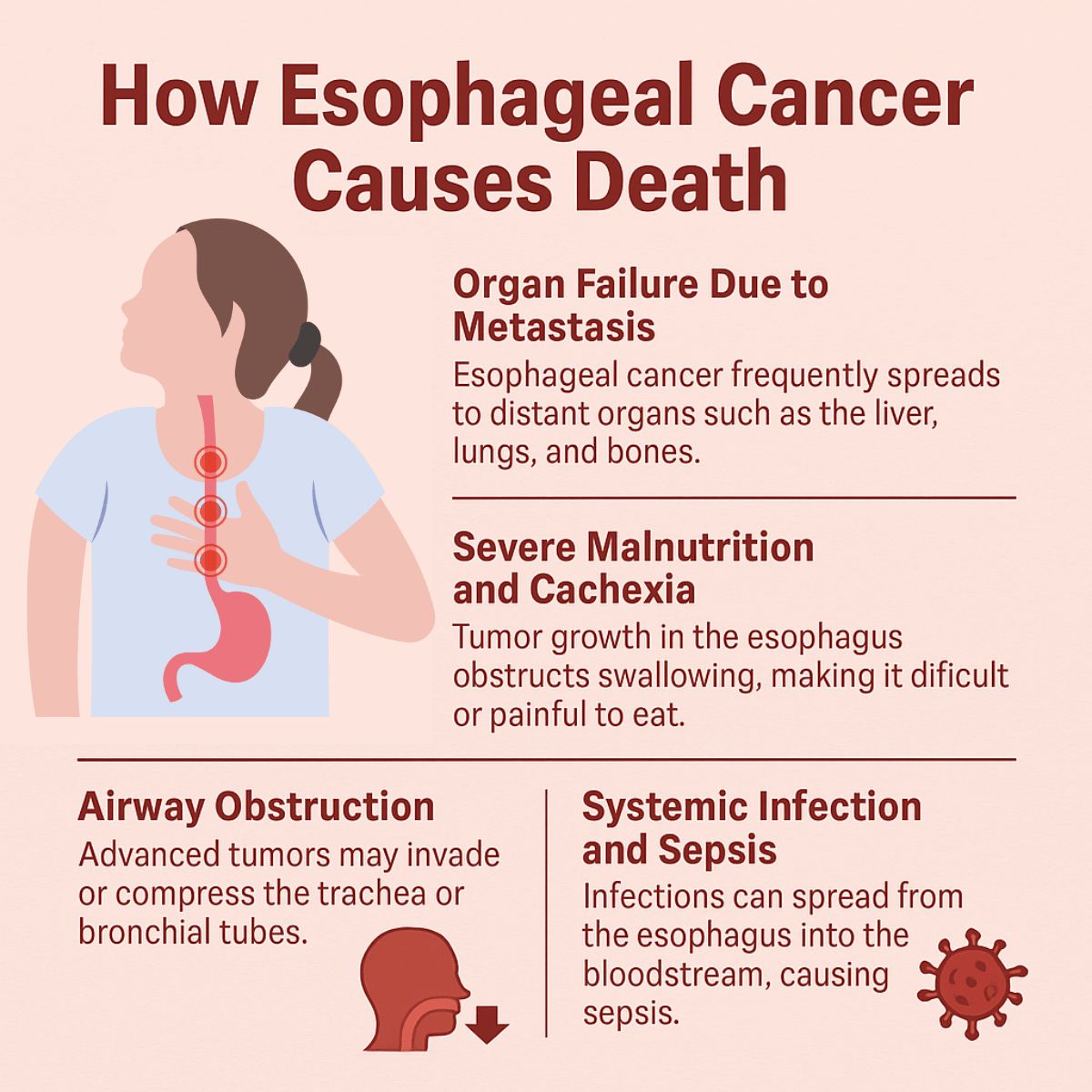
How Esophageal Cancer Causes Death
Esophageal cancer leads to death primarily by disrupting vital bodily functions through tumor growth, spread, and complications. Its effects extend beyond the esophagus, impacting nutrition, the respiratory system, and the immune response.
Organ Failure Due to Metastasis
Esophageal cancer frequently spreads to distant organs such as the liver, lungs, and bones. This process, called metastasis, impairs the normal function of these organs. For example, liver metastases reduce detoxification and metabolism, causing systemic toxicity.
When the lungs are involved, metastases interfere with oxygen exchange, leading to respiratory failure. Bone metastases cause severe pain and fractures, further weakening the patient. Organ failure often results from a combination of tumor burden and the body’s inability to compensate, ultimately causing death.
Severe Malnutrition and Cachexia
Tumor growth in the esophagus obstructs swallowing, making it difficult or painful to eat. This obstruction leads to severe malnutrition because patients cannot maintain adequate calorie and nutrient intake.
Cachexia, a wasting syndrome, develops as the cancer causes systemic inflammation and muscle loss. It reduces body mass, strength, and immune function. Even with nutritional support, cachexia often persists and significantly contributes to mortality in esophageal cancer patients.
Airway Obstruction
Advanced tumors may invade or compress the trachea or bronchial tubes. This invasion narrows the airways, causing breathing difficulties, coughing, and infections like pneumonia.
If the airway becomes critically obstructed, oxygen delivery to the body decreases. Patients may experience respiratory distress, hypoxia, and, in severe cases, suffocation. Airway obstruction can be an immediate life-threatening complication of esophageal cancer.
Systemic Infection and Sepsis
Esophageal cancer and its treatments weaken the immune system. Tumor necrosis and ulceration in the esophagus increase the risk of bacterial infection.
Infections can spread from the esophagus into the bloodstream, causing sepsis, a severe and uncontrolled immune response to infection. Sepsis leads to widespread inflammation, organ damage, and shock. Without prompt treatment, sepsis from esophageal cancer complications often results in death.
Complications Leading to Fatality
Esophageal cancer can cause life-threatening problems by damaging essential structures and disrupting vital functions. These complications often result from tumor growth or treatment effects and can directly cause death.
Esophageal Perforation
Esophageal perforation occurs when the cancer weakens the esophageal wall, causing a hole or tear. This allows food, saliva, and bacteria to leak into the chest cavity, leading to severe infection and inflammation known as mediastinitis.
Mediastinitis can rapidly progress to sepsis, a life-threatening systemic infection. Without prompt treatment, such as surgery or drainage combined with antibiotics, perforation often results in fatal outcomes.
This complication is a medical emergency. Symptoms include severe chest pain, fever, and difficulty swallowing. It is more common in advanced stages when the tumor invades through the esophageal wall.
Massive Hemorrhage
Massive hemorrhage happens when the tumor erodes into nearby blood vessels, causing severe bleeding. This bleeding can occur suddenly and may be difficult to control due to the tumor’s location and fragile vascular tissue.
Patients may experience vomiting of large amounts of blood (hematemesis) or rapid blood loss leading to shock. Emergency intervention is required to stabilise the patient, but this complication frequently has a poor prognosis.
Note: The bleeding source is often the aorta or other major arteries adjacent to the esophagus. Recurrent or uncontrolled hemorrhage can rapidly lead to death due to blood loss and cardiovascular collapse.
Aspiration Pneumonia
Aspiration pneumonia results from food, liquids, or saliva entering the lungs due to impaired swallowing caused by the tumor. This leads to lung infection, inflammation, and impaired oxygen exchange.
Cancer patients often have weakened immune systems, increasing pneumonia severity. Symptoms include cough, fever, chest pain, and shortness of breath. If untreated, aspiration pneumonia can cause respiratory failure. It is a common cause of death in esophageal cancer patients, especially in later stages when swallowing difficulty worsens.
Progression of Advanced Esophageal Cancer
Advanced esophageal cancer worsens as the tumor grows and spreads. It causes increasing obstruction and damages nearby tissues. The disease also spreads to lymph nodes, which accelerates its impact on the body.
Local Tumor Growth
The cancer tumor in the esophagus grows deeper into the esophageal wall layers, destroying muscle and connective tissue. This thickening narrows the esophageal passage, causing difficulty swallowing (dysphagia).
As the tumor enlarges, it can invade nearby organs such as the trachea, lungs, or aorta. This invasion may lead to severe complications like fistulas, infections, or bleeding. Pain becomes more intense as the tumor disrupts nerves.
Tumor growth also causes local inflammation and ulceration, which worsen symptoms like pain and bleeding. Eventually, the esophagus may become blocked, preventing food and liquids from passing through.
Regional Lymph Node Involvement
Cancer often spreads from the esophagus to nearby lymph nodes early in progression. These lymph nodes then serve as reservoirs, allowing cancer cells to multiply and enter the bloodstream or lymphatic system.
Involvement of regional lymph nodes indicates more aggressive disease and lowers survival rates. Swollen lymph nodes may press on adjacent structures, causing pain or swelling in the neck or chest.
Note: This lymphatic spread facilitates distant metastasis, commonly reaching organs such as the liver, lungs, and bones. As a result, systemic symptoms like weight loss, fatigue, and weakness often arise.
Impact on the Digestive System
Esophageal cancer disrupts normal swallowing and digestion by narrowing the esophagus and impairing muscle function. This leads to critical complications that affect nutrient intake and cause discomfort.
Severe Dysphagia
Esophageal tumors often cause severe dysphagia, a condition where swallowing becomes very difficult. The tumor narrows the esophageal passage, preventing solid and eventually liquid foods from passing into the stomach.
Patients can experience pain while swallowing and may choke frequently. This condition leads to reduced food intake, weight loss, and malnutrition because the body cannot absorb enough calories or nutrients.
Note: As the cancer grows, dysphagia typically worsens, forcing some patients to rely on feeding tubes or intravenous nutrition to maintain adequate nourishment.
Intractable Vomiting
Intractable vomiting occurs when the tumor blocks the esophagus or disrupts normal motility. Patients may vomit frequently and uncontrollably, leading to dehydration and loss of essential electrolytes.
The vomiting can result in aspiration, where stomach contents enter the lungs, causing pneumonia. Persistent vomiting makes it harder for patients to keep down even small amounts of fluid or medication.
Note: This symptom contributes significantly to the rapid physical decline seen in advanced esophageal cancer cases, complicating care and reducing survival chances.
Role of Metastatic Spread
Esophageal cancer often becomes fatal when it spreads beyond the esophagus. The cancer cells invade distant organs, impairing their function and leading to life-threatening complications. Key organs affected include the liver, lungs, and bones, each presenting specific risks and outcomes.
Liver Metastases
When esophageal cancer spreads to the liver, the tumor disrupts normal liver function. This includes impairing detoxification, protein synthesis, and bile production. Patients may develop jaundice, ascites (fluid buildup in the abdomen), and blood clotting abnormalities.
Liver failure can ensue, causing confusion, swelling, and eventually coma. The extensive liver damage reduces the body’s ability to manage toxins and maintain chemical balance. This decline is a common cause of death in metastatic esophageal cancer.
Lung Metastases
Metastases in the lungs cause respiratory symptoms like shortness of breath, persistent cough, and chest pain. Tumors may block airways or cause fluid accumulation around the lungs (pleural effusion), severely limiting oxygen exchange.
Respiratory failure occurs as the lungs lose the ability to oxygenate blood effectively. This can lead to severe hypoxia, organ failure, and death. Pneumonia and other infections are common due to compromised lung function.
Bone Metastases
Bone metastases cause severe pain due to destruction of bone tissue. Fractures or spinal cord compression may occur, leading to immobility, nerve damage, and paralysis. The cancer also disrupts calcium metabolism, causing high blood calcium levels (hypercalcemia).
Hypercalcemia can cause confusion, kidney failure, and cardiac arrhythmias. The combined effects of pain, fractures, and metabolic imbalances contribute significantly to morbidity and mortality in esophageal cancer patients with bone spread.
Factors Influencing Survival Time
Survival time in esophageal cancer depends on multiple clinical and health-related factors. The extent of cancer spread and the patient’s overall health critically affect treatment success and longevity.
Stage at Diagnosis
The stage of esophageal cancer at diagnosis is the most significant predictor of survival time. Early-stage cancers confined to the esophagus wall have higher survival rates because they are more treatable with surgery or localized therapies.
Advanced stages, where cancer has spread to lymph nodes or distant organs, reduce survival dramatically. Metastasis limits treatment options to mainly palliative care, and median survival often decreases to months.
Note: Early detection improves survival chances by enabling aggressive treatments, while late diagnosis correlates with lower life expectancy due to complications and limited therapeutic benefit.
Patient Comorbidities
Existing medical conditions heavily influence survival outcomes in esophageal cancer patients. Chronic illnesses such as heart disease, diabetes, or respiratory disorders can reduce tolerance to surgery and chemotherapy.
Comorbidities increase the risk of treatment-related complications and slow recovery, often necessitating less aggressive treatment approaches. This can lead to reduced survival times since full treatment protocols might not be feasible.
Note: Patients with fewer or well-managed comorbidities typically have better responses to treatment and longer survival compared to those with multiple or severe health issues.
FAQs About Esophageal Cancer and Life-Threatening Complications
Can You Die From Esophageal Cancer?
Yes, esophageal cancer can be fatal, especially when it is diagnosed at a later stage. The cancer can block the esophagus, making swallowing extremely difficult, which leads to severe malnutrition and weakness. It can also spread to vital organs, such as the liver, lungs, or lymph nodes, further reducing survival rates.
Without effective treatment, the disease can cause complications such as bleeding, respiratory issues, or infections. Early detection and proper therapy significantly improve the chances of survival and overall quality of life.
How Aggressive Is Esophageal Cancer?
Esophageal cancer is considered highly aggressive because it often grows quickly and spreads before noticeable symptoms develop. Many patients are diagnosed in advanced stages, when the tumor has already invaded nearby structures or metastasized to distant organs.
This rapid progression makes treatment more complex and survival rates lower compared to some other cancers. Its aggressive nature also explains why early screening and attention to risk factors, such as smoking, alcohol use, and chronic acid reflux, are so important for prevention and timely detection.
What Is The Life Expectancy Of Someone With Esophageal Cancer?
Life expectancy depends on the stage at diagnosis, overall health, and response to treatment. Early-stage esophageal cancer has a better prognosis, with some patients living years after treatment. In contrast, advanced stages often shorten survival to months or a few years, even with therapy.
On average, the five-year survival rate is relatively low; however, outcomes improve significantly when the cancer is detected early. Supportive care and modern treatments can also extend life expectancy and improve the patient’s comfort and quality of life.
How Painful Is Death By Esophageal Cancer?
Death from esophageal cancer can involve significant discomfort, particularly if the disease is advanced and untreated. Patients may experience difficulty swallowing, chest pain, shortness of breath, or severe weight loss. However, modern palliative care and pain management strategies can greatly reduce suffering.
Medications, nutritional support, and procedures are often provided to relieve swallowing difficulties and enhance comfort. While the disease itself can be painful, healthcare teams focus on easing symptoms and maintaining dignity for patients during the final stages of life.
How Fast Does Esophageal Cancer Grow?
The growth rate of esophageal cancer varies depending on the type. Squamous cell carcinoma and adenocarcinoma, the two main forms, can both progress quickly once they develop. In many cases, the cancer advances silently, showing few symptoms until it is already advanced.
Without early detection, it can spread to surrounding tissues and distant organs within months. This relatively fast growth highlights the importance of paying attention to early signs such as difficulty swallowing, chronic heartburn, or unexplained weight loss to ensure timely diagnosis.
How Fast Can Esophageal Cancer Kill You?
How quickly esophageal cancer becomes fatal depends on its stage, aggressiveness, and whether treatment is received. In advanced, untreated cases, survival may only be a few months. With treatment, many patients live longer, sometimes several years, depending on how well they respond.
Because the disease often spreads before diagnosis, its progression can be rapid. Early detection, lifestyle changes, and therapies such as surgery, chemotherapy, or immunotherapy can significantly slow the cancer’s course and improve both survival rates and quality of life.
How Long Can You Live With Untreated Esophageal Cancer?
Without treatment, esophageal cancer usually progresses quickly and may become fatal within a few months to a year. The exact timeline varies depending on the cancer type, size, and how far it has spread at diagnosis.
As the tumor grows, patients often develop severe swallowing problems, weight loss, and complications like infections or bleeding. Because untreated disease almost always advances rapidly, seeking medical care as early as possible is critical for extending survival and maintaining quality of life for as long as possible.
What Are The Early Signs Of Esophageal Cancer?
Early signs of esophageal cancer are often subtle and easy to overlook. The most common early symptom is difficulty swallowing solid foods, which gradually worsens. Other signs may include unexplained weight loss, persistent heartburn, chest pain, chronic cough, or hoarseness.
Some patients may feel as if food is stuck in the throat or chest. Because symptoms are vague and often appear late, many cases are diagnosed in advanced stages.
Note: Recognizing these early warning signs can lead to earlier detection and better treatment outcomes.
Final Thoughts
Esophageal cancer is one of the most challenging cancers because of its aggressive growth and the serious complications it causes. By narrowing the esophagus, spreading to vital organs, and weakening the body through malnutrition and infection, it gradually overwhelms a patient’s ability to survive.
Understanding how this disease leads to death is not meant to create fear but to emphasize the importance of early detection, prompt treatment, and supportive care.
While the prognosis can be difficult, advances in medical therapies and palliative approaches are helping many patients live longer and maintain a better quality of life. Awareness, timely screening, and compassionate care remain essential in the fight against esophageal cancer.

Written by:
John Landry is a registered respiratory therapist from Memphis, TN, and has a bachelor's degree in kinesiology. He enjoys using evidence-based research to help others breathe easier and live a healthier life.
References
- Wang Y, Mukkamalla SKR, Singh R, et al. Esophageal Cancer. [Updated 2024 Aug 17]. In: StatPearls [Internet]. Treasure Island (FL): StatPearls Publishing; 2025.