
When fluid builds up around the lungs, it can lead to symptoms such as shortness of breath, chest discomfort, and fatigue. One of the most common treatments for this condition is a procedure to drain the excess fluid, often providing rapid relief.
However, many people wonder how long the process actually takes and what to expect before, during, and after the procedure. The answer can vary depending on the amount of fluid, the method used, and the underlying cause.
In this article, we will break down the timeline and explain what factors influence how quickly fluid can be safely drained from the lungs.

Download our free guide that has over 100+ of the best tips for healthy lungs.
How Long Does it Take to Drain Fluid From the Lungs?
The time it takes to drain fluid from the lungs depends on the amount of fluid, the method used, and the patient’s overall condition. A common procedure called thoracentesis typically takes about 10 to 30 minutes to remove the fluid itself, although preparation and monitoring may extend the total time to about an hour.
In cases where a larger volume of fluid needs to be drained, a chest tube may be placed, allowing fluid to drain slowly over several hours or days.
Recovery time also varies, with many patients experiencing immediate relief in breathing. However, if the underlying cause is not treated, fluid may return and require additional drainage procedures.
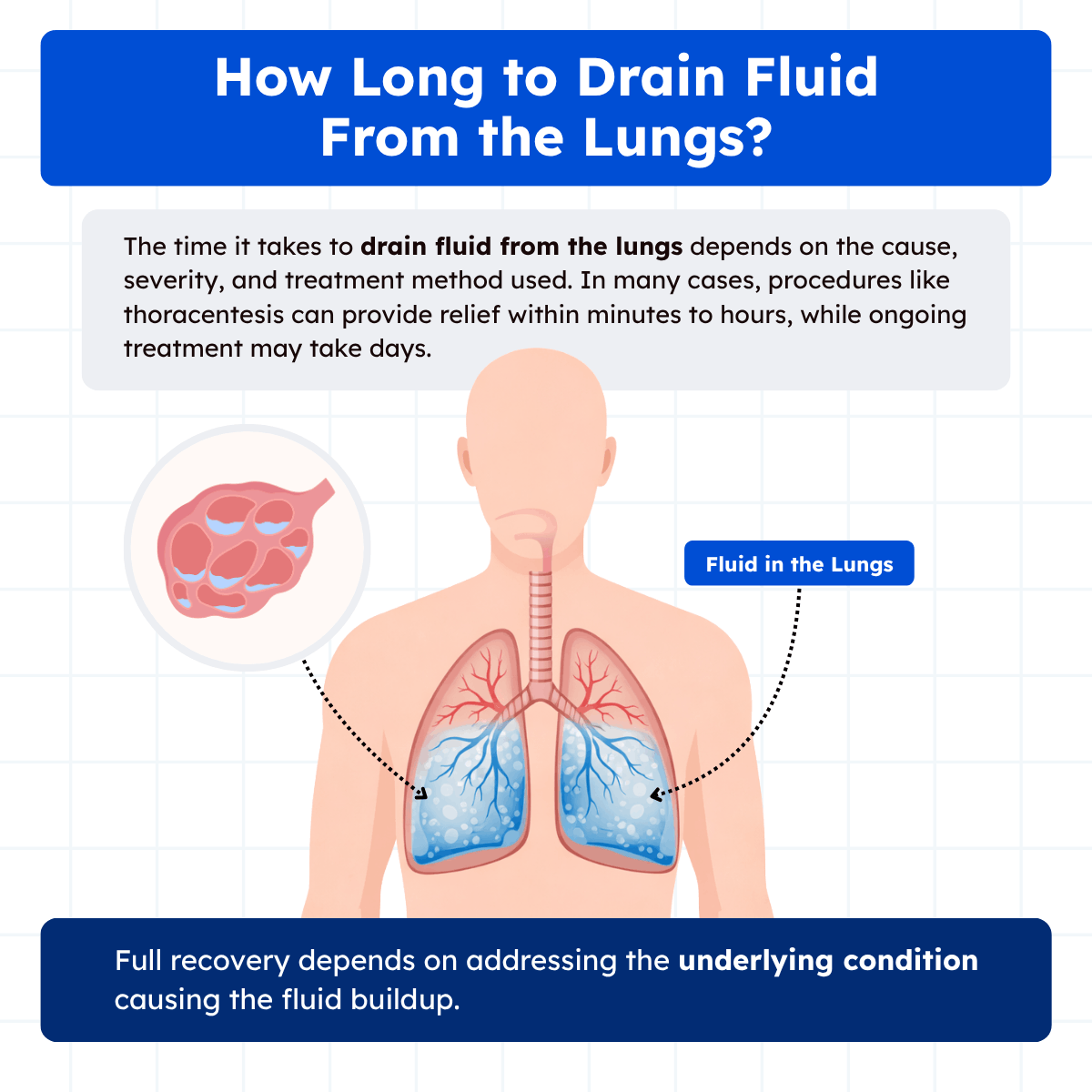
Typical Duration to Drain Fluid From the Lungs
The time required to drain fluid from the lungs varies based on the procedure type, fluid volume, and patient-specific factors. Most drainage procedures take between 15 minutes to several hours, with recovery times extending from same-day discharge to multiple days of hospitalization.
Average Timeframes for Different Procedures
Thoracentesis typically requires 10 to 15 minutes for the actual fluid removal. The entire appointment, including preparation and post-procedure monitoring, usually takes 30 to 60 minutes. Patients can often leave within an hour if no complications arise.
Chest tube insertion takes approximately 30 to 45 minutes to place. The tube remains in position for 1 to 7 days on average, depending on fluid accumulation rates. Continuous drainage occurs during this period, with healthcare providers monitoring output daily.
Pleurodesis procedures require 30 to 60 minutes to perform after initial fluid drainage. The patient must keep the chest tube in place for an additional 24 to 72 hours while the lung adheres to the chest wall. Total hospitalization for pleurodesis typically spans 3 to 5 days.
Factors Influencing Overall Duration
Fluid volume significantly affects drainage time. Small accumulations of 500 milliliters or less drain quickly during thoracentesis, while larger volumes of 1 to 2 liters may require slower removal to prevent complications.
The underlying cause impacts the timeline. Infections like pneumonia may require chest tube drainage for 5 to 7 days until the infection resolves. Malignant effusions often need longer drainage periods or permanent catheter placement.
Patient tolerance plays a role in procedure length. Some individuals experience discomfort or breathing changes that necessitate pausing the drainage process. Medical conditions such as lung disease or heart failure can extend both the procedure and recovery periods.
Comparison of Outpatient vs. Inpatient Drainage
Outpatient thoracentesis allows patients to return home the same day. The procedure occurs in a clinic or hospital, with monitoring lasting 30 to 60 minutes post-drainage. Patients receive instructions to watch for symptoms like shortness of breath or chest pain.
Inpatient drainage involves hospital admission for chest tube placement. Patients stay 2 to 7 days while the tube drains fluid continuously. Medical staff perform daily chest X-rays and assess drainage amounts to determine when removal is appropriate.
Indwelling pleural catheters offer a hybrid approach. Initial placement takes 30 to 45 minutes as an outpatient procedure. Patients or caregivers then perform drainage at home every 1 to 3 days, with each session lasting 15 to 30 minutes.
Procedures Used to Drain Lung Fluid
Medical professionals use several proven methods to remove excess fluid from the lungs, ranging from minimally invasive needle procedures to surgical interventions. The choice of procedure depends on the fluid volume, underlying cause, and patient’s overall health status.
Thoracentesis
Thoracentesis is the most common outpatient procedure for removing pleural fluid. A physician inserts a thin needle between the ribs into the pleural space while using ultrasound guidance to visualize the fluid collection.
The patient typically sits upright and leans forward during the procedure. Local anesthesia numbs the insertion site before the needle enters the chest wall. Medical staff can remove up to 1,500 milliliters of fluid in a single session, though smaller volumes are often drained to prevent complications.
The procedure takes 10 to 15 minutes to complete. Patients experience immediate relief from breathing difficulties once the fluid is removed. A chest X-ray follows the procedure to confirm proper lung re-expansion and check for pneumothorax.
Chest Tube Insertion
Chest tube insertion, or tube thoracostomy, involves placing a flexible plastic tube between the ribs into the pleural space. This method is necessary when fluid accumulates rapidly, reaccumulates after thoracentesis, or contains infection or blood.
The physician makes a small incision between the ribs after administering local anesthesia. The tube remains in place for several days, connected to a drainage system that continuously removes fluid. Medical staff monitor the drainage output and fluid characteristics throughout the treatment period.
This approach is more invasive than thoracentesis but allows for ongoing drainage. Patients remain hospitalized while the chest tube is in place. The tube is removed once drainage decreases to less than 100 to 150 milliliters per day.
Surgical Drainage Options
Video-assisted thoracoscopic surgery (VATS) is performed when less invasive methods fail or when the underlying cause requires surgical treatment. Surgeons make small incisions and insert a camera along with surgical instruments to drain fluid and address the source.
Pleurodesis is often performed during VATS to prevent fluid reaccumulation. This procedure involves introducing a substance that causes the lung and chest wall to adhere together, eliminating the space where fluid collects.
Open thoracotomy represents the most invasive option, reserved for complex cases involving thick fluid, extensive scarring, or trapped lung. Recovery from surgical drainage requires longer hospitalization and rehabilitation compared to other methods.
What to Expect Before the Procedure
Before fluid is drained from the lungs, patients typically undergo a thorough evaluation to confirm the presence of fluid and determine the safest approach for removal. Imaging studies such as a chest X-ray, ultrasound, or CT scan are commonly used to visualize the fluid and estimate its volume. Among these, ultrasound is especially helpful because it allows the provider to locate the fluid in real time and guide needle placement with greater accuracy.
Your healthcare provider will also review your medical history, medications, and any underlying conditions. Blood tests may be ordered to assess clotting ability, especially if you are taking blood thinners. In some cases, you may be asked to temporarily stop certain medications prior to the procedure to reduce the risk of bleeding.
On the day of the procedure, patients are usually awake and do not require general anesthesia. Instead, a local anesthetic is used to numb the area where the needle or tube will be inserted. You may be asked to sit upright or lie in a specific position to allow better access to the fluid. The healthcare team will explain each step, answer questions, and monitor your vital signs to ensure safety and comfort throughout the process.
What Happens During Fluid Drainage
The experience during fluid drainage depends on the procedure being performed, but most patients find it more tolerable than expected. During thoracentesis, a thin needle is inserted into the pleural space after the skin has been numbed. You may feel slight pressure during insertion, but sharp pain is usually minimized with proper anesthesia.
As the fluid is removed, many patients notice an immediate improvement in breathing. However, it is important to remove fluid gradually, especially when large amounts are present. Rapid removal can lead to complications such as re-expansion pulmonary edema, which is why providers carefully control the drainage rate.
If a chest tube is used, the initial placement may involve some discomfort, but this is managed with anesthesia and sometimes mild sedation. Once in place, the tube continuously drains fluid into a collection chamber. Patients may feel mild soreness at the insertion site, but the relief from reduced pressure in the chest often outweighs this discomfort.
Note: Throughout the procedure, medical staff closely monitor oxygen levels, heart rate, and overall stability. If any symptoms such as dizziness, chest pain, or worsening shortness of breath occur, the procedure can be paused or adjusted accordingly.
Recovery After Fluid Drainage
Recovery time varies depending on the procedure and the underlying condition, but many patients experience noticeable improvement almost immediately. Breathing often becomes easier as pressure on the lungs decreases, allowing them to expand more fully.
After thoracentesis, patients are usually observed for a short period, often 30 to 60 minutes, before being discharged. A follow-up chest X-ray may be performed to ensure there are no complications, such as a collapsed lung. Most people can return to normal activities within a day, although strenuous activity may be limited temporarily.
For those with a chest tube, recovery involves a longer hospital stay. The tube remains in place until fluid drainage decreases to an acceptable level and the lung has adequately re-expanded. During this time, patients are encouraged to move, cough, and perform breathing exercises to support lung function and prevent complications like pneumonia.
Note: Pain management is an important part of recovery. Mild discomfort is common, but it is usually manageable with prescribed medications. The insertion site should be kept clean and monitored for signs of infection, such as redness, swelling, or drainage.
Risks and Potential Complications
Although fluid drainage procedures are generally safe, there are some risks to be aware of. The most common complication is a pneumothorax, or collapsed lung, which can occur if air enters the pleural space during the procedure. This is why imaging and careful technique are essential, and why patients are often monitored afterward.
Other potential risks include bleeding, infection, and pain at the insertion site. In rare cases, rapid removal of large volumes of fluid can lead to re-expansion pulmonary edema, a condition where the lung becomes inflamed as it re-expands too quickly.
For patients with chest tubes, additional risks include tube displacement, blockage, or irritation of surrounding tissues. However, these complications are relatively uncommon when the procedure is performed by experienced medical professionals.
Note: It is important to follow all post-procedure instructions and report any concerning symptoms, such as worsening shortness of breath, chest pain, fever, or persistent coughing. Early recognition of complications allows for prompt treatment and better outcomes.
Why Fluid May Come Back
One of the most important aspects of managing fluid in the lungs is addressing the underlying cause. While drainage procedures can provide immediate relief, they do not always prevent fluid from returning.
Conditions such as heart failure, cancer, liver disease, and kidney disease can lead to ongoing fluid accumulation. In these cases, repeated drainage procedures or long-term solutions, such as indwelling pleural catheters or pleurodesis, may be necessary.
For example, patients with congestive heart failure may benefit from medications like diuretics to reduce fluid buildup throughout the body. Those with infections may require antibiotics to eliminate the source of inflammation. In cases of malignancy, treatment may involve chemotherapy, radiation, or other targeted therapies to control the disease.
Note: Understanding why fluid accumulates is key to preventing recurrence and improving long-term outcomes. Your healthcare provider will develop a treatment plan tailored to your specific condition.
When to Seek Medical Attention
Fluid buildup in the lungs should never be ignored, especially if symptoms are worsening. You should seek medical attention if you experience increasing shortness of breath, chest pain, rapid breathing, or a persistent cough. These symptoms may indicate that fluid is accumulating or that complications are developing.
Emergency care is necessary if breathing becomes severely difficult, if you feel lightheaded or faint, or if you notice bluish discoloration of the lips or fingertips. These signs suggest that oxygen levels may be dangerously low and require immediate intervention.
Even after fluid has been drained, follow-up care is essential. Regular check-ups, imaging, and monitoring help ensure that the condition is improving and that fluid is not returning. Early intervention can prevent complications and reduce the need for more invasive treatments.
Long-Term Management of Fluid in the Lungs
Managing fluid in the lungs over the long term focuses on treating the root cause and preventing recurrence. While drainage procedures provide relief, they are often just one part of a broader treatment plan. For many patients, ongoing care is essential to maintain lung function and overall health.
In conditions like congestive heart failure, medications such as diuretics help reduce fluid buildup by increasing urine output. Patients may also be advised to limit sodium intake, monitor fluid consumption, and track daily weight changes to detect early signs of fluid retention. These lifestyle adjustments can significantly reduce the likelihood of fluid reaccumulating.
For individuals with chronic conditions such as cancer or liver disease, long-term solutions may include repeated drainage, indwelling pleural catheters, or pleurodesis. Indwelling catheters allow patients to drain fluid at home, providing convenience and reducing hospital visits. Pleurodesis, on the other hand, eliminates the pleural space to prevent future fluid buildup altogether.
Note: Close follow-up with a healthcare provider is critical. Regular imaging and clinical evaluations help ensure that treatment is effective and allow for timely adjustments when needed.
Can Fluid Be Drained Too Quickly?
Yes, draining fluid too quickly can lead to complications, which is why medical professionals carefully control the rate of removal. One of the primary concerns is re-expansion pulmonary edema, a condition that can occur when a collapsed lung re-expands too rapidly after fluid removal.
To minimize this risk, providers often limit the amount of fluid removed during a single thoracentesis, typically to around 1 to 1.5 liters at a time. If more fluid is present, additional drainage sessions may be scheduled. This gradual approach allows the lungs and surrounding structures to adjust safely.
Patients may also be monitored closely during the procedure for symptoms such as coughing, chest tightness, or changes in oxygen levels. If any concerning signs arise, the procedure can be paused or stopped to prevent complications.
Note: This careful balance between effective drainage and patient safety is a key reason why these procedures should always be performed under medical supervision.
Signs That Fluid Is Improving After Drainage
After fluid is drained from the lungs, many patients notice improvements fairly quickly. One of the earliest and most noticeable changes is easier breathing. As the pressure on the lungs decreases, they are able to expand more fully, allowing for better oxygen exchange.
Other signs of improvement may include reduced chest discomfort, less coughing, and increased energy levels. Patients often find that they can perform daily activities with less fatigue and shortness of breath.
Healthcare providers may confirm improvement through follow-up imaging, such as chest X-rays or ultrasounds, which show reduced fluid levels and better lung expansion. Oxygen levels may also improve, and abnormal breath sounds may resolve during physical examination.
Note: It is important to remember that improvement depends on addressing the underlying cause. If the root condition is not treated, symptoms may return over time.
Tips to Prevent Fluid From Coming Back
Preventing fluid from returning to the lungs involves a combination of medical treatment and lifestyle adjustments. While not all cases are preventable, especially those related to chronic or serious illnesses, there are steps that can help reduce the risk.
Following your treatment plan is the most important step. This includes taking medications as prescribed, attending follow-up appointments, and monitoring symptoms closely. Missing doses or delaying care can increase the likelihood of recurrence.
Dietary changes may also play a role, particularly for patients with heart or kidney conditions. Reducing sodium intake helps prevent fluid retention, while maintaining a balanced diet supports overall health.
Staying active, within your limits, can improve circulation and lung function. Gentle activities such as walking or breathing exercises may help keep the lungs expanded and functioning properly. Avoiding smoking and limiting exposure to environmental irritants is also important. These factors can worsen lung function and increase the risk of complications.
FAQs About Draining Fluid From the Lungs
How Does Fluid Build Up Around the Lungs?
Fluid builds up around the lungs when excess liquid collects in the pleural space, the area between the lungs and chest wall. This can occur due to increased pressure in blood vessels, inflammation, or impaired drainage of fluid.
Common causes include heart failure, pneumonia, cancer, and liver or kidney disease. When the balance between fluid production and removal is disrupted, fluid accumulates and compresses the lungs, leading to symptoms such as shortness of breath and chest discomfort.
Are You Put to Sleep to Drain Fluid From the Lungs?
In most cases, you are not put to sleep to drain fluid from the lungs. Procedures like thoracentesis are typically performed using local anesthesia to numb the area, allowing you to remain awake but comfortable.
Sedation may be used in certain situations, especially if a chest tube is being placed or if the patient is anxious. General anesthesia is usually reserved for more invasive surgical procedures, such as video-assisted thoracoscopic surgery (VATS).
What to Expect After Your Lungs Are Drained?
After your lungs are drained, you may experience immediate relief in breathing and reduced chest pressure. Mild soreness at the insertion site is common but usually temporary. You may be monitored for a short period to ensure there are no complications, such as a collapsed lung.
Some patients undergo a follow-up chest X-ray. Most people can return to normal activities within a day, although your provider may recommend avoiding strenuous activity for a short time.
How Long Does It Take for a Diuretic to Remove Fluid From the Lungs?
Diuretics can begin working within hours, but the time it takes to remove fluid from the lungs varies depending on the severity of the condition and the individual’s response. Some patients notice improved breathing within a day, while others may require several days of treatment.
Diuretics help reduce overall fluid volume in the body, which can gradually decrease fluid in the lungs. Ongoing use and monitoring are often needed to maintain proper fluid balance.
Are You Awake During a Thoracentesis?
Yes, most patients are awake during a thoracentesis. The procedure is performed under local anesthesia, which numbs the area where the needle is inserted. While you may feel pressure or slight discomfort, significant pain is uncommon.
Being awake allows you to follow instructions, such as holding your breath briefly, which can improve safety. The procedure is generally quick, and many patients tolerate it well with minimal discomfort.
Can Fluid Come Back After a Thoracentesis?
Yes, fluid can come back after a thoracentesis, especially if the underlying cause is not addressed. Conditions such as heart failure, cancer, or chronic infections can lead to recurrent fluid buildup. In these cases, repeated drainage procedures or long-term management strategies may be necessary.
Options may include medications, indwelling pleural catheters, or procedures like pleurodesis to prevent recurrence. Ongoing monitoring is important to detect and manage fluid reaccumulation early.
How Do I Get Ready for a Thoracentesis?
To prepare for a thoracentesis, your healthcare provider will review your medical history and medications. You may need to stop blood thinners temporarily to reduce bleeding risk. Imaging studies, such as ultrasound or chest X-ray, are often performed beforehand.
On the day of the procedure, wear comfortable clothing and follow any instructions provided, such as avoiding food if sedation is planned. Your provider will explain the procedure and answer any questions to help you feel prepared and at ease.
Is Draining Fluid From the Lungs Painful?
Most patients report minimal pain during fluid drainage procedures. Local anesthesia is used to numb the area, so while you may feel pressure or slight discomfort, sharp pain is uncommon.
After the procedure, mild soreness at the insertion site is normal and usually resolves within a few days. Pain can typically be managed with over-the-counter or prescribed medications.
Note: If severe or persistent pain occurs, it is important to contact your healthcare provider.
How Much Fluid Can Be Removed at Once?
The amount of fluid removed during a single procedure depends on safety considerations. In most cases, providers limit drainage to about 1 to 1.5 liters at a time to reduce the risk of complications.
Removing too much fluid too quickly can lead to issues such as re-expansion pulmonary edema. If a larger volume is present, additional drainage sessions or a chest tube may be used to remove the fluid more gradually and safely.
Do You Feel Better Immediately After Drainage?
Many patients experience immediate relief after fluid is drained from the lungs. Breathing often becomes easier, and chest pressure decreases as the lungs are able to expand more fully.
However, the degree of improvement can vary depending on the underlying condition and overall health. Some patients may need additional treatments or time to fully recover. Continued monitoring and follow-up care are important to ensure lasting improvement.
Can Fluid in the Lungs Be Life-Threatening?
Yes, fluid in the lungs can be life-threatening if left untreated, especially when it significantly impairs breathing or is caused by a serious underlying condition. Severe fluid buildup can reduce oxygen levels and place strain on the heart and lungs.
Conditions such as pulmonary edema or large pleural effusions require prompt medical attention. Early diagnosis and treatment are essential to prevent complications and improve outcomes.
Final Thoughts
The time required to drain fluid from the lungs can vary based on several factors, but many patients experience relief relatively quickly once the procedure is performed. Whether it takes minutes with thoracentesis or longer with a chest tube, the goal is to safely remove the fluid while addressing the underlying cause.
Understanding the timeline can help ease anxiety and set realistic expectations for recovery. If fluid buildup is suspected, seeking prompt medical care is essential to ensure proper treatment and prevent complications.

Written by:
John Landry is a registered respiratory therapist from Memphis, TN, and has a bachelor's degree in kinesiology. He enjoys using evidence-based research to help others breathe easier and live a healthier life.
References
- Wiederhold BD, Sharma S, O’Rourke MC. Thoracentesis. [Updated 2024 Oct 6]. In: StatPearls [Internet]. Treasure Island (FL): StatPearls Publishing; 2026.
- Ali M, Sharma S, Surani S. Pleurodesis. [Updated 2025 Jan 19]. In: StatPearls [Internet]. Treasure Island (FL): StatPearls Publishing; 2026.