

When managing respiratory conditions such as asthma, chronic obstructive pulmonary disease (COPD), and other forms of airway obstruction, medications that help open the airways play a critical role in improving breathing and reducing symptoms.
One commonly prescribed treatment is DuoNeb, a nebulized medication frequently used in both emergency and clinical settings. However, many patients and healthcare students often wonder whether DuoNeb itself is classified as a bronchodilator or something more complex.
Understanding how DuoNeb works, what medications it contains, and how it affects the respiratory system can help clarify its role in airway management and overall respiratory care.

Download our free guide that has over 100+ of the best tips for healthy lungs.
Is DuoNeb a Bronchodilator?
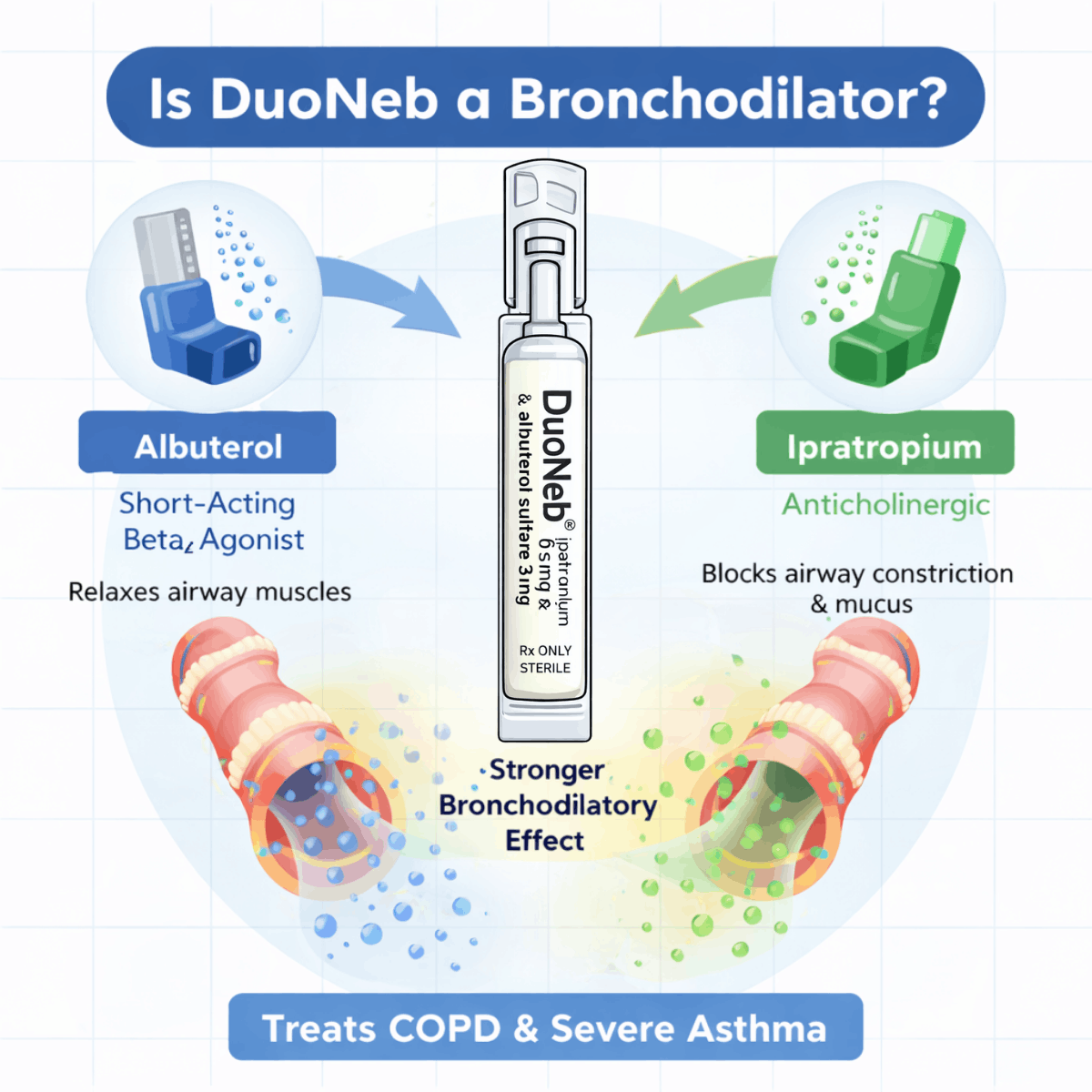
Yes, DuoNeb is considered a bronchodilator because it contains two medications that work together to relax and open the airways. DuoNeb is a combination of albuterol and ipratropium bromide, both of which are bronchodilators but belong to different drug classes.
Albuterol is a short-acting beta₂-agonist that stimulates receptors in the airway smooth muscle, causing the muscles to relax and the airways to widen quickly. Ipratropium bromide is an anticholinergic agent that blocks certain nerve signals responsible for airway constriction and excess mucus production.
When used together, these medications provide a stronger bronchodilatory effect, making DuoNeb especially useful for treating bronchospasm associated with conditions like COPD and severe asthma exacerbations.
Understanding Bronchodilators
Bronchodilators open narrowed airways and improve airflow in your lungs. They differ by drug class, duration, and how they relax airway muscles. Knowing how they work helps you understand why specific medications, including combination therapies, get prescribed.
Definition and Types
A bronchodilator is a medication that relaxes the smooth muscle lining your airways. When those muscles tighten, airflow drops and breathing becomes harder. You use bronchodilators to relieve or prevent this narrowing.
Clinicians group bronchodilators by mechanism and duration. The main types include beta-2 agonists, anticholinergics, and methylxanthines. Each class targets airway muscle tone through a different pathway.
You also see bronchodilators labeled as short-acting or long-acting. Short-acting agents provide quick relief during symptoms. Long-acting agents maintain airway openness over many hours and support daily control in chronic lung disease.
How Bronchodilators Work
Bronchodilators act directly on airway smooth muscle to reduce constriction. When the muscle relaxes, the airway diameter increases and air moves more freely. This change lowers the work of breathing and reduces wheezing.
Beta-2 agonists stimulate beta-2 receptors in the lungs. This activation triggers muscle relaxation within minutes for short-acting drugs. Long-acting versions bind longer and sustain the effect.
Anticholinergics block muscarinic receptors that cause airway tightening. By preventing this signal, they limit reflex bronchoconstriction. This effect matters in conditions with excess airway tone, such as COPD.
Note: Some therapies combine drug classes. You benefit from complementary mechanisms that improve airflow more than a single agent alone.
Examples of Bronchodilators
You encounter bronchodilators in inhalers, nebulizer solutions, and combination products. Common examples include:
- Albuterol: a short-acting beta-2 agonist used for rapid symptom relief.
- Salmeterol and formoterol: long-acting beta-2 agonists for maintenance therapy.
- Ipratropium and tiotropium: anticholinergics that reduce airway narrowing, especially in COPD.
Some medications combine agents from different classes. Duoneb, for example, contains albuterol and ipratropium in a single nebulized treatment. You receive fast muscle relaxation plus reduced bronchoconstriction signals. These options allow clinicians to tailor therapy to your symptoms, disease type, and response to treatment.
What Is DuoNeb?
DuoNeb is a prescription nebulized medication that opens your airways by combining two fast-acting bronchodilators. It treats airflow obstruction by relaxing airway muscles and reducing nerve-driven tightening that limits breathing.
Active Ingredients in DuoNeb
DuoNeb contains albuterol sulfate and ipratropium bromide, each targeting airway narrowing in a different way. Albuterol works as a short-acting beta₂-agonist (SABA) that relaxes smooth muscle in your bronchial tubes within minutes.
Ipratropium functions as a short-acting anticholinergic (SAMA). It blocks muscarinic receptors that trigger bronchoconstriction, which helps reduce airway tightening caused by vagal nerve activity.
You receive both medications together through a nebulizer, which turns liquid medicine into a breathable mist. This dual approach often improves airflow more than either drug alone, especially when symptoms persist despite single-agent therapy.
Approved Medical Uses
DuoNeb carries FDA approval for the treatment of chronic obstructive pulmonary disease (COPD), including chronic bronchitis and emphysema. Clinicians prescribe it when you need regular bronchodilation to control persistent symptoms such as wheezing and shortness of breath.
You typically use DuoNeb on a scheduled basis rather than as a rescue-only treatment. It supports daily symptom control in moderate to severe COPD.
Doctors also use DuoNeb in emergency or inpatient settings for acute COPD exacerbations. In some cases, providers prescribe it off-label for acute asthma symptoms, but it does not replace asthma-specific controller medications.
How DuoNeb Differs From Similar Medications
DuoNeb differs from albuterol alone by adding ipratropium, which provides complementary bronchodilation. This combination often delivers greater and longer-lasting airflow improvement during COPD flare-ups.
It contains the same medications as Combivent Respimat, but the delivery method differs. DuoNeb uses a nebulizer, while Combivent uses a handheld inhaler, which may matter if coordination or inspiratory flow is limited.
Unlike long-acting bronchodilators such as LABAs or LAMAs, DuoNeb acts quickly but for a shorter duration. It also does not reduce airway inflammation, which separates it from inhaled corticosteroids used in chronic asthma management.
Why DuoNeb Functions as a Bronchodilator
DuoNeb functions as a bronchodilator because it contains two medications that directly relax airway muscles. Each component targets a different pathway to improve airflow and reduce breathing difficulty.
Pharmacological Classification
DuoNeb is a combination bronchodilator made of albuterol sulfate and ipratropium bromide. Albuterol belongs to the short-acting beta‑2 agonist (SABA) class, while ipratropium is a short-acting anticholinergic.
You receive both drugs in a single nebulized solution, not as a steroid or anti‑inflammatory medication. DuoNeb does not prevent airway inflammation or modify disease progression. Its role focuses on symptom relief through airway relaxation.
Note: Because both components act locally in the lungs, DuoNeb works quickly when inhaled. It does not provide long-term maintenance control and is not classified as a long‑acting bronchodilator.
Bronchodilator Mechanism in DuoNeb
DuoNeb widens your airways through two distinct but complementary mechanisms. Albuterol stimulates beta‑2 receptors in airway smooth muscle, which causes muscle relaxation and rapid bronchodilation.
At the same time, ipratropium blocks muscarinic receptors that normally trigger bronchoconstriction. This action reduces vagal tone in your airways, helping prevent tightening caused by reflex nerve signals.
Using both agents together increases airflow more effectively than either drug alone. You experience reduced airway resistance, improved oxygen movement, and easier breathing without relying on systemic effects.
Why DuoNeb Is Prescribed for Airway Obstruction
Clinicians prescribe DuoNeb when you have reversible or partially reversible airway obstruction. It commonly treats chronic obstructive pulmonary disease (COPD), including chronic bronchitis and emphysema. You may also receive DuoNeb during acute bronchospasm, such as asthma exacerbations, when rapid symptom relief matters. Nebulization allows medication delivery even if you struggle to inhale deeply.
DuoNeb helps reduce wheezing, chest tightness, and shortness of breath. It does not replace maintenance inhalers, but it supports symptom control when airflow limitation interferes with normal breathing.
Benefits of DuoNeb in Respiratory Care
DuoNeb combines two bronchodilators with different mechanisms to improve airflow and reduce breathing effort. You gain both rapid symptom relief and practical benefits for ongoing respiratory management.
Effectiveness for COPD
You often receive DuoNeb for chronic obstructive pulmonary disease because it targets airway narrowing from two pathways. Albuterol relaxes smooth muscle through beta‑2 stimulation, while ipratropium reduces bronchoconstriction by blocking muscarinic receptors.
This dual action improves forced expiratory flow and eases shortness of breath during flare-ups. You may notice less wheezing and chest tightness within minutes when using the nebulized form.
Clinical use favors DuoNeb during acute COPD exacerbations and for patients who struggle with inhaler technique. Nebulization delivers medication steadily, which helps when breathing feels labored.
Key benefits you may experience include:
- Faster bronchodilation than single‑agent therapy
- Reduced need for frequent rescue doses
- More consistent delivery during severe symptoms
Short-Term and Long-Term Advantages
In the short term, DuoNeb provides predictable relief when symptoms escalate. You can expect improved airflow, lower breathing effort, and better tolerance for daily activities. Over longer use, scheduled dosing can help you maintain more stable lung function. You may experience fewer symptom spikes and improved day‑to‑day comfort, especially if you have moderate to severe COPD.
DuoNeb also supports adherence when inhalers prove difficult. The nebulized format suits patients with limited hand strength or coordination.
Additional advantages include:
- Complementary mechanisms that reduce reliance on higher doses
- Flexible use in home and clinical settings
- Consistent delivery during periods of respiratory fatigue
How DuoNeb Works in the Lungs
DuoNeb improves airflow by delivering two bronchodilators directly to your airways and relaxing the muscles that narrow them. The medication reaches the lungs as a fine mist and acts on specific receptors that control airway tone.
Nebulized Delivery System
You inhale DuoNeb through a nebulizer that turns liquid medication into an aerosol. This method sends albuterol sulfate and ipratropium bromide straight into your bronchial tree, where they can act locally. Direct delivery limits the amount that enters your bloodstream. That focus helps you get relief with fewer systemic effects than oral medicines.
Particle size matters. The nebulizer produces droplets small enough to travel into both large and small airways, including areas often affected in COPD and acute bronchospasm. You breathe normally during treatment. That steady breathing supports consistent deposition across the lungs and does not require precise timing or coordination.
Impact on Smooth Muscle
Once in your lungs, DuoNeb targets the smooth muscle that lines your airways. These muscles tighten during bronchospasm and restrict airflow.
- Albuterol stimulates beta-2 adrenergic receptors. This action increases cyclic AMP inside smooth muscle cells and causes them to relax, which widens the airways.
- Ipratropium blocks muscarinic receptors, mainly M3. By preventing acetylcholine from binding, it reduces reflex bronchoconstriction and mucus-related narrowing.
Note: Using both drugs together addresses two pathways of airway tightening. You get broader bronchodilation than with either medication alone, which can improve breathing during flare-ups.
Potential Side Effects and Safety Considerations
Duoneb combines albuterol and ipratropium, so side effects reflect both medicines. You should watch for mild reactions during routine use and know which symptoms require prompt medical attention.
Common Side Effects
You may notice tremor, nervousness, or a fast heartbeat, especially soon after a treatment. These effects come from albuterol’s stimulation of beta-agonist receptors and often lessen as your body adjusts.
Respiratory and throat symptoms also occur. Cough, dry mouth, throat irritation, and a bitter taste can follow nebulized doses, particularly if you use the mask instead of a mouthpiece.
Other possible effects include headache, dizziness, nausea, and mild chest discomfort. Less commonly, you may feel muscle cramps or weakness, which can relate to temporary potassium shifts. Contact your clinician if side effects persist, worsen, or interfere with daily activities.
Important Safety Warnings
Seek medical help if you develop worsening shortness of breath right after a dose, which can signal paradoxical bronchospasm. This reaction is rare but serious and requires stopping the medication.
Use caution if you have heart disease, arrhythmias, or high blood pressure, since Duoneb can increase heart rate and blood pressure. Monitor symptoms closely if you also have diabetes, as albuterol may raise blood glucose.
Avoid getting the mist in your eyes. Ipratropium exposure can worsen narrow-angle glaucoma, causing eye pain or blurred vision. Tell your provider if you have urinary retention or prostate enlargement, as anticholinergic effects may aggravate these conditions.
FAQs About DuoNeb and Bronchodilators
Does DuoNeb Have Albuterol in It?
Yes, DuoNeb contains albuterol as one of its active ingredients. It combines albuterol sulfate with ipratropium bromide to provide a dual-action bronchodilator effect. Albuterol is a short-acting beta₂-agonist that works by relaxing the smooth muscles surrounding the airways, allowing them to widen and improve airflow.
This helps relieve symptoms such as wheezing, shortness of breath, and chest tightness. The addition of ipratropium enhances the overall bronchodilation, making DuoNeb especially useful for treating moderate to severe bronchospasm, particularly in patients with COPD.
What Type of Drug Is DuoNeb?
DuoNeb is classified as a combination bronchodilator medication. It contains two different types of drugs that work together to improve breathing.
The first component, albuterol, is a short-acting beta₂-agonist that quickly relaxes airway muscles. The second component, ipratropium bromide, is an anticholinergic agent that blocks nerve signals that cause airway constriction and mucus production.
Note: By combining these two medications, DuoNeb provides a stronger and more sustained bronchodilatory effect than either medication alone, making it effective for managing airway obstruction.
Is a Nebulizer Treatment a Bronchodilator?
A nebulizer treatment is not a bronchodilator itself but rather a delivery method used to administer medications into the lungs. A nebulizer converts liquid medication into a fine mist that can be inhaled deeply into the airways. The medication placed inside the nebulizer determines the therapeutic effect.
Some nebulized medications, such as DuoNeb or albuterol, act as bronchodilators, while others may reduce inflammation or thin mucus. Therefore, the nebulizer is simply the device used to deliver respiratory medications.
When Should You Not Use DuoNeb?
DuoNeb should not be used in individuals who are allergic to albuterol, ipratropium, atropine, or similar medications. Caution is also recommended for patients with certain medical conditions, including severe heart rhythm disorders, narrow-angle glaucoma, or urinary retention.
Additionally, DuoNeb should only be used as prescribed by a healthcare provider, as overuse can lead to side effects such as rapid heart rate, tremors, or worsening breathing symptoms.
Note: Patients should always consult their healthcare provider before starting or stopping this medication.
What Is the Difference Between Albuterol and DuoNeb?
Albuterol is a single bronchodilator medication that works quickly to relax airway smooth muscle and relieve bronchospasm. DuoNeb, on the other hand, is a combination medication that contains both albuterol and ipratropium bromide.
While albuterol provides rapid bronchodilation, ipratropium adds a second mechanism by blocking nerve signals that cause airway narrowing and mucus secretion. Because of this dual-action effect, DuoNeb often provides more comprehensive symptom relief and is commonly used for patients with COPD or more severe airway obstruction.
Can Kids Use DuoNeb Better Than Albuterol?
Children can use DuoNeb in certain situations, but it is not always preferred over albuterol alone. Albuterol is often the first-line bronchodilator for pediatric patients because it works quickly and has a well-established safety profile. DuoNeb may be prescribed for children with more severe bronchospasm or when symptoms do not improve with albuterol alone.
The decision depends on the child’s age, condition, and medical history. A healthcare provider should determine whether DuoNeb is appropriate for pediatric use.
Do You Need to Rinse Your Mouth After DuoNeb?
Rinsing the mouth after using DuoNeb is generally recommended but not always required. While DuoNeb does not contain inhaled corticosteroids, which commonly cause oral irritation or thrush, rinsing can help remove any medication residue left in the mouth or throat.
This practice may reduce minor side effects such as dryness, irritation, or unpleasant taste. Additionally, rinsing the mouth helps maintain good oral hygiene and is often encouraged as part of routine care following nebulizer treatments.
Final Thoughts
DuoNeb plays an important role in respiratory care by combining two effective bronchodilators that work through different mechanisms to improve airflow and relieve breathing difficulties.
By delivering both albuterol and ipratropium bromide in a single nebulized treatment, DuoNeb provides enhanced bronchodilation and symptom relief, particularly for patients with COPD and severe airway obstruction.
Understanding how this medication functions helps patients and healthcare providers use it more effectively and recognize its value in managing acute respiratory symptoms. When used as prescribed, DuoNeb can significantly improve breathing comfort, reduce bronchospasm, and support better overall respiratory function.

Written by:
John Landry is a registered respiratory therapist from Memphis, TN, and has a bachelor's degree in kinesiology. He enjoys using evidence-based research to help others breathe easier and live a healthier life.
References
- Karpel JP, Schacter EN, Fanta C, Levey D, Spiro P, Aldrich T, Menjoge SS, Witek TJ. A comparison of ipratropium and albuterol vs albuterol alone for the treatment of acute asthma. Chest. 1996.