
Using supplemental oxygen at home can raise many practical questions about safety, especially when it comes to everyday household appliances. One common concern people have is whether it’s safe to use a microwave while oxygen therapy is in use. Because oxygen supports combustion, many individuals worry that operating electrical devices could pose a fire risk.
Understanding how oxygen works and how modern appliances are designed can help clear up this confusion. In most cases, using a microwave while on oxygen is safe when proper precautions are followed.
This article explains the potential risks, safety considerations, and best practices to help oxygen users operate household appliances safely and confidently.

Download our free guide that has over 100+ of the best tips for healthy lungs.
Can You Use a Microwave While on Oxygen?
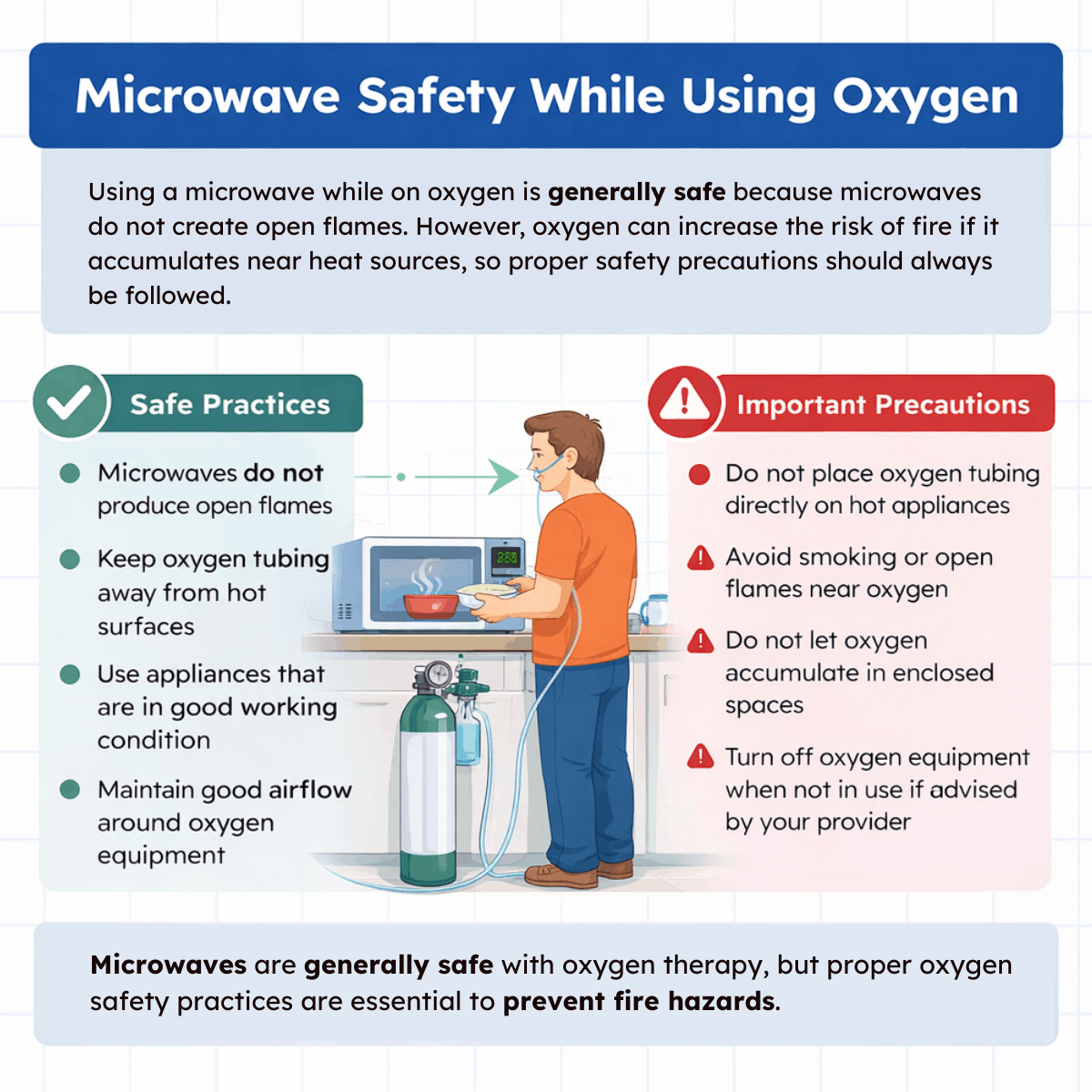
Yes, you can generally use a microwave while on oxygen, but it’s important to follow proper safety precautions. Microwaves themselves do not produce open flames, so they are typically considered safe to operate around oxygen equipment. However, oxygen supports combustion, meaning materials can ignite and burn more easily in oxygen-rich environments.
For this reason, it’s important to keep oxygen tubing away from hot surfaces, sparks, or damaged electrical appliances. Always ensure the microwave and power cord are in good condition and avoid placing oxygen equipment directly next to the appliance.
Most healthcare providers consider microwaves safe when used responsibly. As a general rule, maintain a safe distance between oxygen equipment and heat sources, and always follow the safety guidelines provided with your oxygen therapy system.
Microwave Use and Oxygen Safety
Microwaves and oxygen therapy can exist in the same home, but they require careful handling. Understanding how each works helps reduce fire risk and prevent avoidable accidents.
How Microwaves Work
A microwave oven uses electromagnetic waves to heat food. It generates these waves through a component called a magnetron, which converts electrical energy into microwave radiation. The waves cause water molecules in food to vibrate. This vibration produces heat, which cooks or warms the food from the inside out.
The microwave unit itself does not create an open flame. Under normal operation, it does not produce sparks or high external heat. The cooking chamber contains the energy, and the metal enclosure prevents radiation from escaping.
Most risk comes from misuse rather than the appliance’s basic function. Damaged cords, faulty outlets, or metal objects placed inside the oven can cause arcing. Arcing creates visible sparks, which can ignite flammable materials in oxygen-enriched environments.
Interaction Between Oxygen and Electrical Devices
Medical oxygen does not burn on its own. It supports combustion by allowing materials to ignite more easily and burn faster. When oxygen levels rise above normal room air concentration, common items can ignite at lower temperatures. Clothing, bedding, and even dust can become more flammable.
Electrical appliances, including microwaves, can produce small ignition sources. These include internal switches, heating elements in other appliances, or damaged wiring. In an oxygen-enriched space, even a minor spark can escalate quickly.
Oxygen can accumulate in confined or poorly ventilated areas. If a person uses oxygen therapy in a small kitchen, the concentration around the face, tubing, and clothing may increase temporarily. This localized enrichment creates higher fire risk near ignition sources.
Note: Maintaining distance between oxygen equipment and electrical devices reduces this risk.
Risks of Using Appliances Near Oxygen
Using a microwave while on oxygen generally remains safe when equipment functions properly. The greater concern involves fire hazards linked to oxygen concentration and electrical malfunction.
Key risk factors include:
- Frayed power cords or loose plugs
- Overloaded electrical outlets
- Sparks from inserting or removing metal objects
- Oxygen tubing placed too close to heat or wiring
Oxygen tubing can rest against counters or appliances without obvious danger. However, if a spark occurs, oxygen flowing through tubing can feed a fire rapidly. Users should keep oxygen equipment at least several feet away from active cooking appliances. They should also avoid using extension cords with high-wattage devices like microwaves.
Note: Routine inspection of both oxygen systems and kitchen appliances plays a central role in preventing fire. Proper ventilation and adherence to manufacturer instructions further reduce risk.
Fire and Explosion Hazards
Oxygen itself does not burn, but it accelerates combustion and lowers the ignition point of many materials. In a kitchen, heat, grease, and electrical appliances can combine with enriched oxygen to create serious fire risks.
Causes of Combustion With Oxygen Equipment
Medical oxygen increases the concentration of oxygen in the immediate area around the user. Even a small leak from tubing or a loose connection can saturate clothing, hair, or nearby fabrics.
Materials that normally resist ignition can ignite more easily in oxygen‑enriched air. This includes cotton clothing, paper towels, cooking oil, and plastic tubing. A minor spark can cause these materials to burn faster and hotter than expected.
Microwaves rarely produce open flames, but they can create sparks if metal objects are placed inside. Damaged cords or faulty outlets can also generate electrical sparks. If oxygen tubing runs close to the microwave or other kitchen appliances, heat exposure can weaken the plastic. That damage increases the chance of leaks, which raises fire risk further.
Examples of Home Oxygen-Related Incidents
Fire departments regularly report home fires involving oxygen equipment. Many cases involve open flames such as candles or gas stoves, but electrical appliances also contribute. In some incidents, users placed oxygen tubing across stovetops or countertops near active cooking areas. Grease fires ignited tubing, which then burned rapidly due to oxygen flow.
Other reports describe electrical malfunctions that sparked near oxygen concentrators. When oxygen accumulated in a confined kitchen space, small ignition sources led to fast‑spreading fires.
Smoking while using oxygen remains a leading cause of severe burns and fatal house fires. The presence of oxygen allows flames to travel quickly across clothing and furniture. These examples show that the main danger comes from oxygen-enriched air interacting with heat or sparks, not from the microwave alone.
Prevention Strategies for Kitchen Safety
Users should keep oxygen equipment at least 5–10 feet away from heat sources, including microwaves, stovetops, and toasters. They should route tubing away from cooking surfaces and high‑traffic areas.
Regularly inspect tubing for cracks, stiffness, or loose fittings. Replace damaged parts immediately to prevent leaks. Never place metal objects inside a microwave. Maintain the appliance in good working order and unplug it if it shows signs of electrical damage.
Avoid using extension cords for oxygen concentrators. Plug the device directly into a properly grounded outlet.
Note: Most importantly, prohibit smoking anywhere near oxygen equipment. Clear rules and visible reminders reduce the risk of preventable fires.
Manufacturer Guidelines and Medical Recommendations
Microwave manufacturers and oxygen equipment providers give clear safety instructions about appliance use near oxygen. Healthcare professionals reinforce these directions to reduce fire risk and equipment damage.
Instructions on Appliance Use Around Oxygen
Most microwave manufacturers state that the appliance should operate in a well‑ventilated area, away from flammable gases and concentrated oxygen. Oxygen itself does not burn, but it supports combustion and can cause materials to ignite more easily and burn faster.
Manufacturers typically advise keeping the microwave several feet away from oxygen equipment. They also warn users not to place oxygen tubing, masks, or cannulas on or behind the microwave where heat builds up.
He or she should never operate a microwave with damaged wiring, a faulty door seal, or visible sparking inside the unit. Any electrical malfunction increases fire risk in an oxygen‑enriched environment.
Product manuals often include a general warning: avoid using electrical appliances near medical oxygen unless a healthcare provider confirms it is safe. Following the appliance’s spacing, ventilation, and maintenance instructions reduces preventable hazards.
Advice From Oxygen Suppliers
Oxygen suppliers provide specific rules based on the type of system in use, such as concentrators, compressed gas cylinders, or liquid oxygen units. They usually recommend keeping oxygen equipment at least 5–10 feet away from heat sources, including microwaves.
Suppliers stress the importance of proper tubing management. Tubing should not run across hot surfaces, near the back of appliances, or through areas where it can kink or become damaged.
They also instruct users to post “No Smoking: Oxygen in Use” signs in the home. While a microwave does not create an open flame, suppliers treat any electrical appliance as a potential ignition source if it malfunctions.
Routine equipment checks form part of their guidance. If the concentrator makes unusual noises or if tubing appears brittle, the patient should contact the supplier before continuing normal appliance use nearby.
Healthcare Provider Guidance
Healthcare providers assess the patient’s oxygen flow rate, mobility, and home layout before giving practical advice. They often confirm that using a microwave is acceptable when the appliance is in good condition and placed a safe distance from oxygen equipment.
Clinicians emphasize keeping oxygen flowing only as prescribed. Higher flow rates can increase localized oxygen concentration, which may elevate fire risk in confined spaces. They also instruct patients and caregivers to avoid using oil‑based lotions on the face or hands before cooking. Petroleum products can ignite more easily in oxygen‑rich settings.
If the patient has limited mobility, a provider may suggest rearranging the kitchen so the microwave remains accessible without stretching or pulling tubing. Clear positioning and routine safety checks support safe, daily use.
Proper Handling of Oxygen Equipment
Safe use of oxygen equipment depends on correct placement and careful storage, especially in areas where heat and cooking appliances are present. Clear spacing, stable positioning, and protection from grease or open flames reduce fire risk and equipment damage.
Safe Placement of Oxygen Tanks or Concentrators
They should place oxygen tanks or concentrators at least 5 to 10 feet away from heat sources such as microwaves, stovetops, ovens, and toasters. While a microwave does not create an open flame, it still generates heat and may sit near other cooking appliances that do.
Keep the unit upright and secured in a stand or cart to prevent tipping. A falling cylinder can damage the valve, which may lead to rapid oxygen release. Do not place oxygen equipment behind curtains, near electrical cords that may overheat, or in tight corners where airflow is limited. Concentrators require adequate ventilation to prevent overheating.
They should also ensure that tubing does not run across cooking surfaces or hang near burners. Short, direct tubing paths reduce tripping hazards and limit contact with hot equipment.
Storage Precautions in the Kitchen
Store oxygen cylinders in a well‑ventilated area away from direct sunlight, grease, and moisture. Kitchens often contain airborne oil particles that can accumulate on equipment and increase fire risk.
Keep cylinders at least 5 feet from gas stoves, pilot lights, or any open flame. Never store them inside cabinets that contain cleaning chemicals, paper goods, or flammable liquids.
Avoid placing oxygen equipment near trash cans or under counters where spills occur. Food and liquid spills can damage components and create sanitation concerns. They should close cylinder valves when not in use and keep protective caps in place during storage. Proper labeling and secure positioning help prevent accidental movement or misuse.
Alternatives to Microwave Cooking While on Oxygen
Many people on oxygen therapy choose other cooking methods for comfort and peace of mind. They can prepare meals safely with common household appliances when they follow standard oxygen safety guidelines.
Electric stovetops provide a controlled heat source. Users should keep oxygen tubing away from burners and avoid loose clothing. Induction cooktops offer an added layer of safety because the surface stays cooler than traditional electric coils.
A slow cooker works well for hands-off meals. It uses low, steady heat and reduces the need to stand near an active heat source. This option suits soups, stews, and tender meats.
Small countertop appliances can also help:
- Toaster ovens for reheating and baking small portions
- Electric kettles for boiling water quickly
- Air fryers for crisping foods with minimal oil
- Rice cookers for grains and steamed dishes
Cold meal preparation is another practical option. They can prepare salads, sandwiches, yogurt bowls, and pre-cooked proteins without using heat at all.
When using any appliance, they should maintain good airflow in the room and secure oxygen equipment properly. Keeping devices clean and cords organized also lowers everyday household risks.
Emergency Procedures for Accidents Involving Oxygen
If oxygen equipment ignites or sparks, turn off the oxygen supply immediately if it is safe to do so. Do not attempt to save equipment. Call emergency services right away.
If clothing catches fire, the person should follow the “Stop, Drop, and Roll” method. This action can smother flames and limit burns. Others nearby should use a fire extinguisher only if they are trained and the fire is small.
If a fire starts in the microwave while oxygen is in use, turn off the microwave and oxygen source without opening the door. Opening the door can introduce more oxygen and increase flames. Leave the area and call 911 if the fire does not stop.
For burns, cool the area with running water for several minutes. Do not apply grease, ointment, or ice. Seek medical care for any burn that is larger than a small area or involves the face, hands, or airway.
If oxygen tubing melts or becomes damaged, stop using it immediately. Replace it before resuming therapy. Damaged tubing can leak oxygen and increase fire risk. Patients and caregivers should keep emergency numbers visible and review these steps regularly. Clear planning reduces panic and supports faster action during an emergency.
Final Thoughts
Using a microwave while on oxygen is generally safe when basic safety precautions are followed. Because oxygen itself is not flammable but can accelerate combustion, it’s important to remain mindful of potential fire hazards around oxygen equipment.
Keeping oxygen tubing away from heat sources, ensuring appliances are in good working condition, and maintaining a safe distance between oxygen and electrical devices can significantly reduce risks.
By following these simple guidelines and the instructions provided by your healthcare provider and oxygen supplier, individuals receiving oxygen therapy can continue using common household appliances like microwaves safely and confidently as part of their daily routine.

Written by:
John Landry is a registered respiratory therapist from Memphis, TN, and has a bachelor's degree in kinesiology. He enjoys using evidence-based research to help others breathe easier and live a healthier life.
References
- West GA, Primeau P. Nonmedical hazards of long-term oxygen therapy. Respir Care. 1983.