
Being referred to a thoracic surgeon can sound alarming at first, but it’s often a critical step in diagnosing and treating conditions that affect the organs inside your chest. These specialists are trained to manage complex issues involving the lungs, esophagus, diaphragm, and other structures within the thoracic cavity.
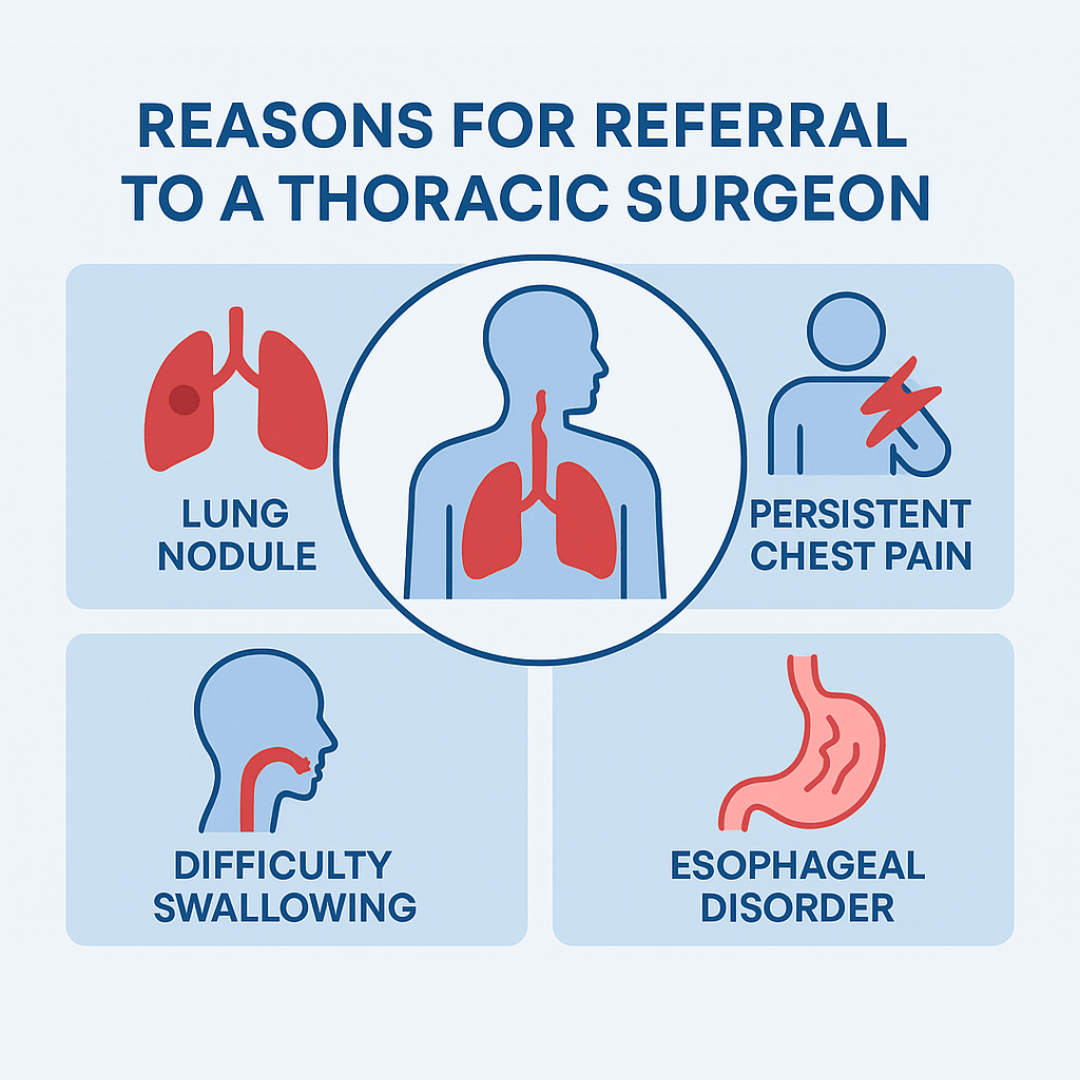
Whether it’s a suspicious lung nodule, persistent chest pain, or difficulty swallowing, a referral to a thoracic surgeon typically means your doctor wants a closer look or believes that surgery may be part of the solution.
Understanding the reasons behind this referral can help ease anxiety and empower you to take an active role in your care. In this article, we’ll explore the most common conditions that warrant a visit to a thoracic surgeon.

Download our free guide that has over 100+ of the best tips for healthy lungs.
What Is a Thoracic Surgeon?
Thoracic surgeons are medical specialists who focus on surgical procedures involving the chest cavity, including the lungs, heart, esophagus, and other structures within the thorax. The word “thoracic” comes from the Greek word “thorax,” meaning chest.
These highly trained physicians complete extensive education, including medical school, a general surgery residency, and specialized thoracic surgery training that can last several additional years.
While some thoracic surgeons subspecialize in cardiac surgery (heart operations), others focus on general thoracic surgery, which encompasses all procedures within the chest cavity. The distinction is important because the reasons for referral can vary significantly depending on which organs are affected.
Why Would You Be Referred to a Thoracic Surgeon?
You may be referred to a thoracic surgeon if you have a condition involving the organs inside your chest, such as the lungs, esophagus, or mediastinum. Common reasons include lung nodules or masses, esophageal disorders, chest trauma, or diseases like lung cancer or emphysema that may require surgical intervention.
A thoracic surgeon specializes in both minimally invasive and open procedures to diagnose, remove, or repair abnormalities in the chest. If imaging studies reveal suspicious growths, fluid accumulation, or structural abnormalities, your doctor may refer you for further evaluation and potential surgical treatment.
The goal is to determine whether surgery is necessary to treat or improve your condition and to develop the best possible treatment plan for your health.
Common Lung and Respiratory Conditions
Lung Cancer
Lung cancer represents one of the most common reasons for thoracic surgery referrals. When imaging studies, such as CT scans, reveal suspicious masses or nodules in the lungs, a thoracic surgeon may be consulted to determine the best approach for diagnosis and treatment. Not all lung nodules are cancerous, but when they are, early surgical intervention often provides the best chance for cure.
The surgeon might recommend various procedures depending on the size, location, and stage of the cancer. A lobectomy involves removing an entire lobe of the lung, while a wedge resection removes only a small, wedge-shaped portion.
In more extensive cases, a pneumonectomy may be necessary, which involves removing an entire lung. Modern minimally invasive techniques, including video-assisted thoracoscopic surgery (VATS) and robotic surgery, have made these procedures less invasive with faster recovery times.
Lung Nodules and Masses
Many people develop small spots or nodules in their lungs that show up on chest X-rays or CT scans. While most are benign, some require further investigation. A thoracic surgeon can perform a biopsy to determine whether these growths are cancerous or benign. This might involve a needle biopsy guided by CT scan, a bronchoscopy, or in some cases, a surgical biopsy.
The size, growth rate, and appearance of nodules help determine the appropriate course of action. Smaller nodules might be monitored over time, while larger or rapidly growing ones typically require more immediate attention.
Emphysema and Chronic Obstructive Pulmonary Disease (COPD)
Severe emphysema, a type of COPD, can sometimes benefit from surgical intervention. Lung volume reduction surgery involves removing damaged portions of the lung, allowing healthier tissue to function more effectively. This procedure can improve breathing and quality of life for carefully selected patients with severe emphysema who haven’t responded adequately to medical therapy.
For end-stage lung disease, lung transplantation might be considered. Thoracic surgeons work as part of multidisciplinary teams to evaluate candidates for transplantation and perform these complex procedures.
Pneumothorax (Collapsed Lung)
A pneumothorax occurs when air leaks into the space between the lung and chest wall, causing the lung to collapse. While small pneumothoraces might resolve on their own, larger ones or those that recur frequently may require surgical repair. Thoracic surgeons can repair the air leak and prevent future episodes through various surgical techniques.
Pleural Diseases
The pleura is the thin membrane that lines the lungs and chest cavity. Various conditions can affect the pleura, including pleural effusion (fluid accumulation), pleural thickening, and mesothelioma. Thoracic surgeons can drain fluid collections, perform biopsies of pleural tissue, and in some cases, remove diseased pleural tissue to improve lung function.
Esophageal Conditions
Esophageal Cancer
Cancer of the esophagus, the tube that connects the throat to the stomach, often requires surgical treatment. Esophagectomy, the removal of part or all of the esophagus, is a complex procedure that thoracic surgeons perform to treat this condition. The surgery often involves reconstructing the digestive pathway using a portion of the stomach or intestine.
Gastroesophageal Reflux Disease (GERD)
While most cases of GERD respond well to medication, severe cases that don’t improve with medical treatment might benefit from surgical intervention. Procedures like fundoplication can strengthen the barrier between the esophagus and stomach, reducing acid reflux and its complications.
Achalasia
This condition involves dysfunction of the esophageal muscles, making it difficult for food to pass into the stomach. Thoracic surgeons can perform procedures to divide the muscle fibers that are preventing proper swallowing, often using minimally invasive techniques.
Chest Wall and Mediastinal Conditions
Chest Wall Tumors
Tumors can develop in the ribs, sternum, or soft tissues of the chest wall. These might be primary tumors originating in the chest wall or metastases from cancers elsewhere in the body. Thoracic surgeons can remove these tumors and, when necessary, reconstruct the chest wall using prosthetic materials or tissue grafts.
Mediastinal Masses
The mediastinum is the central compartment of the chest, containing the heart, major blood vessels, trachea, and esophagus. Masses in this area can include lymphomas, thymomas, and other tumors. Thoracic surgeons work with oncologists and other specialists to diagnose and treat these conditions.
Pectus Deformities
Pectus excavatum (funnel chest) and pectus carinatum (pigeon chest) are congenital deformities of the chest wall. While often primarily cosmetic concerns, severe cases can affect heart and lung function. Thoracic surgeons can perform corrective procedures to improve both appearance and function.
Trauma and Emergency Situations
Chest Trauma
Serious chest injuries from accidents, falls, or penetrating wounds may require immediate thoracic surgical intervention. This can include repairing damaged lungs, stopping bleeding from injured blood vessels, or addressing damage to other chest structures.
Empyema
Severe infections in the pleural space (empyema) sometimes require surgical drainage and cleaning of the infected area. This might involve minimally invasive procedures or, in severe cases, more extensive surgery to remove infected tissue.
When to Expect a Referral
Your primary care physician or pulmonologist might refer you to a thoracic surgeon when:
- Imaging studies reveal suspicious lung nodules or masses
- You have symptoms like persistent cough, chest pain, or difficulty breathing that suggest serious chest pathology
- You’ve been diagnosed with lung cancer and need staging or treatment
- Conservative treatment for conditions like severe GERD or chest wall problems hasn’t been effective
- You have recurrent pneumothoraces or pleural effusions
- You’ve experienced significant chest trauma
What to Expect During Your Consultation
During your first visit with a thoracic surgeon, expect a comprehensive evaluation. The surgeon will review your medical history, current symptoms, and any imaging studies or test results. They’ll perform a physical examination and may recommend additional tests to better understand your condition.
The surgeon will explain your diagnosis, discuss treatment options, and outline the risks and benefits of different approaches. This is an excellent time to ask questions about the procedure, recovery time, and long-term prognosis.
Note: Many thoracic surgeons work with nurse practitioners or physician assistants who can provide additional education and support.
Minimally Invasive Techniques
Modern thoracic surgery has undergone significant evolution, with many procedures now performed using minimally invasive techniques. Video-assisted thoracoscopic surgery (VATS) uses small incisions and a camera to guide surgical instruments, resulting in less pain, shorter hospital stays, and faster recovery compared to traditional open surgery.
Robotic surgery is another advancement that enables even more precise movements and enhanced visualization during complex procedures. These technologies have made thoracic surgery safer and more tolerable for patients.
Preparing for Surgery
If surgery is recommended, your surgical team will provide detailed instructions for preparation. This typically includes stopping certain medications, fasting before surgery, and arranging for post-operative care. Preoperative testing may include blood work, cardiac evaluation, and pulmonary function tests to ensure you’re a suitable candidate for surgery.
Recovery and Follow-up
Recovery from thoracic surgery varies depending on the specific procedure and individual factors. Your surgical team will provide detailed instructions for post-operative care, including activity restrictions, wound care, and when to seek medical attention.
Note: Follow-up appointments are crucial for monitoring your recovery and addressing any concerns.
Final Thoughts
Being referred to a thoracic surgeon doesn’t necessarily mean you have a life-threatening condition, but it does indicate that your symptoms or test results require specialized expertise. These highly skilled physicians offer a range of diagnostic and therapeutic options for various chest conditions. Understanding when and why you might need thoracic surgery can help you feel more prepared and confident as you navigate your healthcare journey.
Remember that thoracic surgeons are part of a larger healthcare team that might include pulmonologists, oncologists, radiologists, and other specialists. This collaborative approach ensures that you receive comprehensive care tailored to your specific condition and needs.
Don’t hesitate to ask questions and seek clarification about your condition and treatment options—being an informed patient is an important part of achieving the best possible outcome.

Written by:
John Landry is a registered respiratory therapist from Memphis, TN, and has a bachelor's degree in kinesiology. He enjoys using evidence-based research to help others breathe easier and live a healthier life.
References
- Byrd CT, Williams KM, Backhus LM. A brief overview of thoracic surgery in the United States. J Thorac Dis. 2022.
- Mangiameli G, Cioffi U, Alloisio M, et al. The State of the Art in Thoracic Surgery: Treating Lung Cancer Between Tradition and Innovation. In: Sergi CM, editor. Metastasis [Internet]. Brisbane (AU): Exon Publications; 2022.