
Breathing problems can affect nearly every aspect of daily life, including intimacy. For individuals living with conditions such as asthma, COPD, or other respiratory disorders, shortness of breath, fatigue, and anxiety can make sexual activity feel physically demanding.
The good news is that with the right positioning, pacing, and communication, intimacy can still be comfortable and enjoyable.
This article explores practical sex positions and strategies that may help reduce breathlessness, conserve energy, and promote better airflow, allowing individuals with breathing challenges to feel more confident and supported during intimate moments.

Download our free guide that has over 100+ of the best tips for healthy lungs.
Understanding Breathing Problems During Sex
Breathing problems during sex often stem from specific medical conditions, physical strain, or environmental triggers. When you understand what limits your airflow and stamina, you can adjust positions, pace, and support to protect your breathing and stay comfortable.
Common Respiratory Challenges
Several conditions can interfere with steady breathing during sexual activity. Asthma, chronic obstructive pulmonary disease (COPD), sleep apnea, obesity, and anxiety-related hyperventilation are among the most common.
Asthma can cause airway tightening during exertion. Rapid breathing, increased heart rate, or exposure to allergens like dust or scented products may trigger symptoms. COPD often limits airflow and reduces oxygen exchange. You may feel short of breath with minimal physical effort, especially in positions that compress your chest.
Obesity can restrict diaphragm movement. When you lie flat or support your partner’s weight, you may notice increased pressure on your lungs. Anxiety also plays a role. If you start breathing quickly and shallowly, you may feel lightheaded or tight in the chest, even without an underlying lung condition.
Impact on Intimacy
Breathing difficulty can interrupt arousal and reduce stamina. If you struggle to catch your breath, you may shift focus from pleasure to physical discomfort. You might avoid certain positions that require core strength or sustained movement. Positions where you support your body weight with your arms or remain underneath a partner can worsen shortness of breath.
Fear of symptoms can also affect desire. If you worry about wheezing, coughing, or needing medication mid-activity, you may feel tense before intimacy begins.
Note: Communication becomes essential. When you explain your limits clearly, you reduce misunderstandings and create space for adjustments that protect both comfort and connection.
Identifying Triggers
You can often trace breathing problems to specific triggers. Physical exertion, room temperature, humidity, allergens, and emotional stress commonly play a role. Pay attention to when symptoms begin. Do you feel breathless during vigorous movement, when lying on your back, or after prolonged activity?
Notice environmental factors. Strong fragrances, candles, pet dander, or dust in bedding may irritate your airways. Track medication timing as well. If you use a rescue inhaler or maintenance therapy, inadequate control may increase symptoms during exertion.
When you identify patterns, you can make targeted changes. Adjusting pace, choosing supportive positions, and managing environmental triggers can significantly improve your breathing during sex.

Best Sex Positions for People With Breathing Problems
The right position reduces chest pressure, limits exertion, and helps you control your breathing pace. Choose setups that support your upper body, keep your airway open, and let you pause easily if needed.
Face-to-Face Positions
Face-to-face positions work well when you want eye contact without straining your lungs. The key is keeping your chest upright and free from pressure.
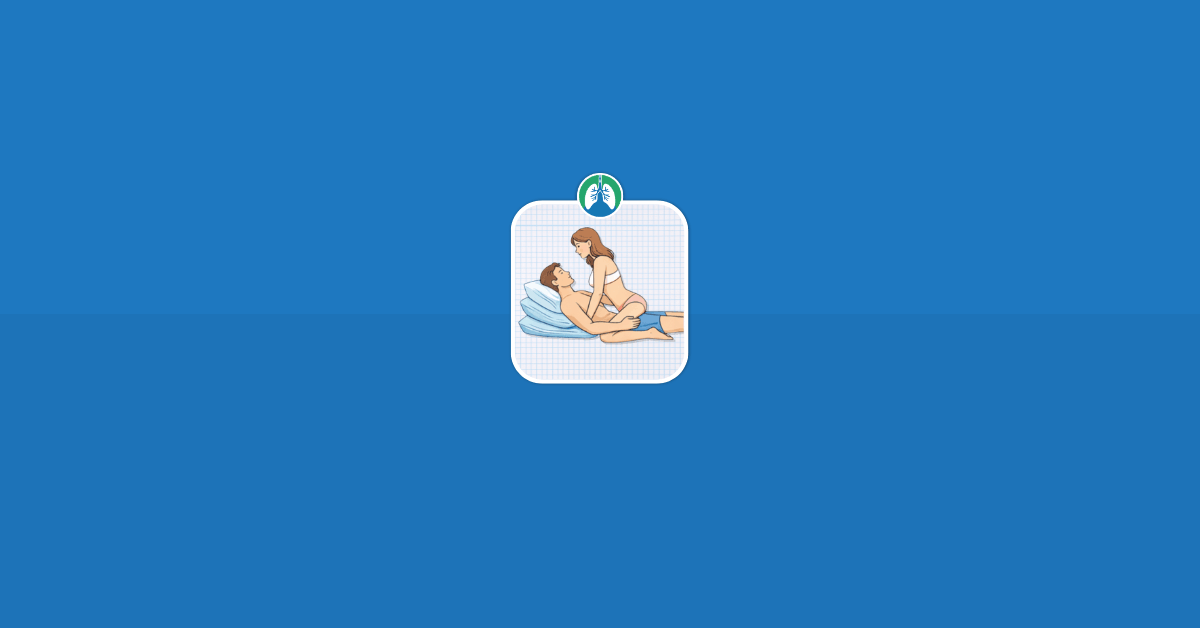
Try a supported missionary variation where your partner supports their weight with straight arms or shifts their weight onto their knees. Place pillows under your head and upper back to elevate your torso. This slight incline can ease breathing by reducing pressure on your diaphragm.
You can also choose a modified standing position with both of you upright against a wall or sturdy surface. Standing keeps your chest expanded and avoids compression. Keep movements slow and controlled so you do not spike your breathing rate.
Note: If you notice shortness of breath, pause while staying upright. Maintaining posture matters more than intensity.
Side-Lying Positions
Side-lying positions reduce physical strain and energy use. They allow you to relax your abdominal muscles and keep breathing steady. The spooning position works especially well. Both of you lie on your sides, with your partner behind you. This setup removes weight from your chest and lets you control depth and rhythm with minimal effort.
Place a pillow behind your back for stability or between your knees to align your hips. Proper support prevents muscle tension that can make breathing feel harder.
You can also face each other while lying on your sides. Keep your head slightly elevated with a pillow to maintain an open airway. Slow, shallow thrusting often feels more manageable than rapid movement.
Seated Positions
Seated positions give you strong upper-body support and help you stay upright. An upright posture often makes breathing easier than lying flat. Try sitting on a sturdy chair while your partner straddles you. Keep your back straight and supported by the chair. This position allows you to control pace and stop movement quickly if your breathing changes.
You can also sit at the edge of a bed with your feet flat on the floor. Grounding your feet improves balance and reduces effort from your core muscles. Focus on steady breathing patterns. Inhale through your nose and exhale through your mouth while maintaining slow, deliberate movement.
Sex Positions to Avoid for Those With Respiratory Issues
Certain positions make breathing harder by compressing your chest or forcing you to move continuously without rest. You reduce strain when you recognize which setups limit lung expansion or demand sustained effort.
Positions With Chest Compression
Avoid positions where your partner’s weight presses directly on your chest or upper abdomen. This pressure restricts how fully your lungs can expand, especially if you already experience shortness of breath, asthma, or COPD.
For example, traditional missionary with your partner leaning heavily on you can limit rib cage movement. Even moderate body weight across your sternum can make each breath feel shallow and forced.
You should also avoid face-down positions where the mattress supports your body weight against your chest. Lying prone compresses the front of your torso and reduces diaphragmatic movement.
If you notice chest tightness, rapid breathing, or difficulty speaking in full sentences, change positions immediately. Choose setups that keep your chest open and allow you to control posture and depth of breathing.
Positions Requiring Extensive Movement
Positions that demand constant thrusting, lifting, or balancing increase oxygen demand quickly. If you already struggle with airflow, these movements can cause early fatigue and breathlessness.
Standing positions often require you to engage multiple muscle groups at once. You must stabilize your core, support body weight, and maintain rhythm, which elevates your heart rate and breathing rate.
Rear-entry positions that require you to hold yourself up on your hands or maintain a crouched stance also strain your shoulders and core. Sustained muscle tension makes it harder to maintain steady breathing.
Note: Avoid any position where you cannot pause easily. You should be able to slow down, adjust, or rest without losing balance or placing stress on your lungs.
Techniques to Enhance Comfort and Safety
You improve comfort and reduce breathing strain by adjusting body support and keeping your airways clear. Small changes in positioning, elevation, and alignment can lower pressure on your chest and help you breathe more steadily during intimacy.
Using Pillows for Support
Use firm pillows to raise your upper body when lying on your back. Elevating your head and shoulders by 30–45 degrees can reduce pressure on your lungs and make inhalation easier. Place a pillow behind your lower back to maintain a neutral spine. This prevents slouching, which can compress your chest and limit expansion.
If you lie on your side, position a pillow between your knees. This keeps your hips aligned and reduces strain that can shift tension into your torso. You can also hug a pillow to prevent rolling forward and collapsing your chest.
When you are on top, support your weight with your arms rather than your chest. Keep a pillow under your partner’s hips if needed to adjust angles without forcing either of you to hunch or lean heavily.
Note: Adjust pillow height gradually. If you feel your chin dropping toward your chest, reduce the angle to avoid narrowing your airway.
Maintaining Open Airways
Keep your neck in a neutral position. Your ears should align roughly with your shoulders, not tilted sharply forward or back. Avoid pressing your face into bedding or your partner’s body. Turn your head to the side or elevate it slightly so your nose and mouth remain unobstructed.
Breathe through your nose when possible. Nasal breathing filters air and encourages slower, steadier breaths, which can prevent rapid breathing that triggers shortness of breath. Pace your movements. Coordinate motion with slow inhalations and exhalations instead of holding your breath during effort.
If you use an inhaler for asthma or another condition, keep it within reach. Use it as prescribed before activity if your clinician recommends pre-treatment, and stop immediately if you experience wheezing, chest tightness, or dizziness.
Adapting Positions for Different Respiratory Conditions
Different breathing conditions affect airflow, stamina, and comfort in specific ways. You can adjust body angles, pacing, and support to reduce strain and maintain steady breathing during intimacy.
Asthma Considerations
Asthma can tighten your airways quickly, especially with exertion or strong emotional shifts. You need positions that let you control pace and keep your chest open. Choose upright or semi‑reclined positions that prevent pressure on your chest. Sitting on the edge of the bed while your partner straddles you, or leaning back against pillows, helps expand your lungs and makes it easier to take slow, deep breaths.
Avoid positions where your partner’s weight rests on your torso. Even light pressure on your ribcage can trigger shortness of breath. Keep your rescue inhaler within reach. Use it 10–15 minutes before sex if exercise commonly triggers symptoms.
Focus on steady rhythm and controlled movement rather than fast thrusting. Slow pacing reduces airway irritation and lowers the risk of sudden wheezing.
Note: If you notice chest tightness, stop and sit upright immediately. Prioritize airflow over maintaining momentum.
COPD Adaptations
COPD often limits airflow and reduces oxygen exchange, which can cause fatigue and breathlessness. You benefit most from conserving energy and avoiding flat positions. Side-lying positions work well because they reduce physical effort and allow you to breathe without chest compression. Lying on your side with your partner behind you requires less exertion and keeps your upper body relaxed.
Use pillows to prop your upper body at a 30–45 degree angle if you prefer face-to-face contact. Elevation decreases pressure on your diaphragm and supports easier inhalation. Keep movements slow and deliberate. Short bursts of activity followed by pauses help you recover without escalating breathlessness.
If you use supplemental oxygen, secure tubing away from limbs and maintain your prescribed flow rate. Do not reduce oxygen to “manage” appearance or sound. Stop if you feel dizzy, unusually fatigued, or unable to speak in full sentences. Your breathing stability should guide every adjustment you make.
Communication With Partners About Breathing Needs
You need to talk about your breathing before intimacy begins. Clear communication reduces anxiety and helps you both plan positions that support steady airflow.
Explain your specific triggers and limits. For example, tell your partner if lying flat, pressure on your chest, or fast pacing makes breathing harder.
Use direct statements such as:
- “I need to stay more upright.”
- “Let’s pause if I start breathing heavily.”
- “I may need my inhaler nearby.”
Keep medical tools within reach and say so in advance. This prevents confusion if you need to stop briefly. Agree on simple check-ins during sex. A short phrase like “How’s your breathing?” keeps the focus on safety without interrupting connection.
You can also set nonverbal cues. A light tap or hand squeeze can signal that you need to slow down or change position. Encourage your partner to share their comfort level too. Mutual awareness builds trust and makes adjustments feel normal rather than disruptive.
Note: If your breathing condition changes, update your partner. Clear, ongoing communication helps you adapt positions and pacing with confidence.
When to Consult a Healthcare Provider
If you often feel short of breath during sex, talk to a healthcare provider. Ongoing breathing difficulty is not something you should ignore. It may signal an underlying heart or lung condition that needs evaluation.
Seek medical care right away if you notice chest pain, fainting, severe dizziness, or blue lips or fingertips. These symptoms require urgent attention. Do not try to adjust positions and continue.
Make an appointment if you have asthma, COPD, heart disease, or sleep apnea and sex regularly triggers symptoms. Your provider can review your treatment plan. They may adjust medications, recommend inhalers before activity, or suggest pulmonary or cardiac rehabilitation.
You should also speak with a clinician if anxiety about breathing limits intimacy. Shortness of breath can have both physical and psychological causes. A provider can help you sort out what is happening and guide you toward safe options.
Bring clear details to your visit, such as:
- When symptoms start and how long they last
- What positions make breathing easier or harder
- Any wheezing, coughing, or chest tightness
- Medications you use before or after sex
Note: Accurate information helps your provider give practical, personalized advice.
Tools and Devices That May Help
You can use simple tools to reduce strain on your chest and support easier breathing during sex. The goal is to keep your airway open and your body well supported.
Supportive pillows or wedges help you stay upright or side-lying without using extra muscle effort. Place a firm pillow behind your back to maintain a semi-reclined position. Use smaller cushions under your hips or knees to reduce pressure on your abdomen and lungs.
A bed wedge provides steady elevation for your upper body. This position can ease shortness of breath by allowing your diaphragm to move more freely. Adjustable beds offer similar benefits with more flexibility.
If you use prescribed respiratory equipment, keep it nearby.
- Inhalers should remain within reach if you have asthma.
- Nebulizers can be used beforehand if your clinician recommends pre-treatment.
- CPAP or BiPAP machines may be appropriate in certain cases, especially if your condition requires continuous nighttime support.
A small portable fan can improve airflow and reduce the feeling of breathlessness. Direct cool air toward your face to stimulate a natural breathing response.
You may also benefit from a pulse oximeter to monitor oxygen saturation during longer sessions. This tool helps you track changes and pause if levels drop below your provider’s recommended range.
Note: Choose devices that support comfort and stability. Avoid equipment that restricts movement or adds unnecessary strain.
FAQs About the Best Sex Positions for Breathing Problems
What Sex Position Is Best for Shortness of Breath?
Positions that reduce physical strain and keep the upper body elevated are generally best for shortness of breath. Side-lying positions are often ideal because they conserve energy and avoid pressure on the chest.
Being supported by pillows can further improve comfort and airflow. Seated or semi-reclined positions also allow gravity to assist lung expansion.
Note: The key is minimizing exertion, avoiding weight-bearing on the arms, and pacing activity slowly with breaks as needed.
What Is the Best Sex Position for COPD Patients?
For people with COPD, positions that limit exertion and keep the chest free from compression are most helpful. Side-lying positions and supported upright positions tend to work well. Using pillows to elevate the back and shoulders can make breathing easier.
Many individuals with COPD benefit from taking the less physically demanding role during intimacy. Planning ahead, using prescribed inhalers as directed, and pacing the activity can significantly reduce breathlessness and fatigue.
What Sex Position Helps Open the Airways?
Positions that keep the torso upright or slightly elevated can help promote easier airflow. Sitting upright or being supported by pillows allows gravity to assist lung expansion and reduces pressure on the diaphragm.
Avoiding positions that compress the chest or require heavy arm support can also improve breathing comfort. While no position literally “opens” the airways, maintaining good posture and minimizing strain can help optimize airflow during intimacy.
How Does COPD Affect Sex?
COPD can affect sex by causing shortness of breath, fatigue, and decreased exercise tolerance. Anxiety about becoming breathless may also reduce confidence and desire. Some medications or long-term oxygen use can influence body image or energy levels.
Despite these challenges, many people with COPD can maintain a satisfying sex life by choosing supportive positions, pacing themselves, and communicating openly with their partner. Planning and reassurance often make a meaningful difference.
Is There a Link Between COPD and Erectile Dysfunction?
There can be a link between COPD and erectile dysfunction. Chronic low oxygen levels, inflammation, and vascular changes associated with COPD may affect blood flow, which is essential for erections. Additionally, fatigue, anxiety, depression, and certain medications can contribute to sexual dysfunction.
Lifestyle factors such as smoking also play a role. Addressing COPD management, improving overall cardiovascular health, and discussing concerns with a healthcare provider can help identify appropriate treatment options.
What Causes Shortness of Breath After Sex?
Shortness of breath after sex is often due to physical exertion, similar to moderate exercise. In people with respiratory or heart conditions, limited lung function or reduced oxygen exchange can make recovery slower.
Anxiety and rapid breathing can also worsen breathlessness. If symptoms are severe, prolonged, or accompanied by chest pain or dizziness, medical evaluation is important. Otherwise, pacing activity and using supportive positions can help reduce post-activity breathlessness.
What Breathing Techniques Can I Use to Manage My Breathlessness During Sex?
Pursed-lip breathing is one of the most effective techniques for managing breathlessness. Inhale slowly through your nose and exhale gently through pursed lips to help keep the airways open longer. Diaphragmatic breathing, which focuses on expanding the abdomen rather than the chest, can also improve efficiency.
Coordinating breathing with movement and taking short pauses as needed can prevent overexertion. Practicing these techniques regularly can build confidence and improve control during intimacy.
Final Thoughts
Living with a respiratory condition does not mean giving up intimacy or connection. By choosing supportive positions, pacing activity appropriately, and communicating openly with a partner, individuals with breathing problems can reduce strain and feel more at ease.
Simple adjustments such as keeping the upper body elevated, avoiding pressure on the chest, and taking breaks when needed can make a meaningful difference.
With planning, awareness, and mutual understanding, intimacy can remain a safe, satisfying, and fulfilling part of life despite the challenges of breathlessness.

Written by:
John Landry is a registered respiratory therapist from Memphis, TN, and has a bachelor's degree in kinesiology. He enjoys using evidence-based research to help others breathe easier and live a healthier life.
References
- Soriano JB, Polverino F. Sexual activity and respiratory disease: A systematic review. Respir Med. 2024.
- Holmes LJ, Yorke JA, Dutton C, Fowler SJ, Ryan D. Sex and intimacy in people with severe asthma: a qualitative study. BMJ Open Respir Res. 2019.
- Curgian LM, Gronkiewicz CA. Enhancing sexual performance in COPD. Nurse Pract. 1988.