
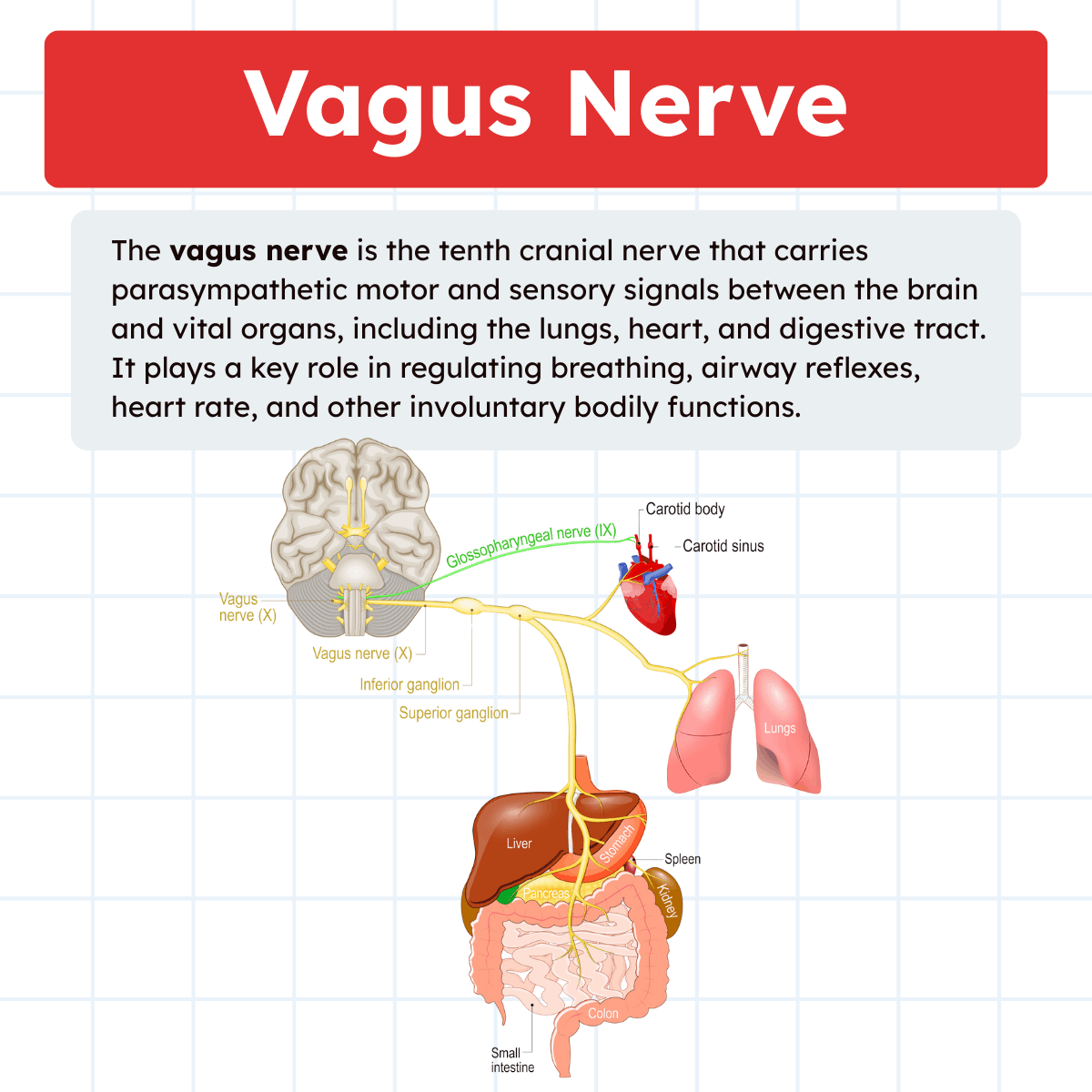
The vagus nerve plays a crucial role in regulating vital functions throughout the body, including breathing, heart rate, and airway control. As the tenth cranial nerve, it serves as a major component of the parasympathetic nervous system, transmitting motor and sensory signals between the brain and various organs.
For respiratory therapists and healthcare professionals, understanding the vagus nerve is essential because of its direct influence on airway function, respiratory reflexes, and cardiopulmonary stability.
From managing mechanically ventilated patients to performing airway suctioning, the vagus nerve plays a significant role in patient outcomes and respiratory care interventions.

What Is the Vagus Nerve?
The vagus nerve, also known as cranial nerve X, is one of the longest and most complex cranial nerves in the human body. The term “vagus” is derived from the Latin word meaning “wandering,” which accurately describes its extensive distribution throughout the thoracic and abdominal organs. Originating in the brainstem, the vagus nerve travels downward through the neck and into the chest and abdomen, innervating structures such as the larynx, trachea, lungs, heart, and digestive tract.
The vagus nerve is a primary component of the parasympathetic nervous system, which is responsible for the body’s “rest and digest” functions.
Through this system, the vagus nerve helps regulate airway smooth muscle tone, glandular secretion, heart rate, and reflexes that protect the respiratory system. It also carries afferent sensory signals from the lungs and airways back to the central nervous system, allowing the brain to monitor and respond to changes in lung inflation, irritation, and chemical stimuli.
Anatomy and Branches of the Vagus Nerve
The vagus nerve exits the brainstem and descends through the neck, branching into several structures that are highly relevant to respiratory function. Upon entering the thoracic cavity, the nerve gives rise to the recurrent laryngeal nerve and the superior laryngeal nerve, both of which play critical roles in airway protection and vocal cord function.
The recurrent laryngeal nerve provides the primary motor innervation to most of the muscles of the larynx. These muscles control vocal cord movement, which is essential for phonation, airway protection, and effective coughing. Damage to this branch can result in vocal cord paralysis, hoarseness, or an impaired cough reflex, increasing the risk of airway obstruction and aspiration.
The superior laryngeal nerve has two major branches. The external branch supplies motor function to the cricothyroid muscle, which helps regulate vocal cord tension. The internal branch provides sensory innervation to the larynx, allowing the body to detect foreign material and initiate protective reflexes such as coughing or glottic closure.
In addition to laryngeal innervation, vagal nerve fibers extend into the lungs and airways, where they regulate bronchial smooth muscle tone and mucus secretion. The vagus nerve also carries afferent fibers that transmit sensory information from pulmonary receptors to the brain, making it essential for respiratory control and reflex activity.
The Vagus Nerve and Respiratory Control
The vagus nerve plays a vital role in the regulation of breathing through its involvement in respiratory reflexes and feedback mechanisms. Many sensory receptors located within the lungs and airways rely on vagal pathways to communicate with the central nervous system.
One of the most well-known vagally mediated respiratory reflexes is the Hering-Breuer inflation reflex. This reflex is triggered when stretch receptors in the airway smooth muscle are activated by lung inflation. These receptors send inhibitory signals through the vagus nerve to inspiratory neurons in the brainstem, preventing excessive lung inflation and helping regulate breathing patterns. While this reflex is not a major contributor to normal quiet breathing in adults, it becomes more significant during large tidal volumes, such as those experienced during exercise or mechanical ventilation.
Another important reflex is the deflation reflex, which occurs when sudden lung collapse stimulates strong inspiratory effort. This reflex may contribute to hyperpnea and is often observed in conditions such as pneumothorax. Although the exact receptors involved are not fully understood, the vagus nerve is known to be the primary pathway for this response.
The Head paradoxical reflex represents another vagally mediated respiratory mechanism. Unlike the Hering-Breuer reflex, this reflex enhances inspiratory effort during lung hyperinflation. It is believed to help maintain large tidal volumes during exercise and may play a role in generating deep sighs that help prevent atelectasis. Additionally, this reflex is thought to contribute to the initiation of breathing in newborns.
Nonadrenergic, Noncholinergic (NANC) Pathways
In addition to its parasympathetic functions, the vagus nerve contains nonadrenergic, noncholinergic (NANC) nerve fibers that provide a third autonomic pathway in the airways. These fibers travel within the vagus nerve and influence airway smooth muscle tone and inflammatory responses.
NANC pathways play a complex role in regulating airway function. Some NANC fibers promote bronchodilation, while others contribute to bronchoconstriction and mucus secretion. These pathways are particularly relevant in respiratory diseases such as asthma and chronic obstructive pulmonary disease (COPD), where abnormal airway responses and inflammation are common.
Note: Understanding NANC pathways helps respiratory therapists better appreciate the complex neural control of airway function and the mechanisms underlying airway hyperresponsiveness.
Clinical Relevance to Respiratory Therapists
The vagus nerve is highly relevant to respiratory therapists because many routine respiratory care procedures directly or indirectly stimulate vagal activity. One of the most common examples is airway suctioning in intubated or tracheostomized patients. Deep suctioning can stimulate vagal receptors, potentially causing bradycardia, hypotension, or even cardiac arrest in vulnerable patients.
Respiratory therapists must be aware of this risk and take steps to minimize vagal stimulation during suctioning. Techniques such as using the shallow suction method, limiting suction duration, using appropriate suction pressures, and preoxygenating the patient can help reduce complications. Monitoring heart rate and oxygen saturation during suctioning is also essential to ensure patient safety.
The vagus nerve also influences bronchial tone and airway secretions, making it important in the management of obstructive airway diseases. Increased vagal tone can contribute to bronchoconstriction, which is a key feature of asthma and COPD. Pharmacologic interventions, such as anticholinergic bronchodilators, work by blocking vagally mediated bronchoconstriction, thereby improving airway patency and airflow.
In critical care settings, vagal responses can also influence cardiovascular stability. Since the vagus nerve plays a major role in regulating heart rate, excessive vagal stimulation can lead to bradycardia. Respiratory therapists working in intensive care units must recognize situations where vagal stimulation may occur, such as during airway manipulation, suctioning, or coughing episodes.
Complications Associated With Vagal Nerve Injury
Damage to the vagus nerve or its branches can lead to significant respiratory and airway complications. Injury to the recurrent laryngeal nerve can cause unilateral or bilateral vocal cord paralysis. Patients with this condition may experience hoarseness, weak voice, difficulty swallowing, and an increased risk of aspiration.
Loss of effective vocal cord movement can also impair the cough reflex, making it more difficult to clear airway secretions. This can increase the risk of pneumonia and other respiratory infections. In severe cases, bilateral vocal cord paralysis can lead to airway obstruction, requiring surgical intervention or long-term airway support.
Vagal nerve injury can occur during surgical procedures involving the neck, chest, or thyroid gland. Respiratory therapists play an important role in recognizing early signs of vagal nerve injury and implementing appropriate airway management strategies.
The Vagus Nerve and Cardiopulmonary Interaction
The vagus nerve serves as a critical link between the respiratory and cardiovascular systems. By regulating heart rate and bronchial tone simultaneously, the vagus nerve helps coordinate cardiopulmonary function. This coordination is particularly important during exercise, stress, and respiratory distress.
Vagal afferent fibers allow the brain to detect changes in lung volume, airway irritation, and chemical composition, enabling rapid adjustments in breathing patterns and cardiovascular responses. These integrated responses help maintain oxygen delivery and carbon dioxide removal, which are essential for maintaining homeostasis.
Note: Understanding these interactions allows respiratory therapists to anticipate physiologic responses during procedures and therapies, ultimately improving patient care and safety.
Vagus Nerve Practice Questions
1. What is the vagus nerve, and why is it important in respiratory physiology?
The vagus nerve is the tenth cranial nerve (X) that carries parasympathetic motor and sensory signals between the brain and major organs, helping regulate breathing, airway tone, heart rate, and reflex responses.
2. Which division of the autonomic nervous system is primarily associated with the vagus nerve?
The vagus nerve is primarily associated with the parasympathetic division of the autonomic nervous system.
3. How does the vagus nerve influence airway smooth muscle?
The vagus nerve stimulates bronchoconstriction through parasympathetic cholinergic pathways.
4. What type of nerve fibers leave the brainstem through the vagus nerve to influence thoracic organs?
Parasympathetic preganglionic fibers leave the brainstem through the vagus nerve to regulate thoracic and abdominal organs.
5. What is the primary function of vagal sensory (afferent) fibers from the lungs?
Vagal afferent fibers transmit information from pulmonary receptors to the central nervous system to regulate breathing.
6. Which branch of the vagus nerve supplies motor innervation to most intrinsic laryngeal muscles?
The recurrent laryngeal nerve provides primary motor innervation to most intrinsic laryngeal muscles.
7. What is the primary function of the superior laryngeal nerve?
The superior laryngeal nerve provides sensory innervation to the larynx and motor innervation to the cricothyroid muscle.
8. What muscle is specifically supplied by the external branch of the superior laryngeal nerve?
The external branch supplies the cricothyroid muscle, which helps regulate vocal cord tension.
9. What symptoms may occur if the recurrent laryngeal nerve is damaged?
Damage may cause vocal cord paralysis, hoarseness, voice loss, and ineffective cough.
10. What is the role of the vagus nerve in cough reflex control?
The vagus nerve carries sensory input from airway irritant receptors to trigger the cough reflex.
11. What is the nonadrenergic, noncholinergic (NANC) pathway associated with the vagus nerve?
The NANC pathway provides additional airway regulation through neurotransmitters that influence bronchial tone independently of sympathetic and parasympathetic systems.
12. Which respiratory reflex is mediated by stretch receptors and transmitted through the vagus nerve?
The Hering-Breuer inflation reflex is transmitted through the vagus nerve.
13. What is the purpose of the Hering-Breuer inflation reflex?
It prevents excessive lung inflation by inhibiting further inspiration when lung stretch receptors are activated.
14. At what tidal volume range is the Hering-Breuer reflex most active in adults?
It is most active during large tidal volumes, typically 800 to 1000 mL or greater.
15. Is the Hering-Breuer reflex an important regulator of quiet breathing in healthy adults?
No, it is generally not a major regulator during quiet breathing in healthy adults.
16. What respiratory response occurs when lung deflation stimulates vagal pathways?
Lung deflation can stimulate increased inspiratory effort and hyperpnea.
17. Which clinical condition commonly activates the deflation reflex?
Pneumothorax commonly activates the deflation reflex.
18. What are rapidly adapting receptors involved in vagal respiratory reflexes?
Rapidly adapting receptors respond quickly to airway changes and help regulate breathing patterns.
19. What is the Head paradoxical reflex?
The Head paradoxical reflex increases inspiratory effort during lung inflation when vagal inhibition is reduced.
20. What potential physiological role does the Head reflex play in normal breathing?
It helps maintain large tidal volumes and contributes to periodic deep sighs that prevent alveolar collapse.
21. How may the vagus nerve influence the first breaths of a newborn?
The Head reflex mediated by vagal pathways may help initiate strong inspiratory efforts at birth.
22. Which brainstem respiratory center receives inhibitory signals from vagal stretch receptors?
The dorsal respiratory group (DRG) receives inhibitory signals from vagal stretch receptors.
23. What occurs if vagal input to the respiratory centers is disrupted?
Disruption can lead to abnormal breathing patterns such as prolonged inspiratory gasps.
24. How does the vagus nerve influence heart rate?
The vagus nerve decreases heart rate through parasympathetic stimulation.
25. Which pulmonary receptors send sensory information through the vagus nerve?
Pulmonary stretch receptors, irritant receptors, and J-receptors send sensory information through the vagus nerve.
26. How do irritant receptors transmitted through the vagus nerve affect breathing?
They trigger bronchoconstriction, coughing, and rapid shallow breathing.
27. What is the role of J-receptors in vagal respiratory reflexes?
J-receptors respond to pulmonary congestion or edema and can stimulate rapid, shallow breathing.
28. Why is vagal nerve function important for airway protection?
It coordinates reflexes such as coughing and glottic closure to prevent aspiration.
29. How can excessive vagal stimulation affect airway function?
Excessive vagal stimulation can lead to bronchospasm and increased airway resistance.
30. Why is the vagus nerve clinically important during airway procedures?
Airway manipulation can stimulate vagal reflexes that cause bradycardia or bronchospasm.
31. How does vagal nerve activity influence respiratory rhythm control?
It provides sensory feedback that helps regulate inspiratory timing and breathing depth.
32. Why is understanding vagal respiratory reflexes important for respiratory therapists?
It helps clinicians recognize abnormal breathing patterns and anticipate airway reflex responses during patient care.
33. What is the overall role of the vagus nerve in cardiopulmonary function?
The vagus nerve integrates sensory and motor signals to regulate breathing, airway tone, heart rate, and protective respiratory reflexes.
34. Why is the vagus nerve clinically important for respiratory therapists?
The vagus nerve is clinically important because many respiratory procedures can stimulate vagal reflexes that affect airway tone, breathing patterns, and cardiovascular stability.
35. How can endotracheal suctioning stimulate the vagus nerve?
Deep suctioning can stimulate vagal receptors in the airway, potentially triggering reflex bradycardia and hypotension.
36. What cardiovascular complication may occur from excessive vagal stimulation during suctioning?
Excessive vagal stimulation can cause bradycardia and, in severe cases, cardiac arrest.
37. Why is preoxygenation recommended before airway suctioning?
Preoxygenation helps prevent hypoxemia that can occur due to suction-induced airway obstruction and alveolar derecruitment.
38. What suctioning technique is recommended to reduce vagal stimulation risk?
The shallow suction technique is recommended to reduce vagal stimulation and mucosal trauma.
39. Why should suction duration be limited during airway suctioning?
Limiting suction duration helps reduce hypoxemia, vagal stimulation, and airway injury.
40. How does monitoring heart rate during suctioning improve patient safety?
Monitoring heart rate allows early detection of vagally induced bradycardia so the procedure can be stopped if necessary.
41. How can inappropriate suction pressure contribute to complications?
Excessive suction pressure can damage airway mucosa, increase bleeding risk, and intensify vagal reflex responses.
42. Why may coughing during airway suctioning increase vagal stimulation?
Coughing stimulates airway receptors that activate vagal reflexes, potentially leading to cardiovascular instability.
43. How does the vagus nerve influence bronchial tone in obstructive airway diseases?
The vagus nerve promotes bronchoconstriction through parasympathetic pathways, which can worsen airflow limitation in diseases like asthma and COPD.
44. How do anticholinergic bronchodilators improve airflow in patients with obstructive lung disease?
Anticholinergic bronchodilators block vagally mediated bronchoconstriction, resulting in airway relaxation and improved airflow.
45. Why must respiratory therapists be cautious when performing airway manipulation in critically ill patients?
Airway manipulation can stimulate vagal reflexes that may lead to bradycardia, hypotension, or arrhythmias.
46. How can blood-tinged secretions occur during suctioning?
Blood-tinged secretions may result from mucosal trauma caused by deep or aggressive suctioning techniques.
47. What is the relationship between hypoxemia and suctioning procedures?
Suctioning can temporarily reduce oxygen levels by removing oxygen from the airway and causing alveolar collapse.
48. Why are patients with cardiac instability at higher risk during suctioning procedures?
These patients may have reduced tolerance to vagal stimulation, increasing the likelihood of severe bradycardia or hemodynamic collapse.
49. Which cranial nerve carries parasympathetic motor and sensory signals to the lungs and airways?
Cranial nerve X, the vagus nerve, carries parasympathetic motor and sensory signals to the lungs and airways.
50. How do sympathetic nerve fibers affect airway function compared to vagal stimulation?
Sympathetic fibers promote bronchodilation, whereas vagal stimulation promotes bronchoconstriction.
51. Where are portions of the vagus nerve located within the thoracic cavity?
Portions of the vagus nerve travel through the mediastinum, supplying parasympathetic innervation to thoracic organs.
52. Which mediastinal compartment contains upper portions of the vagus nerve?
The middle mediastinum contains the upper portions of the vagus nerve along with the heart, pericardium, and major vessels.
53. Which mediastinal compartment contains lower portions of the vagus nerve?
The posterior mediastinum contains lower portions of the vagus nerve along with the thoracic aorta, esophagus, and thoracic duct.
54. How can excessive vagal stimulation affect heart rate regulation?
Excessive vagal stimulation slows the sinoatrial node, leading to decreased heart rate.
55. Why should suctioning be stopped if significant bradycardia occurs?
Stopping suctioning removes vagal stimulation and helps restore normal heart rate and hemodynamic stability.
56. How does the vagus nerve contribute to airway secretion regulation?
Parasympathetic vagal stimulation increases mucus secretion within the airways.
57. Why are patients with COPD sensitive to vagal-mediated bronchoconstriction?
COPD patients often have increased airway reactivity, making them more susceptible to vagally induced airflow limitation.
58. How can respiratory therapists minimize vagal complications during airway procedures?
They can minimize complications by using gentle techniques, limiting suction duration, monitoring vital signs, and preoxygenating patients.
59. Why is understanding vagal reflexes important in intensive care respiratory management?
Understanding vagal reflexes helps clinicians anticipate cardiovascular and respiratory changes during airway interventions.
60. How does coughing serve as both a protective reflex and a vagal response?
Coughing clears airway secretions and foreign material but may also stimulate vagal reflexes that affect heart rate and airway tone.
61. Why is knowledge of vagal nerve anatomy important for respiratory care providers?
Understanding vagal anatomy helps clinicians recognize potential complications during airway procedures and manage respiratory and cardiovascular responses safely.
62. How can stimulation of the vagus nerve affect respiratory rate?
Vagal stimulation can slow respiratory rate by influencing respiratory centers in the brainstem.
63. Why might tracheal intubation trigger a vagal response?
Tracheal intubation can stimulate airway receptors that activate parasympathetic vagal reflexes, potentially causing bradycardia or hypotension.
64. How does the vagus nerve influence airway smooth muscle tone?
The vagus nerve stimulates airway smooth muscle contraction through parasympathetic cholinergic pathways, causing bronchoconstriction.
65. What role does the vagus nerve play in cough reflex sensitivity?
The vagus nerve carries sensory signals from airway irritant receptors that trigger the cough reflex.
66. Why is vagal tone typically higher during rest compared to stress?
Parasympathetic activity, including vagal tone, predominates during rest, slowing heart rate and promoting airway secretions.
67. How can vagal stimulation during bronchoscopy affect patient stability?
Bronchoscopy can stimulate vagal receptors, leading to bradycardia, hypotension, or bronchospasm.
68. Why might patients receiving mechanical ventilation experience vagal reflexes?
Airway instrumentation and suctioning during mechanical ventilation can stimulate vagal pathways.
69. How does vagal nerve activation influence mucus production?
Parasympathetic stimulation via the vagus nerve increases glandular secretion within the airway mucosa.
70. Why can strong vagal stimulation lead to syncope?
Excessive vagal stimulation can significantly slow heart rate and lower blood pressure, reducing cerebral perfusion and causing fainting.
71. How does vagal nerve dysfunction contribute to impaired cough effectiveness?
Damage to vagal pathways can reduce sensory and motor coordination needed for an effective cough.
72. Why can tracheostomy care trigger vagal responses?
Manipulation of the tracheostomy tube can stimulate vagal receptors within the airway.
73. How does vagal stimulation influence airway resistance?
Increased vagal activity promotes bronchoconstriction, increasing airway resistance.
74. Why is atropine sometimes used during airway procedures?
Atropine blocks parasympathetic vagal effects and can prevent or treat vagally induced bradycardia.
75. How does vagal stimulation affect blood pressure regulation?
Vagal activation can lower blood pressure by decreasing heart rate and cardiac output.
76. Why are pediatric patients more sensitive to vagal stimulation?
Children often have higher baseline vagal tone, making them more prone to bradycardia during airway manipulation.
77. How can vagal nerve irritation contribute to chronic cough?
Persistent stimulation of vagal sensory fibers can trigger repeated cough reflex activation.
78. Why should clinicians monitor ECG during airway suctioning in critical patients?
Continuous ECG monitoring allows early detection of vagally induced arrhythmias or bradycardia.
79. How does vagal activity influence swallowing and airway protection?
The vagus nerve coordinates swallowing and laryngeal closure to prevent aspiration.
80. Why can vagal injury lead to aspiration risk?
Damage to vagal motor control may impair laryngeal closure and cough reflex, increasing aspiration risk.
81. How does vagal stimulation influence airway inflammation?
Parasympathetic activity may increase airway secretions and inflammatory responses in some respiratory conditions.
82. Why can excessive coughing lead to vagal-mediated cardiovascular changes?
Repeated coughing can stimulate vagal receptors, leading to temporary reductions in heart rate and blood pressure.
83. How does the vagus nerve contribute to coordination between breathing and heart rate?
The vagus nerve participates in respiratory sinus arrhythmia, where heart rate varies with breathing cycles.
84. Why might vagal stimulation increase bronchial secretions during respiratory infections?
Parasympathetic activation enhances glandular secretion as part of airway defense mechanisms.
85. How does vagal tone affect airway responsiveness in asthma patients?
Elevated vagal tone increases airway hyperreactivity, contributing to bronchospasm.
86. Why is gentle airway suctioning especially important in post-cardiac arrest patients?
These patients are highly susceptible to vagally induced hemodynamic instability.
87. How can vagal reflexes affect ventilator synchrony?
Excessive vagal stimulation may alter respiratory drive and contribute to ventilator dyssynchrony.
88. Why can esophageal procedures trigger vagal responses?
The esophagus shares vagal innervation with thoracic organs, allowing stimulation during procedures.
89. How does vagal nerve activity influence laryngeal reflexes?
The vagus nerve coordinates vocal cord movement and airway protective reflexes.
90. Why may vagal stimulation contribute to bronchospasm during allergic reactions?
Parasympathetic activation can enhance airway smooth muscle contraction during hypersensitivity responses.
91. How can vagal dysfunction affect voice quality?
Damage to vagal laryngeal branches can impair vocal cord function, causing hoarseness or voice loss.
92. Why should clinicians be cautious when performing deep suctioning in patients with elevated intracranial pressure?
Vagal stimulation may alter cerebral perfusion by affecting cardiovascular stability.
93. How does the vagus nerve influence airway reflexes during aspiration events?
Vagal sensory fibers detect foreign material and initiate protective coughing and airway closure.
94. Why can vagal stimulation cause sudden drops in oxygen saturation?
Reflex bronchoconstriction and reduced ventilation may temporarily impair gas exchange.
95. How does vagal nerve activation affect gastrointestinal and respiratory coordination?
The vagus nerve coordinates swallowing, breathing, and airway protection mechanisms.
96. Why might vagal nerve damage impair ventilatory response to airway irritation?
Loss of vagal sensory input can reduce reflex respiratory responses to harmful stimuli.
97. How can vagal nerve reflexes contribute to postoperative respiratory complications?
Airway irritation and instrumentation after surgery can trigger vagal responses affecting breathing and cardiovascular stability.
98. Why is understanding vagal physiology important during emergency airway management?
Recognizing vagal reflexes helps clinicians anticipate and manage sudden cardiovascular or respiratory complications during airway procedures.
99. How does vagal stimulation influence the balance between airway protection and airflow limitation?
While vagal reflexes protect the airway by promoting cough and secretion clearance, excessive stimulation may cause bronchoconstriction and impaired airflow.
100. Why is vagal nerve function essential for maintaining normal respiratory reflex coordination?
The vagus nerve integrates sensory input from airway receptors with brainstem respiratory centers to regulate breathing patterns and airway defense mechanisms.
Final Thoughts
The vagus nerve is a fundamental component of respiratory and cardiopulmonary physiology, serving as a key regulator of airway function, respiratory reflexes, and heart rate control. Its extensive innervation of the larynx, lungs, and cardiovascular system makes it highly relevant to respiratory therapists and other healthcare professionals involved in airway management and critical care.
By understanding the anatomy, function, and clinical implications of the vagus nerve, respiratory therapists can better anticipate complications, perform procedures safely, and optimize patient outcomes. Mastery of vagal physiology enhances clinical decision-making and reinforces the importance of neurologic control in respiratory care.

Written by:
John Landry is a registered respiratory therapist from Memphis, TN, and has a bachelor's degree in kinesiology. He enjoys using evidence-based research to help others breathe easier and live a healthier life.
References
- Kenny BJ, Bordoni B. Neuroanatomy, Cranial Nerve 10 (Vagus Nerve) [Updated 2022 Nov 7]. In: StatPearls [Internet]. Treasure Island (FL): StatPearls Publishing; 2025.