

Fluid buildup in the lungs, often referred to as pulmonary edema or pleural effusion, can be caused by a variety of medical conditions, including cancer. When cancer is involved, the presence of fluid is often a sign that the disease has affected the lungs, pleura, or surrounding structures.
This can interfere with normal breathing and gas exchange, leading to symptoms such as shortness of breath and chest discomfort. Understanding which types of cancer can cause fluid in the lungs is important for early recognition, diagnosis, and appropriate treatment.

Download our free guide that has over 100+ of the best tips for healthy lungs.
What Type of Cancer Causes Fluid in the Lungs?
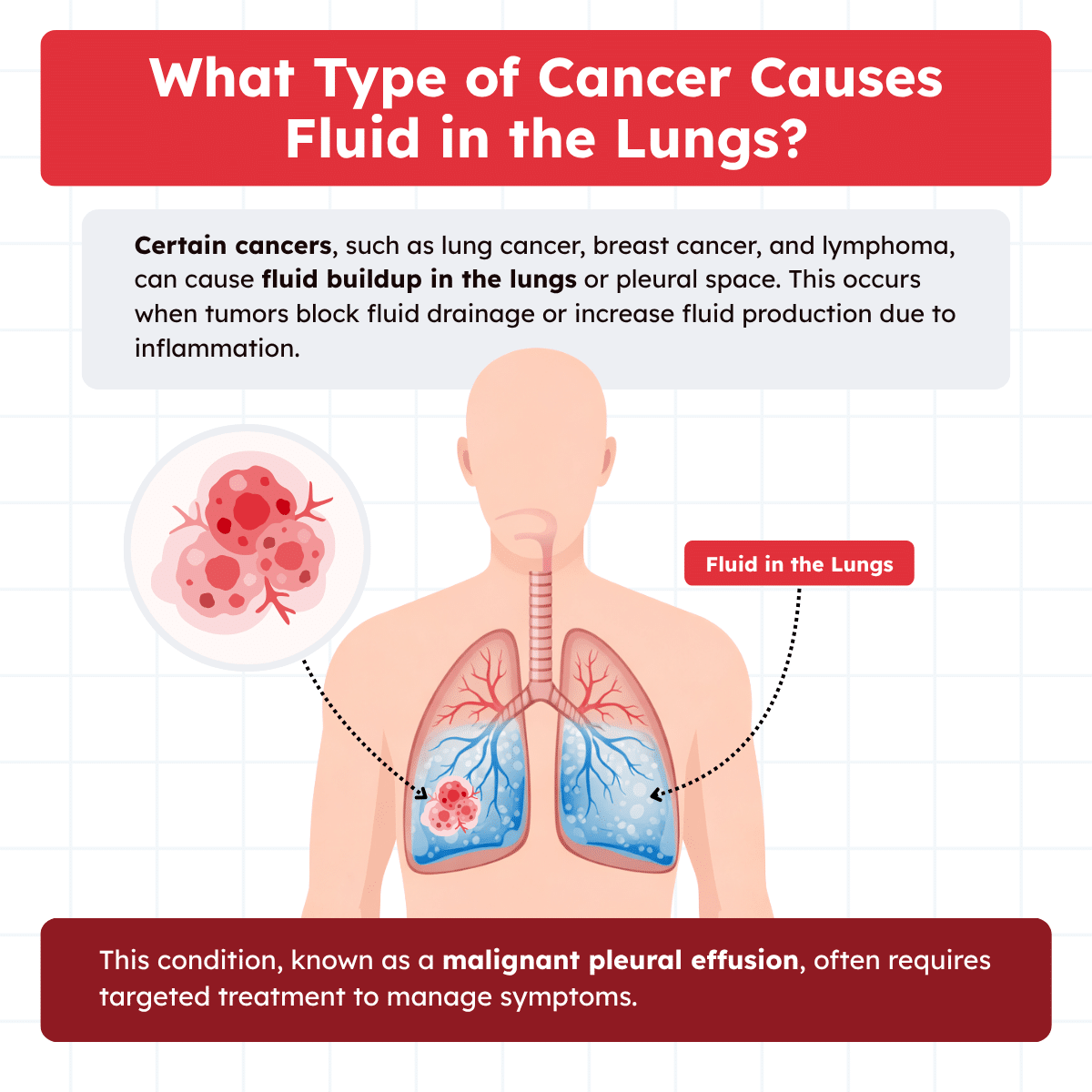
Several types of cancer can cause fluid buildup in the lungs, most commonly in the form of a malignant pleural effusion. The leading cause is lung cancer, which directly involves the lungs and pleura.
Breast cancer is another frequent cause, as it often spreads to the chest. Lymphoma can also lead to fluid accumulation by blocking lymphatic drainage. Ovarian cancer is known to cause both abdominal fluid and pleural effusion, especially in advanced stages.
Other cancers, including gastrointestinal cancers, kidney cancer, and melanoma, may also result in fluid buildup when they metastasize. In most cases, this occurs when cancer spreads to the pleura or interferes with normal fluid drainage.
Understanding Fluid in the Lungs
Before discussing cancer specifically, it is helpful to understand what “fluid in the lungs” actually means. This phrase is often used broadly, but medically it can refer to two main conditions:
- Pulmonary edema: Fluid accumulates within the lung tissue and alveoli
- Pleural effusion: Fluid collects in the pleural space between the lungs and chest wall
Cancer most commonly causes pleural effusion, although it can contribute to pulmonary edema in certain situations.
Pleural effusions associated with cancer are often referred to as malignant pleural effusions. These occur when cancer cells spread to the pleura or interfere with normal fluid drainage, leading to accumulation.
Lung Cancer
Primary Lung Cancer
Lung cancer is the most direct and common cancer associated with fluid in the lungs. It originates within the lung tissue and can spread locally to the pleura.
There are two main types:
- Non-small cell lung cancer (NSCLC)
- Small cell lung cancer (SCLC)
Note: Both types can lead to pleural effusion, but NSCLC is more commonly associated with this complication.
How Lung Cancer Causes Fluid
Lung cancer can cause fluid buildup through several mechanisms:
- Direct invasion of the pleura, leading to inflammation and fluid production
- Obstruction of lymphatic drainage, preventing normal fluid removal
- Increased vascular permeability, allowing fluid to leak into the pleural space
Note: In many cases, the fluid may contain cancer cells, confirming a malignant pleural effusion.
Clinical Significance
The presence of pleural effusion in lung cancer often indicates advanced disease, particularly when malignant cells are found in the fluid. It can significantly impact breathing and quality of life.
Breast Cancer
Spread to the Pleura
Breast cancer is one of the most common cancers in women and is also a frequent cause of malignant pleural effusion. It can spread beyond the breast to the lungs and pleural surfaces.
Mechanisms of Fluid Accumulation
- Metastasis to the pleura leads to irritation and fluid production
- Blockage of lymphatic channels prevents drainage
- Tumor growth disrupts normal fluid balance
Characteristics
Pleural effusion related to breast cancer may develop gradually and is often associated with:
- Shortness of breath
- Chest tightness
- Persistent cough
Note: Like lung cancer, the detection of cancer cells in pleural fluid typically indicates metastatic disease.
Lymphoma
Types of Lymphoma
Lymphoma includes cancers of the lymphatic system, such as:
- Hodgkin lymphoma
- Non-Hodgkin lymphoma
Note: These cancers can involve lymph nodes in the chest and mediastinum.
How Lymphoma Causes Fluid
Lymphoma can lead to fluid accumulation through:
- Enlarged lymph nodes compressing lymphatic vessels, preventing fluid drainage
- Direct involvement of the pleura
- Inflammatory processes that increase fluid production
Unique Features
Pleural effusions caused by lymphoma may sometimes be large and recurrent. In some cases, the fluid may not initially contain cancer cells, which can make diagnosis more challenging.
Ovarian Cancer
Spread Beyond the Abdomen
Ovarian cancer typically begins in the pelvis but can spread to the abdomen and chest. It is commonly associated with both:
- Ascites (fluid in the abdomen)
- Pleural effusion (fluid in the chest)
Mechanisms
- Cancer cells can travel through the diaphragm into the pleural space
- Increased pressure from abdominal fluid can push fluid into the chest
- Lymphatic obstruction contributes to fluid buildup
Clinical Presentation
Patients with ovarian cancer may develop:
- Shortness of breath
- Chest discomfort
- Rapid accumulation of pleural fluid
Note: This pattern is sometimes referred to as part of a syndrome involving both abdominal and pleural fluid.
Gastrointestinal Cancers
Types Involved
Several gastrointestinal cancers can cause fluid in the lungs, including:
- Stomach cancer
- Colon cancer
- Pancreatic cancer
Pathophysiology
These cancers typically cause pleural effusion through metastasis:
- Spread of cancer cells to the pleura
- Lymphatic obstruction
- Increased capillary permeability
Clinical Considerations
Pleural effusion from gastrointestinal cancers often indicates advanced disease. Symptoms may appear later in the course of illness.
Mesothelioma
Cancer of the Pleura
Mesothelioma is a rare but significant cancer that directly affects the pleura. It is strongly associated with asbestos exposure.
Why It Causes Fluid
Because mesothelioma originates in the pleura, it almost always leads to:
- Chronic irritation of the pleural lining
- Excessive fluid production
- Impaired fluid absorption
Key Features
- Recurrent pleural effusions
- Thickening of the pleura
- Progressive shortness of breath
Note: Mesothelioma-related effusions are often persistent and difficult to manage.
Leukemia
Indirect Effects
Leukemia is a cancer of the blood and bone marrow. While it does not originate in the lungs or pleura, it can still cause fluid buildup indirectly.
Mechanisms
- Infiltration of leukemic cells into lung tissue or pleura
- Increased susceptibility to infections that lead to effusion
- Treatment-related complications
Clinical Relevance
Pleural effusion in leukemia may be due to multiple factors, not just direct cancer involvement. Careful evaluation is needed to determine the exact cause.
Other Cancers That Can Cause Pleural Effusion
Several other cancers may lead to fluid in the lungs, especially when they metastasize:
- Kidney cancer
- Prostate cancer
- Thyroid cancer
- Melanoma
Note: These cancers typically cause pleural effusion through spread to the pleura or lymphatic obstruction.
Malignant Pleural Effusion
Definition
A malignant pleural effusion is diagnosed when cancer cells are present in the pleural fluid or when cancer is known to involve the pleura.
Characteristics
- Often recurrent
- May accumulate rapidly
- Can significantly impair breathing
Symptoms
- Shortness of breath
- Chest pain
- Dry or productive cough
- Fatigue
Note: The severity of symptoms depends on the volume of fluid and how quickly it accumulates.
Diagnosis of Cancer-Related Fluid in the Lungs
Imaging Studies
Common imaging methods include:
- Chest X-ray
- CT scan
- Ultrasound
Note: These help identify the presence and extent of fluid.
Thoracentesis
Thoracentesis is a procedure used to remove fluid from the pleural space for analysis. It helps determine:
- Whether the fluid is malignant
- The underlying cause
- Protein and cell content
Cytology
Examining the fluid under a microscope can reveal cancer cells, confirming a malignant pleural effusion.
Clinical Implications
The presence of fluid in the lungs due to cancer has important implications:
- It often indicates advanced or metastatic disease
- It can significantly affect breathing and quality of life
- It may influence treatment decisions
Note: Management focuses on both relieving symptoms and addressing the underlying cancer.
Treatment Options
Treatment depends on the type of cancer and the severity of the effusion.
Symptom Relief
- Thoracentesis to remove fluid
- Oxygen therapy if needed
Long-Term Management
- Pleurodesis to prevent fluid reaccumulation
- Indwelling pleural catheters for ongoing drainage
Cancer Treatment
- Chemotherapy
- Radiation therapy
- Targeted therapy
Note: Treating the underlying cancer may reduce fluid buildup in some cases.
Prognosis of Cancer-Related Fluid in the Lungs
The prognosis for fluid in the lungs caused by cancer depends on several factors, including the type of cancer, how advanced it is, and how well it responds to treatment. In many cases, the presence of a malignant pleural effusion suggests that the cancer has spread beyond its original site.
Some cancers, such as certain types of breast cancer and lymphoma, may respond well to treatment, which can help reduce or control fluid buildup. In other cases, particularly with advanced lung cancer or mesothelioma, the condition may be more difficult to manage.
Survival rates vary widely, but the focus of care is often on symptom control, maintaining quality of life, and slowing disease progression when possible. Early recognition and appropriate management can make a meaningful difference in patient comfort and outcomes.
Complications of Fluid in the Lungs
Respiratory Distress
As fluid builds up, it compresses the lungs and limits their ability to expand. This can lead to:
- Severe shortness of breath
- Rapid breathing
- Reduced oxygen levels
Note: If untreated, this can progress to respiratory failure.
Infection
Pleural fluid can become infected, resulting in a condition known as empyema. This adds another layer of complexity to an already serious situation and often requires antibiotics and drainage.
Recurrent Effusions
Malignant pleural effusions are often recurrent. Even after fluid is removed, it may return quickly, requiring repeated procedures or long-term management strategies.
Reduced Quality of Life
Persistent symptoms such as breathlessness, fatigue, and chest discomfort can significantly impact daily activities, sleep, and overall well-being.
Malignant vs Non-Malignant Pleural Effusion
Malignant Pleural Effusion
- Caused by cancer involvement of the pleura
- Often contains cancer cells
- Typically recurrent and progressive
- Associated with advanced disease
Non-Malignant Pleural Effusion
Common causes include:
- Heart failure
- Pneumonia
- Liver disease
- Kidney disease
Note: These effusions are often treatable by addressing the underlying condition and may resolve with appropriate therapy.
When to Seek Medical Attention
Fluid in the lungs, especially when related to cancer, should always be taken seriously. Prompt medical evaluation is important if any of the following symptoms are present:
- New or worsening shortness of breath
- Chest pain or pressure
- Persistent cough
- Difficulty lying flat due to breathing discomfort
- Unexplained fatigue
Note: In patients with a known history of cancer, these symptoms may indicate disease progression or a new complication that requires immediate attention.
How It Is Managed Over Time
Managing cancer-related fluid in the lungs often requires a long-term approach, particularly when the effusion is recurrent.
- Monitoring: Regular follow-up with imaging studies helps track fluid accumulation and guide treatment decisions.
- Repeated Drainage: Some patients may require multiple thoracentesis procedures to relieve symptoms. While effective, repeated procedures can be inconvenient and carry some risks.
- Indwelling Pleural Catheters: These devices allow patients or caregivers to drain fluid at home, reducing the need for frequent hospital visits and improving comfort.
- Pleurodesis: This procedure involves introducing a substance into the pleural space to cause the lung lining to adhere to the chest wall, preventing further fluid accumulation.
- Systemic Cancer Therapy: Treatments such as chemotherapy, targeted therapy, or immunotherapy may help control the underlying cancer and reduce fluid production in some cases.
The Role of Early Detection
While not all cases of cancer-related fluid in the lungs can be prevented, early detection of cancer and its complications can improve outcomes.
Routine screenings, awareness of symptoms, and timely medical evaluation play a key role in identifying problems before they become severe. In some cases, detecting a pleural effusion may even lead to the initial diagnosis of an underlying cancer.
Final Thoughts
Fluid in the lungs can be caused by several types of cancer, most commonly lung cancer, breast cancer, lymphoma, ovarian cancer, and mesothelioma. In many cases, it develops when cancer spreads to the pleura or disrupts normal fluid drainage, leading to a malignant pleural effusion.
This condition can significantly affect breathing and overall quality of life.
While it often indicates advanced disease, there are effective strategies to manage symptoms and, in some cases, control the underlying cause. Prompt recognition and appropriate care are essential for improving comfort and clinical outcomes.

Written by:
John Landry is a registered respiratory therapist from Memphis, TN, and has a bachelor's degree in kinesiology. He enjoys using evidence-based research to help others breathe easier and live a healthier life.
References
- Sharma S, Arora RD, Boster J. Malignant Pleural Effusion. [Updated 2024 Aug 12]. In: StatPearls [Internet]. Treasure Island (FL): StatPearls Publishing; 2026.