

A burning sensation in the nose can be uncomfortable and sometimes alarming, especially when it appears suddenly or persists without a clear cause. This symptom is often linked to irritation of the nasal passages, which can result from factors such as dry air, allergens, infections, or exposure to environmental irritants.
In some cases, it may also be associated with underlying conditions like sinus inflammation or nasal sensitivity.
Understanding what causes this sensation is important for identifying the right treatment and preventing further discomfort. This article explores the most common reasons why your nose may burn and what you can do to find relief.

Download our free guide that has over 100+ of the best tips for healthy lungs.
Why Does My Nose Burn?
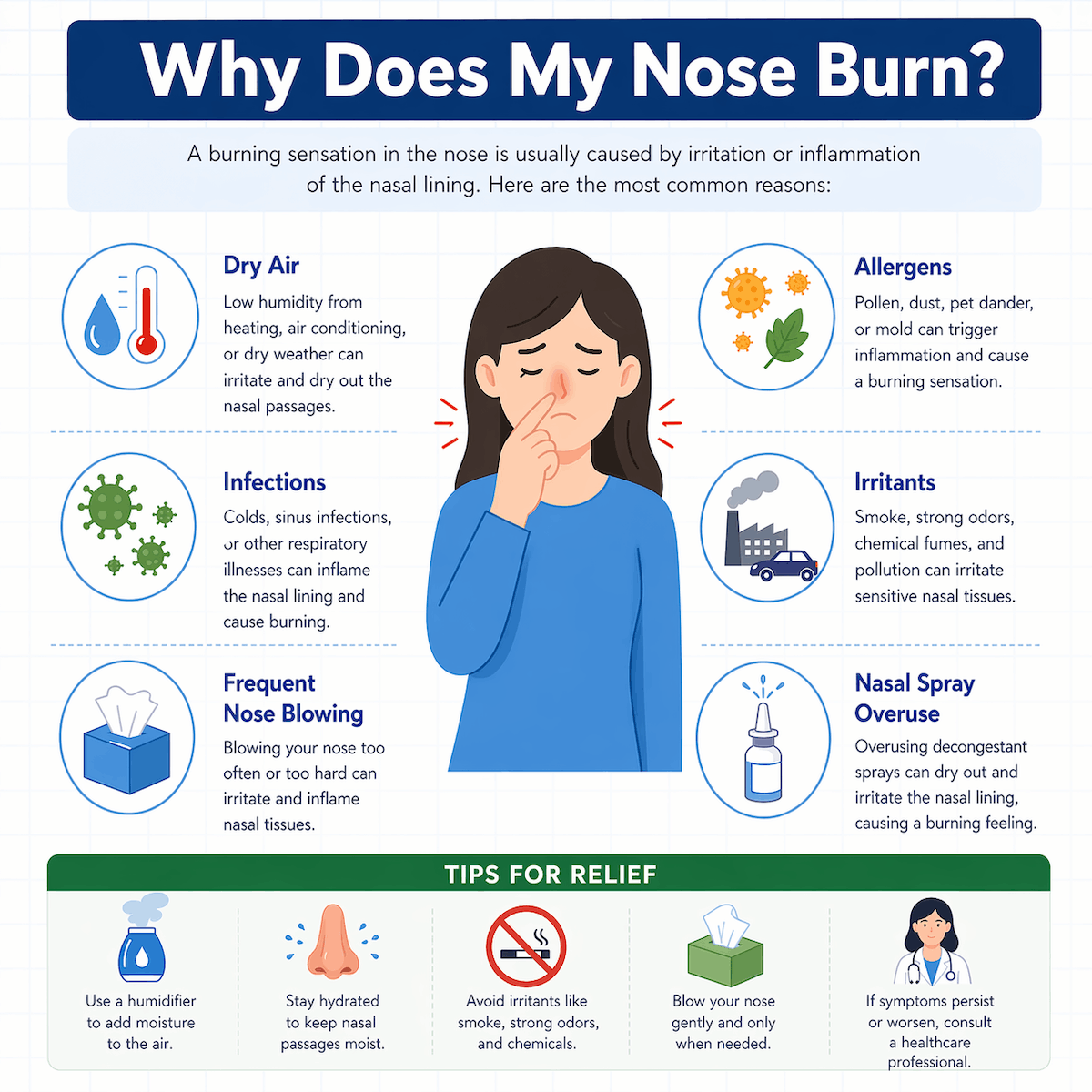
A burning sensation in the nose is usually caused by irritation or inflammation of the nasal lining. This can happen when the delicate mucosa becomes dry, inflamed, or exposed to irritants. Common causes include dry air, especially in heated or air-conditioned environments, which can strip moisture from the nasal passages.
Allergens like pollen, dust, or pet dander can also trigger inflammation, leading to a burning feeling. Infections such as the common cold or sinusitis may cause similar symptoms due to swelling and increased mucus production. Environmental irritants like smoke, strong odors, or chemical fumes are another frequent cause.
In some cases, frequent nose blowing or use of nasal sprays can worsen the irritation. Identifying the underlying cause is key, as treatment may involve humidification, avoiding triggers, or addressing allergies or infections.
Common Medical Causes
Several medical conditions can irritate the sensitive lining inside your nose and create a burning feeling. Inflammation, infection, structural changes, and dryness often play a direct role in this discomfort.
Allergic Rhinitis
Allergic rhinitis develops when your immune system reacts to substances like pollen, dust mites, pet dander, or mold. Your body releases histamine and other chemicals that inflame the nasal lining. This inflammation can cause burning, itching, sneezing, and a clear, watery discharge.
You may notice symptoms worsen during specific seasons or after exposure to known triggers. The inside of your nose can feel raw or irritated, especially if you rub or blow it often.
Swelling inside your nasal passages can also create congestion. When tissues become inflamed, they produce more mucus, which further irritates the lining. Persistent exposure to allergens can keep the burning sensation active until you reduce contact or use appropriate treatment such as antihistamines or nasal corticosteroid sprays.
Sinus Infections
A sinus infection, also called sinusitis, occurs when the tissue lining your sinuses becomes inflamed and infected. Viruses cause most cases, though bacteria can also be responsible. As pressure and mucus build up, you may feel burning deep in your nose or behind your eyes.
Thick yellow or green nasal discharge often accompanies this condition. You might also experience facial pressure, reduced sense of smell, headache, or fever.
Inflamed sinus tissue narrows drainage pathways. When mucus cannot drain properly, it irritates surrounding structures and increases pressure inside the sinus cavities. The combination of inflammation and trapped secretions can produce a persistent burning or aching sensation that lasts for days or even weeks.
Nasal Dryness
Nasal dryness occurs when the mucous membranes inside your nose lose moisture. Dry indoor air, especially during winter heating, frequently causes this problem. Air conditioning, dehydration, and certain medications such as antihistamines can also contribute.
When your nasal lining dries out, it becomes cracked and irritated. This irritation often feels like burning or stinging, particularly when you inhale cold or dry air.
Small cracks in the tissue may bleed easily. You might notice crusting or minor nosebleeds along with discomfort. Using saline sprays, humidifiers, or staying well hydrated can help restore moisture and reduce irritation.
Deviated Septum
A deviated septum means the thin wall dividing your nasal passages shifts to one side. Some people are born with this condition, while others develop it after a nasal injury. When one passage becomes narrower, airflow changes inside your nose.
Altered airflow can dry out one side more than the other. This uneven drying can irritate the lining and create a burning sensation, especially during breathing.
You may also experience chronic congestion, frequent sinus infections, or nosebleeds. If the deviation significantly blocks airflow, a healthcare professional may recommend medical management or surgery to improve nasal function and reduce ongoing irritation.
Environmental Triggers
Your nose reacts quickly to changes in the air around you. Particles, temperature shifts, and strong smells can irritate the delicate lining inside your nasal passages and cause a burning sensation.
Airborne Irritants
Airborne irritants are one of the most common causes of nasal burning. Dust, pollen, mold spores, and pet dander can inflame the lining of your nose, especially if you have allergies.
Smoke is another frequent trigger. Cigarette smoke, wildfire smoke, and even heavy cooking fumes contain fine particles and chemicals that irritate the nasal mucosa. These particles dry out protective mucus and expose sensitive nerve endings.
Chemical fumes also play a role. Cleaning products, paint, and industrial chemicals release vapors that can inflame your nasal tissues within minutes. If you notice burning that starts soon after exposure and improves when you leave the area, irritants are likely responsible.
Note: Poor indoor air quality can worsen symptoms. Low humidity dries out your nasal passages, while high levels of dust or pollutants increase irritation.
Temperature Changes
Sudden temperature shifts can trigger nasal burning. Moving from cold outdoor air into a warm building, or the reverse, stresses the blood vessels inside your nose.
Cold air is especially drying. It reduces moisture in your nasal lining and can cause small surface cracks, which lead to stinging or burning. Wind exposure increases this effect by accelerating moisture loss.
Hot, dry climates create similar problems. Air conditioning and indoor heating systems lower humidity levels, which can dry out your nasal passages over time.
Rapid temperature changes also cause blood vessels in your nose to expand and contract. This response can create a brief burning or tingling sensation, especially if your nasal lining is already irritated.
Strong Odors
Strong odors can irritate the sensory nerves inside your nose. Perfume, cologne, scented candles, and air fresheners contain volatile chemicals that stimulate nerve endings directly.
Cleaning sprays, bleach, and ammonia release fumes that can cause immediate burning. Even short exposure may trigger discomfort if you are sensitive.
Certain foods and spices can also provoke a reaction. Chili peppers, horseradish, and wasabi release compounds that activate pain receptors in your nasal passages, leading to a sharp burning feeling.
If you develop burning consistently around specific smells, you may have heightened nasal sensitivity. Limiting exposure and improving ventilation can reduce irritation and help protect your nasal lining.
Lifestyle and Habits
Certain daily habits expose the lining of your nose to heat, chemicals, and irritants. Repeated contact can dry the tissue, damage small blood vessels, and trigger ongoing inflammation.
Smoking and Vaping
When you smoke cigarettes, cigars, or pipes, hot smoke and toxic chemicals pass directly through your nasal passages. This heat dries the mucous membranes and irritates the delicate lining inside your nose. You may notice burning, stinging, or increased congestion shortly after smoking.
Tobacco smoke contains substances such as formaldehyde and ammonia that irritate tissue. Regular exposure can cause chronic inflammation, swelling, and thicker mucus. Over time, this may make your nose feel raw or sensitive even when you are not actively smoking.
Vaping also affects your nasal lining. E‑cigarette vapor contains nicotine, flavoring agents, and other chemicals that can dry out and inflame tissue. Some flavorings, especially mint or menthol, can create a sharp burning sensation.
Note: If your symptoms improve when you reduce or stop smoking or vaping, irritation from these products is likely contributing to the problem.
Recreational Drug Use
Snorting recreational drugs such as cocaine, methamphetamine, or crushed prescription pills directly injures the inside of your nose. These substances constrict blood vessels, which reduces blood flow to the tissue. Reduced blood flow slows healing and increases the risk of sores and persistent burning.
Powders and fillers mixed with drugs can also scrape and irritate the nasal lining. Frequent use may lead to scabbing, crusting, and small ulcers. In severe cases, repeated damage can cause holes in the nasal septum.
You may feel intense burning immediately after use, followed by congestion or nosebleeds. Ongoing symptoms signal tissue damage that needs medical evaluation and cessation of use to prevent further harm.
Medication Side Effects
Certain medications can irritate the lining of your nose and trigger a burning feeling. This reaction often relates to how the drug affects blood vessels, mucus production, or moisture levels inside your nasal passages.
Decongestant Overuse
Topical decongestant sprays such as oxymetazoline and phenylephrine shrink swollen blood vessels in your nose. You may feel quick relief at first, but using them for more than three consecutive days can cause rebound congestion.
Rebound congestion, also called rhinitis medicamentosa, makes your nasal tissues swell more once the medication wears off. As you use the spray more often, your nasal lining can become dry, irritated, and inflamed. That irritation often causes a burning or stinging sensation.
You might also notice increased sensitivity to air, smoke, or strong smells. The tissue inside your nose becomes fragile and less able to protect itself.
Note: If you rely on a decongestant daily, your symptoms may worsen instead of improve. Gradually stopping the spray under medical guidance usually allows your nasal lining to recover.
Nasal Sprays
Prescription and over-the-counter nasal sprays, including steroid and saline sprays, can sometimes cause burning right after use. This effect usually happens because the spray contacts already irritated tissue.
Steroid sprays such as fluticasone or mometasone reduce inflammation, but incorrect technique can lead to discomfort. If you aim the nozzle toward the center of your nose instead of the outer wall, the medication can irritate the septum. This area contains delicate tissue that burns easily.
Some sprays contain preservatives like benzalkonium chloride. In sensitive individuals, these additives can dry out the lining and cause ongoing irritation.
You can reduce burning by using proper technique, keeping the nozzle clean, and avoiding forceful sniffing after spraying. If pain persists or you develop nosebleeds, you should speak with your healthcare provider.
Antihistamines
Oral antihistamines such as diphenhydramine, loratadine, and cetirizine reduce allergy symptoms by blocking histamine. However, many of these medications also decrease mucus production. When your nose produces less mucus, the lining can become dry. Dry tissue cracks more easily and may feel hot, tight, or irritated. This dryness often explains a persistent burning sensation.
First generation antihistamines tend to cause more dryness than newer options. You may also notice dry mouth and dry eyes at the same time.
Drinking adequate fluids and using a humidifier can help maintain moisture. If dryness becomes uncomfortable, your clinician may recommend adjusting the dose or switching medications.
Underlying Health Conditions
Certain medical conditions can irritate the nasal lining and trigger a persistent burning feeling. Immune system disorders and hormonal shifts often change how your nasal tissues respond to dryness, inflammation, and environmental triggers.
Autoimmune Disorders
Autoimmune disorders cause your immune system to attack healthy tissue, including the delicate lining inside your nose. This inflammation can lead to burning, dryness, crusting, and frequent irritation.
Sjögren’s syndrome commonly reduces moisture production in your body. When your nasal passages lose natural lubrication, the tissue dries out and becomes more sensitive to airflow and particles in the air. You may also notice dry eyes and a dry mouth.
Conditions such as lupus or granulomatosis with polyangiitis can inflame blood vessels in the nasal passages. This inflammation may cause burning, congestion, nosebleeds, or even small sores inside your nose.
If you have persistent nasal burning along with fatigue, joint pain, or unexplained rashes, you should seek medical evaluation. Proper diagnosis allows your clinician to control inflammation and reduce nasal symptoms.
Hormonal Fluctuations
Hormonal changes can alter blood flow and mucus production in your nasal passages. These shifts may make your nose feel irritated, swollen, or unusually dry.
During pregnancy, rising estrogen levels increase blood flow to nasal tissues. This can cause swelling and a burning or stinging sensation, even without infection or allergies. Symptoms often improve after hormone levels stabilize.
You may also notice nasal burning during menopause. Lower estrogen levels can dry out mucous membranes, including those inside your nose. Dry tissue becomes more prone to irritation from indoor heating, air conditioning, or mild irritants.
Thyroid disorders can further disrupt moisture balance and tissue health. If nasal burning appears alongside weight changes, temperature sensitivity, or fatigue, you should discuss hormone testing with your healthcare provider.
Symptoms That May Accompany Nasal Burning
Nasal burning often occurs with other noticeable symptoms that help you identify the cause. You may feel irritation inside your nostrils, see changes in nasal discharge, or notice bleeding or blockage.
Stinging Sensations
A burning nose frequently includes a sharp or prickling stinging feeling inside your nostrils. You may notice it most when you inhale cold air, breathe in strong odors, or use certain nasal sprays.
Dry air commonly triggers this sensation. When the lining of your nose loses moisture, tiny cracks can form in the tissue. These small breaks expose nerve endings and make the inside of your nose feel raw.
Allergies and viral infections can also cause stinging. In these cases, inflammation increases blood flow to the nasal lining. The swollen tissue becomes more sensitive, so even normal airflow may feel uncomfortable.
If the stinging worsens after using medicated sprays, you may be experiencing irritation from overuse. Some decongestant sprays can dry and inflame the nasal passages when used longer than directed.
Nosebleeds
Burning inside your nose sometimes occurs alongside frequent or mild nosebleeds. Dryness remains a common cause. When the nasal lining becomes dry and irritated, small surface blood vessels can break easily. You may see light streaks of blood when you blow your nose or small drops on a tissue.
Inflammation from allergies, sinus infections, or chemical irritants can also weaken these blood vessels. Repeated rubbing or blowing your nose increases the risk of bleeding.
If nosebleeds happen often, last longer than 10 to 15 minutes, or occur without clear irritation, you should seek medical evaluation. Persistent bleeding may signal an underlying condition that requires treatment.
Congestion
Nasal burning often appears with congestion or a blocked feeling in your nose. Swelling inside the nasal passages narrows airflow and creates pressure.
You may find it harder to breathe through one or both nostrils. This blockage can shift from side to side, especially during infections or allergic reactions.
Congestion related to viral colds usually includes thicker mucus and facial pressure. Allergy-related congestion often comes with clear, watery discharge and frequent sneezing.
Note: When inflammation drives both burning and congestion, reducing the swelling often improves both symptoms at the same time.
When to Seek Medical Attention
A mild burning sensation often improves with simple steps like rinsing your nose or avoiding irritants. However, some symptoms require medical care.
Seek prompt evaluation if your nasal burning comes with severe pain, high fever, or persistent nosebleeds. These signs may point to infection or another condition that needs treatment.
Contact a healthcare professional if you notice:
- Thick yellow or green discharge that lasts more than 10 days
- Swelling around your eyes or face
- Headache that does not improve
- Trouble breathing through your nose
- Burning after a chemical exposure
If you recently inhaled smoke, fumes, or a strong chemical and your nose continues to burn, get medical help right away. Chemical irritation can damage delicate nasal tissue.
You should also seek care if over-the-counter treatments do not relieve symptoms within a week. Ongoing discomfort may signal allergies, chronic sinusitis, or another underlying issue.
Note: Trust your judgment. If the burning feels unusual, intense, or keeps returning, a clinician can examine your nasal passages and recommend the right treatment.
Prevention and Home Care Tips
You can reduce nasal burning by limiting exposure to common irritants. Stay away from cigarette smoke, strong perfumes, cleaning fumes, and heavy air pollution whenever possible. If you cannot avoid them, improve ventilation or wear a protective mask.
Keep your nasal passages moist. Use a saline nasal spray or rinse once or twice daily to soothe dry tissue and clear irritants. A clean humidifier can also add moisture to dry indoor air, especially during winter.
Support your nasal health with simple daily habits:
- Drink enough water to stay hydrated
- Gently blow your nose instead of forceful blowing
- Wash your hands often to reduce viral spread
- Replace air filters regularly in your home
If allergies trigger your symptoms, manage them consistently. Use prescribed or over the counter antihistamines or nasal corticosteroids as directed. Avoid known allergens such as dust, pet dander, or pollen when you can.
Pay attention to your environment. Dry heat, air conditioning, and high altitudes can irritate your nasal lining. Adjust humidity levels indoors to a comfortable range and avoid sudden temperature changes when possible.
Note: Seek medical care if burning lasts more than a few weeks, worsens, or occurs with frequent nosebleeds, facial pain, or thick discharge. Persistent symptoms may require evaluation and targeted treatment.
FAQs About a Burning Sensation in the Nose
What Causes Nose Burning When Breathing?
A burning sensation when breathing is usually caused by irritation of the nasal lining as air passes through the nose. Dry air is one of the most common triggers, especially in heated or air-conditioned environments. Allergens like pollen, dust, or pet dander can also inflame the nasal passages.
Infections such as colds or sinusitis may contribute as well. Exposure to irritants like smoke, chemicals, or strong odors can worsen the sensation. In some cases, overuse of nasal sprays or frequent nose blowing may further irritate the sensitive tissues.
Why Is the Inside of My Nose Burning?
The inside of your nose may burn due to inflammation or dryness of the nasal mucosa. This can occur when the protective lining becomes irritated from environmental factors like low humidity or pollution. Allergies are another common cause, leading to swelling and sensitivity. Viral infections, such as the common cold, can also inflame the nasal passages.
Additionally, using certain medications, including decongestant sprays, may dry out the lining. Minor irritation from frequent wiping or blowing your nose can further contribute to the discomfort.
How Do I Get Rid of the Burning in My Nose?
Relieving a burning sensation in the nose often involves reducing irritation and restoring moisture. Using a humidifier can help add moisture to dry air, which soothes the nasal passages. Staying well hydrated is also important. Saline nasal sprays or rinses can gently cleanse and moisturize the nasal lining.
Avoid exposure to irritants such as smoke, strong fragrances, or chemicals. If allergies are the cause, antihistamines may help. It is also important to limit the use of decongestant sprays, as overuse can worsen irritation.
Is Nose Burning a Symptom of Covid-19?
Nose burning is not considered a primary symptom of COVID-19, but it can occur in some cases due to inflammation of the nasal passages. COVID-19 more commonly presents with symptoms such as fever, cough, fatigue, and loss of taste or smell.
However, any viral infection, including COVID-19, can irritate the nasal lining and cause discomfort. If nose burning is accompanied by other concerning symptoms or known exposure, testing may be appropriate. It is always best to monitor symptoms closely and follow public health guidance.
What Is a Home Remedy for Nose Burning?
Several home remedies can help soothe a burning sensation in the nose. Using a humidifier adds moisture to the air, which can reduce dryness and irritation. Saline nasal sprays or rinses help keep the nasal passages hydrated and clear of irritants.
Drinking plenty of fluids supports overall hydration. Applying a small amount of petroleum jelly around the nostrils may help protect the skin from irritation. Avoiding triggers such as smoke, strong scents, and dry environments is also important for preventing further discomfort.
Why Does My Nose Burn When I Vape?
Vaping can cause a burning sensation in the nose because the vapor contains chemicals and particles that irritate the nasal lining. Ingredients such as propylene glycol and flavoring agents can dry out the mucosa and trigger inflammation. The heat from the vapor may also contribute to irritation.
Frequent exposure can worsen symptoms and increase sensitivity over time. In some cases, vaping may lead to more persistent nasal and respiratory issues. Reducing or avoiding vaping is often the most effective way to prevent this discomfort.
Why Does My Nose Burn When I Yawn?
A burning sensation when yawning can occur due to sudden airflow changes through the nasal passages. When you yawn, a large volume of air moves quickly through the nose, which can irritate dry or sensitive tissues.
If the nasal lining is already inflamed from allergies, dryness, or infection, this sensation may be more noticeable. Yawning may also briefly alter pressure within the sinuses, contributing to discomfort. Keeping the nasal passages moist and addressing underlying irritation can help reduce this sensation.
When Should I Be Concerned About Nose Pain?
You should be concerned about nose pain if it is severe, persistent, or accompanied by other symptoms such as fever, swelling, bleeding, or difficulty breathing. Pain that does not improve with simple measures like hydration or humidification may indicate an underlying issue, such as infection or injury.
Chronic irritation could also suggest allergies or sinus problems that need evaluation. If symptoms worsen over time or interfere with daily activities, it is important to seek medical attention for proper diagnosis and treatment.
Final Thoughts
In most cases, a burning sensation in the nose is not serious and can be traced back to temporary irritation from dryness, allergens, or environmental triggers. However, persistent or worsening symptoms may indicate an underlying issue that requires further attention.
By recognizing the common causes and making simple adjustments, such as improving indoor humidity, avoiding irritants, and managing allergies, you can often find relief quickly. If the discomfort continues despite these measures, seeking medical advice can help identify any underlying conditions and ensure appropriate treatment.
Understanding what is causing your symptoms is the first step toward protecting your nasal health and preventing future irritation.

Written by:
John Landry is a registered respiratory therapist from Memphis, TN, and has a bachelor's degree in kinesiology. He enjoys using evidence-based research to help others breathe easier and live a healthier life.
References
- Carroll MP Jr, Bulkhi AA, Lockey RF. Rhinitis and Sinusitis. Asthma, Allergic and Immunologic Diseases During Pregnancy. 2018.