
Chest trauma is a common and potentially life-threatening condition encountered in emergency departments, intensive care units, and trauma centers. It can directly impair ventilation, oxygenation, and overall cardiopulmonary stability.
Because the lungs, airway, chest wall, and major blood vessels are all vulnerable to injury, chest trauma often requires rapid assessment and skilled respiratory intervention.
For respiratory therapists, understanding chest trauma is essential, as these patients frequently depend on airway management, oxygen therapy, mechanical ventilation, and ongoing pulmonary monitoring to survive and recover.

What Is Chest Trauma?
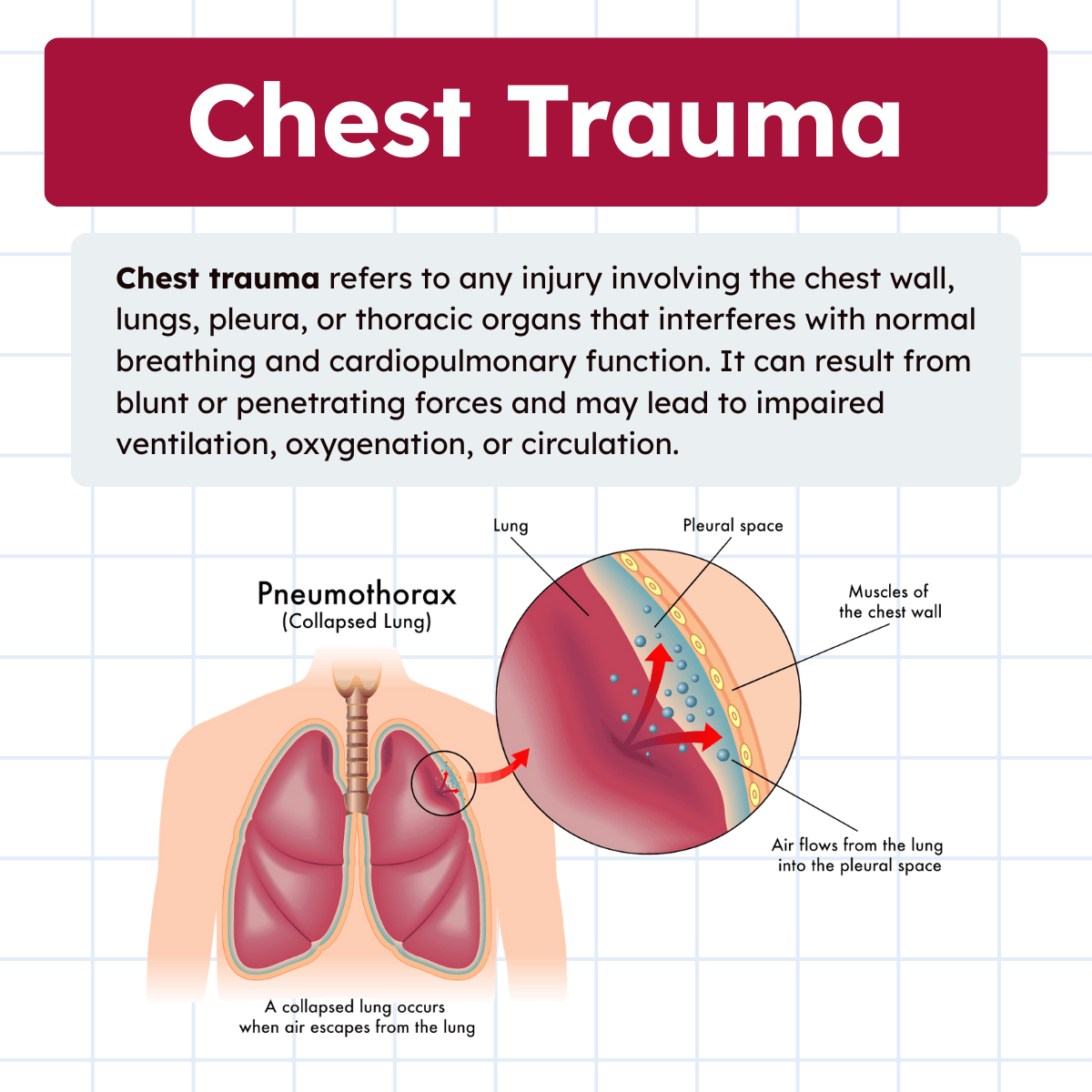
Chest trauma refers to any injury involving the thoracic cavity, including the chest wall, lungs, pleura, airway, diaphragm, and major cardiovascular structures. These injuries may result from blunt forces, such as motor vehicle collisions or falls, or penetrating mechanisms, such as stab wounds or gunshot injuries.
Trauma to the chest can disrupt normal breathing mechanics, damage lung tissue, impair gas exchange, and compromise circulation. Even injuries that initially appear mild can rapidly progress into respiratory failure if not recognized and treated promptly. Chest trauma is often categorized based on the mechanism of injury, as this helps guide assessment and management.
Types of Chest Trauma
Blunt Chest Trauma
Blunt chest trauma occurs when force is applied to the chest without penetration of the skin. This is the most common form of chest injury and is frequently associated with high-speed motor vehicle accidents, falls, or crush injuries.
Common injuries associated with blunt chest trauma include rib fractures, pulmonary contusions, flail chest, pneumothorax, hemothorax, and cardiac contusion. These injuries may impair ventilation by limiting chest wall movement, reducing lung compliance, or causing pain that leads to shallow breathing.
Penetrating Chest Trauma
Penetrating chest trauma occurs when an object pierces the chest wall and enters the thoracic cavity. Examples include stab wounds, gunshot wounds, and shrapnel injuries. These injuries carry a high risk of pneumothorax, hemothorax, vascular injury, and lung laceration.
Penetrating injuries can rapidly lead to respiratory compromise due to air leaks, blood loss, or direct damage to lung tissue. Immediate airway assessment and chest decompression may be lifesaving.
Common Chest Trauma Injuries
Rib Fractures
Rib fractures are among the most frequent chest injuries and can significantly impact respiratory function. Pain from fractured ribs limits deep breathing and coughing, increasing the risk of atelectasis and pneumonia.
Multiple rib fractures or fractures in elderly patients are particularly concerning, as they are associated with higher rates of respiratory failure and mortality.
Flail Chest
Flail chest occurs when three or more consecutive ribs are fractured in two or more places, creating a free-floating segment of the chest wall. This segment moves paradoxically during respiration, collapsing inward during inspiration and bulging outward during expiration.
Flail chest severely compromises ventilation and is often associated with underlying pulmonary contusion. Many patients require ventilatory support to stabilize the chest wall and maintain adequate gas exchange.
Pulmonary Contusion
Pulmonary contusion is bruising of lung tissue resulting in alveolar hemorrhage and edema. This injury reduces lung compliance and interferes with oxygen diffusion.
Symptoms may worsen over the first 24 to 48 hours after injury, making continuous monitoring essential. Pulmonary contusions are a leading cause of hypoxemia following blunt chest trauma.
Pneumothorax and Hemothorax
A pneumothorax occurs when air enters the pleural space, causing partial or complete lung collapse. A hemothorax involves blood accumulation in the pleural space. Both conditions restrict lung expansion and can lead to hypoxia and respiratory distress.
Tension pneumothorax is a medical emergency in which trapped air increases intrathoracic pressure, compressing the lungs and heart and rapidly leading to shock if untreated.
Pathophysiology of Chest Trauma
Chest trauma disrupts normal respiratory mechanics in several ways. Injury to the chest wall limits thoracic expansion, while lung parenchymal damage reduces compliance and functional alveolar surface area. Pain leads to hypoventilation, ineffective cough, and secretion retention.
In severe cases, ventilation-perfusion mismatch develops due to collapsed alveoli, fluid-filled airspaces, or impaired pulmonary blood flow. The combined effects of hypoventilation, shunting, and increased dead space place patients at high risk for hypoxemia and hypercapnia.
Clinical Assessment and Diagnosis
Early recognition of chest trauma is critical. Assessment typically begins with airway, breathing, and circulation, followed by focused thoracic evaluation. Signs of respiratory distress may include tachypnea, use of accessory muscles, cyanosis, asymmetric chest movement, and abnormal breath sounds.
Diagnostic tools include chest X-rays, CT scans, arterial blood gases, and continuous pulse oximetry. Imaging helps identify fractures, lung injuries, and pleural abnormalities, while blood gas analysis provides insight into ventilation and oxygenation status.
Why Chest Trauma Is Relevant to Respiratory Therapists
Chest trauma patients frequently rely on respiratory therapists for life-sustaining care. Respiratory therapists play a central role in airway management, oxygen delivery, ventilator management, and pulmonary hygiene.
Many chest trauma patients require intubation and mechanical ventilation due to respiratory failure, altered mental status, or severe chest wall instability. Proper ventilator settings are essential to optimize oxygenation while minimizing additional lung injury.
Pain control, though managed by the medical team, directly affects respiratory outcomes. Respiratory therapists must recognize how inadequate pain management leads to shallow breathing, atelectasis, and secretion retention.
Respiratory Management of Chest Trauma
Oxygen Therapy
Supplemental oxygen is often the first intervention for chest trauma patients. The goal is to correct hypoxemia while closely monitoring for deterioration that may require advanced airway support.
Airway Management
Patients with severe trauma, decreased consciousness, or progressive respiratory failure may require intubation. Early airway protection prevents hypoventilation, aspiration, and worsening hypoxemia.
Mechanical Ventilation
Mechanical ventilation is commonly used in patients with flail chest, pulmonary contusion, or severe hypoxemia. Positive pressure ventilation helps stabilize the chest wall, recruit collapsed alveoli, and improve gas exchange.
Careful attention must be paid to tidal volumes, pressures, and oxygen levels to avoid ventilator-induced lung injury, especially in already compromised lungs.
Pulmonary Hygiene
Chest trauma increases the risk of secretion retention and pneumonia. Techniques such as incentive spirometry, deep breathing exercises, suctioning, and early mobilization are critical components of care when appropriate.
Complications and Long-Term Outcomes
Chest trauma can lead to acute complications such as respiratory failure, pneumonia, acute respiratory distress syndrome, and prolonged ventilator dependence. Long-term effects may include chronic pain, reduced lung function, and decreased quality of life.
Early and effective respiratory management significantly improves outcomes and reduces complications. Multidisciplinary care involving respiratory therapists, physicians, nurses, and physical therapists is essential for optimal recovery.
Chest Trauma Practice Questions
1. What is chest trauma characterized by?
Chest trauma is characterized by injury to the structures within the thoracic cavity, including the lungs, heart, ribs, and major blood vessels. It can result from blunt or penetrating mechanisms, leading to conditions like rib fractures, pneumothorax, hemothorax, cardiac tamponade, and lung contusions. These injuries can cause pain, difficulty breathing, and other life-threatening complications, necessitating prompt medical attention.
2. What are the two types of chest trauma?
Blunt and penetrating
3. Blunt trauma can be caused by which mechanisms?
Deceleration, shearing, and compression
4. Penetrating trauma can be caused by which mechanisms?
Gunshot and stabbing wounds
5. What tests are ordered initially for patients with chest trauma?
Chest x-ray and CT scan of the chest/abdomen, CBC, type and cross-match, electrolytes, O2 saturation, ABG, and EKG.
6. Where is a chest tube inserted?
Right or left pleural spaces or mediastinum.
7. Why is a chest tube inserted?
To restore negative pressure and help the lungs re-expand.
8. What are the two types of chest tubes?
Small bore and large bore
9. What are the types of chest drainage systems?
Wet (water seal) and dry suction.
10. What will the wet drainage system look like when the chest tube is placed in the mediastinum?
It may pulsate with the patient’s heartbeat.
11. What can be done to prevent excessive negative pressure in a chest tube drainage system?
Having the water level at the 2 cm mark.
12. What are the benefits of a dry suction chamber?
Can be set up quickly in emergency situations, still works even if it is knocked over, and is useful for patients being transported.
13. What are the consequences of a dry suction chamber?
There’s no way to tell if the pressure in the chest has changed.
14. What happens if a chest tube stays clamped?
It can cause a tension pneumothorax and mediastinal shift.
15. What should be done if the patient has a chest tube and needs to be transported to another area of the hospital?
Place the drainage system below chest level while transporting.
16. What should be done if, while transporting a patient with a chest tube, the tubing disconnects?
Cut off contaminated tips, insert the sterile connector into the cut ends, and reattach to the draining system.
17. Is bubbling in the water seal chamber of a chest tube drainage system normal?
Intermittent bubbling is normal, not continuous bubbling.
18. When is the only acceptable time to clamp a chest tube?
Right before removal.
19. What are the priorities when removing a patient’s chest tube?
Preventing air from entering the pleural cavity and preventing infection; therefore, the tube is removed quickly after being clamped.
20. What dressing is used on the chest tube site after removal?
Petroleum gauze is applied, followed by 4×4 gauze, and thoroughly covered and sealed with tape.
21. What treatment should be done on sternal/rib fractures?
Pain management, as patients need to be able to breathe adequately, avoid excessive activity, apply ice over the fracture site, and use a chest binder.
22. What is the definition of a flail chest?
Flail chest is a condition where several ribs are fractured in different sites, which results in free-floating rib segments.
23. What can be observed on the ABG in patients with a flail chest?
Respiratory acidosis
24. What treatment is done in patients with a flail chest?
Ventilatory support (IS, deep breathing, bronchodilators, intubation), airway management, clearing lung secretions, controlling pain, and surgery if the injury is severe. Stabilize the area, intubate, and initiate positive pressure ventilation to treat or prevent ventilatory failure.
25. What should be monitored in patients with a flail chest?
Chest x-ray, ABG, pulse oximetry, and bedside pull functioning.
26. What is a pulmonary contusion?
A pulmonary contusion is a bruise of the lung tissue resulting from traumatic injury, typically due to blunt chest trauma like a car accident or a fall.
27. What is cardiac tamponade?
Cardiac tamponade is a life-threatening medical condition where fluid accumulates in the pericardium (the sac surrounding the heart), leading to reduced ventricular filling and compromised cardiac output.
28. What is a pneumothorax?
Pneumothorax is a collection of air in the pleural space that causes part or all of the lungs to collapse due to the loss of negative pressure in the chest cavity.
29. What are the three types of pneumothorax?
Simple or spontaneous, traumatic, and tension.
30. What are the clinical manifestations of a pneumothorax?
Pleuritic pain, tachypnea, anxiety, dyspnea with air hunger, use of accessory muscles, decreased or absent breath sounds, decreased movement on the affected side, and subcutaneous emphysema.
31. What is the progression of a tension pneumothorax?
Air enters a wound in the chest wall and becomes trapped; ith each breath, tension increases in the pleural space; the lung collapses, and mediastinal structures shift to the opposite side.
32. What are the classic signs of a tension pneumothorax?
Deviation of the trachea away from the side with the tension, hyper-expanded chest that moves little with respiration, an increased percussion note, and central venous pressure is usually raised but will be normal or low if the patient is hypovolemic.
33. What is hemothorax?
An accumulation of blood in the pleural cavity.
34. What is the difference between the treatment for hemothorax and pneumothorax?
Chest tubes for pneumothorax are high in the chest wall. However, blood is heavy and will pool lower in the thoracic cavity closer to the diaphragm. So, for a hemothorax, the chest tube is placed lower in the chest wall.
35. What position is best for patients with a pneumothorax?
High Fowler’s position
36. How does a chest tube treat a hemothorax or pneumothorax?
It is inserted by a physician into pleural space, drains blood, fluid, air, or pus, and re-establishes negative pressure in the thoracic cavity, facilitating lung expansion.
37. What is an air leak, and what should be done to treat it?
An air leak is noted when continuous rapid bubbling is found in the water seal chamber. When this happens, start at the insertion site and assess the tubing to locate the leak.
38. What is subcutaneous emphysema?
Subcutaneous emphysema is a medical condition where gas or air is trapped beneath the skin’s surface, typically resulting from an injury or rupture in the nearby respiratory system or infection with gas-producing bacteria.
39. What does subcutaneous emphysema feel like?
It feels like rice krispies crackling in the neck, face, and chest.
40. How can a tension pneumothorax be fatal?
It can be fatal as accumulating pressure compresses blood vessels, decreasing venous return and cardiac output.
41. What is an open pneumothorax?
A sucking chest wound and opening that allows air into the pleural space.
42. What are the most common injuries from chest trauma?
Fractures of the ribs and sternum.
43. What are the signs and symptoms of ribs or sternum fractures?
Pain and tenderness, crepitus, bones grating together, shallow respirations, and respiratory acidosis.
44. What complications should you look for with rib or sternum fractures?
Pneumothorax, hemothorax, and flail chest.
45. When does flail chest occur?
It occurs when a patient has multiple rib fractures.
46. What are the signs and symptoms of flail chest?
Pain, paradoxical chest wall movement, dyspnea, cyanosis, increased pulse, moves in with inspiration/out with expiration, increased work of breathing, hypoxemia, and tachycardia.
47. What is paradoxical chest wall movement?
A see-saw chest where the chest sucks inwardly on inspiration and puffs out on expiration. To assess chest symmetry, always stand at the foot of the bed to observe how the chest is rising and falling.
48. What does a blunt chest wall injury do?
It damages structures in the chest cavity without disrupting chest wall integrity.
49. What is the leading cause of blunt chest injuries?
Motor vehicle accidents (MVA)
50. What is the medical treatment for cardiac tamponade?
Pericardiocentesis
51. What are the symptoms of a rib fracture?
Pain at the site of injury, localized tenderness, crepitus, splinting of the chest, and shallow breathing.
52. Why can rib fractures cause atelectasis?
Rib fractures are painful, and this makes the patient not want to take deep breaths.
53. What is used to diagnose rib fractures?
Chest x-ray
54. What is the primary goal of treating rib fractures?
Pain management
55. Why are opioids used cautiously to treat rib fractures?
They can suppress respiration.
56. How is a flail chest diagnosed?
Chest x-ray and visual inspection.
57. What is the best way to diagnose a flail chest?
Visual inspection
58. What is a closed pneumothorax?
There is no external wound.
59. How much water is needed in the water seal chamber of a pleural drainage system?
2 cm
60. What should be assessed in the water-seal chamber?
Tidaling
61. What does excessive bubbling mean?
That there’s a leak
62. What does no bubbling mean?
The lung is expanded, or there is a kink.
63. What do we do if the drainage system breaks?
Place the end of the chest tube in 2 cm of sterile water.
64. What type of chest trauma is more commonly harder to determine the extent of damage?
Blunt trauma
65. What are the types of blunt trauma?
Fractured sternum or ribs, flail chest, and pulmonary contusion.
66. What is penetrating chest trauma?
It occurs when a foreign object enters the chest wall (e.g., gunshot wound or stabbing).
67. What is the most common type of chest trauma?
Rib fracture
68. What is the prognosis of sternal and rib fractures?
Most are benign but can be life-threatening.
69. What conservative treatment is available for sternal and rib fractures?
Pain control, avoiding excessive activity, deep breathing exercises, rib belts, and surgical intervention in severe cases.
70. What should be noted in patients with penetrating trauma compared to patients with a blunt injury?
Patients with penetrating trauma may deteriorate rapidly and recover much faster than patients with blunt injuries.
71. What is the medical management of patients with chest trauma?
Establish and secure the airway (i.e., intubation and mechanical ventilation; Re-establish chest wall integrity (i.e., occluding open chest wounds, correct fluid volume, or drain intrapleural fluid); and control bleeding.
72. What is paradoxical movement?
The flail area moves in the opposite direction of the intact portion of the chest wall. During inspiration, the affected portion is sucked in with a mediastinal shift to the uninjured side or unaffected side. On expiration, the flail section bulges outward with a mediastinal shift to the injured side. This results in hypoxemia, respiratory acidosis, and hypotension.
73. What are the treatment goals for a patient with a flail chest?
Depends on the degree of respiratory dysfunction and will include controlling pain, clearing secretions, and ventilatory support.
74. What interventions are used to clear the airway of patients with a flail chest?
A cough and deep breath, positioning, and suctioning of secretions.
75. What are the causes of a simple or spontaneous pneumothorax?
Rupture of a bleb, rupture of a bronchopleural fistula, or rupture of an air-filled blister in a healthy person.
76. What are the causes of traumatic pneumothorax?
Causes include blunt trauma, penetrating chest trauma, abdominal trauma, and invasive thoracic procedures.
77. Why are chest tubes inserted?
To drain the pleural space and reestablish negative pressure, allowing for proper lung expansion.
78. What are the different types of chest tubes?
Large chest tubes to drain blood, medium chest tubes to drain fluid, and small chest tubes to drain air.
79. What does an anterior chest tube remove?
Air
80. What does a posterior chest tube remove?
Fluid
81. What is the primary respiratory complication associated with severe chest trauma?
Impaired ventilation due to pain, lung injury, or disruption of normal chest wall mechanics.
82. Why is pain control critical in patients with chest trauma?
Uncontrolled pain leads to shallow breathing, poor cough, atelectasis, and hypoventilation.
83. How does chest trauma increase the risk of pneumonia?
Inadequate ventilation and secretion retention promote infection.
84. What is the role of incentive spirometry in chest trauma management?
To promote lung expansion and prevent atelectasis.
85. Why are patients with chest trauma at risk for hypoxemia?
Due to ventilation–perfusion mismatch from lung collapse, contusion, or air trapping.
86. What type of chest trauma commonly results in pulmonary contusion?
Blunt chest trauma
87. Why can pulmonary contusions worsen over the first 24–48 hours?
Inflammation and edema increase, impairing gas exchange.
88. What is the primary ventilatory problem in pulmonary contusion?
Impaired oxygenation due to alveolar flooding and inflammation.
89. Why should excessive fluid administration be avoided in chest trauma patients?
It can worsen pulmonary edema and lung contusions.
90. What respiratory therapy intervention is commonly required in severe chest trauma?
Supplemental oxygen or mechanical ventilation.
91. Why is positive pressure ventilation beneficial in flail chest?
It stabilizes the chest wall and improves ventilation.
92. What finding on physical exam suggests chest wall instability?
Paradoxical chest wall movement.
93. Why is early recognition of chest trauma important?
Delays in treatment increase the risk of respiratory failure and death.
94. What is the purpose of monitoring pulse oximetry in chest trauma patients?
To continuously assess oxygenation status.
95. Why are arterial blood gases useful in chest trauma?
They assess ventilation, oxygenation, and acid–base status.
96. What complication may result from untreated pneumothorax?
Progression to tension pneumothorax.
97. Why is frequent reassessment essential in chest trauma?
Injuries can evolve rapidly, leading to sudden deterioration.
98. How does chest trauma affect work of breathing?
Pain and mechanical disruption increase respiratory effort.
99. What is the main respiratory goal in managing chest trauma?
To maintain adequate ventilation and oxygenation.
100. Why are respiratory therapists essential members of the chest trauma care team?
They manage oxygen therapy, ventilation, airway clearance, and monitor respiratory status.
Final Thoughts
Chest trauma represents a significant challenge in acute and critical care, with direct consequences for ventilation, oxygenation, and overall patient survival. For respiratory therapists, a strong understanding of chest trauma is essential, as these patients often depend on timely airway management, oxygen therapy, mechanical ventilation, and pulmonary care.
Early recognition, careful monitoring, and appropriate respiratory interventions can dramatically improve outcomes. As front-line providers in cardiopulmonary management, respiratory therapists play a vital role in stabilizing chest trauma patients and guiding them toward recovery.

Written by:
John Landry is a registered respiratory therapist from Memphis, TN, and has a bachelor's degree in kinesiology. He enjoys using evidence-based research to help others breathe easier and live a healthier life.
References
- Jain A, Waseem M. Chest Trauma. [Updated 2025 Feb 27]. In: StatPearls [Internet]. Treasure Island (FL): StatPearls Publishing; 2025.