

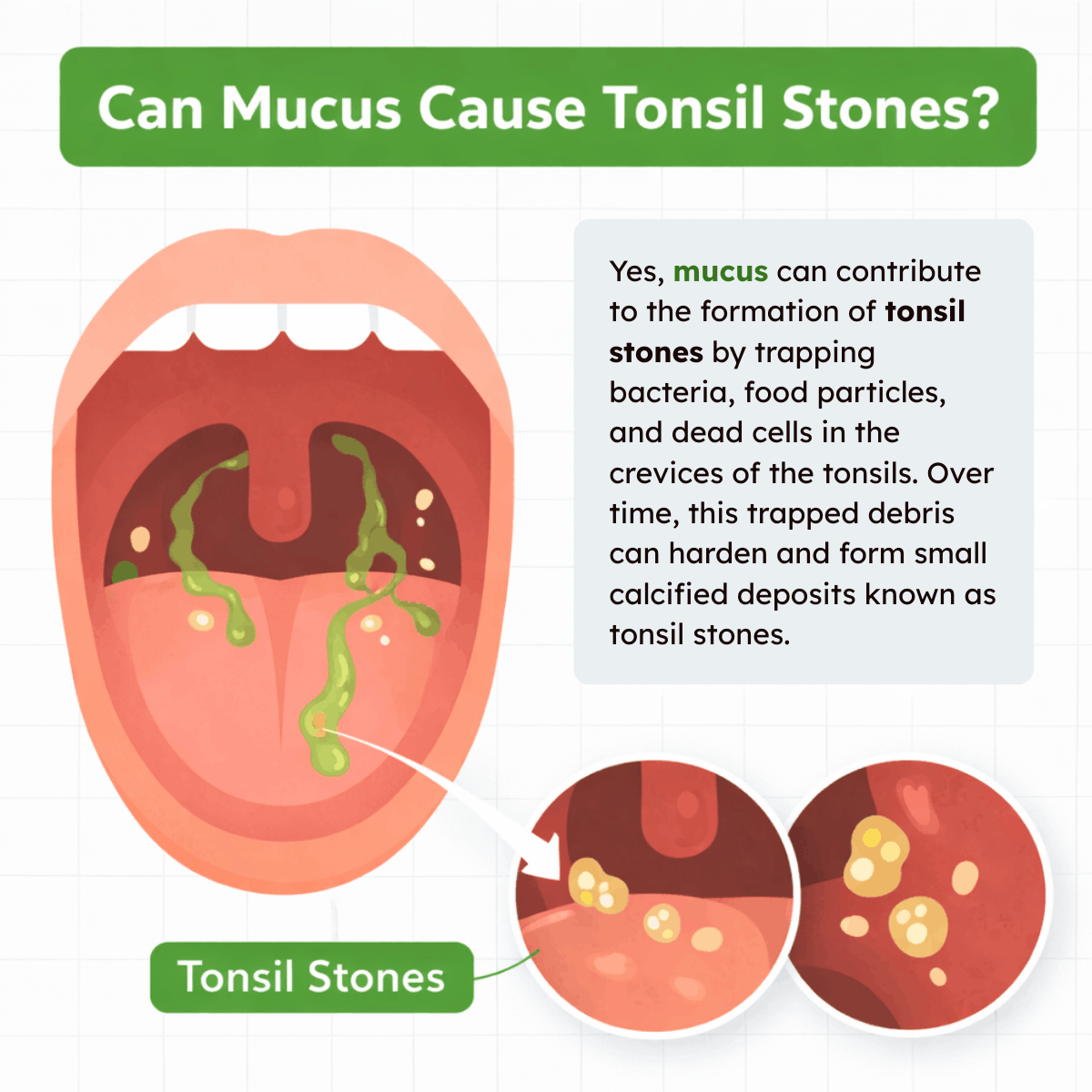
Tonsil stones, also known as tonsilloliths, are small, hardened deposits that form in the crevices of the tonsils. They are often made up of trapped debris such as bacteria, dead cells, food particles, and mucus.
Because mucus is naturally produced in the respiratory system and can accumulate in the throat, many people wonder whether excess mucus can contribute to the formation of tonsil stones.
Understanding the relationship between mucus production and tonsil stones can help explain why these deposits form and what factors may increase the risk of developing them.

Download our free guide that has over 100+ of the best tips for healthy lungs.
Can Mucus Cause Tonsil Stones?
Yes, mucus can contribute to the formation of tonsil stones. Tonsil stones develop when debris becomes trapped in the small crevices, or crypts, of the tonsils and hardens over time. Mucus from the sinuses and respiratory tract can drain into the back of the throat, where it may mix with bacteria, dead cells, and food particles. When this sticky material collects in the tonsillar crypts, it can create an environment where debris becomes lodged and gradually calcifies into tonsil stones.
Excess mucus is often associated with conditions such as allergies, sinus infections, colds, and postnasal drip, all of which can increase the likelihood of debris accumulation in the throat. Thick mucus can make it easier for particles to stick to the tonsils rather than being swallowed or cleared naturally.
While mucus alone does not directly cause tonsil stones, it can play a role in their development by trapping and binding the materials that eventually form these small, hardened deposits.
What Are Tonsil Stones
Tonsil stones are small, hardened deposits that form in the crevices of the tonsils. They develop when debris becomes trapped and calcifies, leading to noticeable symptoms in some people.
Tonsil Structure and Function
The tonsils are two oval-shaped masses of lymphoid tissue located at the back of the throat. They play a role in immune defense by trapping bacteria, viruses, and other particles that enter through the mouth or nose.
Their surface contains folds and pockets called tonsillar crypts. These crypts increase surface area, which helps the tonsils detect pathogens. However, the same structure also allows debris such as food particles, dead cells, and mucus to collect.
When material remains in the crypts, bacteria can break it down. Over time, this debris can harden through a process called calcification. The result is a small, white or yellowish mass known as a tonsil stone, or tonsillolith.
Note: Not everyone with deep crypts develops stones. The risk increases when debris builds up faster than the body clears it.
Common Symptoms of Tonsil Stones
Many tonsil stones cause no symptoms and are discovered accidentally. Others lead to noticeable discomfort, especially when they grow larger. The most common symptom is persistent bad breath (halitosis). Bacteria trapped in the stone produce sulfur compounds, which create a strong odor.
Some people feel a sensation of something stuck in the throat. They may also notice difficulty swallowing, mild ear pain on one side, or throat irritation. In certain cases, the tonsils appear swollen or inflamed.
Note: Visible stones often look like small white or yellow lumps lodged in the tonsil crypts. Larger stones can cause localized discomfort but rarely lead to serious complications.
Risk Factors for Development
Several factors increase the likelihood of forming tonsil stones. One of the most important is having deep or enlarged tonsillar crypts, which trap debris more easily. Chronic tonsillitis also raises risk. Repeated inflammation can widen crypt openings and promote debris retention.
Poor oral hygiene allows bacteria and food particles to accumulate in the mouth. This increases the material available to collect in the tonsils. Excess mucus from postnasal drip may also contribute by carrying additional debris into the crypts.
Note: Dry mouth reduces natural cleansing from saliva. When saliva flow decreases, the mouth cannot wash away particles effectively, making stone formation more likely.
Role of Mucus in Tonsil Stone Formation
Mucus plays a direct mechanical and biological role in the development of tonsil stones. Its thickness, volume, and interaction with bacteria determine whether debris clears from the tonsils or becomes trapped and hardened over time.
How Mucus Accumulates in Tonsil Crypts
The tonsils contain small folds and pockets called crypts. These crypts trap particles such as food debris, dead cells, and bacteria during normal swallowing and breathing. Under typical conditions, thin mucus helps flush this material out. It acts as a lubricant, allowing trapped debris to move toward the throat where it is swallowed.
Problems arise when mucus becomes thick or excessive. Sticky mucus settles deep inside the crypts and holds debris in place instead of clearing it. Over time, this retained material compresses.
As layers build up, the mixture of mucus and debris begins to harden. Calcium and other minerals in saliva can deposit within the mass, gradually forming a tonsil stone. Deeper or more irregular crypts increase the likelihood of accumulation. Individuals with naturally larger crypts often experience repeated buildup, especially when mucus flow is impaired.
Interaction Between Mucus and Bacteria
Mucus provides a moist environment that supports bacterial growth. The tonsils naturally contain bacteria, but trapped mucus allows them to multiply more easily. When mucus becomes stagnant inside crypts, oxygen levels drop. This environment favors anaerobic bacteria, which are known to produce sulfur compounds.
These sulfur compounds cause the characteristic bad breath associated with tonsil stones. The bacteria also contribute to the breakdown of trapped proteins and cells.
As bacteria digest debris, they form a structured layer known as a biofilm. Biofilms make the material more cohesive and resistant to removal. This bacterial activity transforms soft mucus and debris into a firmer mass. Over time, mineral deposits strengthen the structure, making it more difficult to dislodge without intervention.
Differences Between Normal and Excess Mucus
Normal mucus is thin, slippery, and continuously produced in small amounts. It clears particles efficiently and rarely remains lodged in the tonsils. Excess mucus is thicker and more adhesive. It may feel sticky in the throat or create a constant need to swallow.
Several factors influence mucus consistency, including hydration levels and environmental irritants. Dehydration, for example, concentrates mucus and reduces its flow.
When mucus becomes dense, it moves slowly. This delayed clearance increases the chance that debris will remain inside the crypts long enough to compact. Persistent thick mucus also signals underlying irritation. Chronic inflammation of the throat can stimulate glands to produce more mucus than necessary, further increasing accumulation risk.
Contribution of Allergies and Postnasal Drip
Allergies commonly increase mucus production in the nasal passages and sinuses. This excess mucus often drains down the back of the throat as postnasal drip. Postnasal drip delivers a steady stream of mucus directly over the tonsils. Repeated exposure increases the likelihood that mucus will settle into crypts.
Allergic inflammation can also swell nearby tissues. Swelling may narrow drainage pathways, reducing the natural flushing action that clears debris.
Chronic sinus congestion compounds the issue. Thick sinus mucus contains inflammatory cells and proteins that contribute to denser buildup.
When allergies remain untreated, ongoing postnasal drip maintains a constant supply of mucus to the tonsils. This continuous accumulation significantly raises the risk of stone formation, particularly in individuals with deep tonsillar crypts.
Distinguishing Mucus From Other Causes
Mucus can contribute to tonsil stones, but it is not the only material involved. Food debris and saliva also play distinct roles in how stones form and harden inside the tonsil crypts.
Food Debris Versus Mucus
Food particles often become trapped in the small crevices of the tonsils after eating. Unlike mucus, which is soft and gel-like, food debris usually consists of solid fragments that bacteria break down over time.
When food remains lodged in a crypt, bacteria digest it and release sulfur compounds. This process leads to bad breath and creates a sticky base where calcium salts can collect. The material gradually hardens into a tonsil stone.
Mucus behaves differently. It acts as a binding substance rather than the main solid component. Thick mucus from postnasal drip can coat the tonsils and trap microscopic debris, but it does not usually harden on its own.
Note: People who notice stones shortly after meals may suspect food debris. Those with chronic sinus congestion may find that excess mucus increases how often stones develop.
Saliva’s Role in Tonsil Stone Formation
Saliva constantly washes over the tonsils and normally helps clear bacteria and particles. When saliva flow decreases, debris remains in place longer, raising the risk of buildup.
Saliva also contains calcium. In some individuals, higher calcium concentrations can contribute to mineral deposits inside trapped material. Over time, these deposits solidify and form the firm texture typical of tonsil stones.
Dry mouth, certain medications, and dehydration reduce saliva flow. In these situations, both mucus and food debris are less likely to clear naturally.
Note: Balanced saliva production supports natural cleansing. When this balance shifts, the environment inside the tonsil crypts favors accumulation rather than removal.
Preventing and Reducing Mucus Buildup
Reducing excess mucus lowers the material that can collect in tonsil crypts and harden into stones. Consistent oral care, targeted sinus management, and specific daily habits help control buildup at its source.
Effective Oral Hygiene Practices
Thorough oral hygiene removes mucus, bacteria, and food particles before they settle in the tonsils. Brushing at least twice daily with a soft-bristled toothbrush helps reduce bacterial growth that thickens mucus.
The tongue should be brushed gently from back to front. The tongue often holds mucus and odor-causing bacteria that contribute to tonsil debris. Daily flossing prevents trapped food from breaking down and mixing with mucus. An alcohol-free antibacterial mouthwash can further lower oral bacteria without drying the mouth.
Some people benefit from gargling with warm salt water once or twice a day. Salt water helps thin mucus and flush debris from the tonsil surface. Consistency matters more than using multiple products. A simple routine performed correctly each day provides the strongest protection.
Managing Sinus and Throat Health
Postnasal drip often drives excess mucus in the throat. Managing sinus conditions reduces the amount that reaches the tonsils. Saline nasal sprays or rinses can clear allergens, dust, and thick secretions from the nasal passages. Isotonic saline works well for daily use because it does not irritate tissue.
If allergies trigger mucus production, antihistamines or intranasal corticosteroid sprays may help when used as directed. A healthcare professional should guide long-term use.
Humidified air can keep nasal passages from drying out and overproducing mucus. Indoor humidity between 30% and 50% supports balanced moisture levels. Addressing chronic sinus infections, acid reflux, or frequent throat clearing is also important. These conditions can sustain inflammation and increase mucus flow toward the tonsils.
Lifestyle Changes to Minimize Mucus
Hydration directly affects mucus thickness. Drinking enough water throughout the day keeps secretions thinner and easier to clear. Limiting dairy may help some individuals who notice thicker mucus after consumption. The effect varies, so personal patterns matter more than strict elimination.
Smoking and secondhand smoke irritate the respiratory tract. Irritation stimulates extra mucus production and slows natural clearance mechanisms.
Diet also plays a role. Reducing highly processed foods and excess sugar may lower inflammation that contributes to persistent throat mucus.
Note: Regular physical activity supports circulation and normal respiratory function. Even moderate movement, such as brisk walking, can promote better mucus clearance over time.
Treatment Options for Tonsil Stones Related to Mucus
Effective treatment targets both the tonsil stones and the excess mucus that contributes to their formation. Management may involve medical procedures, daily hygiene changes, and timely evaluation when symptoms persist.
Medical Interventions
A healthcare provider may remove visible tonsil stones using specialized tools during an office visit. This method works well for larger or deeply embedded stones that do not respond to rinsing or coughing.
If mucus buildup results from chronic sinusitis or allergies, the provider may prescribe intranasal corticosteroids, antihistamines, or saline irrigation therapy. These treatments reduce postnasal drip and limit debris that collects in the tonsil crypts.
For recurring or severe cases, a clinician may recommend laser cryptolysis or coblation cryptolysis. These procedures smooth the surface of the tonsils to reduce deep crevices where mucus and debris accumulate.
In rare cases with persistent infection or frequent stone formation, tonsillectomy may provide a permanent solution. Surgeons typically reserve this option for patients with ongoing discomfort, bad breath, or repeated infections.
Home Remedies and Self-Care Strategies
Daily oral hygiene plays a central role in prevention. Brushing the teeth and tongue twice daily and flossing once daily reduces bacteria that bind with mucus and debris. Regular saltwater gargles help loosen trapped particles and decrease bacterial growth. Many people benefit from gargling after meals to limit buildup in the tonsil crypts.
Hydration also matters. Drinking adequate water thins mucus, which makes it less likely to stagnate and harden inside the tonsils. Some individuals use a low-pressure water irrigator to gently flush the tonsils. They should avoid high pressure, which can damage tissue and push debris deeper.
Note: Managing underlying allergies with over-the-counter antihistamines or saline nasal sprays can reduce postnasal drip. Less mucus exposure lowers the risk of stone formation.
When to Seek Professional Help
A person should contact a healthcare provider if tonsil stones cause persistent pain, difficulty swallowing, or repeated sore throats. These symptoms may indicate infection or another underlying issue. Medical evaluation becomes important if bad breath continues despite good oral hygiene. Chronic halitosis can signal deep or hidden stones that require removal.
Swelling on one side of the throat, fever, or significant discomfort warrants prompt assessment. These signs may suggest an abscess or acute tonsillitis.
Frequent recurrence, especially several times per year, also justifies professional guidance. A clinician can assess contributing factors such as chronic sinus disease, enlarged tonsil crypts, or immune-related conditions and recommend targeted treatment.
FAQs About Mucus and Tonsil Stones
Are Tonsil Stones Caused by Mucus?
Tonsil stones are not caused by mucus alone, but mucus can contribute to their formation. Excess mucus from postnasal drip, allergies, or respiratory infections can carry bacteria, food particles, and dead cells into the back of the throat. This material may become trapped in the small crevices of the tonsils known as crypts.
Over time, the trapped debris can harden and calcify, forming tonsil stones. While mucus plays a supporting role, poor oral hygiene, chronic sinus drainage, and enlarged tonsil crypts are often key factors.
What Can Trigger Tonsil Stones?
Several factors can trigger the formation of tonsil stones. Common causes include poor oral hygiene, chronic postnasal drip, sinus infections, and the buildup of bacteria and food particles in the tonsil crypts.
Individuals with large or deep tonsil crypts are more likely to develop them because debris can easily become trapped. Dry mouth and certain bacterial imbalances in the mouth may also increase the risk. Recurrent throat infections and frequent mucus drainage from allergies or colds can further contribute to tonsil stone formation.
How Do You Prevent Tonsil Stones from Postnasal Drip?
Preventing tonsil stones caused by postnasal drip often involves managing excess mucus and keeping the throat clean. Drinking plenty of water helps thin mucus and promotes natural clearance from the throat.
Using saline nasal sprays or rinses can reduce sinus congestion and drainage. Practicing good oral hygiene, including brushing the tongue and gargling with salt water or mouthwash, helps remove bacteria and debris.
Note: Managing allergies or sinus conditions that cause persistent mucus production can also reduce the likelihood of debris accumulating in the tonsils.
Why Am I Getting Tonsil Stones So Often?
Frequent tonsil stones are often related to structural and lifestyle factors. Some people naturally have deeper or larger tonsil crypts, which make it easier for debris to become trapped. Chronic postnasal drip, sinus problems, and allergies can increase mucus drainage into the throat, carrying bacteria and particles that contribute to stone formation.
Poor oral hygiene and dry mouth may also allow bacteria to accumulate more easily. In some cases, recurrent tonsil infections or chronic inflammation of the tonsils can increase the likelihood of developing tonsil stones.
What Are Tonsil Stones Composed Of?
Tonsil stones are composed of a mixture of debris that becomes trapped in the tonsil crypts and gradually hardens. This material commonly includes bacteria, dead cells, food particles, and mucus. Over time, minerals such as calcium can accumulate within the debris, causing it to calcify and form a firm deposit.
Tonsil stones may appear white or yellow and often have an unpleasant odor due to the presence of sulfur-producing bacteria. Their composition is similar to dental plaque but forms within the small pockets of the tonsils.
What Nasal Spray Prevents Tonsil Stones?
Nasal sprays do not directly prevent tonsil stones, but they can help reduce the conditions that contribute to their formation. Saline nasal sprays are commonly used to keep the nasal passages moist and flush out mucus, which may reduce postnasal drip.
In some cases, corticosteroid nasal sprays prescribed for allergies can decrease inflammation and mucus production in the sinuses. By limiting excess mucus drainage into the throat, these sprays may help lower the risk of debris collecting in the tonsil crypts.
Do Tonsil Stones Cause Excess Mucus?
Tonsil stones do not usually cause excess mucus production, but they can irritate the throat and create the sensation of mucus buildup. The presence of a tonsil stone may lead to throat discomfort, bad breath, or a feeling that something is stuck in the throat.
This irritation can sometimes stimulate additional throat clearing or mucus secretion. However, most cases of excess mucus are caused by underlying conditions such as allergies, sinus infections, respiratory illnesses, or postnasal drip rather than the tonsil stones themselves.
Can You Get Tonsil Stones from Sinus Drainage?
Yes, sinus drainage can contribute to the formation of tonsil stones. When mucus from the sinuses drains into the throat, it may carry bacteria, dead cells, and other debris. This material can become trapped in the tonsil crypts, especially in individuals with larger or deeper tonsil pockets.
Over time, the trapped debris can harden and form tonsil stones. Chronic sinus infections, allergies, and persistent postnasal drip may increase the risk because they lead to frequent mucus drainage into the throat.
Final Thoughts
Mucus can play an indirect role in the formation of tonsil stones by helping trap debris in the tonsillar crypts. When excess mucus from postnasal drip, allergies, or respiratory infections accumulates in the throat, it can combine with bacteria, dead cells, and food particles that may become lodged in the tonsils.
Over time, this trapped material can harden and form tonsil stones. Maintaining good oral hygiene, staying hydrated, and managing conditions that cause excess mucus can help reduce the buildup of debris in the throat and lower the risk of developing tonsil stones.

Written by:
John Landry is a registered respiratory therapist from Memphis, TN, and has a bachelor's degree in kinesiology. He enjoys using evidence-based research to help others breathe easier and live a healthier life.
References
- Smith KL, Hughes R, Myrex P. Tonsillitis and Tonsilloliths: Diagnosis and Management. Am Fam Physician. 2023.
- McShane A, Bath J, Jaramillo AM, Ridley C, Walsh AA, Evans CM, Thornton DJ, Ribbeck K. Mucus. Curr Biol. 2021.