
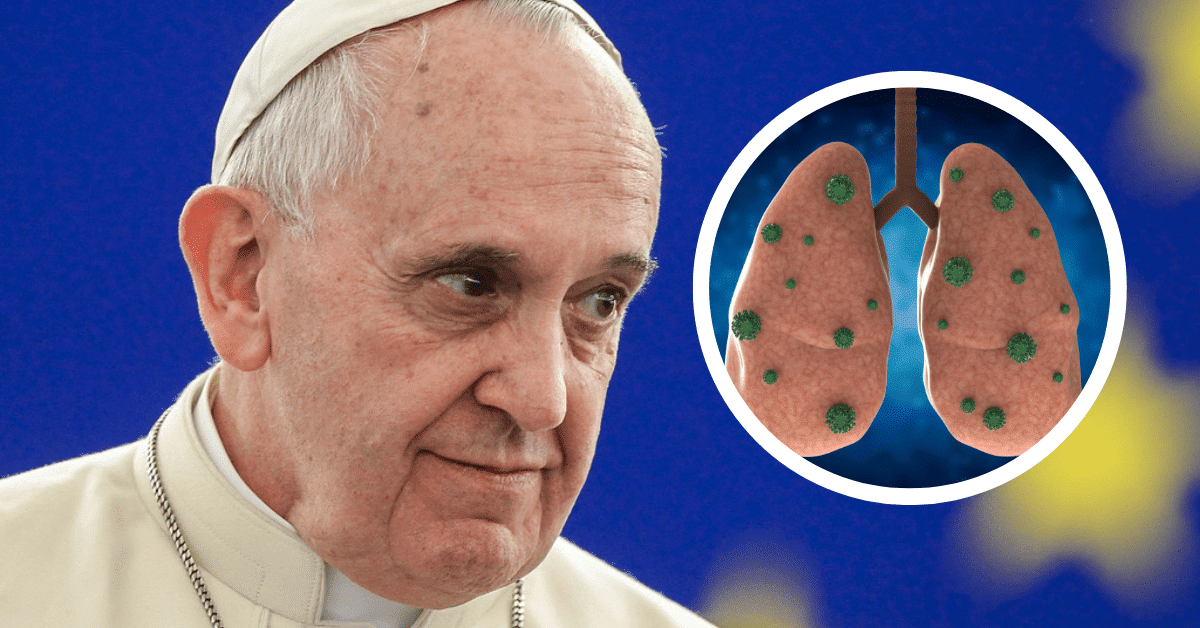
Pope Francis, the 88-year-old leader of the Catholic Church, has encountered significant health setbacks in his battle against a complex respiratory infection and pneumonia, according to recent updates from the Vatican.
The pontiff, who has been hospitalized for over two weeks, experienced two new episodes of acute respiratory distress on Monday, requiring him to be placed back on noninvasive mechanical ventilation. This development marks another hurdle in what has become one of the most prolonged health crises of his papacy.
The Vatican confirmed that the episodes were triggered by a significant buildup of mucus in the pope’s lungs, coupled with bronchial spasms. Medical teams performed two bronchoscopies—a procedure involving a camera-equipped tube to suction out fluid—to remove the excess mucus.
While the Vatican assured the public that this was a reaction to his existing pneumonia and not a new infection, the situation has raised concerns about the pope’s ability to recover fully.
Despite these challenges, Pope Francis has remained alert, oriented, and cooperative with his medical team. However, his prognosis remains guarded, with doctors emphasizing that he is not yet out of danger.
The pope’s condition has been complicated by his age, chronic lung disease, and a history of having part of one lung removed earlier in his life. These factors have made his recovery slower and more precarious than initially anticipated.

Download our free guide that has over 100+ of the best tips for healthy lungs.
A Papacy Tested by Health Struggles
Pope Francis’ hospitalization, which began on February 14, has become the longest absence from public view during his 12-year papacy. The Vatican has provided regular, albeit brief, updates on his condition, assuring the faithful that the pope remains engaged in his duties.
He has been signing documents from his hospital room, adding the note “From Gemelli Polyclinic” to indicate his continued involvement in Church affairs.
The Vatican has defended the pope’s decision to recover away from the public eye, emphasizing the need for privacy and rest. However, some within the Church have expressed concern about the lack of visible leadership during this critical time. Archbishop Vincenzo Paglia, a close friend of the pope, urged Francis to make his voice heard, stating that the world needs his guidance now more than ever.
“We need men like him who are truly universal and not only one-sided,” Paglia said during a press conference. “His voice is vital in these times of global uncertainty.”
A Message of Peace Amid Personal Struggle
Even from his hospital bed, Pope Francis has continued to address global issues. In a message dated February 26, he lamented the growing ineffectiveness of international organizations in addressing global threats, criticizing their focus on protecting national interests over fostering peace.
This theme has been a cornerstone of his papacy, as he has consistently called for dialogue and reconciliation in conflicts such as the war between Russia and Ukraine and the ongoing violence in Gaza.
The pope’s message resonated deeply with his followers, many of whom see him as a moral authority in a world increasingly divided by conflict. Archbishop Georg Gaenswein, a Vatican ambassador and former secretary to Pope Benedict XVI, emphasized the importance of Francis’ voice during this time.
“Pope Francis is the only authority who speaks of peace, who condemns war, all the wars underway starting with Ukraine,” Gaenswein said.
Medical Challenges and the Road to Recovery
The pope’s health struggles have highlighted the fragility of his condition. Medical experts have noted that the need for bronchoscopies to manually remove mucus from his lungs is particularly concerning, as it indicates that he is unable to clear secretions on his own. Dr. John Coleman, a pulmonary critical care specialist at Northwestern Medicine in Chicago, explained that such episodes are a sign of significant respiratory distress.
“The fact that they had to go in and remove the mucus manually is worrying,” Coleman said. “It suggests that his lung function is compromised, and he is not able to cough vigorously enough to expel the fluid.”
Despite these challenges, there have been moments of improvement. Over the weekend, the Vatican reported that Francis was able to spend long periods off the ventilator, relying instead on high-flow supplemental oxygen. His blood gas levels remained stable during these periods, a positive sign that his respiratory function is gradually improving. However, doctors have cautioned that his recovery is far from certain, and he remains in a guarded condition.

A Teachable Moment on Fragility and Care
Archbishop Paglia, who heads the Vatican’s bioethics academy, reflected on the broader significance of the pope’s health struggles. He described Francis’ hospitalization as an “extraordinary teaching on fragility,” reminding the world of the vulnerability that comes with age and illness.
“Today the pope, not through words but with his body, is reminding all of us, we elderly people to begin with, that we are all fragile and therefore we need to take care of each other,” Paglia said.
The pope’s situation has also sparked discussions about end-of-life care within the Catholic Church. Catholic teaching emphasizes the sanctity of life from conception to natural death, advocating for ordinary care such as hydration and nutrition but allowing for the suspension of extraordinary measures if they are no longer beneficial.
Pope Francis himself has addressed this issue, stating in 2017 that there is “no obligation to have recourse in all circumstances to every possible remedy.”
Global Prayers for the Pope’s Recovery
As the Vatican marks its “holy year,” drawing pilgrims to Rome from around the world, the faithful have united in prayer for the pope’s recovery. Pilgrims visiting St. Peter’s Basilica and the hilltop town of Assisi, the birthplace of Saint Francis, have expressed their concern and support for the ailing pontiff.
“Every day we’re praying for the pope,” said Father Jacinto Bento, a priest visiting Assisi with a group of pilgrims from the Azores Islands. “We’re very sad for his situation, but we trust in God’s will.”
While Pope Francis’ hospitalization is significant, it has not yet reached the record set by his predecessor, St. John Paul II, who endured numerous lengthy hospital stays during his papacy.
For now, the global Catholic community remains hopeful that the pope will overcome this health crisis and return to his mission of spreading peace and compassion in a fractured world.

Written by:
John Landry is a registered respiratory therapist from Memphis, TN, and has a bachelor's degree in kinesiology. He enjoys using evidence-based research to help others breathe easier and live a healthier life.
References
- Barmania S, Reiss M. Pope Francis and health. Lancet. 2023.