

Alcohol use affects far more than the liver. It can also take a serious toll on the respiratory system. Many people with heavy or long-term alcohol use develop a persistent cough that lingers throughout the day or worsens at night.
This coughing is not random or harmless. Alcohol can irritate the throat and airways, weaken the immune system, and interfere with the body’s natural ability to clear mucus and protect the lungs.
Over time, repeated exposure increases the risk of inflammation, infection, and aspiration, all of which can trigger frequent coughing. Understanding why alcoholics cough so much helps reveal how closely breathing health is tied to chronic alcohol use.

Download our free guide that has over 100+ of the best tips for healthy lungs.
Why Do Alcoholics Cough So Much?
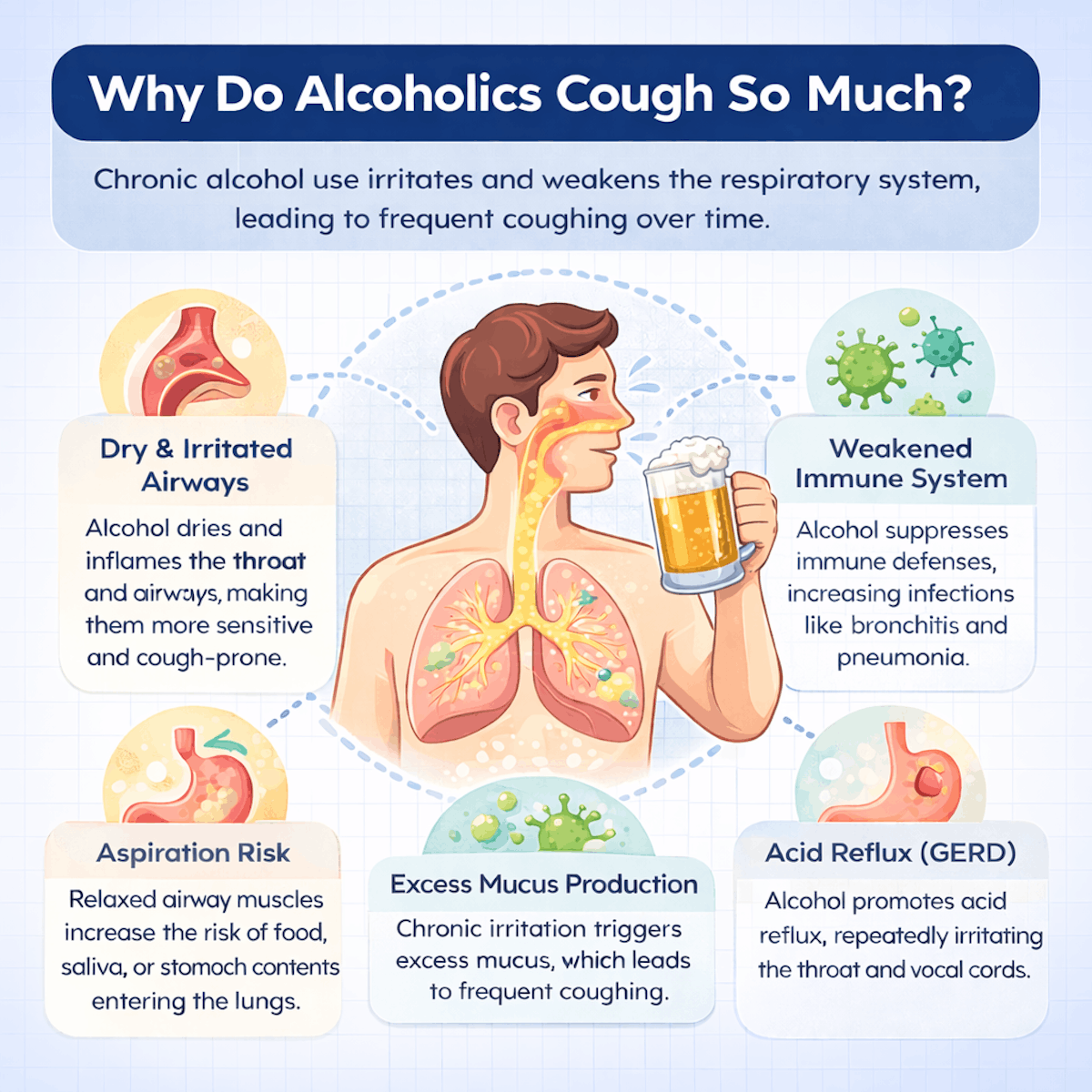
Alcoholics often cough frequently because chronic alcohol use directly irritates and weakens the respiratory system. Alcohol dries and inflames the lining of the throat and airways, making them more sensitive and prone to coughing. It also suppresses the immune system, increasing the risk of respiratory infections such as bronchitis and pneumonia, which commonly cause persistent cough.
In addition, alcohol relaxes the muscles that protect the airway, raising the risk of aspiration, where stomach contents or saliva enter the lungs and trigger coughing.
Acid reflux is also more common with heavy drinking and can repeatedly irritate the throat and vocal cords. Over time, these combined effects lead to ongoing airway inflammation, excess mucus production, and frequent coughing.
Causes of Persistent Cough in Alcoholics
Alcohol affects your airways through direct chemical exposure, fluid imbalance, and reduced defense mechanisms. These effects combine to trigger frequent throat clearing, dry cough, or a lingering productive cough.
Irritation of the Respiratory Tract
Alcohol acts as a chemical irritant when it contacts the tissues lining your throat and upper airways. Repeated exposure inflames the mucosal lining, which increases sensitivity to air, smoke, and minor infections. This irritation can trigger a frequent urge to cough, even without mucus.
Alcohol also worsens acid reflux, which allows stomach acid to reach your throat. Acid exposure further inflames the larynx and vocal cords, leading to hoarseness and chronic coughing. You may notice coughing after drinking, lying down, or waking up.
Note: Inflamed airways respond by tightening and producing more mucus. That response increases coughing as your body attempts to clear the irritation.
Alcohol-Induced Dehydration
Alcohol suppresses antidiuretic hormone, which increases fluid loss through urination. As dehydration sets in, the tissues in your throat and airways lose moisture and become dry. Dry tissues trigger coughing because they lack the lubrication needed to function smoothly.
Thickened mucus becomes harder to clear when you are dehydrated. Your cough may sound harsh or unproductive, with a persistent tickling sensation in your throat. Even small amounts of alcohol can worsen this effect if you already consume too little water.
Note: Dehydration also slows tissue repair. Irritated airways stay inflamed longer, which allows coughing to persist day after day.
Impaired Mucociliary Clearance
Your respiratory tract relies on tiny hair-like structures called cilia to move mucus out of your lungs. Alcohol slows ciliary movement and reduces coordination, which allows mucus to build up. Stagnant mucus traps irritants, bacteria, and debris.
As mucus accumulates, your body relies more on coughing to clear it. This leads to frequent coughing, especially in the morning or after drinking. You may also notice chest congestion that takes longer to resolve.
Note: Chronic alcohol use weakens immune responses in the airways. Infections become more common, which further increases mucus production and cough frequency.
Alcohol and Its Impact on Lung Health
Alcohol changes how your lungs defend themselves, how your airways stay clear, and how safely you swallow. These effects combine to raise infection risk, irritate the bronchial tubes, and allow stomach contents to enter the lungs.
Increased Risk of Respiratory Infections
Alcohol weakens immune responses in your airways, making it easier for viruses and bacteria to take hold. It reduces the activity of immune cells that normally clear pathogens from the lungs.
You also produce thicker mucus, which traps germs but moves more slowly. When mucus lingers, you cough more to try to clear it.
Heavy drinking disrupts the ciliary function in your airways. These tiny hair-like structures usually sweep debris upward, but alcohol slows them down. As a result, infections like pneumonia and bronchitis occur more often and last longer. Persistent inflammation during and after these infections keeps cough receptors active.
Chronic Bronchitis in Heavy Drinkers
Regular alcohol use irritates the lining of your bronchial tubes. This irritation promotes swelling and excess mucus production, two key features of chronic bronchitis.
You may notice a daily cough that produces phlegm, especially in the morning. Alcohol-driven dehydration can also thicken mucus, making it harder to clear.
If you smoke, alcohol magnifies the damage. Together, they increase airway inflammation and reduce repair of lung tissue. Over time, repeated irritation narrows your airways. Narrowed passages increase airflow resistance, which triggers coughing as your body tries to keep air moving.
Aspiration and Its Consequences
Alcohol relaxes the muscles that protect your airway during swallowing. When these reflexes weaken, food, liquid, or stomach acid can enter your lungs. Aspiration often happens during sleep or vomiting. You may wake with sudden coughing, choking, or a burning sensation in your chest.
Even small, repeated aspirations inflame lung tissue. This inflammation sensitizes cough receptors and causes frequent, unexplained coughing. Aspiration also raises the risk of aspiration pneumonia, a serious lung infection. Ongoing irritation from acid or particles keeps your airways inflamed, sustaining the cough cycle.
How Alcohol Weakens the Immune System
Alcohol interferes with how your immune system detects and fights germs. It reduces the activity of white blood cells that identify and destroy bacteria and viruses. As a result, infections can take hold more easily.
You also produce fewer protective signaling molecules after drinking. These signals help immune cells coordinate a response. When signaling slows, your body reacts later and less effectively.
Alcohol damages the lining of your airways and gut. This damage makes it easier for pathogens to enter your body. It also increases inflammation, which can irritate your throat and trigger coughing.
Key immune effects linked to alcohol include:
- Reduced white blood cell function, limiting pathogen clearance
- Impaired antibody production, weakening long-term protection
- Slower inflammatory response, delaying early defense
- Higher infection risk, especially in the lungs
Chronic drinking worsens these effects over time. Your body struggles to repair tissues and maintain normal immune balance. Respiratory infections then last longer and provoke frequent coughing.
Even moderate intoxication can blunt immune responses for hours. During that window, your body remains more vulnerable to airborne irritants and microbes.
Alcohol Use and Gastroesophageal Issues
Alcohol disrupts normal digestive defenses and airway protection. These changes increase reflux and raise the chance that stomach contents reach your lungs, which can trigger persistent coughing.
Acid Reflux Triggers
Alcohol relaxes the lower esophageal sphincter, the muscle that keeps stomach acid from moving upward. When that barrier weakens, acid travels into your esophagus and sometimes your throat.
You may notice coughing that worsens after drinking or when you lie down. Acid can irritate the larynx and vocal cords, leading to throat clearing, hoarseness, and a dry cough.
Alcohol also increases stomach acid production and slows stomach emptying. Both effects raise pressure and make reflux more likely.
Common triggers include:
- Beer and wine, which add volume and acidity
- Late-night drinking, which increases reflux during sleep
- Mixed drinks, especially with citrus or carbonation
Note: Repeated exposure inflames sensitive tissues. Over time, this irritation can keep your cough active even when you are not drinking.
Risk of Aspiration Pneumonia
Alcohol impairs your swallowing reflex and dulls the cough reflex that normally protects your airway. When these defenses weaken, food, saliva, or stomach contents can slip into your lungs.
Aspiration often happens during sleep or episodes of vomiting. You may not notice it when it occurs, but your lungs respond with inflammation and infection.
Aspiration pneumonia commonly causes:
- A wet or productive cough
- Fever or chills
- Chest discomfort with breathing
Note: Chronic alcohol use also reduces immune response in the lungs. This makes infections harder to clear and allows coughing to persist or return after short periods of improvement.
Secondary Conditions Linked to Coughing in Alcoholics
Heavy alcohol use can trigger medical conditions that directly irritate your lungs or change how your body manages fluid and pressure. These changes often make coughing more frequent, persistent, and harder to ignore.
Pulmonary Edema
Pulmonary edema occurs when fluid leaks into your lung air spaces, which interferes with normal breathing and triggers coughing. Long-term alcohol use can weaken your heart muscle, increasing the risk of alcohol-related cardiomyopathy that leads to fluid backup in the lungs.
You may notice a wet or frothy cough, shortness of breath, or coughing that worsens when you lie flat. These symptoms often intensify at night.
Alcohol also raises the risk of aspiration, especially during sleep. Inhaling stomach contents can inflame lung tissue and worsen fluid accumulation.
Common features linked to alcohol-related pulmonary edema include:
- Rapid breathing and chest tightness
- Pink, frothy sputum in severe cases
- Sudden coughing episodes during rest
Alcoholic Liver Disease Effects
Advanced liver disease affects more than digestion; it alters pressure and fluid balance throughout your body. When your liver becomes scarred, fluid can build up in your abdomen and chest, limiting lung expansion and triggering a chronic cough.
Ascites can push against your diaphragm, while hepatic hydrothorax allows fluid to collect around your lungs. Both conditions increase coughing, especially with movement or deep breathing.
Liver disease also raises your risk of reflux and aspiration. Stomach acid entering your airways irritates sensitive tissues and sustains cough reflex activity. Reduced immune function adds another layer of risk. You become more vulnerable to respiratory infections that prolong coughing and delay recovery.
Lifestyle Factors and Environmental Exposures
Daily habits and the environments you spend time in can irritate your airways and make alcohol-related coughing more frequent. Two factors stand out because they directly damage the respiratory tract and reduce your ability to clear mucus.
Smoking and Combined Effects
If you drink heavily and smoke, the combination places constant stress on your lungs and throat. Alcohol dries the airway lining, while cigarette smoke adds heat, chemicals, and fine particles that inflame tissue.
You may notice a deeper, more persistent cough because smoking damages the tiny cilia that move mucus out of your airways. When alcohol slows reflexes and thickens secretions, mucus builds up and triggers coughing.
Common effects you may experience include:
- Chronic throat irritation
- Increased phlegm, especially in the morning
- Slower recovery from respiratory infections
Note: Smoking also raises the risk of acid reflux. Alcohol relaxes the lower esophageal sphincter, and refluxed acid can reach your throat, further stimulating cough receptors.
Exposure to Airborne Toxins
Regular exposure to polluted air can worsen coughing, especially if you drink heavily. Alcohol weakens your immune response, making your lungs more sensitive to irritants such as dust, fumes, and chemical vapors.
You may face higher exposure if you work in construction, manufacturing, or cleaning jobs. Poor ventilation at home or work can also trap irritants and prolong airway inflammation.
Specific airborne triggers include:
- Secondhand smoke
- Industrial chemicals and solvents
- Vehicle exhaust and fine particulate matter
Note: When these substances irritate your airways, your body relies on coughing to protect your lungs. Alcohol reduces your ability to repair that irritation, which can make the cough more frequent and harder to control.
Alcohol and Bronchiectasis
Alcohol can worsen bronchiectasis symptoms by directly interfering with the lungs’ ability to manage mucus and defend against infection. In people with bronchiectasis, the airways are already damaged and widened, making it difficult to clear mucus effectively.
Alcohol can compound this problem by increasing mucus production and thickening secretions due to its dehydrating effects. Thicker mucus is harder to clear, allowing bacteria to linger in the airways and increasing the risk of flare-ups and recurrent infections.
Heavy or frequent alcohol use may also impair the function of cilia, the tiny hair-like structures responsible for moving mucus out of the lungs. When ciliary activity is reduced, mucus and debris accumulate more easily, worsening cough and congestion.
In addition, alcohol can weaken immune defenses, leaving individuals with bronchiectasis more vulnerable to respiratory infections. For these reasons, limiting or avoiding alcohol may help reduce symptom severity and support better long-term lung health.
Final Thoughts
Frequent coughing in people with alcoholism is often a warning sign that the respiratory system is under strain. Chronic alcohol use can inflame the airways, suppress protective reflexes, and increase the risk of infections, reflux, and aspiration, all of which contribute to persistent cough. Left unaddressed, these issues may progress to more serious lung conditions and repeated respiratory illness.
Recognizing the connection between alcohol use and chronic coughing is an important step toward protecting lung health. Reducing or stopping alcohol intake, managing underlying conditions, and seeking medical support can significantly improve breathing, reduce coughing, and help prevent long-term respiratory damage.

Written by:
John Landry is a registered respiratory therapist from Memphis, TN, and has a bachelor's degree in kinesiology. He enjoys using evidence-based research to help others breathe easier and live a healthier life.
References
- Sisson JH. Alcohol and airways function in health and disease. Alcohol. 2007.