
The nasopharynx is a vital component of the upper airway that plays an essential role in respiration, airway protection, and immune defense. Located behind the nasal cavity and above the oropharynx, this anatomical structure serves as a passageway for inhaled air while also helping to filter, warm, and humidify it before it reaches the lower respiratory tract.
For respiratory therapists and healthcare professionals, understanding the nasopharynx is crucial because abnormalities in this region can directly impact airway patency, ventilation, and overall respiratory function.

What Is the Nasopharynx?
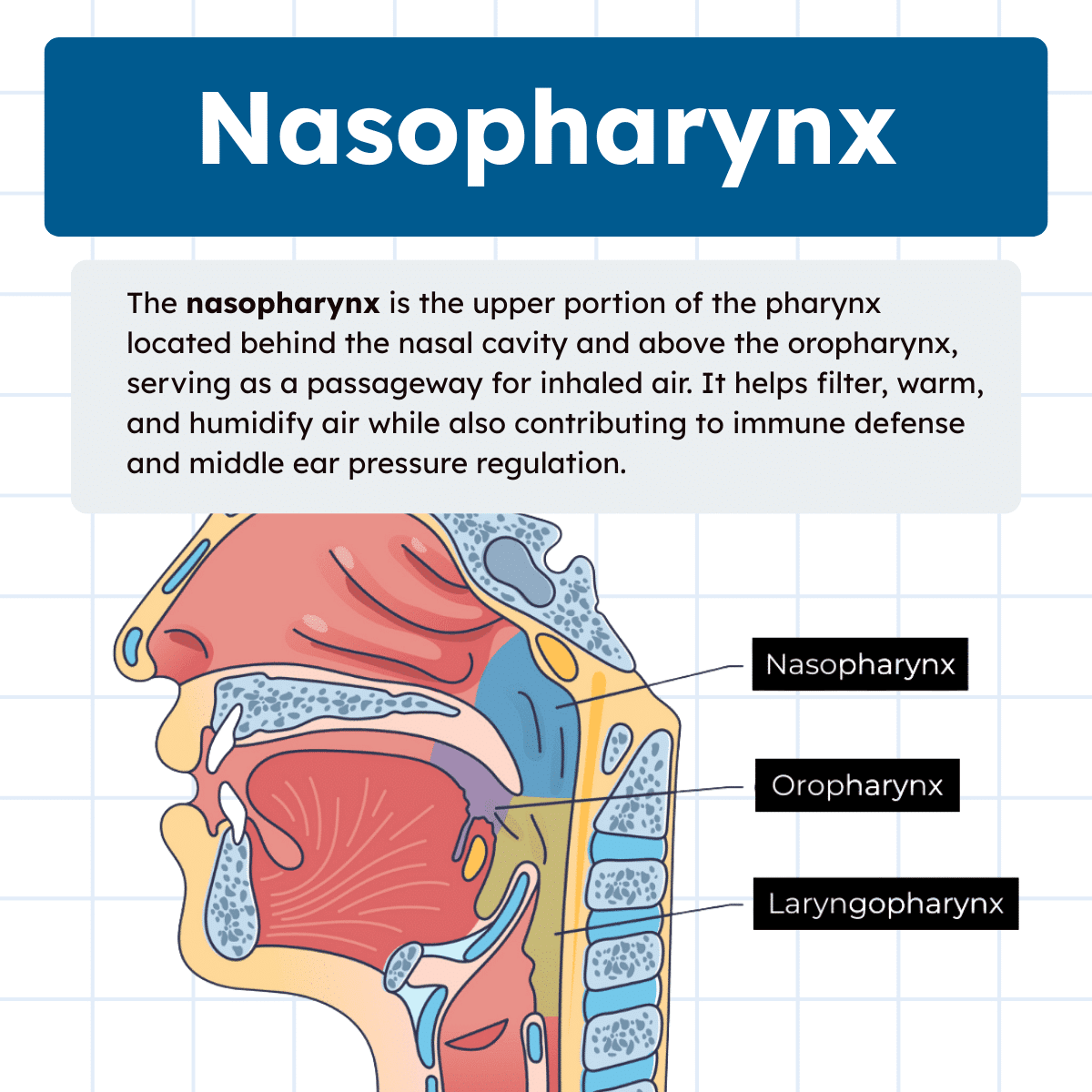
The nasopharynx is the uppermost portion of the pharynx, which is the muscular tube connecting the nasal and oral cavities to the larynx and esophagus. It is positioned posterior to the nasal cavity and extends from the base of the skull down to the soft palate and uvula. Unlike the oropharynx and hypopharynx, the nasopharynx functions exclusively as an air passage and does not participate in the digestive process.
The interior of the nasopharynx is lined with respiratory epithelium, specifically pseudostratified ciliated columnar epithelial cells. These cells play a key role in airway defense by trapping inhaled particles, bacteria, and pollutants within mucus. The cilia then move the mucus toward the throat, where it can be swallowed or expelled, helping to prevent harmful substances from entering the lower airways.
The nasopharynx also contains important anatomical structures, including the pharyngeal tonsils, commonly known as adenoids. These lymphoid tissues contribute to immune surveillance by detecting and responding to airborne pathogens. Additionally, the nasopharynx contains openings to the eustachian tubes, which connect the upper airway to the middle ear and help regulate pressure across the tympanic membrane.
Anatomical Structure and Boundaries
Understanding the boundaries of the nasopharynx is essential for clinical practice. Superiorly, it extends to the base of the skull, while inferiorly it ends at the level of the soft palate. Anteriorly, it connects to the nasal cavities through the posterior nasal openings known as the choanae. Posteriorly, it is bordered by the pharyngeal wall.
The lateral walls of the nasopharynx contain the openings to the eustachian tubes, which allow air to pass between the nasopharynx and the middle ear. These tubes help equalize pressure and allow drainage of fluid from the middle ear, which is important for maintaining normal hearing and preventing infections.
Another key anatomical feature is the presence of lymphoid tissue known as Waldeyer’s ring. This ring includes the adenoids, palatine tonsils, and lingual tonsils, all of which provide immune protection against inhaled or ingested pathogens. This immune function is particularly important during early childhood, when exposure to infectious agents is more common.
Physiological Functions of the Nasopharynx
The nasopharynx serves several critical physiological roles that support normal respiratory function.
Air Conduction
The primary function of the nasopharynx is to serve as an air passage between the nasal cavity and the lower airway. During inhalation, air enters through the nose and passes through the nasopharynx before reaching the oropharynx, larynx, trachea, and lungs. Maintaining patency in this region is essential for effective ventilation.
Air Filtration and Conditioning
The nasopharynx contributes to filtering and conditioning inspired air. The mucus layer traps airborne particles such as dust, bacteria, and allergens, while the cilia transport these contaminants toward the oropharynx for removal. This process protects delicate lung tissue from injury and infection.
Additionally, the nasopharynx helps warm and humidify inhaled air, which prevents airway dryness and reduces irritation in the lower respiratory tract.
Immune Defense
The adenoids located in the nasopharynx play a major role in immune surveillance. These lymphoid tissues help identify pathogens and activate immune responses, particularly during childhood when immune system development is still occurring.
Pressure Regulation
The nasopharynx contributes to middle ear pressure regulation through the eustachian tubes. Proper functioning of these tubes helps prevent pressure imbalances and fluid accumulation within the middle ear.
Clinical Relevance to Respiratory Therapists
Respiratory therapists must have a thorough understanding of nasopharyngeal anatomy and function because this region directly affects airway management, oxygen delivery, and respiratory support.
Airway Obstruction
Obstruction of the nasopharynx can significantly impair airflow and ventilation. Enlarged adenoids, inflammation, tumors, or structural abnormalities may partially or completely block the airway. In pediatric patients, adenoid hypertrophy is a common cause of upper airway obstruction and can lead to breathing difficulties, snoring, and sleep-disordered breathing.
Respiratory therapists often assess airway patency when evaluating patients with respiratory distress, especially in children or individuals with suspected upper airway obstruction.
Nasopharyngeal Airway Placement
Respiratory therapists frequently use nasopharyngeal airways (NPAs) to maintain airway patency in patients with altered levels of consciousness or partial airway obstruction. NPAs are inserted through the nostril and extend into the nasopharynx, helping to prevent soft tissue collapse and facilitate airflow.
Proper sizing, insertion technique, and patient assessment are essential to prevent complications such as bleeding, tissue trauma, or improper placement.
Oxygen and Medication Delivery
The nasopharynx plays a role in delivering oxygen therapy and aerosolized medications. Devices such as nasal cannulas deliver oxygen through the nasal passages, requiring airflow through the nasopharynx before reaching the lower airway. Any obstruction or inflammation in this region can reduce the effectiveness of oxygen therapy and medication delivery.
Sleep-Disordered Breathing and Obstructive Sleep Apnea
The nasopharynx is commonly involved in sleep-disordered breathing conditions, including obstructive sleep apnea (OSA). Enlargement of lymphoid tissues or collapse of upper airway structures during sleep can obstruct airflow, leading to episodes of apnea or hypopnea.
Respiratory therapists play an important role in diagnosing and managing OSA through patient assessment, sleep study interpretation, and implementation of therapies such as continuous positive airway pressure (CPAP).
Common Disorders Affecting the Nasopharynx
Several medical conditions can affect the structure and function of the nasopharynx.
Adenoid Hypertrophy
Enlargement of the adenoids is common in children and can lead to nasal obstruction, mouth breathing, chronic sinus infections, and sleep apnea. Severe cases may require surgical removal through an adenoidectomy.
Nasopharyngitis
Inflammation of the nasopharynx, often associated with viral infections such as the common cold, can cause congestion, sore throat, and impaired airflow. Although typically self-limiting, nasopharyngitis can contribute to respiratory discomfort and impaired ventilation.
Nasopharyngeal Tumors
Tumors within the nasopharynx, though less common, can obstruct airflow and cause symptoms such as nasal blockage, nosebleeds, and difficulty breathing. Early detection and treatment are important for improving patient outcomes.
Eustachian Tube Dysfunction
When the eustachian tubes fail to open or close properly, fluid may accumulate in the middle ear, leading to infections, hearing problems, and pressure imbalance. This condition often results from inflammation or blockage within the nasopharynx.
Assessment and Diagnostic Considerations
Respiratory therapists and healthcare providers evaluate nasopharyngeal function through physical examination, imaging studies, and patient history. Symptoms such as nasal obstruction, snoring, recurrent infections, or difficulty breathing may indicate nasopharyngeal abnormalities.
Diagnostic tools may include nasal endoscopy, radiographic imaging, or sleep studies to identify structural or functional problems. Accurate assessment helps guide appropriate treatment and airway management strategies.
Importance in Airway Management and Emergency Care
In emergency and critical care settings, the nasopharynx plays a significant role in airway management. Patients who are unconscious or have reduced muscle tone may experience collapse of soft tissues within the upper airway, including the nasopharynx. This collapse can obstruct airflow and compromise ventilation.
Respiratory therapists often use airway adjuncts, positioning techniques, and suctioning to maintain airway patency and prevent complications. Understanding nasopharyngeal anatomy helps clinicians perform these interventions safely and effectively.
Nasopharynx Practice Questions
1. What is the primary function of the nasopharynx within the respiratory system?
The nasopharynx serves as an air passage that conducts inspired air from the nasal cavity toward the lower respiratory tract.
2. Where is the nasopharynx anatomically located?
The nasopharynx is located posterior to the nasal cavity and extends from the base of the skull to the soft palate and uvula.
3. How does the nasopharynx differ from the oropharynx and hypopharynx in function?
The nasopharynx is involved only in airflow, whereas the oropharynx and hypopharynx participate in both respiratory and digestive processes.
4. What type of epithelium lines the nasopharynx?
The nasopharynx is lined with pseudostratified ciliated columnar respiratory epithelium.
5. What is the primary role of ciliated epithelial cells in the nasopharynx?
Ciliated cells help move mucus and trapped particles toward the throat for removal.
6. How does mucus contribute to airway protection in the nasopharynx?
Mucus traps inhaled dust, pathogens, and pollutants, preventing them from entering the lower airways.
7. What are the pharyngeal tonsils commonly called?
The pharyngeal tonsils are commonly referred to as adenoids.
8. What is the immunologic function of the adenoids?
Adenoids help detect and respond to airborne pathogens through lymphoid tissue activity.
9. Where are the openings to the eustachian tubes located?
The openings to the eustachian tubes are located in the lateral walls of the nasopharynx.
10. What is the primary function of the eustachian tubes?
The eustachian tubes equalize pressure between the middle ear and the external environment and help drain fluid from the middle ear.
11. Why is pressure equalization across the tympanic membrane important?
Equalizing pressure prevents discomfort, hearing disturbances, and potential injury to the eardrum.
12. What region connects the nasal and oral cavities to the larynx and esophagus?
The pharynx serves as the connecting region between these structures.
13. How is the pharynx anatomically divided?
The pharynx is divided into the nasopharynx, oropharynx, and hypopharynx (laryngopharynx).
14. Where does the oropharynx extend anatomically?
The oropharynx extends from the uvula to the upper border of the epiglottis.
15. Which tonsils are located within the oropharynx?
The palatine tonsils are located on the lateral walls of the oropharynx.
16. How can enlarged palatine tonsils affect breathing?
Enlarged tonsils may partially obstruct the airway and impair airflow.
17. What surgical procedure is performed to remove chronically inflamed palatine tonsils?
A tonsillectomy is performed to remove the palatine tonsils.
18. What is the anatomical extent of the hypopharynx?
The hypopharynx extends from the upper border of the epiglottis to the opening between the vocal cords.
19. How do pharyngeal tissues change during speech and swallowing?
These tissues undergo dynamic shape changes to facilitate breathing, speaking, and swallowing.
20. Where do the respiratory and digestive tracts separate?
The separation occurs immediately below the hypopharynx.
21. How can unconsciousness contribute to airway obstruction?
Muscle relaxation may allow the tongue and soft tissues to collapse and block the airway.
22. What condition commonly results from upper airway collapse during sleep?
Obstructive sleep apnea can result from airway obstruction during sleep.
23. Why is the nasopharynx exposed to inhaled foreign particles?
It is the initial airway passage encountered by air entering through the nose.
24. How do lymphoid cells within the nasopharynx contribute to immune defense?
They monitor inhaled particles and initiate immune responses against pathogens.
25. What role does the nasopharynx play in respiratory filtration?
It helps trap airborne contaminants before they reach lower airway structures.
26. Why is mucociliary clearance important in the nasopharynx?
It prevents accumulation of harmful particles and supports airway cleanliness.
27. How does nasopharyngeal inflammation affect respiratory function?
Inflammation can obstruct airflow and impair ventilation.
28. What condition may occur if adenoids become enlarged?
Enlarged adenoids may cause nasal obstruction, ear infections, or sleep-disordered breathing.
29. Why can adenoid enlargement contribute to middle ear infections?
Enlarged adenoids can block eustachian tube drainage and promote fluid accumulation.
30. How does the nasopharynx contribute to humidification of inspired air?
It helps warm and moisten inhaled air before it reaches the lower respiratory tract.
31. Why is the nasopharynx important for speech resonance?
It helps shape vocal sound quality by influencing airflow and resonance chambers.
32. How does nasal breathing enhance airway defense compared to mouth breathing?
Nasal breathing improves filtration, humidification, and warming of inspired air.
33. Why is knowledge of nasopharyngeal anatomy important for respiratory therapists?
Understanding this anatomy assists with airway management, suctioning procedures, and evaluation of upper airway obstruction.
34. What are the superior and inferior anatomical boundaries of the nasopharynx?
The nasopharynx extends from the base of the skull superiorly to the level of the soft palate inferiorly.
35. What structure forms the anterior opening of the nasopharynx?
The choanae, or posterior nasal openings, connect the nasal cavities to the nasopharynx.
36. What structure forms the posterior boundary of the nasopharynx?
The posterior boundary of the nasopharynx is formed by the pharyngeal wall.
37. Where are the eustachian tube openings located within the nasopharynx?
The eustachian tube openings are located on the lateral walls of the nasopharynx.
38. How do the eustachian tubes contribute to middle ear function?
They allow airflow between the nasopharynx and middle ear and help drain middle ear secretions.
39. What is Waldeyer’s ring and why is it important?
Waldeyer’s ring is a collection of lymphoid tissue, including the adenoids, palatine tonsils, and lingual tonsils, that provides immune protection against pathogens.
40. Why is Waldeyer’s ring particularly important during childhood?
It plays a major role in immune development by helping the body recognize and respond to common pathogens.
41. What is the primary respiratory function of the nasopharynx?
The nasopharynx conducts airflow from the nasal cavity to the lower respiratory tract.
42. Why is maintaining patency of the nasopharynx essential for ventilation?
Airflow obstruction in this region can impair breathing and reduce oxygen delivery.
43. How does the nasopharynx contribute to air filtration?
Mucus traps airborne contaminants while cilia transport them toward the throat for removal.
44. How does the nasopharynx help condition inspired air?
It warms and humidifies inhaled air to protect lower airway tissues.
45. Why is humidification of inspired air important for respiratory health?
Humidification prevents airway dryness, irritation, and impaired mucociliary function.
46. What immune structure located in the nasopharynx helps detect inhaled pathogens?
The adenoids provide immune surveillance and help initiate immune responses.
47. How does the nasopharynx assist in regulating middle ear pressure?
Air movement through the eustachian tubes equalizes pressure across the tympanic membrane.
48. What may occur if the eustachian tubes become obstructed?
Fluid accumulation and middle ear infections may develop.
49. What are common causes of nasopharyngeal airway obstruction?
Common causes include adenoid hypertrophy, inflammation, tumors, and structural abnormalities.
50. Why are children more susceptible to nasopharyngeal airway obstruction?
Children frequently experience adenoid enlargement, which can narrow the airway.
51. What symptoms may indicate nasopharyngeal obstruction in pediatric patients?
Symptoms may include snoring, mouth breathing, sleep disturbances, and respiratory distress.
52. Why do respiratory therapists assess nasopharyngeal patency in patients with respiratory distress?
Assessment helps identify upper airway obstruction that may compromise ventilation.
53. What is the primary purpose of a nasopharyngeal airway (NPA)?
An NPA helps maintain airway patency by preventing soft tissue collapse.
54. In which patients is an NPA commonly used?
NPAs are commonly used in patients with decreased consciousness or partial upper airway obstruction.
55. Through which route is a nasopharyngeal airway inserted?
An NPA is inserted through the nostril into the nasopharynx.
56. Why is proper sizing important when selecting an NPA?
Incorrect sizing can cause ineffective airway support or increase the risk of trauma.
57. What complications may occur if an NPA is inserted improperly?
Potential complications include nasal bleeding, tissue injury, and improper airway placement.
58. Why is patient assessment necessary before NPA insertion?
Assessment helps identify contraindications such as facial trauma or nasal fractures.
59. How can nasopharyngeal inflammation affect breathing?
Inflammation may narrow the airway and increase resistance to airflow.
60. Why is mucociliary clearance essential for nasopharyngeal function?
It helps remove secretions and foreign particles from the airway.
61. How does nasopharyngeal obstruction contribute to sleep-disordered breathing?
Airway narrowing increases airflow resistance, which can lead to snoring and obstructive sleep apnea.
62. Why must respiratory therapists understand nasopharyngeal anatomy when managing oxygen therapy?
Upper airway obstruction can interfere with effective oxygen delivery.
63. How does tumor growth in the nasopharynx affect respiratory function?
Tumors may obstruct airflow and interfere with normal breathing.
64. Why is understanding nasopharyngeal anatomy important during airway suctioning?
It helps clinicians avoid trauma and ensure effective secretion removal.
65. How can structural abnormalities of the nasopharynx affect ventilation?
Structural changes may reduce airway diameter and increase work of breathing.
66. Why is early recognition of nasopharyngeal obstruction important in clinical practice?
Early recognition allows prompt intervention to prevent respiratory compromise.
67. Why is the nasopharynx important for oxygen delivery using a nasal cannula?
Oxygen delivered through a nasal cannula passes through the nasopharynx before reaching the lower airways, making nasopharyngeal patency essential for effective oxygen therapy.
68. How can nasopharyngeal obstruction affect oxygen therapy?
Obstruction or inflammation in the nasopharynx can reduce airflow and decrease the effectiveness of oxygen delivery.
69. Why is the nasopharynx important for aerosol medication delivery?
Aerosolized medications delivered through the nose must pass through the nasopharynx, where obstruction or swelling can reduce drug delivery to the lungs.
70. How can inflammation of the nasopharynx interfere with inhaled medication effectiveness?
Inflammation can narrow the airway and disrupt airflow patterns, limiting medication deposition in the lower respiratory tract.
71. What sleep-related breathing disorder commonly involves the nasopharynx?
Obstructive sleep apnea (OSA) frequently involves airway narrowing or collapse within the nasopharynx.
72. How does lymphoid tissue enlargement contribute to obstructive sleep apnea?
Enlarged lymphoid tissues, such as adenoids, can obstruct airflow and cause apneic or hypopneic episodes during sleep.
73. What role do respiratory therapists play in managing obstructive sleep apnea?
They assist with patient assessment, sleep study interpretation, and implementation of therapies such as CPAP.
74. How does CPAP therapy help patients with nasopharyngeal airway obstruction?
CPAP maintains positive airway pressure, preventing soft tissue collapse and improving airflow.
75. What is adenoid hypertrophy?
Adenoid hypertrophy is the enlargement of the pharyngeal tonsils that can obstruct airflow through the nasopharynx.
76. What symptoms may result from adenoid hypertrophy?
Symptoms may include nasal obstruction, mouth breathing, snoring, chronic sinus infections, and sleep apnea.
77. When is adenoidectomy considered for patients with adenoid hypertrophy?
Surgical removal may be considered when severe obstruction or recurrent infections occur.
78. What is nasopharyngitis?
Nasopharyngitis is inflammation of the nasopharynx commonly associated with viral upper respiratory infections.
79. What symptoms are commonly associated with nasopharyngitis?
Common symptoms include nasal congestion, sore throat, and reduced airflow.
80. Why is nasopharyngitis usually self-limiting?
Most cases are caused by viral infections that resolve without advanced medical treatment.
81. How can nasopharyngeal tumors affect breathing?
Tumors can obstruct airflow and cause symptoms such as nasal blockage, nosebleeds, and respiratory difficulty.
82. Why is early detection of nasopharyngeal tumors important?
Early detection improves treatment outcomes and reduces complications related to airway obstruction.
83. What is eustachian tube dysfunction?
It is a condition in which the eustachian tubes fail to properly regulate pressure or drain fluid from the middle ear.
84. How can nasopharyngeal inflammation contribute to eustachian tube dysfunction?
Inflammation can block the eustachian tube openings and impair pressure regulation and drainage.
85. What symptoms may indicate eustachian tube dysfunction?
Symptoms may include ear fullness, hearing difficulties, and recurrent middle ear infections.
86. How do healthcare providers assess nasopharyngeal function?
Assessment may include physical examination, imaging studies, endoscopy, and patient history evaluation.
87. What symptoms may indicate nasopharyngeal abnormalities during patient assessment?
Symptoms may include nasal obstruction, snoring, recurrent infections, and breathing difficulty.
88. What diagnostic tool allows direct visualization of nasopharyngeal structures?
Nasal endoscopy allows clinicians to directly examine the nasopharynx and surrounding tissues.
89. How can imaging studies assist in evaluating nasopharyngeal disorders?
Radiographic imaging can identify structural abnormalities, tumors, and airway narrowing.
90. Why are sleep studies useful when evaluating nasopharyngeal function?
Sleep studies help identify airway obstruction and breathing disturbances during sleep.
91. Why is the nasopharynx important in emergency airway management?
Collapse of nasopharyngeal soft tissues can obstruct airflow in unconscious patients.
92. How does decreased muscle tone contribute to nasopharyngeal airway obstruction?
Reduced muscle tone allows soft tissues to collapse and block airflow.
93. What airway adjunct is commonly used to maintain nasopharyngeal airway patency?
A nasopharyngeal airway is used to prevent soft tissue collapse and maintain airflow.
94. Why is proper patient positioning important for nasopharyngeal airway patency?
Proper positioning helps prevent airway collapse and improves ventilation.
95. How does suctioning help maintain nasopharyngeal airway patency?
Suctioning removes secretions that may obstruct airflow.
96. Why must clinicians understand nasopharyngeal anatomy when performing suctioning?
Understanding anatomy reduces the risk of trauma and ensures effective secretion removal.
97. How can airway collapse in the nasopharynx compromise ventilation?
Airway collapse increases resistance and reduces airflow to the lungs.
98. Why is airway patency in the nasopharynx especially important in unconscious patients?
Unconscious patients cannot maintain airway muscle tone, increasing the risk of obstruction.
99. How can chronic nasopharyngeal obstruction affect respiratory function?
Chronic obstruction can increase work of breathing and impair oxygenation.
100. Why is knowledge of nasopharyngeal anatomy essential for respiratory therapists?
It supports safe airway management, effective oxygen delivery, and proper respiratory intervention.
Final Thoughts
The nasopharynx is a crucial component of the respiratory system that supports airway conduction, filtration, immune defense, and pressure regulation. Although it is often overlooked compared to lower airway structures, its role in maintaining effective ventilation and protecting the lungs is essential.
For respiratory therapists, a strong understanding of nasopharyngeal anatomy and function is necessary for airway assessment, oxygen therapy, and management of sleep-disordered breathing and upper airway obstruction.
Recognizing disorders affecting this region allows clinicians to provide timely interventions, improve patient outcomes, and support overall respiratory health.

Written by:
John Landry is a registered respiratory therapist from Memphis, TN, and has a bachelor's degree in kinesiology. He enjoys using evidence-based research to help others breathe easier and live a healthier life.
References
- Mankowski NL, Bordoni B. Anatomy, Head and Neck, Nasopharynx. [Updated 2023 Aug 8]. In: StatPearls [Internet]. Treasure Island (FL): StatPearls Publishing; 2025.