
A persistent cough is one of the most recognizable symptoms of chronic obstructive pulmonary disease (COPD). For many people, this cough develops gradually and may initially seem like a minor irritation or a lingering effect of smoking or respiratory infections. Over time, however, it often becomes more frequent and productive, bringing up mucus from the airways.
Because COPD causes chronic inflammation and narrowing of the bronchial passages, the cough tends to have distinctive characteristics that set it apart from other types of coughs.
Understanding what a COPD cough sounds like can help individuals recognize potential warning signs and seek appropriate medical evaluation.

Download our free guide that has over 100+ of the best tips for healthy lungs.
What Does a COPD Cough Sound Like?
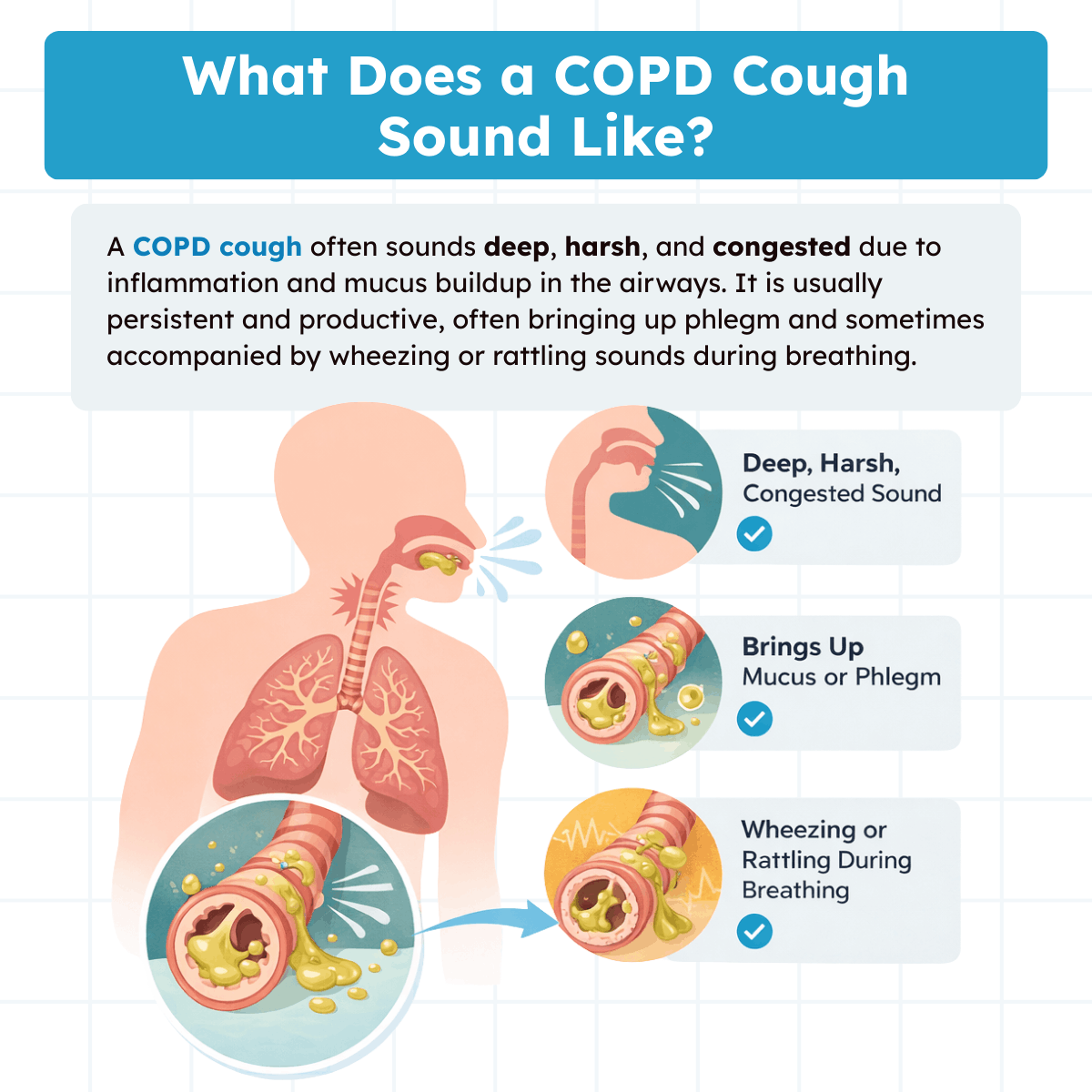
A COPD cough is typically deep, persistent, and often described as “wet” or productive. Unlike a dry cough, it frequently brings up mucus or phlegm from the airways, especially in the morning. The sound may be harsh, rattling, or congested due to inflammation and excess mucus in the bronchial tubes.
Many people with COPD experience repeated coughing fits as the body tries to clear secretions from narrowed airways. In some cases, the cough may also be accompanied by wheezing, chest tightness, or shortness of breath.
Because COPD causes long-term airway irritation, this cough tends to occur daily and may worsen during respiratory infections, exposure to smoke, or other environmental irritants.
Common Characteristics of a COPD Cough
A COPD cough has recognizable features that relate to airflow limitation, airway irritation, and mucus buildup. You may notice changes in sound, the presence of wheezing, and differences in how much mucus the cough produces.
Sound and Pitch Variations
A COPD cough often sounds deep, harsh, or raspy, rather than sharp or barking. You may hear a low-pitched, strained quality that reflects narrowed airways and reduced airflow. The cough can sound labored, especially during flare-ups or physical exertion.
You might notice the sound becomes rougher in the morning. Overnight mucus accumulation can make early coughing louder and more forceful. As the day goes on, the cough may soften but remain persistent.
In some cases, the cough carries a wet or gurgling undertone, even before mucus becomes obvious. This sound comes from air moving through partially blocked bronchial tubes rather than from the throat.
Presence of Wheezing
You may hear wheezing alongside a COPD cough, especially during exhalation. Wheezing sounds like a high-pitched whistle or squeak and signals airflow moving through narrowed or inflamed airways.
The wheeze may appear:
- During or right after a coughing spell
- With physical activity
- When lying flat
- During respiratory infections or exposure to irritants
You might hear wheezing more clearly in quiet settings or when breathing deeply after coughing. Not every cough produces wheezing, but its presence often indicates increased airway obstruction.
Wheezing that worsens or becomes constant can signal a change in your condition and often accompanies shortness of breath or chest tightness.
Dry vs. Productive Cough
A COPD cough can be dry or productive, and the type may change over time. Early or mild COPD often causes a dry, irritating cough that feels persistent but brings up little mucus.
As COPD progresses, you are more likely to develop a productive cough. This cough brings up sputum that may appear clear, white, yellow, or green. Thicker mucus often requires repeated coughing to clear.
You may cough more forcefully to move mucus, which can make the cough sound heavy or congested. Productive coughing tends to worsen in the morning and during infections, when mucus production increases and airways swell.
How a COPD Cough Differs From Other Coughs
A COPD cough has a distinct pattern tied to chronic airway damage and mucus buildup. You notice differences in sound, timing, and persistence when you compare it with asthma or smoking-related coughs.
Comparison With Asthma Cough
A COPD cough usually sounds wet and rattly because thick mucus sits in narrowed airways. You often cough every day, with symptoms strongest in the morning. An asthma cough tends to sound dry or tight, with less mucus. You may notice it comes in episodes rather than staying constant.
Key differences you can notice include:
- Consistency: COPD coughing happens most days, while asthma coughing flares with triggers like cold air, exercise, or allergens.
- Sound: COPD produces a deeper, congested sound; asthma often causes a sharp cough with wheezing.
- Response to treatment: Asthma coughs often ease quickly after using a rescue inhaler, while a COPD cough improves more slowly and may never fully stop.
Note: Breathlessness usually lingers with COPD, even between coughing spells.
Differences From Smoking-Related Cough
A smoking-related cough often appears as a morning cough that clears mucus after you wake up. You may notice it improves during the day. A COPD cough stays present beyond the morning. You cough because airflow stays limited, not just because smoke irritates your airways.
Important distinctions include:
- Duration: A smoking-related cough can lessen after quitting, while a COPD cough often continues despite stopping smoking.
- Mucus volume: COPD commonly produces larger amounts of thick sputum.
- Associated symptoms: With COPD, you often have ongoing shortness of breath and chest tightness, not just coughing.
Note: The sound of a COPD cough usually feels heavier and more labored, especially during flare-ups.
Associated Symptoms Accompanying COPD Cough
A COPD cough rarely occurs alone. You often notice breathing strain and chest sensations that change with activity, posture, and flare-ups.
Shortness of Breath
You may feel short of breath during or after coughing because narrowed airways limit airflow. The effort to clear mucus increases your breathing rate and can leave you winded, even with light activity.
Breathlessness often worsens during exertion, cold air exposure, or respiratory infections. You might need longer recovery time after walking, climbing stairs, or talking.
Common signs you may notice include:
- Faster, shallow breathing
- Needing to pause mid-sentence
- Using neck or chest muscles to breathe
Note: Shortness of breath can persist between coughs, especially in moderate to severe COPD. In advanced cases, you may rely on pursed-lip breathing or need to sit upright to ease airflow.
Chest Tightness
Chest tightness can accompany a COPD cough as airway inflammation and muscle strain increase pressure in your chest. You may describe the sensation as squeezing, heaviness, or difficulty expanding your lungs.
Repeated coughing can fatigue chest muscles, which adds to discomfort. Tightness often intensifies during flare-ups or when mucus builds up and resists clearance.
You may notice chest tightness:
- During deep breaths
- After prolonged coughing episodes
- When exposed to smoke, pollution, or strong odors
Note: Although chest tightness in COPD usually relates to breathing mechanics, persistent or sudden pain needs medical attention. Distinguishing routine tightness from new or severe symptoms helps you manage your condition safely.
Stages of COPD and Their Effect on Cough Sounds
As COPD progresses, the sound of your cough often changes in pitch, frequency, and the amount of mucus involved. These changes reflect increasing airway inflammation, mucus buildup, and reduced airflow.
Mild COPD Cough Features
In mild COPD, your cough often sounds dry or lightly productive. You may notice a brief, throat-clearing quality rather than a deep chest sound. The cough usually occurs in the morning and may fade as the day goes on.
When mucus appears, it tends to sound thin and quiet, without heavy rattling. You can usually clear it after a few coughs. The cough rarely interrupts speaking or breathing.
Common features include:
- Short cough bursts rather than prolonged fits
- A low-volume sound without wheezing
- Mild hoarseness after coughing
Note: At this stage, your cough may feel more annoying than limiting. You may not notice major changes in your voice or breathing between coughs.
Advanced Stage Cough Characteristics
In advanced COPD, your cough often sounds deep, wet, and forceful. It usually comes from the chest and may carry a rattling or gurgling quality due to thick mucus in narrowed airways.
You may cough in long, repeated bouts that feel exhausting. The sound can include wheezing, especially when you exhale. Clearing mucus may take significant effort and still feel incomplete.
Common features include:
- Loud, harsh coughing fits
- A coarse, bubbling sound from trapped secretions
- Coughing that disrupts speech or sleep
Note: Your cough may worsen with physical activity, infections, or cold air. The sound often signals ongoing airway obstruction rather than temporary irritation.
Factors That Influence the Sound of a COPD Cough
Several factors change how your COPD cough sounds from day to day. Environmental exposures and the time of day affect airway irritation, mucus thickness, and airflow, which alters pitch, wetness, and intensity.
Environmental Triggers
Your surroundings can quickly change the character of your cough. Cold air often tightens your airways, leading to a sharper, harsher sound. Smoke, dust, and chemical fumes increase inflammation and mucus, which makes the cough wetter and more rattling.
Common triggers that alter cough sound include:
- Air pollution and vehicle exhaust, which thicken mucus and deepen the cough.
- Low humidity, which dries airway surfaces and produces a dry, barking quality.
- High humidity, which loosens secretions and causes gurgling or crackling sounds.
- Allergens like pollen or mold, which raise congestion and make coughing more frequent.
Note: When you reduce exposure, the cough often becomes less forceful and less noisy, even if it does not disappear.
Time of Day Variations
The sound of your COPD cough often changes across the day. In the morning, it tends to sound wet and congested because mucus pools in your airways overnight. You may hear rattling or bubbling as you clear secretions after waking.
At night, coughing can sound tighter or more strained. Lying flat allows mucus to shift, and airway narrowing can increase wheezing or dry coughing. Medications taken earlier may also wear off, which affects airflow.
Note: Your body’s daily rhythm plays a role. Airway tone naturally tightens in the early morning hours, which can raise cough intensity and change its pitch.
When to Seek Medical Advice Regarding Cough Changes
Contact a healthcare professional if your cough changes in a way that feels unusual or persistent. Changes often signal a flare-up or a new problem that needs attention. Seek care if you notice a sudden increase in coughing frequency or intensity that lasts more than a few days. This includes coughing that disrupts sleep or daily activities.
Pay close attention to changes in mucus. Thickened mucus, a shift to yellow, green, brown, or bloody sputum, or a sharp increase in volume can indicate infection or worsening airway inflammation.
Get medical advice if coughing comes with new or worsening shortness of breath, chest tightness, or wheezing that does not improve with your usual medications. These signs suggest reduced airflow that may require treatment changes.
Act promptly if you develop fever, chills, or fatigue alongside cough changes. These symptoms can point to infection and may need timely evaluation. Seek urgent care if you experience coughing up blood, confusion, blue or gray lips or fingertips, or severe breathlessness at rest. These symptoms require immediate medical assessment.
Note: If your cough no longer responds to your prescribed plan, or you need rescue medications more often, schedule a review. Adjustments can help stabilize symptoms and reduce complications.
FAQs About a COPD Cough
Is Coughing Common in COPD?
Yes, coughing is a very common symptom of chronic obstructive pulmonary disease (COPD). Many patients develop a persistent cough due to chronic inflammation and irritation in the airways. This cough is often productive, meaning it brings up mucus or phlegm from the lungs. It tends to be worse in the morning as secretions accumulate overnight.
Over time, the cough may become more frequent as the disease progresses and airway obstruction increases. In many cases, a chronic cough is one of the earliest warning signs of COPD.
How Do I Know If My Cough Is COPD?
A cough related to COPD is typically chronic and occurs most days for several months each year. It is often productive and may produce thick mucus. People with COPD may also experience wheezing, chest tightness, and shortness of breath during activity.
Risk factors such as long-term smoking or exposure to lung irritants increase the likelihood that a persistent cough is related to COPD. A medical evaluation is necessary for confirmation, and spirometry testing is commonly used to diagnose airflow limitation.
What Is the Most Common Lung Sound With COPD?
The most common lung sounds heard in patients with COPD are wheezes and diminished breath sounds. Wheezing occurs when air flows through narrowed or inflamed airways, producing a high-pitched musical sound during breathing. Crackles may also be present in some cases, particularly when mucus or secretions are present in the airways.
In advanced disease, breath sounds may become quieter due to airflow obstruction and lung hyperinflation. These abnormal sounds help clinicians identify airway narrowing and other changes associated with COPD.
Can A Doctor Hear COPD With A Stethoscope?
A doctor cannot diagnose COPD solely by listening with a stethoscope, but certain lung sounds may suggest the condition. Healthcare providers may hear wheezing, reduced breath sounds, or prolonged expiration when examining the chest.
These findings can indicate airway obstruction or airflow limitation. However, similar sounds can occur with other respiratory conditions as well. For this reason, additional testing is required to confirm the diagnosis.
Note: Spirometry is the most important test because it measures how well air moves in and out of the lungs.
How Are COPD Lung Sounds Assessed?
COPD lung sounds are typically assessed through a physical examination using a stethoscope. A healthcare provider listens to different areas of the chest while the patient breathes deeply. This allows the clinician to detect abnormal sounds such as wheezing, crackles, or diminished breath sounds.
The provider may also evaluate the length of expiration and overall airflow. In addition to auscultation, diagnostic tests such as spirometry and imaging studies may be used to evaluate lung function and confirm the presence and severity of COPD.
Final Thoughts
A COPD cough is more than just an occasional irritation. It is often a persistent and productive cough that reflects ongoing inflammation and mucus buildup within the airways. While the sound and severity can vary from person to person, a deep, rattling, or congested cough that occurs regularly may signal an underlying respiratory problem.
Recognizing these characteristics is important because early evaluation and treatment can help slow disease progression and improve quality of life.
Anyone experiencing a chronic cough, especially if it is accompanied by mucus production, wheezing, or shortness of breath, should consider seeking medical advice to determine the underlying cause and receive appropriate care.

Written by:
John Landry is a registered respiratory therapist from Memphis, TN, and has a bachelor's degree in kinesiology. He enjoys using evidence-based research to help others breathe easier and live a healthier life.
References
- Smith J, Woodcock A. Cough and its importance in COPD. Int J Chron Obstruct Pulmon Dis. 2006.