

Monitoring your oxygen levels at home has never been more important, especially for individuals managing chronic respiratory conditions, such as COPD, asthma, or recovering from COVID-19.
A pulse oximeter is a small, non-invasive device that clips onto your fingertip and provides quick readings of your blood oxygen saturation (SpO₂) and pulse rate. With so many models available on the market, choosing a reliable and accurate pulse oximeter for home use can feel overwhelming.
In this article, we’ll break down the best pulse oximeters designed for home monitoring, highlighting their features, accuracy, ease of use, and overall value to help you find the right one for your health needs.
Best Pulse Oximeters for Home Use

- Includes plethysmograph to visualize pulse strength
- Auditory alarm for abnormal SpO₂ or pulse rate
- Multi-directional OLED display with adjustable brightness
- Beep sound for each detected pulse
- Comes with batteries, lanyard, and protective silicone cover

- Displays SpO₂ levels up to 100%
- Accurate even with low blood perfusion (as low as 0.2%)
- Large, easy-to-read LED display
- One-button operation for quick spot checks
- Includes batteries, lanyard, and silicone cover
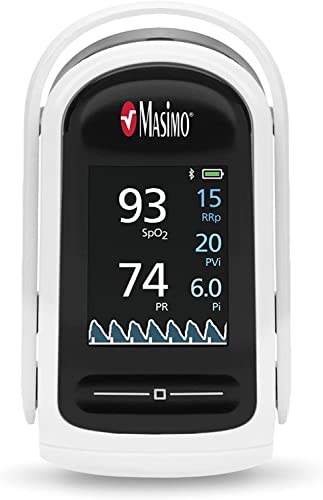
- Measures SpO₂, pulse rate, respiration rate, PI, and PVi
- Hospital-grade Masimo SET technology for superior accuracy
- Works accurately during motion and low perfusion
- Bluetooth sync with Masimo Health app
- Rotating, touchpad-controlled OLED display for easy viewing
Zacurate 500C Elite Fingertip Pulse Oximeter
The Zacurate 500C Elite is an upgraded version of the popular 500DL model, offering enhanced functionality while maintaining the same ease of use.
A feature-rich pulse oximeter with a plethysmograph, built-in alarms, and a bright OLED display for accurate, real-time monitoring.
This model includes a plethysmograph for visualizing pulse strength and an auditory alarm that alerts users when SpO₂ or pulse rates fall outside normal limits. It also beeps with each pulse, giving real-time feedback. The high-quality OLED display is bright, adjustable, and multi-directional, allowing users or caregivers to view readings from any angle.
Like other Zacurate devices, the 500C Elite meets FDA and CE standards for use in sports and aviation. It’s perfect for athletes, hikers, or anyone wanting quick spot checks of their vitals. Accessories include two AAA batteries, a lanyard, and a protective silicone cover.
Customers love its reliability and value, though some note it may take a few extra seconds to stabilize readings. Overall, it’s a dependable and affordable pulse oximeter for home use.
Zacurate Pro Series 500DL Fingertip Pulse Oximeter
The Zacurate Pro Series 500DL is a popular and reliable fingertip pulse oximeter ideal for home use, sports, and aviation.
A reliable and user-friendly fingertip pulse oximeter that provides accurate SpO₂ and pulse rate readings up to 100%, even in low-perfusion conditions.
What sets this device apart is its ability to display SpO₂ values up to 100%, a rare feature among consumer-grade oximeters. It utilizes upgraded hardware and a high-quality, light-absorbing design to minimize environmental interference, ensuring accurate readings even in low-perfusion situations (as low as 0.2%).
The large, easy-to-read LED display faces the user directly, making it simple to check your oxygen saturation and pulse rate on the go. It’s also incredibly user-friendly—just clip it on your finger, press a button, and wait about 10 seconds.
It comes with a silicone cover, lanyard, and two AAA batteries, ready to use right out of the box. While not a medical device, it’s a dependable choice for spot-checking vitals at home or during physical activity.
Masimo MightySat Fingertip Pulse Oximeter with Bluetooth
The Masimo MightySat is a premium pulse oximeter that stands out with its hospital-grade accuracy and ability to measure five key health parameters: SpO₂, pulse rate, perfusion index, respiration rate, and Pleth Variability Index (PVi).
A hospital-grade oximeter with Bluetooth connectivity that measures five key health metrics with superior accuracy, even during motion or low blood flow.
Powered by Masimo SET technology—the same used in leading hospitals—it excels in tough conditions, such as during movement, low blood flow, or cold extremities. Its OLED screen is easy to read and can rotate for convenience, while the touchpad interface and flexible grip enhance user comfort.
One of its top features is Bluetooth connectivity, which allows you to sync your data with the Masimo Health app for detailed tracking and sharing.
While some users express concerns about durability and battery life, many praise its clinical-level accuracy and comprehensive data. Designed for athletes, tech-savvy users, or anyone serious about respiratory monitoring, the MightySat offers a high-end experience for health tracking at home or on the go.
Innovo Deluxe iP900AP Fingertip Pulse Oximeter
The Innovo Deluxe iP900AP offers advanced features that elevate it above basic fingertip pulse oximeters.

An advanced pulse oximeter featuring a plethysmograph, perfusion index, and adjustable OLED screen for highly accurate and easy-to-interpret readings.
Designed for users who want extra confidence in their readings, it includes a plethysmograph and perfusion index—two features that help validate the accuracy and strength of your pulse signal. The device delivers reliable SpO₂ and pulse rate readings, even under challenging conditions like low perfusion or slight movement.
Its OLED screen has six display orientations and adjustable brightness, making it easy to read from different angles. Plus, the built-in auditory alarm alerts you when oxygen or pulse levels fall outside preset limits.
Users appreciate its quick results and consistent performance, and many note that it compares favorably to professional medical equipment. It comes with 2 AAA batteries and a lanyard, ready to use right away. While it’s not intended for continuous monitoring, the iP900AP is ideal for at-home spot checks, featuring added clinical capabilities.
Innovo iP900BP-B Fingertip Pulse Oximeter with Bluetooth
The Innovo iP900BP-B combines clinical-grade accuracy with modern convenience, thanks to its Bluetooth capability and smartphone integration.

A Bluetooth-enabled oximeter that tracks SpO₂, pulse rate, and perfusion index with app integration and a multi-directional display.
This fingertip pulse oximeter measures blood oxygen levels (SpO₂), pulse rate, plethysmograph, and perfusion index—even in individuals with poor circulation. Its standout feature is the wireless connection to the Beyond Oximeter app, which enables users to record and visualize data trends in real-time.
With a patented multi-directional display, users can customize the layout for easier reading from any angle. It’s ideal for athletes, travelers, or anyone seeking a deeper understanding of their respiratory health.
Users appreciate the fast and accurate readings, as well as the convenience of monitoring and sharing their results through the app. Although it’s designed for sports and wellness rather than continuous medical monitoring, it delivers professional-level functionality, making it a smart choice for health-conscious individuals.
AccuMed CMS-50D1 Fingertip Pulse Oximeter
The AccuMed CMS-50D1 is a lightweight, travel-friendly fingertip pulse oximeter designed for fast and convenient spot checks of oxygen saturation and pulse rate.
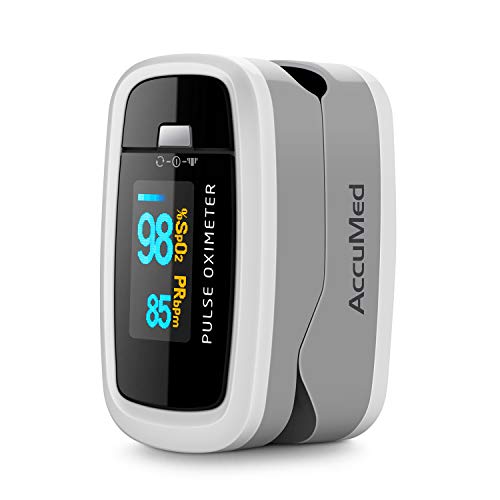
A compact, travel-friendly pulse oximeter offering quick readings and a rotating LED screen, ideal for casual spot-checks.
Weighing just 50 grams, it’s ideal for users on the go—whether you’re hiking, exercising, or simply monitoring at home. This device delivers readings in 8–10 seconds and features a rotating LED display for easy viewing in both portrait and landscape modes. It accommodates a wide range of finger sizes, making it suitable for both children (ages 4+) and adults. The auto shut-off feature and low power consumption extend battery life, offering up to 20 hours of use with the included AAA batteries.
Customers find it easy to use and generally accurate, though some report inconsistent performance. It also includes a lanyard and a travel case for added portability. While not a medical device, the CMS-50D1 is a solid choice for casual, wellness-focused monitoring.
mibest OLED Finger Pulse Oximeter
The mibest OLED Finger Pulse Oximeter is a sleek and reliable device that provides quick, accurate readings of oxygen saturation and pulse rate.

A stylish and easy-to-use oximeter with multi-mode OLED display and real-time readings for SpO₂ and pulse rate.
With a dual-color OLED display, users can view results in six different modes and four screen directions, with 10 adjustable brightness levels for optimal visibility in any setting. The one-button operation makes it simple to use, and the device offers real-time spot-checks of SpO₂, pulse rate, and a visual pulse bar graph.
It’s lightweight, portable, and designed for wellness monitoring during sports, exercise, or air travel—not for medical diagnostics. The oximeter comes ready to use with two AAA batteries, a lanyard, and a protective pouch.
Customers appreciate its consistent performance, ease of use, and large, clear display. Whether you’re managing a chronic condition or simply want to monitor your vitals, the Mibest oximeter offers excellent functionality at an affordable price.
Zacurate 500BL Fingertip Pulse Oximeter
The Zacurate 500BL is a budget-friendly, no-frills fingertip pulse oximeter designed for users who want quick and reliable readings of oxygen saturation and pulse rate.
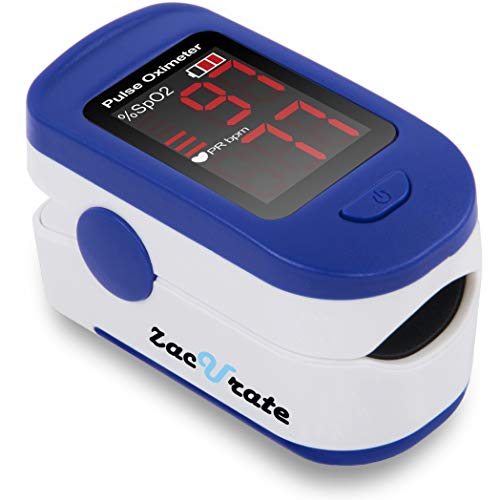
A no-frills, budget-friendly oximeter that provides fast and straightforward oxygen saturation and pulse rate measurements.
It features a large LED display that faces the user, making it easy to read results in just 10 seconds. While it’s intended for sports and general wellness use—not for medical diagnosis—it performs well for casual at-home monitoring, especially for athletes and individuals tracking respiratory health. The device is easy to operate: simply insert your finger, press the button, and remain still while it measures.
It’s smart spring system accommodates a wide range of finger sizes, making it suitable for users aged 12 and up. It comes with 2 AAA batteries, so it’s ready to use out of the box, and includes a one-year warranty and U.S.-based customer support. Some users note mixed accuracy, but overall, it’s considered a great value for the price.
Vibeat Fingertip Pulse Oximeter
The Vibeat Fingertip Pulse Oximeter is a feature-rich device designed for quick, accurate spot checks of blood oxygen saturation, pulse rate, perfusion index, and pulse waveform.

A high-precision pulse oximeter with audible alerts, built-in memory, and quick-read technology for accurate spot checks.
Built with research-grade photoplethysmography technology, it uses infrared light to deliver reliable readings in just a few seconds. The OLED screen displays vital signs clearly, and users benefit from visual and audible alerts when readings fall outside preset thresholds.
A standout feature is its built-in memory, which can store up to 12 past results directly on the device—ideal for tracking trends without relying on a smartphone app. It also offers a “spot check” mode for on-the-go readings and can be adjusted to a continuous mode when needed.
While customers generally find it accurate and easy to use, some report concerns with battery longevity and long-term durability. For the price, though, it delivers solid performance and is great for both everyday users and athletes.
SleepO2 Wrist Recording Pulse Oximeter by EMAY
The SleepO2 by EMAY is a specialized wrist pulse oximeter designed for overnight monitoring of blood oxygen saturation and heart rate.

A comfortable, wrist-worn oximeter that continuously records SpO₂ and pulse rate overnight, with detailed reports available through a companion app.
Unlike fingertip models meant for quick spot checks, this device continuously records data every second throughout the night. It features a lightweight, comfortable wristband and a patented soft silicone finger probe that stays securely in place while you sleep.
After recording, users can sync the device with the companion app to generate detailed reports, including trend graphs and ODI4% (oxygen desaturation index). These insights are particularly helpful for tracking sleep quality and identifying potential issues, such as sleep apnea. The rechargeable battery provides up to 12 hours of monitoring on a single charge.
Customers praise its ease of use, accuracy, and comprehensive reporting features. While the finger probe fits most users well, some report occasional slipping. Overall, the SleepO2 is a smart choice for individuals who require reliable overnight SpO₂ monitoring.
How to Choose the Best Pulse Oximeter
When selecting a pulse oximeter for home use, it’s important to consider your specific needs and how you plan to use the device. Here are the key factors to keep in mind:
- Accuracy and Reliability: Look for pulse oximeters that are FDA-cleared or meet CE standards, especially if you need precise readings for medical conditions. Devices with added features, such as a plethysmograph and perfusion index, can provide extra reassurance about the accuracy of your results.
- Display and Readability: Choose a model with a bright, easy-to-read display. OLED and LED screens with adjustable brightness and multi-directional viewing make it easier to read clearly in any lighting condition or position.
- Speed and Ease of Use: Most fingertip oximeters provide readings in under 10 seconds. One-button operation is ideal for quick spot checks, especially for older adults or anyone new to using the device.
- Portability and Design: If you plan to carry it while traveling, hiking, or exercising, opt for a compact, lightweight model that includes a carrying case or lanyard.
- Extra Features: Some advanced models offer Bluetooth connectivity, smartphone apps, built-in memory, or alarms for abnormal readings. These are useful for tracking trends or sharing data with healthcare providers.
- Intended Use: Note that many consumer-grade pulse oximeters are labeled for “sports and aviation use only.” If you’re managing a chronic condition, consider models designed for higher accuracy or consult your healthcare provider for personalized recommendations.
How Does a Pulse Oximeter Work?
A pulse oximeter measures the oxygen saturation level (SpO₂) in your blood by using light. When you place your finger into the device, it shines two types of light—red and infrared—through your skin. Oxygenated and deoxygenated blood absorb these lights differently. Sensors on the other side detect the amount of light that passes through, and the device uses this data to calculate your blood oxygen level and pulse rate.
The process is quick, non-invasive, and painless. Within seconds, the screen displays your oxygen saturation as a percentage and your heart rate in beats per minute. A normal SpO₂ level for most healthy individuals is typically between 95% and 100%.
Pulse oximeters are particularly useful for individuals with respiratory conditions, athletes, or those monitoring their health at home. However, accuracy can be affected by factors such as cold fingers, poor circulation, nail polish, or movement during measurement.

How to Use a Pulse Oximeter
Using a pulse oximeter at home is straightforward and requires only a few simple steps. To ensure accurate readings, follow these tips:
- Sit Still and Relax: Take a few minutes to rest before taking a reading. Movement or shaking can affect accuracy.
- Warm Your Hands: Cold fingers can reduce blood flow, leading to inaccurate results. Rub your hands together or run them under warm water if needed.
- Place the Device on Your Finger: Insert your index or middle finger fully into the oximeter with the display facing up.
- Press the Power Button: Turn the device on. Keep your hand still and relaxed while the device takes a reading—this usually takes 5 to 15 seconds.
- Read the Results: The screen displays two main numbers: your oxygen saturation level (SpO₂) and your pulse rate (in beats per minute).
- Avoid Interference: Remove nail polish or artificial nails from the measured finger, and avoid using the oximeter in direct sunlight.
Note: For best results, take multiple readings over time and share any concerning trends with your healthcare provider.
FAQs About the Best Pulse Oximeters
What Is the Best Fingertip Pulse Oximeter for Home Use?
For most users, the Zacurate 500C Elite is a top pick thanks to its accuracy, plethysmograph, and alarm features. The Zacurate 500BL is an excellent budget option, offering reliable basic readings at an affordable price.
If you’re looking for advanced tracking and accuracy, the Masimo MightySat is a great upgrade pick with Bluetooth connectivity and hospital-grade technology. Each of these devices offers solid performance depending on your needs and budget.
Do You Really Need a Pulse Oximeter in Your Home?
While not essential for everyone, a pulse oximeter is particularly useful if you have a respiratory condition, such as asthma, COPD, or sleep apnea. It’s also helpful for monitoring oxygen levels during illnesses or after recovering from COVID-19.
Athletes, high-altitude travelers, and fitness enthusiasts may also benefit from routine spot checks. For general wellness, it provides peace of mind, but for medical monitoring, it should supplement—not replace—professional advice and care.

Download our free guide that has over 100+ of the best tips for healthy lungs.
What Does a Pulse Oximeter Measure?
A pulse oximeter measures two key health indicators: oxygen saturation (SpO₂) and pulse rate. SpO₂ shows the percentage of oxygen in your blood, typically ranging from 95–100% in healthy individuals.
The pulse rate indicates the number of times your heart beats per minute. Some advanced models also show perfusion index and plethysmograph readings to help assess the strength of your pulse and the reliability of your results.
How Can You Read a Pulse Oximeter?
To read a pulse oximeter, simply place your finger in the device and press the power button. Within seconds, it will display your SpO₂ as a percentage and your pulse rate in beats per minute.
A normal SpO₂ is typically 95–100%, while a normal pulse rate varies between 60–100 bpm for most adults. Ensure your hand is still and warm, and refrain from wearing nail polish for the most accurate reading.
What Is an Oxygen Reader?
An oxygen reader, commonly known as a pulse oximeter, is a small, non-invasive device that measures the oxygen saturation (SpO₂) in your blood and your pulse rate. It works by shining red and infrared light through your fingertip and analyzing the amount of light absorbed.
The device then calculates the percentage of oxygen in your blood. It’s often used at home, in clinics, or during physical activity to monitor respiratory function.
What Factors Can Affect Pulse Oximeter Readings?
Several factors can interfere with the accuracy of a pulse oximeter. Cold fingers, poor circulation, and movement, as well as the use of nail polish or artificial nails, can lead to false or inconsistent readings. Bright ambient light, especially direct sunlight, can also affect sensor performance.
Additionally, people with darker skin tones or low perfusion (reduced blood flow) may occasionally see less accurate results. For the best reading, sit still, keep your hand warm, and use a clean, bare finger.
Which Finger Is Best for a Pulse Oximeter?
The middle finger or index finger on your dominant hand is typically considered the best for pulse oximeter readings. These fingers usually have better blood flow and are more accessible for accurate sensor placement.
Although most oximeters work on any finger, consistency matters—using the same finger every time helps you compare readings over time.
Note: Ensure the finger is clean, warm, and free from nail polish and artificial nails.
Which Brand Is Best for Pulse Oximeters?
Top brands for pulse oximeters include Zacurate, Innovo, and Masimo. Zacurate is known for its ease of use and value, especially models like the 500C Elite. Innovo offers advanced features, including a plethysmograph and a perfusion index, making it ideal for medical or professional use.
Masimo is a premium brand trusted in hospitals for its superior accuracy and technology, especially in challenging conditions. The best brand depends on your needs, features, and budget.
What Is the Best Pulse Oximeter for Respiratory Therapists?
The Innovo Deluxe iP900AP is an excellent choice for respiratory therapists. It offers reliable SpO₂ and pulse rate readings, even in low perfusion scenarios, and includes advanced features like a plethysmograph and perfusion index to confirm reading accuracy.
The adjustable OLED display, built-in alarm system, and high level of precision make it a professional-grade tool suitable for both clinical and home care settings.
An advanced pulse oximeter featuring a plethysmograph, perfusion index, and adjustable OLED screen for highly accurate and easy-to-interpret readings.
What Are the Risks of Pulse Oximetry?
Pulse oximetry is a safe and noninvasive procedure with minimal risks. However, inaccurate readings may occur due to poor circulation, movement, or external factors like nail polish or skin pigmentation.
Relying solely on a pulse oximeter without considering symptoms or medical advice may delay proper care. It’s essential to use it as a supportive tool, not as a substitute for professional medical evaluation, especially in emergencies or with serious health conditions.
What Are the Normal Ranges for a Pulse Oximeter?
A normal oxygen saturation (SpO₂) level for healthy individuals typically ranges from 95% to 100%. Values consistently below 90% are considered low and may require medical attention. Normal pulse rates generally fall between 60 to 100 beats per minute for adults at rest.
Note: It’s important to interpret readings in context—some people with chronic respiratory conditions may have slightly lower baseline levels that are normal for them.
Final Thoughts
A pulse oximeter is a simple yet powerful tool that allows you to easily monitor your oxygen levels and pulse rate from the comfort of your own home. Whether you’re managing a respiratory condition, tracking fitness performance, or simply staying proactive about your health, having a reliable device can give you peace of mind and help you respond quickly to changes.
With numerous options available—from basic models to advanced Bluetooth-enabled units—it’s essential to select one that suits your needs, lifestyle, and budget. By understanding how these devices work and what features to look for, you’ll be better equipped to make an informed decision and take control of your health with confidence.

Written by:
John Landry is a registered respiratory therapist from Memphis, TN, and has a bachelor's degree in kinesiology. He enjoys using evidence-based research to help others breathe easier and live a healthier life.
References
- Torp KD, Modi P, Pollard EJ, et al. Pulse Oximetry. [Updated 2023 Jul 30]. In: StatPearls [Internet]. Treasure Island (FL): StatPearls Publishing; 2025.