

When people hear the word “bruise,” they typically picture a discolored patch of skin caused by a minor bump or fall. But bruising is not limited to the surface of the body. Internal organs, including the lungs, can sustain bruise-like injuries from significant trauma. A bruised lung is a real and serious medical condition that requires prompt attention.
Understanding what it means, how it happens, who is at risk, and what recovery looks like can help people recognize warning signs and seek appropriate care.

Download our free guide that has over 100+ of the best tips for healthy lungs.
Can You Bruise Your Lungs?
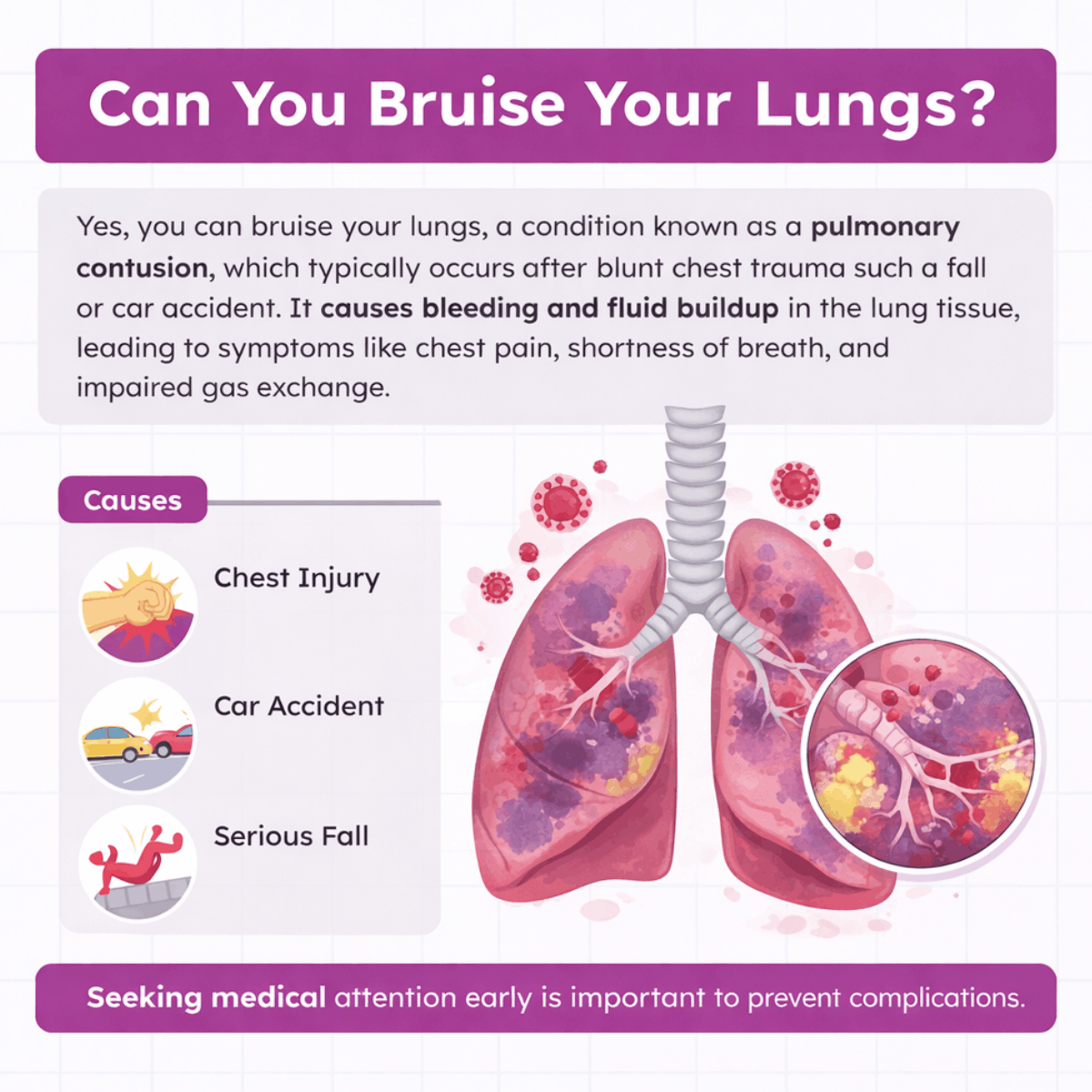
Yes, you can bruise your lungs. This condition is called a pulmonary contusion, and it typically occurs after blunt trauma to the chest, such as from a car accident, fall, or sports injury. When the lungs are bruised, blood and fluid accumulate in the lung tissue, which interferes with normal gas exchange.
Symptoms may include chest pain, shortness of breath, coughing, and sometimes coughing up blood. Unlike other injuries, symptoms can worsen over time as swelling increases.
Treatment usually involves supportive care, such as oxygen therapy and close monitoring, while the lungs heal. In severe cases, mechanical ventilation may be required to maintain adequate oxygenation.
What Does It Mean to Bruise a Lung?
A bruised lung is medically referred to as a pulmonary contusion. The word “contusion” simply means bruise, and a pulmonary contusion occurs when blunt force trauma damages the lung tissue without necessarily tearing it open. Just as a bruise on the skin involves bleeding and swelling in the damaged area, a pulmonary contusion involves bleeding into the lung tissue and the air sacs, known as alveoli, where oxygen exchange takes place.
When this bleeding occurs, the affected area of the lung becomes less able to transfer oxygen into the bloodstream and remove carbon dioxide. Depending on how large the contused area is, this can cause anything from mild breathing difficulty to life-threatening respiratory failure. Unlike a cut or laceration, the damage from a pulmonary contusion is often invisible from the outside, which makes it easy to underestimate.
Pulmonary contusions are among the most common serious chest injuries seen in trauma settings. They account for a significant proportion of injuries in motor vehicle accidents and are frequently associated with rib fractures, though a bruised lung can occur even without broken ribs, particularly in children whose chest walls are more flexible.
How Does a Lung Bruise Happen?
The lungs sit inside the chest cavity, protected by the ribcage and surrounding muscles. For the lung tissue itself to sustain bruising, a considerable force must be applied to the chest. The most common causes of pulmonary contusion include:
- Motor vehicle accidents: This is the leading cause. When a driver or passenger is thrown forward into a steering wheel, dashboard, or seatbelt during a crash, the force transmitted through the chest wall can bruise the underlying lung. Even with modern airbags, the deceleration forces involved in high-speed collisions can be extreme enough to cause this injury.
- Falls from height: Falling from a significant elevation and landing on the chest, or even on the back, can generate enough force to bruise the lungs. Construction workers, athletes, and elderly individuals who fall on hard surfaces are among those who may sustain this type of injury.
- Blunt chest trauma in sports: Contact sports such as American football, rugby, hockey, and martial arts occasionally produce pulmonary contusions, particularly when an athlete takes a powerful blow directly to the chest.
- Blast injuries: Explosions create rapid pressure waves that travel through the body. The lungs, being air-filled and highly sensitive to pressure changes, are particularly vulnerable to blast-related contusions. This is a well-documented injury pattern in military combat and industrial accidents.
- Physical assault: A powerful punch or kick to the chest can, in severe cases, generate enough force to bruise lung tissue, though this is less common than the causes listed above.
- Crush injuries: When the chest is compressed between two objects, such as in an industrial accident or when someone is trapped under debris, the lungs can be severely contused.
Note: In each of these scenarios, the common factor is a rapid transfer of kinetic energy into the chest. The lung tissue, which is delicate and spongy, absorbs this energy and responds with inflammation and hemorrhage.
Recognizing the Symptoms
One of the more challenging aspects of pulmonary contusion is that symptoms do not always appear immediately. In some cases, the full extent of the injury becomes apparent only over the first 24 to 48 hours after the trauma. This delayed presentation can lead people to believe they are fine when, in fact, their condition is worsening.
Common symptoms of a bruised lung include:
- Shortness of breath: This is typically one of the first and most notable symptoms. The person may feel as though they cannot get enough air, even while at rest. The sensation can range from mild breathlessness to severe respiratory distress.
- Chest pain: Pain in the chest area is common, often made worse by breathing deeply, coughing, or moving. It can be difficult to distinguish the pain of a pulmonary contusion from that of a fractured rib, and indeed both injuries often occur together.
- Coughing up blood: Known medically as hemoptysis, coughing up blood or blood-tinged mucus is a significant warning sign that should prompt immediate medical evaluation. It indicates bleeding within the lung tissue or airways.
- Rapid breathing: The body attempts to compensate for reduced oxygen exchange by breathing faster. A noticeably elevated respiratory rate, particularly in someone who has recently sustained chest trauma, should be taken seriously.
- Low oxygen levels: A drop in blood oxygen saturation, which can be detected with a pulse oximeter, is a key indicator of impaired lung function.
- Bruising on the chest wall: While internal bruising is invisible, visible bruising on the skin of the chest can signal that significant force was applied and that internal injury is possible.
- Fatigue and confusion: In more severe cases, inadequate oxygenation can cause the person to feel unusually tired, confused, or disoriented. These are signs that the brain is not receiving sufficient oxygen.
Note: Because symptoms can be delayed and are sometimes subtle at first, anyone who has experienced significant chest trauma should seek medical evaluation even if they feel relatively well immediately after the incident.
How Is a Bruised Lung Diagnosed?
Diagnosing a pulmonary contusion requires imaging, as the injury is internal and cannot be assessed by looking at the patient alone. The main diagnostic tools include:
- Chest X-ray: A chest X-ray is often the first imaging test performed in a trauma setting. It can reveal areas of consolidation, which appear as haziness or opacification in the lung fields, suggesting that blood and fluid have filled the air spaces. However, X-rays are not perfect. In the early hours after injury, the contusion may not yet be visible, and smaller contusions can be missed entirely.
- CT scan: A computed tomography scan of the chest is far more sensitive than a plain X-ray and is considered the gold standard for diagnosing pulmonary contusion. It can detect even small areas of hemorrhage and provide a clearer picture of the extent and location of the injury. CT scans are also valuable for identifying associated injuries such as rib fractures, pneumothorax (collapsed lung), or hemothorax (blood in the chest cavity).
- Arterial blood gas analysis: This blood test measures the levels of oxygen and carbon dioxide in the arterial blood, providing direct information about how well the lungs are performing their gas exchange function. A pulmonary contusion that is causing significant impairment will typically show reduced oxygen and elevated carbon dioxide levels.
- Pulse oximetry: Continuous monitoring of oxygen saturation using a clip-on device is a simple, non-invasive way to track respiratory function over time.
Note: In trauma situations, diagnosis is often made quickly, given the urgency of the situation, and treatment may begin even before all test results are available.
Treatment Options
The treatment of a bruised lung depends on the severity of the injury. There is no specific medication that reverses the damage to lung tissue. Instead, treatment is focused on supporting the lungs while the body heals and preventing complications.
- Oxygen therapy: Supplemental oxygen is almost universally provided to patients with pulmonary contusion. Delivering oxygen through a mask or nasal cannula helps maintain adequate blood oxygen levels even when the injured lung tissue cannot exchange gases efficiently.
- Mechanical ventilation: In more severe cases, the patient may not be able to breathe adequately on their own. Mechanical ventilation, which involves a breathing tube connected to a ventilator machine, takes over the work of breathing and ensures the lungs are properly inflated. A less invasive approach using non-invasive positive pressure ventilation, such as CPAP or BiPAP, may be appropriate for some patients.
- Pain management: Controlling pain is crucial. When breathing is painful, patients tend to take shallow breaths to avoid discomfort, which worsens lung function and increases the risk of complications such as pneumonia. Adequate pain relief, whether through oral medications, intravenous drugs, or regional nerve blocks, allows patients to breathe more deeply and cough more effectively.
- Fluid management: Careful management of intravenous fluids is important. Giving too much fluid can worsen fluid accumulation in the lung tissue, while giving too little can compromise overall circulation. The balance is often a clinical challenge, particularly in patients with other traumatic injuries.
- Pulmonary hygiene: Techniques such as incentive spirometry, where the patient uses a small handheld device to practice deep breathing, along with supervised coughing and chest physiotherapy, help keep the airways clear and reduce the risk of pneumonia.
- Treatment of associated injuries: Most pulmonary contusions occur alongside other injuries. Rib fractures, pneumothorax, and hemothorax each require their own specific management, and addressing these effectively is part of the overall treatment plan.
Note: Hospitalization is typically required for moderate to severe pulmonary contusion. The monitoring of oxygen levels, respiratory rate, and overall clinical status allows medical teams to detect deterioration early and intervene promptly.
Potential Complications
A bruised lung, if severe or not managed appropriately, can lead to several serious complications:
- Pneumonia: Injured lung tissue is more susceptible to bacterial infection. Patients who are unable to cough effectively due to pain are at particular risk. Hospital-acquired pneumonia is a significant concern in patients on mechanical ventilation.
- Acute respiratory distress syndrome (ARDS): In the most severe cases, diffuse lung injury can trigger a systemic inflammatory response that leads to ARDS, a life-threatening condition in which the lungs become severely inflamed and fluid-filled, making oxygenation extremely difficult. ARDS requires intensive care management and carries a significant mortality rate.
- Respiratory failure: If the contusion is extensive, the lungs may be unable to maintain adequate oxygenation even with supplemental oxygen, leading to respiratory failure.
- Atelectasis: This refers to the collapse of portions of the lung, which can occur when patients breathe shallowly due to pain. Collapsed lung segments cannot participate in gas exchange and create conditions favorable for infection.
- Long-term lung changes: Some patients who sustain significant pulmonary contusion may develop persistent changes in lung function or develop areas of fibrosis, or scar tissue, in the injured lung. The degree to which this affects long-term health depends on the initial severity of the injury and the individual’s overall health.
Recovery: What to Expect
The recovery from a pulmonary contusion varies widely based on the extent of the injury. Mild contusions in otherwise healthy individuals may resolve within one to two weeks. More significant injuries can take four to six weeks or longer, and severe cases requiring mechanical ventilation may involve an extended hospital stay followed by a prolonged rehabilitation period.
During recovery, several factors influence how quickly and completely a patient heals:
- Age: Younger patients generally have greater physiological reserve and tend to recover more quickly. Older adults are more vulnerable to complications and may have a slower recovery.
- Pre-existing lung conditions: Individuals with chronic obstructive pulmonary disease, asthma, or other respiratory conditions start with a reduced baseline lung function, making them less able to tolerate the additional impairment from a contusion.
- Extent of associated injuries: Patients who have multiple traumatic injuries face a more complex recovery than those with an isolated pulmonary contusion.
- Smoking history: Smokers tend to have compromised lung function and diminished ability to clear secretions, which increases their risk of post-injury pneumonia and slows recovery.
During the recovery period, patients are typically advised to rest, avoid strenuous activity, practice breathing exercises, manage pain effectively, and attend follow-up appointments to monitor lung function. Returning to physically demanding work or sports should only occur after clearance from a medical professional.
When to Seek Emergency Care
Certain symptoms following chest trauma warrant immediate emergency evaluation:
- Difficulty breathing or inability to catch your breath
- Coughing up blood or blood-streaked mucus
- A bluish tint to the lips or fingertips, which indicates dangerously low oxygen levels
- Rapid or labored breathing
- Severe chest pain
- Loss of consciousness or profound confusion
Do not wait to see if these symptoms improve on their own. Pulmonary contusion can worsen rapidly in the first 24 to 48 hours, and early medical intervention significantly improves outcomes.
Even in the absence of these alarming symptoms, anyone who has sustained significant blunt chest trauma should seek medical evaluation within a short time frame, not days later. A healthcare provider can order appropriate imaging and monitoring to determine whether a contusion is present and how severe it may be.
FAQs About Lung Bruising
Is It Possible to Bruise Your Lungs?
Yes, it is possible to bruise your lungs, a condition known as a pulmonary contusion. This typically occurs after blunt chest trauma, such as from a car accident, fall, or sports injury. The impact causes damage to the lung tissue, leading to bleeding and fluid accumulation within the alveoli.
This interferes with normal gas exchange and can result in breathing difficulties. While mild cases may resolve on their own, more severe contusions require medical monitoring and supportive care to prevent complications.
How Do You Tell If You Have a Bruised Lung?
A bruised lung can be difficult to detect at first, as symptoms may not appear immediately after an injury. Common signs include chest pain, shortness of breath, rapid breathing, and coughing, sometimes with blood. You may also experience decreased oxygen levels, which can cause fatigue or confusion.
A healthcare provider typically confirms the diagnosis using imaging tests such as a chest X-ray or CT scan. Monitoring is important because symptoms can worsen over time as inflammation and fluid buildup increase.
Can A Bruised Lung Heal On Its Own?
Yes, a bruised lung can heal on its own in mild cases, especially when the injury is not severe. The body gradually reabsorbs the blood and fluid within the lung tissue, allowing normal function to return. However, healing requires time, rest, and proper supportive care, such as oxygen therapy if needed.
More severe contusions may require hospitalization to monitor breathing and oxygen levels. Without proper care, complications like pneumonia or respiratory failure can develop, making early evaluation important.
How Long Can A Bruised Lung Last?
The duration of a bruised lung varies depending on the severity of the injury. Mild pulmonary contusions may improve within a few days, while more significant injuries can take one to two weeks or longer to fully heal. Symptoms often peak within the first 24 to 48 hours as inflammation and fluid accumulation increase.
Recovery may be slower in individuals with underlying lung conditions or other injuries. Close monitoring during the early stages is important to ensure the condition does not worsen.
What Does A Bruised Lung Feel Like?
A bruised lung often causes a deep, aching pain in the chest that may worsen with breathing, coughing, or movement. Many people also experience shortness of breath, a feeling of tightness in the chest, and difficulty taking a full breath.
The discomfort can range from mild to severe depending on the extent of the injury. Some individuals may also feel fatigued due to decreased oxygen levels. Symptoms can intensify over time, especially as inflammation and fluid buildup increase in the lungs.
Can A Bruised Lung Get Worse?
Yes, a bruised lung can get worse, especially within the first 24 to 48 hours after the injury. As inflammation increases and fluid continues to accumulate in the lung tissue, breathing can become more difficult.
This progression may lead to worsening oxygen levels and increased respiratory distress. In severe cases, complications such as pneumonia or acute respiratory failure can develop. This is why close monitoring is essential, even if symptoms initially appear mild following a chest injury.
How Bad Does A Bruised Lung Hurt?
The pain from a bruised lung can range from mild discomfort to severe, sharp chest pain depending on the extent of the injury. It is often described as a deep, aching sensation that worsens with breathing, coughing, or movement.
In more severe cases, the pain may make it difficult to take a full breath, leading to shallow breathing. This can increase the risk of complications. Pain management is an important part of treatment to help maintain adequate ventilation.
What Are The Symptoms Of A Bruised Lung?
Symptoms of a bruised lung can vary but commonly include chest pain, shortness of breath, rapid or shallow breathing, and coughing. In some cases, a person may cough up blood or experience low oxygen levels, which can lead to confusion or fatigue.
Symptoms often worsen within the first 24 to 48 hours after the injury due to increasing inflammation and fluid buildup. Severe cases may result in respiratory distress, requiring immediate medical attention and supportive care.
Can You Bruise Your Lungs From Coughing?
It is very unlikely to bruise your lungs from coughing alone. Pulmonary contusions are typically caused by direct blunt trauma to the chest, such as from an accident or impact injury. However, severe or prolonged coughing can strain the chest muscles and may cause discomfort or even rib injuries in rare cases.
Note: While coughing itself does not usually damage lung tissue in this way, it can worsen existing lung conditions or symptoms, making it important to address persistent coughing.
Final Thoughts
Yes, you can bruise your lungs, and it is far more serious than bruising your arm or leg. Pulmonary contusion is a legitimate medical emergency that can range from a manageable injury to a life-threatening condition, depending on its severity and how promptly it is treated.
Understanding the causes, recognizing the symptoms, and knowing when to seek care are all important steps in protecting yourself and others after chest trauma. Recovery is possible for most patients, but it requires appropriate medical support, patience, and careful attention to the healing process.

Written by:
John Landry is a registered respiratory therapist from Memphis, TN, and has a bachelor's degree in kinesiology. He enjoys using evidence-based research to help others breathe easier and live a healthier life.
References
- Choudhary S, Pasrija D, Mendez MD. Pulmonary Contusion. [Updated 2024 Jan 30]. In: StatPearls [Internet]. Treasure Island (FL): StatPearls Publishing; 2026.