
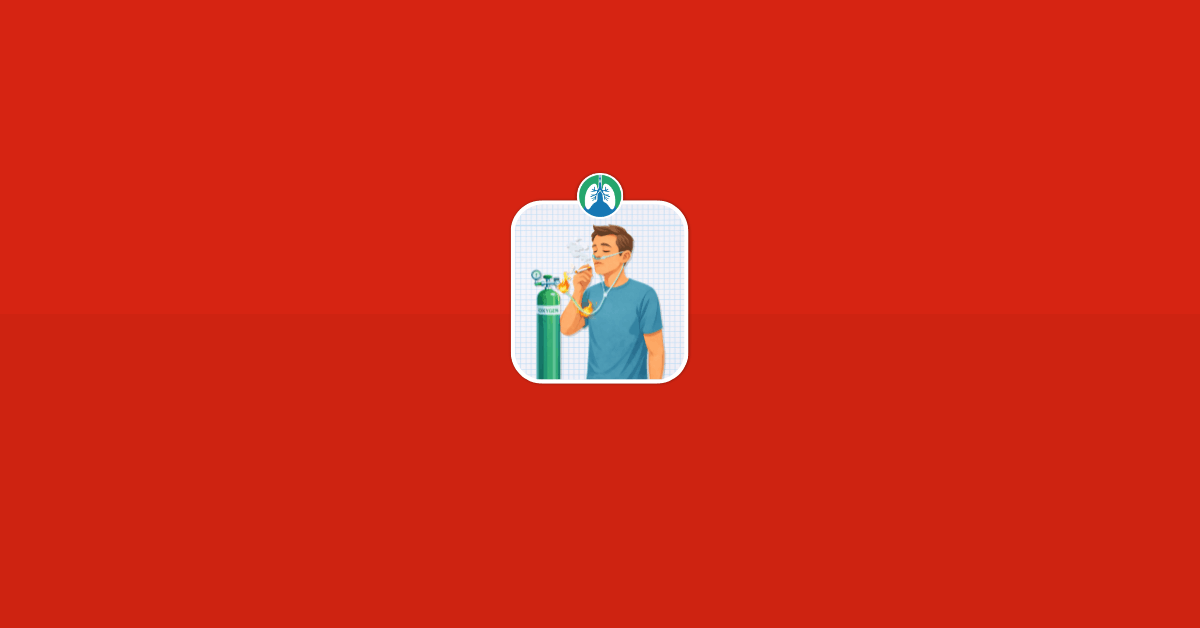
For people who rely on supplemental oxygen, everyday activities often come with important safety considerations. One of the most critical questions is whether it is safe to smoke while using oxygen therapy.
Although oxygen itself is not flammable, it greatly accelerates combustion and can turn a small spark into a dangerous fire in seconds. Smoking while on oxygen significantly increases the risk of burns, house fires, and serious injury
Understanding the dangers and proper safety guidelines is essential for anyone using oxygen therapy at home. In this article, we’ll explore whether smoking while on oxygen is safe and explain the serious risks involved.

Download our free guide that has over 100+ of the best tips for healthy lungs.
Can You Smoke While on Oxygen?
Smoking while on oxygen is extremely dangerous and strongly discouraged. Although oxygen itself does not burn, it supports combustion and can cause materials to ignite much more easily and burn more intensely. When supplemental oxygen is in use, it can saturate clothing, hair, bedding, and furniture, creating an oxygen-enriched environment.
If a lit cigarette, lighter, or match is introduced, it can quickly lead to a flash fire or explosion. These fires can cause severe burns, property damage, and even death.
For this reason, healthcare providers and oxygen equipment manufacturers universally advise patients never to smoke while using oxygen. If a person chooses to smoke, the oxygen equipment should be turned off and moved away, and they should wait several minutes for excess oxygen to dissipate.

Dangers of Smoking While on Oxygen
Smoking while using oxygen creates immediate fire hazards, worsens breathing problems, and can damage essential medical equipment. Even a small spark can trigger serious consequences when oxygen levels are elevated.
Explosion and Fire Risks
Oxygen itself does not burn, but it feeds combustion and causes materials to ignite more easily and burn faster. When a person smokes while using supplemental oxygen, the enriched environment around their face, clothing, and tubing becomes highly flammable.
A lit cigarette, lighter, or match can ignite oxygen that has accumulated in nasal cannulas, masks, or clothing fibers. Fires can start instantly and spread within seconds.
Common ignition points include:
- Cigarette tips
- Lighter sparks
- Ash that falls onto clothing or furniture
- Electrical sparks from nearby devices
Note: Facial burns are common in these incidents because the oxygen source sits close to the nose and mouth. In severe cases, fires extend to bedding, furniture, or walls, putting others in the home at risk.
Immediate Health Effects
Smoking while on oxygen places extreme stress on the lungs. Oxygen therapy treats low blood oxygen levels, often caused by chronic lung diseases such as COPD or pulmonary fibrosis. Cigarette smoke directly irritates the airways and reduces lung function.
Nicotine and carbon monoxide counteract the benefits of oxygen therapy. Carbon monoxide binds to hemoglobin more readily than oxygen, limiting oxygen delivery to tissues.
Short-term effects may include:
- Increased shortness of breath
- Chest tightness
- Coughing and wheezing
- Reduced oxygen saturation levels
Note: Even one cigarette can lower blood oxygen efficiency. For someone already dependent on supplemental oxygen, this reduction can worsen symptoms quickly.
Impact on Oxygen Equipment
Smoking can damage oxygen equipment and reduce its effectiveness. Heat and ash can melt nasal cannulas, tubing, and mask components. Burned or melted tubing may leak oxygen, creating additional fire hazards. Small leaks allow oxygen to accumulate in confined spaces, increasing ignition risk.
Smoke particles also contaminate filters and concentrator components. This buildup can:
- Reduce airflow efficiency
- Shorten equipment lifespan
- Increase maintenance needs
Note: Manufacturers and healthcare providers warn against smoking near oxygen equipment for these reasons. Proper function depends on clean, intact components and a smoke-free environment.
How Oxygen Therapy Interacts With Smoking
Oxygen therapy changes how fire behaves in a home environment. Smoking near oxygen creates a direct ignition risk, increases fire intensity, and exposes others to harm from both flames and smoke.
Why Oxygen Increases Flammability
Medical oxygen does not explode on its own, but it feeds combustion. When oxygen levels rise above the normal 21% found in room air, materials ignite more easily and burn hotter and faster.
Clothing, hair, bedding, and furniture can become oxygen-enriched when a person uses a nasal cannula or mask. Even a small spark from a lighter can ignite these materials within seconds. Fires in oxygen-rich settings spread rapidly and produce intense heat.
Cigarettes, cigars, and lighters introduce open flames or hot embers. A lit cigarette tip can reach temperatures above 1,000°F during a puff. In the presence of supplemental oxygen, that heat can trigger flash fires that cause severe facial burns and airway injuries.
Note: Turning off the oxygen device does not immediately remove the risk. Oxygen can saturate fabrics and remain in the surrounding area for several minutes, depending on airflow and room ventilation.
Smoking Restrictions With Home Oxygen
Most oxygen suppliers and healthcare providers require patients to follow strict no-smoking policies inside the home. These rules apply to the patient and to anyone in the household. Many suppliers will not deliver oxygen if someone continues to smoke indoors. Some require written agreements confirming that smoking will not occur near equipment, tubing, or storage tanks.
Patients should stay at least 10 feet away from open flames, including gas stoves, candles, and fireplaces. They should never smoke while wearing a cannula or mask, and they should remove oxygen and wait several minutes before approaching any ignition source.
Local fire codes and insurance policies may also restrict smoking in homes where oxygen is in use. Violating these rules increases the risk of property damage, injury, and denial of coverage after a fire.
Secondhand Smoke and Oxygen Use
Secondhand smoke creates additional health risks for people who require oxygen therapy. Many patients use oxygen because of chronic lung disease, such as COPD or pulmonary fibrosis. Smoke exposure worsens airway inflammation and reduces lung function.
Even brief exposure can trigger coughing, shortness of breath, or increased oxygen needs. Over time, secondhand smoke may contribute to more frequent exacerbations and hospital visits.
Smoke particles can also accumulate on oxygen tubing and equipment. While the primary danger remains fire, residue buildup may affect cleanliness and air quality in the immediate area.
Household members who smoke outside and away from oxygen equipment reduce both fire and health risks. Strict separation between smoking and oxygen use protects the patient and everyone in the home.
Legal and Medical Guidelines for Smokers on Oxygen
Medical providers, safety regulators, and insurance companies set strict rules for people who use oxygen and continue to smoke. These rules focus on preventing fires, reducing health risks, and limiting legal and financial liability.
Healthcare Provider Instructions
Healthcare providers clearly instruct patients not to smoke while using oxygen. Oxygen supports combustion, and even a small spark from a lighter or cigarette can ignite clothing, tubing, or nearby materials.
Most providers require patients to sign safety agreements before receiving home oxygen equipment. These agreements often state that the patient will keep oxygen at least 5–10 feet away from open flames and heat sources.
Clinicians also document smoking status in the medical record. If a patient continues to smoke, the provider may increase counseling efforts, recommend nicotine replacement therapy, or refer the patient to a cessation program.
In severe cases, a provider may reassess whether home oxygen remains safe. If the fire risk becomes significant, the oxygen supplier and medical team may reconsider delivery arrangements to protect the patient and others in the household.
Home Safety Regulations
Local fire codes and oxygen supplier policies require specific safety measures inside the home. Oxygen tanks must remain secured upright and stored away from stoves, fireplaces, candles, and space heaters.
Many suppliers place “No Smoking—Oxygen in Use” signs at home entrances. This step alerts visitors and emergency personnel to the fire hazard.
Some regions allow landlords to restrict smoking in units where medical oxygen is in use. Multi-unit housing increases the risk that a fire could spread to neighboring residents.
Fire departments often recommend smoke detectors in every bedroom and common area, along with a working fire extinguisher. These measures reduce injury risk but do not make smoking safe around oxygen.
Insurance Implications
Insurance carriers evaluate risk carefully when covering home oxygen therapy. If a fire occurs and investigators determine that smoking near oxygen caused it, coverage disputes may follow. Homeowners or renters insurance policies may limit payouts if policyholders ignore documented safety instructions. This limitation can apply to property damage and liability claims.
Health insurers typically continue covering medically necessary oxygen. However, repeated safety violations may prompt additional documentation requirements from the prescribing physician or supplier.
Life insurance applicants who use oxygen and smoke often face higher premiums. Insurers classify both chronic lung disease and active smoking as significant risk factors, which directly affect underwriting decisions.
Alternatives and Support to Stop Smoking
Quitting smoking while using oxygen therapy is critical for safety and long-term lung health. Structured programs, medication options, and behavioral strategies increase the chances of success and reduce the risk of relapse.
Smoking Cessation Programs
Smoking cessation programs provide structured plans, medical oversight, and accountability. Many hospitals, pulmonary clinics, and community health centers offer programs tailored to people with chronic lung disease or those using home oxygen.
These programs often begin with a clinical assessment. A clinician reviews medical history, nicotine dependence level, current medications, and oxygen use. This helps create a quit plan with a specific quit date and follow-up schedule.
Most programs include weekly sessions for at least 4–8 weeks. Participants learn how nicotine addiction works, how to manage cravings, and how to prevent relapse during high-risk situations such as stress or social events.
Some programs offer group sessions. Others provide one-on-one counseling, which may be more appropriate for individuals with complex medical conditions. Telephone-based and virtual programs are also available and can be useful for people with limited mobility due to lung disease.
Nicotine Replacement Therapies
Nicotine replacement therapy (NRT) reduces withdrawal symptoms by delivering controlled doses of nicotine without tobacco smoke. This lowers exposure to carbon monoxide and other harmful chemicals found in cigarettes.
Common forms of NRT include:
- Nicotine patches (worn daily on the skin)
- Nicotine gum
- Nicotine lozenges
- Nicotine inhalers
- Nicotine nasal sprays
Patches provide steady nicotine levels throughout the day. Gum and lozenges help manage sudden cravings. Some people use a combination, such as a daily patch with gum for breakthrough urges.
A healthcare provider should guide dosing, especially for individuals with heart or lung disease. Using NRT while continuing to smoke increases nicotine exposure and can cause side effects such as nausea, dizziness, or increased heart rate.
Note: Prescription medications like varenicline or bupropion may also be recommended. These drugs reduce cravings and withdrawal symptoms and require medical supervision.
Behavioral Support Options
Behavioral support addresses the habits and triggers linked to smoking. This approach focuses on changing routines, coping with stress, and building new habits that do not involve cigarettes. Cognitive behavioral therapy (CBT) helps individuals identify thought patterns that lead to smoking. A therapist works with the patient to replace automatic responses with healthier alternatives.
Practical strategies include:
- Removing cigarettes, lighters, and ashtrays from the home
- Avoiding places where others smoke
- Using breathing exercises during cravings
- Keeping hands busy with small tasks
Support from family members also plays a key role. Clear communication about the risks of smoking around oxygen equipment reinforces safety and accountability.
Quitlines, such as state or national tobacco cessation hotlines, provide free counseling and follow-up calls. Regular contact improves quit rates and offers support during relapse-risk periods.
Tips for Safe Oxygen Use
They should treat oxygen as a medical gas that supports life but also increases fire risk. Oxygen itself does not burn, but it makes flames spread faster and hotter. Careful handling reduces the chance of injury.
Keep oxygen at least 5–10 feet away from open flames and heat sources. This includes cigarettes, candles, gas stoves, fireplaces, and space heaters. They should never smoke or allow others to smoke near oxygen equipment.
Store tanks upright in a secure stand or cart to prevent tipping. Avoid placing equipment near oily or greasy substances, including petroleum-based lotions, which can ignite more easily in oxygen-rich environments.
He or she should check tubing regularly for cracks, leaks, or kinks. Damaged tubing can reduce oxygen flow and create safety concerns. Replace worn parts promptly and follow the supplier’s instructions.
Electrical safety also matters. They should plug concentrators directly into a grounded outlet and avoid extension cords unless approved by the manufacturer. Post “No Smoking: Oxygen in Use” signs in visible areas of the home. This alerts visitors and reinforces safe behavior.
Finally, they should follow the prescribed flow rate exactly as ordered. Adjusting oxygen levels without medical guidance can affect both safety and treatment effectiveness.
Potential Consequences of Ignoring Precautions
Smoking near oxygen creates immediate fire hazards and serious safety risks. Flames can ignite faster, burn hotter, and spread farther when oxygen is present, putting both the user and others in danger.
Injury and Property Damage
Oxygen itself does not burn, but it feeds combustion and causes materials to ignite more easily. A lit cigarette, lighter, or match can spark a fire in seconds when oxygen saturates clothing, bedding, or furniture.
Clothing and hair can catch fire quickly if oxygen flows near the face. Many documented injuries involve facial burns, airway damage, and hand injuries because people smoke while wearing a nasal cannula.
Home oxygen tanks and concentrators can also become part of the fire environment. While tanks are designed with safety features, intense heat can damage equipment, trigger explosions in rare cases, and spread flames through a room.
Fires linked to home oxygen often cause structural damage. Upholstery, carpets, and curtains absorb oxygen-enriched air, which allows flames to move rapidly and increases repair costs and displacement from the home.
Risk to Bystanders
Smoking while on oxygen does not only endanger the user. Family members, caregivers, neighbors, and even emergency responders face increased risk if a fire starts. In multi-unit housing, flames can spread through shared walls and ventilation systems. A single ignition source in one apartment can force evacuations and expose others to smoke inhalation.
Children and older adults may not react quickly enough to escape. They rely on the oxygen user to follow safety rules and maintain a smoke-free environment around oxygen equipment.
First responders also face heightened danger when entering an oxygen-enriched space. Elevated oxygen levels can cause flash fires, increasing the chance of injury during rescue efforts.
FAQs About Smoking While on Oxygen
What Are the Rules That Must Be Followed When Oxygen Is in Use?
When using supplemental oxygen, safety precautions must always be followed because oxygen supports combustion and increases the risk of fire. Never smoke or allow open flames near oxygen equipment.
Keep oxygen tanks and concentrators at least 5–10 feet away from heat sources such as stoves, candles, fireplaces, or space heaters. Avoid using flammable products like aerosol sprays, oil-based lotions, or petroleum jelly near oxygen.
Ensure the equipment is stored upright and in a well-ventilated area, and follow all instructions provided by your healthcare provider and oxygen supplier.
Why Can’t You Smoke While on Oxygen?
Smoking while using oxygen is extremely dangerous because oxygen makes materials ignite more easily and burn much faster. A lit cigarette, lighter, or match can quickly cause clothing, tubing, or nearby objects to catch fire.
Oxygen itself is not flammable, but it greatly accelerates combustion. This means even a small spark can lead to serious burns, fires, or explosions. For this reason, patients receiving oxygen therapy are strongly advised never to smoke and to keep all smoking materials far away from oxygen equipment.
Does Smoking Affect Your Oxygen Levels?
Yes, smoking can significantly affect your oxygen levels. Cigarette smoke damages the lungs and airways, causing inflammation, narrowing of the air passages, and reduced ability to exchange oxygen and carbon dioxide.
Over time, smoking can lead to conditions such as chronic bronchitis, emphysema, and chronic obstructive pulmonary disease (COPD), all of which impair oxygen delivery to the body. Smoking also introduces carbon monoxide into the bloodstream, which binds to hemoglobin and reduces the blood’s ability to carry oxygen effectively.
How Long Should Oxygen Be Turned Off Before Smoking?
In general, patients using oxygen therapy should not smoke at all because of the serious fire risk. Simply turning off the oxygen does not immediately remove the danger, as oxygen can remain concentrated in clothing, hair, furniture, and the surrounding environment.
If someone chooses to smoke despite medical advice, it is recommended to remove the oxygen equipment and wait at least 10–15 minutes in a different area before lighting a cigarette. However, healthcare providers strongly discourage smoking while receiving oxygen therapy due to safety risks.
Final Thoughts
Smoking while using supplemental oxygen is extremely hazardous and should never be done. Oxygen-enriched environments can cause materials to ignite rapidly, turning a simple cigarette into a serious fire risk.
For individuals who rely on oxygen therapy, following safety guidelines is essential to prevent burns, property damage, and life-threatening accidents. The safest approach is to avoid smoking entirely, especially when oxygen equipment is present. Quitting smoking not only eliminates these risks but also provides significant health benefits for the lungs and overall well-being.
By understanding the dangers and taking proper precautions, oxygen users can help protect themselves, their homes, and those around them.

Written by:
John Landry is a registered respiratory therapist from Memphis, TN, and has a bachelor's degree in kinesiology. He enjoys using evidence-based research to help others breathe easier and live a healthier life.
References
- Fadil A, Kennedy SE, Austin A. The Danger of Smoking on Home Oxygen: A Cautionary Case of Facial Flash Burn. Case Rep Pulmonol. 2025.