

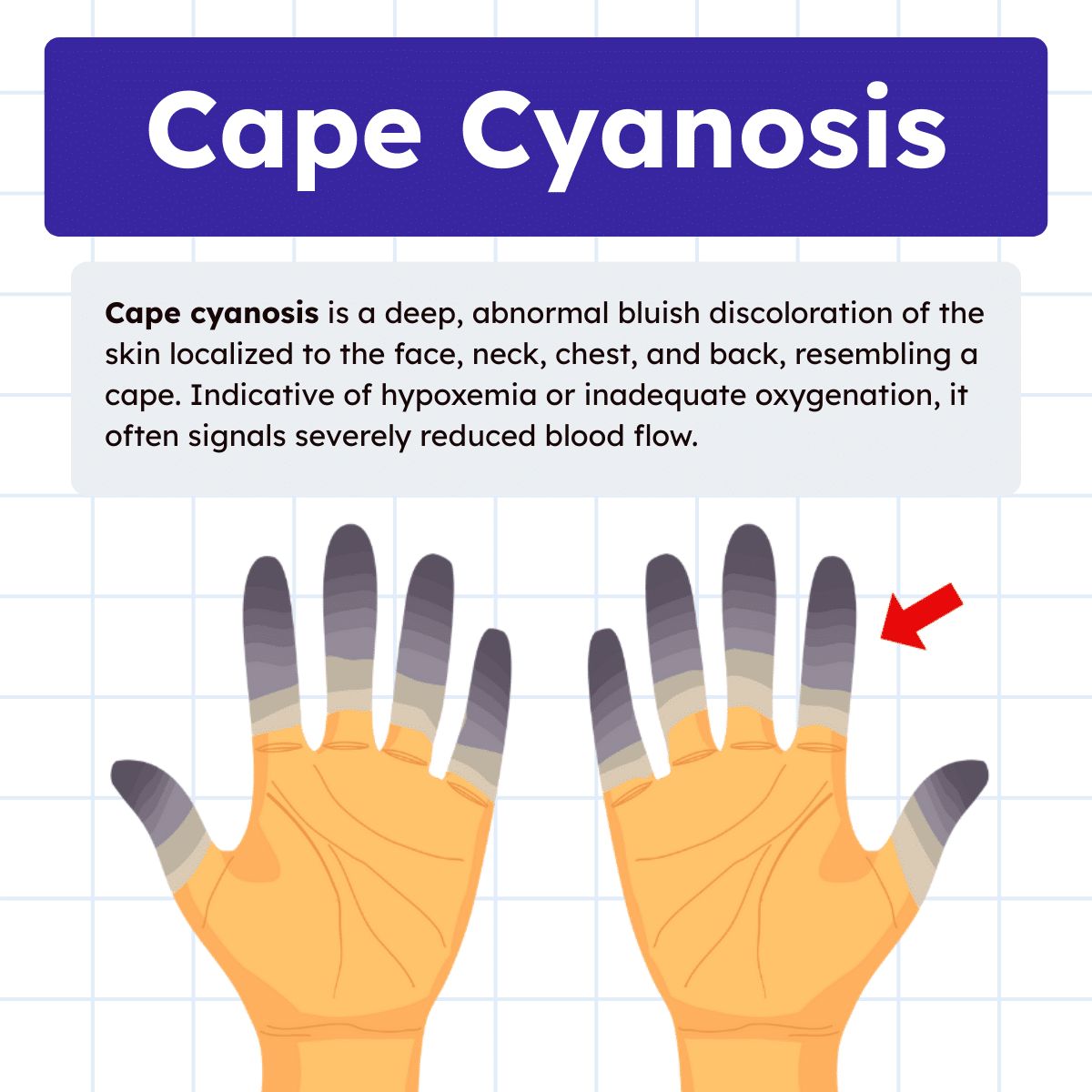
Cape cyanosis is a medical condition characterized by a bluish discoloration of the skin and mucous membranes. It’s a significant indicator of underlying health issues, primarily related to inadequate blood oxygenation.
This article breaks down the causes, symptoms, and potential treatments of cape cyanosis, offering a comprehensive understanding of its medical implications and the importance of early diagnosis and intervention.

Download our free guide that has over 100+ of the best tips for healthy lungs.
What is Cape Cyanosis?
Cape cyanosis is localized cyanosis affecting the “cape” area: face, scalp, neck, and upper chest. It results from increased deoxygenated hemoglobin in superficial venous blood or from reduced arterial oxygen delivery to these skin regions.
You should distinguish cape cyanosis from generalized cyanosis and acrocyanosis. Generalized cyanosis involves central causes (pulmonary or cardiac) with mucous membrane involvement, while acrocyanosis affects extremities and is often cold-induced. Cape cyanosis often indicates venous congestion, right heart failure, superior vena cava syndrome, or localized hypoperfusion.
In infants, a similar pattern can reflect congenital heart disease with right-to-left shunt. In adults, look for signs of venous obstruction, neck vein distention, or trauma. Document color change, symmetry, temperature, and associated respiratory or cardiac symptoms for accurate assessment.
Understanding Cape Cyanosis
Cape cyanosis describes persistent bluish discoloration of the head, neck, and shoulders caused by reduced oxygenation or altered blood flow in superficial tissues. You will find clear differences in origin, physiology, and clinical signs that guide diagnosis and immediate management.
Mechanisms of Cyanosis
Cyanosis occurs when reduced hemoglobin exceeds about 5 g/dL of blood, producing a visible blue hue in skin and mucosa. Cape cyanosis specifically arises from two main mechanisms: localized venous stasis with increased deoxygenated hemoglobin in superficial veins, and regional arterial hypoxemia due to impaired pulmonary or cardiac oxygenation.
Venous obstruction—such as superior vena cava compression, central venous catheter complications, or thrombosis—causes pooling of poorly oxygenated blood in the head and neck. Right-sided heart failure or tricuspid regurgitation raises central venous pressure and produces similar findings. Hypoxemia from lung disease or shunt physiology can exaggerate the color change when perfusion to the cape region is relatively preserved.
Skin temperature and perfusion help differentiate mechanisms. Warm, congested skin suggests venous stasis; cool, pale skin with a bluish tint suggests poor arterial inflow. Pulse oximetry and arterial blood gases quantify systemic oxygenation while duplex imaging or CT venography identifies venous causes.
Signs and Symptoms
You will notice a bluish or purplish discoloration confined to the head, neck, and upper chest. Color intensity may change with position, Valsalva maneuvers, or respiration, and often coexists with neck vein distension and facial edema.
Associated symptoms point to the underlying cause. If venous obstruction is present, expect facial swelling, head fullness, dyspnea, cough, and dilated superficial neck veins. In heart failure, you may find peripheral edema, exertional dyspnea, and hepatomegaly. Pulmonary causes produce tachypnea, hypoxia, and possibly cyanosis of lips and tongue if central oxygenation is affected.
Assess pulse oximetry, capillary refill, skin temperature, and mucous membranes. Rapid worsening, hypoxia unresponsive to supplemental oxygen, or signs of airway compromise require urgent evaluation and imaging to identify obstruction or cardiopulmonary failure.
Causes of Cape Cyanosis
Cape cyanosis most often results from reduced oxygen delivery to the skin of the face, neck, and upper chest, or from altered blood flow patterns that concentrate deoxygenated blood in that region. The causes fall into three main categories related to heart function, lung gas exchange, and peripheral circulatory disturbances.
Cardiac Disorders
Heart conditions that create right-to-left shunts or decrease pulmonary blood flow commonly produce cape cyanosis. Examples include congenital defects such as tetralogy of Fallot, Eisenmenger syndrome from long-standing ventricular septal defects, or severe pulmonary hypertension that reverses intracardiac shunting.
In these cases, deoxygenated venous blood bypasses the lungs and mixes with systemic arterial blood, raising the proportion of reduced hemoglobin and producing bluish discoloration concentrated on the face and upper torso.
Valve lesions and acute heart failure can also contribute by raising right-sided pressures and promoting venous congestion in the head and neck. Rapid onset cyanosis with associated murmurs, failure to thrive in infants, or exercise intolerance in older children and adults should prompt urgent cardiac evaluation with echocardiography and pulse oximetry.
Respiratory Conditions
Lung diseases that impair oxygen uptake frequently cause generalized cyanosis but may present as capelike when airflow or ventilation-perfusion mismatch is regional. Severe pneumonia, acute respiratory distress syndrome (ARDS), or large airway obstruction can reduce arterial oxygen saturation enough to produce visible bluish skin tones on exposed areas.
Hypoventilation from central causes (opioid overdose, neuromuscular weakness) similarly lowers arterial oxygen and can contribute to cape cyanosis when upper-body perfusion predominates.
Chronic obstructive pulmonary disease (COPD) and interstitial lung disease typically produce more diffuse cyanosis but may accentuate the face and neck if the person is upright, tachypneic, or has concurrent cardiac disease. Diagnostic steps include arterial blood gas analysis, chest imaging, and pulse oximetry to quantify hypoxemia and guide oxygen therapy.
Circulatory Abnormalities
Local or systemic circulatory problems can concentrate poorly oxygenated blood in the caput-and-shoulder distribution. Superior vena cava (SVC) obstruction — from malignancy, thrombosis, or external compression — causes venous engorgement and cyanosis of the face and upper chest, often with edema and venous distension. Peripheral vasoconstriction from hypothermia or shock can shift flow centrally and accentuate cyanosis in the face and upper torso.
Autonomic dysfunction and conditions causing asymmetric blood flow (positional venous pooling, sympathetic block) may also produce a cape-like pattern. Evaluate with Doppler ultrasound, venography when indicated, and assessment for thrombotic risk factors, tumors, or external compressive causes to address reversible circulatory contributors.
Pathophysiology in Cape Cyanosis
Cape cyanosis arises from localized increases in deoxygenated hemoglobin and regional perfusion abnormalities in the upper chest and neck. The following subsections explain how reduced oxygen delivery and specific vascular patterns produce the characteristic distribution you observe.
Impaired Oxygenation
You see cyanosis when cutaneous venous or capillary blood has ≥5 g/dL deoxygenated hemoglobin. In Cape Cyanosis, impaired oxygenation results from a combination of reduced arterial oxygen content and increased local oxygen extraction. Causes include hypoxemia from respiratory failure, low cardiac output limiting oxygen delivery, or anemia that alters relative hemoglobin saturation dynamics.
Microcirculatory factors matter. Sluggish flow and prolonged capillary transit time let tissues extract more oxygen, increasing desaturated hemoglobin in superficial vessels. Venous stasis and increased local metabolic demand — for example during fever or shivering — further lower venous oxygen saturation. These processes concentrate deoxygenated blood in the cutaneous plexus, producing the visible blue discoloration.
Regional Cyanosis Distribution
You notice a cape-shaped pattern because of regional venous drainage and sympathetic vasomotor tone. The supraclavicular and anterior neck skin drains into superficial jugular and thoracic tributaries that can pool blood when central venous pressure rises or when local vasoconstriction redistributes flow.
Gravity and patient position amplify the pattern: when upright, dependent venous pooling favors the upper chest and shoulders if thoracic venous pressures are abnormal. External compression (tight collars, suprasternal dressings) or localized edema can accentuate discoloration by impeding venous outflow. Neural reflexes from thoracic disease (e.g., mediastinal processes) may alter regional cutaneous perfusion and produce the well-demarcated “cape” appearance.
Risk Factors
Cape Cyanosis most often arises from specific inherited variations and from age-related changes that alter blood oxygenation and vascular response. You will see that family history and congenital heart or hemoglobin abnormalities sharply increase risk, while advancing age affects skin perfusion, comorbid diseases, and medication interactions.
Genetic Predispositions
You inherit some causes of persistent cyanotic skin changes through identifiable genetic variants. Classic examples include congenital heart defects (e.g., Tetralogy of Fallot, transposition of the great arteries) that produce right-to-left shunts, and mutations in hemoglobin genes (such as beta-globin variants) that reduce oxygen affinity or impair oxygen delivery.
Family history matters: if a parent or sibling has a congenital cyanotic condition or known hemoglobinopathy, your risk rises substantially. Genetic testing and a detailed pedigree can clarify risk for you and guide prenatal or early-life screening.
Carrier states and less severe mutations can produce intermittent or mild cyanotic episodes, especially during exertion or illness. Knowing specific mutations lets clinicians predict complications, tailor monitoring, and choose therapies such as targeted hematology follow-up, corrective cardiac surgery, or oxygen supplementation plans.
Age-Related Factors
As you age, your vascular responsiveness and skin perfusion change, increasing the chance that low peripheral oxygen or poor circulation will produce visible cyanosis. Older adults commonly develop comorbidities—chronic obstructive pulmonary disease, heart failure, peripheral arterial disease—that lower arterial oxygenation or impede blood flow to the extremities and trunk.
Medications commonly used in later life—beta blockers, vasoconstrictors, certain chemotherapy agents—can worsen peripheral cyanosis by reducing cutaneous blood flow. Polypharmacy also raises the risk of drug interactions that impair oxygen delivery.
You should watch for acute events that disproportionately affect older people, such as pulmonary embolism or aspiration, because these events can abruptly reduce oxygen saturation and reveal or worsen cape-pattern cyanosis. Regular review of cardiac and pulmonary status, medication reconciliation, and vascular assessments help identify and reduce these age-related risks.
Diagnostic Methods
You will evaluate skin color, oxygen saturation, and arterial blood gases to determine whether cyanosis reflects reduced oxygen delivery, abnormal hemoglobin, or peripheral vasoconstriction. Each test provides specific, actionable data that guides immediate management and further workup.
Physical Examination
Inspect the lips, nail beds, tongue, and mucous membranes under natural light; central cyanosis shows bluish discoloration of the tongue and lips, while peripheral cyanosis is limited to the digits and nail beds. Note whether cyanosis is present at rest or with exertion, and whether warming or oxygen improves the color.
Palpate pulse rate and quality, and measure capillary refill time. Look for signs of heart failure (jugular venous distension, lung crackles), respiratory distress (use of accessory muscles), or perfusion deficits (cool extremities) that explain cyanosis.
Document associated findings such as clubbing, rashes, or hemolysis signs. Record medication history (nitrites, dapsone), smoking, and exposure to oxidizing agents that can cause methemoglobinemia or sulfhemoglobinemia.
Pulse Oximetry
Use a validated pulse oximeter on a well-perfused finger, earlobe, or toe; ensure proper sensor fit and minimal motion. Pulse oximetry reports SpO2 but cannot differentiate dyshemoglobinemias; a persistently low reading despite supplemental oxygen raises concern for abnormal hemoglobin forms.
Recognize device limitations: nail polish, dark skin pigmentation, hypotension, hypothermia, and motion can produce inaccurate values. In suspected methemoglobinemia, expect a SpO2 plateau around 85% that fails to rise with oxygen.
When SpO2 conflicts with clinical signs, repeat measurement on another site and compare with arterial blood gas co-oximetry results. Use oximetry trends to monitor response to therapy but avoid relying on a single reading to make definitive diagnoses.
Blood Gas Analysis
Obtain arterial blood gas (ABG) with co-oximetry rather than a standard ABG when dyshemoglobinemia is suspected. Co-oximetry provides fractions of oxyhemoglobin, deoxyhemoglobin, carboxyhemoglobin, and methemoglobin, which are essential for accurate diagnosis.
Interpret PaO2 separate from saturation; a normal or high PaO2 with low measured saturation suggests dysfunctional hemoglobin. Calculate alveolar-arterial gradient when evaluating hypoxemia to differentiate cardiopulmonary causes.
Use serial ABG/co-oximetry to assess severity and guide treatment: methylene blue for methemoglobinemia, hyperbaric oxygen or CO-specific therapies for carbon monoxide, and supportive care for sulfhemoglobinemia. Correlate lab results with clinical status before initiating definitive therapy.
Differential Diagnosis
Consider central cyanosis from cardiopulmonary causes first, as it often mimics cape cyanosis. Look for low oxygen saturation, respiratory distress, or signs of heart failure; arterial blood gas and pulse oximetry help differentiate these conditions.
Peripheral cyanosis (acrocyanosis) can appear similar but spares the trunk. Evaluate limb temperature and capillary refill; improvement with warming or improved circulation favors peripheral causes rather than a cape distribution.
Methemoglobinemia produces a slate-gray or brownish discoloration and causes low pulse oximetry readings that do not correct with oxygen. Check for a history of oxidant exposure and measure methemoglobin level if suspected.
Shock states and severe peripheral vasoconstriction can localize cyanosis to dependent areas and the skin overlying the back. Assess perfusion, blood pressure, and lactate; rapid hemodynamic assessment helps distinguish these etiologies from true differential cyanosis.
Acrocyanosis variants and vasospastic disorders (e.g., Raynaud phenomenon) cause episodic color changes. Obtain a history of triggers, symmetry of findings, and response to warming or vasodilators.
Medication- or toxin-induced cutaneous discoloration may mimic cape cyanosis. Review recent drugs, topical agents, and occupational exposures; toxicology testing or dermatology consult can clarify unclear cases.
Skin disorders and pigmentation (e.g., hemosiderin deposition, livedo reticularis) can create persistent discoloration without hypoxemia. Inspect for texture changes, ulceration, or chronicity and consider dermatology biopsy when diagnosis remains uncertain.
Treatment Options
You will focus on improving oxygen delivery and treating the medical problem that caused cyanosis. Timely action can reverse tissue hypoxia and prevent complications.
Oxygen Therapy
Give supplemental oxygen promptly if your oxygen saturation is below target or you show respiratory distress. Start with nasal cannula at 2–6 L/min for mild hypoxemia; use a nonrebreather mask at 10–15 L/min for severe desaturation or signs of shock.
Monitor SpO2 continuously and titrate oxygen to goal saturations (typically 92–96% for most adults; 88–92% in some chronic CO2 retainers). Avoid over-oxygenation when indicated; document response and wean as soon as stable.
Consider high-flow nasal cannula (HFNC) for persistent hypoxemia despite conventional oxygen, and noninvasive ventilation (CPAP/BiPAP) if you have respiratory muscle fatigue or hypercapnia. Intubate and provide mechanical ventilation when you have respiratory failure, altered mental status, or inability to protect the airway.
Addressing Underlying Causes
Identify and treat the specific cause quickly: for pulmonary embolism, initiate anticoagulation and consider thrombolysis or embolectomy based on hemodynamics. For severe pneumonia or ARDS, start empiric antibiotics, obtain cultures, and use lung-protective ventilation strategies if intubated.
If cyanosis stems from cardiac shunt or congenital heart disease, involve cardiology for echo, possible catheter-based closure, or surgical repair. For methemoglobinemia, administer methylene blue (1–2 mg/kg IV) unless contraindicated and stop offending agents.
Manage contributing factors such as anemia with transfusion when hemoglobin is low and tissue oxygen delivery is compromised. Treat hypothermia, correct acid–base disturbances, and consult specialists (pulmonology, cardiology, hematology) when etiology is unclear or the patient fails to improve.
Prognosis and Outcomes
Your prognosis depends on the underlying cause and the speed of treatment. If Cape cyanosis reflects reversible peripheral vasoconstriction or mild hypoxia, you often recover quickly with warming, oxygen, and addressing the precipitating factor.
When cyanosis stems from serious cardiopulmonary disease, outcomes vary and tend to be less favorable without timely, targeted care. Chronic heart or lung conditions can lead to persistent cyanosis, exercise intolerance, and increased risk of complications such as right heart strain or recurrent hypoxemic events.
Early recognition and appropriate intervention improve short- and long-term outcomes. You benefit from rapid oxygenation, temperature correction, and treatment of shock, sepsis, or airway problems when present. Monitoring for organ dysfunction guides escalation of care and affects recovery.
Functional recovery often correlates with resolution of tissue hypoxia and restoration of perfusion. In some cases, residual symptoms like cold intolerance, paresthesia, or skin changes may persist despite correction of oxygenation. Rehabilitation and follow-up care can help optimize function and reduce recurrence risk.
Prognostic indicators you should watch include severity and duration of hypoxia, comorbidities (e.g., COPD, heart failure, diabetes), and response to initial therapies. These factors inform decisions about inpatient monitoring, advanced therapies, and specialist referral.
Prevention Strategies
You should identify and avoid known triggers that can lead to Cape Cyanosis episodes. Common triggers include prolonged cold exposure, tight clothing around the torso and neck, and activities that cause sudden drops in skin temperature. Dress in layers and prioritize windproof, insulated outerwear when you expect cold or wet conditions. Keep your head and hands protected with hats and gloves, and ensure clothing allows good circulation without constriction.
Maintain good peripheral circulation through regular movement and moderate exercise. Periodic gentle warming of the chest and upper back helps; use warm (not hot) compresses or warm beverages to restore normal skin perfusion.
Manage underlying health issues that increase risk, such as circulatory problems, respiratory disorders, or Raynaud-like conditions. Follow your clinician’s advice on medications and therapies, and attend regular checkups to adjust treatment as needed. Adopt simple behavioral measures: avoid smoking, limit alcohol in cold environments, and plan for breaks indoors during prolonged outdoor exposure. Carry emergency warming items—thermal blankets, hand warmers—if you expect extended time in cold settings.
Note: If you notice persistent or recurrent discoloration, seek medical evaluation promptly. Early assessment can identify treatable causes and reduce the chance of complications.
What is a Pulmonary Embolism?
A pulmonary embolism (PE) is a serious medical condition where one or more arteries in the lungs become blocked by a blood clot. These clots typically originate in the deep veins of the legs, a condition known as deep vein thrombosis (DVT).
When part of the clot breaks off, it can travel through the bloodstream to the lungs, causing a blockage.
The key aspects of pulmonary embolism include:
- Symptoms: These can vary but often include shortness of breath, chest pain that may become worse when breathing in, cough (sometimes with bloody sputum), rapid heart rate, and lightheadedness or dizziness.
- Risk Factors: Prolonged immobility (like long flights or bed rest), surgery, certain medical conditions (like cancer or heart disease), smoking, obesity, and a family history of blood clots are known risk factors.
- Diagnosis: PE is typically diagnosed through imaging tests such as a CT scan of the lungs (CT pulmonary angiography) or a lung ventilation/perfusion scan, along with blood tests, an ultrasound of the legs, and an ECG.
- Treatment: Treatment usually involves anticoagulant medications (blood thinners) to prevent further clotting, thrombolytic therapy to break down existing clots in severe cases, and sometimes surgical interventions.
- Prevention: Preventative measures include blood thinners for at-risk individuals, compression stockings to prevent DVT, and lifestyle changes like regular exercise and avoiding smoking.
Note: It’s crucial to seek immediate medical attention if a pulmonary embolism is suspected, as it can be life-threatening and requires prompt treatment.
Central vs. Peripheral Cyanosis
Central and peripheral cyanosis are two types of cyanosis, distinguished by their causes and the areas of the body they affect.
Both indicate problems with blood oxygenation, but their underlying causes and implications can be quite different.
Central Cyanosis
- Location: Central cyanosis is observed in the core (central) areas of the body, including the lips, tongue, and chest. It can also be seen in mucous membranes.
- Cause: It is typically caused by a systemic decrease in arterial oxygenation, which can be due to respiratory issues (like severe pneumonia, bronchitis) or cardiac problems (such as congenital heart defects or heart failure).
- Indication: Central cyanosis is generally a sign of serious systemic health issues and indicates that the problem is with the oxygenation of blood in the heart or lungs.
- Appearance: It often presents as a consistent blue coloration that does not change much with warming or massage.
Peripheral Cyanosis:
- Location: Peripheral cyanosis is observed in the extremities, such as the fingers, toes, and sometimes the nose and earlobes.
- Cause: It is usually due to local vasoconstriction or stasis, leading to increased extraction of oxygen from the blood in the peripheral tissues. Common causes include exposure to cold, circulatory problems, and more localized issues like Raynaud’s phenomenon.
- Indication: Unlike central cyanosis, peripheral cyanosis might not indicate a systemic problem with blood oxygenation but rather a local issue with blood circulation to certain areas of the body.
- Appearance: The discoloration typically intensifies in cold temperatures and might lessen with warming or massaging the affected area.
Note: In both cases, cyanosis is a symptom that warrants medical evaluation to determine and address the underlying cause. However, central cyanosis often requires more urgent medical attention due to its association with systemic and potentially life-threatening conditions.
FAQs About Cape Cyanosis
What Is the Pathophysiology of Cyanosis?
Cyanosis develops when there is an increased concentration of deoxygenated hemoglobin in the blood, giving the skin and mucous membranes a bluish appearance. This typically occurs when arterial oxygen levels fall or when blood is not adequately oxygenated in the lungs.
It can also result from impaired circulation that slows blood flow, allowing tissues to extract more oxygen than normal. Overall, cyanosis reflects a mismatch between oxygen delivery and tissue demand, signaling a problem with oxygenation, ventilation, circulation, or a combination of these factors.
What Does Cyanosis Look Like?
Cyanosis appears as a bluish or purplish discoloration of the skin and mucous membranes. In lighter skin tones, it is often most visible around the lips, nail beds, gums, and eyes. In darker skin tones, cyanosis may be subtler and more easily identified in the mucous membranes, such as the lips, tongue, and inside of the mouth, or beneath the fingernails.
Note: Because skin pigmentation can mask color changes, careful assessment of multiple areas is essential for accurate recognition.
What Is Classic Cape Cyanosis?
Classic cape cyanosis refers to a distinctive pattern of bluish discoloration involving the face, neck, upper chest, and upper back. The distribution resembles a cape draped over the shoulders and torso, which is how the condition gets its name.
This pattern is uncommon and highly concerning, as it usually reflects severe hypoxemia or impaired pulmonary blood flow. Cape cyanosis is most classically associated with massive pulmonary embolism and should prompt immediate evaluation and urgent medical intervention.
How Does Pulmonary Embolism Cause Cyanosis?
A pulmonary embolism causes cyanosis by blocking blood flow through the pulmonary arteries, preventing blood from reaching the lungs for oxygenation. As a result, less oxygenated blood returns to the left side of the heart and is delivered to the body.
This leads to an increased level of deoxygenated hemoglobin in the circulation. When severe or sudden, this oxygen deficit can produce visible cyanosis, particularly in central areas of the body, and signals a life-threatening emergency.
What Does Cape Cyanosis Look Like?
Cape cyanosis presents as a prominent bluish or purplish discoloration concentrated over the face, neck, upper chest, and back. Unlike generalized cyanosis, this pattern is localized to the upper body and resembles a cloak or cape.
The discoloration is often striking and may appear suddenly. Because it reflects profound impairment in oxygenation or pulmonary circulation, cape cyanosis is considered a medical emergency and is most often linked to serious cardiopulmonary conditions.
What Does It Mean When There Is Cape Cyanosis Across the Chest?
Cape cyanosis across the chest indicates severe disruption in oxygen delivery to the upper body. This finding suggests significant hypoxemia or compromised pulmonary blood flow and is commonly associated with conditions such as pulmonary embolism or severe respiratory failure.
The localized upper-body distribution reflects abnormal circulation patterns rather than simple peripheral vasoconstriction. Its presence signals a critical underlying problem and requires immediate diagnostic evaluation and treatment to prevent rapid deterioration.
What Causes Upper Body Cyanosis?
Upper body cyanosis occurs when oxygen saturation is severely reduced or when blood flow through the lungs is impaired. Common causes include pulmonary embolism, severe COPD exacerbations, acute asthma, congenital heart defects with right-to-left shunting, and advanced heart failure.
These conditions limit effective oxygenation of blood or alter normal circulation patterns. Because upper body cyanosis often reflects central oxygenation failure, it is generally more serious than peripheral cyanosis and warrants urgent medical assessment.
What Is the Difference Between Cyanosis and Pallor?
Cyanosis and pallor are both visible signs of underlying pathology but reflect different physiological problems. Cyanosis is a bluish discoloration caused by low oxygen levels or increased deoxygenated hemoglobin in the blood.
Pallor, on the other hand, refers to abnormal paleness of the skin and is usually related to reduced blood flow, vasoconstriction, or anemia. While cyanosis points to oxygenation issues, pallor more commonly suggests circulatory compromise or decreased red blood cell concentration.
What Is Peripheral Cyanosis?
Peripheral cyanosis is characterized by bluish discoloration of the extremities, such as the fingers, toes, ears, or nose. It occurs when blood flow to these areas is reduced or when tissues extract more oxygen due to slow circulation.
Common causes include cold exposure, peripheral vascular disease, heart failure, or shock. Unlike central cyanosis, peripheral cyanosis does not necessarily indicate low arterial oxygen levels and often improves with warming or restoration of adequate circulation.
What Is Central Cyanosis?
Central cyanosis is a bluish discoloration involving the lips, tongue, mucous membranes, and central body areas. It results from decreased arterial oxygen saturation, most often due to serious lung or heart conditions that impair overall oxygenation.
Common causes include severe pneumonia, pulmonary embolism, congenital heart disease, or respiratory failure. Central cyanosis is a more concerning finding than peripheral cyanosis because it reflects systemic hypoxemia and typically requires immediate medical evaluation and treatment.
Is Cyanosis Dangerous?
Cyanosis can be dangerous because it often signals a serious underlying disorder affecting oxygenation or circulation. While mild or peripheral cyanosis may be benign in some situations, central cyanosis is frequently associated with life-threatening heart or lung conditions.
The level of risk depends on the cause, onset, and severity. Prompt recognition and treatment of the underlying condition are critical, as prolonged or severe hypoxemia can lead to organ damage, cardiac arrest, or death.
Final Thoughts
Cape cyanosis is a rare but critical clinical sign that should never be overlooked. Its characteristic distribution over the face, neck, chest, and upper back reflects severe impairment in oxygenation or pulmonary blood flow, often pointing to life-threatening conditions such as pulmonary embolism.
Prompt recognition and interpretation of this finding can significantly impact patient outcomes by accelerating diagnosis and treatment.
For clinicians, understanding the presentation, causes, and management of cape cyanosis reinforces the importance of thorough physical assessment and rapid intervention when signs of profound hypoxemia are present, ultimately helping to reduce morbidity and mortality in high-risk cardiopulmonary emergencies.

Written by:
John Landry is a registered respiratory therapist from Memphis, TN, and has a bachelor's degree in kinesiology. He enjoys using evidence-based research to help others breathe easier and live a healthier life.
References
- Adeyinka A, Kondamudi NP. Cyanosis (Archived) [Updated 2023 Aug 12]. In: StatPearls [Internet]. Treasure Island (FL): StatPearls Publishing; 2025.