

Cheyne-Stokes respiration is a well-defined abnormal breathing pattern seen in a variety of clinical settings. It consists of cyclical increases and decreases in respiratory rate and tidal volume that alternate with brief periods of apnea, and it is often associated with neurologic injury or heart failure.
For respiratory therapists, the ability to identify this pattern of breathing is an important component of patient assessment.
A clear understanding of its underlying mechanisms, common causes, and management considerations supports appropriate monitoring, ventilatory decision-making, and effective collaboration with the healthcare team in both acute and long-term care environments.

What Is Cheyne-Stokes Respiration?
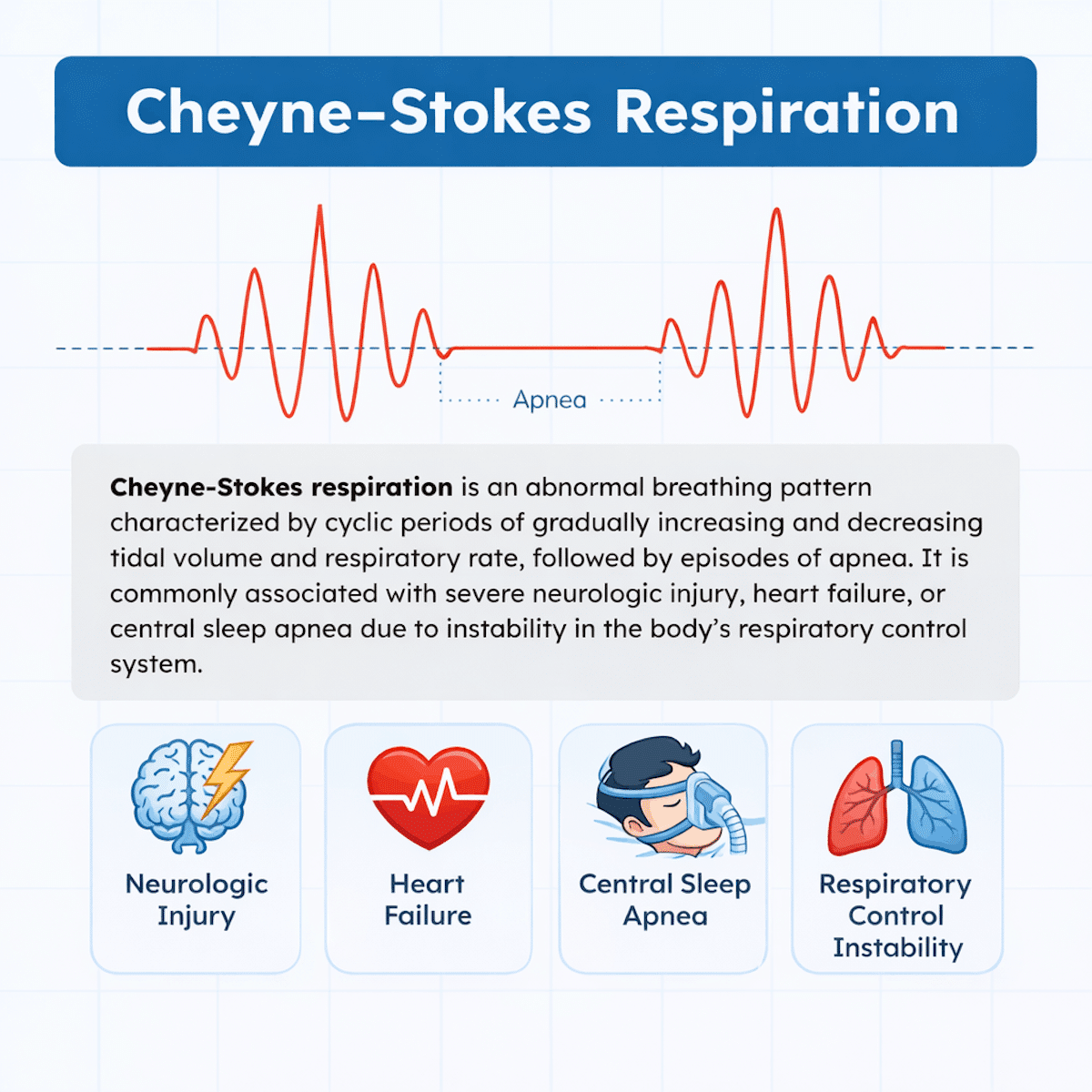
Cheyne-Stokes respiration is an abnormal breathing pattern characterized by cyclical changes in respiratory rate and tidal volume followed by periods of apnea. Breathing gradually increases in depth and sometimes rate, then progressively decreases until ventilation temporarily stops. After the apneic pause, the cycle repeats.
This pattern is considered a form of periodic breathing and reflects instability in the body’s respiratory control system. It is most commonly associated with conditions such as congestive heart failure, stroke, traumatic brain injury, metabolic encephalopathy, and central sleep apnea.
Cheyne-Stokes respiration occurs when the brain’s respiratory centers overcorrect for changes in carbon dioxide levels or when delayed circulation time disrupts normal feedback mechanisms that regulate breathing.
Pathophysiology of Cheyne-Stokes Respiration
To understand Cheyne-Stokes respiration, respiratory therapists must appreciate the role of the brain stem in controlling ventilation.
The medulla oblongata serves as the primary center for automatic respiratory control. Under normal circumstances, ventilation is tightly regulated by central and peripheral chemoreceptors that respond to changes in PaCO2, PaO2, and pH.
In Cheyne-Stokes respiration, this regulatory system becomes unstable.
1. Loss of Cortical Regulation (Neurologic Causes)
In patients with severe cerebral lesions or coma, cortical modulation of the medullary respiratory centers is impaired. The medulla becomes overly sensitive to carbon dioxide levels. Small fluctuations in PaCO2 can trigger exaggerated ventilatory responses.
This leads to:
- Hyperventilation when PaCO2 rises slightly
- Excessive CO2 elimination
- PaCO2 falling below the apneic threshold
- Temporary cessation of breathing
Note: As CO2 accumulates during apnea, ventilation resumes, often in an exaggerated fashion, restarting the cycle.
2. Prolonged Circulation Time (Cardiac Causes)
In congestive heart failure, Cheyne-Stokes respiration results primarily from delayed blood transit time between the lungs and the brain.
Because cardiac output is reduced:
- Changes in arterial CO2 take longer to reach the respiratory centers.
- The medulla responds to outdated information.
- Ventilatory adjustments overshoot the target.
Note: This delayed feedback loop creates oscillations in ventilation, producing the classic crescendo-decrescendo pattern.
Clinical Conditions Associated with Cheyne-Stokes Respiration
Cheyne-Stokes respiration can occur in multiple clinical scenarios. Respiratory therapists frequently encounter it in the following conditions:
- Congestive Heart Failure (CHF): This breathing pattern is common in patients with reduced left ventricular ejection fraction. It may present during sleep as central sleep apnea with Cheyne-Stokes breathing. Clinical relevance is associated with a worse prognosis, linked to increased mortality, and contributes to sleep fragmentation and daytime fatigue.
- Stroke and Severe Brain Injury: Large bilateral cerebral infarctions, traumatic brain injury (TBI), and intracranial hemorrhage can disrupt cortical control of breathing. Cheyne-Stokes respiration and slow or irregular respirations are common in TBI.
- Encephalopathy: Metabolic derangements such as hepatic or uremic encephalopathy may impair respiratory control mechanisms.
- Coma: In comatose patients, this breathing pattern may provide valuable clues about the location and severity of neurologic damage.
- Central Sleep Apnea (CSA): Cheyne-Stokes breathing represents a specific pattern of central sleep apnea. It is especially prevalent in patients with heart failure.
Differentiating Cheyne-Stokes from Other Abnormal Breathing Patterns
Respiratory therapists must distinguish Cheyne-Stokes respiration from other pathologic patterns:
- Kussmaul breathing – Deep, rapid breathing seen in diabetic ketoacidosis
- Biot (ataxic) breathing – Irregular respirations with unpredictable apneic pauses, associated with brain stem damage or increased ICP
- Apneustic breathing – Prolonged inspiratory pauses due to pontine lesions
- Agonal breathing – Gasping respirations signaling cerebral hypoxia/anoxia
Note: Accurate identification guides further diagnostic evaluation and urgency of intervention.
Why Cheyne-Stokes Respiration Matters to Respiratory Therapists
Cheyne-Stokes respiration is highly relevant to respiratory care for several reasons.
1. It Signals Serious Underlying Pathology
Cheyne-Stokes respiration often indicates severe neurologic damage or advanced heart failure. Early recognition allows respiratory therapists to escalate care promptly and collaborate with physicians.
2. It Affects Gas Exchange
- During hyperpnea: PaCO2 may drop significantly. Respiratory alkalosis may develop.
- During apnea: CO2 rises. Oxygen saturation may fall.
Note: These oscillations can worsen myocardial oxygen demand and destabilize critically ill patients.
3. It Impacts Ventilator Management
In mechanically ventilated patients, Cheyne-Stokes respiration may appear as cyclic variations in spontaneous breathing efforts.
Respiratory therapists must:
- Monitor waveform patterns carefully.
- Adjust trigger sensitivity if needed.
- Avoid over-assisting during hyperpneic phases.
- Evaluate ABG trends.
4. It Plays a Role in Sleep Medicine
Respiratory therapists involved in sleep diagnostics often identify Cheyne-Stokes breathing during polysomnography (PSG). Recognition is essential for:
- Differentiating obstructive from central apnea
- Recommending appropriate PAP therapy
- Evaluating heart failure severity
5. It Has Prognostic Implications
In heart failure patients, Cheyne-Stokes respiration is associated with:
- Increased sympathetic activation
- Reduced quality of life
- Higher mortality risk
Note: Respiratory therapists can contribute to multidisciplinary management strategies that improve outcomes.
Assessment and Monitoring
When Cheyne-Stokes respiration is suspected, respiratory therapists should:
Perform a Thorough Assessment
- Evaluate neurologic status
- Assess cardiac history
- Monitor vital signs
- Observe breathing pattern duration and cycle length
Obtain Objective Data
- Arterial blood gases (ABGs)
- Continuous pulse oximetry
- Capnography
- Echocardiography (if CHF suspected)
- Polysomnography (if sleep-related)
Document Pattern Characteristics
Precise documentation of crescendo-decrescendo phases and apnea duration is critical in acute care settings.
Management Strategies
Treatment focuses on addressing the underlying cause.
1. Optimize Cardiac Function (CHF-Related Cheyne-Stokes respiration)
- Improve ejection fraction
- Adjust heart failure medications
- Reduce fluid overload
Note: Improving cardiac output shortens circulation time and stabilizes ventilatory feedback.
2. Positive Airway Pressure (PAP) Therapy
In central sleep apnea with Cheyne-Stokes breathing:
- CPAP: May improve cardiac function, stabilize the upper airway, and reduce apnea episodes.
- BiPAP: Effective for hypercapnic central sleep apnea (hypoventilation syndrome).
- Adaptive Servo-Ventilation (ASV): Often considered the most effective therapy for Cheyne-Stokes breathing, provides dynamic pressure support, and requires a prescription based on PSG findings.
3. Nocturnal Oxygen Therapy
For CSA secondary to heart failure:
- Improves left ventricular ejection fraction
- Decreases apnea-hypopnea index (AHI)
- Often combined with PAP therapy
4. Pharmacologic Therapy
Acetazolamide (Diamox) increases bicarbonate excretion, produces mild metabolic acidosis, lowers the PaCO2 apneic threshold, and may reduce Cheyne-Stokes episodes in heart failure.
Cheyne-Stokes Respiration in Critical Care
In the ICU, Cheyne-Stokes respiration may signal deterioration.
Respiratory therapists should:
- Monitor for progression to irregular or ataxic breathing
- Communicate changes promptly
- Support airway protection
- Prepare for potential ventilatory support
Note: Because Cheyne-Stokes respiration may precede respiratory failure in neurologic injury, vigilance is essential.
Respiratory Control Instability
Cheyne-Stokes respiration highlights the delicate balance of the respiratory control system.
It demonstrates:
- The importance of feedback loops
- The sensitivity of chemoreceptors
- The role of cardiac output in ventilatory stability
Note: For respiratory therapists, understanding Cheyne-Stokes respiration deepens appreciation of how neurologic and cardiovascular systems intersect with pulmonary function.
Cheyne-Stokes Respiration Practice Questions
1. What is Cheyne-Stokes respiration?
Cheyne-Stokes respiration is an abnormal breathing pattern characterized by a gradual increase and decrease in tidal volume and respiratory rate, followed by a period of apnea.
2. How is Cheyne-Stokes respiration classified?
It is classified as a form of periodic breathing.
3. What is the hallmark pattern of Cheyne-Stokes respiration?
Breathing follows a smooth crescendo-decrescendo pattern that alternates with episodes of apnea.
4. What neurologic conditions commonly cause Cheyne-Stokes respiration?
Severe bilateral cerebral hemisphere damage, infarction, or encephalopathy are common neurologic causes.
5. How does congestive heart failure contribute to Cheyne-Stokes respiration?
Prolonged circulation time delays changes in carbon dioxide levels reaching the respiratory center, leading to cyclical breathing instability.
6. Why may Cheyne-Stokes respiration occur in elderly patients without severe disease?
It can occasionally occur during sleep due to age-related changes in respiratory control.
7. What role does the medulla play in Cheyne-Stokes respiration?
The medulla regulates breathing and becomes overly sensitive to carbon dioxide when higher cortical control is impaired.
8. How does loss of cortical regulation affect breathing patterns in coma?
Loss of cortical influence increases medullary sensitivity to CO2, contributing to waxing and waning ventilation.
9. What is the primary site of central respiratory control?
The brainstem, particularly the medulla, is the primary site of subconscious respiratory control.
10. In what clinical states is Cheyne-Stokes respiration commonly observed?
It is often seen in coma, severe central nervous system disease, metabolic disturbances, and heart failure.
11. How does Cheyne-Stokes respiration differ from Biot breathing?
Cheyne-Stokes has a rhythmic crescendo-decrescendo pattern, whereas Biot breathing is irregular with unpredictable apnea.
12. What is ataxic breathing a marker of?
Ataxic breathing indicates severe brainstem dysfunction.
13. How can breathing patterns help evaluate a comatose patient?
Specific patterns may provide clues to the underlying cause of coma.
14. What condition is suggested by Kussmaul respirations?
Kussmaul breathing suggests metabolic acidosis, commonly seen in diabetic ketoacidosis.
15. What breathing pattern is associated with increased intracranial pressure?
Biot breathing is often associated with brain damage and elevated intracranial pressure.
16. What does agonal breathing typically indicate?
Agonal breathing suggests severe cerebral hypoxia or impending respiratory arrest.
17. Why is Cheyne-Stokes respiration common in traumatic brain injury?
Central nervous system disruption alters respiratory control, leading to periodic breathing.
18. What is central sleep apnea (CSA)?
Central sleep apnea is a sleep disorder characterized by recurrent cessation of respiratory effort during sleep.
19. How is Cheyne-Stokes breathing related to central sleep apnea?
Cheyne-Stokes breathing is a form of central sleep apnea often associated with heart failure or neurologic disease.
20. What is the first step in managing central sleep apnea?
Treatment should focus on identifying and addressing the underlying cause.
21. How can optimizing cardiac function improve Cheyne-Stokes respiration?
Improving cardiac output reduces circulation delay and stabilizes carbon dioxide fluctuations.
22. How does CPAP therapy benefit patients with Cheyne-Stokes breathing and heart failure?
CPAP may improve oxygenation and cardiac function, reducing apnea severity.
23. When is BiPAP indicated in central sleep apnea?
BiPAP may be used in patients with hypercapnic central sleep apnea or hypoventilation syndromes.
24. What is adaptive servo-ventilation (ASV)?
ASV is a specialized positive airway pressure therapy designed to stabilize ventilation in central sleep apnea.
25. When should ASV be prescribed?
ASV should be prescribed based on findings from polysomnography.
26. How does nocturnal oxygen therapy help in central sleep apnea due to heart failure?
Supplemental oxygen can reduce apnea frequency and improve left ventricular function.
27. What is the mechanism of action of acetazolamide in Cheyne-Stokes respiration?
Acetazolamide promotes bicarbonate excretion, inducing mild metabolic acidosis that lowers the apneic threshold.
28. Why is acetazolamide useful in heart failure-related Cheyne-Stokes respiration?
It reduces carbon dioxide instability and helps stabilize ventilation.
29. How does hypoxemia contribute to Cheyne-Stokes respiration?
Low oxygen levels can destabilize respiratory control and trigger periodic breathing.
30. Why is Cheyne-Stokes respiration considered clinically significant?
It often reflects serious neurologic or cardiac pathology and may indicate worsening disease.
31. What is the Cheyne-Stokes breathing pattern characterized by?
Cheyne-Stokes respiration is a form of periodic breathing characterized by a repeating cycle of crescendo hyperpnea, decrescendo ventilation, and apnea.
32. What are the three phases of Cheyne-Stokes respiration?
The three phases are gradual increase in ventilation, gradual decrease in ventilation, and a period of apnea.
33. How long does a typical Cheyne-Stokes cycle last?
A typical cycle repeats approximately every 30 seconds to 2 minutes.
34. What occurs during the hyperpneic phase of Cheyne-Stokes respiration?
Ventilation progressively increases in tidal volume and rate until it reaches a peak.
35. What happens after the decrescendo phase in Cheyne-Stokes respiration?
Breathing diminishes smoothly and temporarily stops, resulting in apnea.
36. What restarts the breathing cycle after apnea in Cheyne-Stokes respiration?
Accumulation of carbon dioxide during apnea stimulates ventilation, restarting the cycle.
37. Which brain structure is primarily responsible for automatic respiratory control?
The medulla oblongata is the primary center for automatic control of breathing.
38. How do central and peripheral chemoreceptors regulate normal ventilation?
They respond to changes in PaCO2, PaO2, and pH to maintain stable respiratory control.
39. What underlying problem occurs in Cheyne-Stokes respiration?
There is instability in the feedback control system regulating ventilation.
40. How does loss of cortical regulation contribute to Cheyne-Stokes respiration?
Damage to higher brain centers increases medullary sensitivity to carbon dioxide fluctuations.
41. Why does hyperventilation occur in neurologic causes of Cheyne-Stokes respiration?
Small increases in PaCO2 trigger exaggerated ventilatory responses.
42. What is the apneic threshold?
The apneic threshold is the PaCO2 level below which respiratory drive temporarily ceases.
43. How does excessive CO2 elimination contribute to apnea in Cheyne-Stokes respiration?
Hyperventilation lowers PaCO2 below the apneic threshold, causing temporary cessation of breathing.
44. How does carbon dioxide accumulation during apnea affect ventilation?
Rising PaCO2 stimulates renewed and often exaggerated ventilation.
45. What cardiac condition is strongly associated with Cheyne-Stokes respiration?
Congestive heart failure is a common cardiac cause.
46. How does reduced cardiac output lead to Cheyne-Stokes respiration?
Delayed circulation time causes the respiratory center to respond to outdated blood gas information.
47. What is meant by a delayed feedback loop in Cheyne-Stokes respiration?
The respiratory center responds to previous CO2 levels rather than current levels, causing overshoot and oscillation.
48. Why is Cheyne-Stokes respiration common in patients with reduced left ventricular ejection fraction?
Poor cardiac output increases circulation time and destabilizes ventilatory control.
49. Why is Cheyne-Stokes respiration clinically significant in heart failure?
It is associated with worse prognosis and increased mortality.
50. How does Cheyne-Stokes respiration affect sleep quality?
It causes sleep fragmentation and may lead to daytime fatigue.
51. What neurologic events commonly trigger Cheyne-Stokes respiration?
Large bilateral cerebral infarctions and intracranial hemorrhage can disrupt respiratory regulation.
52. Why is Cheyne-Stokes respiration common in traumatic brain injury?
Disruption of cortical control alters central respiratory regulation.
53. How can encephalopathy contribute to Cheyne-Stokes respiration?
Metabolic disturbances impair central respiratory control mechanisms.
54. In comatose patients, what can Cheyne-Stokes respiration indicate?
It may provide clues about the severity and location of neurologic injury.
55. Why is it important for respiratory therapists to recognize Cheyne-Stokes respiration?
Recognition helps identify underlying neurologic or cardiac pathology and guides appropriate intervention.
56. How is Cheyne-Stokes breathing related to central sleep apnea (CSA)?
Cheyne-Stokes breathing is a specific form of central sleep apnea characterized by cyclic crescendo-decrescendo ventilation with apnea.
57. In which patient population is Cheyne-Stokes breathing most prevalent?
It is especially common in patients with congestive heart failure.
58. Why is it important to differentiate Cheyne-Stokes respiration from other abnormal breathing patterns?
Accurate identification guides appropriate diagnostic evaluation and urgency of intervention.
59. How does Kussmaul breathing differ from Cheyne-Stokes respiration?
Kussmaul breathing is deep and rapid without apnea, typically associated with metabolic acidosis such as diabetic ketoacidosis.
60. What characterizes Biot (ataxic) breathing?
Biot breathing consists of irregular respirations with unpredictable apneic pauses, often due to brainstem damage or increased intracranial pressure.
61. What is apneustic breathing?
Apneustic breathing involves prolonged inspiratory pauses and is usually caused by pontine lesions.
62. What is agonal breathing?
Agonal breathing is a gasping pattern that indicates severe cerebral hypoxia or impending respiratory arrest.
63. Why is Cheyne-Stokes respiration clinically significant?
It often signals severe neurologic injury or advanced heart failure.
64. How can Cheyne-Stokes respiration affect arterial carbon dioxide levels?
PaCO2 may fall during hyperpnea and rise significantly during apnea.
65. What acid-base disturbance may develop during the hyperpneic phase of Cheyne-Stokes respiration?
Respiratory alkalosis may occur due to excessive CO2 elimination.
66. How can Cheyne-Stokes respiration affect oxygenation?
Oxygen saturation may decline during apneic phases.
67. Why can Cheyne-Stokes respiration increase myocardial oxygen demand?
Fluctuating oxygen levels and sympathetic activation can stress the cardiovascular system.
68. How might Cheyne-Stokes respiration appear in mechanically ventilated patients?
It may present as cyclic variations in spontaneous breathing effort and ventilator waveforms.
69. Why must respiratory therapists monitor ventilator waveforms in suspected Cheyne-Stokes respiration?
Careful monitoring helps prevent over-assistance during hyperpneic phases and ensures appropriate ventilator settings.
70. What laboratory test is useful for evaluating gas exchange in Cheyne-Stokes respiration?
Arterial blood gas (ABG) analysis provides objective assessment of oxygenation and ventilation.
71. What bedside monitoring tool helps track oxygen fluctuations in Cheyne-Stokes respiration?
Continuous pulse oximetry helps monitor oxygen saturation trends.
72. How can capnography assist in evaluating Cheyne-Stokes respiration?
Capnography allows continuous monitoring of CO2 trends and ventilatory patterns.
73. What cardiac test may be indicated if heart failure is suspected?
Echocardiography can assess left ventricular function.
74. What sleep study is used to diagnose central sleep apnea with Cheyne-Stokes breathing?
Polysomnography (PSG) is used to evaluate sleep-related breathing disorders.
75. Why is detailed documentation of breathing cycles important in Cheyne-Stokes respiration?
Accurate documentation supports clinical decision-making and trend analysis in acute care.
76. What is the primary management principle for Cheyne-Stokes respiration?
Treatment focuses on correcting the underlying cause.
77. How does optimizing cardiac function help reduce Cheyne-Stokes respiration?
Improved cardiac output shortens circulation time and stabilizes ventilatory feedback loops.
78. How can CPAP therapy benefit patients with Cheyne-Stokes breathing?
CPAP may stabilize ventilation and improve cardiac function in selected patients.
79. When is BiPAP most appropriate in central sleep apnea?
BiPAP is particularly useful in hypercapnic central sleep apnea or hypoventilation syndromes.
80. What is adaptive servo-ventilation (ASV) designed to do?
ASV dynamically adjusts pressure support to stabilize ventilation in central sleep apnea.
81. Why must ASV be prescribed carefully in heart failure patients?
Certain heart failure populations require careful evaluation before ASV use due to potential risks.
82. How can nocturnal oxygen therapy help in heart failure-related central sleep apnea?
Supplemental oxygen may reduce apnea frequency and improve cardiac function.
83. What is the mechanism of acetazolamide in treating Cheyne-Stokes respiration?
Acetazolamide induces mild metabolic acidosis, lowering the PaCO2 apneic threshold and stabilizing breathing.
84. Why is vigilance important when Cheyne-Stokes respiration is observed in the ICU?
It may signal neurologic deterioration or progression toward respiratory failure.
85. How does Cheyne-Stokes respiration demonstrate instability in respiratory control?
It reflects delayed or exaggerated feedback between chemoreceptors, the brainstem, and the cardiovascular system.
86. Why is interdisciplinary collaboration important in managing Cheyne-Stokes respiration?
Management often requires coordinated care between respiratory therapists, cardiologists, neurologists, and sleep specialists.
87. What physiologic variable primarily drives the cyclic pattern seen in Cheyne-Stokes respiration?
Fluctuations in arterial carbon dioxide (PaCO2) are the primary driver of the cyclic ventilatory pattern.
88. How does an increased chemoreceptor gain contribute to Cheyne-Stokes respiration?
Heightened sensitivity to small PaCO2 changes leads to exaggerated ventilatory responses and instability.
89. What is meant by ventilatory overshoot in Cheyne-Stokes respiration?
Ventilatory overshoot refers to excessive hyperventilation that lowers PaCO2 below the apneic threshold.
90. Why does reduced cardiac output worsen ventilatory instability?
Slower blood flow delays feedback to central chemoreceptors, increasing oscillations in breathing.
91. How can Cheyne-Stokes respiration affect sleep architecture?
Repeated arousals from apnea and hyperpnea disrupt normal sleep stages.
92. What symptom may patients with sleep-related Cheyne-Stokes breathing report?
Patients may report nonrestorative sleep and excessive daytime fatigue.
93. Why is monitoring cycle length clinically relevant in Cheyne-Stokes respiration?
Changes in cycle length may reflect worsening cardiac or neurologic function.
94. How can Cheyne-Stokes respiration impact intracranial pressure?
Fluctuations in CO2 can alter cerebral blood flow and potentially influence intracranial pressure.
95. What hemodynamic change is commonly associated with Cheyne-Stokes respiration in heart failure?
Increased sympathetic nervous system activity is frequently observed.
96. How does Cheyne-Stokes respiration differ from obstructive sleep apnea on PSG?
Central events in Cheyne-Stokes respiration lack respiratory effort, whereas obstructive events show continued effort.
97. What waveform pattern may be observed on capnography during Cheyne-Stokes respiration?
Capnography may show cyclic rises and falls in end-tidal CO2 corresponding to hyperpnea and apnea.
98. Why is early recognition of Cheyne-Stokes respiration important in stroke patients?
It may indicate bilateral cerebral involvement or worsening neurologic status.
99. How can fluid overload exacerbate Cheyne-Stokes respiration in heart failure?
Pulmonary congestion and impaired gas exchange can worsen ventilatory instability.
100. What is the clinical significance of persistent Cheyne-Stokes respiration despite therapy?
Persistent Cheyne-Stokes respiration may suggest refractory heart failure or progressive neurologic impairment.
Final Thoughts
Cheyne-Stokes respiration is a distinctive abnormal breathing pattern that reflects disruption in normal respiratory control. It is commonly associated with heart failure, neurologic injury, metabolic disturbances, and central sleep apnea, and may indicate significant underlying disease.
For respiratory therapists, accurate recognition of this pattern supports appropriate assessment, monitoring, and communication with the healthcare team.
Understanding its underlying mechanisms and treatment options helps guide clinical decisions in both acute and chronic care settings and contributes to safe, evidence-based respiratory management.

Written by:
John Landry is a registered respiratory therapist from Memphis, TN, and has a bachelor's degree in kinesiology. He enjoys using evidence-based research to help others breathe easier and live a healthier life.
References
- Rudrappa M, Modi P, Bollu PC. Cheyne Stokes Respirations. [Updated 2023 Jul 31]. In: StatPearls [Internet]. Treasure Island (FL): StatPearls Publishing; 2025.