
Disease X is a term used by scientists and global health experts to describe a potential future illness that could cause a serious international outbreak. Unlike well-known diseases, Disease X represents an unknown pathogen that has not yet emerged but could pose a significant threat to public health.
The concept highlights the importance of preparedness, research, and rapid response systems in the fight against infectious diseases.
By studying Disease X, researchers and healthcare professionals can better understand how new diseases may appear, spread, and impact communities around the world, helping governments and medical systems prepare for future pandemics.

Download our free guide that has over 100+ of the best tips for healthy lungs.
What is Disease X?
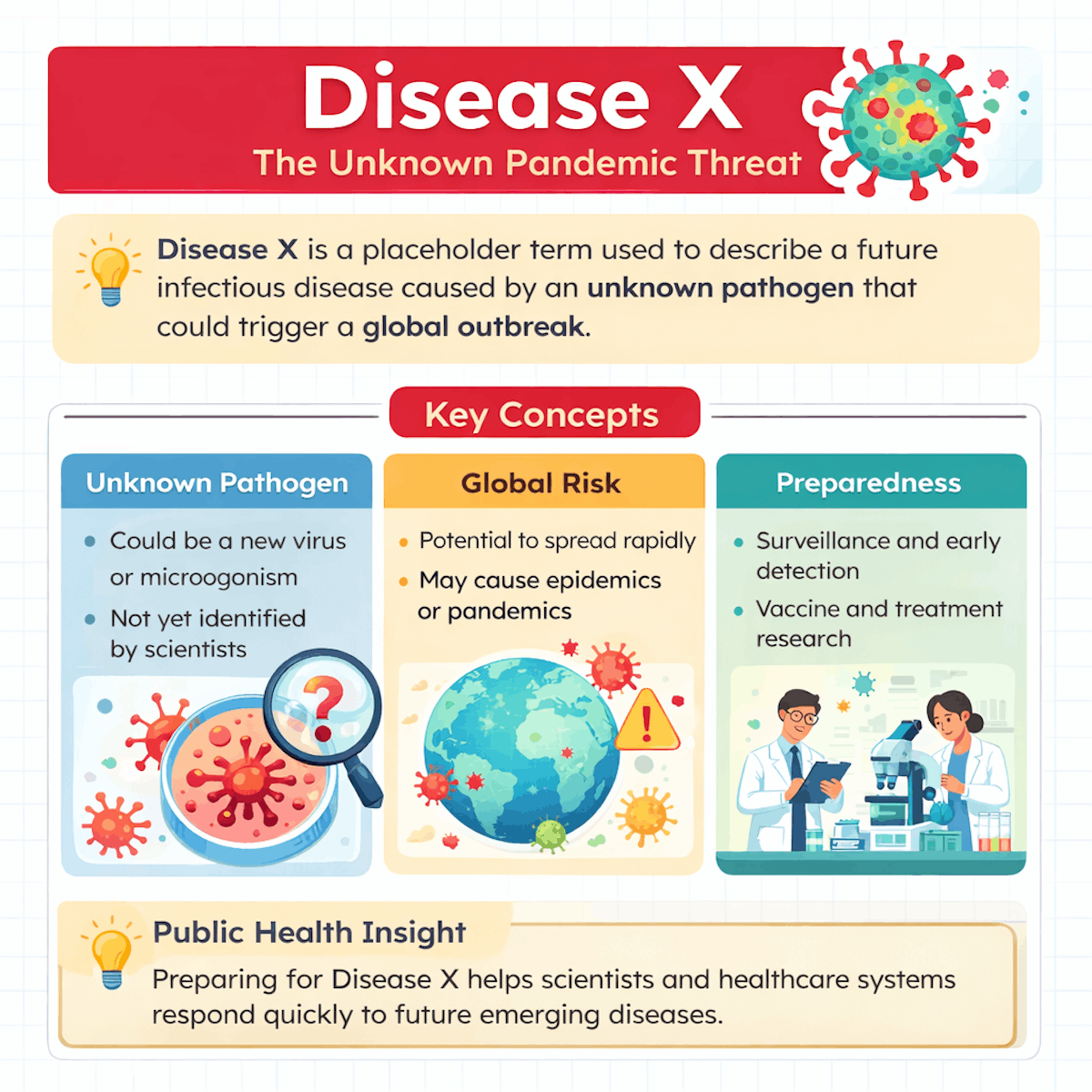
Disease X is a term used by the World Health Organization (WHO) to represent a hypothetical, unknown infectious disease that could cause a serious international epidemic or pandemic. The concept was introduced to emphasize that the next major global health threat may come from a pathogen that scientists have not yet discovered or studied.
Disease X could be caused by a new virus, bacterium, or other microorganism capable of spreading rapidly among humans. It highlights the importance of surveillance, research, vaccine development, and global preparedness.
By planning for Disease X, public health experts aim to strengthen healthcare systems, improve outbreak response strategies, and ensure the world is better equipped to detect and contain future emerging diseases before they become widespread.
Origin of the Disease X Concept
The World Health Organization (WHO) formally introduced the term Disease X in 2018. It added the label to its research and development blueprint for priority diseases.
WHO created the concept to address a gap in preparedness planning. Health agencies often focused on known threats such as influenza, Ebola, or Zika. Disease X signaled that the next global emergency could come from an unknown pathogen, not a familiar one.
The term does not describe a specific virus or bacterium. It acts as a planning tool that encourages flexible vaccine platforms, adaptable surveillance systems, and rapid research funding mechanisms.
Note: By naming the possibility of an unidentified threat, WHO pushed governments and research institutions to invest in broad-response technologies rather than disease-specific solutions alone.
Meaning of Hypothetical Disease
A hypothetical disease is not imaginary in the sense of being fictional. It represents a real-world risk that has not yet materialized in a defined form.
In the case of Disease X, the concern centers on Pathogen X—a microorganism that could emerge through mutation, animal-to-human spillover, or genetic reassortment. Scientists consider respiratory viruses especially concerning because they spread efficiently through coughing, speaking, or close contact.
WHO describes Disease X as a serious international epidemic caused by a pathogen not currently known to cause human disease. That definition allows room for viruses, bacteria, fungi, or other agents, although history shows that viruses account for most recent pandemics.
Note: The concept shifts attention from reacting to the last outbreak toward preparing for biological uncertainty.
Disease X vs. Known Pathogens
Known pathogens such as SARS-CoV-2, influenza viruses, or Ebola virus have established transmission patterns, diagnostic tools, and, in some cases, vaccines or treatments. Public health agencies can model their behavior using existing data.
Disease X differs because it lacks those reference points. Scientists do not know its incubation period, fatality rate, reservoir, or route of spread at the outset. That uncertainty complicates early containment.
COVID-19 itself functioned as a form of Disease X before its identification in late 2019. Researchers had studied coronaviruses, yet they did not predict the exact virus that would trigger a global pandemic.
Planning for Disease X therefore emphasizes platform technologies, rapid diagnostics, scalable manufacturing, and coordinated global surveillance. It prepares systems to respond to the unexpected rather than to a single named disease.
WHO Blueprint Priority Diseases
The World Health Organization (WHO) maintains a focused list of pathogens that pose a high risk of international public health emergencies. This Blueprint priority diseases framework guides research funding, vaccine development, and global coordination, while explicitly accounting for the threat of an unknown pathogen.
Evolution of the WHO List
WHO launched its R&D Blueprint after the 2014–2016 Ebola outbreak exposed gaps in global preparedness. The organization created a structured process to identify diseases with epidemic potential and limited or no effective medical countermeasures.
In 2018, WHO formally included “Disease X” to represent a serious epidemic caused by an unknown pathogen. That decision followed expert consultations that reviewed emerging threats such as Ebola, Lassa fever, and MERS.
The list is not static. WHO updates it as scientific knowledge, outbreak patterns, and countermeasure pipelines evolve. COVID-19, caused by SARS-CoV-2, later demonstrated how quickly a novel coronavirus could escalate into a pandemic, reinforcing the need for a flexible and regularly reviewed priority framework.
Role of Disease X in Preparedness
Disease X serves as a planning tool rather than a specific diagnosis. WHO uses the term to signal that the next global health emergency may arise from a pathogen not yet identified in humans.
By including Disease X alongside known threats, WHO encourages cross-cutting research platforms. These include adaptable vaccine technologies, broad-spectrum antivirals, and scalable diagnostic systems.
COVID-19 became the first real-world example of Disease X after the term was introduced. SARS-CoV-2 was a novel coronavirus, distinct from SARS and MERS, yet related enough to show how coronavirus research could accelerate countermeasure development.
Note: The concept pushes governments and research institutions to invest in flexible systems rather than disease-by-disease responses.
Other Priority Pathogens
WHO’s Blueprint priority diseases currently include a defined group of high-risk pathogens:
- COVID-19 (SARS-CoV-2)
- Ebola virus disease and Marburg virus disease
- Lassa fever
- Middle East respiratory syndrome (MERS) and SARS
- Nipah and other henipaviral diseases
- Rift Valley fever
- Zika virus disease
- Crimean-Congo haemorrhagic fever
These diseases share key features: epidemic potential, serious clinical outcomes, and gaps in vaccines, therapeutics, or diagnostics.
Ebola and Marburg virus cause severe hemorrhagic illness with high case fatality rates. Lassa fever remains endemic in parts of West Africa, while Nipah virus has triggered deadly outbreaks in South and Southeast Asia.
Zika virus drew global concern after its link to congenital abnormalities. SARS and MERS, both caused by coronaviruses, demonstrated the pandemic risk posed by zoonotic respiratory viruses.
Characteristics of Potential Disease X Pathogens
Pathogen X is expected to share measurable traits seen in past emerging infectious diseases. These traits shape its pandemic potential, how it spreads, and how it first enters human populations.
Pandemic Potential Indicators
Public health agencies assess pandemic potential by examining how easily a novel pathogen infects humans and sustains transmission. A key indicator is efficient human-to-human spread, especially before symptoms appear. Asymptomatic or presymptomatic transmission makes early containment difficult.
Researchers also evaluate whether the pathogen belongs to known viral families with a history of global outbreaks, such as coronaviruses, influenza viruses, or filoviruses. Evidence suggests viruses are more likely than bacteria to become “pathogen X” because of their mutation rates and adaptability.
Other warning signs include:
- Lack of preexisting immunity in the global population
- Absence of licensed vaccines or targeted treatments
- Severe clinical outcomes in a subset of patients
- High viral load in respiratory secretions or blood
Note: A true novel pathogen with these features can spread internationally before detection systems identify it.
Transmission and Spread
Transmission dynamics determine whether an outbreak remains local or escalates into a pandemic. Airborne or respiratory spread poses the highest risk because it allows rapid transmission in crowded indoor settings and across borders through travel.
Vector-borne and direct contact routes also matter, especially in regions with limited public health infrastructure. However, pathogens that combine multiple transmission pathways create greater control challenges.
Factors that accelerate spread include:
- Urban density and global mobility
- Delayed case recognition
- Limited diagnostic capacity
- Weak infection prevention measures
Note: Emerging infectious diseases with short incubation periods and high viral shedding can overwhelm surveillance systems. If a pathogen spreads efficiently in both healthcare and community settings, containment becomes significantly harder.
Zoonotic Origins
Many candidates for Disease X arise from zoonotic diseases, where pathogens circulate in animals before infecting humans. This process, known as zoonotic spillover, often occurs at points of close human-animal interaction, such as wildlife trade, livestock farming, and habitat encroachment.
Researchers estimate that a large number of undiscovered viruses circulate in wildlife reservoirs. Bats, rodents, and birds frequently host viral families linked to emerging infectious diseases.
Spillover alone does not guarantee a pandemic. The pathogen must adapt to sustain human-to-human transmission. Genetic mutations or recombination events can enhance receptor binding, replication efficiency, or immune evasion.
Note: Monitoring high-risk interfaces between humans and animals remains central to identifying potential pathogen X before widespread transmission begins.
Surveillance and Early Detection
Effective surveillance systems detect unusual health events before they escalate into an international epidemic. Early detection depends on coordinated disease surveillance, rapid data sharing, and the ability to investigate signals at their source.
Global Disease Surveillance
Global disease surveillance relies on the continuous collection, analysis, and interpretation of health data. Public health agencies track clinical cases, laboratory results, hospital admissions, and mortality trends to identify unusual patterns.
Organizations such as the CDC and the World Health Organization coordinate cross-border reporting under international health regulations. They support national surveillance systems with laboratory networks, field epidemiology training, and standardized case definitions. These systems allow countries to compare data and detect anomalies that may signal a novel pathogen.
Modern surveillance extends beyond hospitals. It includes genomic sequencing, wastewater monitoring, and digital reporting platforms that flag clusters in near real time. Some emergency settings deploy early warning systems designed to function during conflict or natural disasters, where routine reporting may collapse.
Note: A strong system depends on timely reporting, transparent data sharing, and sustained funding. Without these elements, early signals can remain unnoticed until widespread transmission occurs.
Emergence Hotspots
Disease X is most likely to emerge in areas where humans, animals, and environmental pressures intersect. Regions with dense populations, wildlife trade, intensive farming, or rapid land-use change face elevated spillover risk.
The One Health approach integrates surveillance across human, animal, and environmental sectors. Veterinary reports, livestock die-offs, and unusual wildlife mortality can provide early clues before human cases appear. Environmental sampling, including metagenomic sequencing, strengthens detection of unknown pathogens.
Urban centers with major travel hubs also require close monitoring. High mobility can transform a local outbreak into an international epidemic within days. Surveillance systems in these locations often prioritize rapid diagnostic capacity and syndromic reporting from emergency departments.
Note: Targeted monitoring in hotspots allows public health authorities to allocate laboratory resources and field investigators more efficiently.
Challenges in Detection
Early detection faces structural and technical barriers. Many countries lack stable funding, laboratory infrastructure, or trained epidemiologists to maintain high-quality disease surveillance. Political concerns and economic pressures can delay reporting. Trust between local authorities, national governments, and international partners directly affects whether outbreak data moves quickly enough to prompt action.
Novel pathogens create additional difficulty because clinicians may not recognize them immediately. Initial cases can resemble common respiratory or gastrointestinal illnesses, which complicates threshold-based early warning models.
Data overload also presents challenges. Surveillance systems now generate large volumes of genomic and syndromic data, but interpreting signals without producing false alarms requires clear criteria and skilled analysis. Balancing sensitivity with specificity remains central to detecting Disease X before it spreads widely.
Precedents: Recent and Historical Disease X Events
Recent outbreaks show how unknown or underestimated pathogens can escalate into international emergencies. COVID-19 demonstrated how quickly a novel virus can spread, while SARS, MERS, and multiple zoonotic threats reveal recurring patterns that inform planning for future pandemics.
COVID-19 as Disease X
When SARS-CoV-2 emerged in late 2019, it fulfilled the scenario public health planners had labeled “Disease X.” It was a previously unidentified coronavirus capable of efficient human-to-human transmission, primarily through respiratory droplets and aerosols.
Within months, COVID-19 spread worldwide. Governments faced shortages of diagnostics, personal protective equipment (PPE), and hospital capacity. Scientists raced to sequence the virus, understand transmission, and develop vaccines.
COVID-19 highlighted several defining traits of a Disease X event:
- Respiratory spread
- Global susceptibility due to lack of prior immunity
- Rapid international travel amplification
- Heavy strain on health systems
Note: The pandemic also showed that vaccine platforms, genomic surveillance, and coordinated research can shorten response time. However, delays in detection and uneven preparedness allowed widespread transmission before containment measures took effect.
SARS, MERS, and Zoonotic Examples
Earlier coronavirus outbreaks foreshadowed COVID-19. Severe Acute Respiratory Syndrome (SARS) emerged in 2002–2003 and spread to multiple countries before aggressive public health measures stopped transmission. Middle East Respiratory Syndrome (MERS), identified in 2012, continues to cause sporadic outbreaks linked to camels.
Both viruses originated in animals and crossed into humans. They demonstrated how zoonotic spillover can introduce novel pathogens with high mortality rates.
Other zoonotic threats reinforce this pattern:
- Ebola and Marburg virus: cause severe hemorrhagic fever with high case fatality rates.
- Lassa fever and Rift Valley fever: circulate in animal reservoirs and periodically infect humans.
- Nipah virus and Zika: show how vector-borne or bat-associated viruses can expand geographically.
Note: These events confirm that viral families with known outbreak history remain candidates for future pandemic emergence, especially when ecological or social conditions shift.
Unidentified Outbreaks
Public health agencies routinely investigate clusters of unexplained illness. Some resolve as known infections; others reveal novel pathogens.
In recent decades, previously unrecognized viruses have surfaced after unexplained cases of severe pneumonia, encephalitis, or hemorrhagic disease. Genetic sequencing now allows laboratories to identify pathogens more quickly than in the past, yet early detection still depends on surveillance and transparent reporting.
An unidentified outbreak becomes a true Disease X event when it meets several conditions:
- Sustained human-to-human transmission
- Efficient respiratory or vector-borne spread
- Limited existing immunity
- International dissemination
Note: Preparedness efforts focus on strengthening surveillance, laboratory capacity, and rapid vaccine development so that the next unknown pathogen does not escalate into another global crisis.
Preparedness and Prevention Strategies
Effective planning for Disease X depends on strong health systems, coordinated global action, and integration of human, animal, and environmental health data. These elements shape how quickly authorities detect threats, develop countermeasures, and limit spread.
Public Health Infrastructure
Robust healthcare infrastructure forms the backbone of epidemic preparedness. Countries need surveillance systems that detect unusual clusters of respiratory illness, severe pneumonia, or unexplained deaths in real time. Laboratories must sequence pathogens quickly and share results with national and international databases.
Hospitals require flexible surge capacity. This includes expandable intensive care units, stockpiles of personal protective equipment, reliable oxygen supplies, and trained staff who can shift roles during emergencies. COVID-19 exposed gaps in hospital capacity and domestic manufacturing that many countries still have not fully resolved.
Preparedness also depends on medical countermeasure platforms. mRNA and viral vector technologies allow researchers to design vaccine candidates within days of identifying a pathogen’s genetic sequence. Organizations such as the Coalition for Epidemic Preparedness Innovations (CEPI) promote targets like developing a vaccine within 100 days of pathogen identification.
Note: Clear risk communication strategies strengthen public trust. Health agencies must provide timely, consistent guidance on testing, vaccination, and infection control to reduce misinformation and improve compliance.
International Collaboration
No country can manage Disease X alone. Pathogens spread across borders through travel and trade, making coordinated surveillance and data sharing essential.
The World Health Organization (WHO) coordinates global alert systems and maintains priority pathogen lists that include the placeholder concept of Disease X. International Health Regulations require countries to report events that may constitute a public health emergency of international concern.
Multisector partnerships expand this framework. CEPI funds vaccine research and manufacturing capacity across regions. The World Economic Forum engages private sector leaders to strengthen supply chains and business continuity planning during outbreaks.
Joint simulation exercises and information-sharing platforms improve readiness. Governments, pharmaceutical companies, and regional public health agencies align regulatory standards to accelerate approval of diagnostics, antivirals, and vaccines during crises.
One Health Approach
Most emerging infectious diseases originate in animals before spilling over into humans. The One Health approach links human medicine, veterinary science, and environmental monitoring to reduce this risk.
Surveillance in wildlife, livestock, and high-risk interfaces—such as live animal markets or regions with rapid land-use change—can identify novel viruses before widespread transmission occurs. Genomic sequencing in animals helps researchers assess whether a pathogen shows traits associated with efficient human-to-human spread.
Environmental factors also shape risk. Deforestation, urban expansion, and climate shifts alter patterns of human-animal contact and vector distribution. Coordinated data from agricultural agencies, conservation groups, and public health departments allows earlier intervention.
Preventing spillover often costs less than responding to a pandemic. Investment in biosecurity, vaccination of livestock where applicable, and community education in high-exposure settings reduces the likelihood that an unknown pathogen becomes the next global crisis.
Medical Countermeasures and Innovation
Effective response to Disease X depends on rapid vaccine development, scalable diagnostic tests, targeted antivirals, and regulatory systems that can move at outbreak speed.
Governments, industry, and global health agencies increasingly invest in platform technologies and coordinated medical countermeasures to reduce delays between pathogen discovery and clinical deployment.
Vaccine Development Platforms
Vaccine development for Disease X relies on platform technologies that adapt quickly to a newly identified pathogen. Instead of starting from scratch, scientists insert genetic sequences from the emerging agent into pre‑tested systems such as mRNA, viral vectors, or recombinant protein platforms.
mRNA platforms allow researchers to design vaccine candidates within days of sequencing a pathogen. Manufacturers can then use standardized production processes, which shortens early development timelines and supports rapid scale‑up.
Viral vector and protein subunit platforms offer alternative approaches when cold‑chain limits, storage constraints, or safety considerations require flexibility. These platforms build on prior clinical data, which can streamline early safety evaluation.
Global initiatives, including efforts aligned with the “100 Days Mission,” aim to deliver safe and effective vaccine candidates within roughly three months of identifying a new threat. Achieving that goal requires advance investment in manufacturing capacity, clinical trial networks, and supply chains before Disease X emerges.
Diagnostic Tests and Antivirals
Early detection shapes the entire outbreak response. Developers typically begin with molecular diagnostic tests, such as PCR assays, which can be designed soon after scientists publish a pathogen’s genome sequence.
Rapid antigen tests may follow, offering lower sensitivity but faster results and easier deployment in community settings. Widespread access to reliable diagnostics supports surveillance, case isolation, and data‑driven policy decisions.
Antiviral development often takes longer. De novo medical countermeasures, including therapeutics, can require years to complete full development and regulatory review. To reduce delays, researchers increasingly explore broad‑spectrum antivirals that target conserved viral processes, such as polymerase or protease activity.
Public–private partnerships and advance purchase agreements can reduce financial risk for manufacturers. Programs modeled on prior emergency efforts demonstrate that clear funding commitments encourage companies to invest in high‑risk pandemic countermeasure research.
Regulatory Flexibility
Regulatory systems play a decisive role in accelerating access to medical countermeasures. Agencies may use mechanisms such as emergency use authorizations, rolling data reviews, and adaptive trial designs to shorten timelines without removing core safety standards.
Rolling reviews allow regulators to assess clinical and manufacturing data as sponsors generate it. This approach prevents administrative delays once trials conclude.
Adaptive clinical trials can evaluate multiple vaccine or antiviral candidates under a shared protocol. Investigators can add or drop study arms based on interim results, which conserves time and resources during fast‑moving outbreaks.
Clear regulatory guidance before a crisis improves predictability for developers. When authorities define data requirements and manufacturing standards in advance, companies can align research plans with expectations and reduce uncertainty during a Disease X emergency.
Societal Measures and Public Response
Governments rely on targeted social distancing, rapid containment, and clear public communication to slow transmission of an unknown pathogen. Authorities must apply these measures early, adjust them to real-time data, and explain them clearly to maintain compliance and public trust.
Social Distancing and Containment
When Disease X shows sustained human-to-human transmission, officials implement social distancing to reduce close contact in shared spaces. Measures often include limits on large gatherings, remote work policies, temporary school closures, and capacity restrictions in indoor venues.
Authorities prioritize early case detection, testing, isolation of confirmed cases, and quarantine of close contacts. Rapid contact tracing reduces secondary spread, especially if the pathogen demonstrates superspreading patterns where a small number of cases drive most infections.
Travel advisories or targeted entry screening may slow cross-border spread, but they work best alongside domestic containment. In high-risk settings such as hospitals or long-term care facilities, infection prevention protocols, ventilation improvements, and appropriate protective equipment reduce amplification events.
Note: Officials scale restrictions based on transmission intensity and health system capacity. They lift measures gradually to prevent resurgence while preserving economic and social stability.
Public Communication and Education
Clear communication directly influences compliance with social distancing and other public health measures. Authorities must release timely, consistent updates on case numbers, transmission risks, and the rationale behind interventions.
Messages should explain what is known, what remains uncertain, and how guidance may change as evidence evolves. Transparent disclosure reduces misinformation and limits the spread of rumors that can undermine response efforts.
Public education campaigns should provide specific instructions, such as when to stay home, how to seek testing, and how to reduce household transmission. Outreach must reach diverse communities through multiple channels, including local leaders and healthcare providers.
Trust increases when governments share data openly and correct errors quickly. Fair access to information and services strengthens cooperation and supports sustained adherence to containment policies.
Risk Drivers and Future Threats
Multiple forces increase the likelihood that an unknown pathogen could spark a future pandemic. Environmental disruption, technological risk, and geopolitical instability all shape how Disease X could emerge and spread.
Environmental and Demographic Change
Human activity continues to alter ecosystems in ways that increase contact between people and wildlife. Deforestation, agricultural expansion, and urban growth push communities into previously undisturbed habitats where novel viruses circulate.
Many high-risk pathogens, including coronaviruses and filoviruses, originate in animals before crossing into humans. Increased human–wildlife interaction raises the probability that an unknown pathogen could adapt for human transmission.
Climate change adds further pressure. Rising temperatures expand the geographic range of vectors such as mosquitoes, increasing exposure to viruses like dengue and Zika and creating conditions that could support new zoonotic threats.
Rapid urbanization and global travel accelerate spread once transmission begins. Dense cities and international air networks allow localized outbreaks to move across continents within days, turning a spillover event into a future pandemic.
Bioterrorism and Lab Risks
Deliberate misuse of biological agents remains a recognized security concern. Advances in synthetic biology and gene editing make it easier to modify existing organisms or recreate known pathogens.
Bioterrorism scenarios often focus on engineered viruses with enhanced transmissibility or immune evasion. While strict international conventions prohibit such activity, uneven enforcement and dual-use research create ongoing risk.
Laboratory accidents also pose credible threats. Research facilities that study high-consequence pathogens operate under biosafety protocols, yet breaches have occurred in multiple countries.
Gain-of-function experiments, which alter pathogens to study transmission or virulence, generate debate. Supporters argue that this work improves preparedness, while critics warn that accidental release of a modified organism could trigger a future pandemic involving a novel or poorly understood agent.
Outlook for Future Pandemics
Experts widely expect future pandemics to occur, though the timing and source remain uncertain. Disease X represents this uncertainty: an unknown pathogen with pandemic potential that current systems cannot fully anticipate.
Several trends shape the outlook:
- Increased surveillance capacity, including genomic sequencing
- Persistent gaps in global health infrastructure
- Misinformation and declining vaccine confidence
- Geopolitical tensions that hinder rapid data sharing
Preparedness now emphasizes early detection, rapid data exchange, and flexible vaccine platforms such as mRNA technology. These tools shorten response time but do not eliminate risk.
The next future pandemic may emerge from zoonotic spillover, laboratory mishap, or intentional release. Effective mitigation depends on sustained investment in public health systems, transparent reporting, and coordinated international response before an outbreak escalates beyond control.
FAQs About Disease X
Is Disease X a Virus?
Disease X is not a specific virus. Instead, it is a term used by the World Health Organization to represent a hypothetical future disease caused by an unknown pathogen. This pathogen could be a virus, bacterium, or another type of microorganism that has not yet emerged or been identified.
The concept helps scientists and public health experts prepare for new infectious threats that could appear unexpectedly. By studying Disease X, researchers can develop strategies for surveillance, vaccines, treatments, and emergency response plans before the next global outbreak occurs.
Is Disease X Coming?
Disease X does not refer to a disease that currently exists or is guaranteed to appear. Rather, it represents the possibility that a new infectious disease could emerge in the future and spread rapidly among humans. History shows that new diseases can arise unexpectedly, such as SARS, Ebola, and COVID-19.
Because of this, scientists use the concept of Disease X to encourage preparedness. Governments and health organizations monitor emerging pathogens and invest in research so that they can respond quickly if a new disease begins to spread.
Can Disease X Kill You?
Because Disease X is only a hypothetical concept, it does not currently cause illness or death. However, the term represents the possibility of a future disease that could potentially be severe or even deadly.
Many past pandemics have resulted in significant loss of life, which is why scientists emphasize preparedness. If a new pathogen emerges and spreads quickly, it could pose serious health risks.
Planning for Disease X allows healthcare systems to strengthen surveillance, develop vaccines, and improve response strategies to reduce the impact of future outbreaks.
What Are the Symptoms of Disease X?
Disease X does not have defined symptoms because the disease itself has not yet been identified. If a new infectious disease were to emerge, its symptoms would depend on the type of pathogen involved and how it affects the body.
In general, emerging infectious diseases often cause symptoms such as fever, cough, fatigue, shortness of breath, or gastrointestinal issues.
Researchers study past outbreaks to understand how new diseases might behave. This knowledge helps healthcare professionals recognize unusual illness patterns and respond quickly to potential new threats.
Are People Still Afraid of COVID?
Many people remain cautious about COVID-19 because the pandemic had a major impact on global health, economies, and daily life. While vaccines and improved treatments have helped reduce severe illness, the virus still circulates in many parts of the world.
Public awareness of infectious diseases remains high, and the experience of the pandemic has changed how societies think about health preparedness. For this reason, discussions about Disease X often remind people of the importance of surveillance, vaccination programs, and coordinated global responses to future health threats.
What Is the Difference Between Infection and Disease?
An infection occurs when a microorganism such as a virus, bacterium, fungus, or parasite enters the body and begins to multiply. However, infection does not always lead to illness. Disease develops when the infection causes damage to tissues or disrupts normal body functions, leading to noticeable symptoms. Some people can carry pathogens without feeling sick, while others develop significant symptoms.
Understanding this distinction helps healthcare professionals identify how diseases spread and how to control them, especially when dealing with emerging infectious threats like those represented by Disease X.
What Countries Have Disease X?
No country currently has Disease X because it is not an actual disease. Instead, it is a concept used by global health organizations to represent a possible future pandemic. The purpose of this term is to remind governments and healthcare systems that new diseases can emerge anywhere in the world.
Because modern travel allows infections to spread quickly across borders, international cooperation is essential. Countries collaborate through surveillance networks, research programs, and public health planning to detect and respond to emerging infectious threats as early as possible.
Where Did Disease X Start?
Disease X does not have a geographic origin because it is not a real disease. The term was introduced by the World Health Organization to represent an unknown pathogen that could emerge in the future.
Scientists recognize that many emerging diseases originate from animals and then spread to humans, a process known as zoonotic transmission. These events can occur in many regions of the world.
Note: By studying how past diseases emerged, researchers can improve monitoring systems and better detect new pathogens before they spread widely.
How Are We Preparing for the Next Pandemic?
Global health organizations, scientists, and governments are actively preparing for future pandemics through research, surveillance, and improved healthcare infrastructure. Early detection systems monitor emerging pathogens in humans and animals to identify potential threats quickly.
Scientists are also developing flexible vaccine technologies that can be adapted rapidly if a new disease appears. International collaboration plays a critical role, allowing countries to share data and coordinate responses.
Note: Preparing for scenarios like Disease X helps ensure that healthcare systems can respond more effectively and reduce the impact of future outbreaks.
Final Thoughts
Disease X represents the possibility of a future infectious disease that could emerge and spread rapidly across populations. While the exact cause and characteristics of such a disease remain unknown, the concept highlights the importance of global preparedness, scientific research, and strong public health systems.
By investing in surveillance, rapid response strategies, vaccine development, and international collaboration, health organizations can better respond to new threats as they arise.
Understanding the concept of Disease X reminds us that emerging pathogens are always a possibility, and proactive planning is essential to protect communities and minimize the impact of future outbreaks.

Written by:
John Landry is a registered respiratory therapist from Memphis, TN, and has a bachelor's degree in kinesiology. He enjoys using evidence-based research to help others breathe easier and live a healthier life.
References
- Prioritizing diseases for research and development in emergency contexts. (n.d.). Retrieved 2024.
- Tahir MJ, Sawal I, Essar MY, Jabbar A, Ullah I, Ahmed A. Disease X: A hidden but inevitable creeping danger. Infect Control Hosp Epidemiol. 2022.