

Dry drowning and wet drowning are terms that are often used to describe different types of drowning incidents, but they are frequently misunderstood by the public and even some healthcare learners. Both conditions involve respiratory distress caused by water exposure, yet they differ in how water affects the airway and lungs.
Understanding the differences between dry drowning and wet drowning is important for recognizing symptoms, providing timely treatment, and improving patient outcomes.
This article explores the key distinctions between these two forms of drowning, their underlying pathophysiology, and why early recognition is critical in preventing life-threatening complications.

Download our free guide that has over 100+ of the best tips for healthy lungs.
What is the Difference Between Dry Drowning and Wet Drowning?
Dry drowning and wet drowning differ based on how water affects the airway and lungs during a drowning event. Wet drowning occurs when water is inhaled into the lungs, leading to surfactant washout, alveolar collapse, and impaired gas exchange. This results in hypoxemia and can quickly progress to respiratory failure if not treated.
In contrast, dry drowning involves little to no water entering the lungs. Instead, water exposure triggers a laryngospasm, causing the vocal cords to close and block airflow into the lungs.
Although the mechanisms differ, both conditions result in oxygen deprivation and can be life-threatening. Today, these terms are less commonly used in clinical practice, with most healthcare professionals simply referring to both as drowning with varying pathophysiologic effects.
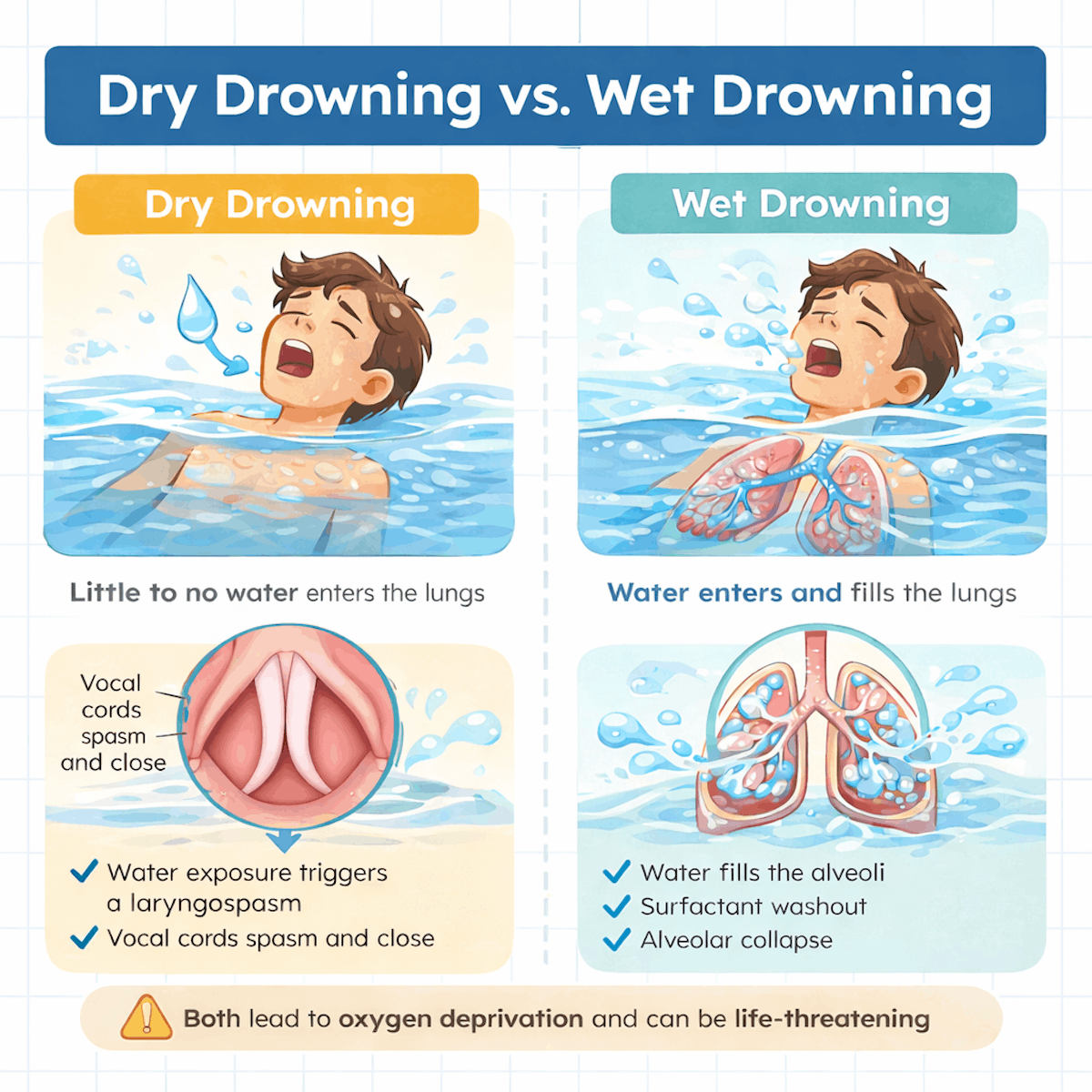
Understanding Dry Drowning and Wet Drowning
You need to understand how these terms describe different physical responses to water exposure. The key difference centers on whether water enters your lungs and how your airway reacts during and after the incident.
Dry Drowning
Dry drowning refers to a situation where water exposure triggers a laryngospasm, causing your vocal cords to close tightly. This reaction blocks airflow into your lungs, even though little or no water enters them. You may experience breathing problems minutes to hours after leaving the water.
You might notice persistent coughing, chest tightness, fast or labored breathing, or unusual fatigue. Children may act irritable or lethargic. These symptoms occur because reduced oxygen reaches your body, not because your lungs fill with water.
Note: Medical professionals note that “dry drowning” is not a formal diagnosis. They use it to describe a mechanism rather than a distinct condition. Any delayed breathing symptoms after water exposure require prompt medical evaluation.
Wet Drowning
Wet drowning occurs when you inhale water into your lungs during submersion or struggle at the surface. The water interferes with oxygen exchange and irritates lung tissue, which can lead to inflammation or fluid buildup.
You typically show symptoms immediately or soon after the incident. These include coughing, foamy sputum, shortness of breath, chest pain, and low oxygen levels. The severity depends on the amount and type of water inhaled and how quickly you receive care.
Note: In clinical settings, providers describe this as aspiration-related drowning injury. Treatment focuses on supporting your breathing and monitoring for complications such as pulmonary edema or infection.
Key Differences Between Dry Drowning and Wet Drowning
You see clear differences between dry drowning and wet drowning in how injury begins, how water affects the airways, and how your body reacts. These differences shape symptoms, timing, and medical response.
Mechanisms of Injury
Dry drowning refers to airway closure triggered by water contact, not by water filling your lungs. When water touches your throat or vocal cords, they can spasm and close, blocking airflow. Oxygen levels drop because air cannot move in or out, even though little or no water enters the lungs.
Wet drowning occurs when you inhale water into the airways and lungs. The water disrupts gas exchange by damaging lung tissue and washing out surfactant, which keeps air sacs open. This process leads to inflammation and impaired oxygen transfer.
Note: In both situations, injury progresses from lack of oxygen, but the initiating event differs. Airflow blockage defines dry drowning, while fluid aspiration defines wet drowning.
Water Entry into Airways
In dry drowning, you typically inhale little to no water past the vocal cords. The primary issue involves reflex closure of the airway, which prevents both water and air from entering the lungs. Your chest may move, but airflow remains restricted.
Wet drowning involves clear water entry into the trachea and lungs. The amount varies, but even small volumes can cause significant injury. Water mixes with lung secretions and interferes with normal breathing mechanics.
Key distinctions include:
- Dry drowning: minimal water in lungs, airway shut.
- Wet drowning: water present in lungs, airway open.
Note: These differences affect imaging results, lung sounds, and treatment priorities.
Physiological Responses
With dry drowning, your body responds to oxygen deprivation caused by airway closure. You may experience sudden coughing, gasping, chest tightness, or voice changes. Symptoms often appear quickly because oxygen levels fall rapidly when airflow stops.
In wet drowning, your lungs respond to fluid exposure with inflammation and swelling. You may develop persistent coughing, rapid breathing, or frothy sputum. Oxygen levels drop as fluid-filled air sacs fail to exchange gases effectively.
Timing can vary. Dry drowning symptoms usually appear soon after the event, while wet drowning symptoms may worsen over several hours. In both cases, hypoxia drives the danger, but the underlying physiology differs.
Causes and Risk Factors
You face different mechanisms and risks depending on whether water enters your lungs or triggers airway closure. Both situations often start with a brief water exposure and progress based on your response, health status, and supervision at the time.
Triggering Events
You experience wet drowning when you inhale water, allowing it to enter your airways and lungs. This usually follows submersion, a forceful splash to the face, or loss of balance in water. Inhaled water interferes with oxygen exchange and can lead to rapid breathing distress.
You encounter what people call dry drowning when water contact causes a laryngospasm, a reflex that closes your vocal cords. Little or no water enters your lungs, but airflow stops. This can occur after choking on water, a sudden dive, or panic during swimming.
Common triggering situations include:
- Unsupervised swimming or swimming beyond your skill level
- Rough water conditions, such as waves or strong currents
- Sudden water entry, including diving or slipping into water
Note: Alcohol use and exhaustion increase reaction time and worsen outcomes.
Population at Risk
You face higher risk if you are a young child, because airway reflexes are strong and coordination is still developing. Children also struggle to signal distress and may inhale or aspirate water quickly during play.
You also face increased risk if you have asthma, chronic lung disease, or recent respiratory infections. These conditions make your airways more reactive and less tolerant of irritation or reduced oxygen.
Other higher-risk groups include:
- Inexperienced swimmers or non-swimmers
- Older adults with reduced strength or balance
- People with seizure disorders or heart conditions
Note: Lack of close supervision and delayed rescue raise risk across all ages, regardless of swimming ability.
Signs and Symptoms
After a water incident, symptoms can appear right away or develop hours later. You should watch for breathing changes, behavior shifts, and physical signs that signal lung irritation or oxygen problems.
Common Symptoms
You may notice persistent coughing, choking, or gagging soon after water enters your airway. Breathing can become rapid, shallow, or labored, and you might hear wheezing or crackling sounds. Chest discomfort often appears as tightness or pain, especially when you take a deep breath. Your lips or fingertips may look pale or bluish, which points to reduced oxygen.
Fatigue can feel sudden and disproportionate to activity. You may also experience headache, dizziness, or confusion, reflecting oxygen stress on the brain. In children, behavior changes matter. Watch for unusual irritability, clinginess, or lethargy, along with vomiting after coughing. These signs warrant prompt medical evaluation, even if you seem stable.
Delayed Onset Indicators
Symptoms can emerge 1–24 hours after the event as inflammation worsens. You might develop worsening cough, increased breathing effort, or a hoarse voice without a clear cause. Sleepiness that deepens, trouble staying awake, or new confusion can signal declining oxygen levels. Fever may appear as the lungs react to aspirated water, though infection is not required.
Breathing may feel harder when lying down. You could notice rapid breathing at rest or chest retractions, especially in children. Trust changes over reassurance. If symptoms progress rather than improve, seek care urgently, even if initial signs seemed mild.
Diagnosis and Identification
You identify drowning-related complications through careful history, symptom timing, and focused examination. The key challenge involves separating true water-aspiration injuries from unrelated respiratory illnesses that appear after water exposure.
Clinical Assessment
- You start with a detailed account of the water event, including submersion time, water type, and immediate symptoms such as coughing or breathing difficulty.
- You assess vital signs, oxygen saturation, and mental status to detect early respiratory compromise.
- You examine the chest for increased work of breathing, abnormal lung sounds, or persistent cough.
- You watch for symptoms that worsen over several hours, including rapid breathing, chest tightness, or unusual fatigue.
- You may use pulse oximetry and chest imaging when symptoms persist or oxygen levels drop. Blood tests rarely confirm drowning but can help rule out infection or metabolic causes.
- You base decisions on current findings rather than labels like “dry” or “wet” drowning.
Diagnostic Challenges
- You face diagnostic confusion because “dry drowning” and “wet drowning” lack formal medical definitions. You instead diagnose drowning-related injury based on aspiration and resulting lung inflammation.
- You must distinguish these injuries from asthma, pneumonia, or viral infections, which can share similar symptoms. Timing matters; symptoms linked to aspiration usually appear within hours, not days.
- You also encounter misleading reassurance when symptoms seem mild at first. Children and adults may compensate briefly before oxygen levels fall.
- You rely on observation and follow-up rather than a single normal exam.
- You avoid diagnosis based on fear-driven terms and focus on objective findings. This approach reduces missed cases and unnecessary panic while guiding appropriate care.
Emergency Response and First Aid
Quick action after a water incident reduces the risk of breathing complications and other injuries. You need to focus on airway safety, breathing, and timely medical evaluation.
Immediate Actions
Remove the person from the water and ensure your own safety first. If the person is unresponsive, call emergency services immediately. Check breathing and pulse. If breathing has stopped or is irregular, begin CPR and continue until help arrives or breathing returns.
If the person is breathing, keep them upright or on their side. This position helps maintain an open airway and reduces the chance of aspiration. Remove wet clothing and keep the person warm. Cold stress can worsen breathing problems and delay recovery.
Do not attempt to force water out of the lungs. Avoid abdominal thrusts unless you suspect choking on a solid object. Stay with the person and observe closely for at least several hours. Watch for coughing, fast breathing, chest discomfort, or unusual fatigue.
When to Seek Medical Help
Seek medical care immediately after any drowning event, even if symptoms seem mild. Breathing problems can appear hours later.
Call emergency services or go to urgent care if you notice:
- Persistent coughing or wheezing
- Rapid or labored breathing
- Chest pain or tightness
- Bluish lips or skin
- Fever, lethargy, or behavior changes
Note: Children require medical evaluation after any water-related breathing event. You should not rely on home observation alone. If symptoms worsen or new signs appear within 24 hours, treat it as urgent. Prompt evaluation allows clinicians to monitor oxygen levels and prevent complications.
Medical Treatment Options
Medical care focuses on stabilizing your breathing and preventing complications after a drowning-related incident. Clinicians treat symptoms, not labels, because care depends on how your lungs and airway respond. If you show breathing distress, providers give supplemental oxygen right away. They monitor your oxygen levels, heart rate, and breathing pattern to guide next steps.
When airway swelling or spasms limit airflow, clinicians may use nebulized medications or noninvasive ventilation. These options support breathing while reducing the work your lungs must do. If your condition worsens, doctors may place a breathing tube and use mechanical ventilation. This step protects your airway and ensures consistent oxygen delivery while your lungs recover.
Care teams often order chest imaging and blood tests to assess lung inflammation and oxygen exchange. They repeat monitoring over several hours because symptoms can evolve. You may receive intravenous fluids to maintain blood pressure and hydration. Providers adjust fluids carefully to avoid worsening lung congestion.
Antibiotics do not serve as routine treatment. Clinicians prescribe them only when signs of infection appear. Observation remains a key part of care. You may stay under medical supervision even if early symptoms seem mild, especially after coughing, chest tightness, or ongoing shortness of breath.
Potential Complications
After a drowning event, you may face complications that develop immediately or over the next several hours. These risks can occur whether water entered your lungs or airway spasm limited airflow.
- Breathing problems often appear first. You may develop persistent coughing, chest tightness, wheezing, or rapid breathing as the lungs struggle to exchange oxygen.
- Low oxygen levels (hypoxia) can affect your brain and heart. You might notice confusion, fatigue, bluish lips, or an irregular heartbeat if oxygen delivery drops.
- Aspiration pneumonia can develop when water, bacteria, or debris enter the lungs. Fever, worsening cough, and shortness of breath may appear within 24 to 48 hours.
- Lung inflammation or injury may occur after significant aspiration. This includes acute respiratory distress, which can cause severe breathing difficulty and require medical support.
- Airway spasm and swelling can linger after the event. You may feel throat tightness or hoarseness that interferes with normal breathing.
- Electrolyte and fluid imbalances sometimes follow exposure to large volumes of water. These changes can affect muscle function and heart rhythm.
- Delayed symptoms matter. If you notice breathing changes, chest pain, fever, or unusual behavior after a water incident, you need prompt medical evaluation.
Prevention Strategies
You reduce the risk of both dry drowning–related airway reactions and traditional wet drowning by controlling exposure, supervising closely, and building swimming skills early. Consistent safety habits and proper instruction matter more than rare mechanisms.
Water Safety Tips
You lower risk by supervising continuously whenever someone is in or near water. Designate a water watcher who avoids distractions like phones, alcohol, or long conversations. Use properly fitted life jackets for boating, open water, and weak swimmers; avoid inflatable toys as safety devices. Check that pools have four-sided fencing, self-latching gates, and clear water so you can see the bottom.
Limit breath-holding games and rough play that force water into the airway. Teach children to enter water feet first and to stop if they cough or choke. After swimming, watch for persistent coughing, chest discomfort, rapid breathing, or unusual fatigue in the hours that follow. Seek medical care if symptoms appear, especially after a submersion or hard splash.
Swimming Lessons and Education
You gain protection by enrolling children in age-appropriate, certified swimming lessons that emphasize breath control, floating, and safe exits. Choose programs that teach skills progressively and assess readiness before advancing.
Adults benefit from refresher courses that cover self-rescue, recognizing distress, and assisting without entering the water. Learn how cold water, currents, and fatigue change risk. Include basic water safety rules at home and school: no swimming alone, obey posted signs, and understand local hazards like rip currents or sudden drop-offs.
Note: Add CPR and rescue training for caregivers and frequent swimmers. Fast, correct response improves outcomes when airway irritation or submersion occurs.
FAQs About Dry Drowning and Wet Drowning
What Are the Signs of Dry Drowning?
Signs of dry drowning typically occur when water exposure causes the vocal cords to spasm and block airflow. Common symptoms include difficulty breathing, persistent coughing, chest tightness, and noisy breathing such as stridor. Individuals may also appear anxious, fatigued, or confused due to reduced oxygen levels.
Symptoms can develop shortly after a water incident and may worsen over time. Any breathing difficulty following water exposure should be considered a medical emergency and evaluated promptly to prevent serious complications.
What Are the Signs of Wet Drowning?
Signs of wet drowning occur when water enters the lungs and disrupts gas exchange. Symptoms often include severe shortness of breath, persistent coughing, wheezing, and frothy sputum. Victims may also develop bluish lips or fingernails, chest discomfort, and extreme fatigue.
As oxygen levels drop, confusion and loss of consciousness can occur. Symptoms may develop immediately or gradually worsen after a water incident. Prompt medical evaluation is essential because lung injury and respiratory failure can develop rapidly.
What Is The Treatment For Drowning?
Treatment for drowning focuses on restoring oxygenation and supporting breathing. Initial care includes removing the victim from the water, checking responsiveness, and starting CPR if necessary. Emergency personnel typically provide oxygen therapy, airway management, and assisted ventilation if breathing is inadequate.
In hospital settings, treatment may include mechanical ventilation, bronchodilators, and monitoring for complications such as pneumonia or acute respiratory distress syndrome (ARDS). Early intervention significantly improves survival rates and reduces the risk of long-term lung injury.
Can You Tell If You’re Dry Drowning?
Dry drowning cannot always be easily identified without medical evaluation, but warning signs often develop after water exposure. Symptoms may include persistent coughing, breathing difficulty, throat tightness, hoarseness, or unusual fatigue.
Some individuals may also experience anxiety or behavioral changes caused by oxygen deprivation. These symptoms can appear minutes to hours after leaving the water. Because dry drowning can progress quickly, any unusual breathing or respiratory symptoms following water exposure should be evaluated by a healthcare professional immediately.
What Is The Cause Of Death In Dry Drowning?
The primary cause of death in dry drowning is oxygen deprivation due to airway obstruction. Water exposure triggers a laryngospasm, causing the vocal cords to close and prevent air from entering the lungs.
Without oxygen, the brain and vital organs begin to fail within minutes. Severe hypoxemia can lead to loss of consciousness, cardiac arrest, and death if the airway is not reopened quickly.
Note: Although little water reaches the lungs, the lack of oxygen makes dry drowning equally dangerous and life-threatening.
What Are The Three Types Of Drowning?
The three commonly described types of drowning include wet drowning, dry drowning, and secondary drowning. Wet drowning involves water entering the lungs and impairing gas exchange. Dry drowning occurs when airway spasms block airflow without significant water entering the lungs.
Secondary drowning, also known as delayed drowning, develops when lung irritation and inflammation occur hours after water exposure. Although these terms are used educationally, modern medical practice generally classifies all forms simply as drowning with varying physiological effects.
How Long Can A Child Be Underwater Before Drowning?
A child can begin experiencing severe brain injury after approximately four to six minutes without oxygen. However, the exact timeframe varies depending on water temperature, health status, and rescue efforts. Cold water sometimes slows metabolism, which may slightly prolong survival in rare cases.
Children are particularly vulnerable because they fatigue quickly and may not recognize danger. Immediate rescue and CPR significantly improve survival outcomes. Any child submerged underwater for even a short period should receive medical evaluation.
Can Adults Dry Drown?
Yes, adults can experience dry drowning, although it is less commonly discussed than in children. It occurs when water exposure triggers a laryngospasm that blocks airflow, leading to oxygen deprivation. Adults may develop symptoms such as persistent coughing, throat tightness, difficulty breathing, or chest discomfort after water exposure.
Risk factors include panic, aspiration attempts, or sudden water immersion. Because symptoms can worsen quickly, adults experiencing breathing difficulties after a water incident should seek immediate medical attention.
How Do Medical Personnel Care For A Drowning Victim?
Medical personnel prioritize restoring breathing and oxygen delivery when treating drowning victims. First responders assess airway, breathing, and circulation, providing CPR and oxygen therapy if necessary. Advanced care may involve airway intubation, mechanical ventilation, and medications to treat bronchospasm or lung inflammation.
Healthcare providers also monitor for complications such as ARDS, pneumonia, or electrolyte imbalances. Supportive care continues until the patient’s respiratory function stabilizes. Early and aggressive treatment improves survival rates and reduces long-term complications.
How Do You Prevent Dry Drowning?
Preventing dry drowning involves reducing water-related accidents and monitoring individuals after water exposure. Proper supervision of children, swimming education, and using life jackets significantly reduce drowning risk. Avoiding risky behaviors such as swimming while intoxicated also improves safety.
After any water incident, individuals should be observed for breathing problems, coughing, or unusual fatigue. Prompt medical evaluation for respiratory symptoms can prevent serious complications. Practicing water safety and early symptom recognition are key to preventing dry drowning.
Final Thoughts
While dry drowning and wet drowning describe different physiological responses to water exposure, both represent serious medical emergencies that can rapidly lead to respiratory failure and death if not treated promptly.
Understanding how each process affects the airway and lungs helps healthcare professionals recognize symptoms early and provide appropriate intervention.
For respiratory therapists and other medical providers, recognizing the signs of impaired gas exchange and airway obstruction is essential for improving patient outcomes. Increasing awareness among healthcare workers and the general public can also help ensure faster response times, ultimately reducing complications and saving lives.

Written by:
John Landry is a registered respiratory therapist from Memphis, TN, and has a bachelor's degree in kinesiology. He enjoys using evidence-based research to help others breathe easier and live a healthier life.
References
- Gianfrancesco H, Sternard BT. Drowning: Clinical Management. [Updated 2025 Sep 15]. In: StatPearls [Internet]. Treasure Island (FL): StatPearls Publishing; 2025.