
Infection prevention and control is a critical responsibility in respiratory care, where clinicians routinely manage patients with compromised airways and exposure to aerosol-generating procedures.
Respiratory therapists work in environments where pathogens can spread quickly if proper precautions are not followed. Effective infection prevention requires a clear understanding of transmission pathways, adherence to evidence-based practices, and consistent application of safety measures.
By minimizing the risk of healthcare–associated infections, respiratory therapists help protect patients, coworkers, and themselves while improving clinical outcomes and maintaining a safe care environment.

The Importance of Infection Prevention and Control
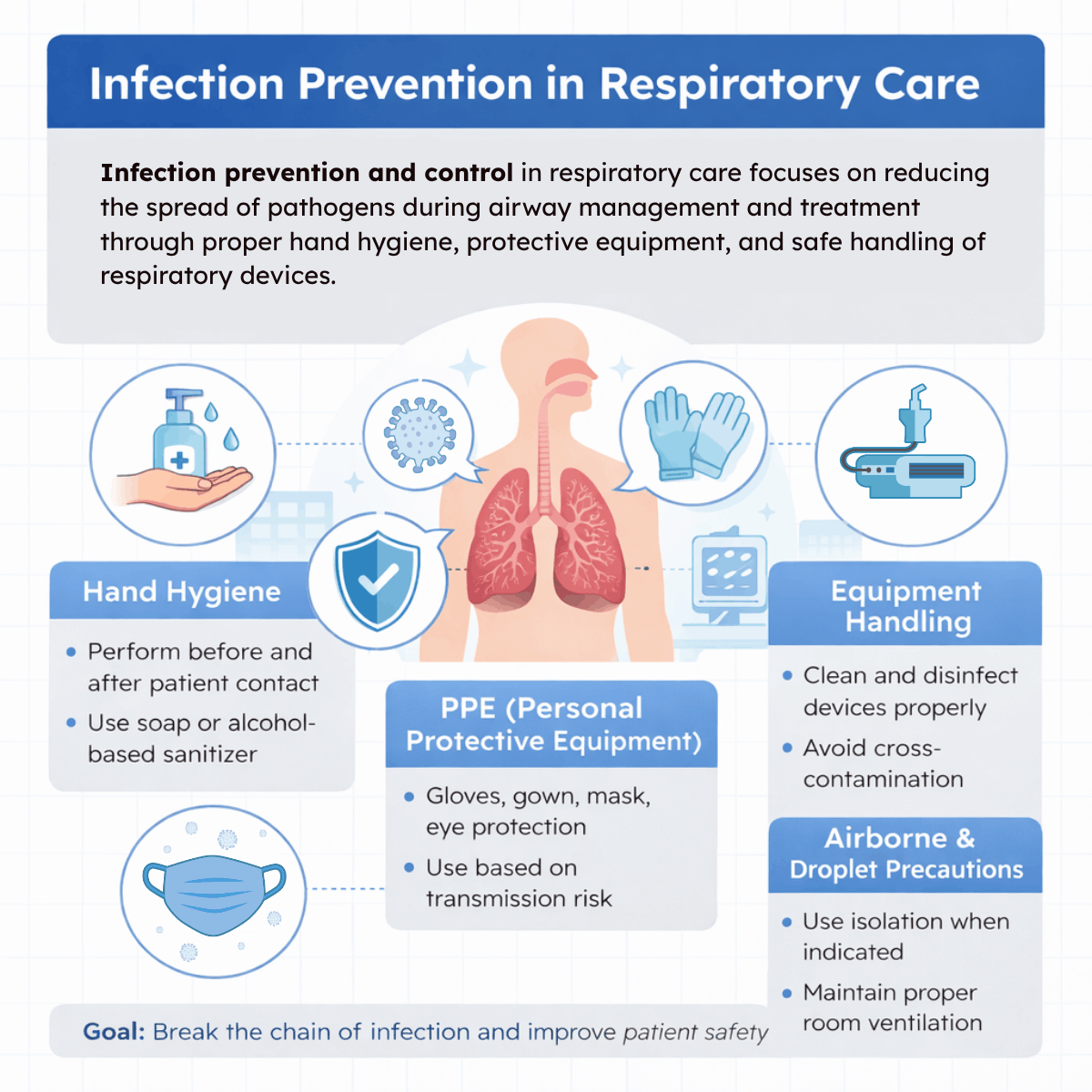
Infection prevention and control in respiratory care focuses on minimizing the spread of pathogens while delivering safe and effective patient care. Respiratory therapists frequently perform procedures such as airway management, suctioning, and aerosol therapy, which can increase the risk of transmission if proper precautions are not followed.
Standard precautions, including hand hygiene and the use of personal protective equipment, must be applied consistently with every patient interaction. In addition, transmission-based precautions are implemented when caring for patients with known or suspected infections. Proper cleaning, disinfection, and sterilization of respiratory equipment are essential to prevent cross-contamination.
By following established guidelines and maintaining vigilance in daily practice, healthcare professionals can reduce healthcare–associated infections and create a safer clinical environment for both patients and staff.
Understanding Healthcare–Associated Infections
healthcare–associated infections (HAIs) are infections that develop during the course of medical treatment. These infections may occur in hospitals, outpatient settings, long-term care facilities, or even in home care environments where medical interventions are provided. Although modern medicine has significantly improved patient outcomes, HAIs remain a persistent challenge.
Patients receiving respiratory care are particularly vulnerable due to underlying cardiopulmonary disease, weakened immune responses, and the frequent use of invasive devices such as endotracheal tubes, tracheostomy tubes, and mechanical ventilators. These devices bypass natural defense mechanisms and create direct pathways for microorganisms to enter the lower respiratory tract.
Certain pathogens are more commonly associated with healthcare settings and may exhibit resistance to multiple antimicrobial agents. Organisms such as Pseudomonas aeruginosa are often implicated in hospital-acquired pneumonia and can be difficult to treat. The presence of resistant organisms further emphasizes the importance of prevention rather than relying solely on treatment.
Chain of Infection
For an infection to occur, three elements must be present: a source of pathogens, a route of transmission, and a susceptible host. Understanding this chain is essential for implementing effective control measures.
Source of Pathogens
The primary source of infectious agents in healthcare settings is humans, including patients, staff, and visitors. Microorganisms can also originate from contaminated equipment, surfaces, medications, or fluids. Respiratory equipment, if not properly cleaned and disinfected, can serve as a reservoir for pathogens.
Route of Transmission
Pathogens spread through several mechanisms, each requiring specific preventive strategies.
- Contact transmission involves direct physical contact with an infected individual or indirect contact through contaminated objects. This is one of the most common modes of transmission in respiratory care, especially when equipment is shared between patients without proper disinfection.
- Droplet transmission occurs when respiratory droplets generated by coughing, sneezing, or talking travel short distances and deposit on mucous membranes. Diseases such as influenza and pertussis spread through this route.
- Airborne transmission involves smaller particles that can remain suspended in the air and travel longer distances. Tuberculosis, measles, and varicella are examples of infections transmitted this way. These pathogens require specialized ventilation and respiratory protection.
Note: Other routes include common vehicle transmission through contaminated food, water, or medications, and vector-borne transmission, although the latter is less relevant in most clinical settings.
Susceptible Host
A susceptible host is an individual who lacks sufficient immunity to resist infection. Patients in respiratory care often have compromised defenses due to chronic disease, acute illness, or invasive interventions. Identifying and protecting vulnerable patients is a key component of infection prevention.
Standard Precautions
Standard precautions represent the foundation of infection prevention in all healthcare settings. These practices are applied to every patient, regardless of diagnosis or infection status, based on the assumption that all blood, body fluids, and secretions may contain infectious agents.
Hand Hygiene
Hand hygiene is the single most important intervention for preventing the spread of infection. It includes washing hands with soap and water or using alcohol-based hand sanitizers when hands are not visibly soiled. Proper technique and timing are essential. Hand hygiene should be performed before and after patient contact, after removing gloves, and after contact with potentially contaminated surfaces.
Soap and water are required when dealing with spore-forming organisms such as Clostridium difficile, as alcohol-based products are not effective in these cases.
Personal Protective Equipment
Personal protective equipment (PPE) provides a barrier between the healthcare worker and infectious material. The selection of PPE depends on the anticipated level of exposure. Gloves are used when there is potential contact with blood, body fluids, or contaminated surfaces. They must be changed between tasks and patients and should never replace hand hygiene.
Gowns are worn to protect skin and clothing during procedures that may generate splashes or sprays. Masks, eye protection, and face shields protect the mucous membranes of the eyes, nose, and mouth.
Respiratory protection, such as N95 respirators, is required for airborne pathogens. Proper fit testing and training are necessary to ensure effectiveness.
Safe Handling of Equipment and Sharps
Proper handling of patient care equipment reduces the risk of transmission. Reusable devices must be cleaned and disinfected before use on another patient. Single-use items should be discarded appropriately.
Sharps must be handled with extreme caution and disposed of in puncture-resistant containers. Practices such as recapping needles should be avoided to reduce the risk of injury and exposure.
Transmission-Based Precautions
In addition to standard precautions, transmission-based precautions are used for patients known or suspected to have specific infections. These precautions are categorized into contact, droplet, and airborne precautions.
Contact Precautions
Contact precautions are used for infections spread by direct or indirect contact. Healthcare workers must wear gloves and gowns when entering the patient’s environment. Equipment should be dedicated to a single patient whenever possible.
Droplet Precautions
Droplet precautions are required for infections transmitted through respiratory droplets. Patients should be placed in private rooms or cohorted with others who have the same infection. Healthcare workers should wear surgical masks when within close proximity to the patient.
Airborne Precautions
Airborne precautions are necessary for infections transmitted through droplet nuclei. Patients should be placed in negative-pressure rooms with specialized ventilation systems. Healthcare workers must wear N95 respirators or higher-level protection.
Respiratory Hygiene and Cough Etiquette
Respiratory hygiene is an important component of infection prevention, particularly in areas where patients first enter the healthcare system. Measures include covering the mouth and nose during coughing or sneezing, using tissues, performing hand hygiene, and maintaining appropriate distance from others.
Education of patients and visitors plays a significant role in reducing transmission. Simple interventions such as providing masks and posting instructional signage can have a meaningful impact.
Environmental Cleaning and Equipment Processing
Environmental sanitation and proper equipment processing are essential for reducing the microbial burden in healthcare settings.
Cleaning
Cleaning involves removing visible debris and organic material from surfaces and equipment. This step is necessary before disinfection or sterilization, as residual material can interfere with the effectiveness of these processes.
Disinfection
Disinfection eliminates many pathogenic organisms but may not destroy bacterial spores. The level of disinfection required depends on the type of equipment and its intended use.
Sterilization
Sterilization destroys all forms of microbial life and is required for critical items that enter sterile tissues or the vascular system. Methods include steam sterilization and low-temperature techniques such as ethylene oxide gas.
Spaulding Classification
Medical equipment is classified based on the risk of infection associated with its use. Critical items require sterilization, semicritical items require high-level disinfection, and noncritical items require low- or intermediate-level disinfection.
Note: Respiratory care equipment such as nebulizers, ventilator circuits, and bronchoscopes must be processed according to these principles to prevent cross-contamination.
Role of Respiratory Therapists
Respiratory therapists play a central role in infection prevention due to their frequent involvement in airway management and aerosol-generating procedures. Their responsibilities include maintaining equipment, adhering to infection control protocols, and monitoring patients for signs of infection.
Consistent application of infection prevention practices requires both knowledge and vigilance. Respiratory therapists must remain aware of current guidelines and integrate them into daily practice.
Device-Related Infections in Respiratory Care
A significant proportion of healthcare–associated infections are linked to the use of medical devices. In respiratory care, these include mechanical ventilators, airway devices, suction systems, and oxygen delivery equipment. Because these devices often bypass normal defense mechanisms, they increase the risk of infection if not properly managed.
Ventilator-Associated Pneumonia
Ventilator-associated pneumonia (VAP) is one of the most common and serious complications in mechanically ventilated patients. It typically develops after 48 hours of intubation and is associated with increased morbidity, mortality, and length of hospital stay.
The pathogenesis of VAP often involves microaspiration of contaminated secretions, colonization of the oropharynx, and the presence of biofilms on endotracheal tubes. Contaminated condensate within ventilator circuits can also contribute to infection if it enters the patient’s airway.
Prevention strategies focus on minimizing risk factors and maintaining strict adherence to evidence-based practices. These include elevating the head of the bed, performing routine oral care, minimizing sedation, and assessing readiness for extubation. Ventilator circuits should not be changed routinely but should be replaced when visibly soiled or malfunctioning. Condensate should be drained away from the patient and handled with care to prevent contamination.
Ventilator-Associated Events
In recent years, surveillance has shifted from focusing solely on VAP to a broader category known as ventilator-associated events, or VAEs. These include ventilator-associated conditions and infection-related complications.
VAE surveillance uses objective criteria such as changes in oxygen requirements or positive end-expiratory pressure to identify potential complications. This approach allows clinicians to detect a wider range of issues, including infection, pulmonary edema, or atelectasis, and promotes a more comprehensive evaluation of patient safety during mechanical ventilation.
Infection Risks from Respiratory Equipment
Respiratory care equipment can serve as a source of infection if not properly maintained and reprocessed.
Nebulizers
Nebulizers generate aerosols that can carry microorganisms directly into the respiratory tract. Contamination may occur from improper cleaning, use of nonsterile fluids, or inadequate handling.
To reduce risk, sterile water should always be used in nebulizers, and reservoirs should be emptied and cleaned between uses. Small-volume nebulizers should be disinfected and air-dried between treatments on the same patient and must undergo high-level disinfection before being used for another patient.
Ventilator Circuits and Humidifiers
Ventilator circuits can accumulate condensate that contains microorganisms from the patient’s airway. If this fluid is allowed to flow back toward the patient, it can increase the risk of infection.
Heated humidifiers and heat and moisture exchangers help reduce contamination when used appropriately. Circuits should be inspected regularly, and condensate should be drained safely without exposing the patient or caregiver to contamination.
Suction Equipment
Suctioning is an essential procedure in respiratory care but carries a risk of infection. Using sterile technique, performing hand hygiene, and avoiding reuse of disposable catheters are key practices.
Closed suction systems may reduce environmental contamination, but proper handling remains critical. Collection canisters and tubing should be changed according to institutional guidelines.
Oxygen Therapy Devices
Although oxygen delivery systems pose a lower risk than other respiratory equipment, they can still contribute to infection if improperly handled. Humidifiers should be filled with sterile water, and disposable devices should be used whenever possible.
Bronchoscopy and High-Level Disinfection
Bronchoscopes are complex instruments that come into direct contact with mucous membranes and respiratory secretions. Because of this, they are classified as semicritical devices and require high-level disinfection.
Proper reprocessing involves several steps, including cleaning, disinfection, rinsing, drying, and storage. Cleaning is the most important step, as residual organic material can reduce the effectiveness of disinfectants.
Failure to follow recommended reprocessing procedures can result in transmission of pathogens such as Mycobacterium tuberculosis and Pseudomonas aeruginosa. Staff responsible for reprocessing must be trained and competent in these procedures, and equipment should be regularly inspected for defects.
Maintaining a Healthy Workforce
Healthcare workers play a vital role in preventing the spread of infection, but they can also serve as a source of transmission if proper precautions are not followed.
Immunization and Health Screening
Vaccination is one of the most effective ways to protect both healthcare workers and patients. Recommended immunizations include influenza, hepatitis B, measles, mumps, rubella, varicella, and pertussis.
Healthcare workers with symptoms of infectious illness should avoid patient contact until they are no longer contagious. Reporting illness and following occupational health guidelines are essential for maintaining a safe environment.
Use of Respiratory Protection
Respiratory therapists frequently encounter airborne pathogens, making the use of appropriate respiratory protection essential. N95 respirators or higher-level devices must be properly fitted and used according to established protocols.
Education and training ensure that healthcare workers understand when and how to use protective equipment effectively.
Creating a Culture of Safety
Infection prevention is not solely the responsibility of individuals but requires a coordinated effort across the entire organization. A culture of safety emphasizes accountability, open communication, and continuous improvement. Healthcare workers should feel empowered to speak up if they observe unsafe practices or potential risks.
Leadership plays a key role by providing the necessary resources, training, and support for infection prevention initiatives. Standardized protocols and checklists can help ensure consistency in practice.
Surveillance and Quality Improvement
Surveillance is the systematic monitoring of infections within a healthcare facility. It involves collecting, analyzing, and interpreting data to identify trends and areas for improvement.
Infection prevention programs track rates of HAIs, device-related infections, and adherence to preventive measures. These data are used to evaluate the effectiveness of interventions and guide quality improvement efforts.
Respiratory therapists contribute to surveillance by documenting clinical findings, participating in data collection, and adhering to established protocols. Feedback from surveillance programs helps inform practice and improve patient outcomes.
Handling Fluids, Medications, and Specimens
Proper handling of fluids and medications is essential to prevent contamination. Sterile fluids should be used for procedures such as tracheal suctioning and nebulization. Multidose vials must be handled according to manufacturer guidelines and should not be used beyond their expiration date.
Laboratory specimens must be collected and transported carefully to prevent contamination of the container and exposure to healthcare workers. Using appropriate labeling and containment methods reduces the risk of accidental exposure.
Use of Disposable vs. Reusable Equipment
The choice between disposable and reusable equipment has implications for infection control, cost, and efficiency.
Disposable equipment reduces the risk of cross-contamination but may increase costs and environmental impact. Reusable equipment requires proper cleaning and disinfection, which involves additional resources and oversight.
Healthcare facilities must balance these factors while ensuring patient safety remains the top priority. When reusable equipment cannot be adequately reprocessed, disposable alternatives should be considered.
Infection Prevention and Control Practice Questions
1. What percentage of hospitalized patients in the United States develop a healthcare-associated infection (HAI)?
Approximately 4% of hospitalized patients develop an HAI.
2. What term describes infections that develop outside of a healthcare setting?
Community-onset infections
3. What term is used for infections acquired during medical treatment or hospitalization?
Healthcare-associated infections (HAIs)
4. What are the three essential components required for infection transmission?
A source of pathogens, a mode of transmission, and a susceptible host.
5. What is the most common source of infectious agents in healthcare settings?
Humans, including patients, healthcare personnel, and visitors.
6. What are inanimate objects that can transmit infectious agents called?
Fomites
7. What type of transmission occurs when pathogens spread via contaminated surfaces or equipment?
Indirect contact transmission
8. What is the typical distance that respiratory droplets travel during droplet transmission?
Usually up to 3 feet (about 1 meter).
9. What particle size defines airborne droplet nuclei?
Particles that are 5 micrometers or smaller (≤5 µm).
10. What is an example of a pathogen transmitted via airborne transmission?
Mycobacterium tuberculosis
11. What type of room is required for patients on airborne precautions?
A negative-pressure isolation room.
12. What type of respiratory protection is required for airborne precautions?
A NIOSH-approved N95 respirator or higher-level protection.
13. What is the single most important method for preventing the spread of infection in healthcare settings?
Proper hand hygiene
14. When should hand hygiene be performed in clinical practice?
Before and after patient contact, after removing gloves, and after contact with potentially contaminated surfaces or materials.
15. Why are alcohol-based hand sanitizers ineffective against Clostridioides difficile?
Because C. difficile produces spores that are resistant to alcohol.
16. What are standard precautions based on in infection control?
The assumption that all blood and body fluids may contain infectious agents.
17. What personal protective equipment (PPE) is used to protect mucous membranes from splashes or sprays?
Masks, eye protection (goggles), or face shields.
18. What must be done to reusable medical equipment before it is used on another patient?
It must be properly cleaned and either disinfected or sterilized according to guidelines.
19. What is the purpose of transmission-based precautions?
To prevent the spread of specific infectious agents beyond standard precautions.
20. What are the three categories of transmission-based precautions?
Contact precautions, droplet precautions, and airborne precautions.
21. Which precaution requires wearing gloves and a gown upon entering a patient’s room?
Contact precautions
22. Which precaution requires wearing a surgical mask when within close proximity to a patient?
Droplet precautions
23. What is respiratory hygiene and cough etiquette?
A set of practices aimed at reducing the spread of respiratory infections at the first point of contact.
24. What are the two main categories of procedures used to reduce pathogens in healthcare environments?
General sanitation and equipment processing.
25. What are the three Spaulding classification categories for medical equipment?
Critical, semicritical, and noncritical items.
26. What type of transmission occurs when infectious droplets come into contact with the mucous membranes of another person?
Droplet transmission
27. What activities commonly generate respiratory droplets?
Coughing, sneezing, talking, and procedures such as suctioning or bronchoscopy.
28. What is an example of a disease transmitted through droplet transmission?
Influenza
29. What is an example of a disease transmitted through airborne transmission?
Measles
30. Why is airborne transmission considered more dangerous than droplet transmission?
Because airborne particles can remain suspended in the air and travel longer distances.
31. What is meant by a susceptible host in the chain of infection?
An individual with weakened immune defenses who is more vulnerable to infection.
32. How do artificial airways increase the risk of infection?
They bypass normal airway defenses such as filtration and mucociliary clearance.
33. What type of precautions should be applied to all patients regardless of diagnosis?
Standard precautions
34. What should be done immediately before putting on gloves?
Perform proper hand hygiene.
35. Why should gloves never replace hand hygiene?
Because gloves may have microscopic defects and hands can become contaminated during removal.
36. When should gloves be changed during patient care?
Between tasks and after contact with contaminated materials or body fluids.
37. What is the purpose of wearing a gown in infection control?
To protect the skin and clothing from contamination.
38. What should be done immediately after removing a contaminated gown?
Perform hand hygiene.
39. What is the risk of failing to clean shared medical equipment between patients?
Transmission of infectious pathogens between patients.
40. Which organization provides infection control guidelines in the United States?
The Centers for Disease Control and Prevention (CDC).
41. What is the primary goal of infection prevention programs in healthcare facilities?
To reduce healthcare-associated infections and protect both patients and staff.
42. What is meant by creating a culture of safety in healthcare?
A shared commitment among all staff to prioritize patient and worker safety.
43. What is a just culture in healthcare?
An environment where healthcare workers can report errors without fear of punishment.
44. What is a key responsibility of respiratory therapists in infection control?
Consistently applying infection prevention and control practices.
45. What is the benefit of employee immunization in healthcare settings?
It reduces the risk of infection and transmission among patients and staff.
46. Which vaccine is required by OSHA for healthcare workers?
The hepatitis B vaccine.
47. What is the most effective way to prevent healthcare-associated influenza?
Annual influenza vaccination.
48. What is presenteeism in healthcare?
Working while ill, which increases the risk of spreading infection.
49. What should a healthcare worker do if they have a fever or signs of infection?
Avoid reporting to work and follow facility illness policies.
50. What is chemoprophylaxis?
The use of medications to prevent infection after a known or suspected exposure.
51. What is the purpose of general sanitation in healthcare settings?
To reduce the number of pathogens in the environment to a safe level.
52. What are examples of general sanitation measures in healthcare?
Laundry handling, food preparation practices, and routine housekeeping.
53. What is the goal of equipment processing in infection control?
To decontaminate medical equipment and prevent the transmission of infectious agents.
54. What term describes agents or processes that kill bacteria?
Bactericidal
55. What term describes agents or processes that inhibit bacterial growth?
Bacteriostatic
56. What term describes agents or processes that destroy bacterial spores?
Sporicidal
57. What term describes agents or processes that inactivate viruses?
Virucidal
58. What is the definition of cleaning in the context of equipment processing?
The physical removal of visible dirt, organic matter, and debris.
59. Why is cleaning required before disinfection or sterilization?
Because organic material can reduce the effectiveness of disinfectants and sterilizing agents.
60. What is disinfection?
The process of eliminating most pathogenic microorganisms, except bacterial spores.
61. What level of disinfection is required for semicritical items?
High-level disinfection
62. What level of processing is required for critical items?
Sterilization
63. What is sterilization?
The complete destruction of all microorganisms, including bacterial spores.
64. What is the most commonly used method of sterilization in healthcare?
Steam sterilization
65. What device is used to perform steam sterilization?
An autoclave.
66. What are the typical temperature and pressure settings for steam sterilization in an autoclave?
121°C at 15 psi
67. What is ethylene oxide (ETO) gas primarily used for in healthcare?
Sterilizing heat- and moisture-sensitive medical equipment.
68. What is a major disadvantage of ethylene oxide sterilization?
It is toxic and requires prolonged aeration to remove residual gas.
69. What is high-level disinfection intended to eliminate?
All microorganisms except high numbers of bacterial spores.
70. What should be done after performing high-level disinfection?
Rinse and thoroughly dry the equipment before use.
71. Why is rinsing necessary after high-level disinfection?
To remove potentially toxic chemical residues.
72. What type of items are classified as noncritical in the Spaulding classification?
Items that come into contact with intact skin only.
73. What is an example of a noncritical medical item?
A blood pressure cuff.
74. What type of items are classified as semicritical?
Items that come into contact with mucous membranes or nonintact skin.
75. What is an example of a semicritical respiratory care device?
A nebulizer.
76. What type of medical items are classified as critical in infection control?
Items that enter sterile tissue or the vascular system.
77. What is an example of a critical medical device?
An intravascular catheter.
78. What is the primary risk associated with improperly processed critical items?
Serious infection due to microbial contamination.
79. What is pasteurization used for in healthcare settings?
A physical method of disinfection that uses heat to reduce microbial load.
80. What is a commonly used chemical agent for high-level disinfection?
Glutaraldehyde
81. What must be ensured during chemical disinfection to achieve effectiveness?
Proper concentration of the disinfectant and adequate contact time.
82. What is the minimum effective concentration (MEC) of a disinfectant?
The lowest concentration at which the disinfectant remains effective.
83. Why must equipment be fully immersed during the disinfection process?
To ensure all surfaces are adequately exposed to the disinfectant.
84. What should be done after disinfection to prevent recontamination?
Handle and store the equipment using aseptic techniques.
85. Why is it important to thoroughly dry equipment after rinsing?
To prevent microbial growth and contamination.
86. What is immediate-use steam sterilization (IUSS)?
A rapid sterilization method used for urgent processing of unwrapped instruments.
87. Why is immediate-use steam sterilization not recommended for routine use?
Because it increases the risk of contamination and lacks protective packaging.
88. What is required before a healthcare worker can safely use a respirator?
Medical evaluation, proper fit testing, and training.
89. What is the purpose of a powered air-purifying respirator (PAPR)?
To provide respiratory protection when an adequate seal cannot be achieved with a standard respirator.
90. What type of protection does a surgical mask provide?
Protection against large respiratory droplets and fluid splashes.
91. Why is a surgical mask not appropriate for airborne precautions?
Because it does not effectively filter small airborne particles.
92. What is the function of a negative-pressure isolation room?
To prevent contaminated air from escaping into surrounding areas.
93. What is the required airflow direction in a negative-pressure room?
Air flows into the room and is then exhausted to the outside.
94. How many air changes per hour are recommended for new airborne isolation rooms?
At least 12 air changes per hour.
95. What is the purpose of high-efficiency particulate air (HEPA) filtration?
To remove airborne particles, including microorganisms, from the air.
96. What percentage of airborne particles do HEPA filters remove?
At least 99.97% of particles measuring 0.3 micrometers or larger.
97. What is a protective environment in healthcare?
A specialized setting designed to protect immunocompromised patients from airborne pathogens.
98. Which patients typically require a protective environment?
Patients undergoing hematopoietic stem cell transplantation.
99. Why are fresh flowers and plants restricted in protective environments?
Because they can harbor fungi and other microorganisms.
100. What is the role of ventilation systems in infection control?
To reduce airborne contamination and limit the spread of infectious agents.
Final Thoughts
Infection prevention and control in respiratory care require consistent attention to detail, adherence to established guidelines, and a strong commitment to patient safety. Respiratory therapists must understand how infections spread and apply appropriate precautions in every clinical interaction.
From hand hygiene and equipment processing to surveillance and workforce protection, each component plays a role in reducing the risk of healthcare–associated infections.
By integrating these practices into daily care, clinicians can create a safer environment, improve outcomes, and uphold the highest standards of professional responsibility.

Written by:
John Landry is a registered respiratory therapist from Memphis, TN, and has a bachelor's degree in kinesiology. He enjoys using evidence-based research to help others breathe easier and live a healthier life.
References
- Tsioutis C, Karageorgos SA. Infection Prevention and Control: Practical and Educational Advances. Trop Med Infect Dis. 2022.