

The patient medical record is one of the most important tools used in respiratory care. It serves as a centralized and organized collection of clinical information that documents a patient’s health history, diagnostic data, treatment plans, and response to therapy over time. In everyday clinical practice, respiratory therapists rely on the medical record to guide safe and effective patient care. On the board exam, it becomes the foundation for nearly every clinical decision you are expected to make.
For respiratory therapy students preparing for the board exam, mastering the interpretation of the patient medical record is essential. Many exam questions are designed to evaluate your ability to analyze chart data, recognize clinical patterns, and determine the most appropriate next step in patient management.
Key sections of the medical record include provider orders, patient history, physical examination findings, laboratory results, imaging studies, and trends in monitoring data. These components work together to form a complete clinical picture of the patient’s condition. Understanding how to synthesize this information efficiently is a critical skill tested on the board exam.
Developing strong medical record interpretation skills not only improves exam performance but also prepares you for real-world clinical practice, where timely and accurate clinical decisions can significantly influence patient outcomes.

Take our free course to learn essential tips, insights, and strategies to pass the TMC Exam on your first (or next) attempt.
Understanding the Patient Medical Record
The patient medical record is a comprehensive and continuously updated record of a patient’s healthcare experience. It includes objective clinical data, subjective reports from the patient, provider assessments, diagnostic findings, treatment plans, and documentation from multiple members of the healthcare team.
For respiratory therapists, the medical record plays a vital role in understanding a patient’s respiratory status, identifying underlying disease processes, and evaluating how well current therapies are working. By reviewing the medical record, clinicians can quickly determine whether a patient is improving, deteriorating, or requiring additional intervention.
On the board exam, the patient medical record serves a similar purpose. You will often be presented with clinical information from several sections of the chart and asked to determine what is happening physiologically and which respiratory care intervention should be performed next.
Rather than simply testing memorized facts, the board exam emphasizes your ability to interpret medical record data and apply clinical reasoning. This means connecting patient history, physical findings, laboratory values, imaging results, and monitoring trends to make sound clinical judgments.
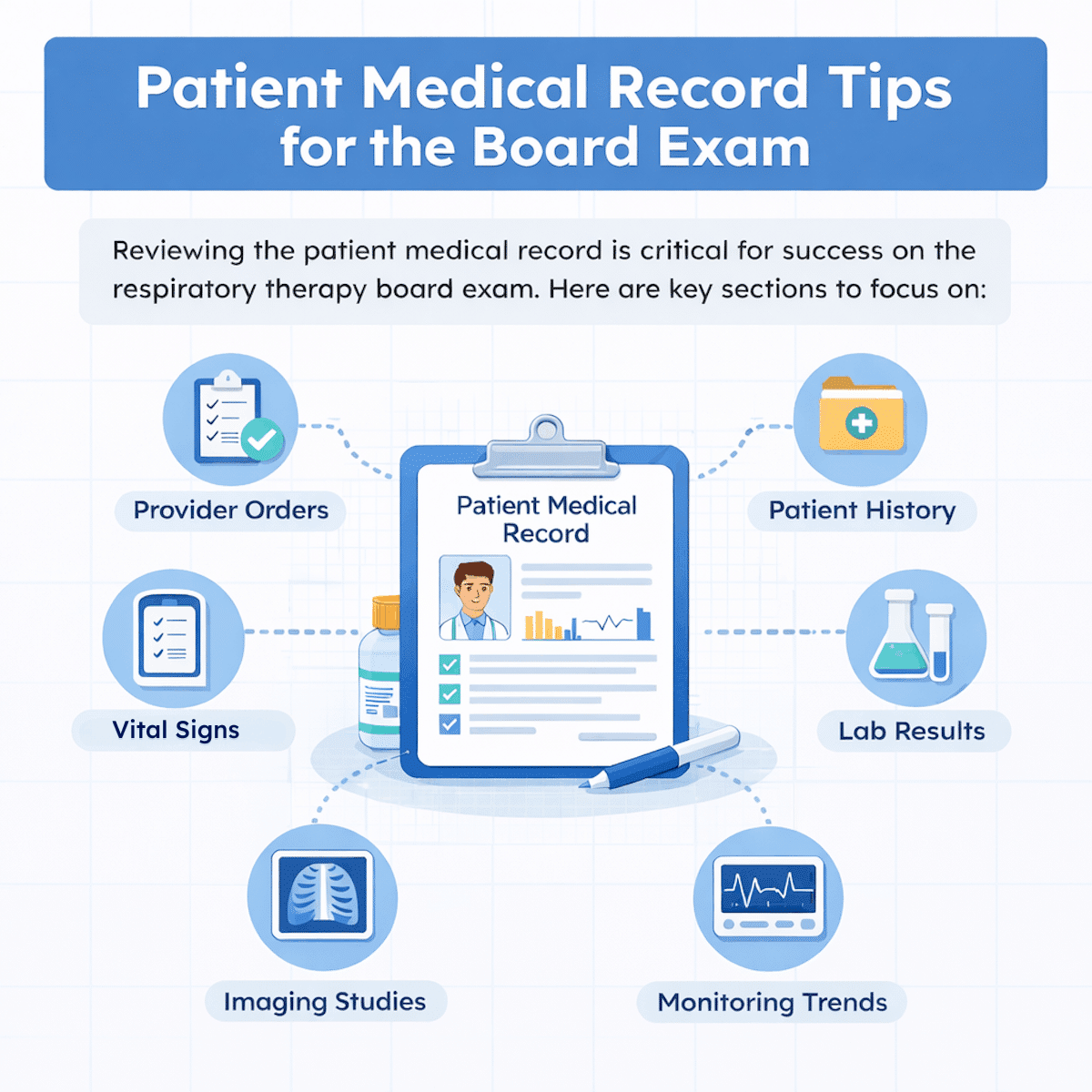
Key Components of the Patient Medical Record
The patient medical record is divided into several sections, each contributing valuable information about the patient’s condition. As a respiratory therapist, you must know which sections are most relevant to respiratory care and how to interpret them quickly and accurately.
Watch this video and keep reading for a detailed review of the key components you should focus on when preparing for the board exam.
Provider Orders
Provider orders outline the diagnostic tests and therapeutic interventions authorized for the patient. These orders guide respiratory care and serve as the legal basis for initiating treatments.
Common respiratory-related orders include:
- Oxygen therapy device and flow rate or FiO₂
- Aerosolized medication schedules
- Mechanical ventilation mode and settings
- Non-invasive ventilation parameters
- Airway clearance techniques
On the board exam, you may be asked to determine whether an order is appropriate, complete, and safe. In some scenarios, the correct answer involves recognizing that an order is unclear, incomplete, or potentially unsafe and therefore requires clarification before proceeding.
Note: Be cautious of vague orders such as “continue previous settings” or “oxygen as needed.” These often indicate that additional patient assessment or provider clarification is necessary.
Patient History
The patient history section provides critical background information that helps explain the patient’s current respiratory condition. This section typically includes both past and present health information.
Important elements of patient history include:
- Previous respiratory diagnoses
- Cardiac or neuromuscular conditions
- Medication history
- Smoking status and occupational exposures
- Recent hospitalizations or infections
Patient history often provides essential clues that guide clinical decision-making. For example, a history of COPD may explain chronic hypercapnia, while a history of asthma may suggest bronchospasm as the cause of acute respiratory distress.
Note: Board exam questions frequently require you to identify risk factors or recommend appropriate management strategies based on patient history, especially for chronic diseases such as COPD or asthma.
Physical Examination Findings
The physical examination section documents objective findings obtained during patient assessment. These findings are essential for evaluating respiratory status and identifying signs of clinical deterioration.
Key respiratory-focused findings include:
- Respiratory rate and breathing pattern
- Use of accessory muscles or retractions
- Chest symmetry and expansion
- Breath sounds such as wheezes, crackles, or diminished airflow
- Skin color and level of consciousness
On the board exam, physical examination findings often point toward the underlying respiratory problem. Wheezing may indicate bronchoconstriction, crackles may suggest fluid accumulation or alveolar collapse, and diminished breath sounds may indicate pneumothorax, atelectasis, or airway obstruction.

Take our free course to learn essential tips, insights, and strategies to pass the Clinical Simulation Exam (CSE) on your first (or next) attempt.
Laboratory Test Results
Laboratory data plays a central role in respiratory care decision-making. Among all laboratory tests, arterial blood gas (ABG) analysis is one of the most important topics tested on the board exam because it provides direct insight into a patient’s ventilation, oxygenation, and acid-base status.
ABGs help clinicians evaluate:
- Ventilation effectiveness
- Oxygenation status
- Acid-base balance
In addition to ABGs, other laboratory values may influence respiratory management. For example, hemoglobin levels affect oxygen transport capacity, while elevated white blood cell counts may indicate infection or systemic inflammation.
Key ABG Values to Know:
- pH: 7.35–7.45
- PaCO₂: 35–45 mmHg
- PaO₂: 80–100 mmHg (on room air)
- HCO₃⁻: 22–26 mEq/L
- Base Excess (BE): ±2
Exam Tip: When interpreting ABGs, always determine whether the primary issue involves ventilation, oxygenation, or acid-base balance. The board exam often tests your ability to recognize patterns such as respiratory acidosis with hypoxemia and select the most appropriate intervention.
Imaging Studies
Chest imaging provides visual confirmation of many respiratory conditions and plays a key role in diagnostic evaluation. Chest x-rays are the most common imaging studies referenced on the board exam.
Common radiographic findings include:
- Infiltrates associated with pneumonia
- Hyperinflation seen in obstructive lung disease
- Atelectasis or lobar collapse
- Pleural effusions
- Diffuse bilateral opacities
Advanced imaging studies such as CT scans may be referenced in cases involving pulmonary embolism, interstitial lung disease, or complex lung pathology.
Exam Tip: Pay close attention to classic radiographic patterns such as the “steeple sign” (indicative of croup) or diffuse white-out patterns associated with ARDS. Expect to identify abnormal radiographic findings when evaluating patient scenarios.
Trends in Vital Signs and Monitoring Data
Trends in monitoring data often provide more meaningful insight than isolated measurements. On the board exam, you are frequently asked to recognize patterns of improvement or deterioration based on changes in monitoring data over time.
Important parameters to monitor include:
- Respiratory rate trends
- Heart rate and blood pressure
- SpO₂ trends
- End-tidal CO₂ values
For example, a gradual decline in oxygen saturation despite increasing oxygen therapy may indicate worsening lung function or developing respiratory failure. Conversely, improvement in oxygenation after initiating therapy may confirm that the intervention is effective.
Note: Board exam questions often require you to recognize whether a patient’s condition is improving, worsening, or remaining stable based on monitoring trends.
Synthesizing Medical Record Data for Decision-Making
One of the most important skills tested on the board exam is the ability to integrate information from multiple sections of the medical record to make clinical decisions.
Rather than focusing on a single abnormal value, you must evaluate the entire clinical picture, including patient history, physical findings, laboratory results, imaging studies, and monitoring trends.
Effective clinical reasoning typically follows two key steps:
- Information Gathering: Identifying the most relevant findings from the patient record
- Decision Making: Selecting the most appropriate diagnostic or therapeutic intervention
Note: Successful candidates recognize when immediate intervention is necessary and when continued monitoring or additional assessment is the most appropriate next step.
Advance Directives and Do-Not-Resuscitate (DNR) Orders
Advance directives outline a patient’s preferences regarding life-sustaining treatments. These directives are especially important during emergencies involving respiratory failure or cardiac arrest.
Advance directives may include:
- Living Will
- Durable Power of Attorney (DPOA)
- Do Not Resuscitate (DNR)
- Do Not Intubate (DNI)
Respiratory therapists must always verify whether a patient has an advance directive before initiating invasive interventions.
Example Scenario: If a patient experiencing respiratory arrest has a valid DNR/DNI order, invasive airway management such as intubation is not performed. Instead, comfort measures and supportive care are prioritized according to the patient’s wishes.
Progress Notes and Interdisciplinary Documentation
Progress notes document changes in patient status and response to therapy over time. These notes may be written by physicians, nurses, respiratory therapists, and other members of the healthcare team.
Progress notes often contain valuable information about:
- Patient response to respiratory treatments
- Ventilator adjustments and weaning progress
- Clinical deterioration or improvement
- Changes in treatment plans
This documentation frequently guides decisions related to escalation of care, ventilator weaning, or discharge planning.
Exam Tip: You may be asked to determine the next step in patient care based on information documented in progress notes.
Strategies for Success When Evaluating Patient Records
- Practice Active Reading: Quickly identify abnormal findings and clinically significant information.
- Focus on Trends: Evaluate changes in patient data over time rather than relying on a single value.
- Apply Clinical Context: Interpret laboratory values, imaging results, and monitoring data within the context of the patient’s diagnosis and therapy.
Integrating Study Resources for Exam Preparation
To strengthen your ability to evaluate patient medical records and clinical scenarios, consistent practice with realistic exam-style questions is essential.
Helpful study resources include:
Note: Regular practice with realistic clinical scenarios is one of the most effective ways to build confidence and strengthen clinical reasoning skills for the board exam.
How to Quickly Analyze a Patient Chart on the Board Exam
During the board exam, you may be presented with a large amount of patient data at once. Developing a quick and systematic method for reviewing the patient medical record can help you identify the most important information without becoming overwhelmed.
A simple approach is to scan the chart in the following order:
- Diagnosis and Chief Complaint: Identify the primary condition affecting the patient. This helps you understand the clinical context.
- Vital Signs and Oxygenation: Review respiratory rate, heart rate, blood pressure, and SpO₂ to assess immediate stability.
- ABG Results: Determine whether the primary problem involves ventilation, oxygenation, or acid-base imbalance.
- Physical Exam Findings: Look for abnormal breath sounds, signs of respiratory distress, or changes in mental status.
- Imaging and Diagnostic Results: Confirm suspected conditions such as pneumonia, pneumothorax, or atelectasis.
- Current Orders and Therapies: Evaluate whether the existing treatments are appropriate or need adjustment.
Note: Using a consistent chart-review method allows you to quickly connect patient data to the most appropriate clinical intervention, which is exactly what the board exam is designed to test.

Get instant access to four premium courses designed to help you pass the TMC/CSE exams—CSE Boost Course, TMC Test Bank, TMC Exam Hacks, and Daily Practice Questions. Bundle and save with everything you need for exam success.
Final Thoughts
A strong understanding of the patient medical record is essential for success on the board exam. The exam evaluates your ability to interpret clinical data, recognize important patterns, and apply appropriate respiratory care interventions.
By developing familiarity with provider orders, patient history, physical examination findings, laboratory results, imaging studies, monitoring trends, and progress notes, you can approach exam scenarios with greater confidence and clarity.
When combined with consistent practice and high-quality study resources, mastering the interpretation of the patient medical record will not only improve exam performance but also prepare you to deliver safe, effective, and professional respiratory care in real-world clinical practice.

Written by:
John Landry is a registered respiratory therapist from Memphis, TN, and has a bachelor's degree in kinesiology. He enjoys using evidence-based research to help others breathe easier and live a healthier life.
References
- Registered Respiratory Therapist (RRT). The National Board for Respiratory Care. 2025.