
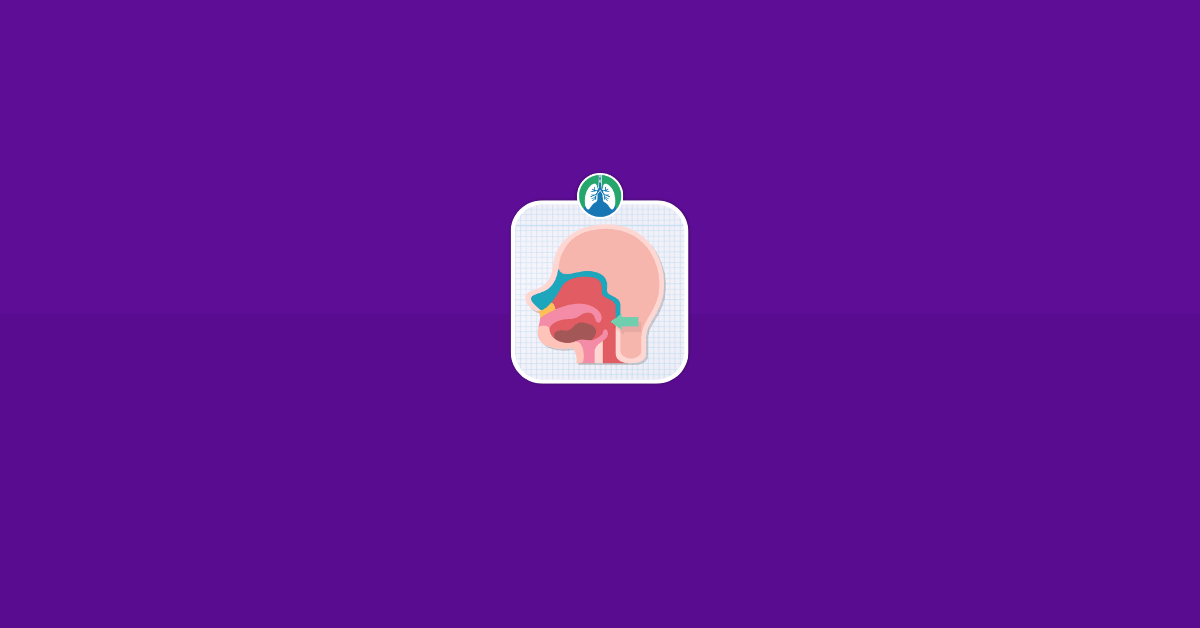
The oropharynx is a central component of the upper airway that plays a vital role in both respiratory and digestive functions. Located behind the oral cavity and extending to the level of the epiglottis, the oropharynx serves as a shared pathway for air and food.
Because of its involvement in airway patency, swallowing, and speech, this structure has significant clinical importance.
For respiratory therapists, understanding the anatomy and function of the oropharynx is essential when managing airways, preventing aspiration, and providing effective respiratory support.

What Is the Oropharynx?
The oropharynx is the middle portion of the pharynx, situated between the nasopharynx above and the laryngopharynx (hypopharynx) below. It extends from the soft palate and uvula down to the upper border of the epiglottis. Unlike the nasopharynx, which functions solely as an air passage, the oropharynx serves as a dual pathway for both respiratory and digestive processes.
The oropharynx is lined with stratified squamous epithelium, which provides protection against abrasion from food and mechanical stress during swallowing. This durable lining helps protect the airway from injury and irritation.
This region also contains several important anatomical structures, including the tongue, palatine tonsils, and the base of the oral cavity. These structures contribute to airway protection, immune defense, and speech production.

Anatomical Structure and Boundaries
Understanding the anatomical boundaries of the oropharynx is essential for airway assessment and management.
Superiorly, the oropharynx begins at the soft palate and uvula, which separate it from the nasopharynx. Inferiorly, it extends to the upper border of the epiglottis, where it transitions into the laryngopharynx. Anteriorly, it connects with the oral cavity through the oropharyngeal isthmus, while posteriorly it is bordered by the pharyngeal wall.
The lateral walls of the oropharynx contain the palatine tonsils, which are part of the body’s lymphatic defense system. These tonsils help detect and respond to inhaled or ingested pathogens.
Note: The base of the tongue forms the anterior portion of the oropharynx and plays a critical role in maintaining airway patency. The tongue’s position and muscle tone significantly influence airflow and swallowing function.
Physiological Functions of the Oropharynx
The oropharynx serves several important physiological functions that support breathing, swallowing, and speech.
Air Conduction
The oropharynx serves as a passageway for airflow from both the nasal and oral cavities to the lower respiratory tract. When nasal airflow is restricted, such as during nasal congestion, the oropharynx allows breathing through the mouth. Maintaining airway patency in this region is essential for effective ventilation.
Swallowing and Airway Protection
One of the primary functions of the oropharynx is its role in swallowing, also known as deglutition. During swallowing, coordinated muscle contractions guide food and liquids toward the esophagus while protecting the airway from aspiration.
The tongue, soft palate, and pharyngeal muscles work together to direct food away from the respiratory tract. The epiglottis also plays a key role by covering the laryngeal opening during swallowing, preventing food or liquid from entering the trachea.
Immune Defense
The palatine tonsils located within the oropharynx serve as immune surveillance structures. These lymphoid tissues help detect pathogens entering through the mouth or nose and contribute to the body’s immune response.
Speech Production
The oropharynx contributes to speech and vocal resonance. The movement of the tongue and soft palate influences sound production and clarity during verbal communication.
Clinical Relevance to Respiratory Therapists
The oropharynx plays a significant role in airway management, making it highly relevant to respiratory therapists and other healthcare professionals.
Airway Obstruction
Obstruction of the oropharynx can lead to significant respiratory compromise. Conditions such as enlarged tonsils, tongue relaxation, or soft tissue swelling can partially or completely block airflow. This is especially common in patients with altered levels of consciousness or neuromuscular weakness.
Respiratory therapists frequently assess the oropharynx when evaluating airway patency, particularly in emergency and critical care settings.
Oropharyngeal Airway Placement
Respiratory therapists often use oropharyngeal airways (OPAs) to maintain airway patency in unconscious patients who lack a gag reflex. OPAs help prevent the tongue from falling backward and obstructing airflow.
Proper sizing and insertion technique are critical to avoid complications such as gagging, vomiting, or airway trauma. Knowledge of oropharyngeal anatomy allows clinicians to safely place these airway adjuncts.
Aspiration Risk and Airway Protection
The oropharynx plays a central role in protecting the airway during swallowing. Patients with neurological disorders, sedation, or muscle weakness may have impaired swallowing function, increasing the risk of aspiration.
Respiratory therapists help identify aspiration risks and work with interdisciplinary teams to implement airway protection strategies, such as suctioning, positioning, and monitoring swallowing function.
Oxygen and Aerosol Therapy
The oropharynx serves as a pathway for oxygen therapy and aerosolized medications delivered through oral breathing or devices such as face masks. Structural abnormalities or obstruction in this region can reduce treatment effectiveness.
Oropharynx and Sleep-Disordered Breathing
The oropharynx is commonly involved in sleep-disordered breathing, particularly obstructive sleep apnea (OSA). During sleep, muscle tone in the tongue and surrounding tissues decreases, allowing soft tissues to collapse and obstruct the airway.
Respiratory therapists play a vital role in diagnosing and managing OSA through sleep studies and therapies such as continuous positive airway pressure (CPAP). Understanding oropharyngeal anatomy helps clinicians determine the causes of airway obstruction and select appropriate treatment strategies.
Common Disorders Affecting the Oropharynx
Several medical conditions can impact oropharyngeal structure and function.
Tonsillitis and Tonsillar Hypertrophy
Inflammation or enlargement of the palatine tonsils can cause airway obstruction, difficulty swallowing, and chronic infections. Severe cases may require surgical removal through tonsillectomy.
Oropharyngeal Cancer
Cancer involving the oropharynx can interfere with breathing, swallowing, and speech. Early symptoms may include persistent sore throat, difficulty swallowing, or voice changes. Early detection is essential for effective treatment.
Dysphagia
Dysphagia, or difficulty swallowing, often involves dysfunction of the oropharyngeal muscles. This condition increases the risk of aspiration and respiratory complications, especially in elderly or neurologically impaired patients.
Upper Airway Edema and Infection
Inflammation caused by infections, allergic reactions, or trauma can lead to swelling within the oropharynx. Severe swelling may obstruct airflow and require immediate airway management.
Assessment and Diagnostic Considerations
Respiratory therapists and healthcare providers assess the oropharynx through physical examination, patient history, and diagnostic testing. Visual inspection of the oral cavity and oropharynx can reveal structural abnormalities, swelling, or infection.
Additional diagnostic tools may include imaging studies, swallowing evaluations, or sleep studies to identify functional impairments. Accurate assessment allows clinicians to develop effective treatment and airway management plans.
Importance in Airway Management and Emergency Care
The oropharynx plays a crucial role in emergency airway management. Patients who are unconscious or sedated often experience loss of muscle tone, allowing the tongue and soft tissues to collapse and obstruct airflow.
Respiratory therapists frequently use airway positioning techniques, suctioning, and airway adjuncts to maintain patency. Understanding oropharyngeal anatomy allows clinicians to respond quickly to airway emergencies and prevent respiratory failure.
Oropharynx Practice Questions
1. What is the oropharynx?
The oropharynx is the middle portion of the pharynx located posterior to the oral cavity and serves as a shared passageway for air and food.
2. Where is the oropharynx anatomically located?
The oropharynx extends from the soft palate and uvula superiorly to the upper border of the epiglottis inferiorly.
3. What is the primary function of the oropharynx in respiration?
The oropharynx conducts airflow from the nasal and oral cavities toward the larynx and lower respiratory tract.
4. What is the primary digestive function of the oropharynx?
The oropharynx assists in directing food and liquids from the mouth into the esophagus during swallowing.
5. Which structures are located within the oropharynx?
Key structures include the tongue base, soft palate, uvula, palatine tonsils, and posterior pharyngeal wall.
6. What type of epithelial tissue lines the oropharynx?
The oropharynx is lined with stratified squamous epithelium, which provides protection against abrasion from food and secretions.
7. Why does the oropharynx contain stratified squamous epithelium instead of respiratory epithelium?
This type of epithelium provides durability and protection from mechanical stress associated with swallowing.
8. What role do the palatine tonsils play in the oropharynx?
The palatine tonsils provide immune defense by detecting and responding to pathogens entering through the mouth or nose.
9. How does the oropharynx contribute to airway protection?
It helps coordinate swallowing and prevents aspiration by directing food away from the airway.
10. How does the oropharynx assist in speech production?
It helps shape sound resonance and airflow during phonation.
11. What is the relationship between the oropharynx and the epiglottis?
The epiglottis sits inferior to the oropharynx and helps prevent food from entering the airway during swallowing.
12. Why is the oropharynx considered a shared respiratory and digestive pathway?
It serves as a passageway for both airflow to the lungs and food traveling to the esophagus.
13. What reflex helps protect the airway within the oropharynx?
The gag reflex helps prevent foreign material from entering the airway.
14. Which cranial nerves are involved in the gag reflex related to the oropharynx?
The glossopharyngeal nerve (CN IX) provides sensory input, and the vagus nerve (CN X) provides motor response.
15. Why is the gag reflex clinically important?
It helps assess neurological function and airway protection ability.
16. How can inflammation of the oropharynx affect breathing?
Swelling can narrow the airway and increase airflow resistance.
17. What condition involves inflammation of the oropharynx and tonsils?
Tonsillitis is inflammation of the palatine tonsils and surrounding tissues.
18. What symptoms are commonly associated with tonsillitis?
Symptoms may include sore throat, difficulty swallowing, fever, and airway obstruction.
19. Why might enlarged tonsils cause airway obstruction?
Enlarged tonsils can physically narrow the oropharyngeal airway.
20. How can tonsil hypertrophy contribute to sleep-disordered breathing?
It can narrow the airway during sleep, increasing the risk of obstructive sleep apnea.
21. What is obstructive sleep apnea (OSA) in relation to the oropharynx?
OSA occurs when oropharyngeal tissues collapse during sleep, blocking airflow.
22. How do respiratory therapists help manage OSA related to oropharyngeal obstruction?
They assist with sleep studies and implement therapies such as CPAP.
23. Why is the oropharynx important in airway management procedures?
It is a key anatomical pathway for airway device insertion and ventilation support.
24. What airway adjunct is commonly inserted through the oropharynx?
An oropharyngeal airway (OPA) is inserted to maintain airway patency.
25. When is an oropharyngeal airway typically indicated?
It is used in unconscious patients to prevent tongue-related airway obstruction.
26. Why should oropharyngeal airways not be used in conscious patients?
They can trigger gagging or vomiting, increasing aspiration risk.
27. How is the correct size of an oropharyngeal airway determined?
It is measured from the corner of the mouth to the angle of the jaw.
28. What complications may occur from improper OPA placement?
Complications may include airway obstruction, trauma, or aspiration.
29. Why is the oropharynx important during bag-mask ventilation?
It provides the primary airflow pathway between the mask and lower airway.
30. How can tongue relaxation affect the oropharyngeal airway?
Relaxation can cause the tongue to fall backward, obstructing airflow.
31. Why is suctioning sometimes performed in the oropharynx?
Suctioning removes secretions, vomit, or blood that could obstruct airflow.
32. How can infections in the oropharynx spread to other respiratory structures?
Pathogens can spread downward into the larynx, trachea, or lungs.
33. Why is understanding oropharyngeal anatomy important for respiratory therapists?
It supports safe airway management, effective ventilation, and prevention of aspiration.
34. Which muscle groups help maintain patency of the oropharynx during normal breathing?
The pharyngeal dilator muscles help keep the oropharyngeal airway open during respiration.
35. How does muscle tone affect oropharyngeal airway stability?
Reduced muscle tone can allow soft tissues to collapse and obstruct airflow.
36. Why are sedated or anesthetized patients at increased risk for oropharyngeal airway obstruction?
Sedation reduces muscle tone, allowing the tongue and soft tissues to obstruct the airway.
37. How does obesity increase the risk of oropharyngeal airway obstruction?
Excess soft tissue around the airway increases the likelihood of airway narrowing and collapse.
38. What role does the soft palate play in oropharyngeal function?
The soft palate helps separate the nasal cavity from the oropharynx during swallowing and speech.
39. How does dysfunction of the soft palate affect respiration?
Soft palate dysfunction can allow airflow leakage into the nasal cavity or increase aspiration risk.
40. Why is snoring commonly associated with the oropharynx?
Snoring occurs when airflow causes vibration of relaxed oropharyngeal tissues.
41. How can swelling of the uvula affect airway function?
Uvula swelling can narrow the airway and contribute to breathing difficulty or snoring.
42. What is uvulitis, and how can it affect respiration?
Uvulitis is inflammation of the uvula that may cause airway irritation, obstruction, or swallowing discomfort.
43. How can trauma to the oropharynx occur during airway management?
Improper insertion of airway devices or suction catheters can injure oropharyngeal tissues.
44. What signs may indicate oropharyngeal trauma after airway instrumentation?
Bleeding, swelling, pain, or difficulty breathing may indicate tissue injury.
45. Why is proper patient positioning important for maintaining oropharyngeal airway patency?
Positioning can prevent soft tissue collapse and improve airflow.
46. How does the head-tilt, chin-lift maneuver help open the oropharyngeal airway?
It moves the tongue away from the posterior pharyngeal wall, improving airflow.
47. When should the jaw-thrust maneuver be used instead of the head-tilt, chin-lift maneuver?
It is used when cervical spine injury is suspected.
48. Why is the oropharynx evaluated during airway assessment?
Assessment helps identify potential obstructions, swelling, or structural abnormalities.
49. What clinical signs may suggest oropharyngeal obstruction?
Stridor, labored breathing, and decreased airflow may indicate obstruction.
50. How can severe allergic reactions affect the oropharynx?
Anaphylaxis can cause rapid swelling and life-threatening airway obstruction.
51. What is the significance of drooling in patients with oropharyngeal dysfunction?
Drooling may indicate impaired swallowing or airway obstruction.
52. Why is the oropharynx examined in patients with suspected epiglottitis?
Swelling in this region can rapidly compromise the airway.
53. How can infections such as peritonsillar abscess affect oropharyngeal function?
They can cause airway obstruction, pain, and difficulty swallowing.
54. What is a peritonsillar abscess?
It is a collection of pus near the tonsils that can obstruct the oropharyngeal airway.
55. Why is early recognition of oropharyngeal infections important?
Prompt treatment helps prevent airway compromise and systemic infection.
56. How can dehydration affect oropharyngeal mucosa?
Dehydration can dry mucosal surfaces, increasing irritation and infection risk.
57. Why is humidification important for oropharyngeal health in oxygen therapy?
Humidification prevents drying and irritation of airway tissues.
58. How does mouth breathing affect the oropharynx?
Mouth breathing bypasses nasal filtration and humidification, increasing irritation and infection risk.
59. Why may patients with chronic mouth breathing develop oropharyngeal dryness?
Airflow through the mouth increases moisture loss from mucosal tissues.
60. How does the oropharynx contribute to swallowing coordination?
It helps direct food safely toward the esophagus while protecting the airway.
61. What neurological conditions can impair oropharyngeal swallowing function?
Stroke, neuromuscular disorders, and brain injuries can disrupt swallowing coordination.
62. Why are patients with neurological impairment at increased aspiration risk?
Reduced coordination of swallowing can allow food or secretions to enter the airway.
63. How can respiratory therapists help reduce aspiration risk in patients with oropharyngeal dysfunction?
They assist with suctioning, airway positioning, and monitoring swallowing safety.
64. What role does cough play in protecting the oropharyngeal airway?
Cough helps expel foreign material and secretions from the airway.
65. Why is the oropharynx important during endotracheal intubation?
The airway device must pass through the oropharynx before entering the trachea.
66. How can improper laryngoscope technique injure the oropharynx?
Excessive force can cause tissue trauma, swelling, or bleeding.
67. What anatomical structures form the lateral walls of the oropharynx?
The palatine tonsils and surrounding pharyngeal muscles form the lateral walls.
68. How does tonsillar hypertrophy affect the oropharyngeal airway?
Enlarged tonsils can narrow the airway and increase resistance to airflow.
69. Why is the oropharynx a common site of obstruction in pediatric patients?
Children have relatively larger tonsils and softer tissues that are prone to collapse.
70. How does inflammation of the oropharynx alter airflow?
Inflammation causes swelling that reduces airway diameter and increases resistance.
71. What role does gravity play in oropharyngeal airway obstruction?
Supine positioning allows the tongue to fall posteriorly, obstructing the airway.
72. Why is the oropharynx particularly vulnerable during loss of consciousness?
Muscle relaxation allows soft tissues to collapse into the airway.
73. How does alcohol consumption affect oropharyngeal airway patency?
Alcohol depresses muscle tone, increasing the risk of airway collapse.
74. What is the relationship between the oropharynx and aspiration pneumonia?
Impaired protection in the oropharynx allows secretions or food to enter the lungs.
75. How can poor dentition affect oropharyngeal health?
Broken teeth and oral infections can introduce pathogens into the airway.
76. Why is suctioning the oropharynx important in patients with excessive secretions?
Suctioning prevents secretion buildup and reduces aspiration risk.
77. What clinical scenario commonly requires oropharyngeal suctioning?
Patients with impaired cough or decreased level of consciousness.
78. How does edema of the tongue impact oropharyngeal airflow?
Tongue swelling can significantly obstruct the airway.
79. Why are burns to the face or neck dangerous for the oropharyngeal airway?
Thermal injury can cause progressive swelling and delayed airway obstruction.
80. How does smoke inhalation affect the oropharynx?
It causes mucosal irritation, edema, and increased secretion production.
81. What is the significance of muffled voice in oropharyngeal pathology?
It may indicate swelling or abscess formation compromising the airway.
82. How can hematoma formation in the oropharynx compromise breathing?
Accumulated blood can compress the airway and obstruct airflow.
83. Why is airway monitoring critical after oropharyngeal surgery?
Postoperative swelling can cause delayed airway obstruction.
84. How does radiation therapy affect the oropharynx?
It can cause fibrosis, dryness, and increased infection risk.
85. Why are patients with head and neck cancer at risk for oropharyngeal obstruction?
Tumors and treatment-related edema can narrow the airway.
86. How does aging affect oropharyngeal muscle tone?
Age-related muscle weakness increases collapse risk.
87. Why is the oropharynx examined during rapid airway assessment?
It provides quick insight into potential obstructions or swelling.
88. How does gastroesophageal reflux disease (GERD) affect the oropharynx?
Acid exposure can cause chronic irritation and inflammation.
89. Why is the oropharynx important in speech production?
It shapes sound resonance and articulation.
90. How does dehydration influence oropharyngeal secretions?
Dehydration thickens secretions, making clearance more difficult.
91. Why can excessive secretions worsen oropharyngeal obstruction?
They occupy airway space and increase airflow resistance.
92. How does nasal obstruction indirectly affect the oropharynx?
Increased mouth breathing increases oropharyngeal workload.
93. Why are airway adjuncts sized carefully for oropharyngeal use?
Improper size can worsen obstruction or cause trauma.
94. How does infection spread from the oropharynx to deeper tissues?
Through lymphatic drainage and direct tissue extension.
95. What role does the gag reflex play in oropharyngeal protection?
It helps prevent foreign objects from entering the airway.
96. Why is the gag reflex unreliable for airway assessment?
Its presence does not guarantee airway protection.
97. How does anxiety affect oropharyngeal airway function?
Stress can increase muscle tension or alter breathing patterns.
98. Why is careful visualization of the oropharynx important before intubation?
It helps anticipate difficulty and reduce airway trauma.
99. How does swelling of the posterior pharyngeal wall affect ventilation?
It narrows the airway and increases work of breathing.
100. Why is the oropharynx considered a shared pathway?
It serves both respiratory and digestive functions.
Final Thoughts
The oropharynx is a vital structure that serves as a shared pathway for breathing, swallowing, and speech. Its role in airway protection and ventilation makes it highly significant in respiratory care.
For respiratory therapists, a thorough understanding of oropharyngeal anatomy and function is essential for airway management, aspiration prevention, and treatment of sleep-disordered breathing.
Recognizing disorders affecting this region allows clinicians to intervene early and improve patient outcomes. By maintaining airway patency and supporting protective reflexes, the oropharynx plays a key role in preserving respiratory health and overall patient safety.

Written by:
John Landry is a registered respiratory therapist from Memphis, TN, and has a bachelor's degree in kinesiology. He enjoys using evidence-based research to help others breathe easier and live a healthier life.
References
- Mittal RK. Motor Function of the Pharynx, Esophagus, and its Sphincters. San Rafael (CA): Morgan & Claypool Life Sciences; 2011.