

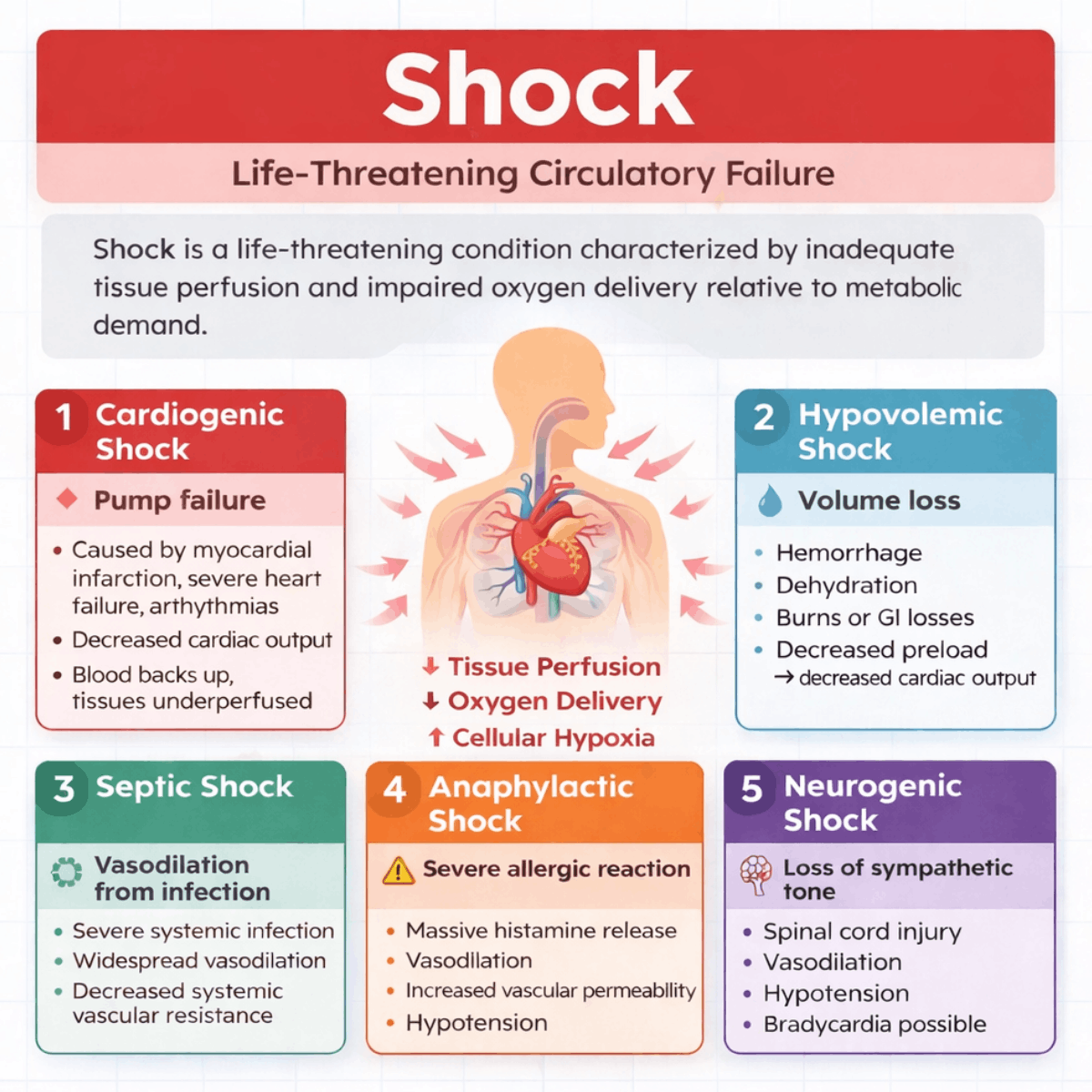
Shock is a life-threatening clinical condition characterized by inadequate tissue perfusion and impaired oxygen delivery relative to metabolic demand. Although hypotension is commonly associated with shock, the defining feature is cellular hypoxia that leads to organ dysfunction.
Without timely recognition and intervention, shock can progress rapidly to irreversible injury and death. Because oxygen delivery depends on both cardiac output and arterial oxygen content, shock has direct implications for respiratory function.
For respiratory therapists, understanding shock is essential for optimizing oxygenation, ventilation, and hemodynamic support in critically ill patients.

What is Shock?
Shock is defined as a state in which the delivery of oxygen and nutrients to tissues is insufficient to meet cellular metabolic needs. Oxygen delivery depends on two primary factors: arterial oxygen content and cardiac output. Even if oxygenation of the blood is normal, reduced blood flow can result in tissue hypoxia.
Hypotension is commonly used as a clinical marker. It may be defined as a systolic arterial pressure less than 90 mmHg, a mean arterial pressure less than 65 mmHg, or a decrease in systolic pressure greater than 40 mmHg from baseline. However, hypotension and shock are not synonymous. A patient may have normal blood pressure yet still have impaired tissue perfusion.
At the cellular level, inadequate oxygen delivery shifts metabolism from aerobic to anaerobic pathways. This results in the accumulation of lactate, metabolic acidosis, impaired cellular function, and eventually cell death.
Respiratory Implications of Shock
Shock has profound effects on the respiratory system because oxygen transport depends on the integrated function of the lungs, heart, and circulatory system. Even when the lungs are structurally normal, impaired circulation can severely limit oxygen delivery at the tissue level.
For respiratory therapists, understanding how shock alters oxygenation, ventilation, and gas exchange is essential for appropriate management in critical care settings.
Impaired Oxygen Delivery
Oxygen delivery to tissues is determined by arterial oxygen content and cardiac output. While arterial oxygen saturation may appear normal on pulse oximetry, reduced cardiac output significantly decreases total oxygen delivery. In cardiogenic or hypovolemic shock, diminished forward blood flow means less oxygen reaches peripheral tissues despite adequate pulmonary gas exchange.
As a compensatory mechanism, tissues extract a greater proportion of delivered oxygen. This increased extraction lowers mixed venous oxygen saturation. A declining venous oxygen saturation can signal inadequate systemic oxygen delivery even before severe hypoxemia is detected. Therefore, normal oxygen saturation does not guarantee sufficient tissue oxygenation in shock.
This distinction is critical in respiratory care. Simply increasing inspired oxygen concentration does not correct impaired perfusion. While oxygen therapy improves arterial oxygen content, it cannot fully compensate for inadequate cardiac output.
Ventilation-Perfusion Mismatch
Shock can disrupt the normal relationship between ventilation and perfusion within the lungs. In certain conditions, such as pulmonary embolism, obstruction of pulmonary blood flow increases alveolar dead space. Ventilated alveoli receive insufficient perfusion, impairing carbon dioxide elimination and contributing to hypoxemia.
In septic shock and inflammatory states, capillary permeability increases. Fluid may accumulate in the interstitium and alveoli, creating intrapulmonary shunt. In this situation, blood passes through poorly ventilated or nonventilated regions of the lung. Even high concentrations of inspired oxygen may not fully correct hypoxemia because the underlying issue is perfusion of nonfunctional alveoli.
Ventilation-perfusion mismatch may also occur in patients with preexisting cardiopulmonary disease. Reduced cardiac output, microvascular dysfunction, and inflammatory injury all contribute to inefficient gas exchange. Recognizing these patterns through arterial blood gas analysis and clinical assessment is an important responsibility of the respiratory therapist.
Increased Work of Breathing
Metabolic acidosis is common in shock due to anaerobic metabolism and lactate accumulation. The respiratory system attempts to compensate by increasing minute ventilation to reduce arterial carbon dioxide levels and partially correct the acidosis. This compensatory hyperventilation often presents as tachypnea.
In early stages, this response may help maintain acid-base balance. However, sustained tachypnea increases the work of breathing. Respiratory muscles require adequate oxygen and perfusion to function effectively. In shock, respiratory muscle perfusion may be compromised, leading to fatigue.
If the patient cannot sustain the increased ventilatory demand, respiratory failure may develop. Signs of fatigue include shallow breathing, rising carbon dioxide levels, altered mental status, and decreased tidal volumes. Early recognition of impending failure allows for timely intervention.
Acute Respiratory Failure and ARDS
Shock, particularly septic shock, can progress to acute respiratory distress syndrome. Systemic inflammation increases alveolar capillary permeability, allowing fluid and proteins to leak into the alveolar space. This leads to diffuse pulmonary edema, decreased lung compliance, and impaired oxygenation.
Patients with acute respiratory distress syndrome often require mechanical ventilation with lung protective strategies. Reduced compliance increases the work required to ventilate the lungs, and high airway pressures may be needed to maintain oxygenation. Careful ventilator management is necessary to minimize ventilator induced lung injury.
Respiratory failure in shock is not solely due to lung pathology. It may also reflect impaired central respiratory drive, muscle fatigue, or altered mental status. A comprehensive assessment is required to determine the underlying cause.
Role of the Respiratory Therapist
Respiratory therapists are integral members of the critical care team managing patients in shock. Their expertise in oxygenation, ventilation, and monitoring directly influences patient outcomes.
Oxygen Therapy
Administration of supplemental oxygen is often one of the first interventions. A high fraction of inspired oxygen is typically delivered to maximize arterial oxygen content. Selection of the appropriate delivery device depends on the patient’s condition, level of consciousness, and oxygen requirement.
In unstable patients, nonrebreather masks or high flow systems may be used initially. Oxygen therapy must be titrated based on arterial blood gases and pulse oximetry while avoiding unnecessary hyperoxia.
Airway Management and Mechanical Ventilation
Airway protection may be required in patients with decreased mental status, severe respiratory distress, or hemodynamic instability. Endotracheal intubation allows for controlled ventilation and improved oxygenation.
Mechanical ventilation must be managed carefully in patients with shock. Positive pressure ventilation increases intrathoracic pressure, which can reduce venous return and decrease cardiac output. This effect is particularly significant in hypovolemic patients.
Respiratory therapists must work closely with physicians to optimize ventilator settings that support gas exchange while minimizing adverse hemodynamic effects. Strategies may include careful adjustment of positive end expiratory pressure, tidal volume, and inspiratory pressures.
Monitoring and Assessment
Continuous monitoring is essential in patients with shock. Pulse oximetry provides real time information about oxygen saturation, while end tidal carbon dioxide monitoring offers insight into ventilation and perfusion status.
Arterial blood gas analysis remains a critical tool for evaluating oxygenation, ventilation, and acid-base balance. Patterns of metabolic acidosis with respiratory compensation are common. Trending values over time helps assess response to therapy.
Changes in respiratory rate, effort, and gas exchange can indicate worsening perfusion or evolving respiratory failure. Prompt communication of these findings to the medical team is vital.
Hemodynamic Awareness
Although respiratory therapists do not directly manage vasoactive medications, understanding hemodynamic principles enhances clinical decision making. Knowledge of cardiac output, systemic vascular resistance, central venous pressure, and pulmonary capillary wedge pressure allows for better interpretation of a patient’s condition.
Ventilator adjustments can influence preload and afterload. Awareness of these interactions helps prevent unintended deterioration in circulatory status.
Note: Effective management requires careful integration of oxygen therapy, ventilatory support, and hemodynamic understanding. Recognizing these interactions is essential to providing safe and effective care in critically ill patients.
Classification of Shock
1. Cardiogenic Shock
Cardiogenic shock occurs when the heart fails to pump sufficient blood to meet the body’s needs. Common causes include myocardial infarction, severe heart failure, and arrhythmias. In this hypodynamic state, cardiac output decreases despite adequate blood volume. Pulmonary capillary wedge pressure is often elevated due to left ventricular failure. Tissue hypoperfusion results from reduced forward flow.
2. Hypovolemic Shock
Hypovolemic shock results from a significant reduction in circulating blood volume. Causes include hemorrhage, dehydration, severe burns, and gastrointestinal losses. Reduced preload leads to decreased stroke volume and cardiac output. Peripheral vasoconstriction attempts to maintain blood pressure, but prolonged hypoperfusion leads to organ injury.
3. Septic Shock
Septic shock is a hyperdynamic state caused by a severe systemic infection and inflammatory response. Widespread vasodilation increases vascular capacity and reduces systemic vascular resistance. Although cardiac output may initially increase, maldistribution of blood flow and impaired cellular oxygen utilization contribute to tissue hypoxia. Warm, dry skin may be observed in early stages due to peripheral vasodilation.
4. Anaphylactic Shock
Anaphylactic shock is triggered by a severe allergic reaction. Massive histamine release causes vasodilation and increased vascular permeability, leading to hypotension and relative hypovolemia. Airway compromise may occur due to bronchoconstriction and laryngeal edema, making respiratory management critical.
5. Neurogenic Shock
Neurogenic shock results from spinal cord injury or disruption of sympathetic nervous system control. Loss of vascular tone leads to vasodilation and hypotension. Bradycardia may also be present due to unopposed parasympathetic activity.
Hemodynamic Principles
Mean arterial pressure is a key determinant of organ perfusion and can be approximated by the relationship:
MAP = (Cardiac Output × Systemic Vascular Resistance) + Central Venous Pressure
Under normal conditions, central venous pressure contributes minimally. Mean arterial pressure typically ranges from 80 to 100 mmHg. When MAP falls below 60 to 65 mmHg, cerebral and renal perfusion may become critically impaired.
Blood pressure is influenced by both blood volume and vascular capacity. Vasoconstriction reduces vascular space and increases pressure without changing volume. Vasodilation increases vascular capacity and reduces pressure, even if blood volume remains constant.
Note: Understanding these relationships helps guide fluid therapy and vasoactive medication use.
Clinical Signs and Symptoms of Shock
Common signs of shock include:
- Weak or thready pulse
- Tachycardia
- Tachypnea
- Hypotension
- Hypoxemia
- Cyanosis
- Cool extremities in hypodynamic states
- Warm skin in early septic shock
- Decreased urine output
- Altered mental status or lethargy
Note: Postural hypotension may be present in hypovolemic states. When systemic perfusion is poor, compensatory vasoconstriction diverts blood to vital organs, resulting in cool extremities. The degree of coolness extending toward the torso can indicate severity.
Lactate and Tissue Hypoxia
Lactate is the end product of anaerobic glucose metabolism. Elevated serum lactate reflects either overproduction due to tissue hypoxia or impaired clearance by the liver.
An initial lactate level above 4 mEq/L is associated with increased mortality in septic, traumatic, and cardiogenic shock. Trending lactate levels over time provides valuable information regarding response to therapy.
Note: While elevated lactate may also be seen in liver disease, diabetes, toxic ingestion, and thiamine deficiency, shock remains the most common cause of severe lactic acidosis in critically ill patients.
Management Strategies
Treatment depends on the underlying cause.
- Intravenous fluids are commonly administered to restore circulating volume.
- Vasopressors are used for persistent hypotension.
- Positive inotropic agents support cardiac contractility in cardiogenic shock.
- Antibiotics are essential in septic shock.
- Blood products may be required in hemorrhagic shock.
- Atropine may be administered for bradycardia.
- Elevating the lower extremities can transiently improve venous return.
Note: The primary objective is restoration of adequate tissue perfusion and oxygen delivery.
Shock Practice Questions
1. What is the definition of shock?
Shock is a life-threatening medical condition characterized by insufficient blood flow to the body’s tissues, leading to organ dysfunction and potential failure.
2. What are the four primary types of shock?
Hypovolemic, cardiogenic, obstructive, and distributive (anaphylactic, septic, neurogenic).
3. What is perfusion?
It is the passage of fluid through the circulatory system or lymphatic system to an organ or a tissue, usually referring to the delivery of blood to a capillary bed in tissue.
4. What are the components of normal perfusion?
Heart: pump function; blood vessel: container function; and blood: content function.
5. What are the primary causes of shock?
Pump failure, poor vessel function, and low fluid volume.
6. What are the four distinct stages of shock?
Initial, compensatory, progressive and refractory.
7. What causes anaerobic metabolism in the initial stage of shock?
Hypoperfusion
8. Why does peripheral edema occur in progressive shock?
Because all the fluid the body is trying to preserve during compensation is not being moved around anymore.
9. What is the refractory stage of shock?
Irreversible cell death and organ damage.
10. What is cardiogenic shock?
Cardiogenic shock is a state of inadequate circulation of blood due to the heart’s inability to pump effectively, often resulting from severe heart muscle damage or dysfunction.
11. What is the main reason for cardiogenic shock?
Myocardial infarction
12. What does cardiogenic shock cause?
Inadequate heart function, congestive heart failure, myocardial infarction, severe mitral regurgitation, and ventricular tachycardia.
13. What is the treatment for cardiogenic shock?
Keep the patient comfortable, high flow oxygen, assist with ventilation, and rapid transport.
14. What pulmonary issue can occur from cardiogenic shock, and what can you treat it with?
Pulmonary edema, and you can treat it with diuretics.
15. What is obstructive shock?
Obstructive shock is an impairment of the heart to pump effectively as a result of a non-cardiac factor. It is caused by mechanical obstruction, which prevents an adequate volume of blood from filling the heart chambers. Two common causes are cardiac tamponade and tension pneumothorax.
16. How can you treat obstructive shock?
Oxygen therapy, keep the patient warm, and rapid transport.
17. What is anaphylactic shock?
Anaphylactic shock is a severe, rapid-onset allergic reaction that leads to systemic vasodilation, airway constriction, and a critical drop in blood pressure, potentially causing organ failure.
18. How do you treat anaphylactic shock?
Advanced airway, high-flow oxygen, and, if directed, epinephrine.
19. What is neurogenic shock?
Neurogenic shock is a condition caused by a sudden loss of the autonomic nervous system’s control over blood vessel tone, leading to severe vasodilation, decreased blood pressure, and inadequate blood supply to the organs.
20. What is the primary cause of neurogenic shock?
Spinal cord injury
21. What type of shock shows an increased cardiac output, fast capillary refill, and warm/flushed extremities?
Septic shock
22. What causes septic shock?
Severe bacterial infection
23. How do you treat septic shock?
Fluid resuscitation by administering a minimum of 20 ml/kg crystalloid to maintain 60-65 mmHg MAP; if fluid resuscitation fails, use vasopressor drugs (e.g., dopamine, norepinephrine); broad-spectrum antibiotics should be administered within 3 hours while waiting on cultures; fix any altered coagulation problem; and corticosteroids to help with inflammation.
24. How is hypovolemic shock different from cariogenic and septic shock?
Hypovolemic shock has many varied and diverse origins.
25. What are the causes of hypovolemic shock?
Severe dehydration, vomiting, diarrhea, burns, diuresis, blood loss, gynecologic, trauma, DKA, surgery, and internal fluid collection.
26. What is the main cause of hypovolemic shock?
Blood loss
27. What amount of fluid loss puts patients at risk of hypovolemic shock?
More than 750 mL
28. How do you treat hypovolemic shock?
Try to restore the fluid volume and blood pressure.
29. What is the pathophysiology of hypovolemic shock?
The pathophysiology of hypovolemic shock involves a decrease in intravascular volume, leading to reduced venous return to the heart, diminished cardiac output, and inadequate tissue perfusion and oxygenation.
30. What happens during the initial stage of shock?
It is usually not clinically apparent, and the only changes are on a cellular level.
31. Which shock depends on fluid resuscitation?
Septic, hypovolemic, and anaphylactic.
32. What happens if we give fluids too fast?
There may be signs and symptoms of fluid overload.
33. What is hypovolemic shock?
Hypovolemic shock is a medical emergency characterized by the loss of blood or fluids in sufficient quantity to impede the circulatory system’s ability to maintain adequate oxygen delivery to the body’s tissues.
34. What is distributive shock?
Distributive shock is a category of shock resulting from widespread dilation of blood vessels, which diminishes blood flow to the body’s tissues and organs, despite an adequate blood volume.
35. What is the compensatory stage of shock?
The compensatory stage of shock is when the body experiences a state of low blood volume but can still maintain cardiac output by increasing the heart rate to restore tissue perfusion and oxygenation.
36. What happens in the progressive stage of shock?
Compensatory mechanisms fail, blood pressure goes down, heart rate goes down, and urine output decreases further.
37. What findings can occur from all types of shock?
Chest pain, lethargy, somnolence, restlessness, anxiousness, dyspnea, diaphoresis, thirst, muscle weakness, nausea, and constipation.
38. What are the causes of cardiogenic shock?
Myocardial infarction, heart failure, cardiomyopathy, dysrhythmias, and heart valve rupture or stenosis.
39. What are the causes of obstructive shock?
Blockage of the great vessels, pulmonary artery stenosis, pulmonary embolism, cardiac tamponade, tension pneumothorax, and aortic dissection.
40. What are the three subtypes of distributive shock?
Neurogenic, septic, and anaphylactic.
41. What are the causes of neurogenic shock?
Head trauma, spinal cord injury, and epidural anesthesia.
42. What is septic shock?
Septic shock is a severe and potentially fatal condition characterized by a significant drop in blood pressure and dysregulated immune response, resulting from a systemic infection leading to widespread inflammation, tissue damage, and multi-organ failure.
43. What vital signs can be observed with septic shock?
Increased temperature, increased respiratory rate, hypotension, and tachycardia.
44. What is the most common cause of septic shock?
Gram-negative bacteria
45. What are the stages of shock?
Compensated shock, decompensated shock, and irreversible shock.
46. What is compensated shock?
The early stage of shock where the body is still able to compensate for the hypovolemic state through defense mechanisms like tachycardia and peripheral vasoconstriction.
47. What is decompensated shock?
A late or progressive stage of shock where the body can no longer compensate for the hypovolemic state, so blood pressure starts to fall.
48. What is irreversible shock?
The final stage of shock where body systems start slowing down.
49. What is one of the most pertinent late signs of shock?
Falling blood pressure
50. What are the signs and symptoms of cardiogenic shock?
Hypotension, portable cardiac history, chest pain, respiratory distress, pulmonary edema, and an altered level of consciousness.
51. What is psychogenic shock?
Psychogenic shock refers to a sudden, temporary reduction in blood flow to the brain, leading to fainting or collapse, often triggered by emotional stress or traumatic events.
52. What are the early signs and symptoms of shock?
Altered level of consciousness, anxiety, irritability, tachycardia, pale/cool skin, weak peripheral pulses, increased respiratory rate, thirst, and delayed capillary refill.
53. What are the late signs and symptoms of shock?
Falling blood pressure, irregular breathing, cyanosis, and absence of peripheral pulses.
54. How do you manage shock?
Shock management involves prompt assessment and stabilization of the patient’s airway, breathing, and circulation, followed by specific interventions like fluid resuscitation, medications, and treatments targeting the underlying cause of the shock.
55. What happens when the body goes into shock?
When the body goes into shock, it experiences a critical reduction in blood flow, leading to a decrease in the delivery of oxygen and nutrients to cells and an accumulation of waste products, which can result in cellular dysfunction, organ failure, and, if not promptly treated, death.
56. Why can tissue hypoxia occur even when arterial oxygen content (CaO2) is normal?
Because oxygen delivery (DO2) depends on both CaO2 and cardiac output, so reduced blood flow can cause hypoxia despite normal CaO2.
57. What two factors primarily determine oxygen delivery (DO2) to tissues?
Arterial oxygen content (CaO2) and cardiac output.
58. What are the two major categories of reduced blood flow that can cause hypoxia?
Circulatory failure (shock) and local reductions in perfusion (ischemia).
59. How does shock differ from ischemia?
Shock causes widespread tissue hypoperfusion, while ischemia is localized reduced perfusion to a specific organ or region.
60. What metabolic byproduct commonly increases when tissues shift to anaerobic metabolism during shock?
Lactic acid (lactate)
61. Why is serum lactate used in the assessment of shock?
It serves as a rapid marker of tissue hypoperfusion and anaerobic metabolism.
62. What does lactate clearance over time suggest in a patient being treated for shock?
Improving perfusion and response to therapy.
63. What is the most precise definition of shock?
Inadequate delivery of oxygen and nutrients to tissues relative to metabolic demand.
64. Are hypotension and shock the same thing?
No, hypotension can occur without shock and shock can exist with normal blood pressure.
65. What are three common clinical definitions of hypotension?
Systolic blood pressure < 90 mmHg, mean arterial pressure (MAP) < 65 mmHg, or a drop in systolic pressure > 40 mmHg from baseline.
66. Why is a “drop > 40 mmHg from baseline” important in chronic hypertensive patients?
Because they may have inadequate organ perfusion at pressures that appear normal for others.
67. What is the major danger of prolonged shock if not corrected?
Irreversible central nervous system injury followed by cardiovascular collapse.
68. What is a common physiologic consequence of ischemia at the tissue level?
Anaerobic metabolism leading to metabolic acidosis and eventual tissue death.
69. Give two classic clinical examples of ischemia causing tissue death.
Myocardial infarction and ischemic stroke.
70. Which type of shock is characterized by pump failure of the heart?
Cardiogenic shock
71. Which type of shock is characterized by low circulating volume?
Hypovolemic shock
72. Which type of shock is most associated with profound systemic vasodilation due to infection?
Septic shock
73. Which type of shock is caused by systemic allergic reaction with vasodilation and capillary leak?
Anaphylactic shock
74. Which type of shock is caused by loss of sympathetic tone, often after spinal cord injury?
Neurogenic shock
75. What is meant by a hypodynamic shock state?
A shock state with low cardiac output, such as cardiogenic shock or hypovolemia.
76. What is meant by a hyperdynamic shock state?
A shock state with peripheral vasodilation, often with high or normal cardiac output early, as seen in septic shock.
77. What bedside skin finding commonly suggests peripheral vasoconstriction from poor systemic perfusion?
Cool, clammy extremities.
78. In septic shock, what skin temperature pattern may be seen early due to vasodilation?
Warm extremities and flushed skin.
79. What is postural (orthostatic) hypotension?
A drop in blood pressure when moving from supine to sitting or standing due to inadequate intravascular volume or autonomic dysfunction.
80. How is postural hypotension confirmed at the bedside?
Measure blood pressure supine, then repeat in sitting or standing position and assess for a significant drop with symptoms.
81. What is a potential neurologic consequence of postural hypotension?
Syncope (fainting) from reduced cerebral blood flow.
82. Which hemodynamic variable is often decreased in hypovolemic shock?
Central venous pressure (CVP)
83. Which hemodynamic variable is classically increased in cardiogenic shock due to left-sided filling pressure elevation?
Pulmonary capillary wedge pressure (PCWP).
84. What is a key limitation of relying only on blood pressure to assess shock?
Blood pressure may be maintained by compensation despite poor tissue perfusion.
85. What is an early compensatory vital sign change commonly seen in shock?
Tachycardia
86. What is a common sign of worsening shock related to kidney perfusion?
Decreased urine output
87. What is a common respiratory finding in shock related to compensation or distress?
Tachypnea
88. Why can capillary refill be delayed in many forms of shock?
Peripheral vasoconstriction reduces skin perfusion to preserve blood flow to vital organs.
89. What does an expanding area of coolness moving toward the torso suggest?
Worsening circulatory failure with increasing peripheral hypoperfusion.
90. What is a general first step in shock management related to oxygen delivery?
Provide supplemental oxygen and support ventilation as needed.
91. Is IV fluid recommended for every type of shock without exception?
No, fluids are essential in hypovolemic and often distributive shock, but must be used cautiously in cardiogenic shock due to risk of pulmonary edema.
92. In what shock type is pulmonary edema most likely to worsen with aggressive fluid administration?
Cardiogenic shock
93. What is a common initial hemodynamic goal in septic shock resuscitation?
Maintain MAP ≥ 65 mmHg
94. When hypotension persists after adequate fluid resuscitation in septic shock, what medication class is typically started?
Vasopressors
95. Which vasopressor is commonly first-line for septic shock?
Norepinephrine
96. What laboratory test helps evaluate anemia or hemorrhage contributing to shock?
Hemoglobin and hematocrit (Hb/Hct).
97. What laboratory tests support the evaluation of renal hypoperfusion in shock?
Creatinine and blood urea nitrogen (BUN).
98. What tests are commonly ordered when infection is suspected as the cause of shock?
Blood cultures and other cultures as indicated.
99. What is a key time-sensitive therapy for septic shock once cultures are obtained or not delayed?
Early broad-spectrum antibiotics.
100. When is intubation and mechanical ventilation most appropriate in shock management?
When there is airway compromise, severe hypoxemia, impending ventilatory failure, or inability to protect the airway.
Final Thoughts
Shock represents a failure of oxygen delivery at the systemic and cellular levels. Although hypotension is a common finding, the defining feature is inadequate tissue perfusion relative to metabolic demand. Early recognition, prompt intervention, and continuous monitoring are critical to prevent irreversible organ damage.
For respiratory therapists, shock is highly relevant because oxygenation, ventilation, and hemodynamic stability are closely interconnected.
Effective management requires an understanding of cardiovascular physiology, gas exchange, and the impact of mechanical ventilation on circulatory function. Comprehensive care improves survival and long-term outcomes in critically ill patients.

Written by:
John Landry is a registered respiratory therapist from Memphis, TN, and has a bachelor's degree in kinesiology. He enjoys using evidence-based research to help others breathe easier and live a healthier life.
References
- Haseer Koya H, Paul M. Shock. [Updated 2023 Jul 24]. In: StatPearls [Internet]. Treasure Island (FL): StatPearls Publishing; 2025.