

Standard precautions are a set of infection control practices designed to reduce the spread of microorganisms in healthcare settings. These guidelines are based on the understanding that blood, body fluids, secretions, and excretions may contain infectious agents, regardless of a patient’s diagnosis.
Respiratory therapists frequently perform procedures that involve airway management, aerosol therapy, and contact with respiratory secretions, which increases exposure risks.
Consistently following standard precautions helps protect healthcare workers, patients, and visitors while supporting safe, high-quality respiratory care across a variety of clinical environments.

What Are Standard Precautions?
Standard precautions are infection control practices designed to reduce the risk of transmitting microorganisms in healthcare environments. They apply to every patient regardless of diagnosis, infection status, or suspected exposure to infectious agents. The concept is based on the understanding that infections can be transmitted even when a patient shows no visible symptoms.
These precautions involve several core strategies, including proper hand hygiene, the use of personal protective equipment (PPE), safe handling of patient care equipment, respiratory hygiene practices, safe injection techniques, and appropriate patient placement. Together, these measures create a universal framework for infection control that protects both patients and healthcare workers.
Unlike transmission-based precautions, which are used for patients with known or suspected contagious infections, standard precautions are applied during all patient encounters. They serve as the baseline level of protection in every healthcare setting, including hospitals, clinics, long-term care facilities, and emergency care environments.
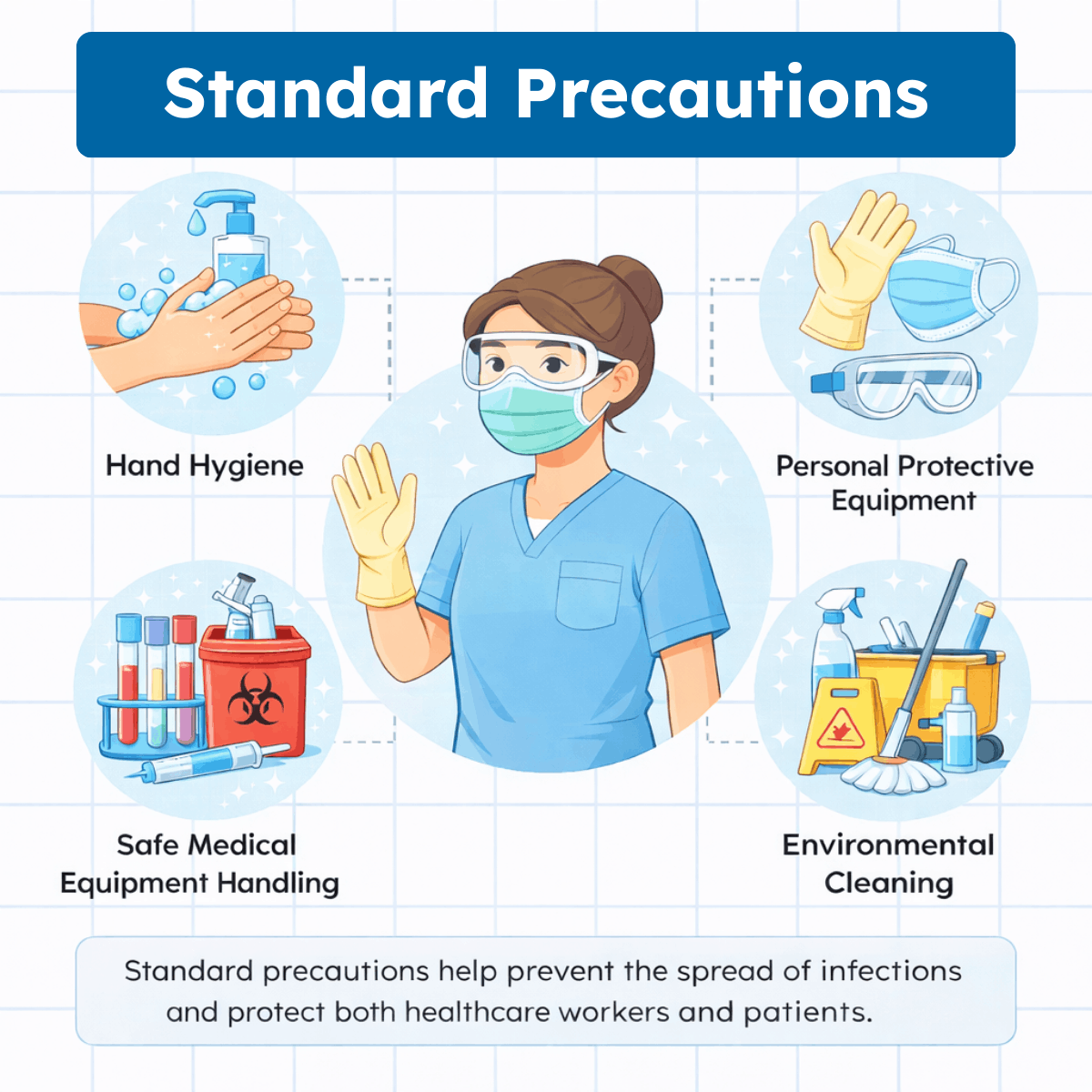
Core Components of Standard Precautions
Hand Hygiene
Hand hygiene is the most important and effective method of preventing the spread of infections. Healthcare workers must perform hand hygiene before and after patient contact, after removing gloves, and after exposure to blood, body fluids, secretions, or contaminated surfaces.
Alcohol-based hand sanitizers are commonly used for routine hand cleaning when hands are not visibly soiled. When visible contamination is present, soap and water should be used instead. Proper hand hygiene significantly reduces the transmission of pathogens between patients and healthcare providers.
Personal Protective Equipment
Personal protective equipment (PPE) serves as a physical barrier that prevents exposure to infectious agents. The type of PPE required depends on the anticipated level of exposure during patient care.
Common PPE includes:
- Gloves: Used when contact with blood, body fluids, mucous membranes, or non-intact skin is anticipated.
- Gowns: Protect skin and clothing from contamination during procedures involving splashes or sprays.
- Masks and Respirators: Protect the mouth and nose from respiratory secretions and airborne particles.
- Eye Protection or Face Shields: Protect mucous membranes of the eyes from infectious droplets.
Note: Respiratory therapists frequently perform procedures such as suctioning, airway management, and aerosol therapy, which increase exposure risks. Selecting and using appropriate PPE is essential for reducing infection transmission during these procedures.
Safe Handling of Patient Care Equipment
Medical equipment can serve as a source of infection if not handled correctly. Equipment contaminated with respiratory secretions or body fluids must be properly cleaned, disinfected, or disposed of before reuse. Single-use items should never be reused, and reusable equipment must undergo proper reprocessing procedures.
Respiratory therapists regularly use devices such as ventilators, nebulizers, oxygen delivery systems, and airway clearance tools. Proper disinfection and sterilization protocols are critical to preventing cross-contamination between patients.
Respiratory Hygiene and Cough Etiquette
Respiratory hygiene practices are designed to limit the spread of respiratory infections. Patients and healthcare workers should cover their nose and mouth when coughing or sneezing, use tissues to contain secretions, and dispose of contaminated materials appropriately.
Healthcare facilities should provide masks, tissues, and hand hygiene resources to patients exhibiting respiratory symptoms. Encouraging these practices helps reduce droplet transmission within clinical environments.
Safe Injection Practices and Sharps Safety
Standard precautions also emphasize safe handling of needles, syringes, and sharp instruments. Healthcare workers must avoid recapping needles, bending or breaking sharps, and improper disposal. Used sharps must be placed immediately into puncture-resistant containers.
These measures protect healthcare workers from bloodborne pathogen exposure and reduce occupational injury risks.
Patient Placement and Environmental Control
Patients who cannot maintain proper hygiene or who may contaminate the surrounding environment may require placement in a private room. Proper environmental cleaning and separation of clean and contaminated equipment are essential for maintaining infection control.
Importance of Standard Precautions in Respiratory Care
Respiratory therapists are uniquely positioned in healthcare environments because they frequently interact with patients experiencing infectious respiratory conditions. Many respiratory care procedures involve direct contact with the airway, increasing the risk of exposure to infectious secretions and aerosolized particles.
Aerosol-Generating Procedures
Procedures such as nebulizer treatments, bronchoscopy, airway suctioning, and mechanical ventilation can produce aerosols that contain infectious microorganisms. These aerosols can remain suspended in the air, increasing the risk of transmission to healthcare workers and nearby patients.
Note: By consistently applying standard precautions, respiratory therapists minimize exposure risks during these high-risk procedures.
Protection from Healthcare-Associated Infections
Healthcare-associated infections (HAIs) remain a significant concern in medical facilities. Improper infection control can lead to ventilator-associated pneumonia, cross-contamination between patients, and occupational illness among healthcare providers.
Note: Standard precautions play a vital role in reducing HAIs by establishing consistent infection prevention practices across all patient interactions.
Maintaining Patient Safety
Patients receiving respiratory care often have compromised immune systems or underlying pulmonary diseases, making them more vulnerable to infections. Standard precautions help prevent the introduction of new pathogens that could worsen patient outcomes or prolong hospital stays.
Occupational Safety for Respiratory Therapists
Respiratory therapists face increased exposure to respiratory secretions, blood, and infectious aerosols. Following standard precautions reduces the risk of occupational infections, including influenza, tuberculosis, and emerging respiratory illnesses.
Relationship Between Standard Precautions and Transmission-Based Precautions
Standard precautions serve as the foundation of infection control, but they are sometimes combined with transmission-based precautions when additional protection is necessary. Transmission-based precautions include contact, droplet, and airborne precautions and are used when specific pathogens require enhanced control measures.
For example, patients with tuberculosis may require airborne precautions, while patients with influenza may require droplet precautions. Even when these additional measures are implemented, standard precautions must always remain in place.
Challenges and Compliance Considerations
Despite the proven effectiveness of standard precautions, maintaining consistent compliance can be challenging. Factors such as high patient volume, time constraints, and limited resources may contribute to lapses in infection control practices.
Healthcare organizations must prioritize staff education, provide adequate PPE supplies, and reinforce infection control policies to ensure consistent adherence. Respiratory therapists play an important role in promoting compliance by modeling proper infection prevention techniques and educating colleagues and patients.
The Evolving Role of Standard Precautions
Emerging infectious diseases and global health threats continue to highlight the importance of infection control practices. The COVID-19 pandemic demonstrated the critical role respiratory therapists play in managing contagious respiratory illnesses and reinforced the need for strict adherence to standard precautions.
Advances in respiratory technology, aerosol delivery systems, and infection control research continue to shape best practices. Ongoing education and training ensure that respiratory therapists remain prepared to manage new infectious challenges safely and effectively.
Standard Precautions Practice Questions
1. What are standard precautions in healthcare?
Standard precautions are infection control practices used for all patients to prevent transmission of infectious agents through blood, body fluids, secretions, excretions (except sweat), non-intact skin, and mucous membranes.
2. Why are standard precautions applied to every patient?
Standard precautions are used because all patients are considered potentially infectious regardless of diagnosis or known infection status.
3. What is the primary goal of standard precautions?
The primary goal is to prevent healthcare-associated infections and protect both patients and healthcare workers from exposure to pathogens.
4. What types of bodily substances are considered potentially infectious under standard precautions?
Blood, body fluids, secretions, excretions, and contaminated materials are all considered potentially infectious.
5. What is personal protective equipment (PPE)?
PPE refers to protective barriers such as gloves, gowns, masks, eye protection, and face shields used to reduce exposure to infectious materials.
6. When should healthcare workers perform hand hygiene?
Hand hygiene should be performed before and after patient contact, after removing gloves, and after contact with bodily fluids or contaminated surfaces.
7. When should soap and water be used instead of alcohol-based hand sanitizer?
Soap and water should be used when hands are visibly soiled or contaminated with certain pathogens such as Clostridioides difficile.
8. Why are gloves worn during patient care?
Gloves protect healthcare workers from exposure to blood, body fluids, secretions, and contaminated surfaces.
9. When should gloves be changed during patient care?
Gloves should be changed between procedures and tasks, especially after contact with contaminated materials.
10. When should gowns be worn during patient care?
Gowns should be worn during procedures likely to generate splashes or sprays of blood or body fluids.
11. Why are masks, goggles, or face shields used during patient care?
They protect mucous membranes of the eyes, nose, and mouth from exposure to infectious droplets or splashes.
12. When should eye protection be used?
Eye protection should be worn during procedures that may generate aerosols, sprays, or splashes of body fluids.
13. Why is proper handling of patient care equipment important?
Proper handling prevents contamination of healthcare workers, patients, and the healthcare environment.
14. How should reusable medical equipment be managed under standard precautions?
Reusable equipment must be cleaned and disinfected before being used on another patient.
15. How should single-use medical items be handled?
Single-use items should be properly discarded after use to prevent cross-contamination.
16. Why must healthcare workers use caution when handling sharps?
Sharps such as needles and scalpels pose a risk for bloodborne pathogen transmission.
17. What is the recommended practice for handling used needles?
Used needles should never be recapped or bent and should be disposed of immediately in puncture-resistant sharps containers.
18. Why is mouth-to-mouth resuscitation generally avoided in healthcare settings?
Barrier devices such as resuscitation bags are used to reduce exposure to infectious pathogens.
19. When should healthcare workers wear clean gloves before patient contact?
Clean gloves should be worn when touching mucous membranes, non-intact skin, or contaminated items.
20. Why is patient placement important in infection control?
Proper placement helps prevent environmental contamination and reduces transmission risk to other patients.
21. When should patients be placed in private rooms under standard precautions?
Patients who cannot maintain hygiene or contaminate the environment should be placed in private rooms.
22. What is the role of respiratory hygiene in infection prevention?
Respiratory hygiene helps reduce the spread of infectious respiratory droplets.
23. What instructions should patients follow to maintain respiratory hygiene?
Patients should cover coughs and sneezes, use tissues, dispose of them properly, and perform hand hygiene.
24. Why should healthcare facilities provide tissues and hand hygiene supplies to patients and visitors?
Providing supplies promotes infection prevention and supports respiratory hygiene practices.
25. What is the purpose of separating clean and contaminated supplies?
Separating supplies reduces the risk of cross-contamination and infection transmission.
26. Why is performing hand hygiene between tasks on the same patient important?
It prevents cross-contamination between different body sites.
27. When should gloves be removed during patient care?
Gloves should be removed immediately after use and before touching clean surfaces or another patient.
28. Why is proper removal of PPE important?
Correct removal prevents contamination of the healthcare worker and surrounding environment.
29. What types of exposures require immediate hand hygiene?
Contact with blood, body fluids, secretions, excretions, or contaminated equipment requires immediate hand hygiene.
30. Why must healthcare workers avoid touching environmental surfaces with contaminated gloves?
Contaminated gloves can transfer pathogens to clean surfaces, increasing infection risk.
31. How do standard precautions protect healthcare workers?
They reduce exposure to infectious materials and minimize occupational health risks.
32. How do standard precautions help protect patients?
They reduce the spread of infections between patients and healthcare staff.
33. Why are standard precautions considered the foundation of infection control?
They provide consistent protection against infection transmission in all healthcare settings.
34. When should healthcare workers perform hand hygiene after glove removal?
Hand hygiene should be performed immediately after removing gloves because gloves may have microscopic defects or contamination during removal.
35. Why should healthcare workers avoid wearing the same gloves for multiple patients?
Using the same gloves can transmit microorganisms between patients and increase the risk of cross-contamination.
36. When should masks be worn under standard precautions?
Masks should be worn during procedures that may generate splashes or sprays of blood, body fluids, or respiratory secretions.
37. What is the purpose of wearing a face shield during patient care?
A face shield provides full facial protection against splashes and aerosolized body fluids.
38. Why should contaminated linens be handled carefully?
Improper handling of contaminated linens can spread infectious organisms to healthcare workers and the environment.
39. How should contaminated linens be transported?
Contaminated linens should be placed in designated leak-proof containers or bags to prevent exposure.
40. Why is it important to limit patient transport when infection risk is present?
Limiting patient movement helps reduce the spread of infectious agents within the healthcare facility.
41. What precaution should be taken when transporting patients who may be infectious?
Patients should follow respiratory hygiene practices and wear appropriate masks when necessary.
42. Why should healthcare workers avoid touching their face while providing patient care?
Touching the face increases the risk of transferring pathogens to mucous membranes.
43. What is the importance of cleaning frequently touched surfaces in patient care areas?
Frequent cleaning reduces the presence of microorganisms and lowers infection transmission risk.
44. Why must healthcare workers perform hand hygiene after touching patient surroundings?
Patient environments can harbor infectious organisms even without direct patient contact.
45. What is the role of environmental cleaning in standard precautions?
Environmental cleaning helps reduce microbial contamination and prevents infection spread.
46. Why should healthcare workers wear PPE based on anticipated exposure rather than diagnosis?
PPE selection is based on the likelihood of exposure to infectious materials during specific procedures.
47. What is the importance of proper disposal of body fluid waste?
Proper disposal prevents contamination of healthcare workers, patients, and the environment.
48. Why should healthcare workers change gowns between patients?
Changing gowns prevents transferring infectious organisms from one patient to another.
49. When should respiratory protection devices be used under standard precautions?
Respiratory protection should be used during procedures likely to generate aerosols or splashes.
50. Why should healthcare workers avoid placing used equipment on clean surfaces?
Used equipment can transfer microorganisms and contaminate sterile or clean areas.
51. What is the role of safe injection practices in infection control?
Safe injection practices prevent transmission of bloodborne pathogens and reduce healthcare-associated infections.
52. Why should single-dose medication vials be used for only one patient?
Using single-dose vials for multiple patients increases the risk of contamination and infection transmission.
53. Why is it important to disinfect reusable respiratory therapy equipment?
Respiratory equipment can harbor pathogens that may cause infection if not properly disinfected.
54. What is the purpose of using barrier devices during airway management?
Barrier devices reduce exposure to respiratory secretions and infectious aerosols.
55. Why should healthcare workers avoid bringing personal items into patient care areas?
Personal items can become contaminated and serve as sources of infection transmission.
56. What is the importance of following institutional infection control policies?
Institutional policies ensure consistent and effective infection prevention practices.
57. Why should healthcare workers perform hand hygiene after contact with respiratory equipment?
Respiratory equipment may be contaminated with infectious secretions.
58. What is the role of respiratory etiquette in preventing infection spread?
Respiratory etiquette reduces transmission of pathogens through coughing and sneezing.
59. Why should healthcare workers wear gloves when handling respiratory secretions?
Respiratory secretions may contain infectious microorganisms.
60. When should healthcare workers replace PPE during extended patient care activities?
PPE should be replaced if it becomes visibly contaminated, damaged, or compromised.
61. Why should healthcare workers avoid adjusting PPE during patient care?
Adjusting PPE can contaminate hands and increase infection transmission risk.
62. What is the purpose of isolating contaminated equipment before cleaning?
Isolation prevents contamination of clean areas and reduces infection spread.
63. Why is proper removal sequence of PPE important?
Correct removal prevents contamination of clothing, skin, and mucous membranes.
64. What is the risk of failing to follow standard precautions during routine patient care?
Failure to follow precautions increases the risk of healthcare-associated infections and occupational exposure.
65. Why should healthcare workers maintain clean uniforms and clothing?
Contaminated clothing can carry microorganisms and contribute to infection transmission.
66. How do standard precautions help prevent outbreaks within healthcare facilities?
They reduce pathogen transmission by applying consistent infection control practices to all patient interactions.
67. Why should healthcare workers avoid wearing artificial nails or excessive jewelry during patient care?
Artificial nails and jewelry can harbor microorganisms and interfere with effective hand hygiene.
68. When should healthcare workers perform hand hygiene before patient contact?
Hand hygiene should be performed immediately before any direct patient interaction to prevent transmission of microorganisms.
69. Why is it important to keep fingernails short and clean in healthcare settings?
Short, clean fingernails reduce microbial accumulation and improve the effectiveness of hand hygiene.
70. What precaution should be taken when handling patient specimens?
Specimens should be handled using appropriate PPE and transported in properly labeled, leak-proof containers.
71. Why should healthcare workers avoid eating or drinking in patient care areas?
Eating or drinking in clinical areas increases the risk of ingesting infectious agents.
72. What is the importance of using dedicated patient care equipment whenever possible?
Dedicated equipment reduces cross-contamination between patients.
73. Why should healthcare workers avoid reusing disposable PPE?
Disposable PPE is designed for single use and reusing it increases infection risk.
74. When should healthcare workers wear protective eyewear?
Protective eyewear should be worn during procedures with risk of splashes or aerosol exposure.
75. Why is proper storage of sterile supplies important?
Improper storage can contaminate supplies and compromise patient safety.
76. What is the purpose of using alcohol-based hand rubs in healthcare settings?
Alcohol-based hand rubs provide rapid and effective hand disinfection when hands are not visibly soiled.
77. When should soap and water be used instead of alcohol-based hand rubs?
Soap and water should be used when hands are visibly soiled or after contact with certain pathogens such as C. difficile.
78. Why should healthcare workers avoid shaking contaminated linens?
Shaking linens can disperse infectious particles into the air.
79. What is the role of respiratory therapists in maintaining infection control during aerosol therapy?
They must use appropriate PPE and ensure proper ventilation to reduce aerosol transmission risk.
80. Why should used respiratory circuits be handled carefully?
They may contain infectious secretions that pose exposure risks.
81. What precaution should be taken when emptying suction canisters?
Healthcare workers should wear appropriate PPE to prevent exposure to respiratory secretions.
82. Why is proper cleaning of reusable nebulizers essential?
Improper cleaning can allow microbial growth and increase infection risk.
83. When should healthcare workers disinfect shared workstations and medical devices?
Disinfection should occur between patient uses and at scheduled intervals.
84. Why should healthcare workers avoid placing medical charts or electronic devices on patient beds?
Beds may be contaminated and can transfer microorganisms to equipment.
85. What is the importance of following respiratory isolation signage?
Isolation signage provides guidance on required precautions and PPE use.
86. Why should healthcare workers avoid wearing contaminated PPE outside patient care areas?
Contaminated PPE can spread infectious organisms to other areas and individuals.
87. What is the purpose of using closed suction systems in mechanically ventilated patients?
Closed suction systems reduce aerosolization and decrease infection transmission risk.
88. Why should healthcare workers disinfect stethoscopes between patients?
Stethoscopes can carry pathogens and contribute to cross-contamination.
89. What is the importance of covering open wounds when providing patient care?
Covered wounds reduce exposure to bloodborne pathogens and infectious materials.
90. Why should healthcare workers report occupational exposures promptly?
Early reporting allows timely evaluation, treatment, and prevention of infection.
91. What precaution should be taken when handling contaminated sharps containers?
Sharps containers should never be overfilled and must be disposed of according to safety guidelines.
92. Why should healthcare workers use barrier protection during tracheostomy care?
Tracheostomy care exposes providers to respiratory secretions that may contain infectious pathogens.
93. When should gowns be worn during patient care under standard precautions?
Gowns should be worn when exposure to blood, body fluids, or secretions is anticipated.
94. Why is patient education important in infection prevention?
Educating patients promotes adherence to hygiene practices and reduces transmission risk.
95. What is the purpose of using hands-free waste disposal containers?
Hands-free containers reduce contamination of hands and environmental surfaces.
96. Why should healthcare workers avoid storing personal protective equipment improperly?
Improper storage can contaminate PPE and reduce its effectiveness.
97. What precaution should be taken when handling contaminated respiratory masks?
Used masks should be removed safely and disposed of according to infection control protocols.
98. Why is it important to maintain adequate ventilation in patient care areas?
Proper ventilation reduces airborne pathogen concentration and lowers infection risk.
99. What is the role of routine infection control training for healthcare workers?
Regular training ensures adherence to updated safety guidelines and best practices.
100. Why should healthcare workers inspect PPE before use?
Inspecting PPE ensures it is intact and capable of providing effective protection.
Final Thoughts
Standard precautions serve as a fundamental part of infection prevention in respiratory care and throughout healthcare. Treating every patient interaction as a potential exposure risk allows healthcare providers to reduce the spread of infectious diseases and maintain safer clinical environments.
For respiratory therapists, who routinely perform procedures involving airway access and aerosol generation, strict adherence to these practices is essential.
As healthcare continues to evolve and new infectious threats emerge, maintaining strong infection control habits remains a critical professional responsibility that supports patient safety, staff protection, and improved clinical outcomes.

Written by:
John Landry is a registered respiratory therapist from Memphis, TN, and has a bachelor's degree in kinesiology. He enjoys using evidence-based research to help others breathe easier and live a healthier life.
References
- Douedi S, Douedi H. Precautions, Bloodborne, Contact, and Droplet. [Updated 2023 Sep 4]. In: StatPearls [Internet]. Treasure Island (FL): StatPearls Publishing; 2025.