
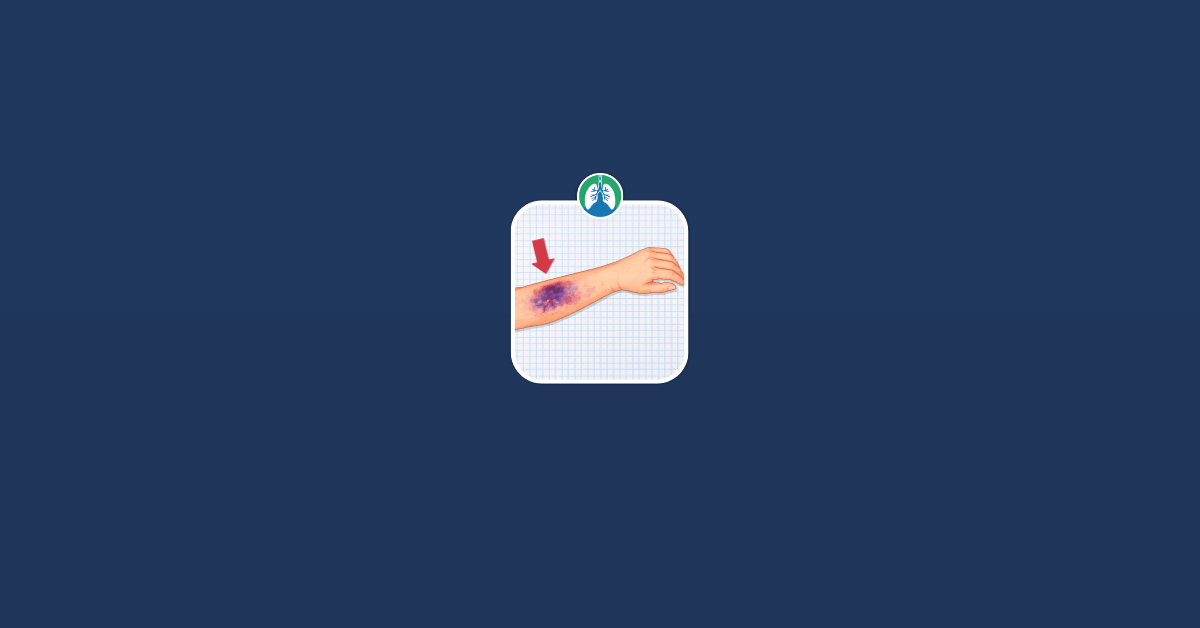
A ruptured vein can appear alarming and uncomfortable, especially if it occurs suddenly after an injury, strenuous activity, or medical procedure. While the term “popped vein” often sounds serious, it typically refers to damage to a small blood vessel beneath the skin rather than a life-threatening condition.
In most cases, it leads to visible bruising, swelling, tenderness, or discoloration in the affected area. Understanding what a popped vein looks like, why it happens, and when medical attention may be necessary can help individuals respond appropriately and reduce unnecessary concern.

Download our free guide that has over 100+ of the best tips for healthy lungs.
What Does a Popped Vein Look Like?
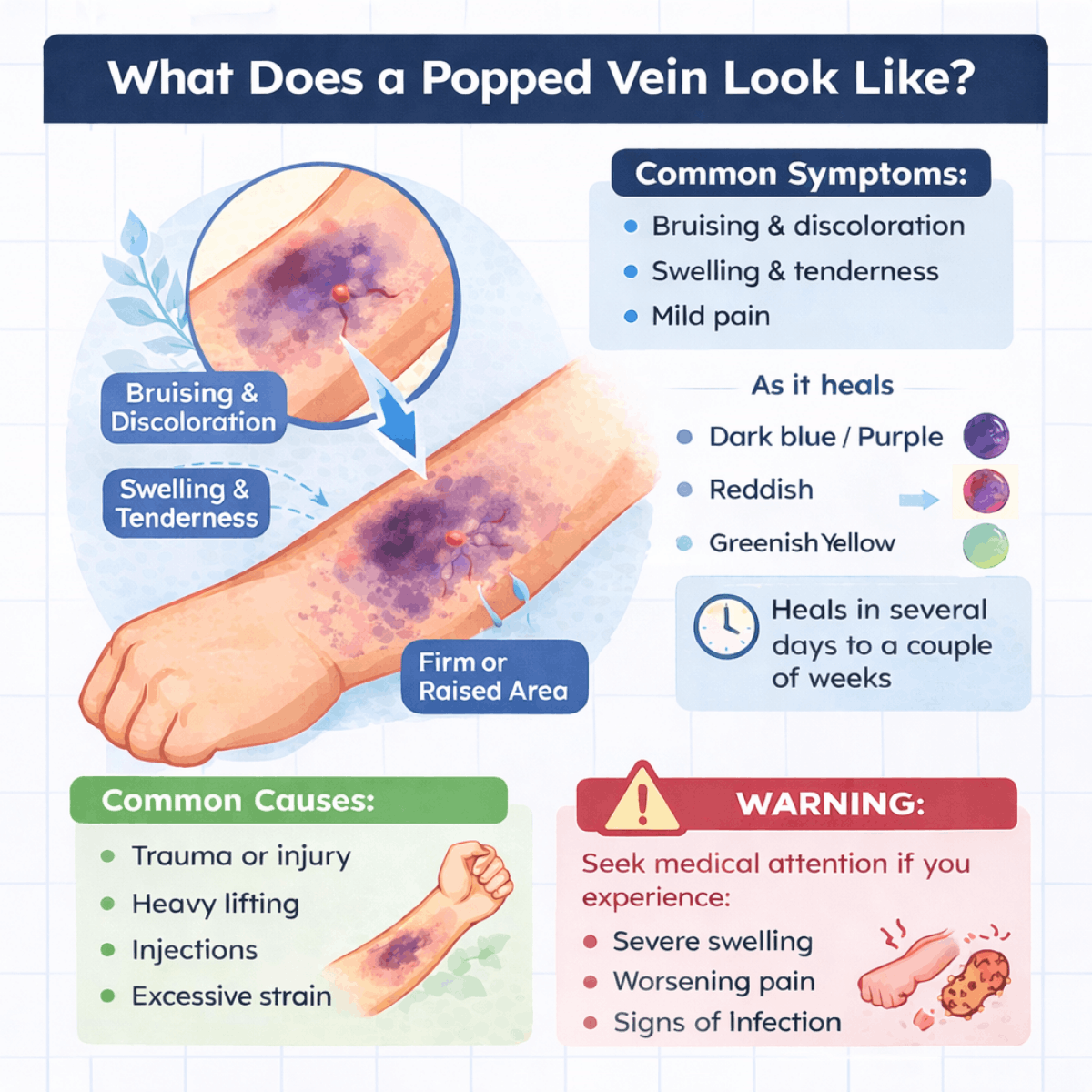
A popped vein usually appears as a bruise or area of discoloration under the skin caused by blood leaking from a damaged blood vessel. The affected area may look dark blue, purple, or reddish and can gradually change color as it heals. Swelling, tenderness, and mild pain are also common symptoms. In some cases, the skin around the vein may feel firm or slightly raised due to trapped blood beneath the surface.
Popped veins often occur after trauma, heavy lifting, injections, or excessive strain that places pressure on blood vessels. While most popped veins heal on their own within several days to a couple of weeks, severe swelling, worsening pain, or signs of infection may require medical evaluation.
Visual Signs of a Popped Vein
A popped vein shows clear changes on your skin that you can often see without medical tools. The most common signs involve shifts in color, localized swelling, and distinct bruising patterns near the affected area.
Color Changes in the Skin
You may notice red, purple, or dark blue discoloration where the vein ruptured. This color change happens when blood leaks into surrounding tissue instead of staying inside the vein. The skin may first appear bright red, then deepen to purple or bluish tones within hours. As your body absorbs the leaked blood, the color often fades to green or yellow over several days.
The affected area usually has defined edges, unlike general skin redness from irritation. Your skin temperature may stay normal, or it may feel slightly warm, but strong heat suggests a different issue.
Note: Color changes often look more pronounced on lighter skin, but they also appear on darker skin as deep purple or brown patches.
Swelling Around the Vein
Swelling often develops directly over or around the popped vein. You may see a raised, puffy area that feels firm or tender when you touch it. This swelling forms as blood and fluid collect under the skin. It usually stays localized rather than spreading far from the vein.
The area may feel tight, especially when you move the nearby joint or muscle. Swelling often peaks within the first day, then slowly decreases as your body reabsorbs the fluid.
Note: Mild swelling is common and usually harmless. Rapid swelling, increasing firmness, or severe pain may signal more than a simple vein rupture.
Visible Bruising Patterns
Bruising from a popped vein often looks uneven or blotchy, not smooth or uniform. You may see irregular shapes that follow the path of the vein under your skin. The bruise can spread downward due to gravity, especially in your arms or legs. This spread does not mean the injury is worsening; it reflects how blood settles in tissue.
Color changes in the bruise follow a predictable pattern:
- Purple or blue in the first days
- Green or yellow as healing progresses
Note: Bruising usually fades within one to two weeks, depending on the size of the rupture and your circulation.
How a Popped Vein Differs From Other Vein Injuries
A popped vein often looks dramatic but usually involves a small, surface vessel. Other vein injuries can affect deeper veins, change symptoms, and alter how urgently you need care.
Popped vs. Burst Vein Appearance
When a vein pops, you usually see sudden discoloration under the skin. The area turns purple, blue, or red as blood leaks into nearby tissue, forming a bruise or small hematoma. Swelling may appear quickly, and the spot can feel tender to the touch.
A “burst vein” often refers to the same event in everyday language, but people also use it to describe more extensive bruising. The skin stays intact, and bleeding remains internal. You may notice a raised area that softens over time as the body reabsorbs blood.
Other vein injuries look different. Varicose vein rupture can cause visible bulging veins with localized bleeding. Capillary breaks create fine red or purple lines rather than a single dark patch.
Surface vs. Deep Vein Symptoms
A popped vein almost always involves a superficial vein. You feel localized pain, mild warmth, and visible bruising. Movement remains normal, and symptoms improve over days to weeks with rest and compression.
Deep vein problems present differently. Deep vein injuries or clots often cause persistent swelling, firmness, or aching in an entire limb rather than a single spot. The skin may look pale or tight instead of bruised.
Key differences you may notice include:
- Location: surface discoloration versus deep, diffuse swelling
- Pain pattern: tender to touch versus constant ache
- Visibility: obvious bruise versus minimal skin color change
Common Locations for a Popped Vein
Popped veins appear more often in areas where veins run close to the skin or face repeated pressure. You usually notice them in the limbs because daily movement, strain, and circulation changes affect these vessels.
Arms and Hands
You often see a popped vein in the arms or hands because veins sit close to the surface. Activities like heavy lifting, intense gripping, or repetitive motion can raise pressure inside the vein and cause it to rupture.
The area may show sudden bruising, a bluish-purple patch, or mild swelling. You might feel tenderness or a tight sensation, especially when you move your wrist or fingers. The skin can look darker without an open wound.
Medical procedures also increase risk. Blood draws, IV lines, or frequent injections can weaken the vein wall. Aging and dehydration make veins less elastic, which raises the chance of popping during minor strain.
Legs and Feet
Popped veins in the legs or feet often relate to prolonged standing, walking long distances, or sudden impact. Gravity increases pressure in lower-body veins, especially around the calves, ankles, and tops of the feet.
You may notice localized bruising, warmth, or a sore spot that appears shortly after activity. The area can feel firm at first, then soften as the blood reabsorbs. Swelling may increase by the end of the day.
Conditions that affect circulation matter here. Varicose veins, pregnancy, obesity, or a history of vein problems raise your risk. Tight footwear or minor trauma, such as bumping furniture, can trigger a popped vein in these areas.
Symptoms That Accompany a Popped Vein
A popped vein often causes local discomfort and visible skin changes at the site. You may notice pain that responds to touch or movement, along with warmth and redness that stay confined to a small area.
Pain and Tenderness
You usually feel sharp or aching pain where the vein ruptured. The pain often starts suddenly after minor trauma, lifting, or pressure. It can range from mild soreness to a more intense sting.
Tenderness shows up when you press on the area or use nearby muscles. Simple actions like gripping, walking, or bending can make it more noticeable. The skin may feel sensitive even without pressure.
Pain typically stays localized and does not spread along the limb. It often eases over several days as the body reabsorbs leaked blood. Worsening pain, increasing swelling, or pain that limits movement may signal a need for medical evaluation.
Warmth and Redness
You may notice warmth and redness directly over the affected vein. These changes occur as blood leaks into surrounding tissue and triggers a mild inflammatory response.
The skin can appear pink to deep red, sometimes with a faint bruise forming within hours. Warmth usually feels subtle and stays limited to the area of injury. It should not cause fever or affect larger sections of skin.
Redness and warmth often peak within the first day, then fade as healing progresses. Spreading redness, significant heat, or red streaks extending away from the area can indicate a different issue and warrant prompt medical attention.
Causes of a Popped Vein
A popped vein usually results from direct stress on a blood vessel or from changes that weaken vein walls. The cause affects how it looks, how painful it feels, and how quickly it heals.
Physical Trauma
Physical force ranks as a common cause. You may notice a popped vein after a hard bump, fall, or blunt impact, especially on the arms, hands, legs, or feet.
Sudden pressure can also rupture small surface veins. This often happens during heavy lifting, intense coughing, or straining, when blood pressure inside the vein rises quickly.
Other frequent triggers include:
- Tight clothing or accessories that compress a vein
- Medical procedures, such as blood draws or IV placement
- Repetitive motion, including vigorous exercise or manual labor
Note: When trauma causes the vein to pop, you usually see localized bruising or swelling. The area may feel tender, but symptoms often improve within days as the blood reabsorbs.
Underlying Health Conditions
Certain health conditions make your veins more fragile. If you have varicose veins, stretched vein walls can rupture with minimal pressure or movement. Blood-related conditions also play a role. Clotting disorders or blood-thinning medications allow blood to leak more easily after minor vessel damage, increasing visible bruising.
Age and skin changes matter. As you get older, thinner skin and reduced connective tissue offer less support to surface veins, raising the risk of rupture. Chronic conditions such as high blood pressure or vascular disease place ongoing stress on vein walls. In these cases, a popped vein may occur without clear injury and may happen repeatedly in the same area.
Risk Factors for Popped Veins
Certain conditions and exposures make your veins more likely to rupture near the skin. Age-related changes and direct medical contact with veins play a major role.
Age and Fragile Skin
As you age, your skin becomes thinner and loses supportive fat. This change leaves surface veins with less protection from minor trauma or pressure. Vein walls also weaken over time. Reduced elasticity makes them more likely to break when stretched or compressed.
You face higher risk if you have:
- Visible surface veins, especially on the hands and arms
- Frequent sun exposure, which speeds skin thinning
- Low body fat, which reduces cushioning around veins
Note: Minor bumps, tight sleeves, or even carrying groceries can trigger a popped vein. The area may bruise quickly because blood spreads under fragile skin. You may notice this more on the backs of your hands or forearms, where veins sit close to the surface.
Medical Treatments
Medical procedures that access veins increase the chance of a vein popping. IV insertion, blood draws, and injections can damage the vein wall. Risk rises when veins are small, mobile, or already weakened. Multiple needle attempts or repeated access in the same spot add stress to the vessel.
Common contributing factors include:
- Dehydration, which makes veins harder to stabilize
- Long-term IV therapy, such as chemotherapy
- Blood thinners, which increase bleeding under the skin
Note: After a vein pops, you may see immediate swelling, bruising, or discoloration near the insertion site. Medical staff usually apply pressure and switch to a different vein to limit further injury.
When to Seek Medical Attention
You should seek medical care if a popped vein causes severe pain, rapid swelling, or skin that feels tight and tense. These signs can point to ongoing bleeding under the skin or pressure on nearby tissues. Contact a healthcare professional if you notice increasing redness, warmth, or pus around the area. These changes may signal an infection, especially if the skin was broken.
Get prompt help if the popped vein follows a significant injury, such as a fall, car accident, or sports impact. Trauma can damage deeper blood vessels that need evaluation.
Seek care right away if you experience any of the following:
- Numbness, tingling, or weakness near the area
- Persistent bleeding that does not stop with pressure
- Severe bruising that spreads quickly
- Changes in skin color, such as pale or bluish skin
You should also talk to a clinician if popped veins happen often or without clear cause. Repeated episodes may relate to clotting problems, vein disorders, or medication effects.
If you take blood thinners or have a bleeding condition, do not ignore new or worsening symptoms. Early assessment can help prevent complications and guide safe treatment.
Preventive Measures for Vein Health
You can support vein health by staying physically active. Regular movement helps blood circulate and reduces pressure inside your veins, especially in the legs. Avoid sitting or standing still for long periods. If your routine keeps you in one position, take short breaks to walk, stretch, or shift your weight every 30–60 minutes.
Maintain a healthy weight to reduce strain on your veins. Extra body weight increases pressure on vein walls and can raise the risk of vein damage over time. You can improve circulation by elevating your legs when resting. Lifting them above heart level for short periods helps blood flow back toward the heart.
Daily habits that support vein health include:
- Wearing properly fitted compression socks if recommended by a clinician
- Staying hydrated to support normal blood flow
- Eating fiber-rich foods to reduce straining during bowel movements
Avoid tight clothing around your waist, groin, or legs. Restrictive garments can limit blood flow and increase vein pressure.
Protect your veins during exercise and daily tasks. Use proper technique, avoid sudden heavy lifting without support, and stop activities that cause sharp pain or visible vein swelling.
FAQs About a Popped Vein
How Can You Tell If You Popped a Vein?
You can often tell if you popped a vein by noticing sudden bruising, discoloration, or swelling beneath the skin, usually after an injury, injection, or physical strain. The affected area may appear dark blue, purple, or reddish and may feel tender or sore to the touch.
Some people also notice a firm or slightly raised area caused by blood pooling under the skin. While mild discomfort is common, severe pain, excessive swelling, or spreading redness may indicate a more serious issue requiring medical evaluation.
How Do You Treat a Popped Vein?
Treatment for a popped vein typically focuses on reducing swelling, discomfort, and further bleeding beneath the skin. Applying ice packs for short intervals during the first 24 to 48 hours can help minimize swelling and bruising.
Elevating the affected area and avoiding strenuous activity may also support healing. Over-the-counter pain relievers may help manage discomfort.
Note: Most popped veins heal on their own within days to weeks, but persistent swelling, worsening pain, or signs of infection should be evaluated by a healthcare provider.
How Does a Vein Look When It Pops?
When a vein pops, it usually appears as a bruise or patch of discoloration beneath the skin rather than an open or visibly ruptured vessel. The area may look dark purple, blue, or red at first and gradually change to greenish or yellow as it heals.
Swelling, tenderness, and mild pain are often present. In some cases, the skin may feel slightly firm or raised due to blood collecting beneath the surface. The appearance typically improves as the body reabsorbs the trapped blood.
How Can You Prevent Popped Veins?
Preventing popped veins involves reducing unnecessary strain on blood vessels and maintaining healthy circulation. Staying hydrated, using proper lifting techniques, and avoiding excessive pressure during physical activity can help protect veins.
For individuals who require injections or blood draws, ensuring proper technique and rotating sites may reduce risk. Wearing compression garments may support circulation for those prone to vein problems.
Note: Maintaining overall cardiovascular health through exercise, balanced nutrition, and weight management can also strengthen blood vessels and lower the risk of rupture.
Is a Popped Vein a Serious Condition?
A popped vein is usually a minor injury that heals without long-term complications. Most cases involve small surface blood vessels and result in bruising, swelling, and mild discomfort that improve over time.
However, it can occasionally indicate a more serious issue, especially if accompanied by severe pain, excessive swelling, persistent bleeding, or signs of infection such as warmth, redness, or fever.
Note: Individuals with clotting disorders or vascular conditions should be especially cautious and seek medical attention if unusual symptoms develop.
Final Thoughts
In most cases, a popped vein is a minor injury that may look concerning but typically heals without serious complications. Recognizing the common signs, such as bruising, swelling, and tenderness, can help you determine when simple home care is sufficient and when medical attention may be necessary.
Applying ice, resting the affected area, and monitoring symptoms can support proper healing. However, if pain worsens, swelling increases, or unusual symptoms develop, it is important to seek medical advice.
Understanding how popped veins appear and progress can provide reassurance and help you respond appropriately if one occurs.

Written by:
John Landry is a registered respiratory therapist from Memphis, TN, and has a bachelor's degree in kinesiology. He enjoys using evidence-based research to help others breathe easier and live a healthier life.
References
- Huber GH, Manna B. Vascular Extremity Trauma. [Updated 2023 Apr 19]. In: StatPearls [Internet]. Treasure Island (FL): StatPearls Publishing; 2025.