

Phlegm is a thick, sticky substance produced within the respiratory system to protect the airways and lungs. It often becomes noticeable during illness, allergies, or exposure to irritants, leading many people to question why it forms and where it originates.
Although commonly associated with coughing or congestion, phlegm is present even in healthy lungs and plays an essential role in trapping dust, microbes, and other particles before they can cause harm.
Understanding where phlegm comes from helps clarify why its amount, color, and consistency can change and what those changes may reveal about respiratory health.

Download our free guide that has over 100+ of the best tips for healthy lungs.
Where Does Phlegm Come From?
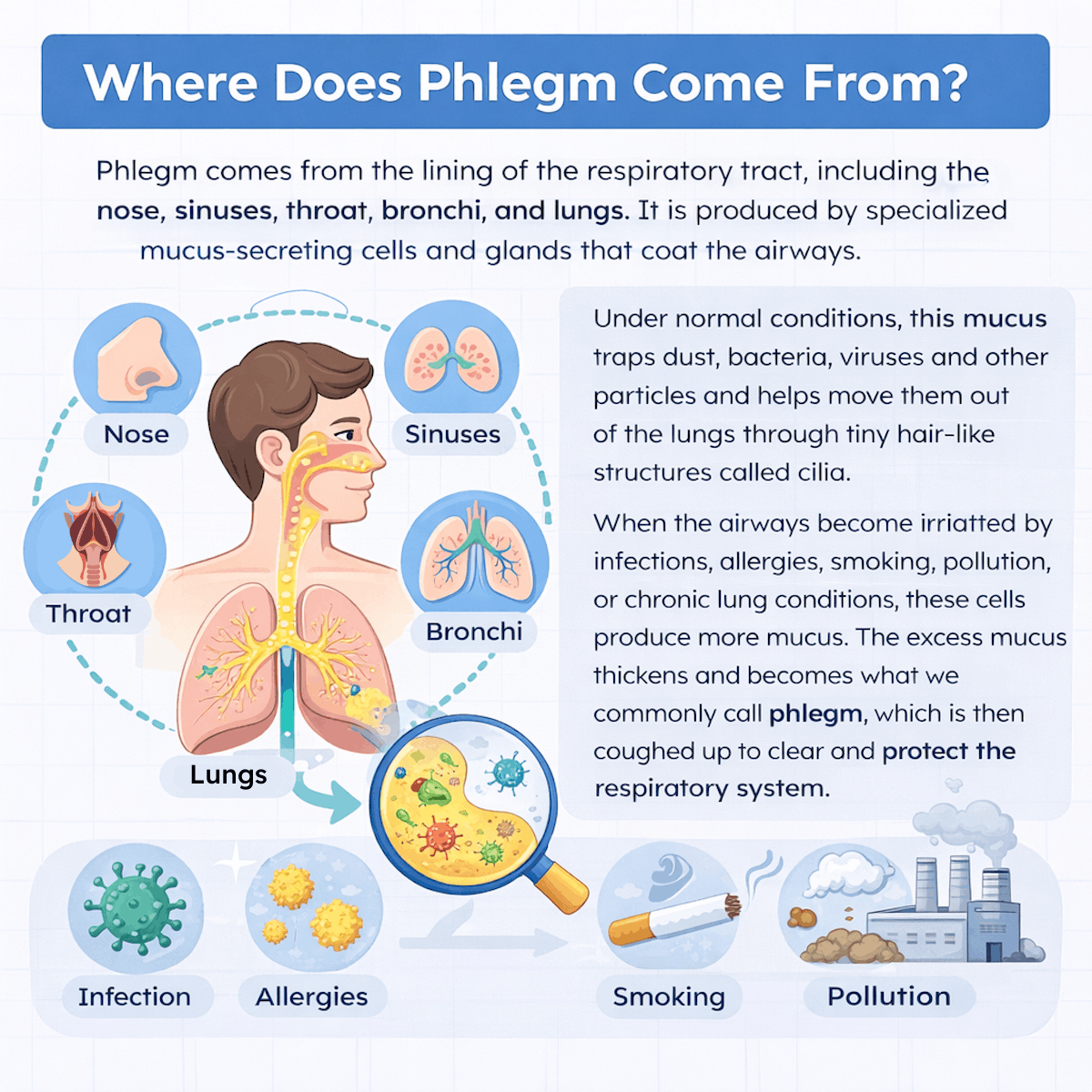
Phlegm comes from the lining of the respiratory tract, including the nose, sinuses, throat, bronchi, and lungs. It is produced by specialized mucus-secreting cells and glands that coat the airways. Under normal conditions, this mucus traps dust, bacteria, viruses, and other particles and helps move them out of the lungs through tiny hair-like structures called cilia.
When the airways become irritated by infections, allergies, smoking, pollution, or chronic lung conditions, these cells produce more mucus. The excess mucus thickens and becomes what we commonly call phlegm, which is then coughed up to clear and protect the respiratory system.
How the Body Produces Phlegm
Your body produces phlegm through goblet cells and mucous glands that line your airways. These cells release mucus continuously to keep surfaces moist and protected. Under normal conditions, you swallow small amounts without noticing.
When you face irritation, infection, or allergens, these cells increase output. Your body uses thicker phlegm to trap particles such as dust, bacteria, or viruses. This response helps limit how deeply irritants travel into your lungs.
Your immune system also influences phlegm production. Inflammation signals the glands to produce more mucus and change its texture. As a result, phlegm may appear denser or change color depending on the type of immune activity involved.
Mucous Membranes and Their Role
Mucous membranes line your nose, sinuses, throat, and lungs. They create a moist barrier that protects delicate tissues from drying out and injury. These membranes anchor the cells responsible for producing phlegm.
You rely on tiny hair-like structures called cilia to move phlegm along these surfaces. The cilia beat in a coordinated pattern, pushing mucus toward your throat. From there, you either swallow it or cough it out.
Note: This system works best when membranes stay hydrated. Dry air, smoke, or illness can disrupt cilia movement. When that happens, phlegm can build up, making you more aware of its presence.
Locations Where Phlegm Forms
Phlegm forms throughout your upper and lower respiratory tract. Each location contributes slightly different mucus based on its function.
Common formation sites include:
- Nasal passages, which filter and humidify incoming air
- Sinuses, which drain mucus into your nasal cavity
- Throat, where mucus gathers before swallowing
- Bronchi and lungs, where phlegm protects airways and traps debris
Note: Phlegm from deeper in your lungs often feels thicker. This thickness helps prevent harmful particles from reaching sensitive lung tissue. When you cough, you usually clear phlegm that originated from these lower airways.
Phlegm in the Respiratory System
Phlegm forms along your airways as a protective mucus that traps particles and manages moisture. Different parts of your respiratory system produce it for specific reasons tied to airflow, exposure, and immune defense.
Phlegm Production in the Nose and Sinuses
Your nose and sinuses produce mucus continuously to filter the air you breathe. Glands in the nasal lining release a thin, sticky fluid that traps dust, pollen, and microbes before they move deeper into your airways.
Cilia, which are tiny hair-like structures, push this mucus toward your throat. You usually swallow it without noticing.
When irritation occurs, mucus thickens and increases in volume. Common triggers include allergens, cold air, infections, and dry environments. Thickened nasal mucus often drains backward, which explains why you may feel phlegm even without chest congestion.
Throat and Bronchial Tubes
Your throat and bronchial tubes produce phlegm to protect delicate airway tissue. Goblet cells lining these passages secrete mucus that coats the surface and keeps it from drying out.
As air moves in and out, this mucus captures particles that escape the nose. Cilia then move the mucus upward in a steady motion called mucociliary clearance.
You notice phlegm here when production increases or clearance slows. Smoking, viral infections, acid reflux, and pollution commonly disrupt this balance. The result is frequent throat clearing or coughing as your body works to remove excess mucus.
Lung Contribution to Phlegm
Your lungs normally produce minimal mucus to keep air sacs clear for oxygen exchange. Specialized cells in the lower airways maintain a thin layer that supports normal breathing.
During illness or chronic irritation, mucus production rises. Conditions such as bronchitis, pneumonia, asthma, and COPD cause glands to enlarge and secrete thicker phlegm.
This phlegm serves a defensive role by trapping pathogens, but it can also obstruct airflow. You often cough to move it upward, where your body can expel it or swallow it. Changes in color or thickness often reflect inflammation rather than a problem with oxygen itself.
Factors Influencing Phlegm Production
Phlegm forms in response to changes in your airways and immune activity. Infections, allergens, irritants, and environmental conditions each affect how much mucus your body produces and how thick it becomes.
Infections and Illnesses
Respiratory infections trigger increased phlegm as your immune system responds to invading microbes. Viruses and bacteria stimulate mucus glands to trap pathogens and move them out of your airways.
During a common cold or flu, phlegm often turns thicker and may appear yellow or green. This change reflects immune cells and debris, not infection severity.
Chronic conditions also affect production. With asthma, inflamed airways create excess mucus that narrows airflow. Chronic bronchitis causes long-term overproduction, often with daily coughing.
Key illness-related factors include:
- Airway inflammation
- Increased immune cell activity
- Slower mucus clearance from swollen tissues
Allergies and Irritants
Allergic reactions cause your body to release histamine, which increases mucus secretion. When you inhale pollen, dust mites, or pet dander, your nasal passages and throat respond quickly. You may notice clear, runny phlegm during allergy flares. This mucus aims to flush allergens from your airways but can drip into your throat and trigger coughing.
Irritants act differently. Cigarette smoke, chemical fumes, and strong odors damage airway lining cells. Your body responds by producing thicker phlegm to protect exposed tissue.
Common irritant effects include:
- Increased mucus thickness
- Reduced cilia movement that normally clears mucus
- Persistent throat clearing or cough
Environmental Conditions
Air quality and climate strongly influence phlegm production. Dry air pulls moisture from your airways, which thickens mucus and makes it harder to clear. Cold temperatures slow the movement of cilia, the tiny hairs that move phlegm upward. This slowdown allows mucus to build up, especially during winter months.
Pollution adds another burden. Fine particles and ozone irritate airway walls and stimulate mucus glands. You may notice more phlegm on high pollution days, even without illness.
Environmental contributors often include:
- Low indoor humidity
- Cold outdoor air
- Urban air pollution and smoke
How Phlegm Differs from Other Bodily Fluids
Phlegm serves a specific role in your respiratory system, while other fluids protect, lubricate, or transport substances elsewhere in your body. Differences in location, purpose, and physical traits help you tell them apart.
Distinction Between Mucus and Phlegm
You produce mucus throughout your body, including your nose, sinuses, throat, and digestive tract. It keeps tissues moist and traps dust, pollen, and microbes before they cause harm.
You produce phlegm deeper in your lungs and lower airways. Inflammation, infection, or irritation triggers its release, which is why you usually cough it up.
Key differences matter in daily health:
- Location: mucus appears in many body systems; phlegm stays in the lower respiratory tract.
- Purpose: mucus protects and lubricates; phlegm signals airway irritation and helps clear it.
- Awareness: you often notice phlegm because coughing brings it into your mouth.
Color and Texture Variations
Phlegm often looks thicker and stickier than nasal mucus because it contains immune cells and cellular debris. Its texture can feel dense, especially when dehydration or infection concentrates it.
Color changes provide useful clues about what affects your airways:
- Clear usually reflects normal production or mild irritation.
- White or gray often links to congestion or viral infection.
- Yellow or green suggests increased immune cell activity.
- Brown or red may reflect old blood, smoke exposure, or airway injury.
Note: Mucus from your nose tends to stay clearer and thinner, even during irritation. You notice these differences most when coughing or blowing your nose.
Common Causes of Excess Phlegm
Excess phlegm usually appears when your airways respond to irritation, infection, or long-term inflammation. The cause often links to how your immune system reacts, what you breathe each day, and whether chronic disease affects your lungs or sinuses.
Colds and Respiratory Infections
Colds, flu, and other respiratory infections often increase phlegm production because your body tries to trap and remove germs. Your airways release extra mucus, which can feel thick or sticky and may change color as immune cells build up.
You may notice more phlegm in the morning or after coughing. Nasal congestion and postnasal drip often add to the volume you feel in your throat.
Common infection-related triggers include:
- Viral colds, which usually cause clear or white mucus at first
- Bacterial infections, which may lead to yellow or green phlegm
- Sinus infections, which drain mucus into the throat
Note: As the infection resolves, mucus production usually returns to normal.
Chronic Conditions
Long-term conditions can keep your airways inflamed, leading to ongoing phlegm production. Unlike short infections, these causes tend to produce symptoms that last for weeks or months.
Asthma can cause thick mucus that narrows your airways and makes breathing harder. Chronic bronchitis, a form of chronic obstructive pulmonary disease (COPD), often leads to daily coughing with phlegm for extended periods.
Other conditions that increase phlegm include:
- Allergic rhinitis, which triggers constant mucus release
- Gastroesophageal reflux disease (GERD), where stomach acid irritates your throat
- Bronchiectasis, which damages airways and traps mucus
Note: Managing the underlying condition often reduces excess phlegm.
Smoking and Air Quality
Smoking directly irritates your airways and damages the tiny hairs that normally clear mucus. As a result, your body produces more phlegm while losing the ability to move it out efficiently. You may cough frequently as your lungs try to clear thick secretions. This effect can persist even after you quit, though it often improves over time.
Poor air quality has a similar impact. Exposure to pollution, dust, chemical fumes, or indoor smoke can trigger ongoing mucus production. Dry air can also thicken phlegm, making it harder to clear. Improving air quality and avoiding irritants can reduce this response.
Body’s Process for Clearing Phlegm
Your body uses coordinated physical movements and chemical actions to move phlegm out of the airways. These processes work continuously to keep breathing passages open and reduce irritation.
Cough Reflex and Removal
You rely on the cough reflex to force phlegm out when it builds up. Nerves in your throat and airways detect mucus, dust, or pathogens and trigger a rapid response.
A typical cough follows a clear sequence:
- Deep inhale to pull air behind the phlegm
- Airway closure to build pressure
- Forceful exhale to expel mucus
Cilia, which are microscopic hair-like structures lining your airways, also play a constant role. They beat in an upward pattern, pushing phlegm toward your throat where you can swallow or cough it out.
You often clear small amounts of phlegm without noticing. When mucus thickens or increases, coughing becomes more frequent to compensate and maintain airflow.
Natural Breakdown Mechanisms
Your body also reduces phlegm by breaking it down internally. Enzymes in mucus thin its structure, making it easier to move and remove. Immune cells contribute by targeting bacteria and debris trapped in the phlegm. As they work, the mucus changes in texture and volume, which supports clearance.
Hydration affects this process directly. When you stay well hydrated, your mucus remains less sticky and moves more efficiently. Normal breathing supports clearance as well. Steady airflow helps cilia maintain their rhythm, allowing continuous movement of phlegm without conscious effort.
Final Thoughts
Phlegm is a normal and necessary part of the body’s defense system, produced by specialized cells throughout the respiratory tract to keep the airways clean and protected. While small amounts often go unnoticed, increased production usually reflects irritation, inflammation, or infection.
Changes in thickness, color, or volume can offer useful clues about what is happening inside the lungs and airways.
By understanding where phlegm comes from and why the body produces it, it becomes easier to recognize when symptoms are harmless and when they may signal a need for medical attention.

Written by:
John Landry is a registered respiratory therapist from Memphis, TN, and has a bachelor's degree in kinesiology. He enjoys using evidence-based research to help others breathe easier and live a healthier life.
References
- Shen F, Zubair M, Sergi C. Sputum Analysis. [Updated 2025 May 4]. In: StatPearls [Internet]. Treasure Island (FL): StatPearls Publishing; 2025.