

Noticing yellow mucus when you blow your nose or cough can be alarming—but does it actually mean you’re getting better? Many people believe that a change in mucus color is a sign that the body is winning its battle against infection.
While there’s some truth to that idea, the reality is a bit more complicated. Yellow mucus often indicates that your immune system is hard at work, but it doesn’t always mean you’re on the mend.
In this article, we’ll break down what yellow mucus really means, what causes it, and whether it’s a sign of recovery or something that might require a closer look.

Download our free guide that has over 100+ of the best tips for healthy lungs.
What Causes Mucus to Turn Yellow?
Mucus is your body’s natural defense mechanism, produced by the lining of your respiratory tract to trap bacteria, viruses, allergens, and debris. Under normal circumstances, mucus is clear and thin.
However, when you’re sick—especially with a respiratory infection—your immune system sends white blood cells called neutrophils to the affected area to fight off invading pathogens.
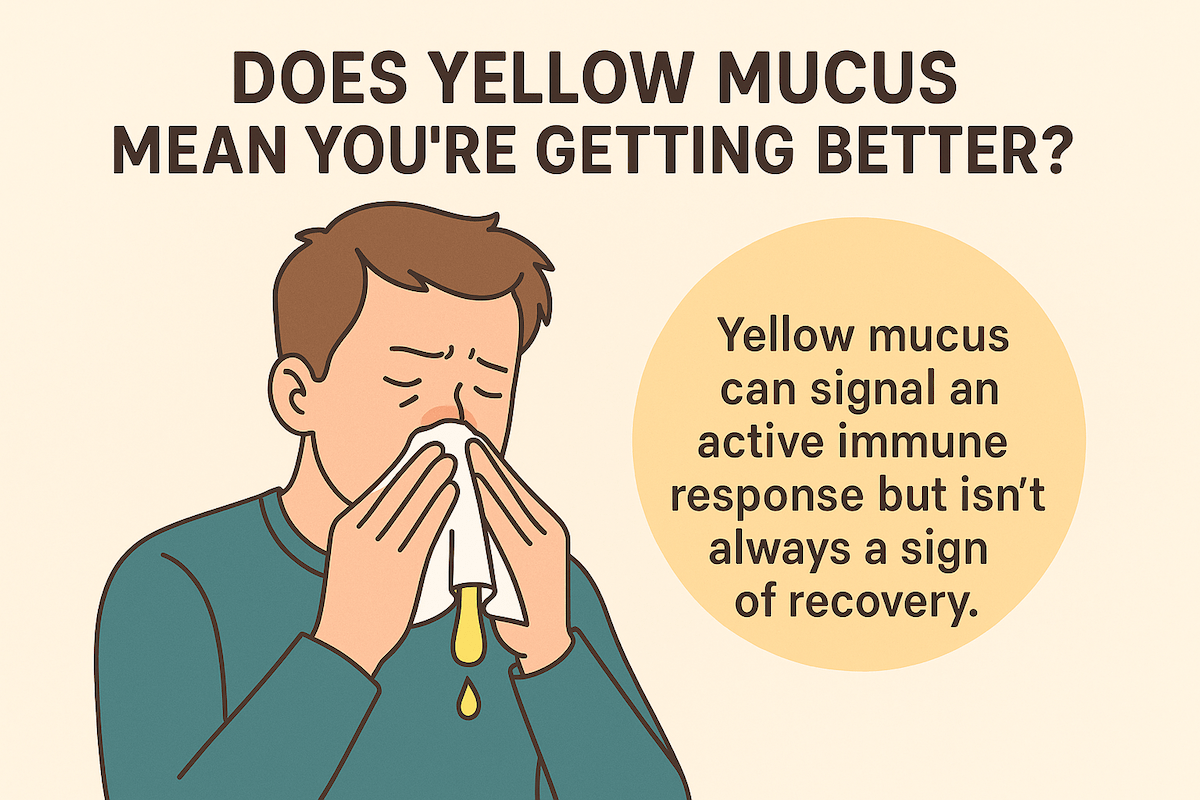
As these white blood cells accumulate and break down, they can give the mucus a yellowish hue. This shift is a sign that your body is actively responding to an infection, such as the common cold or sinusitis. But while yellow mucus shows that your immune system is engaged, it doesn’t always mean you’re getting better just yet.
Is Yellow Mucus a Sign of Improvement?
It depends. Yellow mucus can occur at various stages of an illness. In the early phase, it might simply indicate that your body has recognized an infection and is fighting it. As your symptoms begin to improve and the infection clears, the mucus may continue to appear yellow before returning to clear.
However, if yellow mucus persists for more than 10 days, becomes darker, or is accompanied by worsening symptoms such as facial pain, fever, or congestion, it could signal a lingering or worsening bacterial infection. In those cases, it may be time to consult a healthcare provider.
How to Help Your Body Recover
Whether your yellow mucus signals the middle or end of your illness, supporting your recovery is key. Here are a few tips to help:
- Stay hydrated: Fluids help thin mucus, making it easier to clear from your system.
- Use a humidifier: Moist air can soothe irritated nasal passages and keep mucus from thickening.
- Rest: Your body needs energy to fight off infection, so don’t underestimate the power of sleep.
- Over-the-counter remedies: Saline sprays, decongestants, and nasal rinses can all help manage symptoms.
What Do the Other Mucus Colors Mean?
Mucus color can offer important clues about what’s going on inside your body. While it’s not a perfect diagnostic tool, changes in color often reflect how your immune system is responding to an infection or irritation.
Clear Mucus
This is normal and healthy. Clear mucus helps humidify the air you breathe and traps dust and allergens. If you’re producing a lot of clear mucus, it could also be a sign of allergies, viral infections, or exposure to irritants like smoke or pollution.
White Mucus
White mucus often indicates congestion or inflammation in the nasal passages. It’s common during the early stages of a cold or sinus infection when the tissues in your nose are swollen and slowing the flow of mucus, causing it to thicken and turn white.
Yellow Mucus
As discussed, yellow mucus suggests that your body is fighting off an infection. It usually means that white blood cells are present, actively working to neutralize the threat. This color often appears a few days into a cold or respiratory illness.
Green Mucus
Green mucus can occur when the immune response is in full gear. The darker color often results from a high concentration of white blood cells and cellular debris. While green mucus doesn’t always mean you have a bacterial infection, if it persists beyond 10 days with other symptoms, it could warrant medical attention.
Red or Pink Mucus
This typically indicates the presence of blood. It might result from dry nasal passages, frequent nose-blowing, or irritation. A small amount isn’t usually cause for concern, but frequent or heavy bleeding should be evaluated by a healthcare provider.
Brown or Black Mucus
This could be caused by old blood, inhaled pollutants, or smoking. It may also appear in people with chronic lung diseases or fungal infections. If you’re seeing brown or black mucus and don’t smoke or work in dusty environments, it’s best to get it checked out.

When Should You Be Concerned?
While yellow mucus by itself isn’t usually a cause for alarm, certain signs should prompt you to seek medical attention. These include:
- Yellow or green mucus that lasts more than 10–14 days
- A high fever that doesn’t improve
- Sinus pressure or pain
- Persistent cough or wheezing
- Blood in the mucus
Note: These symptoms could indicate a more serious issue, such as a bacterial infection, bronchitis, or sinusitis, that may require prescription treatment.
FAQs About Yellow Mucus and Recovery
What Does Yellow Mucus Mean?
Yellow mucus typically means that your immune system is actively responding to an infection. The color comes from white blood cells that have traveled to the site of infection and are being flushed out of your body.
It doesn’t always mean you’re getting worse—it simply shows that your body is in the process of fighting off something, such as a cold or other respiratory illness.
Does Mucus Turn Yellow at the End of a Cold?
Mucus can turn yellow at any point during a cold, including the end. In many cases, yellow mucus appears as the immune system continues to clear out dead cells and remaining pathogens. If your other symptoms are improving and you’re feeling better overall, yellow mucus may be a sign that you’re in the recovery phase.
What Color Is Mucus When You Are Getting Better?
Mucus may still appear yellow or green even as you’re getting better, depending on how your body is clearing out the infection. As recovery progresses, mucus usually becomes lighter in color and thinner in consistency, eventually returning to clear as inflammation subsides and your immune response winds down.
Does Thick Snot Mean You’re Getting Better?
Not necessarily. Thick snot often means your body is dehydrated or that mucus is collecting due to inflammation or congestion. It may happen at any stage of a cold or infection. While thick mucus can occur during recovery, it’s not a reliable indicator on its own—context and other symptoms matter more.
Is Yellow Mucus a Symptom of COVID-19?
Yellow mucus is not a hallmark symptom of COVID-19, but it can occur in some cases. COVID-19 more commonly presents with a dry cough, fever, fatigue, and loss of taste or smell.
However, if COVID-19 leads to a secondary infection or inflammation in the respiratory tract, yellow mucus may develop as part of your body’s immune response.
Is Yellow Mucus a Symptom of a Sinus Infection?
Yes, yellow mucus is a common symptom of a sinus infection, especially when it’s accompanied by facial pressure, headache, or nasal congestion. In a sinus infection (sinusitis), mucus can become thick and discolored due to trapped bacteria or viruses and the immune response trying to fight them off.
Is Yellow Mucus Bacterial or Viral?
Yellow mucus can be caused by both bacterial and viral infections. It simply reflects the presence of white blood cells and immune activity.
However, if yellow mucus lasts more than 10 days, worsens, or is paired with other symptoms like fever or sinus pain, a bacterial infection may be more likely and worth discussing with a healthcare provider.
What’s the Difference Between Phlegm and Mucus?
Mucus is the slippery fluid produced by the mucous membranes throughout the respiratory tract, while phlegm refers specifically to the thicker mucus that comes from the lower airways and lungs.
In everyday language, the terms are often used interchangeably, but medically, phlegm usually implies that mucus is being coughed up from the chest rather than dripping from the nose.
Final Thoughts
While yellow mucus can be a sign that your immune system is actively fighting off an infection, it doesn’t always mean you’re in the clear just yet. Paying attention to the color of your mucus—along with how you feel overall—can give you valuable insight into your body’s healing process.
If symptoms persist, worsen, or are accompanied by concerning signs like fever or pain, it’s important to consult a healthcare provider. Understanding what different mucus colors mean can help you make more informed decisions about your health and recovery.

Written by:
John Landry is a registered respiratory therapist from Memphis, TN, and has a bachelor's degree in kinesiology. He enjoys using evidence-based research to help others breathe easier and live a healthier life.
References
- Farzan S. Cough and Sputum Production. In: Walker HK, Hall WD, Hurst JW, editors. Clinical Methods: The History, Physical, and Laboratory Examinations. 3rd edition. Boston: Butterworths; 1990.
- Altiner A, Wilm S, Däubener W, Bormann C, Pentzek M, Abholz HH, Scherer M. Sputum colour for diagnosis of a bacterial infection in patients with acute cough. Scand J Prim Health Care. 2009.