
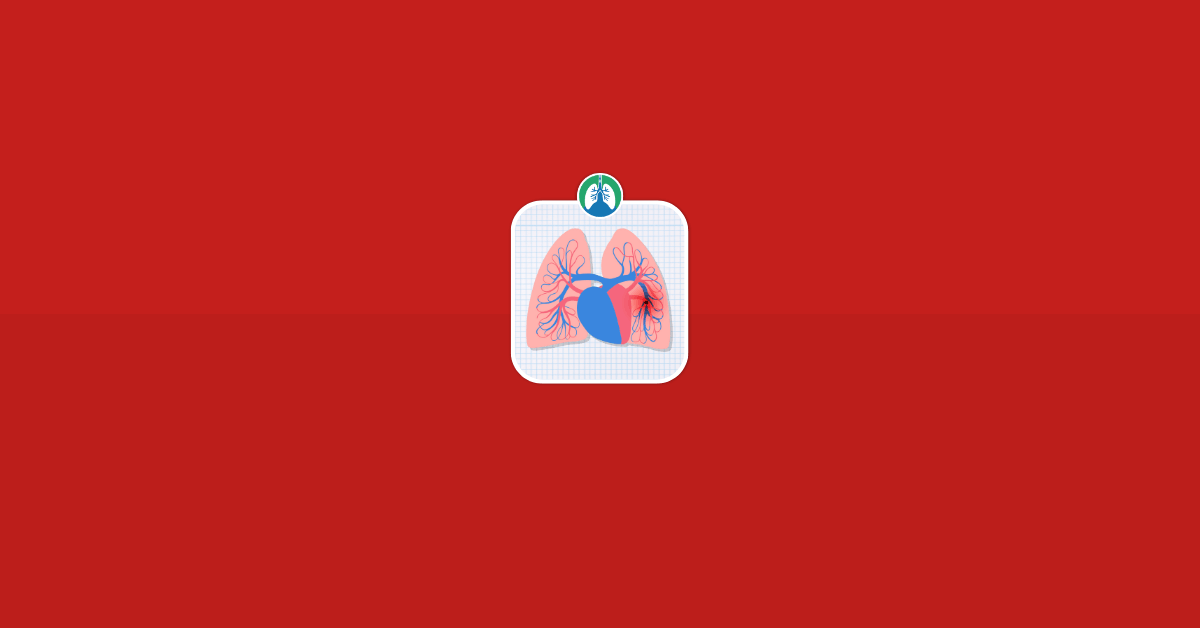
Pulmonary hypertension is a complex and progressive condition that affects the blood vessels of the lungs and places significant strain on the right side of the heart. Although it is less common than many other cardiopulmonary disorders, pulmonary hypertension carries a high risk of morbidity and mortality when not recognized and managed early.
Symptoms often develop gradually and can mimic more common respiratory conditions, making timely identification challenging.
For respiratory therapists, pulmonary hypertension is a critically important topic because it directly impacts oxygenation, ventilation strategies, hemodynamics, and long-term patient outcomes.

What Is Pulmonary Hypertension?
Pulmonary hypertension (PH) is defined as abnormally elevated pressure within the pulmonary arteries. Under normal conditions, the pulmonary circulation operates as a low-pressure, low-resistance system designed to efficiently transport blood from the right side of the heart to the lungs for gas exchange. In pulmonary hypertension, this balance is disrupted, leading to increased pulmonary vascular resistance and elevated pulmonary artery pressures.
As pressure within the pulmonary circulation rises, the right ventricle must work harder to pump blood through the lungs. Over time, this increased workload can result in right ventricular hypertrophy, dilation, and eventually right heart failure. Pulmonary hypertension may develop as a primary disease of the pulmonary vasculature or as a consequence of underlying heart, lung, or systemic conditions.

Classification of Pulmonary Hypertension
Pulmonary hypertension is classified into several groups based on underlying cause and pathophysiology. This classification system helps guide diagnosis and treatment strategies. Pulmonary arterial hypertension (PAH) is characterized by structural changes and vasoconstriction of the small pulmonary arteries. It may be idiopathic, heritable, drug-induced, or associated with connective tissue disease, congenital heart disease, or other systemic disorders. PAH is relatively rare but often severe and progressive.
Pulmonary hypertension due to left heart disease is the most common form. It results from elevated left atrial pressure that is transmitted backward into the pulmonary circulation, commonly seen in heart failure or valvular disease.
Pulmonary hypertension associated with lung disease or hypoxia occurs in conditions such as COPD, interstitial lung disease, sleep-disordered breathing, and chronic exposure to high altitude. Chronic hypoxia leads to pulmonary vasoconstriction and vascular remodeling.
Chronic thromboembolic pulmonary hypertension develops when pulmonary emboli fail to resolve and instead obstruct pulmonary vessels long-term. This form is particularly important because it may be surgically curable if identified early.
Note: Pulmonary hypertension with unclear or multifactorial mechanisms includes conditions that do not fit neatly into other categories, such as hematologic disorders or metabolic diseases.
Pathophysiology of Pulmonary Hypertension
The pathophysiology of pulmonary hypertension involves a combination of vasoconstriction, vascular remodeling, inflammation, and thrombosis within the pulmonary circulation. These processes increase pulmonary vascular resistance and limit blood flow through the lungs.
As resistance rises, the right ventricle must generate higher pressures to maintain cardiac output. Initially, the right ventricle adapts through hypertrophy, but over time it becomes dilated and weakened. Reduced right ventricular function leads to decreased cardiac output, systemic hypotension, and signs of right heart failure.
Pulmonary hypertension also contributes to impaired gas exchange. Reduced pulmonary perfusion worsens ventilation–perfusion mismatch, leading to hypoxemia, particularly during exertion. These physiologic changes explain why patients often present with exercise intolerance, dyspnea, and fatigue long before overt heart failure develops.
Clinical Presentation
Pulmonary hypertension often presents with subtle and nonspecific symptoms, especially in its early stages. Progressive dyspnea on exertion is the most common presenting complaint. Patients may also report fatigue, chest discomfort, lightheadedness, or syncope during activity.
As the disease progresses, signs of right heart failure become more apparent. These include peripheral edema, abdominal distention, hepatomegaly, and jugular venous distention. Hypoxemia may worsen over time, and some patients develop cyanosis.
Note: Because these symptoms overlap with many other respiratory and cardiac conditions, pulmonary hypertension is frequently diagnosed late. Careful clinical assessment and awareness of risk factors are essential for early recognition.
Diagnosis of Pulmonary Hypertension
The diagnostic evaluation of pulmonary hypertension typically involves a combination of imaging, functional testing, and hemodynamic assessment. While respiratory therapists do not independently diagnose pulmonary hypertension, their observations and clinical assessments often prompt further evaluation.
Echocardiography is commonly used as an initial screening tool to estimate pulmonary artery pressures and assess right ventricular function. Additional studies may include pulmonary function tests, imaging to assess lung parenchyma and vasculature, and laboratory testing to identify underlying causes.
Right heart catheterization remains the gold standard for definitive diagnosis, allowing direct measurement of pulmonary artery pressures and vascular resistance. Respiratory therapists play a key role in preparing patients, monitoring oxygenation, and supporting ventilation during diagnostic procedures.
Management of Pulmonary Hypertension
Management of pulmonary hypertension depends on the underlying cause and disease severity. General treatment strategies include optimizing oxygenation, managing volume status, and reducing right ventricular workload. Oxygen therapy is essential for patients with hypoxemia and helps reduce hypoxic pulmonary vasoconstriction. Diuretics are commonly used to manage fluid retention associated with right heart failure.
Targeted pharmacologic therapies are primarily used in pulmonary arterial hypertension and selected other cases. These include calcium channel blockers for patients who respond to vasoreactivity testing, prostanoids, endothelin receptor antagonists, phosphodiesterase-5 inhibitors, and soluble guanylate cyclase stimulators. These medications work through different pathways to promote pulmonary vasodilation and reduce vascular remodeling.
Note: In advanced or refractory cases, lung transplantation or combined heart–lung transplantation may be considered.
Relevance to Respiratory Therapists
Pulmonary hypertension is highly relevant to respiratory therapists because it directly affects oxygenation, ventilation strategies, and cardiopulmonary stability. RTs are often the first to detect worsening hypoxemia, unexplained dyspnea, or declining exercise tolerance.
Respiratory therapists play a key role in administering and managing oxygen therapy, inhaled pulmonary vasodilators, and nitric oxide during vasodilator testing. They also monitor patient response to therapy and identify signs of clinical deterioration that require urgent intervention.
In mechanically ventilated patients, ventilator settings must be carefully managed to avoid increasing pulmonary vascular resistance or compromising right ventricular function. RTs must be especially vigilant when adjusting airway pressures, PEEP, and oxygen levels in patients with known or suspected pulmonary hypertension.
Importance in the Field of Respiratory Care
Pulmonary hypertension represents an intersection of respiratory physiology, cardiovascular function, and critical care. As survival improves for patients with chronic lung disease and congenital heart disease, the prevalence of pulmonary hypertension continues to rise.
Advances in targeted therapies have improved outcomes, but early recognition remains essential. Respiratory therapists serve as frontline clinicians who continuously assess respiratory status and response to therapy. Their expertise is crucial in both acute and chronic care settings.
Education on pulmonary hypertension strengthens clinical judgment, improves interdisciplinary communication, and enhances patient safety. Understanding this condition allows respiratory therapists to anticipate complications and deliver more effective, proactive care.
Pulmonary Hypertension Practice Questions
1. How is pulmonary hypertension (PH) defined hemodynamically?
Pulmonary hypertension is defined as a mean pulmonary arterial pressure of 25 mm Hg or greater at rest.
2. Why is the clinical classification system for pulmonary hypertension important?
It helps explain pathophysiology and provides a framework for diagnosis, management, and treatment.
3. How many major categories is pulmonary hypertension divided into?
Pulmonary hypertension is divided into five major categories.
4. What characterizes pulmonary arterial hypertension (PAH)?
PAH is characterized by narrowing of small and medium-sized pulmonary arteries with elevated pulmonary vascular resistance and normal left-sided filling pressures.
5. What pulmonary vascular resistance value is typical of PAH?
A pulmonary vascular resistance of 3 Wood units or greater.
6. What pulmonary artery occlusion pressure is expected in PAH?
A pulmonary artery occlusion pressure of 15 mm Hg or less.
7. What term is used when no identifiable cause of pulmonary arterial hypertension is found?
Idiopathic pulmonary arterial hypertension (IPAH).
8. What types of diseases are commonly associated with PAH?
Connective tissue disease, congenital heart disease, liver cirrhosis, HIV infection, and exposure to drugs or toxins.
9. Which category of pulmonary hypertension is most common overall?
Pulmonary hypertension due to heart or lung disease.
10. What left-sided heart conditions commonly cause pulmonary hypertension?
Left ventricular systolic dysfunction, diastolic dysfunction, and valvular heart disease.
11. How does left heart disease lead to pulmonary hypertension?
Elevated left-sided pressures are transmitted backward into the pulmonary circulation.
12. What lung diseases are commonly associated with pulmonary hypertension?
COPD, interstitial lung disease, and other mixed obstructive–restrictive disorders.
13. How does chronic hypoxia contribute to pulmonary hypertension?
Chronic hypoxia causes sustained pulmonary vasoconstriction and vascular remodeling.
14. What sleep-related disorder can contribute to pulmonary hypertension?
Sleep-disordered breathing, including obstructive sleep apnea.
15. What is chronic thromboembolic pulmonary hypertension (CTEPH)?
Pulmonary hypertension caused by unresolved or recurrent pulmonary emboli.
16. How does CTEPH develop?
From persistent obstruction and remodeling of pulmonary vessels after emboli are not fully reabsorbed.
17. Why is it important to recognize CTEPH?
Because it is potentially treatable with surgical intervention and targeted therapy.
18. What is pulmonary veno-occlusive disease?
A rare form of pulmonary hypertension caused by narrowing of small pulmonary veins.
19. Why is pulmonary veno-occlusive disease difficult to manage?
Patients often respond poorly to PAH therapies and may develop pulmonary edema.
20. What complication can occur when PAH-specific therapy is given to patients with pulmonary veno-occlusive disease?
Acute pulmonary edema
21. Why is lung transplantation often required in pulmonary veno-occlusive disease?
Because medical therapy is limited and disease progression is severe.
22. How does pulmonary hypertension affect right ventricular function?
It increases right ventricular afterload, leading to hypertrophy and eventual failure.
23. What clinical symptom is most commonly associated with pulmonary hypertension?
Progressive dyspnea, especially with exertion.
24. What is the long-term consequence of untreated pulmonary hypertension?
Right heart failure and reduced survival.
25. Why is early identification of pulmonary hypertension critical?
Early treatment can slow disease progression and improve functional status.
26. What mean pulmonary arterial pressure at rest meets the diagnostic threshold for pulmonary hypertension?
A mean pulmonary arterial pressure greater than 25 mm Hg at rest.
27. What range of mean pulmonary arterial pressure at rest is considered normal?
A mean pulmonary arterial pressure of 8 to 20 mm Hg at rest is considered normal.
28. What is the clinical significance of a mean pulmonary arterial pressure of 21 to 24 mm Hg at rest?
This range has uncertain clinical implications and may represent early or borderline disease.
29. What mean pulmonary arterial pressure during exercise suggests pulmonary hypertension?
A mean pulmonary arterial pressure greater than 30 mm Hg with exercise.
30. What systolic pulmonary artery pressure at rest is consistent with pulmonary hypertension?
A systolic pulmonary artery pressure greater than 40 mm Hg at rest.
31. How is pulmonary hypertension physiologically characterized?
By elevated pulmonary arterial pressure and/or secondary right ventricular failure.
32. Why is pulmonary hypertension considered a serious condition if untreated?
It is a progressive and potentially fatal disease.
33. What term describes structural or functional impairment of the right ventricle due to pulmonary disease?
Cor pulmonale
34. What is cor pulmonale?
Altered structure or impaired function of the right ventricle caused by pulmonary hypertension from lung-related disease.
35. What pulmonary conditions can lead to cor pulmonale?
COPD, pulmonary vascular disease, obstructive sleep apnea, chest wall disorders, massive pulmonary embolism, and chronic pulmonary hypertension.
36. True or False: Right-sided heart failure due to left-sided heart disease is classified as cor pulmonale.
False
37. How is mean pulmonary arterial pressure mathematically determined?
Mean PA pressure equals cardiac output multiplied by pulmonary vascular resistance plus pulmonary venous pressure (approximated by wedge pressure).
38. What factors most commonly lead to the development of pulmonary hypertension?
Any condition that significantly increases pulmonary blood flow or pulmonary vascular resistance.
39. Why do patients with severe pulmonary hypertension eventually develop a fixed cardiac output?
Because impaired right ventricular forward flow limits blood passage through the lungs.
40. What process describes hypoxia-induced pulmonary vasoconstriction?
Chronic hypoxia leading to pulmonary arterial constriction via endothelial and smooth muscle dysfunction.
41. What endothelial changes occur during hypoxic pulmonary vasoconstriction?
Reduced nitric oxide production and altered potassium channel function.
42. What vasoactive imbalance contributes to hypoxic pulmonary vasoconstriction?
An imbalance between thromboxane A2 (vasoconstrictor) and prostacyclin (vasodilator).
43. How does endothelin contribute to pulmonary hypertension?
Increased endothelin promotes pulmonary vasoconstriction and vascular remodeling.
44. What happens to nitric oxide levels in pulmonary hypertension?
Nitric oxide levels are reduced, favoring vasoconstriction.
45. How does pulmonary vascular bed loss affect pulmonary artery pressure?
Loss of vascular surface area increases pulmonary artery pressure.
46. What cellular process contributes to the progression of pulmonary hypertension?
Vascular smooth muscle cell proliferation.
47. Why are patients with pulmonary hypertension predisposed to thrombosis?
Endothelial dysfunction and altered blood flow promote a prothrombotic state.
48. What is the most common symptom of pulmonary hypertension?
Dyspnea with exertion or at rest.
49. What cardiovascular symptom may occur during exertion in pulmonary hypertension?
Exertional syncope
50. What gastrointestinal symptoms may be seen in advanced pulmonary hypertension?
Right upper quadrant pain, anorexia, and fullness due to hepatic congestion.
51. What causes hoarseness in some patients with pulmonary hypertension?
Compression of the recurrent laryngeal nerve (Ortner’s syndrome).
52. What jugular venous finding suggests right ventricular hypertrophy?
Elevated jugular venous pressure with a prominent A wave.
53. What heart sound finding is common in pulmonary hypertension?
A loud or palpable pulmonic component of the second heart sound (P2).
54. What abdominal findings may be present in advanced pulmonary hypertension?
Hepatomegaly, ascites, and a pulsatile liver.
55. What peripheral finding indicates right-sided heart failure in pulmonary hypertension?
Peripheral edema
56. What is the preferred initial diagnostic test for suspected pulmonary hypertension?
Echocardiography
57. What diagnostic tests may support the evaluation of pulmonary hypertension?
Chest X-ray, ECG, CT scan, pulmonary function tests, V/Q scan, and right heart catheterization.
58. What echocardiographic findings suggest pulmonary hypertension?
Right ventricular and right atrial enlargement with reduced left ventricular size.
59. Why can echocardiographic estimates of pulmonary artery pressure be unreliable?
They may overestimate pressure and are not always reproducible.
60. What chest X-ray findings are associated with pulmonary hypertension?
Enlarged pulmonary arteries and signs of right ventricular enlargement.
61. What ECG findings are commonly associated with pulmonary hypertension?
Right axis deviation and tall P waves from right atrial enlargement.
62. Why is ECG not sufficient to assess pulmonary hypertension severity?
It lacks sensitivity and cannot quantify disease severity.
63. What imaging modality can detect pulmonary parenchymal and vascular disease related to pulmonary hypertension?
Spiral CT scan
64. What pulmonary function test patterns may be seen in pulmonary hypertension?
Obstructive patterns in COPD, reduced DLCO in pulmonary fibrosis, or near-normal results in idiopathic PH.
65. What test is most sensitive for detecting chronic thromboembolic pulmonary hypertension?
Ventilation/perfusion (V/Q) scan
66. What is the gold standard test for diagnosing sleep-disordered breathing?
Polysomnography (sleep study)
67. When should a sleep study be ordered in suspected pulmonary hypertension?
When clinical suspicion is high or the Epworth Sleepiness Scale score is 10 or greater.
68. What form of testing helps predict survival in idiopathic pulmonary hypertension?
Exercise testing
69. What types of exercise testing are used in pulmonary hypertension?
Six-minute walk test, treadmill testing, or cardiopulmonary exercise testing.
70. What laboratory studies may assist in evaluating pulmonary hypertension?
CBC, liver function tests, HIV testing, and autoimmune markers.
71. What is the primary treatment strategy for pulmonary hypertension?
Treating the underlying cause.
72. What supportive therapies are commonly used in pulmonary hypertension management?
Anticoagulation, oxygen therapy, diuretics, digoxin, and supervised exercise.
73. How often should patients with pulmonary hypertension be followed clinically?
Approximately every three months.
74. When should patients with persistent pulmonary hypertension be referred to specialized centers?
When symptoms persist at WHO functional class II, III, or IV despite treatment.
75. What therapies are considered advanced treatment for pulmonary hypertension?
Prostanoids, endothelin receptor antagonists, phosphodiesterase-5 inhibitors, or selected calcium channel blockers.
76. What procedures are reserved for refractory pulmonary hypertension?
Atrial septostomy and lung transplantation.
77. What is the untreated prognosis of idiopathic pulmonary arterial hypertension?
Approximately three-year survival from diagnosis without treatment.
78. How does right-sided heart failure affect prognosis in idiopathic pulmonary hypertension?
One-year survival is significantly reduced after onset of right-sided heart failure.
79. How does pulmonary artery pressure influence prognosis in COPD-related pulmonary hypertension?
Higher pressures are associated with markedly reduced long-term survival.
80. What hemodynamic measurement definitively confirms the diagnosis of pulmonary hypertension?
Right heart catheterization showing elevated mean pulmonary arterial pressure.
81. Why is right heart catheterization necessary even after an abnormal echocardiogram?
It provides direct pressure measurements and confirms disease severity.
82. What pulmonary artery occlusion pressure helps distinguish PAH from left heart–related pulmonary hypertension?
A pulmonary artery occlusion pressure of 15 mm Hg or less.
83. What does an elevated pulmonary vascular resistance indicate in pulmonary hypertension?
Increased resistance to blood flow through the pulmonary circulation.
84. Why is anticoagulation commonly considered in pulmonary hypertension management?
Because patients are at increased risk for in situ thrombosis.
85. How does chronic hypoxemia worsen pulmonary hypertension?
It perpetuates pulmonary vasoconstriction and vascular remodeling.
86. What effect does supplemental oxygen have on pulmonary vascular resistance?
It lowers pulmonary vascular resistance by reversing hypoxic vasoconstriction.
87. Why must diuretics be used cautiously in pulmonary hypertension?
Excessive preload reduction can worsen cardiac output.
88. What clinical finding suggests worsening right ventricular failure?
Progressive peripheral edema with rising jugular venous pressure.
89. What is the significance of a declining six-minute walk distance?
It suggests disease progression and worsening functional status.
90. Why is early detection of pulmonary hypertension important?
Early intervention may slow progression and improve outcomes.
91. What role does endothelial dysfunction play in pulmonary hypertension?
It disrupts the balance between vasodilation and vasoconstriction.
92. How does vascular remodeling affect pulmonary arteries?
It narrows vessel lumens and increases pulmonary vascular resistance.
93. What happens to cardiac output during advanced pulmonary hypertension?
It becomes limited due to right ventricular failure.
94. Why can pulmonary hypertension cause exertional chest pain?
Increased right ventricular oxygen demand exceeds supply.
95. What finding suggests advanced disease on physical examination?
A palpable right ventricular heave.
96. Why is pulmonary hypertension often underdiagnosed early?
Initial symptoms are nonspecific and develop gradually.
97. What impact does pulmonary hypertension have on gas exchange?
It worsens ventilation–perfusion mismatch.
98. Why are vasodilator response tests performed in selected patients?
To identify those who may benefit from calcium channel blockers.
99. What complication may occur if PAH-specific therapy is given in pulmonary veno-occlusive disease?
Development of pulmonary edema.
100. How does chronic thromboembolic pulmonary hypertension differ from acute PE?
It results from unresolved emboli causing persistent vascular obstruction.
Final Thoughts
Pulmonary hypertension is a serious and often progressive condition that places significant demands on the cardiopulmonary system. Its subtle onset and complex pathophysiology make early recognition challenging, yet timely intervention can dramatically improve outcomes.
Respiratory therapists play a vital role in identifying early warning signs, optimizing oxygenation, administering specialized therapies, and supporting patients across the continuum of care.
A strong understanding of pulmonary hypertension empowers RTs to contribute meaningfully to diagnosis, management, and long-term treatment strategies, ultimately improving quality of life and survival for affected patients.

Written by:
John Landry is a registered respiratory therapist from Memphis, TN, and has a bachelor's degree in kinesiology. He enjoys using evidence-based research to help others breathe easier and live a healthier life.
References
- Manek G, Bhardwaj A. Pulmonary Hypertension. [Updated 2024 May 1]. In: StatPearls [Internet]. Treasure Island (FL): StatPearls Publishing; 2025.