

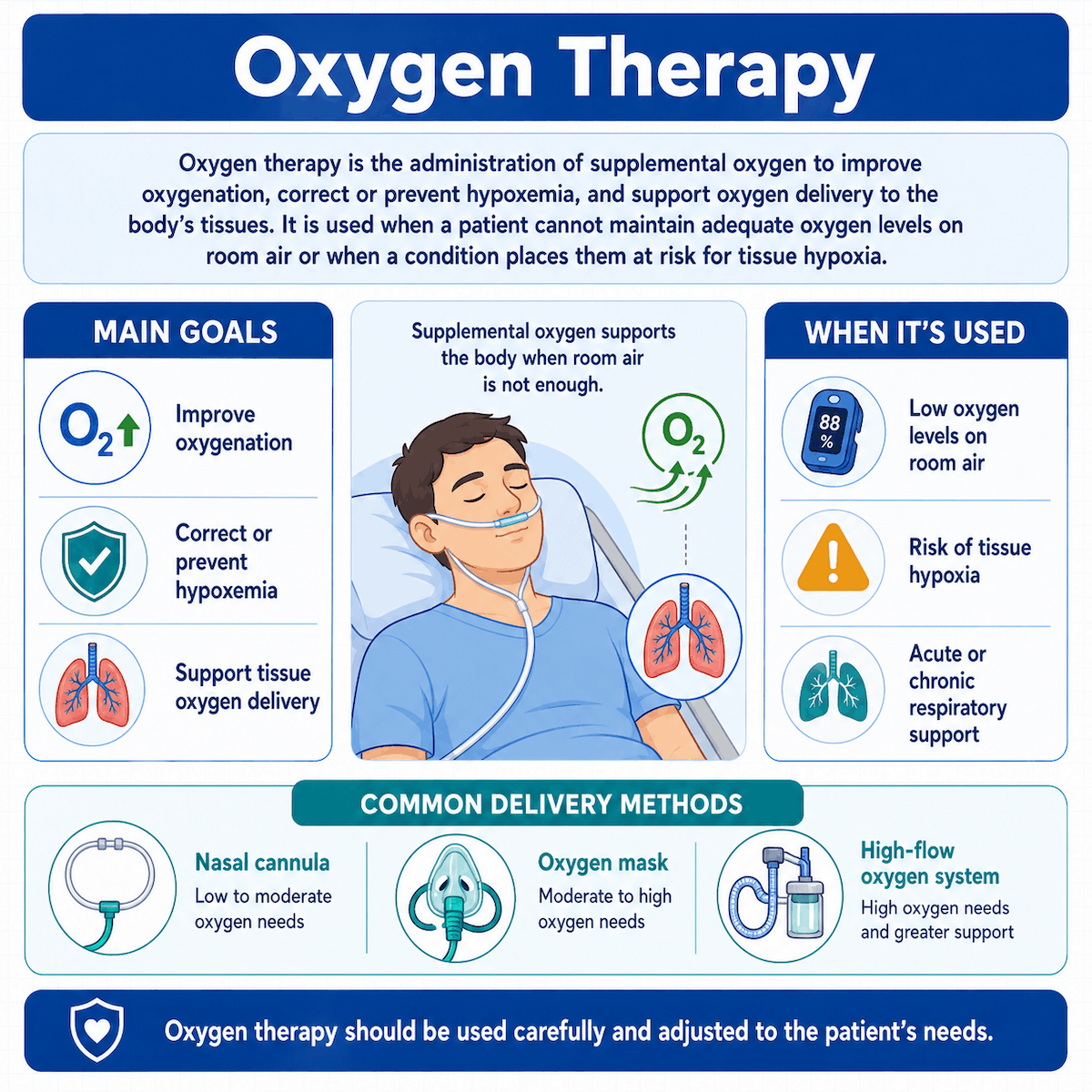
Oxygen therapy is the administration of supplemental oxygen to improve oxygenation, reduce respiratory distress, and support tissue oxygen delivery. It is one of the most common treatments used in respiratory care, but it should never be viewed as a harmless comfort measure.
Oxygen is a medical gas and a drug, which means it must be prescribed, delivered, monitored, and adjusted with a clear purpose.
The goal is to provide enough oxygen to correct or prevent hypoxemia while avoiding unnecessary exposure to high oxygen concentrations that may cause harm.

What Is Oxygen Therapy?
Oxygen therapy is the therapeutic use of supplemental oxygen to increase the amount of oxygen available in the lungs and blood. It is used when a patient cannot maintain adequate oxygenation on room air or when a clinical condition places the patient at high risk for tissue hypoxia.
Room air contains approximately 21% oxygen. When a patient receives oxygen therapy, the fraction of inspired oxygen, or FiO₂, is increased above room air levels. This higher inspired oxygen concentration increases the amount of oxygen in the alveoli, which can improve diffusion into the pulmonary capillary blood. As a result, arterial oxygen tension may increase, hemoglobin saturation may improve, and more oxygen may become available for delivery to the tissues.
Oxygen therapy is commonly used in hospitals, emergency departments, clinics, long-term care facilities, and home care settings. It may be used short term during acute illness or long term for chronic lung disease. It may also be used during procedures, resuscitation, transport, exercise, sleep, or mechanical ventilation.
Although oxygen is essential for life, more oxygen is not always better. Excessive oxygen administration can lead to complications, especially when high oxygen concentrations are used for prolonged periods or in vulnerable populations. Therefore, oxygen therapy should be based on assessment, clinical need, and ongoing monitoring.
Goals of Oxygen Therapy
The primary goal of oxygen therapy is to maintain adequate tissue oxygenation while reducing stress on the cardiopulmonary system. This means oxygen therapy is not simply about increasing a number on a monitor. It is about helping the body deliver enough oxygen to vital organs while reducing the workload placed on the lungs and heart.
The major goals of oxygen therapy include:
- Correcting documented or suspected hypoxemia
- Decreasing symptoms associated with chronic hypoxemia
- Reducing the workload caused by hypoxemia
- Supporting oxygen delivery during emergencies or procedures
- Preventing tissue hypoxia in high-risk clinical situations
Hypoxemia refers to a low level of oxygen in arterial blood. It is commonly assessed by arterial blood gas analysis, pulse oximetry, or both. When hypoxemia is present, the body may attempt to compensate by increasing respiratory rate, heart rate, and cardiac output. These compensatory responses can increase the workload of breathing and place additional strain on the heart.
By increasing the amount of oxygen available in the alveoli, oxygen therapy can improve arterial oxygenation and reduce the need for excessive cardiopulmonary compensation. This can help relieve dyspnea, improve mental function in some patients with chronic hypoxemia, and support organ function during acute illness.
Is Oxygen a Drug?
A key principle in respiratory care is that oxygen is a drug. Like any drug, oxygen has indications, dosage considerations, therapeutic effects, side effects, and potential hazards. It should be administered according to a physician’s order or an approved institutional protocol.
Thinking of oxygen as a drug helps prevent casual or excessive use. Oxygen should be given for a specific reason, such as documented hypoxemia, suspected tissue hypoxia, severe respiratory distress, cardiopulmonary resuscitation, carbon monoxide poisoning, or another clinically justified indication.
The “dose” of oxygen is usually expressed as FiO₂, flow rate, or both. The delivery method also matters because different devices provide different oxygen concentrations and levels of control. A nasal cannula set at 2 L/min does not deliver oxygen in the same way as a Venturi mask set at 28%, a nonrebreathing mask at high flow, or a high-flow nasal cannula system.
The respiratory therapist plays an important role in oxygen therapy. This includes assessing the patient, recommending an appropriate delivery device, initiating therapy, monitoring the response, adjusting oxygen levels, identifying complications, and helping discontinue oxygen when it is no longer needed.
Indications for Oxygen Therapy
Oxygen therapy is indicated when a patient has documented or suspected inadequate oxygenation. The most common indication is hypoxemia, which may be identified through arterial blood gas values, pulse oximetry, clinical assessment, or a combination of findings.
Common indications include:
- Acute hypoxemia
- Chronic hypoxemia
- Respiratory distress with suspected oxygenation impairment
- Shock
- Severe trauma
- Pulmonary embolism
- Acute myocardial infarction
- Cardiopulmonary resuscitation
- Carbon monoxide poisoning
- Cyanide poisoning
- Severe anemia
- Perioperative oxygen support
- Procedure-related oxygen support, such as during suctioning
In many routine adult situations, oxygen therapy is used to maintain a PaO₂ between approximately 60 and 100 torr. A PaO₂ near 60 torr often corresponds to an oxygen saturation around 90%, which is commonly considered the lower acceptable range for many adult patients. However, oxygen targets vary depending on the patient’s condition.
For example, patients with chronic carbon dioxide retention may require more conservative oxygen targets. Premature infants also require careful control of oxygen levels because excess oxygen exposure may contribute to retinopathy of prematurity. In emergencies such as carbon monoxide poisoning or cardiac arrest, high oxygen concentrations may be appropriate because the risk of tissue hypoxia is severe.
Assessment Before Oxygen Therapy
Before oxygen therapy is started, the patient should be assessed carefully. The need for oxygen may be identified through clinical signs, objective measurements, or both. A complete assessment helps determine whether oxygen is needed, how much oxygen is appropriate, and which delivery device should be used.
Respiratory signs of inadequate oxygenation may include:
- Increased respiratory rate
- Labored breathing
- Use of accessory muscles
- Nasal flaring
- Retractions
- Cyanosis
- Shortness of breath
- Inability to speak in full sentences
- Abnormal breathing pattern
Cardiovascular signs may include:
- Tachycardia
- Arrhythmias
- Increased blood pressure early in distress
- Hypotension in severe illness
- Signs of increased cardiac workload
Neurologic signs may include:
- Restlessness
- Anxiety
- Confusion
- Impaired judgment
- Decreased level of consciousness
- Agitation
- Lethargy
These findings may suggest hypoxemia, but physical assessment alone is not always enough. Whenever possible, objective measurements should be used to confirm oxygenation status.
Pulse oximetry provides a noninvasive estimate of oxygen saturation. It is useful for continuous monitoring and trending a patient’s response to therapy. However, pulse oximetry has limitations. It does not measure PaCO₂, pH, or ventilation status, and it may be affected by poor perfusion, motion, nail polish, abnormal hemoglobin, or carbon monoxide poisoning.
Arterial blood gas analysis provides more complete information. It measures PaO₂, PaCO₂, pH, and other values that help evaluate oxygenation, ventilation, and acid-base status. ABG analysis is especially important when oxygen therapy may affect ventilation, such as in patients with COPD and chronic carbon dioxide retention.
How Oxygen Therapy Improves Oxygenation
Oxygen therapy improves oxygenation primarily by increasing the amount of oxygen in the inspired gas. When FiO₂ increases, the oxygen level in the alveoli rises. This increases the pressure gradient for oxygen diffusion from the alveoli into the pulmonary capillary blood.
Once oxygen enters the blood, most of it binds to hemoglobin. A smaller amount dissolves directly in plasma. Hemoglobin saturation and PaO₂ are both important, but they represent different aspects of oxygenation. PaO₂ reflects the oxygen pressure dissolved in arterial blood, while SpO₂ estimates the percentage of hemoglobin binding sites occupied by oxygen.
Improving oxygenation helps support oxygen delivery to tissues. Oxygen delivery depends on several factors, including arterial oxygen content, hemoglobin concentration, cardiac output, and tissue perfusion. This is why oxygen therapy alone may not fully correct tissue hypoxia in every case. For example, a patient in shock may have adequate oxygen saturation but poor tissue oxygen delivery because blood flow is inadequate. A patient with severe anemia may have normal PaO₂ but reduced oxygen-carrying capacity because hemoglobin is low.
Therefore, oxygen therapy should be viewed as one part of the overall management of oxygen delivery. It improves the oxygen available in the lungs and blood, but clinicians must also consider hemoglobin, circulation, ventilation, and the underlying disease process.
Oxygen Therapy Devices
Oxygen delivery devices are selected based on the patient’s condition, oxygen requirement, breathing pattern, need for precise FiO₂, comfort, and clinical setting. Devices may be grouped into low-flow systems, reservoir systems, high-flow systems, blending systems, enclosures, bag-mask devices, and demand-flow or pulse-dose systems.
The main difference between low-flow and high-flow systems is whether the device can meet the patient’s full inspiratory flow demand.
Low-flow systems provide oxygen at a flow that does not fully meet the patient’s inspiratory demand. The patient entrains room air during inspiration, so the delivered FiO₂ varies.
High-flow systems provide enough total flow to meet or exceed the patient’s inspiratory demand. Because the gas mixture is more controlled, high-flow systems can deliver a more stable and predictable FiO₂.
Low-Flow Oxygen Systems
Low-flow oxygen systems are commonly used for stable patients who do not require a precise oxygen concentration. These devices are simple, widely available, and useful for low to moderate oxygen needs. However, the final FiO₂ depends on the patient’s breathing pattern.
Factors that affect FiO₂ with low-flow systems include:
- Oxygen flow setting
- Tidal volume
- Respiratory rate
- Inspiratory flow
- Inspiratory time
- Minute ventilation
- Mouth breathing
- Device fit
- Patient anatomy
Note: A patient who is breathing rapidly and deeply may pull in more room air, which lowers the effective FiO₂. This is why low-flow systems are less reliable in unstable patients or those with high inspiratory flow demands.
Nasal Cannula
The nasal cannula is one of the most common oxygen delivery devices. It consists of two small prongs placed in the nostrils and connected to oxygen tubing. It is simple, inexpensive, comfortable, and allows the patient to talk, eat, and drink.
In adults, the nasal cannula is commonly used at flows from 1 to 6 L/min. A traditional estimate is that each liter per minute increases FiO₂ by about 4%. Using this estimate:
- 1 L/min provides approximately 24% oxygen
- 2 L/min provides approximately 28% oxygen
- 3 L/min provides approximately 32% oxygen
- 4 L/min provides approximately 36% oxygen
- 5 L/min provides approximately 40% oxygen
- 6 L/min provides approximately 44% oxygen
These values are only estimates. The actual FiO₂ may vary significantly based on the patient’s breathing pattern. Flows above 6 L/min are generally avoided with a standard nasal cannula because they may cause nasal dryness, irritation, and discomfort without reliably increasing oxygen delivery.
Note: The nasal cannula is best suited for stable patients with mild to moderate hypoxemia who do not need exact FiO₂ control.
Transtracheal Oxygen Catheter
A transtracheal oxygen catheter delivers oxygen directly into the trachea through a small catheter inserted through the neck. Because oxygen is delivered closer to the lower airway, less oxygen may be wasted in the upper airway. This can reduce oxygen flow requirements in selected long-term oxygen therapy patients.
Transtracheal oxygen therapy requires careful patient selection, education, maintenance, and monitoring. Potential problems include mucus plugging, infection, catheter displacement, and the need for ongoing site care. It is not used as commonly as standard nasal cannula therapy but may be appropriate for selected patients who require long-term oxygen support.
Reservoir Oxygen Systems
Reservoir systems are designed to store oxygen so that a larger amount is available during inspiration. These systems improve oxygen delivery compared with some standard low-flow devices.
Reservoir systems include reservoir cannulas and reservoir masks. Reservoir masks include partial rebreathing masks and nonrebreathing masks.
Simple Oxygen Mask
A simple oxygen mask covers the nose and mouth and provides a reservoir space where oxygen collects before inspiration. It can deliver higher oxygen concentrations than a nasal cannula, but it does not provide a precise FiO₂.
A simple mask usually requires a minimum flow of approximately 5 L/min to help flush exhaled carbon dioxide from the mask. If the flow is too low, carbon dioxide may accumulate inside the mask and be rebreathed.
Proper mask fit is important. Leaks allow room air to enter and reduce the delivered oxygen concentration. The simple mask may be useful for short-term oxygen therapy in patients who need more oxygen than a nasal cannula can provide but do not require precise control.
Partial Rebreathing Mask
A partial rebreathing mask includes a reservoir bag attached to the mask. The patient inhales oxygen from the mask and reservoir bag. During exhalation, part of the exhaled gas enters the reservoir bag. The early portion of exhaled gas comes from the anatomic dead space and contains oxygen that has not participated in gas exchange.
The flow must be set high enough to keep the reservoir bag from collapsing during inspiration. If the bag collapses, the patient may not be receiving enough flow.
Note: A partial rebreathing mask can provide higher oxygen concentrations than a simple mask, but it does not deliver a fixed FiO₂.
Nonrebreathing Mask
A nonrebreathing mask is used when a high oxygen concentration is needed quickly. It includes a reservoir bag and one-way valves that help prevent the patient from rebreathing exhaled gas and help limit room air entrainment.
A properly functioning nonrebreathing mask can deliver high oxygen concentrations, making it useful in emergencies such as severe hypoxemia, trauma, shock, or preoxygenation before certain procedures.
However, it still may not deliver a perfectly fixed FiO₂. The actual oxygen concentration depends on mask fit, oxygen flow, valve function, reservoir bag inflation, and the patient’s inspiratory demand. The reservoir bag should remain at least partially inflated during inspiration. If it collapses, the oxygen flow should be increased or the system should be checked for problems.
High-Flow Oxygen Systems
High-flow oxygen systems are designed to meet or exceed the patient’s inspiratory demand. Because the patient receives the full gas mixture from the device, the FiO₂ is more predictable than with low-flow systems.
High-flow systems are useful when precise oxygen delivery is needed, when the patient has a high inspiratory flow demand, or when the clinician wants better control of oxygen concentration.
Examples include:
- Air-entrainment masks
- Air-entrainment nebulizers
- High-flow nasal cannula
- Oxygen blender systems
Air-Entrainment Mask
The air-entrainment mask, often called a Venturi mask, is a high-flow system that delivers a controlled oxygen concentration. It works by passing pressurized oxygen through a small jet, which creates a pressure gradient that entrains room air into the gas stream. The oxygen and air mix to produce a selected FiO₂.
Venturi masks are commonly set to deliver oxygen concentrations such as 24%, 28%, 31%, 35%, 40%, or 50%, depending on the device. The exact options vary by manufacturer.
This device is especially useful for patients who need precise oxygen control, such as those with COPD who are at risk for oxygen-induced hypercapnia. Because the FiO₂ is known and controlled, the therapist can adjust oxygen therapy more safely and predictably.
Note: The total flow from an air-entrainment device must be high enough to meet the patient’s inspiratory demand. If total flow is inadequate, the patient may entrain additional room air, reducing the intended FiO₂.
High-Flow Nasal Cannula
High-flow nasal cannula (HFNC) delivers heated, humidified oxygen through a specialized nasal cannula at high flow rates. Unlike a standard nasal cannula, HFNC requires equipment that can provide blended oxygen and air, humidification, and high gas flow.
HFNC may help by:
- Delivering a more stable FiO₂
- Meeting high inspiratory flow demands
- Improving patient comfort compared with some masks
- Providing heated humidification
- Helping wash out anatomic dead space
- Providing a small amount of positive airway pressure in some situations
Note: HFNC is often used for patients with hypoxemic respiratory failure, post-extubation oxygen support, or increased oxygen needs who may benefit from high flow and humidification. It is not the same as simply increasing the flow on a standard nasal cannula. It requires proper equipment, careful setup, and close monitoring.
Oxygen Blenders and Humidification
Oxygen blenders mix compressed oxygen and compressed air to deliver a selected FiO₂. They are commonly used with high-flow nasal cannula, mechanical ventilators, neonatal respiratory support, and other systems requiring precise oxygen concentration.
Humidification may be needed depending on the device, flow, and clinical situation. Dry oxygen can irritate the airway, especially at higher flows or when delivered through artificial airways. Heated humidification is especially important for high-flow systems and mechanically ventilated patients because the upper airway’s normal warming and humidifying functions may be bypassed or overwhelmed.
Note: Inadequate humidification may contribute to thick secretions, mucosal drying, discomfort, and airway irritation. Proper humidification improves tolerance and supports secretion clearance.
Oxygen Therapy in COPD
Oxygen therapy in COPD requires careful clinical judgment. Patients with COPD may develop hypoxemia due to ventilation-perfusion mismatch, airflow limitation, air trapping, destruction of alveolar-capillary surface area, or chronic respiratory failure. Supplemental oxygen can be lifesaving when hypoxemia is present.
However, some patients with severe COPD, especially those with chronic carbon dioxide retention, are at risk for oxygen-induced hypercapnia. Excessive oxygen administration may worsen ventilation-perfusion mismatch, reduce ventilatory drive in some cases, and contribute to rising PaCO₂.
This does not mean oxygen should be withheld from a hypoxemic patient with COPD. Severe hypoxemia is dangerous and must be corrected. The key is to titrate oxygen carefully and monitor the patient’s response.
A common oxygenation target in patients at risk for CO₂ retention is an SpO₂ of approximately 88% to 92%, which may correspond to a PaO₂ around 50 to 60 torr. These targets may vary based on institutional protocols and patient-specific factors.
A Venturi mask is often useful in COPD because it provides a controlled FiO₂. ABG analysis is important when evaluating both oxygenation and ventilation. If a COPD patient remains too hypoxemic, oxygen should be increased. If oxygen levels are higher than needed and PaCO₂ is worsening, FiO₂ may need to be reduced while other supportive measures are considered.
Oxygen Therapy in Neonates
Neonatal oxygen therapy requires special caution, especially in premature infants. Premature neonates are vulnerable to oxygen-related injury because their organs and blood vessels are still developing. One of the most important risks is retinopathy of prematurity, which can occur when abnormal retinal blood vessel development is influenced by oxygen exposure.
Because of this risk, oxygen therapy in premature infants must be carefully controlled. Oxygen saturation and PaO₂ targets are usually lower and more tightly regulated than in many adult patients. Excessive oxygen should be avoided, but hypoxemia must also be prevented because low oxygen levels can harm the brain, heart, and other organs.
Neonatal oxygen therapy often requires oxygen blenders, continuous monitoring, and carefully defined saturation targets. During procedures such as suctioning, oxygen increases may be smaller than those used in adults to reduce the risk of oxygen-related complications.
Note: The main principle is balance. Neonates need enough oxygen to support tissue oxygenation, but unnecessary hyperoxia should be avoided.
Oxygen Therapy During Suctioning
Suctioning can cause hypoxemia because it may remove oxygen from the airway along with secretions. It may also interrupt ventilation, stimulate coughing, increase work of breathing, and cause transient changes in heart rate or oxygen saturation.
To reduce the risk of suction-related hypoxemia, patients are often preoxygenated before suctioning. In many adult patients, this may involve increasing oxygen delivery for 1 to 2 minutes before the procedure. After suctioning, supplemental oxygen may be continued until the patient returns to baseline.
The amount of oxygen used depends on the patient’s age, condition, baseline oxygen requirement, and risk factors. Premature infants and young infants require more cautious oxygen increases because of the risk of oxygen-related injury.
Note: Suctioning should be performed only when clinically indicated, and oxygenation should be monitored before, during, and after the procedure.
Oxygen Therapy During Mechanical Ventilation
Oxygen therapy is a major part of mechanical ventilation. The ventilator delivers a selected FiO₂ to support arterial oxygenation while other settings manage ventilation, lung volume, and airway pressures.
When a mechanically ventilated patient is hypoxemic, increasing FiO₂ may improve oxygenation. However, relying only on high FiO₂ can increase the risk of oxygen toxicity. Other strategies, such as adjusting PEEP, improving alveolar recruitment, treating secretions, correcting atelectasis, or addressing the underlying condition, may improve oxygenation while allowing FiO₂ to be reduced.
The goal is to use enough FiO₂ to maintain adequate oxygenation while avoiding prolonged exposure to unnecessarily high oxygen concentrations. In acute emergencies, high FiO₂ may be appropriate. Once the patient stabilizes, oxygen should be titrated downward as tolerated.
Long-Term Oxygen Therapy
Long-term oxygen therapy is commonly used for patients with chronic lung disease and severe resting hypoxemia. It is especially important in selected patients with COPD because supplemental oxygen has been shown to improve survival in those with severe chronic hypoxemia.
Long-term oxygen therapy may be delivered through oxygen concentrators, compressed gas cylinders, liquid oxygen systems, or portable oxygen devices. The patient may require oxygen continuously, during sleep, during exercise, or during specific activities, depending on their oxygenation status and prescription.
Patient education is essential. Patients and families should understand:
- Prescribed flow settings
- When oxygen should be used
- How to operate the equipment
- How to clean and maintain supplies
- How to avoid fire hazards
- What to do during power failure or equipment malfunction
- When to contact a healthcare provider
Note: Not all patients with COPD benefit from oxygen therapy. Patients with mild resting hypoxemia or exercise-only desaturation may not receive the same survival or hospitalization benefits as those with severe resting hypoxemia. Therefore, long-term oxygen therapy should be based on objective criteria and clinical need.
Hyperbaric Oxygen Therapy
Hyperbaric oxygen therapy involves administering oxygen at pressures greater than normal atmospheric pressure. This allows a much larger amount of oxygen to dissolve directly in plasma. It is used for specific conditions where increased dissolved oxygen can provide a clinical benefit.
Examples of indications may include carbon monoxide poisoning and air embolism. In carbon monoxide poisoning, hyperbaric oxygen can help reduce carboxyhemoglobin levels and improve oxygen delivery. In air embolism, increased pressure can help reduce bubble size while oxygen supports tissue oxygenation.
Hyperbaric oxygen therapy requires specialized equipment, trained personnel, and careful monitoring. It also carries risks, including oxygen toxicity, barotrauma, and fire hazard. It is not routine oxygen therapy and should be used only for appropriate indications.
Hazards of Oxygen Therapy
Oxygen therapy has clear benefits, but it also has risks. These hazards are one reason oxygen must be treated as a drug and titrated to the patient’s needs.
Oxygen Toxicity
Oxygen toxicity, also known as hyperoxic acute lung injury, can occur when high oxygen concentrations are delivered for prolonged periods. Excess oxygen can contribute to the formation of reactive oxygen species, which may injure cells and promote inflammation.
Oxygen toxicity can impair gas exchange, reduce lung compliance, and worsen lung function. The risk increases with higher FiO₂ and longer exposure time. In acute emergencies, high oxygen concentrations may be necessary, but FiO₂ should be reduced as soon as adequate oxygenation can be maintained at a lower level.
Oxygen-Induced Hypoventilation and Hypercapnia
Some patients with chronic lung disease and chronic CO₂ retention may develop worsening hypercapnia when given excessive oxygen. This can lead to rising PaCO₂, respiratory acidosis, decreased mental status, and ventilatory failure if not recognized.
Patients at risk should receive carefully titrated oxygen and close monitoring. Pulse oximetry alone is not enough because it does not show PaCO₂ or pH. ABG analysis may be needed to determine whether oxygen therapy is affecting ventilation.
Retinopathy of Prematurity
Retinopathy of prematurity is a serious oxygen-related complication in premature infants. Excess oxygen exposure can contribute to abnormal retinal blood vessel development and may lead to visual impairment.
This risk highlights the importance of controlled oxygen delivery, blended gas systems, and careful saturation monitoring in neonatal care.
Absorption Atelectasis
Absorption atelectasis can occur when high oxygen concentrations wash nitrogen out of the alveoli. Nitrogen normally helps maintain alveolar volume because it is not absorbed as quickly as oxygen. When nitrogen is replaced by oxygen, the oxygen may diffuse into the blood rapidly. If little gas remains in the alveolus, it may collapse.
This can reduce the surface area available for gas exchange and worsen oxygenation over time. Absorption atelectasis is more likely when very high oxygen concentrations are used, especially in poorly ventilated lung regions.
Fire Hazard
Oxygen itself is not flammable, but it supports combustion. In an oxygen-enriched environment, materials can ignite more easily and burn more intensely. Smoking, open flames, sparks, and unsafe electrical equipment must be avoided around oxygen.
Fire safety is especially important in home oxygen therapy. Patients and families must be taught that oxygen should not be used near cigarettes, candles, gas stoves, fireplaces, or other ignition sources. “No smoking” signs and clear safety instructions are important parts of patient education.
Central Nervous System Effects
Very high oxygen exposure, especially under hyperbaric conditions, can affect the central nervous system. Symptoms may include visual changes, nausea, twitching, tremors, or seizures. This is more relevant to hyperbaric oxygen therapy than routine low-flow oxygen use, but it remains an important oxygen hazard.
Monitoring Oxygen Therapy
Monitoring is essential because oxygen therapy must be adjusted based on patient response. The therapist should assess oxygenation, ventilation, work of breathing, mental status, vital signs, and overall clinical condition.
Key monitoring tools include:
- Pulse oximetry
- Arterial blood gas analysis
- Respiratory rate
- Heart rate
- Blood pressure
- Breath sounds
- Work of breathing
- Mental status
- Skin color and perfusion
- Device function
- Patient comfort
Pulse oximetry is useful for continuous monitoring, but it should not replace clinical judgment. A normal SpO₂ does not always mean oxygen delivery is adequate, especially in anemia, shock, or carbon monoxide poisoning.
ABG analysis is especially useful when ventilation status matters. It helps determine PaO₂, PaCO₂, and pH. This is important in COPD, respiratory failure, mechanical ventilation, and any situation where oxygen therapy may affect carbon dioxide levels.
Note: Monitoring should occur after oxygen is started, after flow or FiO₂ changes, when the patient’s condition changes, and when therapy is being reduced or discontinued.
Adjusting Oxygen Therapy
Oxygen therapy should be adjusted according to the patient’s oxygenation goals and clinical response. If the patient remains hypoxemic, oxygen may need to be increased, the device may need to be changed, or additional respiratory support may be needed.
If oxygenation is above the target range, oxygen should often be reduced to avoid unnecessary hyperoxia. This is especially important in patients at risk for oxygen toxicity, oxygen-induced hypercapnia, or neonatal oxygen injury.
Common reasons to increase oxygen include:
- Low SpO₂ or PaO₂
- Increased work of breathing with suspected hypoxemia
- Acute respiratory distress
- Severe anemia with clinical concern
- Shock or poor oxygen delivery
- Emergency resuscitation
- Procedure-related desaturation
Common reasons to decrease oxygen include:
- SpO₂ or PaO₂ above target range
- Stable patient with improving oxygenation
- Concern for oxygen-induced hypercapnia
- Prolonged high FiO₂ exposure
- Neonatal oxygen levels above target range
Note: Oxygen should also be discontinued when it is no longer clinically indicated. Leaving oxygen in place without reassessment can lead to overtreatment and unnecessary risk.
Protocol-Based Oxygen Therapy
Protocol-based oxygen therapy allows trained respiratory therapists to assess patients, initiate oxygen, adjust oxygen levels, and discontinue therapy according to approved guidelines. This approach can improve consistency, reduce delays, and prevent both undertreatment and overtreatment.
A good oxygen therapy protocol includes:
- Criteria for starting oxygen
- Target oxygen saturation ranges
- Device selection guidance
- Monitoring requirements
- Steps for increasing oxygen
- Steps for decreasing oxygen
- Criteria for discontinuation
- Special considerations for COPD, neonates, and emergencies
Note: Protocol-based care recognizes that oxygen needs can change over time. A patient who needs high oxygen during acute distress may need less oxygen after treatment. Another patient may worsen and require escalation. Frequent reassessment is essential.
Choosing the Right Oxygen Device
Device selection should be based on the purpose of therapy, the patient’s oxygen requirement, the need for precise FiO₂, and the patient’s ability to tolerate the device.
A stable patient with mild hypoxemia may do well with a nasal cannula. A patient who needs controlled oxygen delivery may require a Venturi mask. A patient with severe acute hypoxemia may need a nonrebreathing mask, high-flow nasal cannula, noninvasive ventilation, or invasive mechanical ventilation depending on severity and response.
When choosing a device, the therapist should consider:
- How much oxygen the patient needs
- Whether FiO₂ must be precise
- Whether the patient has high inspiratory demand
- Whether the patient can tolerate a mask
- Whether humidification is needed
- Whether the patient is eating, speaking, or coughing
- Whether the patient has COPD or CO₂ retention
- Whether the patient is an infant or premature neonate
- Whether the situation is routine or emergent
Note: The device should be reassessed frequently. If the patient improves, oxygen support may be reduced. If the patient worsens, the delivery system may need to be escalated.
Oxygen Safety and Equipment
Oxygen equipment must be used correctly to prevent patient harm. Hospitals and home care systems use safety mechanisms to reduce the risk of connecting the wrong gas or using incorrect equipment. These include gas-specific connectors and cylinder safety systems.
Oxygen may be supplied through:
- Wall outlets connected to a bulk oxygen system
- Compressed gas cylinders
- Oxygen concentrators
- Liquid oxygen systems
- Portable oxygen devices
Cylinder safety is important. Oxygen cylinders are under high pressure and must be handled carefully. They should be secured properly, kept away from heat sources, and opened according to safe procedures.
Home oxygen safety is equally important. Patients should avoid smoking, open flames, and sparks around oxygen equipment. Liquid oxygen can cause frostbite because it is extremely cold, so patients must be taught how to handle it safely.
Equipment should also be checked for proper function. This includes verifying the flow setting, ensuring tubing is connected, checking for kinks or leaks, confirming reservoir bag inflation when using masks, and making sure humidifiers or blenders are working properly.
Common Mistakes in Oxygen Therapy
Several common mistakes can occur during oxygen therapy. One mistake is giving oxygen without assessing whether it is needed. Another is failing to reassess the patient after oxygen is started. Oxygen should not be placed on a patient and then left unchanged without monitoring.
Another mistake is using the wrong device for the clinical situation. A nasal cannula may be inappropriate for a patient with severe hypoxemia or high inspiratory flow demand. A nonrebreathing mask may be excessive for a stable patient who only needs low-flow oxygen. A Venturi mask may be preferred when precise FiO₂ control is needed.
Failing to monitor carbon dioxide levels in at-risk patients is another important error. In patients with COPD and chronic CO₂ retention, pulse oximetry alone may not show worsening hypercapnia. ABG analysis may be needed.
In neonatal care, oxygen must be controlled carefully to avoid both hypoxemia and hyperoxia. Excessive oxygen exposure in premature infants can have serious consequences.
Fire safety is another common concern. Patients using home oxygen must understand that oxygen supports combustion and that smoking near oxygen can be extremely dangerous.
Role of the Respiratory Therapist
The respiratory therapist has a central role in oxygen therapy. This role includes assessment, device selection, setup, monitoring, adjustment, troubleshooting, education, and documentation.
Respiratory therapists must understand the difference between low-flow and high-flow systems, how to estimate or control FiO₂, how to recognize oxygen hazards, and how to respond when a patient’s oxygenation changes. They also need to know when oxygen therapy alone is not enough.
For example, a patient with severe hypoxemia may require more than increased FiO₂. They may need PEEP, noninvasive ventilation, intubation, mechanical ventilation, bronchodilators, airway clearance, fluid management, antibiotics, or treatment of the underlying cause. Oxygen supports oxygenation, but it does not correct every respiratory problem by itself.
Note: The respiratory therapist also educates patients and families, especially in home oxygen therapy. Education includes equipment use, safety, cleaning, troubleshooting, prescribed flow settings, and when to seek medical help.
Oxygen Therapy Practice Questions
1. What is oxygen therapy?
Oxygen therapy is the administration of supplemental oxygen to improve oxygenation, support tissue oxygen delivery, and reduce cardiopulmonary workload.
2. Why is oxygen considered a drug in respiratory care?
Oxygen is considered a drug because it has indications, dosage requirements, therapeutic effects, side effects, and potential hazards.
3. What is the main goal of oxygen therapy?
The main goal of oxygen therapy is to maintain adequate tissue oxygenation while minimizing the workload on the lungs and heart.
4. What are the three major clinical objectives of oxygen therapy?
The three major objectives are to correct acute hypoxemia, decrease symptoms of chronic hypoxemia, and reduce the cardiopulmonary workload caused by low oxygen levels.
5. What is hypoxemia?
Hypoxemia is a low level of oxygen in arterial blood.
6. How does oxygen therapy help correct hypoxemia?
Oxygen therapy increases the inspired oxygen concentration, raising alveolar oxygen levels and improving oxygen diffusion into the blood.
7. What objective tests are commonly used to evaluate oxygenation?
Arterial blood gas analysis and pulse oximetry are commonly used to evaluate oxygenation.
8. What does pulse oximetry estimate?
Pulse oximetry estimates arterial oxygen saturation, or SpO₂.
9. Why is arterial blood gas analysis important during oxygen therapy?
ABG analysis provides information about PaO₂, PaCO₂, and pH, helping assess both oxygenation and ventilation.
10. What respiratory signs may suggest inadequate oxygenation?
Signs may include increased respiratory rate, labored breathing, accessory muscle use, nasal flaring, retractions, cyanosis, and shortness of breath.
11. What cardiovascular signs may suggest hypoxemia?
Cardiovascular signs may include tachycardia, arrhythmias, and increased cardiac stress.
12. What neurologic signs may occur with poor oxygenation?
Neurologic signs may include restlessness, confusion, impaired judgment, agitation, lethargy, or decreased level of consciousness.
13. Why may oxygen be given before laboratory confirmation in emergencies?
Oxygen may be given immediately in emergencies because the risk of tissue hypoxia is high and vital organs must be protected.
14. What are examples of emergency conditions where oxygen therapy may be required?
Examples include shock, trauma, pulmonary embolism, acute myocardial infarction, cardiopulmonary resuscitation, carbon monoxide poisoning, and cyanide poisoning.
15. Why is oxygen therapy not simply about raising oxygen numbers?
Oxygen therapy is also intended to improve tissue oxygen delivery, reduce respiratory distress, and decrease stress on the heart and lungs.
16. What is FiO₂?
FiO₂ is the fraction of inspired oxygen, or the percentage of oxygen in the gas a patient breathes.
17. What is room air FiO₂?
Room air contains approximately 21% oxygen.
18. Why should oxygen therapy be monitored carefully?
Oxygen therapy must be monitored because too little oxygen may fail to correct hypoxemia, while too much oxygen can cause complications.
19. What are the major hazards of supplemental oxygen?
Major hazards include oxygen toxicity, depression of ventilation, retinopathy of prematurity, absorption atelectasis, and fire hazard.
20. What is oxygen toxicity?
Oxygen toxicity is lung injury caused by prolonged exposure to high oxygen concentrations.
21. What can excessive oxygen exposure produce in the lungs?
Excessive oxygen exposure can promote reactive oxygen species, inflammation, impaired gas exchange, and reduced lung compliance.
22. What should be done after a patient stabilizes on a high FiO₂?
The FiO₂ should be reduced as soon as the patient can maintain adequate oxygenation at a lower concentration.
23. Why can excessive oxygen be dangerous in some COPD patients?
Excessive oxygen may worsen hypercapnia in some COPD patients with chronic carbon dioxide retention.
24. Should oxygen be withheld from a hypoxemic patient with COPD?
No. Oxygen should not be withheld, but it should be carefully titrated and monitored.
25. What is a common oxygen saturation target for COPD patients at risk of CO₂ retention?
A common target is an SpO₂ of approximately 88% to 92%.
26. What PaO₂ range is commonly targeted in many adult patients receiving oxygen therapy?
A common adult PaO₂ target range is approximately 60 to 100 torr.
27. Why is a PaO₂ near 60 torr clinically important?
A PaO₂ near 60 torr often corresponds to an SpO₂ around 90%, which is commonly considered the lower acceptable range for many adult patients.
28. What PaO₂ range may be used for some COPD patients with chronic CO₂ retention?
A common target is a PaO₂ of approximately 50 to 60 torr.
29. Why are blood gases important in COPD patients receiving oxygen?
Blood gases help determine whether oxygen therapy is improving PaO₂ while also showing whether PaCO₂ is rising.
30. What is retinopathy of prematurity?
Retinopathy of prematurity is an oxygen-related complication in premature infants involving abnormal retinal blood vessel development.
31. Why are premature infants especially vulnerable to oxygen injury?
Premature infants have immature retinal blood vessels, making them more vulnerable to damage from excessive oxygen exposure.
32. What PaO₂ limit is often recommended for premature neonates to reduce ROP risk?
PaO₂ is often kept no greater than 80 torr in premature neonates to reduce the risk of retinopathy of prematurity.
33. What is absorption atelectasis?
Absorption atelectasis is alveolar collapse that can occur when high oxygen concentrations wash nitrogen out of the alveoli.
34. Why does nitrogen help prevent alveolar collapse?
Nitrogen helps maintain alveolar volume because it is not absorbed into the blood as rapidly as oxygen.
35. At what oxygen concentration does absorption atelectasis become a greater concern?
Absorption atelectasis becomes a greater concern when high oxygen concentrations are used, especially above 80%.
36. Why is oxygen considered a fire hazard?
Oxygen is not flammable, but it supports combustion and can cause materials to ignite more easily and burn more intensely.
37. What safety instruction should be emphasized for patients using home oxygen?
Patients should avoid smoking, open flames, sparks, and unsafe electrical equipment near oxygen.
38. What are low-flow oxygen systems?
Low-flow oxygen systems provide oxygen at flows that do not fully meet the patient’s inspiratory demand.
39. Why is FiO₂ variable with low-flow oxygen systems?
FiO₂ is variable because the patient entrains room air during inspiration, and the final oxygen concentration depends on the breathing pattern.
40. What are examples of low-flow oxygen systems?
Examples include nasal cannulas, nasal catheters, and transtracheal oxygen catheters.
41. When are low-flow oxygen systems most appropriate?
Low-flow systems are most appropriate for stable patients who do not require a precise FiO₂.
42. What is a major advantage of a nasal cannula?
A nasal cannula is comfortable, simple, inexpensive, and allows the patient to eat, drink, and talk.
43. What is a limitation of the nasal cannula?
The nasal cannula delivers a variable FiO₂ that depends on the patient’s respiratory pattern and oxygen flow.
44. What FiO₂ is estimated with a nasal cannula at 1 L/min?
A nasal cannula at 1 L/min delivers approximately 24% oxygen.
45. What FiO₂ is estimated with a nasal cannula at 2 L/min?
A nasal cannula at 2 L/min delivers approximately 28% oxygen.
46. What FiO₂ is estimated with a nasal cannula at 3 L/min?
A nasal cannula at 3 L/min delivers approximately 32% oxygen.
47. What FiO₂ is estimated with a nasal cannula at 4 L/min?
A nasal cannula at 4 L/min delivers approximately 36% oxygen.
48. What FiO₂ is estimated with a nasal cannula at 5 L/min?
A nasal cannula at 5 L/min delivers approximately 40% oxygen.
49. What FiO₂ is estimated with a nasal cannula at 6 L/min?
A nasal cannula at 6 L/min delivers approximately 44% oxygen.
50. Why are standard adult nasal cannula flows usually limited to 6 L/min?
Flows above 6 L/min may cause nasal irritation and discomfort without reliably increasing delivered oxygen.
51. What is a transtracheal oxygen catheter?
A transtracheal oxygen catheter is a device that delivers oxygen directly into the trachea through a small catheter.
52. What is a benefit of transtracheal oxygen therapy?
It can reduce oxygen waste and lower oxygen flow requirements in selected long-term oxygen therapy patients.
53. What are potential problems with transtracheal oxygen therapy?
Potential problems include mucus plugging, infection, catheter displacement, and the need for regular site care.
54. What are reservoir oxygen systems?
Reservoir oxygen systems store oxygen during exhalation so more oxygen is available during the next inspiration.
55. What are examples of reservoir oxygen systems?
Examples include reservoir cannulas, partial rebreathing masks, and nonrebreathing masks.
56. What is the purpose of a simple oxygen mask?
A simple oxygen mask provides a reservoir space over the nose and mouth to deliver more oxygen than a nasal cannula.
57. Why does a simple oxygen mask require a minimum flow?
A minimum flow is needed to flush exhaled carbon dioxide from the mask and reduce the risk of CO₂ rebreathing.
58. What is a common minimum flow for a simple oxygen mask?
A common minimum flow for a simple oxygen mask is approximately 5 L/min.
59. Why is proper mask fit important during oxygen therapy?
Proper mask fit helps reduce leaks and limits room air entrainment, allowing better oxygen delivery.
60. What is a partial rebreathing mask?
A partial rebreathing mask is an oxygen mask with a reservoir bag that allows the patient to rebreathe some oxygen-rich gas from anatomic dead space.
61. What should be checked when using a partial rebreathing mask?
The reservoir bag should be checked to make sure it does not completely collapse during inspiration.
62. What is a nonrebreathing mask?
A nonrebreathing mask is an oxygen mask with a reservoir bag and one-way valves designed to deliver high oxygen concentrations.
63. When is a nonrebreathing mask commonly used?
It is commonly used during severe hypoxemia, trauma, shock, emergencies, or preoxygenation before procedures.
64. Why might a nonrebreathing mask fail to deliver a high FiO₂?
It may fail if the mask fit is poor, oxygen flow is too low, valves are missing or malfunctioning, or the reservoir bag collapses.
65. What should the reservoir bag do during use of a nonrebreathing mask?
The reservoir bag should remain at least partially inflated during inspiration.
66. What are high-flow oxygen systems?
High-flow oxygen systems provide enough total gas flow to meet or exceed the patient’s inspiratory demand.
67. Why is FiO₂ more predictable with high-flow systems?
FiO₂ is more predictable because high-flow systems deliver the full gas mixture and reduce room air entrainment.
68. When are high-flow oxygen systems especially useful?
They are useful when a precise oxygen concentration is needed or when the patient has a high inspiratory flow demand.
69. What are examples of high-flow oxygen systems?
Examples include air-entrainment masks, air-entrainment nebulizers, high-flow nasal cannula, and oxygen blender systems.
70. What is an air-entrainment mask?
An air-entrainment mask is a high-flow oxygen device that mixes oxygen with room air to deliver a controlled FiO₂.
71. What is another common name for an air-entrainment mask?
An air-entrainment mask is commonly called a Venturi mask.
72. How does a Venturi mask work?
A Venturi mask uses pressurized oxygen passing through a jet to entrain room air and create a controlled oxygen concentration.
73. Why is a Venturi mask useful for some COPD patients?
It provides a controlled FiO₂, which helps clinicians titrate oxygen more safely in patients at risk for oxygen-induced hypercapnia.
74. What FiO₂ settings are commonly available with Venturi masks?
Common settings include 24%, 28%, 31%, 35%, 40%, and sometimes 50%, depending on the device.
75. What can happen if the total flow from an air-entrainment device is too low?
The patient may entrain additional room air, which can reduce the intended FiO₂.
76. What is a high-flow nasal cannula?
High-flow nasal cannula is an oxygen delivery system that provides heated, humidified oxygen through a specialized nasal cannula at high flow rates.
77. How is a high-flow nasal cannula different from a standard nasal cannula?
High-flow nasal cannula requires blended gas, heated humidification, and high flow delivery, while a standard nasal cannula provides low-flow oxygen with variable FiO₂.
78. What equipment is typically needed for high-flow nasal cannula therapy?
High-flow nasal cannula therapy typically requires a humidifier, oxygen source, air source, blender, heated circuit, and specialized nasal cannula.
79. What are the benefits of high-flow nasal cannula therapy?
Benefits may include improved comfort, more stable FiO₂, heated humidification, reduced anatomic dead space, and better support for high inspiratory demand.
80. Why is humidification important with high-flow oxygen therapy?
Humidification helps prevent airway drying, irritation, thick secretions, and discomfort during high gas flow delivery.
81. What does an oxygen blender do?
An oxygen blender mixes compressed oxygen and compressed air to deliver a selected FiO₂.
82. Why are oxygen blenders important in neonatal care?
Oxygen blenders allow precise oxygen control, which helps reduce the risk of both hypoxemia and oxygen-related injury in neonates.
83. What is long-term oxygen therapy?
Long-term oxygen therapy is supplemental oxygen used for patients with chronic hypoxemia, often in the home setting.
84. Which patients with COPD benefit most from long-term oxygen therapy?
Patients with COPD and severe resting hypoxemia benefit most from long-term oxygen therapy.
85. What did the Long-Term Oxygen Treatment Trial show about mild COPD hypoxemia?
It found that oxygen did not improve two-year mortality or all-cause hospitalization in COPD patients with only mild resting hypoxemia or exercise desaturation.
86. What oxygen sources may be used for home oxygen therapy?
Home oxygen may be supplied by oxygen concentrators, compressed gas cylinders, liquid oxygen systems, or portable oxygen devices.
87. What is an oxygen concentrator?
An oxygen concentrator is a device that removes nitrogen from room air to provide oxygen-enriched gas for patient use.
88. What is a key safety concern with liquid oxygen?
Liquid oxygen is extremely cold and can cause frostbite if it contacts the skin.
89. What should patients be taught about smoking near oxygen?
Patients should be taught that smoking near oxygen is extremely dangerous because oxygen supports combustion.
90. What is protocol-based oxygen therapy?
Protocol-based oxygen therapy allows trained clinicians, such as respiratory therapists, to initiate, adjust, and discontinue oxygen according to approved guidelines.
91. How can oxygen therapy protocols improve patient care?
Protocols can help prevent undertreatment, reduce overtreatment, standardize care, and encourage regular reassessment.
92. When should oxygen therapy be adjusted?
Oxygen therapy should be adjusted when oxygenation is below or above target, when the patient’s condition changes, or after reassessment shows a different need.
93. When should oxygen therapy be discontinued?
Oxygen therapy should be discontinued when it is no longer clinically indicated and the patient can maintain adequate oxygenation without it.
94. Why is pulse oximetry not enough in every patient?
Pulse oximetry estimates oxygen saturation but does not measure PaCO₂, pH, ventilation status, or tissue perfusion.
95. Why can carbon monoxide poisoning make pulse oximetry misleading?
Pulse oximetry may read falsely normal because it cannot reliably distinguish oxyhemoglobin from carboxyhemoglobin.
96. Why is oxygen used in carbon monoxide poisoning?
Oxygen helps displace carbon monoxide from hemoglobin and improves oxygen availability to tissues.
97. Why is 100% oxygen commonly used during CPR?
During CPR, tissue oxygen delivery is critically impaired, so 100% oxygen is used to maximize available oxygen.
98. What is hyperbaric oxygen therapy?
Hyperbaric oxygen therapy is the administration of oxygen at pressures greater than normal atmospheric pressure.
99. What are examples of indications for hyperbaric oxygen therapy?
Examples include carbon monoxide poisoning and air embolism.
100. What is the key clinical principle of oxygen therapy?
The key principle is to give enough oxygen to maintain adequate tissue oxygenation while avoiding unnecessary hyperoxia and oxygen-related complications.
Final Thoughts
Oxygen therapy is one of the most important treatments in respiratory care, but it must be used thoughtfully. The goal is to correct hypoxemia, support tissue oxygen delivery, reduce cardiopulmonary workload, and improve the patient’s clinical status.
At the same time, excessive oxygen can cause harm, including oxygen toxicity, absorption atelectasis, oxygen-induced hypercapnia, neonatal eye injury, and fire hazards.
The safest approach is careful assessment, appropriate device selection, ongoing monitoring, and timely adjustment. Oxygen should be given with a clear goal, evaluated regularly, and reduced or discontinued when it is no longer needed.

Written by:
John Landry is a registered respiratory therapist from Memphis, TN, and has a bachelor's degree in kinesiology. He enjoys using evidence-based research to help others breathe easier and live a healthier life.
References
- Weekley MS, Lobo CM, Bland LE. Oxygen Administration. [Updated 2025 Jan 22]. In: StatPearls [Internet]. Treasure Island (FL): StatPearls Publishing; 2026.