

Mechanical ventilation is a life-saving intervention used for patients who are unable to breathe adequately on their own. Ventilators deliver oxygen-rich air into the lungs using positive pressure, allowing gas exchange to occur and sustain vital organ function.
Although mechanical ventilation is a complex topic, it is essential knowledge for respiratory therapists and healthcare professionals who manage critically ill patients.
This article provides a comprehensive overview of mechanical ventilation, breaking down the key concepts and explaining how ventilators work in clinical practice.

Take our free course to master the basics of mechanical ventilation with clear explanations and helpful practice questions.
What is Mechanical Ventilation?
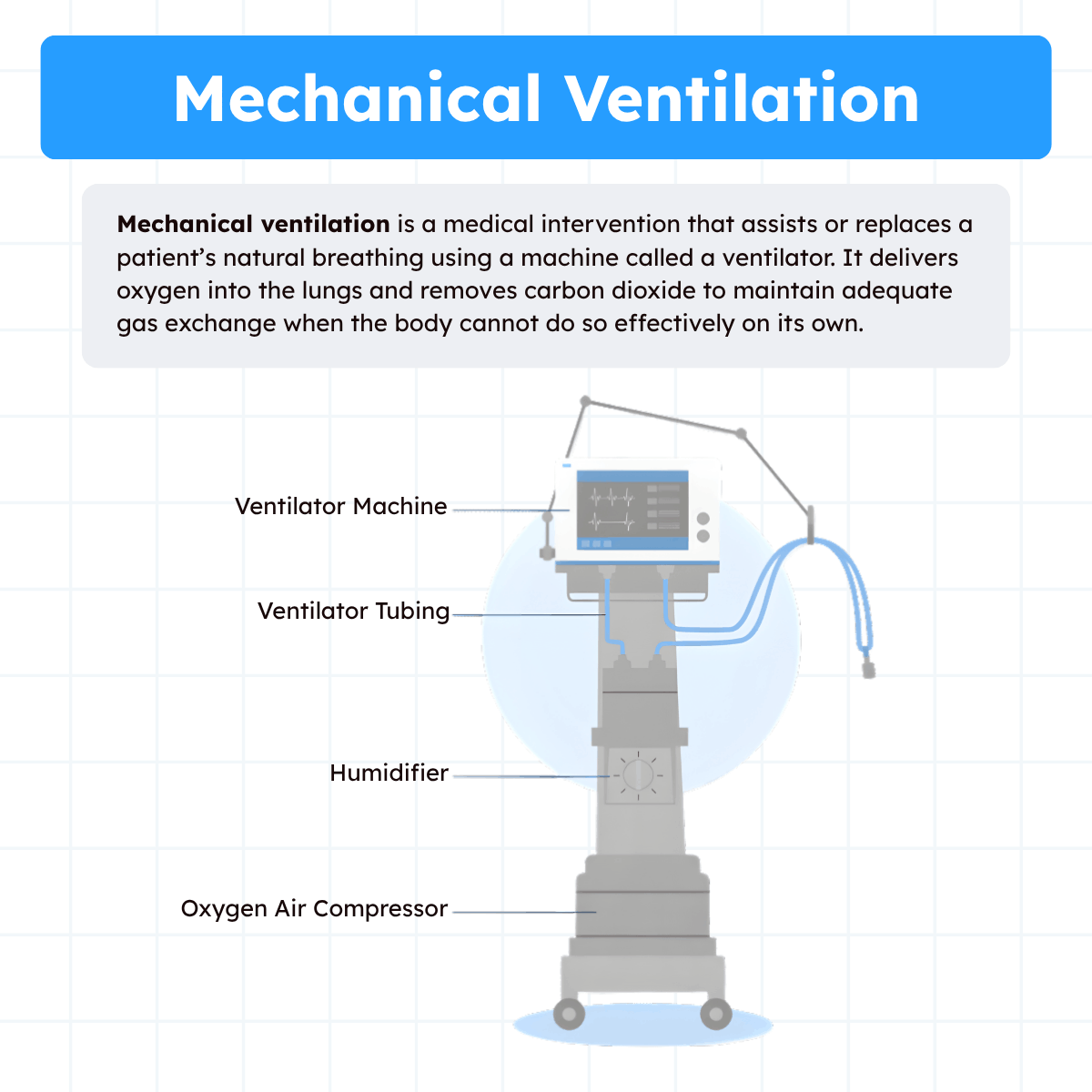
Mechanical ventilation is a medical intervention that assists or replaces a patient’s natural breathing using a machine called a ventilator. It is commonly used when a person is unable to maintain adequate oxygenation or remove carbon dioxide on their own due to illness, injury, or surgery.
The ventilator delivers oxygen-rich air into the lungs, typically through an endotracheal or tracheostomy tube, using positive pressure. This helps ensure proper gas exchange and supports vital organ function.
Mechanical ventilation can be short-term, such as during anesthesia, or long-term in cases of severe respiratory failure. It does not treat the underlying condition but provides essential support while other therapies address the cause.
Indications
The most common reasons a patient may require mechanical ventilation include:
- Insufficient oxygenation: When a patient is not receiving enough oxygen (i.e., hypoxemia), it can impair tissue and organ function. Mechanical ventilation helps deliver oxygen to the lungs for distribution throughout the body.
- Insufficient ventilation: When carbon dioxide is not adequately removed, it leads to increased blood acidity (i.e., respiratory acidosis). Mechanical ventilation supports effective CO2 elimination.
- Acute lung injury (ALI): Lung damage resulting from conditions such as sepsis, pneumonia, aspiration, or trauma.
- Severe asthma: During an asthma exacerbation, airway constriction limits airflow and can lead to respiratory failure, requiring ventilatory support.
- Severe hypotension: Conditions such as shock, sepsis, and congestive heart failure (CHF) can compromise perfusion and necessitate ventilatory assistance.
- Inability to protect the airway: Patients at risk of aspiration may require intubation and mechanical ventilation to maintain airway protection.
- Upper airway obstruction: Conditions like epiglottitis or laryngeal edema can obstruct airflow, making mechanical ventilation necessary to bypass the obstruction.
Note: Mechanical ventilation is indicated when a patient’s spontaneous breathing is insufficient to sustain life. In these cases, ventilatory support is provided until the underlying condition improves or resolves.
Contraindications
Because maintaining adequate ventilation and oxygenation is essential for survival, there are no absolute contraindications for mechanical ventilation. However, some patients may decline this intervention based on their personal wishes.
This is commonly seen with a Do Not Resuscitate (DNR) order, where a patient has legally chosen to forgo life-sustaining treatments. In these situations, healthcare providers must respect the patient’s directives and ensure that care aligns with their goals and preferences.
Principles of Mechanical Ventilation
To effectively manage a ventilated patient, clinicians must understand the core principles of mechanical ventilation, which include:
- Ventilation: The movement of air into and out of the lungs.
- Oxygenation: The transfer of oxygen into the bloodstream.
- Lung compliance: The ability of the lungs to expand and recoil.
- Airway resistance: The opposition to airflow within the respiratory tract.
- Deadspace ventilation: The portion of inhaled air that does not participate in gas exchange.
- Respiratory failure: The inability to adequately oxygenate blood or eliminate carbon dioxide.
Note: These principles guide clinical decisions and help determine the appropriate level of ventilatory support for each patient.
What is a Mechanical Ventilator?
A mechanical ventilator is a medical device designed to assist or completely control a patient’s breathing when they are unable to ventilate effectively on their own. It delivers air, often enriched with oxygen, into the lungs through an artificial airway, such as an endotracheal tube or a tracheostomy tube.
Clinicians can adjust key settings, including respiratory rate, tidal volume, pressure, and oxygen concentration, to meet the patient’s specific respiratory needs.
The ventilator also provides continuous monitoring of respiratory parameters to ensure adequate support and patient safety. Mechanical ventilators are widely used in intensive care units, during surgical procedures requiring anesthesia, and in long-term care for patients with chronic respiratory failure.
How Does a Ventilator Work?
Mechanical ventilators function by using positive pressure to deliver breaths into the lungs. Before a patient can be connected to the machine, an artificial airway must be placed into the trachea. This procedure is known as intubation and involves inserting an endotracheal tube through the nose or mouth into the trachea.
Once the tube is properly positioned, it creates a direct connection between the patient and the ventilator, allowing controlled positive pressure breaths to be delivered.
It’s important to understand that ventilators do not treat or cure the underlying disease. Instead, they provide essential breathing support while other therapies, such as medications and medical interventions, address the root cause of the patient’s condition.
Benefits of Mechanical Ventilation
Mechanical ventilation provides several critical benefits, especially for patients experiencing severe respiratory compromise.
Key benefits include:
- Decreases Work of Breathing: By assisting or taking over ventilation, the machine reduces the patient’s energy expenditure and respiratory muscle fatigue, promoting recovery.
- Maintains Oxygenation: Ventilators can deliver high concentrations of oxygen (up to 100% FiO2) and apply positive end-expiratory pressure (PEEP) to improve oxygenation in patients with hypoxemia.
- Facilitates Carbon Dioxide Removal: Adjustments in respiratory rate and tidal volume allow for effective elimination of carbon dioxide, helping maintain acid-base balance.
- Provides Physiological Stability: By stabilizing ventilation, the ventilator creates optimal conditions for the body to respond to treatment and recover from illness.
Note: While mechanical ventilation is life-saving, it also carries risks. Its use requires careful clinical judgment and continuous monitoring based on the patient’s condition and overall prognosis.
Complications of Mechanical Ventilation
Although essential for critically ill patients, mechanical ventilation is associated with potential risks and complications, including:
- Barotrauma: Lung injury caused by excessive pressure leading to alveolar overdistention.
- Ventilator-associated pneumonia (VAP): A hospital-acquired infection that develops 48 hours or more after intubation.
- Auto-PEEP: The presence of unintended positive pressure in the alveoli at the end of exhalation, often due to incomplete emptying of the lungs.
- Oxygen toxicity: Cellular damage resulting from prolonged exposure to high oxygen concentrations.
- Ventilator-induced lung injury (VILI): Lung damage caused by mechanical forces during ventilation, including overdistention and repetitive alveolar collapse.
Note: With proper management, monitoring, and ventilator adjustments, many of these complications can be prevented or minimized.
Types of Mechanical Ventilation
There are four primary types of mechanical ventilation, each with unique indications and applications:
- Positive-pressure ventilation
- Negative-pressure ventilation
- Invasive mechanical ventilation
- Noninvasive ventilation
Positive-Pressure Ventilation
Positive-pressure ventilation is the most commonly used form and is typically what clinicians refer to when discussing mechanical ventilation. This method uses pressure greater than atmospheric pressure to push air into the lungs. The delivered air reaches the alveoli, where oxygen and carbon dioxide exchange occurs.
Negative-Pressure Ventilation
Negative-pressure ventilation is less commonly used but remains relevant in certain situations. This approach creates negative pressure outside the thoracic cavity, causing air to flow into the lungs as pressure inside becomes lower than atmospheric pressure.
Examples include:
- Iron lung: A historical device used primarily during polio outbreaks.
- Cuirass ventilation: A shell-like device that fits over the chest and abdomen to generate negative pressure.
Invasive Mechanical Ventilation
Invasive mechanical ventilation involves placing an artificial airway into the trachea, establishing a direct pathway between the ventilator and the lungs.
The primary types of artificial airways include:
- Endotracheal Tube: Inserted through the nose or mouth into the trachea.
- Tracheostomy Tube: Inserted through a surgical opening in the neck directly into the trachea.
Noninvasive Ventilation
Noninvasive ventilation (NIV) provides ventilatory support without the need for an artificial airway. It uses a tightly fitted mask over the nose or mouth to deliver oxygen-rich air using positive pressure.
The primary types of NIV include:
- CPAP
- BiPAP
Note: Noninvasive ventilation is commonly used to improve oxygenation, reduce work of breathing, and potentially prevent the need for intubation.
Ventilator Modes
A ventilator mode refers to how a mechanical ventilator delivers breaths and interacts with the patient. Each mode is designed to meet specific clinical needs by controlling how breaths are delivered, how the ventilator synchronizes with the patient’s efforts, and how it responds to changes in respiratory demand.
Ventilator Control Variables
Mechanical ventilation is primarily regulated by two key control variables that determine how breaths are delivered:
- Volume Control (VC): In this mode, the clinician presets the tidal volume delivered to the patient. While the volume remains constant, the peak inspiratory pressure (PIP) may vary depending on the patient’s lung compliance and airway resistance. The primary advantage of VC is the ability to ensure consistent minute ventilation, allowing for precise control of gas exchange.
- Pressure Control (PC): In this mode, a specific pressure level is set and maintained during each breath. The delivered tidal volume can vary based on lung compliance and airway resistance. The main benefit of PC is that it limits excessive airway pressure, helping reduce the risk of barotrauma and ventilator-induced lung injury.
Note: Both control variables are essential for customizing ventilatory support to meet a patient’s individual respiratory needs while minimizing the risk of complications.
Types of Ventilator Modes
The most common ventilator modes used in clinical practice include:
- Assist/Control (A/C)
- Synchronous Intermittent Mandatory Ventilation (SIMV)
- Pressure Support Ventilation (PSV)
- Continuous Positive Airway Pressure (CPAP)
- Volume Support (VS)
- Continuous Mandatory Ventilation (CMV)
- Airway Pressure Release Ventilation (APRV)
- Mandatory Minute Ventilation (MMV)
- Inverse Ratio Ventilation (IRV)
- High-Frequency Oscillatory Ventilation (HFOV)
Note: Each ventilator mode is selected based on the patient’s condition, respiratory mechanics, and treatment goals, whether full support or gradual weaning.
Primary Ventilator Modes
The most commonly used primary modes of mechanical ventilation include:
- Assist/Control (A/C)
- Synchronous Intermittent Mandatory Ventilation (SIMV)
Assist/Control (A/C)
The assist/control (A/C) mode delivers a preset number of mandatory breaths while also allowing the patient to initiate additional assisted breaths. When the patient triggers a breath, the ventilator provides full support using positive pressure. This ensures adequate ventilation even if the patient’s spontaneous effort is weak.
Because it provides full ventilatory support, A/C is commonly used when initiating mechanical ventilation and helps minimize the patient’s work of breathing.
Synchronous Intermittent Mandatory Ventilation (SIMV)
The synchronous intermittent mandatory ventilation (SIMV) mode delivers a preset number of mandatory breaths while allowing the patient to breathe spontaneously between them.
These spontaneous breaths are not fully supported, meaning the patient contributes to their own minute ventilation. As a result, SIMV is typically used when a patient requires partial ventilatory support or during the weaning process.

A clear and concise guide to mastering mechanical ventilation, designed to help respiratory therapists (and students) confidently understand ventilator modes, settings, and clinical applications.
Ventilator Settings
Ventilator settings are adjustable parameters that control how the ventilator delivers support. These settings are tailored to each patient’s respiratory condition and are continuously adjusted based on their response to therapy.
Key ventilator settings include:
- Mode: Determines how breaths are delivered.
- Tidal volume: The volume of air delivered with each breath.
- Frequency (rate): The number of breaths delivered per minute.
- FiO2: The fraction of inspired oxygen delivered to the patient.
- Flow rate: The speed at which air is delivered.
- I:E ratio: The ratio of inspiratory time to expiratory time.
- Sensitivity: The effort required by the patient to trigger a ventilator breath.
- PEEP: Pressure applied at the end of exhalation to prevent alveolar collapse.
- Alarms: Safety features that alert clinicians to potential issues with the patient or ventilator.
Note: Proper adjustment and monitoring of ventilator settings are essential for optimizing gas exchange while minimizing complications.
Initiation of Mechanical Ventilation
Initiating mechanical ventilation is a critical intervention typically performed in emergency or intensive care settings when a patient’s respiratory status is compromised.
Initial Ventilator Settings
Establishing initial ventilator settings requires careful assessment of the patient’s condition, including their ideal body weight (IBW), underlying pathology, and clinical goals.
Common initial settings include:
- Mode: A/C or SIMV are most commonly selected for initial support.
- Tidal volume: 6–8 mL/kg of ideal body weight (IBW)
- Frequency: 10–20 breaths per minute
- FiO2: 30–60% (or up to 100% initially if needed)
- Flow rate: 40–60 L/min
- I:E ratio: Typically between 1:2 and 1:4
- Sensitivity: -1 to -2 cmH2O
- PEEP: 4–6 cmH2O
Note: These are general starting points. Ventilator settings must be continuously reassessed and adjusted based on clinical findings, arterial blood gas results, and the patient’s overall response to therapy.
Artificial Airways for Mechanical Ventilation
Artificial airways are essential components of mechanical ventilation, providing a secure and patent pathway for oxygen delivery and ventilatory support. There are several types of artificial airways, each designed for specific clinical situations and durations of use.
The two primary types used in mechanical ventilation are endotracheal tubes and tracheostomy tubes.
Endotracheal tubes are inserted through the nose or mouth and advanced past the vocal cords into the trachea. Tracheostomy tubes are placed through a surgical opening in the neck directly into the trachea, typically for long-term airway management.
Other Types of Artificial Airways
In addition to the primary airways, there are specialized devices used in specific clinical scenarios:
- Oropharyngeal airway
- Nasopharyngeal airway
- Laryngeal mask airway (LMA)
- King laryngeal tube
- Esophageal obturator airway
- Esophageal gastric tube airway
- Esophageal-tracheal combitube
- Double-lumen endobronchial tube
Note: Each airway device serves a unique purpose and is selected based on the patient’s condition, clinical setting, and level of airway control required. Proper training is essential for safe and effective use.
Drugs Used in Mechanical Ventilation
During mechanical ventilation, various medications are used to manage pain, reduce anxiety, and improve patient-ventilator synchrony. These drugs enhance patient comfort and help optimize ventilation.
Common categories include:
- Antiemetics
- Barbiturates
- Benzodiazepines
- Cathartic agents
- Corticosteroids
- Depolarizing agents
- Nondepolarizing agents
- Inotropic agents
- Opioid analgesics
- Parasympatholytic bronchodilators
- Sympathomimetic bronchodilators
- Xanthine bronchodilators
Note: Neuromuscular blocking agents are commonly used to facilitate intubation, while sedatives reduce anxiety and improve comfort. Analgesics relieve pain, and bronchodilators help open the airways and reduce airflow resistance.z
Managing a Patient on the Ventilator
Managing a mechanically ventilated patient requires a coordinated, multidisciplinary approach focused on safety, comfort, and recovery.
Key aspects of ventilator management include:
- Assessing oxygenation
- Assessing ventilation
- Evaluating lung mechanics
- Adjusting ventilator settings
- Monitoring patient progress
- Managing the ventilator circuit
- Maintaining the artificial airway
- Providing humidification therapy
- Implementing VAP prevention strategies
- Providing nutritional support
- Maintaining fluid and electrolyte balance
- Documenting clinical findings
Note: Effective ventilator management requires ongoing reassessment and individualized care to ensure optimal patient outcomes.
Monitoring a Mechanically Ventilated Patient
Monitoring a mechanically ventilated patient is essential for ensuring effective therapy, detecting complications early, and guiding clinical decisions.
Key parameters to monitor include:
- Vital signs
- Breath sounds
- Chest imaging
- Chest movement
- Fluid balance
- Arterial blood gas (ABG) results
- Capnography
- Cerebral perfusion pressure
Note: Continuous monitoring allows for timely adjustments and helps ensure safe and effective ventilatory support.
Ventilator Alarms
Ventilator alarms are essential safety features that alert clinicians to changes in the patient’s condition or equipment function. These alarms require immediate evaluation and intervention to maintain patient safety.
Common ventilator alarms include:
- High pressure
- Low pressure
- Low volume
- High frequency
- Apnea
- High PEEP
- Low PEEP
Note: Prompt response to ventilator alarms is critical and should include assessment of both the patient and the ventilator system.
Ventilator Waveforms
Ventilator waveforms are graphical displays of respiratory variables that provide real-time insight into patient-ventilator interaction. They are used to assess respiratory mechanics, detect asynchrony, and guide ventilator adjustments.
Common waveform types include:
- Flow-volume loop
- Pressure-volume loop
- Constant flow waveform
- Descending ramp flow waveform
- Pressure-time waveform
- Flow-time (V-t) waveform
Note: Interpreting these waveforms is essential for optimizing ventilation and improving patient outcomes.

Access our quiz, which includes sample TMC practice questions and detailed explanations to master the key concepts of mechanical ventilation.
Ventilator Troubleshooting
Ventilator troubleshooting involves identifying and correcting issues that may compromise ventilation or patient safety.
Common problems include:
- Bronchospasm
- Secretion buildup
- Airway obstruction
- Dynamic hyperinflation
- Kinked endotracheal tube
- Patient biting the tube
- Improper patient positioning
- Drug-related complications
- Abdominal distension
- Circuit leaks
- Inadequate oxygenation
- Inadequate ventilation
- Improper ventilator settings
- Patient-ventilator asynchrony
- Ventilator alarms
- Equipment malfunction
- Lung overinflation
- Auto-PEEP
- Excessive PEEP
- Abnormal waveforms
- Obstructed expiratory valve
- Apnea due to disconnection
Troubleshooting requires a systematic approach that evaluates both the patient and the equipment. Rapid identification and correction of issues are essential for maintaining effective ventilation and ensuring patient safety. The primary goal is to ensure adequate ventilation and oxygen delivery at all times.
Note: If necessary, the patient may be temporarily disconnected from the ventilator and manually ventilated using a resuscitation bag until the issue is resolved.
Ventilator Weaning
Ventilator weaning is the gradual process of reducing and ultimately discontinuing mechanical ventilation, allowing the patient to resume independent breathing. This phase is especially important for patients who have required prolonged ventilatory support.
Weaning success is defined as the patient’s ability to maintain spontaneous breathing for at least 48 hours following extubation without requiring reintubation.
Several factors influence the likelihood of successful weaning, including:
- The type of respiratory disease
- The severity of illness
- The patient’s age
- The presence of comorbidities
- The duration of mechanical ventilation
Weaning failure occurs when a patient is unable to tolerate a spontaneous breathing trial (SBT) or requires reintubation within 48 hours of ventilator removal. The risk of failure increases with prolonged ventilator dependence, as extended support often leads to respiratory muscle weakness and deconditioning.
Note: Patients with chronic conditions such as COPD may also face additional challenges due to compromised respiratory function.
Weaning Criteria
Weaning from mechanical ventilation requires meeting specific clinical criteria that indicate readiness to reduce ventilatory support. These criteria help determine whether a patient can safely undergo a spontaneous breathing trial.
Common weaning criteria include:
- Adequate cough
- Manageable secretions
- Hemodynamic stability
- Acceptable arterial blood gas (ABG) values
- Respiratory rate (f)
- Tidal volume (VT)
- Vital capacity (VC)
- Minute ventilation (MV)
- Maximum inspiratory pressure (MIP/NIF)
- Maximum expiratory pressure (MEP)
- Rapid shallow breathing index (f/VT)
- PaO2
- SaO2
- PaO2/FiO2 (P/F ratio)
- Qs/Qt (shunt fraction)
- P(A-a)O2
- Static compliance
- Airway resistance
- VD/VT (dead space ratio)
- Successful spontaneous breathing trial (SBT)
Note: Meeting these criteria suggests that the patient may be ready to begin the weaning process. Successful weaning typically requires that the underlying condition responsible for respiratory failure has resolved or significantly improved.
What is a Spontaneous Breathing Trial?
A spontaneous breathing trial (SBT) is a clinical assessment used to evaluate a patient’s readiness to be weaned from mechanical ventilation. During an SBT, ventilatory support is reduced or temporarily removed, allowing the patient to breathe independently while being closely monitored.
The trial is considered successful if the patient maintains adequate oxygenation, ventilation, and hemodynamic stability without signs of distress. If the patient is unable to tolerate the trial, they are returned to ventilatory support and reassessed at a later time.

A clear and concise guide to mastering ventilator modes and settings, designed to help respiratory therapists (and students) confidently understand this essential topic.
What is Extubation?
Extubation is the process of removing an endotracheal tube once a patient demonstrates the ability to maintain a stable airway and breathe independently.
The decision to extubate is based on several key factors:
- Airway Protection: The patient must be able to protect their airway and prevent aspiration.
- Respiratory Function: Adequate respiratory muscle strength is required to sustain independent breathing.
- Secretion Management: The patient must be able to effectively clear secretions without risk of airway obstruction.
- Oxygenation: The patient should maintain acceptable oxygen levels without excessive ventilatory support.
- Hemodynamic Stability: A stable cardiovascular system is necessary to tolerate the transition.
- Cooperation: The patient must be alert enough to follow instructions and cooperate with care.
Note: Extubation is performed when these criteria are met, indicating that the patient can safely maintain their airway and ventilation. This procedure is typically carried out by respiratory therapists in collaboration with the healthcare team.
Neonatal Mechanical Ventilation
Neonatal mechanical ventilation is a specialized form of respiratory support used in neonatal intensive care units (NICUs) for newborns who are unable to breathe effectively. This approach is carefully tailored to the unique physiology of infants, particularly premature newborns with underdeveloped lungs.
Neonatal ventilators are designed to deliver very small, precise tidal volumes to minimize the risk of lung injury. Ventilator settings and modes are continuously adjusted to ensure optimal oxygenation while reducing stress on the infant’s respiratory system.
Note: Effective neonatal ventilation requires a multidisciplinary team, including neonatologists, nurses, and respiratory therapists, working together to achieve the best possible outcomes.
FAQs About Mechanical Ventilation
What are the Goals of Mechanical Ventilation?
The primary goal of mechanical ventilation is to support or replace a patient’s natural breathing when it is inadequate to sustain life.
The main objectives include:
- To improve gas exchange
- To reverse hypoxemia
- To correct acute respiratory failure
- To relieve respiratory distress
- To reduce respiratory muscle fatigue
- To improve pulmonary mechanics
- To prevent or reverse atelectasis
- To improve lung compliance
- To minimize the risk of lung injury
- To maintain airway and lung function
- To prevent respiratory muscle deconditioning
Note: The goals of mechanical ventilation vary based on the patient’s condition and are tailored to address their specific clinical needs.
What is the Difference Between Invasive and Noninvasive Mechanical Ventilation?
Mechanical ventilation can be delivered using either invasive or noninvasive methods:
- Invasive mechanical ventilation involves placing an endotracheal tube through the nose or mouth or a tracheostomy tube directly into the trachea. This provides a secure airway and is typically used in cases of severe respiratory failure or when long-term support is required.
- Noninvasive mechanical ventilation delivers positive pressure through a mask or similar interface without the need for intubation. It is often used for patients with less severe respiratory distress or as a step-down therapy from invasive ventilation.
What are the Types of Lung Compliance?
Lung compliance refers to the ability of the lungs to expand and includes two primary types:
- Static Compliance: Measured when there is no airflow, reflecting the elastic properties of the lungs. It is useful in conditions such as pulmonary fibrosis or ARDS.
- Dynamic Compliance: Measured during active breathing and influenced by both lung elasticity and airway resistance, making it relevant in conditions like asthma and COPD.
What are the Types of Deadspace Ventilation?
Deadspace ventilation refers to areas of the respiratory system where air does not participate in gas exchange.
The primary types include:
- Anatomical Deadspace: Air within the conducting airways that does not reach the alveoli.
- Alveolar Deadspace: Air that reaches the alveoli but does not participate in gas exchange due to poor perfusion.
- Physiological Deadspace: The total of anatomical and alveolar deadspace, representing all non-functional ventilation.
Note: Deadspace is often referred to as “wasted ventilation” because it does not contribute to effective gas exchange.
What is Acute Respiratory Distress Syndrome?
Acute respiratory distress syndrome (ARDS) is a severe form of respiratory failure characterized by fluid accumulation in the alveoli and refractory hypoxemia. This leads to decreased lung compliance and impaired oxygenation. Management often requires mechanical ventilation with higher levels of PEEP to maintain adequate oxygenation.
What is an Acute Lung Injury?
Acute lung injury (ALI) is a condition involving sudden inflammation and damage to the lung tissue, resulting in rapid-onset respiratory distress. Although less severe than ARDS, it presents with similar symptoms such as dyspnea and hypoxemia. Common causes include pneumonia, trauma, and inhalation of toxic substances.
What is Ventilator-Associated Pneumonia (VAP)?
Ventilator-associated pneumonia (VAP) is a hospital-acquired infection that develops 48 hours or more after the initiation of mechanical ventilation. It is associated with increased morbidity, longer hospital stays, and higher healthcare costs.
Common contributing factors include:
- Endotracheal tube placement
- Aspiration of bacteria
- Poor patient positioning
- Inadequate suctioning
- Insufficient oral care
- Contaminated ventilator circuits
- Delayed or ineffective weaning
Note: Prevention strategies, including proper oral care and positioning, are essential in reducing the risk of VAP.
Who Can Operate a Mechanical Ventilator?
Operating a mechanical ventilator requires specialized training and expertise. It is typically managed by respiratory therapists, physicians, and pulmonologists. These professionals are responsible for setting up the ventilator, adjusting parameters, and monitoring the patient’s response to therapy.
How Long is a Patient Connected to a Ventilator?
The length of time a patient requires mechanical ventilation varies depending on the underlying condition, response to treatment, and overall health status. Some patients may need support for only a few hours, such as during surgery, while others with severe respiratory illness may require ventilation for days, weeks, or longer.
Note: The goal is always to safely wean the patient off the ventilator as soon as their condition allows.
What is Ventilator Dyssynchrony?
Ventilator dyssynchrony occurs when there is a mismatch between a patient’s spontaneous breathing efforts and the support provided by the ventilator. This mismatch can increase the work of breathing, cause discomfort, and lead to adverse clinical outcomes.
Common types include ineffective triggering, double triggering, and auto-triggering. Management involves adjusting ventilator settings, optimizing sedation, and improving patient comfort to enhance synchrony.
Which Vital Signs Should Be Monitored During Mechanical Ventilation?
Continuous monitoring of vital signs is essential to ensure patient safety and effective ventilation.
Key parameters include:
- Heart rate
- Respiratory rate
- Oxygen saturation (SpO2)
- Blood pressure
- Temperature
Note: Monitoring these values allows for early detection of complications and timely adjustments to ventilator settings.
What are the Spontaneous Ventilator Modes?
Spontaneous ventilator modes allow the patient to initiate and control their own breathing while receiving varying levels of support from the ventilator.
Common spontaneous modes include:
- Continuous Positive Airway Pressure (CPAP)
- Pressure Support Ventilation (PSV)
- Volume Support (VS)
These modes are commonly used during the weaning process or in patients who require partial ventilatory assistance. However, it is important to note that these modes depend on the patient’s ability to initiate breaths. If a patient cannot trigger breaths, the ventilator will not provide support, increasing the risk of apnea.
Note: Patients who are unable to breathe independently must be placed on modes that deliver mandatory breaths to ensure adequate ventilation.
How to Improve Oxygenation in a Patient on the Ventilator?
Improving oxygenation in a mechanically ventilated patient can be achieved through several strategies:
- Increase FiO2
- Optimize circulation
- Initiate CPAP
- Apply or increase PEEP
- Use Airway Pressure Release Ventilation (APRV)
- Use Inverse Ratio Ventilation (IRV)
- Implement prone positioning
- Optimize overall ventilatory status
Note: These interventions aim to improve arterial oxygenation (PaO2) either directly or indirectly.
How to Improve the Ventilation Parameters of a Patient on the Ventilator?
Improving ventilation focuses on enhancing carbon dioxide removal and maintaining proper acid-base balance.
Key strategies include:
- Increase respiratory rate (frequency)
- Increase tidal volume
- Reduce mechanical dead space
Inadequate ventilation leads to elevated PaCO2 levels, resulting in respiratory acidosis. Adjusting tidal volume or respiratory rate helps increase CO2 elimination and improve arterial blood gas values.
In severe cases, extracorporeal membrane oxygenation (ECMO) may be required to support gas exchange outside the body.
What are the Complications of Noninvasive Ventilation?
Noninvasive ventilation is effective for many patients but may be associated with certain complications, including:
- Aerophagia
- Airway dryness
- Aspiration
- Claustrophobia
- Decreased cardiac output
- Dry mouth
- Secretion buildup inside the mask
- Eye irritation from air leaks
- Pressure sores from the mask interface
Note: Most complications can be minimized with proper mask fit, humidification, and careful patient monitoring.
What is the Normal PEEP in Mechanical Ventilation?
Positive end-expiratory pressure (PEEP) is the pressure maintained in the airways at the end of exhalation to prevent alveolar collapse and improve oxygenation. The typical baseline PEEP setting is 5 cmH2O.
Higher levels may be required in patients with refractory hypoxemia or significant oxygenation impairment. PEEP should always be titrated based on the patient’s response to maintain adequate oxygenation while minimizing potential complications.
What Complications are Common in Neonates Who Receive Prolonged Mechanical Ventilation at Birth?
The most common complication in neonates receiving prolonged mechanical ventilation is bronchopulmonary dysplasia (BPD). This chronic lung condition is characterized by inflammation and scarring of the airways, particularly in premature infants with low birth weight.
BPD can lead to long-term respiratory issues and, in severe cases, respiratory failure. Early recognition and appropriate management are essential to improve outcomes in affected infants.
What is Flow in Mechanical Ventilation?
In mechanical ventilation, flow refers to the rate at which air is delivered to the patient’s lungs, typically measured in liters per minute (L/min). Flow settings are adjusted to meet the patient’s inspiratory demand, improve comfort, and ensure proper ventilator synchrony.
Flow patterns may be constant, decelerating, or accelerating, depending on the selected ventilator mode and clinical goals. Proper flow adjustment helps prevent lung overdistension and enhances patient-ventilator interaction.

Final Thoughts
Mechanical ventilation is a critical intervention used to support patients with impaired breathing and respiratory failure. It provides controlled oxygen delivery and carbon dioxide removal while clinicians address the underlying condition.
Understanding ventilator modes, settings, monitoring, and potential complications is essential for safe and effective patient care. Proper management requires ongoing assessment, timely adjustments, and coordination among the healthcare team.
As patients improve, careful weaning and evaluation determine readiness for independent breathing. By applying these principles, healthcare professionals can optimize outcomes and reduce risks associated with mechanical ventilation in both acute and long-term care settings.

Written by:
John Landry is a registered respiratory therapist from Memphis, TN, and has a bachelor's degree in kinesiology. He enjoys using evidence-based research to help others breathe easier and live a healthier life.
References
- Hickey SM, Sankari A, Giwa AO. Mechanical Ventilation. [Updated 2024 Mar 30]. In: StatPearls [Internet]. Treasure Island (FL): StatPearls Publishing; 2026.