

Cor pulmonale is a serious cardiopulmonary condition that develops when chronic lung disease places excessive strain on the right side of the heart. Although it originates in the pulmonary system, its consequences extend directly into cardiac function, hemodynamics, and systemic circulation.
For respiratory therapists, understanding cor pulmonale is essential because it represents a common and potentially life-threatening complication of chronic hypoxemic lung disease.
Recognizing its early signs, understanding its pathophysiology, and implementing appropriate interventions can significantly improve patient outcomes and prevent progression to right-sided heart failure.

What Is Cor Pulmonale?
Cor pulmonale is a medical condition characterized by enlargement and eventual failure of the right ventricle due to a primary disorder of the lungs or pulmonary vasculature. It is essentially right-sided heart failure that develops secondary to chronic pulmonary hypertension.
Unlike left-sided heart failure, which typically results from systemic hypertension or ischemic heart disease, cor pulmonale originates from elevated pressures within the pulmonary arteries. Over time, sustained pulmonary hypertension increases the workload of the right ventricle. Because the right ventricle has thinner walls and is designed to pump blood into a low-pressure system, it is not well suited to handle chronically elevated pulmonary pressures. This eventually leads to right ventricular hypertrophy, dilation, and failure.
Cor pulmonale is most commonly seen in patients with chronic obstructive pulmonary disease (COPD), but it can also occur in other chronic hypoxemic lung disorders.
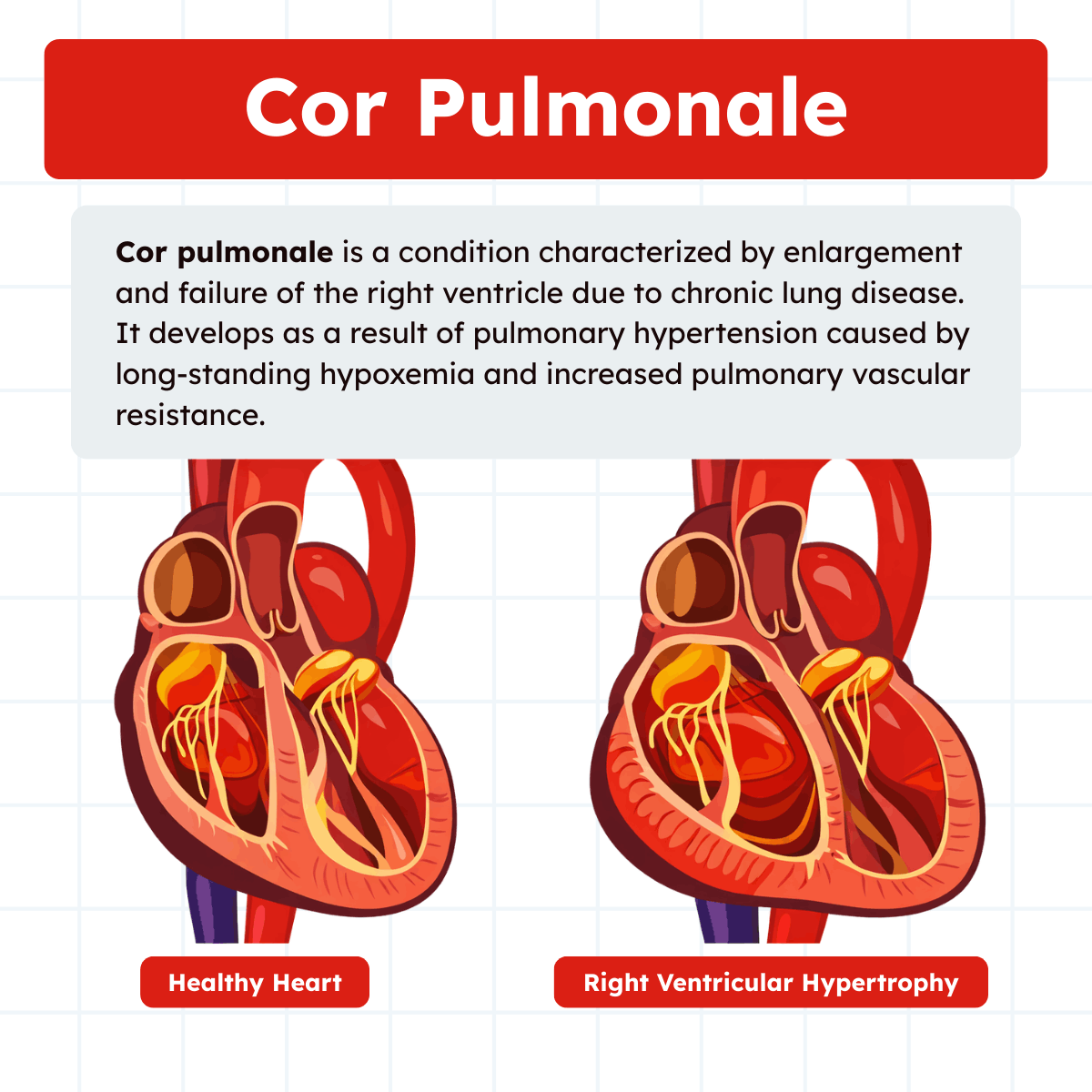
Pathophysiology and How Cor Pulmonale Develops
Cor pulmonale develops as a direct consequence of chronic lung disease and sustained pulmonary hypertension. The process typically begins with long-standing hypoxemia, which triggers pulmonary vasoconstriction. This response is initially protective, redirecting blood flow away from poorly ventilated alveoli.
However, when hypoxemia becomes chronic, vasoconstriction persists and leads to structural changes in the pulmonary vasculature, including smooth muscle hypertrophy, intimal thickening, and loss of capillary beds.
These changes increase pulmonary vascular resistance, forcing the right ventricle to generate higher pressures to pump blood through the lungs. Because the right ventricle is designed for a low-pressure system, prolonged pressure overload causes right ventricular hypertrophy as a compensatory mechanism. Over time, the ventricle can no longer sustain the increased workload, leading to dilation and eventual right-sided heart failure.
As right ventricular function declines, blood backs up into the systemic venous circulation. This results in elevated central venous pressure, jugular venous distension, hepatomegaly, peripheral edema, and other signs of systemic congestion.
Causes of Cor Pulmonale
Cor pulmonale develops secondary to conditions that increase pulmonary vascular resistance and lead to sustained pulmonary hypertension. In simple terms, anything that chronically raises pressure within the pulmonary arteries can eventually strain the right ventricle and lead to right-sided heart enlargement and failure.
The most common cause in clinical practice is chronic obstructive pulmonary disease (COPD). Long-standing hypoxemia in COPD patients leads to persistent pulmonary vasoconstriction, vascular remodeling, and increased resistance within the pulmonary circulation. Over time, this places a significant workload on the right ventricle.
Other important causes include:
- Interstitial lung disease, which causes fibrosis and destruction of pulmonary capillary beds
- Chronic or recurrent pulmonary embolism, which obstructs pulmonary arteries
- Severe obstructive sleep apnea, associated with repeated nocturnal hypoxemia
- Cystic fibrosis, due to chronic infection and airway obstruction
- Chronic bronchiectasis
- Primary pulmonary hypertension
Note: Although these disorders differ in pathophysiology, they share a common outcome: increased pulmonary artery pressure. Among them, COPD remains the leading cause of cor pulmonale in most healthcare settings.
Clinical Signs and Symptoms
Because cor pulmonale represents right-sided heart failure, its clinical manifestations reflect systemic venous congestion rather than pulmonary edema, which is more characteristic of left-sided failure.
Common Symptoms
- Dyspnea
- Fatigue
- Chest discomfort
- Reduced exercise tolerance
- Weakness or generalized malaise
Note: Dyspnea may initially be attributed to the underlying lung disease. However, as right heart dysfunction worsens, symptoms may intensify despite stable pulmonary function, signaling cardiac involvement.
Physical Examination Findings
Physical assessment plays a crucial role in early recognition. Key findings may include:
- Jugular venous distension (JVD), visible more than 4 cm above the sternal angle
- Peripheral edema (pedal edema)
- Hepatomegaly
- Abdominal tenderness
- Ascites in advanced stages
- Increased anterior-posterior (A-P) chest diameter in patients with COPD
Pedal edema is one of the most characteristic findings. It may present as pitting edema, where pressing on the skin leaves an indentation, or as weeping edema, where fluid leaks from the tissue when pressure is applied.
Hepatomegaly and abdominal distension are especially important for respiratory therapists. An enlarged liver can restrict diaphragmatic excursion, limiting lung expansion and worsening ventilation. Abdominal discomfort and distension often inhibit deep breathing and effective coughing, increasing the risk of atelectasis and secretion retention. These changes may contribute to recurrent infections and progressive respiratory insufficiency.
Note: In advanced cases, venous congestion may also lead to pleural effusions and right lower lobe atelectasis, further impairing gas exchange.
Diagnostic Evaluation
Accurate diagnosis of cor pulmonale requires a combination of clinical assessment, hemodynamic monitoring, and imaging studies.
Hemodynamics
Central venous pressure (CVP) is often elevated due to systemic venous congestion. In critical care settings, monitoring CVP trends may provide valuable insight into worsening right heart function.
Electrocardiogram (EKG)
An EKG may reveal:
- Right ventricular hypertrophy
- Right axis deviation
- Signs of right atrial enlargement
- Evidence of right heart strain
Note: Although not definitive on its own, the EKG supports clinical suspicion.
Echocardiogram
Echocardiography is the most important noninvasive diagnostic tool. It can detect:
- Right ventricular enlargement
- Reduced right ventricular contractility
- Elevated pulmonary artery pressures
- Tricuspid regurgitation
Note: Respiratory therapists should advocate for echocardiographic evaluation when signs of pulmonary hypertension or right heart strain are present.
Oxygenation Criteria
Oxygen qualification criteria may differ slightly in patients with cor pulmonale. For example, patients with COPD and secondary cor pulmonale may qualify for long-term oxygen therapy with:
- SpO2 ≤ 89%
- PaO2 between 56 and 59 torr
Note: These criteria reflect the strong relationship between chronic hypoxemia and pulmonary hypertension progression.
Why Cor Pulmonale Matters in Respiratory Care
Cor pulmonale is highly relevant to respiratory therapists because it directly results from chronic pulmonary disease and inadequate oxygenation.
1. Oxygen Therapy Management
Chronic hypoxemia is the driving force behind pulmonary vasoconstriction. Long-term oxygen therapy has been shown to slow the progression of pulmonary hypertension and improve survival in selected COPD patients.
Respiratory therapists must carefully titrate oxygen to maintain adequate saturation while avoiding excessive hyperoxia, especially in patients who retain carbon dioxide.
2. Ventilatory Support
During acute exacerbations, patients with cor pulmonale may require noninvasive ventilation (NIV) or mechanical ventilation. Proper ventilator management reduces work of breathing, improves alveolar ventilation, and decreases hypoxic pulmonary vasoconstriction.
Careful attention to PEEP levels, tidal volume settings, and avoidance of excessive intrathoracic pressures is essential to prevent further hemodynamic compromise.
3. Monitoring Hemodynamics
Elevated CVP, worsening edema, and declining oxygenation may indicate progression of right heart failure. Respiratory therapists working in intensive care units play an important role in recognizing these trends early.
4. Abdominal and Physical Assessment
Assessment of abdominal distension, hepatomegaly, and edema is not solely the responsibility of nursing staff. Respiratory therapists must evaluate how these findings impact diaphragmatic movement and ventilation.
5. Early Recognition
Subtle changes in oxygen requirements, exercise tolerance, or physical findings may signal worsening pulmonary hypertension. Early identification allows for prompt intervention and may prevent hospitalization.
Treatment and Management
Management focuses on correcting hypoxemia, reducing pulmonary artery pressure, and treating the underlying pulmonary condition.
1. Oxygen Therapy
Supplemental oxygen is the cornerstone of therapy. By correcting hypoxemia, oxygen reduces pulmonary vasoconstriction and lowers pulmonary artery pressure.
2. Treat the Underlying Cause
For patients with COPD, this may include:
- Bronchodilators
- Corticosteroids
- Airway clearance therapy
- Smoking cessation
- Pulmonary rehabilitation
Note: Improving ventilation and reducing inflammation decreases pulmonary vascular resistance.
3. Diuretics
Diuretics help relieve peripheral edema and systemic congestion. Care must be taken to avoid excessive volume depletion, which can reduce preload and worsen cardiac output.
4. Positive Inotropic Agents
In selected patients, digitalis may improve right ventricular contractility.
5. Pulmonary Vasodilators
In certain cases, pulmonary vasodilators may be used to reduce pulmonary artery pressure and decrease right ventricular workload.
6. Monitoring and Follow-Up
Regular reassessment of oxygen needs, periodic echocardiography, and close monitoring of symptoms are essential for long-term management.
Complications
If left untreated, cor pulmonale can progress to:
- Severe right-sided heart failure
- Recurrent hospital admissions
- Worsening respiratory insufficiency
- Reduced functional capacity
- Diminished quality of life
- Increased mortality
Note: Systemic venous congestion may also lead to pleural effusions and atelectasis, further compromising ventilation.
Cor Pulmonale vs. Left-Sided Heart Failure
It is important to distinguish cor pulmonale from left-sided heart failure. Cor pulmonale originates from pulmonary disease and pulmonary hypertension.
Left-sided heart failure originates from primary cardiac pathology.
While left heart failure can eventually lead to right heart dysfunction, it is not classified as cor pulmonale because the initiating cause is cardiac rather than pulmonary.
The Role of Preventive Care
Prevention centers on minimizing chronic hypoxemia and controlling pulmonary hypertension.
Key strategies include:
- Early diagnosis and management of COPD
- Smoking cessation
- Influenza and pneumococcal vaccination
- Pulmonary rehabilitation
- Appropriate initiation of long-term oxygen therapy
Note: Respiratory therapists are central to these preventive measures. By optimizing oxygenation, educating patients, and promoting adherence to therapy, they help reduce the risk of progression to cor pulmonale and improve long-term cardiopulmonary outcomes.
Cor Pulmonale Practice Questions
1. What is cor pulmonale?
Cor pulmonale is right ventricular enlargement and failure caused by primary lung or pulmonary vascular disease.
2. What is the underlying mechanism of cor pulmonale?
It develops secondary to chronic pulmonary hypertension.
3. How does chronic hypoxemia contribute to cor pulmonale?
Chronic hypoxemia causes pulmonary vasoconstriction, increasing pulmonary artery pressure and right ventricular workload.
4. Why is the right ventricle vulnerable in cor pulmonale?
The right ventricle has a thin wall and is not designed to pump against high pressures.
5. What is pulmonary hypertension?
Pulmonary hypertension is elevated pressure within the pulmonary arteries.
6. Which chronic lung disease is most commonly associated with cor pulmonale?
Chronic obstructive pulmonary disease (COPD) is the most common cause.
7. What is a common physical finding in cor pulmonale?
Peripheral or pedal edema is commonly present.
8. What is jugular venous distension (JVD)?
JVD is visible elevation of the jugular veins, typically more than 4 cm above the sternal angle.
9. Why does JVD occur in cor pulmonale?
Elevated right atrial pressure leads to venous congestion.
10. What abdominal finding may be present in cor pulmonale?
Hepatomegaly may occur due to venous congestion.
11. How can hepatomegaly affect respiratory function?
An enlarged liver can impair diaphragmatic movement and worsen ventilation.
12. What lung complication may result from hepatomegaly?
Right lower lobe atelectasis or pleural effusion may develop.
13. What hemodynamic change is typically seen in cor pulmonale?
Central venous pressure (CVP) is elevated.
14. What ECG finding may suggest cor pulmonale?
Right ventricular hypertrophy may be present on ECG.
15. What imaging study is recommended to evaluate suspected cor pulmonale?
Echocardiography is used to assess right ventricular size and pulmonary pressures.
16. What structural changes occur in pulmonary vessels in chronic cor pulmonale?
Pulmonary arteriolar hypertrophy and capillary obliteration may occur.
17. What symptom commonly accompanies cor pulmonale?
Progressive dyspnea is frequently reported.
18. How does pulmonary vasoconstriction increase right ventricular workload?
It increases resistance to blood flow through the lungs.
19. What is pitting edema?
Pitting edema leaves a temporary indentation when pressure is applied to the skin.
20. What is weeping edema?
Weeping edema involves fluid leakage through stretched skin.
21. Why is oxygen therapy important in cor pulmonale?
Oxygen reduces hypoxic pulmonary vasoconstriction and lowers pulmonary artery pressure.
22. What oxygen saturation criteria may qualify a COPD patient with cor pulmonale for supplemental oxygen?
An SpO2 of 89% or less or a PaO2 between 56 and 59 mm Hg may qualify.
23. What is the primary treatment goal in cor pulmonale?
Reduce pulmonary hypertension and right ventricular workload.
24. Why are diuretics used in cor pulmonale?
Diuretics reduce fluid overload and venous congestion.
25. What is the role of pulmonary vasodilators in cor pulmonale?
They decrease pulmonary vascular resistance.
26. Why must fluid status be carefully monitored in cor pulmonale?
Excess fluid worsens right-sided heart failure and edema.
27. What is the relationship between cor pulmonale and COPD exacerbations?
Exacerbations can worsen hypoxemia and increase pulmonary pressures.
28. How can abdominal distension affect respiratory mechanics?
It restricts diaphragmatic movement and reduces lung expansion.
29. Why is treating the underlying lung disease essential in cor pulmonale?
Managing the primary lung disorder helps reduce pulmonary hypertension.
30. What is the difference between left-sided heart failure and cor pulmonale?
Cor pulmonale originates from pulmonary disease, whereas left-sided failure originates from left ventricular dysfunction.
31. How is cor pulmonale formally defined?
Cor pulmonale is structural and/or functional alteration of the right ventricle caused by primary lung or pulmonary vascular disease.
32. What is the most common cause of chronic cor pulmonale?
Chronic obstructive pulmonary disease (COPD) is the most common cause.
33. How does the right ventricle normally function compared to the left ventricle?
The right ventricle is primarily a volume pump and adapts better to changes in preload than afterload.
34. How does the right ventricle respond to chronic increases in afterload?
Chronic increased afterload leads to right ventricular hypertrophy.
35. What occurs when right ventricular hypertrophy can no longer compensate?
The right ventricle dilates and may progress to failure.
36. How does acute right ventricular dilation impair cardiac output?
Dilation shifts the interventricular septum toward the left ventricle, reducing left ventricular preload and cardiac output.
37. What is the most common cause of acute cor pulmonale?
Massive pulmonary embolism is the most common cause.
38. What other acute condition can cause cor pulmonale?
Severe acute respiratory distress syndrome (ARDS) can increase pulmonary pressures and strain the right ventricle.
39. What is the gold standard for diagnosing pulmonary hypertension in cor pulmonale?
Right heart catheterization is the gold standard.
40. What nonspecific symptoms are common in early cor pulmonale?
Progressive dyspnea on exertion, cough, fatigue, and lethargy are common early symptoms.
41. What advanced symptoms may appear as cor pulmonale progresses?
Angina, hemoptysis, exertional syncope, peripheral edema, and right upper quadrant abdominal pain may develop.
42. Why can patients with cor pulmonale experience right upper quadrant pain?
Hepatic congestion from right-sided heart failure causes liver enlargement and discomfort.
43. What heart sound abnormality may be heard in pulmonary hypertension?
An accentuated pulmonic component of the second heart sound (loud P2) may be present.
44. What murmur may be heard due to right ventricular enlargement?
Tricuspid regurgitation may produce a holosystolic murmur.
45. What jugular venous finding is characteristic of right-sided heart failure?
Prominent jugular venous distension may be observed.
46. What is hepatojugular reflux?
Hepatojugular reflux is sustained jugular venous distension with abdominal pressure, indicating right heart dysfunction.
47. What peripheral sign is common in cor pulmonale?
Pitting peripheral edema is frequently present.
48. Why may polycythemia be seen in chronic cor pulmonale?
Chronic hypoxemia stimulates increased red blood cell production.
49. Why should alpha-1 antitrypsin levels be checked in certain patients?
Deficiency can predispose patients to COPD and subsequent cor pulmonale.
50. What ABG abnormality is commonly seen in chronic cor pulmonale?
Chronic hypoxemia with possible hypercapnia may be present.
51. What chest x-ray finding suggests pulmonary hypertension?
Enlargement of the central pulmonary arteries may be visible.
52. What ECG pattern is associated with right ventricular hypertrophy?
Right axis deviation and signs of right ventricular hypertrophy may be seen.
53. What echocardiographic finding suggests right ventricular overload?
Paradoxical septal motion or septal flattening may be observed.
54. How can echocardiography estimate pulmonary artery pressure?
By measuring tricuspid regurgitation velocity and applying Doppler calculations.
55. What is the primary goal of therapy in cor pulmonale?
To reduce pulmonary artery pressure and right ventricular workload.
56. How does oxygen therapy help in cor pulmonale?
It reduces hypoxic pulmonary vasoconstriction.
57. What is the role of diuretics in cor pulmonale?
Diuretics reduce fluid overload and venous congestion.
58. Why must diuretics be used cautiously in cor pulmonale?
Excessive diuresis may reduce preload and worsen cardiac output.
59. What intravenous agents may improve right ventricular contractility in unstable patients?
Dobutamine and milrinone may be used in hemodynamically unstable cases.
60. What is the general prognosis for advanced cor pulmonale?
The prognosis is often poor, particularly if the underlying lung disease is severe.
61. What categories of diseases commonly cause cor pulmonale?
Chronic lung parenchymal disease, pulmonary vascular disease, and chest wall disorders can all lead to cor pulmonale.
62. How can chronic lung tissue damage lead to cor pulmonale?
Diseases such as COPD impair oxygenation, leading to hypoxic pulmonary vasoconstriction and pulmonary hypertension.
63. How can chronic thromboembolic disease cause cor pulmonale?
Recurrent pulmonary emboli increase pulmonary vascular resistance and elevate pulmonary artery pressures.
64. How can kyphoscoliosis contribute to cor pulmonale?
Severe spinal deformity restricts lung expansion, causing chronic hypoventilation and secondary pulmonary hypertension.
65. What is the central hemodynamic abnormality underlying cor pulmonale?
Pulmonary hypertension is the primary driving force.
66. What is hypoxic pulmonary vasoconstriction?
It is a physiologic response in which pulmonary arterioles constrict in poorly ventilated areas of the lung.
67. How does widespread hypoxic vasoconstriction lead to pulmonary hypertension?
Global vasoconstriction increases pulmonary vascular resistance and elevates pulmonary artery pressure.
68. What pulmonary artery pressure defines pulmonary hypertension?
A mean pulmonary artery pressure greater than 25 mm Hg at rest defines pulmonary hypertension.
69. How does pulmonary hypertension strain the right ventricle?
It increases afterload, making it more difficult for the right ventricle to eject blood.
70. What early symptom is commonly reported in cor pulmonale?
Exertional dyspnea is often the earliest symptom.
71. Why may patients with cor pulmonale experience fatigue?
Reduced cardiac output limits oxygen delivery to tissues.
72. What type of chest pain may occur in cor pulmonale?
Angina may occur due to right ventricular ischemia or pulmonary artery stretching.
73. Why can hepatomegaly occur in cor pulmonale?
Right-sided heart failure causes venous congestion of the liver.
74. What respiratory rate change may be observed in cor pulmonale?
Tachypnea may be present due to hypoxemia.
75. What physical exam finding reflects increased right atrial pressure?
Jugular venous distension is commonly observed.
76. What chest wall change is often seen in COPD-related cor pulmonale?
An increased anterior–posterior chest diameter may be present.
77. What percussion finding is common in COPD-associated cor pulmonale?
Hyperresonance may be heard due to lung hyperinflation.
78. What heart sound abnormality suggests pulmonary hypertension?
A loud pulmonic component of S2 indicates elevated pulmonary pressures.
79. What is a right ventricular heave?
A palpable impulse along the left parasternal border indicating right ventricular enlargement.
80. What is ascites in the context of cor pulmonale?
Ascites is abdominal fluid accumulation due to chronic right-sided heart failure.
81. How does echocardiography assist in diagnosing cor pulmonale?
It identifies right ventricular enlargement and estimates pulmonary artery pressures.
82. What chest x-ray finding may suggest right ventricular enlargement?
An increased right heart border diameter may be visible.
83. Why is right heart catheterization considered the gold standard?
It directly measures pulmonary artery pressures and confirms pulmonary hypertension.
84. When is right heart catheterization indicated?
It is used when noninvasive imaging cannot adequately assess disease severity.
85. What is the primary therapeutic goal in cor pulmonale?
To lower pulmonary artery pressure and reduce right ventricular strain.
86. How do diuretics help in cor pulmonale?
They reduce fluid overload and decrease venous congestion.
87. Why must potassium levels be monitored when using diuretics?
Loop diuretics may cause hypokalemia, while potassium-sparing agents may cause hyperkalemia.
88. What is the role of anticoagulation in cor pulmonale?
Anticoagulants are used when chronic thromboembolic disease contributes to pulmonary hypertension.
89. What medication class may reduce pulmonary pressures in select patients?
Calcium channel blockers may be beneficial in certain vasoreactive cases.
90. What is the most important therapy shown to reduce mortality in cor pulmonale?
Long-term oxygen therapy significantly reduces mortality.
91. How many hours per day should long-term oxygen therapy typically be used?
At least 15 hours per day is recommended.
92. What oxygen saturation target helps prevent worsening pulmonary hypertension?
Maintaining oxygen saturation above 88% is generally recommended.
93. How does oxygen therapy improve pulmonary hemodynamics?
It reduces hypoxic pulmonary vasoconstriction.
94. What lifestyle change is essential in preventing progression of cor pulmonale?
Smoking cessation is critical.
95. How does sodium restriction benefit patients with cor pulmonale?
It helps limit fluid retention and edema.
96. What sleep-related therapy may benefit cor pulmonale patients with sleep apnea?
Continuous positive airway pressure (CPAP) therapy may improve nocturnal oxygenation.
97. Approximately what percentage of cor pulmonale cases are attributed to COPD?
About 80% of cases are related to COPD.
98. Why does chronic hypoxemia worsen pulmonary hypertension?
Persistent low oxygen levels sustain pulmonary vasoconstriction.
99. What is the relationship between cor pulmonale and chronic hypercapnia?
Chronic lung disease may cause CO2 retention, further impairing respiratory function.
100. What is the best prevention strategy for cor pulmonale?
Early identification and treatment of chronic hypoxemia with supplemental oxygen is key.
Final Thoughts
Cor pulmonale is a predictable complication of chronic lung disease and prolonged pulmonary hypertension. As hypoxemia persists, increased pulmonary vascular resistance places sustained strain on the right ventricle, eventually leading to right-sided heart failure.
For respiratory therapists, careful assessment of oxygenation, hemodynamics, and physical findings such as jugular venous distension and peripheral edema is important for early identification.
Management focuses on correcting hypoxemia and treating the underlying pulmonary condition. A practical understanding of cor pulmonale supports sound clinical decision-making and helps guide appropriate respiratory and supportive care.

Written by:
John Landry is a registered respiratory therapist from Memphis, TN, and has a bachelor's degree in kinesiology. He enjoys using evidence-based research to help others breathe easier and live a healthier life.
References
- Garrison DM, Pendela VS, Memon J. Cor Pulmonale. [Updated 2023 Aug 8]. In: StatPearls [Internet]. Treasure Island (FL): StatPearls Publishing; 2025.