
Hypotension is a clinical term for abnormally low blood pressure, but in respiratory care, it means much more than a low number on a monitor. It can signal poor tissue perfusion, reduced cardiac output, blood loss, sepsis, medication effects, or cardiovascular instability.
For respiratory therapists, hypotension matters because it often appears alongside respiratory distress, hypoxemia, shock, trauma, suctioning complications, or ventilator problems.
Recognizing hypotension early helps clinicians connect the patient’s blood pressure with oxygen delivery, perfusion, mental status, and the overall cardiopulmonary picture.

What is Hypotension?
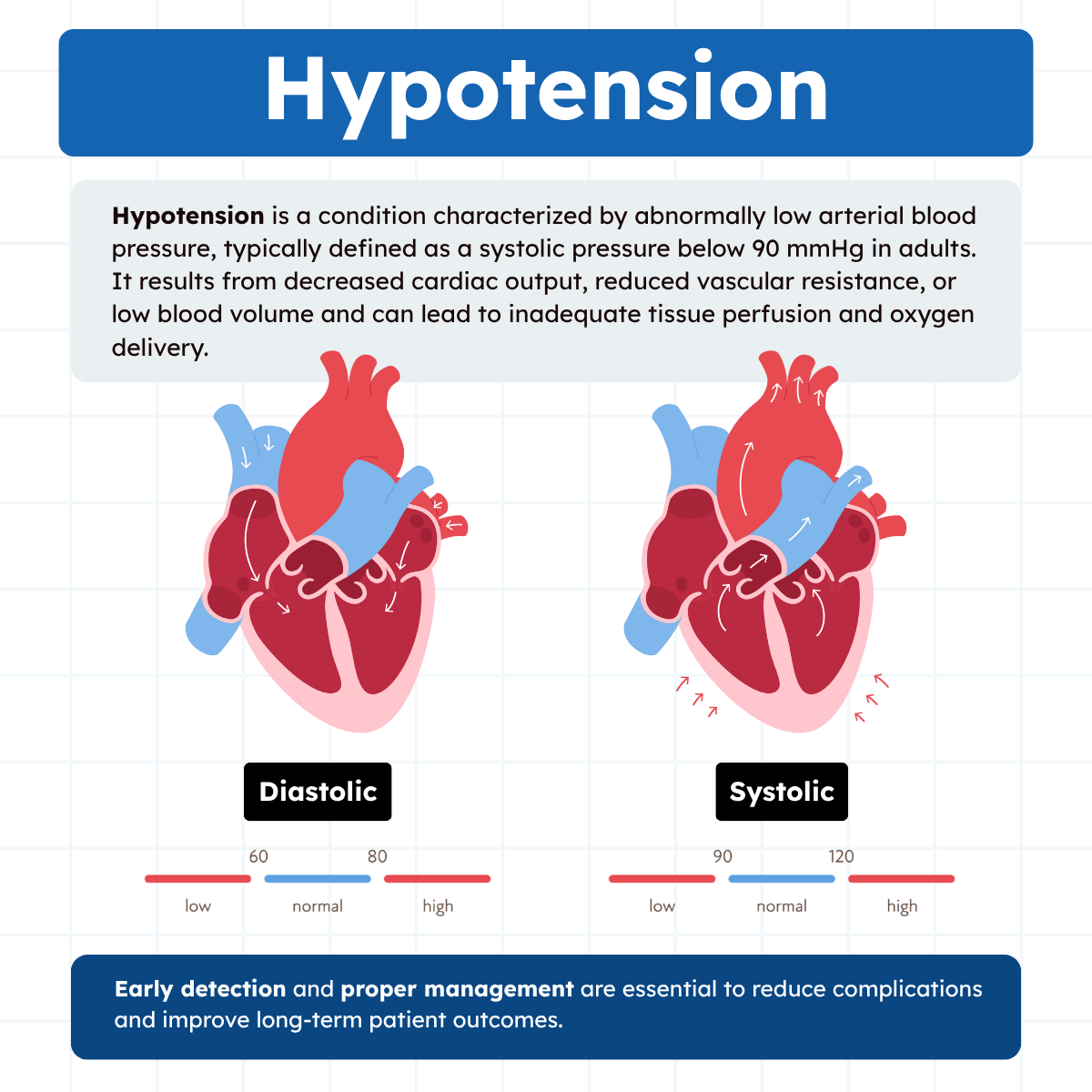
Hypotension refers to blood pressure that is too low to maintain adequate circulation and tissue perfusion. In many adult assessment settings, hypotension is defined as a systolic blood pressure below 90 mmHg. Another common definition is a mean arterial pressure, or MAP, below 65 mmHg. It may also be defined as a drop in systolic pressure greater than 40 mmHg from the patient’s usual baseline.
That last point is important because not all patients begin from the same baseline. A patient with chronic hypertension may normally have a systolic pressure much higher than 120 mmHg. If that patient suddenly drops from 180 mmHg systolic to 120 mmHg systolic, the value may look normal on paper, but the drop may still indicate serious cardiovascular compromise.
For this reason, hypotension should never be interpreted as an isolated number. It should be considered with the patient’s heart rate, respiratory rate, oxygenation, level of consciousness, urine output, skin signs, recent procedures, medications, trauma history, and ventilator status.
Normal Blood Pressure Values
In adults, a normal systolic blood pressure is often considered to be around 90 to 140 mmHg, while a normal diastolic pressure is generally around 60 to 90 mmHg. Blood pressure is written as systolic over diastolic pressure, such as 120/80 mmHg.
The systolic pressure represents the pressure in the arteries when the left ventricle contracts and ejects blood. The diastolic pressure represents the pressure in the arteries when the heart relaxes between beats.
Another useful value is pulse pressure, which is the difference between systolic and diastolic pressure. For example, a blood pressure of 120/80 mmHg has a pulse pressure of 40 mmHg. A normal pulse pressure is often around 30 to 40 mmHg. When pulse pressure falls below 30 mmHg, the pulse may become weak or difficult to palpate.
Note: A narrow pulse pressure may indicate reduced stroke volume or poor cardiac output. In a patient with respiratory distress or shock, this can be an important clue that circulation is compromised.
Why Blood Pressure Matters
Blood pressure is closely related to tissue perfusion. The body needs enough pressure to move blood through the systemic circulation so oxygen and nutrients can reach the brain, heart, kidneys, and other organs.
A simple way to understand blood pressure is:
Blood Pressure = Cardiac Output × Systemic Vascular Resistance
Cardiac output is the amount of blood the heart pumps per minute. Systemic vascular resistance is the resistance created by the blood vessels. If cardiac output falls, blood pressure may fall. If systemic vascular resistance drops, blood pressure may also fall. In some patients, both problems occur at the same time.
For example, a trauma patient who loses a large amount of blood has less circulating volume returning to the heart. This reduces preload, which reduces stroke volume and cardiac output. As cardiac output falls, blood pressure drops. The body may respond by increasing heart rate and constricting blood vessels, but if blood loss continues, compensation may fail.
In sepsis, the problem may be different. The patient may have widespread vasodilation and capillary leakage. Even if the heart is trying to pump harder, the blood vessels may be too dilated to maintain adequate pressure and perfusion.
Hypotension and Perfusion
The main concern with hypotension is not the number itself. The real concern is whether the patient’s tissues are being perfused adequately.
Signs of poor perfusion may include:
- Low urine output
- Cool, clammy skin
- Weak or thready pulse
- Altered mental status
- Delayed capillary refill
- Dizziness or syncope
- Pale or cyanotic skin
- Tachycardia
- Respiratory distress
A falling blood pressure combined with confusion, oliguria, weak pulses, or cold extremities is more concerning than a mildly low blood pressure in a patient who is awake, alert, and otherwise stable.
The brain and kidneys are especially sensitive to reduced perfusion. When cerebral blood flow drops, the patient may become restless, confused, dizzy, or unconscious. When renal perfusion drops, urine output may decrease significantly. In severe cases, urine output may stop.
Hypotension vs. Shock
Hypotension and shock are related, but they are not identical.
Hypotension means the blood pressure is low. Shock means oxygen and nutrient delivery to the tissues is inadequate for the body’s metabolic needs. A patient in shock may have hypotension, but blood pressure alone does not confirm or rule out shock.
Some patients may have low blood pressure without true shock. Others may have poor tissue perfusion even before the blood pressure drops dramatically. This is especially true in early shock, when the body is still compensating through tachycardia, vasoconstriction, and changes in blood flow distribution.
Shock becomes dangerous because vital organs are not receiving enough oxygenated blood. If not corrected, shock can progress to organ dysfunction, respiratory failure, arrhythmias, cardiac arrest, and death.
Treatment depends on the cause. Some patients need fluids or blood products. Others need vasopressors, inotropes, antibiotics, emergency decompression, pericardiocentesis, ventilatory support, or CPR.
Major Causes of Hypotension
Hypotension can develop from several different mechanisms. Understanding the cause helps determine the correct response.
Hypovolemia
Hypovolemia means reduced circulating blood volume. This may occur with hemorrhage, dehydration, vomiting, diarrhea, burns, or severe fluid loss.
When circulating volume falls, less blood returns to the heart. This reduces preload, stroke volume, cardiac output, and blood pressure. The patient may develop tachycardia as the body attempts to compensate.
Clinical signs may include weak pulses, flat neck veins, poor skin turgor, low urine output, cool skin, tachycardia, and hypotension. In trauma, hypotension should raise concern for blood loss, hemothorax, internal bleeding, or major vascular injury.
Note: Treatment may include fluid resuscitation, blood products, and control of bleeding.
Cardiac Dysfunction
Hypotension may occur when the heart cannot pump effectively. This can happen with myocardial infarction, severe heart failure, cardiogenic shock, arrhythmias, complete heart block, or cardiac tamponade.
In cardiogenic causes, the patient may have hypotension despite adequate circulating volume. Signs may include chest pain, pulmonary edema, abnormal heart rhythm, altered mental status, cool skin, poor urine output, and respiratory distress.
In acute pulmonary edema, the presence of hypotension changes management. Diuretics and vasodilators may help some patients with heart failure, but they can worsen circulation if the patient is already hypotensive. In that situation, inotropic support may be needed to maintain cardiac output and mean arterial pressure.
Vasodilation
Some forms of hypotension occur because the blood vessels dilate too much. This reduces systemic vascular resistance and causes blood pressure to fall.
Common examples include septic shock, anaphylaxis, neurogenic shock, and severe liver failure.
In septic shock, infection triggers a systemic inflammatory response. The patient may have fever, tachycardia, tachypnea, hypotension, altered mental status, worsening oxygenation, and signs of organ dysfunction. Some septic patients may have warm skin early because of vasodilation, even while perfusion is impaired.
In anaphylaxis, severe allergic reaction can cause sudden vasodilation, airway swelling, bronchospasm, and hypotension. This is a medical emergency.
Neurogenic shock may occur after spinal cord injury, especially above T6. It is often associated with hypotension, bradycardia, vasodilation, and hypothermia. This differs from hemorrhagic shock, which more commonly presents with tachycardia, cold clammy skin, pallor, and signs of blood loss.
Medication Effects
Many medications can lower blood pressure. Sedatives, analgesics, vasodilators, nitrates, beta blockers, and some induction agents may contribute to hypotension.
Propofol and midazolam are commonly associated with hypotension and respiratory depression. Opioids may also affect blood pressure, and morphine can cause histamine-associated hypotension in some patients. During moderate sedation, continuous monitoring is important because hypotension may occur along with hypoventilation, airway obstruction, bradycardia, or oxygen desaturation.
In acute coronary syndrome, hypotension can change medication decisions. Nitrates are generally avoided when systolic blood pressure is below 90 mmHg or when right ventricular infarction is suspected. Beta blockers may also be contraindicated in hypotension, shock, bradycardia, uncompensated heart failure, or certain reactive airway conditions.
Hypoxemia
Severe hypoxemia can eventually lead to hypotension. Early hypoxemia may trigger tachycardia, increased cardiac output, and sometimes increased blood pressure. But as oxygen delivery worsens, the heart may become unstable. Cardiac output can fall, and the patient may develop hypotension, bradycardia, arrhythmias, ventricular fibrillation, or asystole.
This is why oxygen therapy can be vital in patients with significant hypoxemia. Improving oxygen content can reduce cardiopulmonary workload and help support tissue oxygen delivery. This is especially important in patients with myocardial infarction, sepsis, trauma, respiratory failure, or other conditions that already strain the heart and lungs.
Postural Hypotension
Postural hypotension, also called orthostatic hypotension, occurs when blood pressure drops significantly after the patient changes position, usually from lying down to sitting or standing.
In healthy people, position changes usually cause only small blood pressure changes. In hypovolemic or debilitated patients, however, standing may cause a significant fall in blood pressure because the body cannot compensate adequately.
This can reduce cerebral blood flow and cause dizziness, lightheadedness, or syncope. To assess for postural hypotension, blood pressure is measured while the patient is supine and then again after sitting or standing.
Note: Treatment depends on the cause but often includes fluid administration when hypovolemia is present.
Hypotension in Respiratory Distress
In respiratory care, hypotension often appears with respiratory distress, hypoxemia, or ventilatory failure. When this happens, it should raise concern for a serious systemic process.
A patient with fever, tachypnea, tachycardia, hypotension, altered mental status, and worsening oxygenation may have sepsis with pneumonia. If the condition progresses, the patient may develop acute respiratory distress syndrome, or ARDS. In this setting, hypotension is part of a larger picture of systemic inflammation, poor perfusion, and impaired gas exchange.
Hypotension can also complicate the interpretation of pulmonary edema. A patient with bilateral infiltrates, hypoxemia, and hypotension may have cardiogenic pulmonary edema, but they may also have sepsis with noncardiogenic pulmonary edema or ARDS. The treatments can differ significantly. Cardiogenic pulmonary edema may call for diuresis and afterload reduction, while sepsis often requires fluids, vasopressors, antibiotics, and ventilatory support.
Note: This is why clinicians must interpret hypotension alongside imaging, laboratory results, cardiac markers, physical assessment, and the patient’s history.
Hypotension and Tension Pneumothorax
Tension pneumothorax is one of the most important respiratory emergencies associated with hypotension.
In tension pneumothorax, air enters the pleural space and becomes trapped under pressure. As intrapleural pressure rises, the affected lung collapses, the mediastinum shifts, and venous return to the heart decreases. This reduces cardiac output and blood pressure.
Clinical signs may include sudden respiratory distress, hypoxemia, hypotension, tachycardia, decreased or absent breath sounds on the affected side, hyperresonance, tracheal shift away from the affected side, increased work of breathing, and shock.
In a mechanically ventilated patient, tension pneumothorax may cause rising peak and plateau pressures during volume-controlled ventilation. During pressure-controlled ventilation, delivered tidal volume may decrease. If not treated quickly, tension pneumothorax can progress to pulseless electrical activity or cardiac arrest.
Note: When clinical signs are clear, treatment should not wait for imaging. Emergency needle decompression is required, followed by chest tube placement.
Hypotension and Chest Trauma
Hypotension in chest trauma should be taken seriously. It may indicate hemorrhagic shock, tension pneumothorax, cardiac tamponade, hemothorax, aortic injury, or severe associated injuries.
In pericardial tamponade, blood or fluid accumulates in the pericardial sac and compresses the heart. This limits ventricular filling and reduces cardiac output. A classic finding is Beck’s triad, which includes hypotension, muffled heart sounds, and distended neck veins. Treatment may include pericardiocentesis, fluids, and inotropic support.
Positive-pressure ventilation should be used carefully in some patients with tamponade because it may reduce venous return and worsen hemodynamic status.
Note: In trauma scenarios, respiratory therapists should support oxygenation and ventilation while also recognizing that airway management alone does not correct hemorrhage, tamponade, or obstructive shock.
Hypotension and Positive-Pressure Ventilation
Positive-pressure ventilation can lower blood pressure by increasing intrathoracic pressure. When pressure in the chest rises, venous return to the right side of the heart may decrease. This can reduce right ventricular filling, left ventricular filling, stroke volume, cardiac output, and arterial blood pressure.
This effect may be more pronounced in patients who are hypovolemic, septic, or already hemodynamically unstable. High levels of PEEP may further reduce venous return in susceptible patients.
For this reason, blood pressure should be monitored closely after intubation, initiation of mechanical ventilation, or increases in PEEP. If hypotension develops, clinicians should evaluate volume status, ventilator settings, intrathoracic pressure, cardiac function, and possible complications such as tension pneumothorax.
Hypotension and Ventilator Weaning
Before discontinuing ventilatory support, the patient should be medically and hemodynamically stable. Marked hypotension should be absent. The patient should generally have adequate blood pressure without vasopressor support or with only minimal support.
Hypotension during a spontaneous breathing trial may indicate that the patient is not ready for ventilator liberation. Weaning increases the work of breathing and can place additional stress on the cardiovascular system. If the heart cannot tolerate this demand, blood pressure may fall, heart rate may rise, oxygenation may worsen, or signs of distress may appear.
Note: Respiratory mechanics and oxygenation are important, but they are not enough by themselves. Successful ventilator discontinuation also requires cardiovascular stability.
Hypotension During Suctioning
Airway suctioning can cause several complications, including hypoxemia, dysrhythmias, bronchospasm, increased intracranial pressure, hypertension, hypotension, trauma, pulmonary hemorrhage, and atelectasis.
Hypotension during suctioning may occur because the catheter stimulates vagal nerve endings in the hypopharynx or trachea. Vagal stimulation can cause bradycardia, which may then reduce cardiac output and blood pressure.
Patients receiving high oxygen levels or PEEP may be especially vulnerable during open suctioning because disconnecting the ventilator can cause loss of oxygenation and loss of PEEP. If a ventilated patient develops hypoxemia, tachycardia, and hypotension during open suctioning, closed suctioning may be a better option because it helps maintain oxygen delivery and airway pressure.
The therapist should monitor heart rate, rhythm, oxygen saturation, breath sounds, and blood pressure before and after suctioning. If hypotension or instability occurs, suctioning should be stopped or delayed until the patient recovers. Technique may also need to be adjusted by reducing suction depth, avoiding carinal stimulation, shortening suction duration, or using a closed suction system.
Hypotension During Bedside Testing
Some bedside respiratory maneuvers can affect hemodynamics. For example, maximum expiratory pressure testing resembles a Valsalva maneuver. The increase in intrathoracic pressure can reduce venous return and cardiac output.
During these procedures, the therapist should monitor for signs of stress, including tachycardia, bradycardia, dysrhythmias, hypotension, and decreasing oxygen saturation. If these signs occur, the maneuver should be stopped, and the patient should be reoxygenated and ventilated as needed.
Note: This is especially important in critically ill, unstable, or recently extubated patients.
Hypotension and Hemodynamic Monitoring
Hemodynamic monitoring can help identify the cause of hypotension. Central venous pressure, pulmonary capillary wedge pressure, cardiac output, cardiac index, systemic vascular resistance, and other values can help clinicians determine whether the problem is volume, pump function, vascular tone, or obstruction.
A low central venous pressure with hypotension often suggests hypovolemia. The patient may also have tachycardia, poor urine output, flat neck veins, and poor skin turgor.
A low pulmonary capillary wedge pressure may also suggest low intravascular volume. However, sepsis can sometimes produce hypotension with signs of capillary leakage and abnormal fluid distribution. The patient may appear fluid overloaded in some tissues while still having poor effective circulating volume.
Note: An elevated central venous pressure with falling blood pressure may suggest a different problem, such as cardiac tamponade, right heart failure, or obstructive shock. This is why blood pressure must be interpreted with the full hemodynamic picture.
Hypotension and Vasoactive Medications
Vasoactive medications may be used when hypotension threatens organ perfusion. Vasoconstrictors increase systemic vascular resistance, which can raise blood pressure. They are commonly used when hypotension is caused by vasodilation, such as in septic shock or anaphylaxis.
Norepinephrine and dopamine are examples of medications that may be used to support blood pressure in selected patients. Dopamine has dose-related effects. At lower doses, it may affect renal blood flow. At moderate doses, it can increase myocardial contractility. At higher doses, it can cause stronger vasoconstriction, but it may also reduce renal blood flow.
Patients receiving vasopressors or inotropes require close monitoring. Clinicians should watch blood pressure, heart rhythm, peripheral perfusion, urine output, mental status, and signs of worsening shock.
Note: These medications support circulation, but they do not replace the need to treat the underlying cause of hypotension.
Hypotension in Neonatal Care
Hypotension is also important in neonatal respiratory care. In persistent pulmonary hypertension of the newborn, hypoxemia, hypoglycemia, hypotension, and pain can contribute to pulmonary vascular constriction. The infant may show tachypnea, tachycardia, cyanosis, grunting, nasal flaring, retractions, and systemic hypotension.
Treatment focuses on correcting the underlying problems. This may include oxygen for hypoxemia, surfactant for respiratory distress syndrome, glucose for hypoglycemia, and inotropic support for low cardiac output or systemic hypotension. If the infant remains unstable, intubation, mechanical ventilation, high-frequency ventilation, or inhaled nitric oxide may be required.
Hypotension also affects decisions about CPAP. Neonates with prolonged apnea, hypoxemia, hypotension, bradycardia, or unstable cardiovascular status may not be appropriate candidates for CPAP alone. In those cases, mechanical ventilation may be needed.
Hypotension and Transcutaneous Monitoring
Transcutaneous gas monitoring depends on adequate skin perfusion. When peripheral perfusion is poor, the readings may be unreliable.
General hypotension or locally decreased perfusion can interfere with the accuracy of transcutaneous oxygen and carbon dioxide measurements. This is especially relevant in neonates and critically ill patients. If the skin is poorly perfused, the monitor may not reflect true arterial gas values accurately.
Note: In these situations, clinicians should rely on the broader clinical assessment and consider arterial blood gas analysis when accurate gas measurement is needed.
Assessment Priorities
When hypotension is identified, the first step is to assess the patient, not just the monitor. A low blood pressure reading should be confirmed when appropriate, but treatment should not be delayed in an unstable patient.
Important assessment questions include:
- Is the patient awake and oriented?
- Is the pulse strong or weak?
- Is the heart rate fast, slow, or irregular?
- Is oxygen saturation falling?
- Is the patient breathing adequately?
- Is there evidence of trauma or bleeding?
- Is urine output reduced?
- Are the extremities cool, pale, warm, flushed, or cyanotic?
- Was there a recent medication, suctioning procedure, intubation, ventilator change, or position change?
- Are breath sounds decreased on one side?
- Is the patient receiving positive-pressure ventilation or high PEEP?
- Does the patient have fever or signs of infection?
Note: The answers help narrow the cause and guide the response.
Treatment Principles
The treatment of hypotension depends on the cause.
- If the problem is hypovolemia, fluids or blood products may be needed. If the problem is bleeding, hemorrhage control is essential. If the problem is sepsis, treatment may include fluids, vasopressors, antibiotics, oxygen therapy, and ventilatory support. If the problem is cardiogenic shock, inotropes, rhythm management, revascularization, or mechanical circulatory support may be required.
- If hypotension occurs during suctioning or a bedside procedure, the procedure should be stopped, oxygenation and ventilation should be supported, and the patient should be reassessed.
- If hypotension is caused by tension pneumothorax, emergency decompression is required. If it is caused by cardiac tamponade, pericardiocentesis may be needed. If it occurs after medication administration, the medication effect should be considered and managed appropriately.
Note: The key is to support oxygenation, ventilation, and circulation while identifying and correcting the underlying cause.
Why Hypotension Matters for Respiratory Therapists
Respiratory therapists frequently care for patients whose cardiopulmonary systems are unstable. A patient may be hypoxemic, septic, mechanically ventilated, sedated, injured, or recovering from a major procedure. In each of these situations, hypotension can be an important warning sign.
Hypotension may indicate that oxygen delivery is failing. Even if the lungs are receiving oxygen, the tissues still need adequate circulation to receive it. A patient with good oxygen saturation but poor blood pressure may still have inadequate tissue oxygenation because blood flow is insufficient.
Respiratory therapists must also recognize when their interventions may affect blood pressure. Positive-pressure ventilation, PEEP, suctioning, sedation, and some bedside maneuvers can all contribute to hemodynamic changes.
Note: This is why blood pressure should be connected to the full cardiopulmonary assessment.
Hypotension Practice Questions
1. What is hypotension?
Hypotension is abnormally low blood pressure that may indicate poor tissue perfusion, reduced cardiac output, hypovolemia, sepsis, medication effects, or cardiovascular instability.
2. What systolic blood pressure value is commonly used to define adult hypotension?
Adult hypotension is commonly defined as a systolic blood pressure below 90 mm Hg.
3. What mean arterial pressure value may indicate hypotension?
A mean arterial pressure below 65 mm Hg may indicate hypotension and possible inadequate tissue perfusion.
4. Why should hypotension not be interpreted as an isolated number?
Hypotension should not be interpreted alone because the patient’s baseline blood pressure, mental status, urine output, pulse quality, oxygenation, and overall clinical condition help determine whether tissue perfusion is adequate.
5. Why can a “normal” blood pressure still be concerning in some patients?
A normal-looking blood pressure can be concerning if it represents a major drop from the patient’s usual baseline, especially in someone with chronic hypertension.
6. What three major factors determine blood pressure?
Blood pressure is determined by the pumping ability of the left ventricle, systemic vascular resistance, and circulating blood volume.
7. What is the relationship between blood pressure, cardiac output, and systemic vascular resistance?
Blood pressure equals cardiac output multiplied by systemic vascular resistance.
8. How can hypovolemia cause hypotension?
Hypovolemia reduces circulating blood volume, which lowers venous return, preload, stroke volume, cardiac output, and blood pressure.
9. What clinical signs may suggest poor perfusion in a hypotensive patient?
Signs include weak pulse, altered mental status, cool or clammy skin, low urine output, delayed capillary refill, dizziness, syncope, and respiratory distress.
10. Why is low urine output important in a hypotensive patient?
Low urine output suggests decreased renal perfusion and may indicate that blood pressure is too low to adequately perfuse vital organs.
11. How are hypotension and shock related?
Hypotension can be a sign of shock, but shock is more specifically defined as inadequate oxygen and nutrient delivery to tissues relative to metabolic demand.
12. Can a patient be in shock without severe hypotension?
Yes. A patient may have poor tissue perfusion even before blood pressure drops severely, especially during early compensated shock.
13. What is postural hypotension?
Postural hypotension, also called orthostatic hypotension, is a significant drop in blood pressure that occurs when a patient moves from lying down to sitting or standing.
14. How is postural hypotension assessed?
Postural hypotension is assessed by measuring blood pressure while the patient is supine, then measuring it again after the patient sits or stands.
15. Why can postural hypotension cause syncope?
Postural hypotension can reduce cerebral blood flow, which may lead to dizziness, lightheadedness, or fainting.
16. What broad cardiovascular pattern includes reduced cardiac pumping ability or reduced circulating volume?
A hypodynamic state includes reduced cardiac pumping ability, such as left ventricular failure, or reduced circulating volume, such as hypovolemia.
17. What broad cardiovascular pattern includes profound systemic vasodilation?
A hyperdynamic state includes profound systemic vasodilation or peripheral vascular failure, such as septic shock, anaphylaxis, or severe liver failure.
18. How can septic shock cause hypotension?
Septic shock can cause hypotension through systemic vasodilation, capillary leakage, and impaired vascular tone, which reduce effective tissue perfusion.
19. What signs may suggest sepsis when hypotension appears with respiratory distress?
Fever, tachycardia, tachypnea, altered mental status, worsening oxygenation, and hypotension may suggest sepsis with respiratory involvement.
20. Why is hypotension important in a patient with pneumonia and worsening hypoxemia?
Hypotension may indicate that pneumonia has progressed to sepsis, poor perfusion, or possible acute respiratory distress syndrome.
21. How can severe hypoxemia eventually lead to hypotension?
Severe hypoxemia increases cardiopulmonary workload at first, but as oxygen delivery worsens, cardiac output may fall, leading to hypotension, bradycardia, arrhythmias, or arrest.
22. Why can oxygen therapy help reduce cardiopulmonary workload?
Oxygen therapy improves oxygen content, decreases ventilatory demand, and reduces strain on the heart and lungs.
23. Why must hypotension be evaluated before ventilator weaning?
Marked hypotension suggests hemodynamic instability, and successful ventilator weaning requires adequate cardiovascular function as well as adequate respiratory mechanics and oxygenation.
24. What blood pressure concern should be evaluated before discontinuing ventilatory support?
Hypotension below 90/60 mm Hg should be carefully evaluated before attempting discontinuation of ventilatory support.
25. Why can positive-pressure ventilation contribute to hypotension?
Positive-pressure ventilation can increase intrathoracic pressure, reduce venous return, decrease cardiac output, and lower arterial blood pressure.
26. What suctioning complication can cause hypotension?
Vagal stimulation during suctioning can cause bradycardia, which may reduce cardiac output and lead to hypotension.
27. What should the respiratory therapist monitor before and after suctioning?
The therapist should monitor breath sounds, heart rate, cardiac rhythm, oxygen saturation, and blood pressure before and after suctioning.
28. What should be done if hypotension occurs during suctioning?
Further suctioning should be delayed until the patient recovers, and the technique should be modified to reduce patient instability.
29. Why can open suctioning be risky in a patient receiving high PEEP?
Open suctioning can cause loss of PEEP and oxygenation, which may worsen hypoxemia and contribute to cardiopulmonary instability.
30. What is the preferred suctioning approach when open suctioning causes hypoxemia and hypotension in a ventilated patient?
Closed-airway suctioning is preferred because it helps maintain oxygenation and PEEP during the procedure.
31. How can maximum expiratory pressure testing contribute to hypotension?
Maximum expiratory pressure testing resembles a Valsalva maneuver, which can increase intrathoracic pressure, reduce cardiac output, and cause hypotension.
32. What should be done if hypotension occurs during a bedside pulmonary function maneuver?
The procedure should be stopped, and the patient should be reoxygenated, ventilated, and reassessed.
33. How can a low central venous pressure help explain hypotension?
A low central venous pressure often suggests hypovolemia, which can reduce venous return, preload, cardiac output, and blood pressure.
34. What findings may accompany hypotension in hypovolemia?
Tachycardia, poor urine output, poor skin turgor, flat neck veins, weak pulses, and low blood pressure may occur with hypovolemia.
35. What may elevated CVP with falling blood pressure suggest?
Elevated CVP with falling blood pressure may suggest serious conditions such as cardiac tamponade, right heart failure, or obstructive shock.
36. What does a decreased pulmonary capillary wedge pressure commonly suggest?
A decreased pulmonary capillary wedge pressure may suggest low intravascular volume or sepsis.
37. How can hypovolemia and sepsis both produce hypotension?
Hypovolemia reduces circulating volume, while sepsis causes vasodilation and capillary leakage; both can reduce effective perfusion and blood pressure.
38. What clinical picture may help distinguish sepsis from simple hypovolemia?
Sepsis may include fever, warm skin, weak peripheral pulses, capillary leakage, oliguria, and hypotension, while hypovolemia often includes dehydration signs and flat neck veins.
39. What type of medication is commonly used to support blood pressure in vasodilatory hypotension?
Vasoconstricting medications may be used to increase systemic vascular resistance and support blood pressure.
40. Why are vasoconstrictors used in septic shock or anaphylaxis?
They help counteract systemic vasodilation and raise blood pressure when vascular tone is severely reduced.
41. What are two examples of vasoactive medications used for hypotension?
Dopamine and norepinephrine are examples of vasoactive medications that may be used to support blood pressure.
42. Why must urine output be monitored in a patient receiving dopamine?
Dopamine can affect renal blood flow differently depending on the dose, and high doses may reduce renal blood flow and urine output.
43. What does hypotension during moderate sedation suggest?
Hypotension during moderate sedation may indicate an adverse medication effect and should prompt close monitoring of ventilation, oxygenation, and circulation.
44. Which sedative medications are commonly associated with hypotension?
Propofol and midazolam are commonly associated with hypotension and respiratory depression.
45. Why can morphine cause hypotension in some patients?
Morphine may cause histamine-associated vasodilation, which can lower blood pressure in susceptible or unstable patients.
46. Why are nitrates contraindicated when systolic blood pressure is below 90 mm Hg?
Nitrates can further reduce blood pressure and worsen perfusion in a hypotensive patient.
47. Why may beta blockers be avoided in a hypotensive patient with suspected acute coronary syndrome?
Beta blockers can worsen hypotension, shock, bradycardia, or uncompensated heart failure.
48. What is cardiogenic shock?
Cardiogenic shock is a state of poor tissue perfusion caused by the heart’s inability to pump effectively.
49. How can acute myocardial infarction contribute to hypotension?
An acute myocardial infarction can impair ventricular function, reduce cardiac output, and cause hypotension or cardiogenic shock.
50. Why should vasodilators and aggressive diuresis be used cautiously in pulmonary edema with hypotension?
They can reduce preload or vascular tone further, potentially worsening blood pressure and tissue perfusion.
51. What is tension pneumothorax?
Tension pneumothorax is a life-threatening condition in which air becomes trapped in the pleural space under pressure, compressing the lung and reducing venous return to the heart.
52. How can tension pneumothorax cause hypotension?
Tension pneumothorax increases intrathoracic pressure, compresses the vena cava, reduces venous return, lowers cardiac output, and causes blood pressure to fall.
53. What breath sound finding may accompany hypotension in tension pneumothorax?
Decreased or absent breath sounds on the affected side may occur with hypotension in tension pneumothorax.
54. What percussion finding may suggest tension pneumothorax?
Hyperresonance on the affected side may suggest tension pneumothorax.
55. What tracheal finding may occur in severe tension pneumothorax?
The trachea may shift away from the affected side in severe tension pneumothorax.
56. What ventilator pressure changes may suggest tension pneumothorax during volume-controlled ventilation?
Rising peak and plateau pressures during volume-controlled ventilation may suggest tension pneumothorax.
57. What ventilator change may occur with tension pneumothorax during pressure-controlled ventilation?
Delivered tidal volume may decrease during pressure-controlled ventilation because the lung becomes harder to ventilate.
58. What is the emergency treatment for suspected tension pneumothorax with hypotension?
Emergency needle thoracostomy is required, followed by preparation for chest tube placement.
59. Why should treatment of tension pneumothorax not wait for imaging when clinical signs are clear?
Tension pneumothorax can rapidly progress to shock, pulseless electrical activity, or cardiac arrest, so treatment should be immediate.
60. What is Beck’s triad?
Beck’s triad consists of hypotension, muffled or decreased heart sounds, and distended neck veins.
61. What condition is associated with Beck’s triad?
Beck’s triad is associated with cardiac tamponade.
62. How can cardiac tamponade cause hypotension?
Cardiac tamponade compresses the heart, limits ventricular filling, reduces stroke volume, lowers cardiac output, and causes hypotension.
63. What treatment may be required for cardiac tamponade?
Pericardiocentesis may be required to remove fluid or blood from the pericardial sac and improve cardiac filling.
64. Why should positive-pressure ventilation be used cautiously in cardiac tamponade?
Positive-pressure ventilation can reduce venous return, which may worsen cardiac filling and blood pressure in tamponade.
65. What does hypotension suggest in a trauma patient?
Hypotension in trauma may suggest blood loss, hemorrhagic shock, tension pneumothorax, cardiac tamponade, hemothorax, or major vascular injury.
66. What is hemorrhagic shock?
Hemorrhagic shock is poor tissue perfusion caused by severe blood loss and reduced circulating blood volume.
67. What heart rate response commonly occurs with hypovolemic or hemorrhagic shock?
Tachycardia commonly occurs as the body attempts to compensate for low circulating volume and reduced blood pressure.
68. How do baroreceptors respond when blood pressure falls?
Baroreceptors send fewer impulses to the medulla, which increases sympathetic activity to raise heart rate and vascular tone.
69. Why does blood loss reduce preload?
Blood loss reduces venous return to the heart, which decreases ventricular filling during diastole and lowers preload.
70. How does decreased preload affect cardiac output?
Decreased preload reduces stroke volume, which lowers cardiac output and can lead to hypotension.
71. What skin findings may occur in hemorrhagic shock?
The skin may appear cool, clammy, pale, or cyanotic because blood flow is redirected away from the skin to preserve vital organ perfusion.
72. How can neurogenic shock differ from hemorrhagic shock?
Neurogenic shock often causes hypotension with bradycardia, vasodilation, and hypothermia, while hemorrhagic shock usually causes tachycardia and cool, clammy skin.
73. What level of spinal cord injury is commonly associated with neurogenic shock?
Spinal cord injury above T6 is commonly associated with neurogenic shock.
74. Why can severe hypothermia cause hypotension?
Severe hypothermia can depress cardiac function and circulation, leading to hypotension, bradycardia, arrhythmias, and possible cardiac arrest.
75. What respiratory support may be needed in severe hypothermia with apnea or poor ventilation?
Warmed oxygen and ventilatory support may be needed, while patient movement should be minimized to reduce the risk of arrhythmias.
76. Why is hypotension important in persistent pulmonary hypertension of the newborn?
Hypotension can worsen cardiopulmonary instability and may contribute to pulmonary vascular spasm in persistent pulmonary hypertension of the newborn.
77. What clinical signs may occur with persistent pulmonary hypertension of the newborn?
Tachypnea, tachycardia, cyanosis, grunting, nasal flaring, retractions, hypoxemia, and systemic hypotension may occur.
78. What treatment may be needed for systemic hypotension in a newborn with low cardiac output?
Inotropic support, such as dopamine, may be needed to improve cardiac output and support systemic blood pressure.
79. Why may CPAP be inappropriate in a neonate with hypotension?
CPAP may be inappropriate because unstable cardiovascular status, including hypotension and bradycardia, can indicate the need for mechanical ventilation instead.
80. How can CPAP affect cardiac output in neonates?
CPAP can increase intrathoracic pressure, which may reduce venous return and decrease cardiac output in some neonates.
81. Why can transcutaneous gas monitoring be unreliable in hypotension?
Transcutaneous monitoring depends on adequate skin perfusion, and general hypotension can reduce peripheral perfusion and make readings inaccurate.
82. When should transcutaneous monitoring be avoided?
It should be avoided when there is general hypotension or locally decreased peripheral perfusion.
83. What does a weak or hard-to-palpate pulse suggest in a hypotensive patient?
A weak or hard-to-palpate pulse may suggest decreased pulse pressure, poor perfusion, or reduced cardiac output.
84. What is pulse pressure?
Pulse pressure is the difference between systolic and diastolic blood pressure.
85. What is the normal pulse pressure range in adults?
Normal pulse pressure is usually about 30 to 40 mm Hg.
86. What may happen when pulse pressure falls below 30 mm Hg?
The pulse may become weak or difficult to palpate.
87. Why is altered mental status concerning in a hypotensive patient?
Altered mental status may indicate decreased cerebral perfusion and inadequate oxygen delivery to the brain.
88. Why should blood pressure be checked in a patient who appears to be in shock?
Blood pressure should be checked because hypotension can indicate poor perfusion, decreased cardiac output, hypovolemia, or cardiovascular collapse.
89. Why should blood pressure be checked after major blood loss?
Major blood loss can reduce circulating volume, lower preload and cardiac output, and cause hypotension.
90. Why is hypotension concerning in an unconscious patient?
Hypotension in an unconscious patient may indicate severely reduced cerebral perfusion, shock, hypoxemia, trauma, medication effects, or cardiovascular collapse.
91. What does hypotension with low urine output suggest?
It suggests inadequate renal perfusion and possible shock or poor cardiac output.
92. What does hypotension with fever and worsening oxygenation suggest?
It may suggest sepsis, pneumonia with systemic involvement, or progression toward acute respiratory distress syndrome.
93. What does hypotension with unilateral absent breath sounds suggest?
It may suggest tension pneumothorax, especially if accompanied by hypoxemia, respiratory distress, hyperresonance, or ventilator pressure changes.
94. What does hypotension with distended neck veins and muffled heart sounds suggest?
It suggests cardiac tamponade, especially in a trauma patient.
95. What does hypotension with bradycardia after cervical spinal cord injury suggest?
It suggests neurogenic shock due to loss of sympathetic tone.
96. What does hypotension with tachycardia after trauma most strongly suggest?
It strongly suggests hypovolemia or hemorrhagic shock until proven otherwise.
97. Why should hypotension be considered when evaluating ventilator changes?
Ventilator changes, especially increased positive pressure or PEEP, can reduce venous return, lower cardiac output, and worsen blood pressure.
98. What should be assessed if hypotension develops after intubation?
The clinician should assess oxygenation, ventilation, volume status, medication effects, intrathoracic pressure, cardiac function, and possible tension pneumothorax.
99. What is the safest general approach to hypotension on the NBRC exam?
Assess the cause, support oxygenation and ventilation, evaluate perfusion, stop harmful therapy, restore volume if appropriate, and use vasoactive support when indicated.
100. Why is hypotension a key warning sign in respiratory care?
Hypotension can signal poor perfusion, shock, sepsis, blood loss, cardiac dysfunction, ventilator complications, suctioning instability, or worsening respiratory failure.
Final Thoughts
Hypotension is more than low blood pressure. It is a clinical sign that may point to poor perfusion, shock, blood loss, sepsis, cardiac dysfunction, medication effects, ventilator complications, or neonatal instability.
For respiratory therapists, the most important step is to interpret hypotension in context. A blood pressure value should be compared with the patient’s baseline, mental status, urine output, pulse quality, oxygenation, respiratory status, and recent interventions.
When hypotension appears with respiratory distress, trauma, suctioning, positive-pressure ventilation, or altered mental status, it should be treated as a warning sign that requires prompt assessment and appropriate action.

Written by:
John Landry is a registered respiratory therapist from Memphis, TN, and has a bachelor's degree in kinesiology. He enjoys using evidence-based research to help others breathe easier and live a healthier life.
References
- Chen RJ, Sharma S, Bhattacharya PT. Hypotension. [Updated 2025 May 3]. In: StatPearls [Internet]. Treasure Island (FL): StatPearls Publishing; 2026.