
Obstructive sleep apnea (OSA) is one of the most common sleep-related breathing disorders and a significant public health concern worldwide. It occurs when the upper airway repeatedly collapses during sleep, leading to interruptions in airflow and decreased oxygen levels.
Although OSA is highly prevalent, it often goes undiagnosed and untreated, increasing the risk of serious cardiopulmonary complications. Because this condition directly affects ventilation and gas exchange, it is highly relevant to respiratory therapists.
Understanding OSA allows respiratory care professionals to play a vital role in screening, diagnosing, treating, and educating patients to improve overall health outcomes.

What Is Obstructive Sleep Apnea?
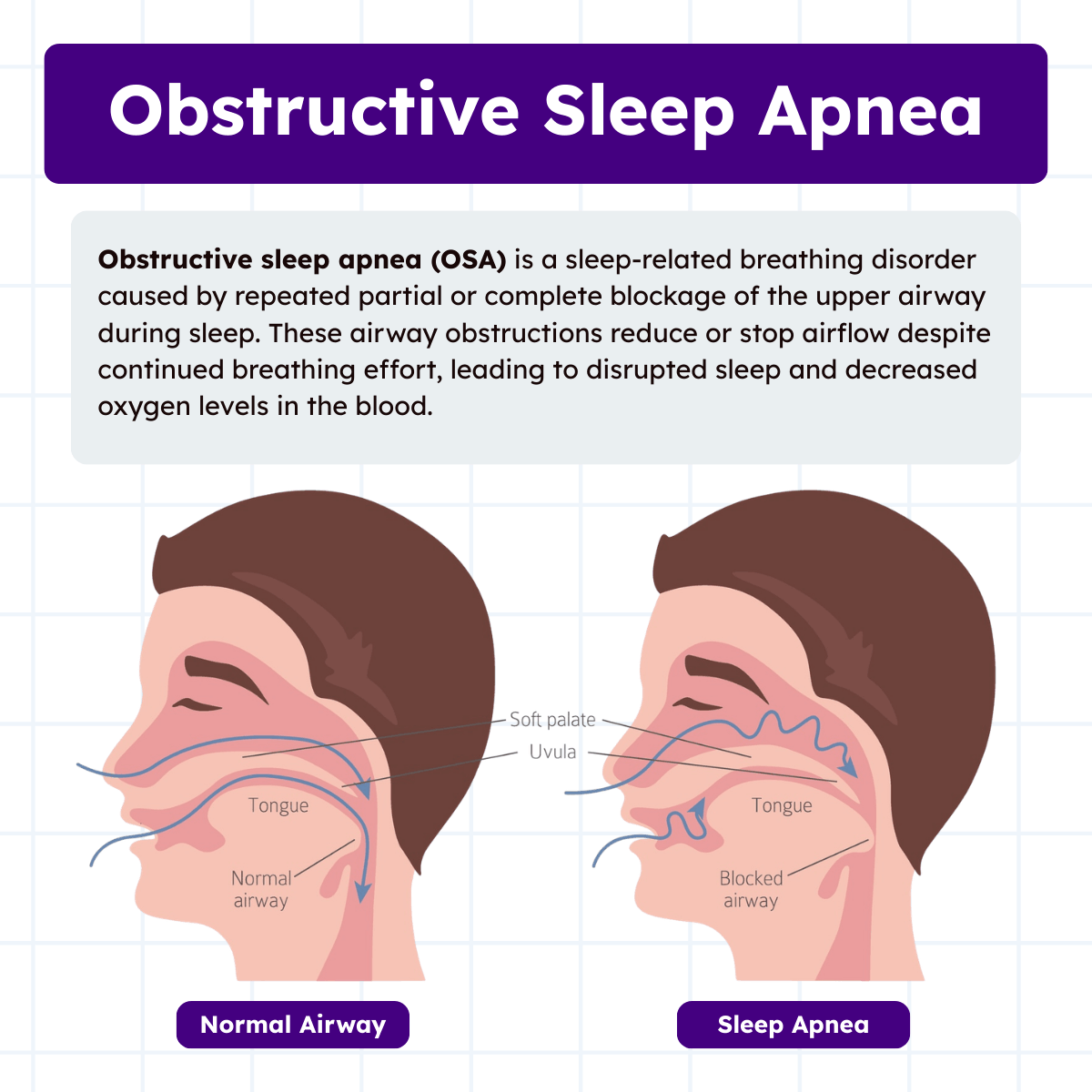
Obstructive sleep apnea is a disorder characterized by repeated episodes of partial or complete upper airway obstruction during sleep. These episodes result in decreased airflow (hypopnea) or complete cessation of airflow (apnea) despite continued respiratory effort. Each breathing pause typically lasts at least 10 seconds and can occur multiple times throughout the night.
When airflow stops or decreases, oxygen levels in the blood drop while carbon dioxide levels rise. The brain responds by briefly arousing the individual from sleep to restore breathing. Although these arousals are often too brief for patients to remember, they disrupt normal sleep architecture and prevent restorative sleep cycles. Over time, this leads to excessive daytime sleepiness, fatigue, and impaired cognitive performance.
Pathophysiology of Obstructive Sleep Apnea
OSA primarily results from anatomical and physiological factors that contribute to airway instability. The upper airway, particularly the pharynx, lacks rigid structural support and relies heavily on surrounding muscles to maintain patency. During wakefulness, increased neural stimulation keeps these muscles active and the airway open.
During sleep, muscle tone naturally decreases. In individuals with risk factors such as obesity or craniofacial abnormalities, this reduction in muscle tone can allow the airway to narrow or collapse completely. Airflow obstruction increases negative intrathoracic pressure as the patient attempts to breathe against a blocked airway. This results in repeated cycles of obstruction, oxygen desaturation, and arousal from sleep.
These repetitive events trigger sympathetic nervous system activation, systemic inflammation, and oxidative stress. Over time, these physiological responses can contribute to cardiovascular disease, metabolic dysfunction, and respiratory complications.
Risk Factors for Obstructive Sleep Apnea
Several factors increase the likelihood of developing OSA. Obesity is the most significant risk factor, particularly when excess fat accumulates around the neck and upper airway. Increased soft tissue surrounding the airway promotes narrowing and airway collapse during sleep.
Other risk factors include male gender, advancing age, large neck circumference, habitual snoring, and hypertension. Craniofacial abnormalities, such as a recessed jaw or small airway structure, also increase susceptibility to airway obstruction. Genetic predisposition can contribute as well, with some families demonstrating higher rates of OSA independent of obesity.
Note: Although OSA is more common in adults, it can occur in children, often due to enlarged tonsils or adenoids.
Signs and Symptoms of Obstructive Sleep Apnea
OSA presents with both nighttime and daytime symptoms. Loud and chronic snoring is one of the most common indicators. Bed partners may observe breathing pauses, gasping, or choking during sleep. Patients frequently experience restless sleep and frequent awakenings.
Daytime symptoms often include excessive sleepiness, fatigue, morning headaches, difficulty concentrating, irritability, and decreased productivity. Some patients may also experience mood disturbances or memory impairment.
It is important to recognize that not all individuals with OSA report excessive daytime sleepiness. Some patients may have severe disease with minimal symptoms, making clinical screening essential.
Diagnosis of Obstructive Sleep Apnea
The diagnosis of OSA typically begins with a thorough patient history and physical examination. Screening tools such as the STOP-BANG questionnaire help identify individuals at high risk for the disorder. This tool evaluates snoring, tiredness, observed breathing pauses, high blood pressure, body mass index, age, neck circumference, and gender.
The gold standard diagnostic test for OSA is polysomnography, also known as a sleep study. Polysomnography monitors brain activity, muscle activity, airflow, oxygen saturation, heart rhythm, and respiratory effort during sleep. These measurements allow healthcare providers to determine the presence and severity of sleep apnea.
Severity is commonly assessed using the apnea-hypopnea index (AHI), which measures the number of breathing disturbances per hour of sleep. Mild OSA involves 5 to 14 events per hour, moderate OSA involves 15 to 30 events per hour, and severe OSA involves more than 30 events per hour.
Note: Home sleep testing is increasingly used as a convenient alternative for diagnosing OSA in appropriate patients.
Treatment and Management of Obstructive Sleep Apnea
Management of OSA involves a combination of lifestyle changes, medical therapies, and sometimes surgical interventions. Weight loss is strongly recommended for obese patients, as even modest reductions in weight can improve airway patency. Patients are also encouraged to avoid alcohol, sedatives, and sleeping in the supine position, all of which can worsen airway collapse.
Continuous positive airway pressure (CPAP) therapy is considered the first-line treatment for moderate to severe OSA. CPAP delivers a constant flow of air through a mask to maintain airway patency throughout the respiratory cycle. When used consistently, CPAP effectively eliminates airway obstruction and improves oxygenation.
Bi-level positive airway pressure (BiPAP) therapy may be used for patients who cannot tolerate CPAP or who require additional ventilatory support. Auto-titrating positive airway pressure devices are also commonly used to adjust pressure levels based on patient needs during sleep.
Oral appliances can reposition the jaw or tongue to maintain airway patency and are often used in patients with mild to moderate OSA. Surgical interventions, including uvulopalatopharyngoplasty or upper airway stimulation therapy, may be considered for patients who do not respond to noninvasive treatments.
Relevance to Respiratory Therapists and Respiratory Care
OSA is highly relevant to respiratory therapists because it directly affects ventilation, oxygenation, and overall cardiopulmonary health. Respiratory therapists are often involved in multiple stages of patient care, including screening, diagnosis, treatment initiation, and long-term management.
Respiratory therapists frequently assist in conducting sleep studies and monitoring respiratory variables during polysomnography. They help interpret respiratory data and work alongside physicians to confirm diagnoses and determine treatment plans.
One of the most important responsibilities of respiratory therapists is initiating and managing positive airway pressure therapy. This includes selecting appropriate masks, ensuring proper fit, adjusting pressure settings, and troubleshooting equipment issues. Proper mask fitting and comfort are critical factors in improving patient compliance with therapy.
Patient education is another essential component of respiratory care. Many patients struggle with long-term adherence to CPAP therapy due to discomfort, claustrophobia, or lack of understanding. Respiratory therapists provide guidance on equipment use, maintenance, and troubleshooting while reinforcing the importance of consistent therapy.
Respiratory therapists also play a critical role in managing patients with comorbid respiratory conditions. The coexistence of OSA and chronic obstructive pulmonary disease, known as overlap syndrome, is associated with worsened oxygenation and increased mortality risk. Early detection and management of OSA in these patients can significantly improve clinical outcomes.
Additionally, respiratory therapists help identify sleep-disordered breathing in patients with neuromuscular diseases and hypoventilation syndromes. Early intervention with noninvasive ventilation can improve gas exchange, quality of life, and survival.
Complications of Untreated Obstructive Sleep Apnea
If left untreated, OSA can lead to numerous health complications. Cardiovascular complications are among the most significant and include systemic hypertension, pulmonary hypertension, arrhythmias, heart failure, and increased risk of stroke and myocardial infarction.
OSA is also associated with metabolic dysfunction, including insulin resistance and type 2 diabetes. Chronic sleep disruption can impair cognitive function, increase the risk of motor vehicle accidents, and negatively affect mental health and quality of life.
Note: Because of these widespread health effects, early recognition and treatment of OSA are critical components of comprehensive respiratory care.
Obstructive Sleep Apnea Practice Questions
1. What is obstructive sleep apnea (OSA)?
OSA is a sleep disorder characterized by repeated episodes of partial or complete upper airway obstruction during sleep, resulting in reduced or absent airflow despite continued respiratory effort.
2. What defines an apnea event in sleep-disordered breathing?
An apnea is defined as a complete cessation of airflow lasting at least 10 seconds.
3. What is hypopnea?
Hypopnea is a partial reduction in airflow, typically 30% to 90%, accompanied by oxygen desaturation or arousal from sleep.
4. What is the primary cause of obstructive sleep apnea?
The primary cause of OSA is collapse or narrowing of the upper airway during sleep.
5. How does OSA differ from central sleep apnea (CSA)?
OSA occurs due to upper airway obstruction with continued respiratory effort, whereas CSA occurs due to a lack of respiratory drive from the brain.
6. What type of sleep apnea begins as central apnea and ends with airway obstruction?
Mixed sleep apnea begins with a central component followed by an obstructive component.
7. Why does upper airway collapse occur more frequently during sleep?
Upper airway muscle tone decreases during sleep, making the airway more prone to narrowing or collapse.
8. What role do upper airway dilator muscles play in preventing OSA?
These muscles maintain airway patency by stabilizing and widening the pharyngeal airway during wakefulness.
9. How does obesity contribute to obstructive sleep apnea?
Excess fat tissue around the neck and airway increases airway resistance and promotes airway collapse during sleep.
10. What craniofacial abnormalities increase the risk of OSA?
Conditions such as micrognathia or retrognathia reduce airway space and increase the likelihood of obstruction.
11. Why is a large neck circumference considered a risk factor for OSA?
A larger neck circumference is associated with increased soft tissue around the airway, which can promote airway narrowing.
12. What is considered a concerning body mass index (BMI) for OSA risk?
A BMI greater than 28 is associated with an increased risk of developing OSA.
13. Why are men at higher risk for obstructive sleep apnea?
Men tend to have greater upper airway fat distribution and anatomical differences that increase airway collapsibility.
14. How does aging affect the risk of OSA?
Age-related decreases in muscle tone and structural airway changes increase the risk of airway obstruction during sleep.
15. What is the most common symptom of obstructive sleep apnea?
Loud, habitual snoring is the most common presenting symptom.
16. Why do patients with OSA often experience excessive daytime sleepiness?
Repeated arousals from sleep disrupt normal sleep architecture, leading to poor sleep quality and daytime fatigue.
17. How can OSA affect cardiovascular health?
Untreated OSA increases the risk of hypertension, arrhythmias, stroke, and heart failure.
18. Why does OSA cause intermittent hypoxemia?
Airway obstruction prevents adequate airflow, leading to reduced oxygen levels in the blood during apnea episodes.
19. How does OSA contribute to hypercapnia?
Airway obstruction reduces ventilation, allowing carbon dioxide to accumulate in the bloodstream.
20. What physiological changes occur during an obstructive apnea episode?
Negative intrathoracic pressure increases, oxygen levels drop, carbon dioxide rises, and sympathetic nervous system activity increases.
21. Why does OSA increase sympathetic nervous system activity?
Repeated hypoxemia and arousals stimulate stress responses that elevate heart rate and blood pressure.
22. How does untreated OSA affect metabolic health?
OSA is associated with insulin resistance, glucose intolerance, and metabolic syndrome.
23. What is the gold standard diagnostic test for OSA?
Polysomnography (PSG) is the gold standard diagnostic test.
24. What physiological parameters are measured during polysomnography?
PSG measures airflow, oxygen saturation, respiratory effort, heart rhythm, and sleep stages.
25. What is home sleep apnea testing?
Home sleep testing is a simplified diagnostic method that monitors breathing patterns and oxygen levels outside a laboratory setting.
26. What is the apnea-hypopnea index (AHI)?
AHI is the number of apnea and hypopnea events per hour of sleep used to determine OSA severity.
27. How is mild obstructive sleep apnea classified?
Mild OSA is defined as an AHI of 5 to 15 events per hour.
28. How is moderate obstructive sleep apnea classified?
Moderate OSA is defined as an AHI of 15 to 30 events per hour.
29. How is severe obstructive sleep apnea classified?
Severe OSA is defined as an AHI greater than 30 events per hour.
30. What is the first-line treatment for obstructive sleep apnea?
Continuous positive airway pressure (CPAP) therapy is the first-line treatment.
31. How does CPAP improve airway patency?
CPAP delivers constant positive pressure to splint the airway open and prevent collapse during sleep.
32. When might bilevel positive airway pressure (BiPAP) be used for OSA?
BiPAP may be used in patients who cannot tolerate CPAP or who require different inspiratory and expiratory pressures.
33. What role do oral appliances play in OSA treatment?
Oral appliances reposition the jaw and tongue to help maintain airway patency in mild to moderate OSA.
34. When is surgical intervention considered for OSA?
Surgery may be considered when conservative treatments fail or when anatomical abnormalities significantly obstruct the airway.
35. Why is patient education important in managing obstructive sleep apnea?
Education improves treatment adherence, enhances long-term outcomes, and helps patients recognize complications associated with untreated OSA.
36. What is the primary physiological event that causes snoring in patients with obstructive sleep apnea?
Snoring occurs due to vibration of soft tissues in the upper airway as airflow passes through a narrowed airway.
37. Why do patients with OSA often awaken feeling unrefreshed?
Repeated sleep disruptions prevent progression into deeper, restorative stages of sleep.
38. How can untreated OSA affect cognitive function?
OSA can impair memory, concentration, decision-making ability, and overall mental alertness.
39. Why is OSA associated with increased risk of motor vehicle accidents?
Excessive daytime sleepiness and impaired attention increase the risk of driving-related errors.
40. How does alcohol consumption worsen obstructive sleep apnea?
Alcohol relaxes upper airway muscles and decreases respiratory drive, increasing airway collapse risk.
41. Why can sedative medications increase the severity of OSA?
Sedatives reduce upper airway muscle tone and blunt arousal responses that normally reopen the airway.
42. What role does sleeping position play in OSA severity?
Supine sleeping can worsen airway obstruction by allowing gravity to collapse airway structures.
43. What is positional obstructive sleep apnea?
It is a form of OSA in which apnea episodes occur primarily when the patient sleeps on their back.
44. How does nasal obstruction contribute to obstructive sleep apnea?
Nasal obstruction increases airway resistance, promoting mouth breathing and airway collapse.
45. Why do some patients with OSA experience morning headaches?
Morning headaches may result from nocturnal hypoxemia and elevated carbon dioxide levels.
46. How does OSA affect blood pressure regulation?
OSA causes repeated sympathetic activation, which contributes to chronic hypertension.
47. What cardiovascular rhythm disturbances are associated with OSA?
OSA is associated with atrial fibrillation, bradyarrhythmias, and ventricular arrhythmias.
48. How does OSA contribute to pulmonary hypertension?
Chronic hypoxemia causes pulmonary vasoconstriction, increasing pulmonary artery pressure.
49. Why is OSA considered a risk factor for stroke?
OSA promotes hypertension, inflammation, and vascular dysfunction, which increase stroke risk.
50. What is excessive daytime sleepiness (EDS)?
EDS is persistent sleepiness during waking hours that interferes with normal daily activities.
51. How can OSA affect mood and mental health?
OSA is associated with depression, irritability, anxiety, and reduced quality of life.
52. Why are nocturnal awakenings common in patients with OSA?
Apnea episodes trigger arousals that restore airway patency but disrupt sleep continuity.
53. How does OSA affect children differently than adults?
Children with OSA may present with behavioral problems, poor academic performance, and growth disturbances.
54. What pediatric condition commonly contributes to OSA?
Adenotonsillar hypertrophy is a leading cause of OSA in children.
55. How does chronic mouth breathing indicate possible OSA in children?
Mouth breathing may suggest nasal or airway obstruction during sleep.
56. Why is OSA associated with gastroesophageal reflux disease (GERD)?
Increased intrathoracic pressure during obstructive events promotes acid reflux into the esophagus.
57. How does weight loss impact OSA severity?
Weight loss reduces airway fat deposition and improves airway stability.
58. What lifestyle modifications can help manage mild OSA?
Weight reduction, positional therapy, avoidance of alcohol, and improved sleep hygiene may reduce symptoms.
59. Why is adherence to CPAP therapy important?
Consistent CPAP use improves symptoms, reduces cardiovascular risk, and improves sleep quality.
60. What is CPAP titration?
CPAP titration is the process of adjusting airway pressure levels to determine the optimal therapeutic setting.
61. How does autotitrating CPAP differ from fixed-pressure CPAP?
Autotitrating CPAP automatically adjusts pressure levels based on airflow resistance and obstruction events.
62. What are common reasons for CPAP intolerance?
Mask discomfort, nasal dryness, air leaks, claustrophobia, and pressure intolerance can reduce compliance.
63. How can humidification improve CPAP tolerance?
Heated humidification reduces airway dryness and improves patient comfort during therapy.
64. Why is mask fit important in CPAP therapy?
Proper mask fit prevents air leaks, improves comfort, and enhances therapy effectiveness.
65. What is residual apnea?
Residual apnea refers to continued apnea events despite CPAP therapy, often requiring pressure adjustment.
66. How can respiratory therapists improve CPAP compliance?
Therapists provide education, equipment adjustment, troubleshooting, and ongoing patient support.
67. What is upper airway resistance syndrome (UARS)?
UARS is a sleep disorder characterized by increased airway resistance without complete apnea events.
68. Why is early diagnosis of OSA important?
Early diagnosis reduces long-term complications such as cardiovascular disease and metabolic disorders.
69. How does untreated OSA affect overall mortality risk?
Untreated moderate to severe OSA is associated with increased risk of cardiovascular-related death.
70. What role do respiratory therapists play in OSA management?
Respiratory therapists assist with sleep study interpretation, PAP therapy setup, patient education, and treatment monitoring.
71. What is the apnea-hypopnea index (AHI)?
The apnea-hypopnea index is a measurement used to diagnose and determine the severity of sleep apnea based on the number of apnea and hypopnea events per hour of sleep.
72. How is obstructive sleep apnea severity classified using the AHI?
OSA is classified as mild (5–14 events per hour), moderate (15–29 events per hour), or severe (30 or more events per hour).
73. Why do apnea episodes typically end with an arousal from sleep?
Arousal restores upper airway muscle tone and reopens the collapsed airway, allowing breathing to resume.
74. How does OSA contribute to chronic fatigue?
Frequent sleep interruptions prevent restorative sleep cycles, leading to persistent fatigue and reduced energy levels.
75. Why do patients with OSA often experience nocturia?
Repeated arousals and increased intrathoracic pressure stimulate hormonal changes that increase nighttime urine production.
76. How can OSA contribute to insulin resistance?
Chronic intermittent hypoxemia and inflammation associated with OSA can impair glucose metabolism and increase insulin resistance.
77. What is the relationship between OSA and metabolic syndrome?
OSA is linked to obesity, hypertension, insulin resistance, and dyslipidemia, which are components of metabolic syndrome.
78. Why is neck circumference considered a screening factor for OSA?
Increased neck circumference often reflects upper airway fat deposition, which increases airway collapse risk.
79. What role does craniofacial anatomy play in OSA development?
Structural abnormalities such as retrognathia or a narrow maxilla can reduce airway space and increase obstruction risk.
80. Why is snoring considered a warning sign of obstructive sleep apnea?
Snoring indicates turbulent airflow through a partially obstructed airway, which may progress to apnea events.
81. What is the STOP-BANG questionnaire used for?
It is a screening tool used to assess risk factors for obstructive sleep apnea.
82. What is the significance of witnessed apnea during sleep?
Witnessed apnea suggests repeated airflow cessation and strongly supports the diagnosis of sleep apnea.
83. How does untreated OSA affect daytime alertness?
OSA causes excessive daytime sleepiness, reduced concentration, and impaired reaction time.
84. Why is polysomnography considered the gold standard for diagnosing OSA?
Polysomnography measures airflow, oxygen saturation, sleep stages, respiratory effort, and cardiac rhythm during sleep.
85. What physiologic changes occur during obstructive apnea episodes?
Airflow stops while respiratory effort continues, leading to hypoxemia, hypercapnia, and increased negative intrathoracic pressure.
86. How does repeated hypoxemia affect the cardiovascular system in OSA?
It increases sympathetic nervous system activity, leading to hypertension and increased cardiac workload.
87. Why do patients with OSA often experience morning dry mouth?
Mouth breathing during sleep can cause dryness of the oral mucosa.
88. How does OSA contribute to poor sleep efficiency?
Frequent arousals reduce total sleep time and disrupt normal sleep architecture.
89. What sleep stage is most vulnerable to airway collapse in OSA?
Rapid eye movement (REM) sleep is particularly vulnerable due to reduced muscle tone.
90. Why is REM-related OSA clinically significant?
Apnea episodes during REM sleep may cause severe oxygen desaturation and increased cardiovascular stress.
91. How does OSA affect memory formation?
Disrupted sleep cycles impair memory consolidation and cognitive processing.
92. Why is screening for OSA important in surgical patients?
Untreated OSA increases the risk of perioperative respiratory complications and difficult airway management.
93. How can opioid use worsen OSA symptoms?
Opioids depress respiratory drive and may increase airway collapse during sleep.
94. What is the role of weight management in OSA prevention?
Maintaining a healthy body weight reduces upper airway fat accumulation and airway obstruction risk.
95. How does positional therapy help manage OSA?
Positional therapy encourages sleeping in a lateral position to reduce airway collapse.
96. Why are oral mandibular advancement devices used in OSA treatment?
They reposition the jaw forward to enlarge the airway and reduce obstruction.
97. What is upper airway stimulation therapy?
It is a surgical treatment that stimulates upper airway muscles to maintain airway patency during sleep.
98. Why is patient education important in OSA management?
Education improves therapy adherence, symptom recognition, and long-term treatment success.
99. How does OSA affect overall quality of life?
OSA can reduce work performance, social functioning, emotional well-being, and physical health.
100. Why should respiratory therapists monitor PAP therapy effectiveness?
Monitoring ensures proper pressure settings, symptom improvement, and prevention of treatment failure.
Final Thoughts
Obstructive sleep apnea is a widespread yet frequently overlooked disorder that can profoundly affect respiratory health, cardiovascular function, and overall quality of life. The repeated airway collapse and resulting oxygen deprivation place significant strain on multiple body systems, increasing the risk of serious and potentially life-threatening complications when left untreated. Early recognition and proper management are essential to preventing disease progression and improving long-term health outcomes.
Respiratory therapists serve as key contributors in the fight against OSA by helping identify high-risk individuals, conducting and assisting with diagnostic testing, initiating and optimizing positive airway pressure therapy, and supporting long-term patient adherence.
Through ongoing education, monitoring, and personalized care, respiratory therapists play a vital role in enhancing treatment success, improving sleep quality, and promoting better overall health for patients living with obstructive sleep apnea.

Written by:
John Landry is a registered respiratory therapist from Memphis, TN, and has a bachelor's degree in kinesiology. He enjoys using evidence-based research to help others breathe easier and live a healthier life.
References
- Slowik JM, Sankari A, Collen JF. Obstructive Sleep Apnea. [Updated 2025 Mar 4]. In: StatPearls [Internet]. Treasure Island (FL): StatPearls Publishing; 2025.